Hybrid Ungulates

Our memories are very similar! It is difficult to comprehend now, but photography was not commonplace, and I bet there is nothing recorded. My memory of the triple hybrids was that they most resembled a Reeve's in type and size with a long flat tail, and were dark and 'smudgy' in colour, but you could see all the parents spp in them - at least once you knew!
I don't have any memory of what the Turkey X Peafowl were like; but only as a schoolboy I can remember the two Turkey-Pheasant crosses. They were the same in appearance and presumed to be either females or asexual. The colour of a pale hen pheasant (of the Formosan/Chinese Ring-neck types) they were more pheasant like - but huge, the size of a turkey hen or peahen, if not larger, and heavy in build. For a kid who had only seen pictures in books, they reminded me of a female Capercaillie - although much paler in colour.... I guess their father was the white(?) turkey semen, but there was no mention of their mother, just a 'common' pheasant.
That triple hybrid should be easy enough to reproduce, if anyone had the energy, resources and resilience to negative comments to do so!
F.E.B. did of course have a hen Capercaillie in the early 70s, first one I saw. Also a single Blood Pheasant, pre-dating the Iain Grahame imports.
 
That triple hybrid should be easy enough to reproduce, if anyone had the energy, resources and resilience to negative comments to do so!


F.E.B. did of course have a hen Capercaillie in the early 70s, first one I saw. Also a single Blood Pheasant, pre-dating the Iain Grahame imports.

I'm not sure how fertile these inter-generic crosses would be. Fertility is often quite variable in such, often varying between the sexes. I tried it (unintentionally) between Chrysolophus and Phasianus, and nothing was ever fertile.

I did read about those latter, and I think I must have visited around the time the Capercaillie was there, but missed her - if she lived very long?
 
I'm not sure how fertile these inter-generic crosses would be. Fertility is often quite variable in such, often varying between the sexes. I tried it (unintentionally) between Chrysolophus and Phasianus, and nothing was ever fertile.

I did read about those latter, and I think I must have visited around the time the Capercaillie was there, but missed her - if she lived very long?
Quite possible that caper didn't last -- she was on grass. I've got an Avicultural Magazine (1930s?) article somewhere that details Prof Ghigi's extensive hybridisation experiments. I think the suggestion was that male Chrysolophus X Phasianus hybrids were fertile. I have an idea that such was the male parent of the trigen hybrids, with a Reeves' hen.
On the hybrid pheasant tack, I knew two Old English Game Bantam X Golden Pheasant hybrids. Their gender was never determined, they lived for years and never displayed any sexual behaviour or laid eggs.
 
So lets return to the ungulates.

Found some notes on Duiker hybrids:
First some from which I have no further info :
Bay duiker male x Red-flanked duiker female
Red forest duiker male x Common duiker female
Red-flanked duiker male x Bay duiker female

In 1958 Frankfurt Zoo recieved 2 young female Zebra duikers but because no males were avaible they were house with a single male Black duiker and a male Bay duiker.
The male Black duiker didn't show any intrest in the females but the male Bay duiker mated several times with both female Zebra duikers.
On Dec. 1 female 1 had a miscarriage and on March 19 female 2 gave birth to a living young but the mother didn't take care for it very well and an attempt to hand-raise it wasn't succesfull.
On June 9 female 1 had again given birth but only the remains ( a head ) of the young were found, the mother and/or the other duikers had eaten the rest of it.
On Oct.28 female 2 producted a fetus from which also some parts were already eaten by the duikers'
On Nov. 17 a female young was born to female 1 and this young was raised succesfully.
During 1962 Frankfurt had also recieved 2 more Zebra duikers but instead of 2 males ( or at least one pair ) these again were 2 females.
Much later Frankfurt managed to get also a male and in 1977 had the European first breeding with the Zebra duiker.
 
Years ago I saw a mule deer x white-tailed deer hybrid at the (now closed) Payson Zoo in Arizona. The parents were rescue animals and the owner says Arizona Game & Fish told him they would not interbreed. Obviously they were wrong.

Zebra x domestic donkey hybrids are fairly common (I have seen photos but not sure if I have seen one in person, maybe I have).

For a short time (not sure why they stopped) Out Of Africa in Arizona had camel rides with dromedary x bactrian hybrids, which they claimed gave better rides than either of the pure species. (The rides were operated by an outside company).
Is it true that white-tails and mule deer sometimes cross in the wild?
 
Is it true that white-tails and mule deer sometimes cross in the wild?
I honestly do not know, though I have not heard of it happening. Their ranges do overlap here in southern Arizona.

Considering how similar they look (I have a hard time telling them apart), I am surprised they are not in the same genus. I am sure there is a scientific reason why.
 
Is it true that white-tails and mule deer sometimes cross in the wild?
They do hybridize in the wild. There is a well-studied hybrid zone in western Texas, but hybrids pop up elsewhere also and hybridization has been cited as a threat to white-tailed deer populations in the Pacific Northwest. Overall it isn't a frequent occurrence though because the two species generally have different habitat preferences even though their ranges overlap so extensively.
 
Found some notes on Duiker hybrids:
First some from which I have no further info :
Bay duiker male x Red-flanked duiker female
Red forest duiker male x Common duiker female
Red-flanked duiker male x Bay duiker female
Thanks for the very interesting information about zebra duiker hybrids in Frankfurt.

Regarding the red-flanked duiker (male) X bay duiker (female) hybrid:- such a hybrid was born at London Zoo on 25th January 1869.
 
Last edited:
So lets return to the ungulates.

Found some notes on Duiker hybrids:
First some from which I have no further info :
Bay duiker male x Red-flanked duiker female
Red forest duiker male x Common duiker female
Red-flanked duiker male x Bay duiker female

In 1958 Frankfurt Zoo recieved 2 young female Zebra duikers but because no males were avaible they were house with a single male Black duiker and a male Bay duiker.
The male Black duiker didn't show any intrest in the females but the male Bay duiker mated several times with both female Zebra duikers.
On Dec. 1 female 1 had a miscarriage and on March 19 female 2 gave birth to a living young but the mother didn't take care for it very well and an attempt to hand-raise it wasn't succesfull.
On June 9 female 1 had again given birth but only the remains ( a head ) of the young were found, the mother and/or the other duikers had eaten the rest of it.
On Oct.28 female 2 producted a fetus from which also some parts were already eaten by the duikers'
On Nov. 17 a female young was born to female 1 and this young was raised succesfully.
During 1962 Frankfurt had also recieved 2 more Zebra duikers but instead of 2 males ( or at least one pair ) these again were 2 females.
Much later Frankfurt managed to get also a male and in 1977 had the European first breeding with the Zebra duiker.

Just discovered that I forgot to mention in which years the births took place :( !
The first birth - the miscarriage was in 1961 and all the other births were in 1962.
 
So lets return to the ungulates.

Found some notes on Duiker hybrids:
First some from which I have no further info :
Bay duiker male x Red-flanked duiker female
Red forest duiker male x Common duiker female
Red-flanked duiker male x Bay duiker female

In 1958 Frankfurt Zoo recieved 2 young female Zebra duikers but because no males were avaible they were house with a single male Black duiker and a male Bay duiker.
The male Black duiker didn't show any intrest in the females but the male Bay duiker mated several times with both female Zebra duikers.
On Dec. 1 female 1 had a miscarriage and on March 19 female 2 gave birth to a living young but the mother didn't take care for it very well and an attempt to hand-raise it wasn't succesfull.
On June 9 female 1 had again given birth but only the remains ( a head ) of the young were found, the mother and/or the other duikers had eaten the rest of it.
On Oct.28 female 2 producted a fetus from which also some parts were already eaten by the duikers'
On Nov. 17 a female young was born to female 1 and this young was raised succesfully.
During 1962 Frankfurt had also recieved 2 more Zebra duikers but instead of 2 males ( or at least one pair ) these again were 2 females.
Much later Frankfurt managed to get also a male and in 1977 had the European first breeding with the Zebra duiker.

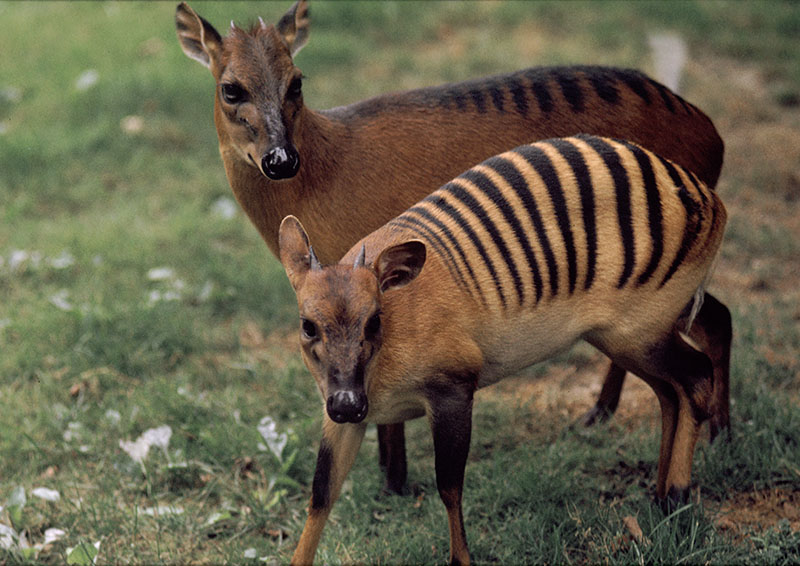
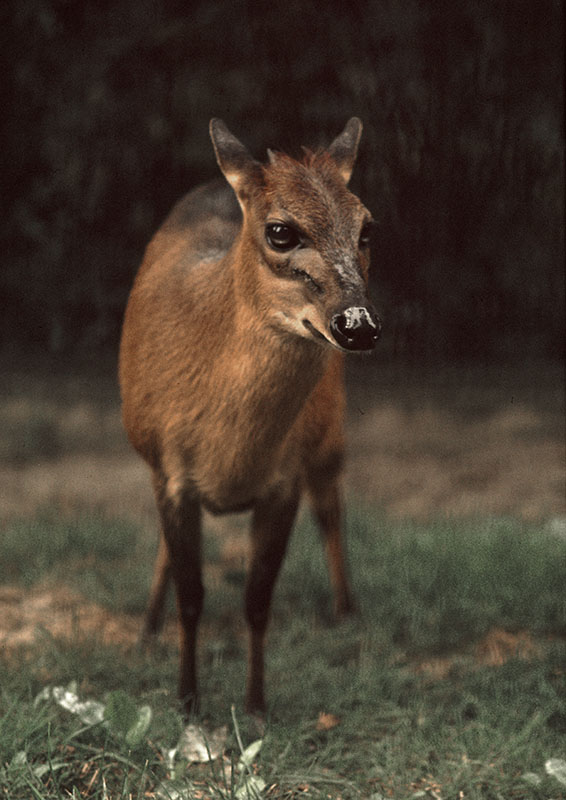
I have to correct that a little. The first Blackduiker, a female, did not arrive in Frankfurt until 1961. In 1958 1.2 zebraduiker arrived, but the male died shortly after arrival. The two females were held together with 1.1 spotted chevtrotain, only from 1961 with a male bay duiker that had arrived this year. The first bay duiekr, a male,was kept from 1955 until 1959, but was sold for space reasons. The second was held together with the female Blackduiker, the female Zebraduiker and a female Klipspringer. Until 1963 each a male Zebraduiker, a male Blackduiker and a male Klippspringer arrived. The Bay Duiker bred only with the zebraduikers, not with the black duiker, which only had four offspring with the pure Black duiker buck. Between 1961 and 1962, four hybrids were born between Bay Duiker and Zebraduiker, but only one female was raised. This Ducker hybrid set an age record; it died on February 21, 1983 at the age of 20 years, 3 months and 10 days! It was mated with Zebraduikers several times, but of the 5 offspring only one survived for two months .

By the way, the Zoo has imported 8.8 Zebraduiker between 1958 and 1983, bred 10 young, of which 8 could be raised. They all died without breeding. So the Zoo wasn't sucessful in keeping and breeding that species, so no zoo was.
 
Another group from which hybrids are rarely reported are the Old World wild pigs.
In captivity Wild boars x Bornean bearded pigs have been bred and from the wild one case of a Javan warty pig ( Sus verrucosus ) x Wild boar ( Sus scrofa vittatus ) is known. A hunter shot an adult male pig in Nov. 1982 in Eastern Java and the head of this animal came in the hands of some scientists. By examening the head ( and skull ) they concluded that this animal was the natural hybrid of the above mentioned species.
2 unconfirmed sigthings of the same hybrids also came for East Java.
 
Stretching the scope of this thread. I have done some work on a wild population of petrels that includes pure birds and various hybrids including three-way hybrids involving Trindade Petrel Pterodroma arminjoniana x Herald Petrel P. heraldica x Kermadec Petrel P. neglecta.
 
. . . . Between 1961 and 1962, four hybrids were born between Bay Duiker and Zebraduiker, but only one female was raised. This Ducker hybrid set an age record; it died on February 21, 1983 at the age of 20 years, 3 months and 10 days! . . . .
I managed to photograph the female zebra duiker and the hybrid when I visited Frankfurt Zoo in 1973. @Bib Fortuna and I have corresponded about my visit and he explained this story to me some years ago, so I think these photos are relevant here.
 
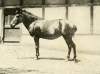
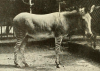
1904 the King of Abyssina donated a Grevy zebra stud to President Roosevelt and he gave the animal to the Washington Zoo.
Because not females of the same species were avaible they started - in cooperation with the US Department of Agriculture - to do some cross-breeding experiments and 2 foals were produced in this way :
Grevy zebra x Horse ( of the Morgan-breed ) :

Grevy Zebra x Morgan mare mashingthon 1890 - 1930.png

and Grevy zebra x Domestic donkey :

grevy zebra x domestic ass washington 1890 - 1930.png

( both photos from before 1930 so no copyright on them anymore )
 

Attachments

  • Grevy Zebra x Morgan mare mashingthon 1890 - 1930.png
    Grevy Zebra x Morgan mare mashingthon 1890 - 1930.png
    311.5 KB · Views: 75
  • grevy zebra x domestic ass washington 1890 - 1930.png
    grevy zebra x domestic ass washington 1890 - 1930.png
    563.6 KB · Views: 75
An interesting hybrid not mentioned here was a black rhino x southern white rhino hybrid born at South Africa’s National Zoological Gardens Game Breeding Centre. The specimen was killed due to no conservation Ali value, and had traits of both the black sire and white dam
 
Back
Top