IUCN Red List update - October 2024

DesertRhino150

Well-Known Member
15+ year member
The latest update to the IUCN Red List has been released today. These are some things I have noticed, mostly of relevance to species kept in captivity:

Among mammals:
  • The speckled ground squirrel has moved from Near Threatened to Critically Endangered.
  • The banteng has moved from Endangered to Critically Endangered.
  • The garden dormouse has moved from Near Threatened to Vulnerable.
  • The Romanian hamster has moved from Near Threatened to Vulnerable.
  • The Indian flying fox has moved from Least Concern to Near Threatened.
  • The West European hedgehog has moved from Least Concern to Near Threatened.
  • The Southern water vole has moved from Vulnerable to Near Threatened.
  • The recently-identified Calabrian black squirrel has been added to the Red List, with a status of Near Threatened.
Among birds:
  • The African penguin has moved from Endangered to Critically Endangered.
  • The white-winged duck has moved from Endangered to Critically Endangered.
  • The salmon-crested cockatoo has moved from Vulnerable to Endangered.
  • The coral-billed ground cuckoo has moved from Vulnerable to Endangered.
  • The Madagascar crested ibis has moved from Near Threatened to Vulnerable.
  • The grey plover has moved from Least Concern to Vulnerable.
  • The ruddy turnstone has moved from Least Concern to Near Threatened.
  • The dunlin has moved from Least Concern to Near Threatened.
  • The killdeer has moved from Least Concern to Near Threatened.
  • The Southern bald ibis has moved from Vulnerable to Near Threatened.
  • The Lord Derby's parakeet has moved from Near Threatened to Least Concern.
  • The white eared-pheasant has moved from Near Threatened to Least Concern.
  • The black-headed ibis has moved from Near Threatened to Least Concern.
  • The brown eared-pheasant has moved from Vulnerable to Least Concern.
Among amphibians:
  • The Sardinian brook salamander has moved from Vulnerable to Endangered.
Among cartilaginous fishes:
  • The undulate skate has moved from Endangered to Near Threatened.
Among bony fishes:
  • The European seabass has moved from Least Concern to Near Threatened.
  • Both the thicklip and thinlip grey mullets have moved from Least Concern to Near Threatened.
  • The recently-described Cisalpine or Italian pike has been added to the Red List for the first time, as Vulnerable.
Among invertebrates:
  • The giant clam has moved from Vulnerable to Critically Endangered.
 
Last edited:
Another update that I have just noticed that has some relevance to zoos:
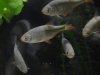
  • The Racovitza's rudd, Scardinius racovitzai, a freshwater fish endemic to a single small spring-fed lake in northwestern Romania, has moved from Critically Endangered to Extinct in the Wild. Places mentioned on the species page that keep captive populations are Țării Crișurilor Museum (Romania), Răsvan Angheluțăq Museum of Natural Sciences (Romania), Schönbrunn Zoo (Austria), Plzen Zoo (Czech Republic) and Tropicarium (Hungary). Do any of these places keep the fish on public display?
 
Also, the old good Hermann's Tortoise is now Vulnerable, as is the Asp Viper.

However, I feel that a better measure than the IUCN red list status needs to be found for conservation plans, especially in zoos. The IUCN red list status simply changes too fast to plan longer term conservation plans. It also has an inbuilt mistake of shifting baseline - the decline is measured only as the three last generations or 10 years. So an animal which population collapsed but later stopped becomes magically safe.

For zoos, there is also a large number of narrow endemic lizards Gallotia, Iberolacerta and Podarcis from Europe and surroundings, which could be the object of breeding plans in zoos. Independently of their current status.
 
  • The Racovitza's rudd, Scardinius racovitzai, a freshwater fish endemic to a single small spring-fed lake in northwestern Romania, has moved from Critically Endangered to Extinct in the Wild. Places mentioned on the species page that keep captive populations are Țării Crișurilor Museum (Romania), Răsvan Angheluțăq Museum of Natural Sciences (Romania), Schönbrunn Zoo (Austria), Plzen Zoo (Czech Republic) and Tropicarium (Hungary). Do any of these places keep the fish on public display?

Tropicarium certainly had these on show in 2016 - though whether they still do I can't say. Photo attached. :)

I've been to Plzen and Schönbrunn both more than once since then and don't recall seeing them on show.
 

Attachments

  • DSC_2327.JPG
    DSC_2327.JPG
    73.3 KB · Views: 8
Also, the old good Hermann's Tortoise is now Vulnerable, as is the Asp Viper.

These status changes already happened in the 1st update of the IUCN red list in early 2024.

However, I feel that a better measure than the IUCN red list status needs to be found for conservation plans, especially in zoos. The IUCN red list status simply changes too fast to plan longer term conservation plans. It also has an inbuilt mistake of shifting baseline - the decline is measured only as the three last generations or 10 years. So an animal which population collapsed but later stopped becomes magically safe.

I've already criticized the timeframe used to measure the population changes, that is unfit for short-lived species (I can think to many fish belonging to the Cyprinodontiformes order, that are often subject to a high degree of endemism, with numerous species with small ranges and naturally fluctuating populations) or instead for the most long-lived species whose generational replacement can take decades or even centuries, leading to counter-intuitive up/downgradings (I think to sturgeons, sea turtles, some large trees and for some extent to the Elephant species).

The distinction between "genuine" and "non-genuine" changes may be hardly understandable in many cases, even if the first ones are assumed to be "stronger" reasons for changes. I may give some examples of falsely genuine changes in various animal taxa, as well as falsely non-genuine ones.
It may be the case when the population of one species declines drastically then stabilizes over the time : many reasons can explain it, including mixed reasons.

Finally I add that national or even regional lists may be useful to assess the situation of one species : for example the Brown Bear isn't threatened worldwide nor even in Europe or EU, but it is critically endangered in France.
 
I’m surprised to see African penguin, killdeer and banteng all move down, each of them I thought were doing good.
The African Penguin seems to be by far the most imperiled of the four Spheniscus species, including the Galapagos one.
The uplist of the Banteng has been driven by its decline in one country, Cambodia. This nation was for long its main stronghold in continental Asia, but steep declines have been recorded there in the last decades and haven't ceased (they even exacerbated since the 2010s, that haven't happened nowhere else in this frametime for this species).
I don't know the situation of the Killdeer Plover.
 
Killdeer populations have declined by 18.3% in the US and Canada since 2008, and by 16% since 2012 in Mexico and Central America. The reason for these declines is unknown but suspected to be increased usage of agricultural chemicals.
 
However, I feel that a better measure than the IUCN red list status needs to be found for conservation plans, especially in zoos. The IUCN red list status simply changes too fast to plan longer term conservation plans. It also has an inbuilt mistake of shifting baseline - the decline is measured only as the three last generations or 10 years. So an animal which population collapsed but later stopped becomes magically safe.
.

The problem is that for many taxa we have no clue what is going on even within well-studied groups like birds and mammals. I looked at some of the October updates for species I'm familiar with and the species are still listed as LC even though they are facing habitat degradation and unsustainable exploitation, but because we have no clue of the total population size (or more no one has ever published an estimate based on field monitoring) we don't know the decrease.

Also the use of the Hanssen dataset for forest cover loss is using the best tool we have, but again it has it's limitations. There have been some attempts to project future forest loss based on other indicators (by example the arrival of roads), but they are still work in progress.

All in all the red lists are an impressive piece of work that are useful, but it has it's limitations. One of the ones is field research. In-situ field monitoring of biodiversity is not very sexy and has received less resources and attention than some other fields in biology, but we pay the price for that now. Can we replace this with AI and UAV, probably partly but again not for certain groups that are notorious difficult to monitor plus you still need taxonomic experts which for major groups are in short supply.

Should zoos depend on IUCN redlists for the programme management. It should be one of the indicators, but there are multiple reasons to manage species (sometimes even to limit a population) and all these should be taken into account. To be fair for some people inside zoo management but also in some of the animal rights movement it is the main thing they look at.
 
The problem is that for many taxa we have no clue what is going on even within well-studied groups like birds and mammals. I looked at some of the October updates for species I'm familiar with and the species are still listed as LC even though they are facing habitat degradation and unsustainable exploitation, but because we have no clue of the total population size (or more no one has ever published an estimate based on field monitoring) we don't know the decrease.

Also the use of the Hanssen dataset for forest cover loss is using the best tool we have, but again it has it's limitations.

The IUCN Red list would really benefit from adding a quality of assessment. Many bird monitoring reports add the quality / completeness of their estimate, for example low (0-20%), medium, high etc.

The IUCN could also correct the error of excluding introduced populations. Even some famous invasive species are officially Endangered on the IUCN, like the european rabbit or the long-tailed macaque. And for many animals like Fallow and Red Deer, it is uncertain which populations are native and which long introduced.

The IUCN could also start considering the original population size and distribution of animals. This causes what was pointed many times - very many animals rare in Europe or eastern North America, added together making the subjects of most local protection plans, are of Least Concern on the IUCN list, because of populations in places like Siberia or Alaska. Such animals are named Depleted Species in the list of threatened birds in Europe.

For now, however, there is a problem how to treat the IUCN status? Currently, changes from non-genuine reasons are more common than genuine reasons. It is positive that the IUCN is open about it, but it also means that the IUCN status needs to be taken critically.

It seems that animals are usually genuinely endangered if they have small populations or are narrow endemics. Because it is uncommon to discover a completely overlooked range or a population.

However, animals with a large decrease of the population are very likely to change the IUCN status, and also for a more secure one. Because the rate of decrease is often falsely estimated, e.g. based on limited area, indirectly on habitat loss or a generation length. Also, as the animal becomes rarer, the exploitation often slows for practical reasons.
 
Last edited:
The IUCN Red list would really benefit from adding a quality of assessment. Many bird monitoring reports add the quality / completeness of their estimate, for example low (0-20%), medium, high etc.

The IUCN could also correct the error of excluding introduced populations. Even some famous invasive species are officially Endangered on the IUCN, like the european rabbit or the long-tailed macaque. And for many animals like Fallow and Red Deer, it is uncertain which populations are native and which long introduced.

The IUCN could also start considering the original population size and distribution of animals. This causes what was pointed many times - very many animals rare in Europe or eastern North America, added together making the subjects of most local protection plans, are of Least Concern on the IUCN list, because of populations in places like Siberia or Alaska. Such animals are named Depleted Species in the list of threatened birds in Europe.

For now, however, there is a problem how to treat the IUCN status? Currently, changes from non-genuine reasons are more common than genuine reasons. It is positive that the IUCN is open about it, but it also means that the IUCN status needs to be taken critically.

It seems that animals are usually genuinely endangered if they have small populations or are narrow endemics. Because it is uncommon to discover a completely overlooked range or a population.

However, animals with a large decrease of the population are very likely to change the IUCN status, and also for a more secure one. Because the rate of decrease is often falsely estimated, e.g. based on limited area, indirectly on habitat loss or a generation length. Also, as the animal becomes rarer, the exploitation often slows for practical reasons.
Introduced populations are excluded because the status is supposed to be a rating of a likelihood of being extinct in the wild. If a species is gone from its native range but introduced elsewhere, it's still extinct in the wild.
 
Introduced populations are excluded because the status is supposed to be a rating of a likelihood of being extinct in the wild. If a species is gone from its native range but introduced elsewhere, it's still extinct in the wild.

Have to say I'm with @Jurek7 on this one in that I think this is a mistake - it undermines the credibility of the system a bit I think when you're telling people European Rabbits (say) are Endangered when they are visibly numerous, often to problematic levels, on a global scale. Maybe a new status is called for? A little star or something to indicate their status in native range versus globally?
 
I have some significant species too add here
Iberian lynx: from endangered to vulnerable
russian desman: from vulnerable to critically endangered
saiga: from critically endangered to near threatened

I totally agree with the correctness of criteria that set a species status. Status itself does not always mean something, it could sometimes refer the population trend (stable, increasing, decreasing). The distinction of wild/introduced/captive populations is important too as referred for the case of european rabbit
 
Have to say I'm with @Jurek7 on this one in that I think this is a mistake - it undermines the credibility of the system a bit I think when you're telling people European Rabbits (say) are Endangered when they are visibly numerous, often to problematic levels, on a global scale. Maybe a new status is called for? A little star or something to indicate their status in native range versus globally?

Do some research before saying nonsensical things. If you believe you can do a better job, join IUCN and start doing assessments. Hopefully, you can share your insights about population biology, ecology and genetics to them. But remember it is mostly a volunteer job. Most specialists who do the assessements are not paid to do so.
Justification
The European Rabbit is a widespread colonizer and is considered a pest outside its natural range, where eradication of the rabbit is priority for conservation (Cooke 2014, Cooke, Flux and Bonino 2018). However, only the natural range of Spain, Portugal, and southern France are considered in this global assessment. Assessment of the European Rabbit is filled with contradictions (Lees and Bell 2008, Delibes-Mateos et al. 2011). The European Rabbit is an important game species in Spain, Portugal and France, and the agriculture sector considers the species a pest (not a typical situation for a putatively Threatened species). On the other hand, it is an important ecosystem engineer (Galvez-Bravo et al. 2009) and a keystone species within its native range (Delibes-Mateos et al. 2008), serving as the dominant prey item for the highly endangered Iberian Lynx (Lynx pardinus) and the Spanish Imperial Eagle (Aquila adalberti) (Ferrer and Negro 2004). However, from 1950 onwards, the European Rabbit declined dramatically throughout its native range to densities less than 10% of those found earlier in the 20th century mainly due to the irruption of viral diseases (Myxomatosis in the fifties and Rabbit Hemorrhagic disease, RHD, in the nineties), and habitat loss (Moreno et al. 2007, Delibes-Mateos et al. 2009a, Villafuerte et al. 2017). Other factors such as human induced mortality or predation may have played a role in rabbit decline, at least locally. On balance this situation led more than one decade ago to a classification of the European Rabbit as Vulnerable in Spain and Near Threatened in Portugal (Cabral et al. 2005, Villafuerte and Delibes-Mateos 2008). In recent years many rabbit populations, particularly in natural habitats, have continued declining (some have even become extirpated), while others, mostly in human-modified landscapes, have increased in numbers leading to an increase in complaints by farmers concerning crop damage caused by rabbits (Delibes-Mateos et al. 2014a).

Most recently, beginning after 2010, a new wave of disease (a new variant of RHD virus – GI.2/RHDV2/b) has swept through many rabbit populations causing massive declines. In an area that traditionally held the highest rabbit densities within Doñana National Park (i.e. Coto del Rey) – which thus held a core population of Iberian Lynx – there was a decline of greater than 80% during 2012-2014. In low-density rabbit areas within the park similar declines have been reported (Delibes-Mateos et al. 2014b). Rabbit density in the proximity to Yeguas River in Andújar and Cardeña Natural park in southern Spain, where the largest Iberian Lynx population lives, the rabbit density declined from more than 3.5 rabbits/ha in 2010 to less than 1 rabbit/ha in 2013 (a decline of approximately 75%). Also, rabbit abundance decreased by 57% between 2010 and 2014 in 26 localities surveyed in the Córdoba province (southern Spain), only 11% of these populations experienced a positive trend in the study period (Guerrero-Casado et al. 2016). The Andalusian government through censuses that started in 2004, has shown that rabbit density has decreased on average by more than 50% in 2016, despite the increase in abundance detected in some agricultural areas, where rabbits have to be controlled to avoid crop damage (www.juntadeandalucia.es). Hunters have similarly noted the decreased abundance of rabbits based on declines of 70-80% in the hunter bags in some estates compared with recent years (Delibes-Mateos et al. 2014b). In summary, the recent overall estimated 60-70% decline in populations of European Rabbits over the past decade has been followed by decreases of 65.7% in Iberian Lynx and 45.5% in Spanish Imperial Eagle fecundities (Monterroso et al. 2016). These new data lead to a re-evaluation of the previous assessment of the European Rabbit as NT, to EN – Endangered A2abce reflecting that populations have experienced or are experiencing declines mainly due to the recent impact of GI.2/RHDV2/b. The A3 criteria has not been applied because European Rabbits have been known to develop immunity to epizootics of prior viral diseases, it is hoped that a similar recovery will occur following this epizootic.
 
Do some research before saying nonsensical things. If you believe you can do a better job, join IUCN and start doing assessments. Hopefully, you can share your insights about population biology, ecology and genetics to them. But remember it is mostly a volunteer job. Most specialists who do the assessements are not paid to do so.

Sorry I seem to have touched a nerve but I never claimed to be anything other than an interested person taking part in a discussion on a discussion board. I also never claimed there was no reasoning behind the IUCN's approach, or that under the current processes Endangered was not the correct assessment.

But my point was specifically based on the impression it gives to people outside conservation biology - not the science. Political decision makers. Private companies. The mainstream media. Not the science, or the scientists.

It comes down to the dangers of summarising anything in one or two words (if you want another example - look up the Ofsted 'one word' school inspection reports in the UK, that caused at least one death by suicide).

If a species is described as Endangered (with no qualifier) that people see running around the whole time, I think (certainly from a UK perspective) there is a risk that when we want a local planning authority to block a scheme because of the risk to another (or multiple) Endangered species, someone with no scientific interest is going to look it up on the Internet, see that that status is the same as for European Rabbit, and go 'oh, well it's not that bad then - there are loads of those - ignore them - lot of fuss over nothing'. Because most people won't come close to the subtlety of it.

Which is why I would propose (say) a specific category of 'Endangered in Natural Range' or similar (in exactly the same way that the system currently distinguishes 'Extinct' and 'Extinct in the Wild') so that at least it flags this is a different situation. That's all.
 
Sorry I seem to have touched a nerve but I never claimed to be anything other than an interested person taking part in a discussion on a discussion board. I also never claimed there was no reasoning behind the IUCN's approach, or that under the current processes Endangered was not the correct assessment.

But my point was specifically based on the impression it gives to people outside conservation biology - not the science. Political decision makers. Private companies. The mainstream media. Not the science, or the scientists.

It comes down to the dangers of summarising anything in one or two words (if you want another example - look up the Ofsted 'one word' school inspection reports in the UK, that caused at least one death by suicide).

If a species is described as Endangered (with no qualifier) that people see running around the whole time, I think (certainly from a UK perspective) there is a risk that when we want a local planning authority to block a scheme because of the risk to another (or multiple) Endangered species, someone with no scientific interest is going to look it up on the Internet, see that that status is the same as for European Rabbit, and go 'oh, well it's not that bad then - there are loads of those - ignore them - lot of fuss over nothing'. Because most people won't come close to the subtlety of it.

Which is why I would propose (say) a specific category of 'Endangered in Natural Range' or similar (in exactly the same way that the system currently distinguishes 'Extinct' and 'Extinct in the Wild') so that at least it flags this is a different situation. That's all.
My apologies, I should have quoted Jurek7's post instead as it is mostly regarding what he first claimed. It was a lapse on my side.
I can see your point in addressing the problem by creating a new status. However, I do not think it serves to change much. IUCN assessments are most often, by definition, assessments of native ranges. People in Britain must be told that rabbits are not native to Britain and that the conservation of the species matters in its native range. I do not think the public (people, policymakers, etc) is that dumb to not be able to understand that.
 
I can see your point in addressing the problem by creating a new status. However, I do not think it serves to change much. IUCN assessments are most often, by definition, assessments of native ranges. People in Britain must be told that rabbits are not native to Britain and that the conservation of the species matters in its native range. I do not think the public (people, policymakers, etc) is that dumb to not be able to understand that.

I definitely agree in that I don't think they're too dumb to understand if told either. Or if they care enough to check properly for themselves. But they won't be told unless they ask, and in most cases they won't ask. They're human and will just read it in brief and act. These kind of assumptions and errors cause problems all the time in the UK, particularly in local government (and I only say 'in the UK' just because I have experienced it here, I'm sure it's not a unique problem) and across all topics and I do think it's reasonable to take mitigation action against them.

As I say, a similar topic is 'hot' in the UK at the moment in the wake of the Ofsted scandal so I'm probably hyper-aware. One- or two-word inspection conclusions were given to schools and were generally held to have been misinterpreted and misapplied widely - and in at least one case the shock of the conclusion being simply 'inadequate' caused the death of a headteacher by suicide.

Rightly or wrongly (some) people will make judgments based on those couple-of-word headings, and not necessarily the explanation behind them, so I do think they need to be carefully chosen. Such as when 'Near Threatened' was split off from 'Lower Risk' (now 'Least Concern' of course), which was emphatically a good decision as there was a very valuable distinction to make there -and I just feel there is here too.


My apologies, I should have quoted Jurek7's post instead as it is mostly regarding what he first claimed. It was a lapse on my side.

No worries - happens to us all! :)
 
Back
Top