Jacaranda trees at SE Australian zoos

Grant Rhino

Well-Known Member
10+ year member
Here in Melbourne the Jacaranda trees are in bloom at the moment and they look beautiful with the blue/purple flowers everywhere (both on the trees and under them).

Do any of the zoos in SE Australia have many jacaranda trees? I'm sure I can recall one of them (either Melbourne, Werribee, Taronga, Mogo, Dubbo, or Adelaide) has a lot of them? Obviously they are only in bloom once per year so its quite easy to forget!

I'd love to get some photos of animals with the jacaranda blooms in shot.

On a side topic, which species in our zoos would suit an enclosure with these trees?
 
Here in Melbourne the Jacaranda trees are in bloom at the moment and they look beautiful with the blue/purple flowers everywhere (both on the trees and under them).

Do any of the zoos in SE Australia have many jacaranda trees? I'm sure I can recall one of them (either Melbourne, Werribee, Taronga, Mogo, Dubbo, or Adelaide) has a lot of them? Obviously they are only in bloom once per year so its quite easy to forget!

I'd love to get some photos of animals with the jacaranda blooms in shot.

On a side topic, which species in our zoos would suit an enclosure with these trees?

Taronga would be the only zoo I've visited in jacaranda season, but the only one I can recall is in the Backyard to Bush area, behind the playground.

Jacarandas are originally a South American species, aren't they? My suggestion would be a large mixed species South American habitat, featuring Bolivian Squirrel Monkeys, Golden Lion Tamarins, Brazilian Tapir and Capybara. The colours of the primates would be striking all year round.
 
Here in Melbourne the Jacaranda trees are in bloom at the moment and they look beautiful with the blue/purple flowers everywhere (both on the trees and under them).

Do any of the zoos in SE Australia have many jacaranda trees? I'm sure I can recall one of them (either Melbourne, Werribee, Taronga, Mogo, Dubbo, or Adelaide) has a lot of them? Obviously they are only in bloom once per year so its quite easy to forget!

I'd love to get some photos of animals with the jacaranda blooms in shot.

On a side topic, which species in our zoos would suit an enclosure with these trees?
Jacarandas are originally a South American species, aren't they? My suggestion would be a large mixed species South American habitat, featuring Bolivian Squirrel Monkeys, Golden Lion Tamarins, Brazilian Tapir and Capybara. The colours of the primates would be striking all year round.

Jacaranda are a native of the tropical and subtropical regions of the Americas including Bolivia, Argentina and Brazil.

Regrettably, all parts of the tree are poisonous, causing vomiting, diarrhoea, irregular heart beat, dilated pupils, coma and death. They wouldn’t be suitable for use in any exhibit and since there’d be the risk of leaf fall, they ideally shouldn’t be planted in close proximity to any exhibit.
 
This makes sense: I was at Werribee Zoo today and I only found 1 jacaranda tree in the entire zoo!

I noticed something else of interest too: I knew that WORZ had morton bag fig trees but I never realised or noticed how many they have! There are a lot within the grounds, so some of the smaller ones are going to look amazing in 20-30 years time!
 
This makes sense: I was at Werribee Zoo today and I only found 1 jacaranda tree in the entire zoo!

I noticed something else of interest too: I knew that WORZ had morton bag fig trees but I never realised or noticed how many they have! There are a lot within the grounds, so some of the smaller ones are going to look amazing in 20-30 years time!

Moreton Bay fig trees are favoured by zoos for their sheer size and suitability for animal exhibits. Adelaide Zoo has one in their Nepalese red panda exhibit and Taronga Zoo has an ancient (heritage listed) Moreton Bay fig tree in their Sumatran tiger complex.

Taronga Zoo:

upload_2023-1-5_20-48-32.jpeg
Source: https://www.ronstantensilearch.com/taronga-zoo-sumatran-tiger-enclosure/
 

Attachments

  • upload_2023-1-5_20-48-32.jpeg
    upload_2023-1-5_20-48-32.jpeg
    164.3 KB · Views: 6
Jacaranda are a native of the tropical and subtropical regions of the Americas including Bolivia, Argentina and Brazil.

Regrettably, all parts of the tree are poisonous, causing vomiting, diarrhoea, irregular heart beat, dilated pupils, coma and death. They wouldn’t be suitable for use in any exhibit and since there’d be the risk of leaf fall, they ideally shouldn’t be planted in close proximity to any exhibit.


I had no idea that this famous tree was poisonous!
 
Jacaranda are a native of the tropical and subtropical regions of the Americas including Bolivia, Argentina and Brazil.

Regrettably, all parts of the tree are poisonous, causing vomiting, diarrhoea, irregular heart beat, dilated pupils, coma and death. They wouldn’t be suitable for use in any exhibit and since there’d be the risk of leaf fall, they ideally shouldn’t be planted in close proximity to any exhibit.

That explains quite a bit then. The jacaranda at Taronga is in an area of the zoo in between non-animal structures - a children's playground and an indoor exhibit for wombats - which prevents risk to the animals.

Also, the photo you shared of the tiger exhibit is beautiful!
 
Also, the photo you shared of the tiger exhibit is beautiful!

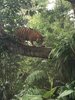
We also have a close up of the tree thanks to you. It’s easy to see why the tigers are so fond of this tree. Like most felids, they enjoy being high up and clearly find it immensely enriching. I look forward to seeing them return to this exhibit in time.

upload_2023-1-5_22-31-43.jpeg
Source: @Abbey
 

Attachments

  • upload_2023-1-5_22-31-43.jpeg
    upload_2023-1-5_22-31-43.jpeg
    124.3 KB · Views: 5
Moreton Bay fig trees are favoured by zoos for their sheer size and suitability for animal exhibits. Adelaide Zoo has one in their Nepalese red panda exhibit and Taronga Zoo has an ancient (heritage listed) Moreton Bay fig tree in their Sumatran tiger complex.

The best one at Adelaide Zoo (well my favourite anyway), is the one in the Dusky Langur / Malayan Tapir enclosure! I love watching the langurs play in it
 
The best one at Adelaide Zoo (well my favourite anyway), is the one in the Dusky Langur / Malayan Tapir enclosure! I love watching the langurs play in it

The funny thing about flora in animal exhibits is that it never bothers me if it doesn’t match the native range of the fauna in the exhibit. Exhibit an Indian antelope in an African Savannah and it bugs the hell out of me, but have a Moreton Bay fig tree (Australian native) in a Sumatran tiger exhibit or tapir/langur exhibit and I think it looks great!

Perhaps it’s because I’m not an expert on Botanics; or perhaps I can just accept zoos have to work with what will grow in their climate but some trees transcend geography to become the perfect addition to the exhibit they’re in.
 
The funny thing about flora in animal exhibits is that it never bothers me if it doesn’t match the native range of the fauna in the exhibit. Exhibit an Indian antelope in an African Savannah and it bugs the hell out of me, but have a Moreton Bay fig tree (Australian native) in a Sumatran tiger exhibit or tapir/langur exhibit and I think it looks great!

Perhaps it’s because I’m not an expert on Botanics; or perhaps I can just accept zoos have to work with what will grow in their climate but some trees transcend geography to become the perfect addition to the exhibit they’re in.

It's interesting that you say that - because I was just thinking the other day about the zoos that I like a lot and the ones that I don't like at all: It's nothing to do with the animals. I've realised that I like pretty zoos with nice plants. Almost any animal looks nice with a nice enclosure.

My favourites (in Australia) are Melbourne Zoo, Werribee Zoo, Mogo Zoo, Adelaide Zoo, Currumbin, Healesville Santucary and Taronga Zoo - all of which have really pretty gardens.

I also like Monarto a lot - but for its desolate desert/arid feel.

The ones I don't like (and I won't name them) are not pretty, and certainly don't have an eye to nice flora. Those ones seem dull and bland to me - even if they have a lot of species of animal.

I think the very best thing any zoo could do when they start up is invest in the biggest Moreton Bay Fig trees that they could possibly get their hands on! They are just an absolute winner in pretty much any enclosure.
 
It's interesting that you say that - because I was just thinking the other day about the zoos that I like a lot and the ones that I don't like at all: It's nothing to do with the animals. I've realised that I like pretty zoos with nice plants. Almost any animal looks nice with a nice enclosure.

My favourites (in Australia) are Melbourne Zoo, Werribee Zoo, Mogo Zoo, Adelaide Zoo, Currumbin, Healesville Santucary and Taronga Zoo - all of which have really pretty gardens.

I also like Monarto a lot - but for its desolate desert/arid feel.

The ones I don't like (and I won't name them) are not pretty, and certainly don't have an eye to nice flora. Those ones seem dull and bland to me - even if they have a lot of species of animal.

I think the very best thing any zoo could do when they start up is invest in the biggest Moreton Bay Fig trees that they could possibly get their hands on! They are just an absolute winner in pretty much any enclosure.

Flora can greatly enhance a zoo and give it a naturalistic feel, but as always there’s a balance. Hamilton Zoo trimmed the hell out of the lush foliage in the Sumatran tiger exhibit because nobody could see the tigers; and Auckland Zoo need to give their complex a pruning if they want anybody to see a tiger.

Many zoos use foliage to disguise fencing and from an aesthetics perspective, this is very effective. Auckland Zoo do this well with the rear wall of their lion exhibit (which is mostly moated), partly screened with bamboo.
 
Many zoos use foliage to disguise fencing and from an aesthetics perspective, this is very effective. Auckland Zoo do this well with the rear wall of their lion exhibit (which is mostly moated), partly screened with bamboo.

To me this should be just a given minimum standard: I find any enclosure without this just feels like it has been created in a really lazy way with minimal effort. There is nothing worse than seeing a fence... That said, I do realise that a lot of animal species won't co-operate and they will just eat the foliage or destroy it, so it's not as black and white as I'd like it to be.
 
To me this should be just a given minimum standard: I find any enclosure without this just feels like it has been created in a really lazy way with minimal effort. There is nothing worse than seeing a fence... That said, I do realise that a lot of animal species won't co-operate and they will just eat the foliage or destroy it, so it's not as black and white as I'd like it to be.

I agree. There’s so many options nowadays when planting exhibits. Hotwire is used, not just to contain animals, but to protect trees. Taronga have done this in their chimpanzee exhibit for example. It’s a vast improvement on the clunky tree guards Auckland Zoo were apparently using in mid-20th Century photos of their lion pit to protect the trees!
 
Back
Top