Other 2024 News Worth Mentioning:
On May 8th, the zoo announced the name of the sifaka, Maxine.
Jacksonville Zoo and Gardens
On June 28th, it was announced that the zoo transferred a (0.1) blue-eyed black lemur to the Duke Lemur Center in North Carolina.
Duke Lemur Center
On October 20th, it was mentioned that the zoo transferred a (0.1) giant otter to the Los Angeles Zoo in California*.
------------------------------------------------------------------------------------------------------------------------
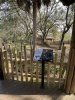
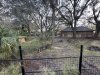
On January 2nd, the zoo stated that construction on the sloth exhibit had begun in the Play Park area**.
Jacksonville Zoo and Gardens
* Information provided by @African Grey & @Elena in the Los Angeles Zoo News 2024 thread (Pages 5 & 12 Posts #94 & #233 respectively).
** Information is in a comment reply, not in the main post itself.
On June 26th, the zoo announced that a (1.0) Florida manatee calf passed away due to difficulties from a collapsed lung.
11K views · 1.3K reactions | We are extremely saddened to share that manatee calf, Tini, recently passed away. Tini arrived at our Manatee Critical Care Center in November with his mom and a surrogate sibling. As a boat strike case, he had air trapped around his lung, resulting in a collapsed lung, which prevented him from being able to submerge under water. The Animal Care and Health teams spent many months providing extensive care, including supplemental formula feedings, multiple times daily, during his first few months at the Zoo. We performed nine chest taps in an attempt to help remove the air and allow him to resume normal buoyancy, but his thoracic cavity remained damaged, and he continued to float unevenly at the surface. Our teams consulted with many colleagues throughout his case. It was decided to put him under anesthesia with the hopes of putting a camera in his chest cavity and assessing if the lung and diaphragm could be repaired. Medically, marine mammals are extremely challenging to work with. Manatees present extra obstacles with their lack of accessible veins for IV access, the need to place a breathing tube “blindly” through their nose and their large size precludes many diagnostic abilities such as obtaining good x-rays. Unfortunately, Tini was already very compromised with only one functional lung, and he died during the procedure. Florida Fish and Wildlife Conservation Commission (FWC) performed his necropsy (the animal version of an autopsy). His left lung had regions where it was stuck onto itself, and it was much smaller in size than his right, normal lung. Ultimately, we would not have been able to fix Tini given the severity of his injuries. “We knew Tini’s case would be an uphill battle, but it was one definitely worth trying,” said Dr. Meredith Persky, Director of Animal Health and a board-certified specialist in zoological medicine™. “Watching him gain 200 pounds since arrival, coupled with his spunkiness, makes this loss that much more heartbreaking. We all tried our absolute best to help him, and we will take the lessons Tini’s case taught us to help future manatees.” | Jacksonville Zoo and Gardens
On December 31st, the zoo announced that 500+ striped newts hatched between March and September.
Jacksonville Zoo and Gardens
11K views · 1.3K reactions | We are extremely saddened to share that manatee calf, Tini, recently passed away. Tini arrived at our Manatee Critical Care Center in November with his mom and a surrogate sibling. As a boat strike case, he had air trapped around his lung, resulting in a collapsed lung, which prevented him from being able to submerge under water. The Animal Care and Health teams spent many months providing extensive care, including supplemental formula feedings, multiple times daily, during his first few months at the Zoo. We performed nine chest taps in an attempt to help remove the air and allow him to resume normal buoyancy, but his thoracic cavity remained damaged, and he continued to float unevenly at the surface. Our teams consulted with many colleagues throughout his case. It was decided to put him under anesthesia with the hopes of putting a camera in his chest cavity and assessing if the lung and diaphragm could be repaired. Medically, marine mammals are extremely challenging to work with. Manatees present extra obstacles with their lack of accessible veins for IV access, the need to place a breathing tube “blindly” through their nose and their large size precludes many diagnostic abilities such as obtaining good x-rays. Unfortunately, Tini was already very compromised with only one functional lung, and he died during the procedure. Florida Fish and Wildlife Conservation Commission (FWC) performed his necropsy (the animal version of an autopsy). His left lung had regions where it was stuck onto itself, and it was much smaller in size than his right, normal lung. Ultimately, we would not have been able to fix Tini given the severity of his injuries. “We knew Tini’s case would be an uphill battle, but it was one definitely worth trying,” said Dr. Meredith Persky, Director of Animal Health and a board-certified specialist in zoological medicine™. “Watching him gain 200 pounds since arrival, coupled with his spunkiness, makes this loss that much more heartbreaking. We all tried our absolute best to help him, and we will take the lessons Tini’s case taught us to help future manatees.” | Jacksonville Zoo and Gardens
On December 31st, the zoo announced that 500+ striped newts hatched between March and September.
Jacksonville Zoo and Gardens
On March 15th, the zoo announced that a (0.1) Coquerel's sifaka was born in January.
Jacksonville Zoo and Gardens
On May 8th, the zoo announced the name of the sifaka, Maxine.
Jacksonville Zoo and Gardens
On June 28th, it was announced that the zoo transferred a (0.1) blue-eyed black lemur to the Duke Lemur Center in North Carolina.
Duke Lemur Center
On October 20th, it was mentioned that the zoo transferred a (0.1) giant otter to the Los Angeles Zoo in California*.
------------------------------------------------------------------------------------------------------------------------
the zoo recently acquired a 29 year old Female Hoffman's Two-Toed Sloth and a 6 year old female Linneaus' Two-Toed Sloth, the post stated they will remain bts for now but will share more in the future.
Jacksonville Zoo and Gardens
On January 2nd, the zoo stated that construction on the sloth exhibit had begun in the Play Park area**.
Jacksonville Zoo and Gardens
* Information provided by @African Grey & @Elena in the Los Angeles Zoo News 2024 thread (Pages 5 & 12 Posts #94 & #233 respectively).
** Information is in a comment reply, not in the main post itself.