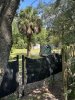
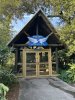
After another successful shift, I was able to document the following changes and updates earlier today (09/05):
Perhaps, the most significant non-animal related update I have to report; the “skyscape” framework for the new entrance has been erected (see below). With this addition, the project in general is well underway for a 2026 opening date, as it was first mentioned by user
@Milwaukee Man.
 Photo Credit: yours truly, Austin the Sengi
Not long after the end of my shift, this next update marks the first time I have seen the
Sloth Crossing exhibit since it opened. While neither of the zoo’s sloths were visible, the new exhibit as it stands is a decent redesign at best.
For those curious about the status of the
Emerald Forest Aviary, I can confirm that it is open to the general public once again.
I also noticed that the following signage relating to the zoo’s jaguars had been updated since my last report. For reference, the top image shows the new design, while the bottom shows what it used to look like.

 Photo Credits: yours truly, Austin the Sengi
Following my time with the
Range of the Jaguar area, I noticed that some palm trees were planted in the space where the old leopard aviary once stood; with no other changes being present in the still-empty space.
While I alluded the idea of finding the same bongo calves that I highlighted in my previous post. To my disappointment, all three chose to remain out of sight due to the heat.
Regarding the Elephant Plaza’s wattled crane chick, the singleton offspring has significantly grown in size (nearly as tall as its parents!), with all three cranes still housed together on the day of my visit.
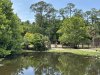
While this next update has nothing to do with captive animals, I can confirm that wood stork nesting season is in full swing. With dozens of nesting pairs and offspring being seen in and around the same trees that they congregate annually.
 Photo Credit: yours truly, Austin the Sengi
Last, but certainly not least, in an area slightly hidden away from the hubbub of the wood stork colony. A smaller breeding colony of Roseate Spoonbills can also be seen from the Africa Boardwalk. For reference, the spoonbill roost is located among a cluster of sycamore trees between the former okapi enclosure and the rhino savanna (see above; far left in the image).