Happy World Rhino Day!!!!!
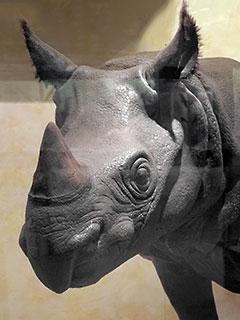
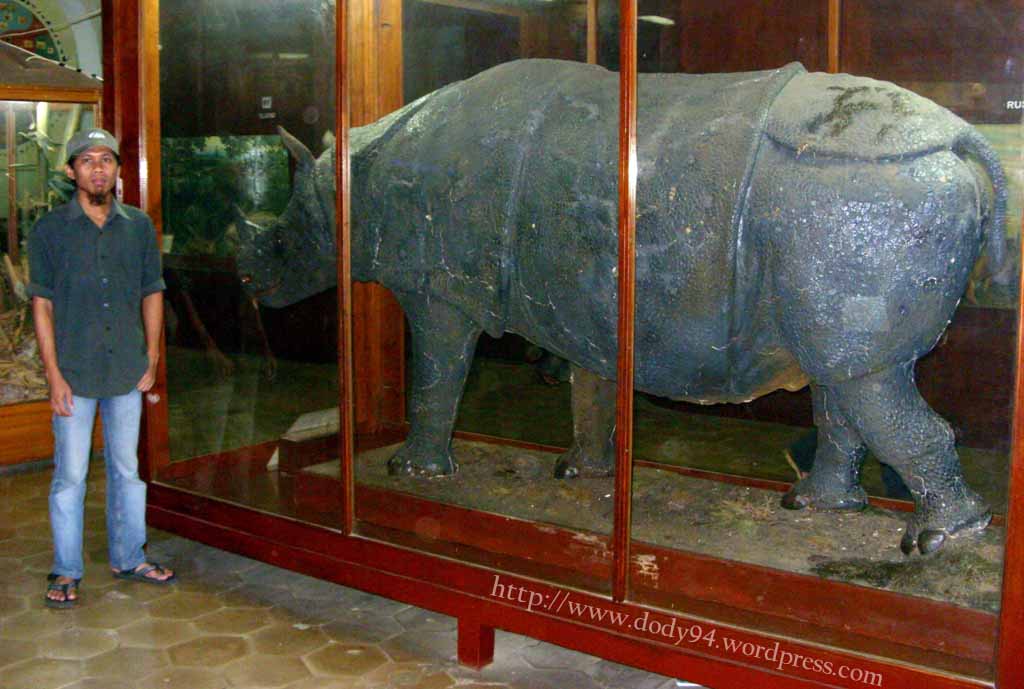
This year marks the bicentennial of the Javan Rhino. First described by Anselme Desmarest in 1822 from a specimen originating from Java sent to France's National Museum of Natural History by Alfred Duvaucel and Pierre Medard Diard this species was once the most populous in Asia ranging from India to Indonesia. However, over the ensuing two centuries it suffered catastrophic losses due to hunting, poaching and habitat loss. Regarded as an agricultural pest due to much larger numbers over two centuries ago, between 1747 & 1749 over 500 rhinos were killed via bounty to protect crops. Over time hunting and habitat loss took its toll. The last known mainland Javan Rhino was a female of the annamiticus subspecies poached in Vietnam’s Cat Tien National Park. Overall there were originally 3 subspecies of this incredible rhino. Now only one remains, the nominate subspecies known as the Indonesian Javan Rhinoceros, the largest on average with a possible chance at population recovery. The classification goes as follows:
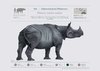
Rhinoceros sondaicus sondaicus, the Indonesian Javan Rhinoceros, Desmarest 1822 – 76 individuals left
This subspecies is the largest known in size standing up to 5'10" and can weight up to 5,000 lbs. It's range occured throughout Indonesia with a former population on Sumatra. It is now confined to the western tip of Java in Ujung Kulon National Park.

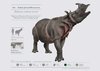
Rhinoceros sondaicus inermis, the Indian Javan Rhinoceros, Lesson 1838 – Extinct, 1925?
This subspecies ranged from Assam India to Bangladesh. The area of which most accounts cite localities from center around the Sundarbans region.

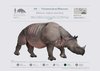
Rhinoceros sondaicus annamiticus, the Vietnamese Javan Rhinoceros, Heude 1892 – Extinct, 2010
This subspecies ranged throughout mainland Southeast Asia & Malaysia. It's favored habitat ranged from floodplains and forests. Studies of its footprints indicated it averaged about 75-80% the size of the Indonesian subspecies.

Images by Ricardo Nunez Suarez
This year marks the bicentennial of the Javan Rhino. First described by Anselme Desmarest in 1822 from a specimen originating from Java sent to France's National Museum of Natural History by Alfred Duvaucel and Pierre Medard Diard this species was once the most populous in Asia ranging from India to Indonesia. However, over the ensuing two centuries it suffered catastrophic losses due to hunting, poaching and habitat loss. Regarded as an agricultural pest due to much larger numbers over two centuries ago, between 1747 & 1749 over 500 rhinos were killed via bounty to protect crops. Over time hunting and habitat loss took its toll. The last known mainland Javan Rhino was a female of the annamiticus subspecies poached in Vietnam’s Cat Tien National Park. Overall there were originally 3 subspecies of this incredible rhino. Now only one remains, the nominate subspecies known as the Indonesian Javan Rhinoceros, the largest on average with a possible chance at population recovery. The classification goes as follows:
Rhinoceros sondaicus sondaicus, the Indonesian Javan Rhinoceros, Desmarest 1822 – 76 individuals left
This subspecies is the largest known in size standing up to 5'10" and can weight up to 5,000 lbs. It's range occured throughout Indonesia with a former population on Sumatra. It is now confined to the western tip of Java in Ujung Kulon National Park.
Rhinoceros sondaicus inermis, the Indian Javan Rhinoceros, Lesson 1838 – Extinct, 1925?
This subspecies ranged from Assam India to Bangladesh. The area of which most accounts cite localities from center around the Sundarbans region.
Rhinoceros sondaicus annamiticus, the Vietnamese Javan Rhinoceros, Heude 1892 – Extinct, 2010
This subspecies ranged throughout mainland Southeast Asia & Malaysia. It's favored habitat ranged from floodplains and forests. Studies of its footprints indicated it averaged about 75-80% the size of the Indonesian subspecies.
Images by Ricardo Nunez Suarez