You are using an out of date browser. It may not display this or other websites correctly.
You should upgrade or use an alternative browser.
You should upgrade or use an alternative browser.
Joburg Zoo Johannesburg Zoo Review and Walk-through
- Thread starter Nix
- Start date

Part 1: Entrance and Heart of Africa
Turning into the Zoo's parking lot from Jan Smuts Ave. you enter a 2-leveled parking lot, with sensors above the spaces indicating whether it is open or not by red and green lights.
In the left-top corner of the parking lot lies the Entrance, on which a gift shop has recently been added, Paying the 110 Rand entrance fee ($7,50) you enter immediately seeing the most unneeded part of the zoo. An "amusement park" with carousals and mini-rollercoasters, by the state of these machines, they clearly aren't often used making them affectively useless to the zoo.
Here you have two options turn left, or right. Left will take you to the "Heart of Africa" a central african themed area, right will take you to "Amazonia" a south-american themed area.
Turning left, you will have two simple fence enclosures with a large piles of rocks in the middle, these contain barbary sheep and Marabou stork, respectively.
Continuing straight, you find a row of large aviaries with hideously green mesh.
These contain Blue Crane, Marabou Stork, Red Duiker, Wattled Crane, Saddle-billed stork and Southern Ground Hornbill.
On your immediate left you can turn into a dead-end path, with two overgrown exhibits for Wattled Crane and 4 small aviaries for parrots: Senegal Parrot, Sulphur-crested Cockatoo, Blue-fronted Amazon, Major Mitchell's Cockatoo and Black-winged Jardine. If you look through the holes of a wooden fence you might spot a backstage exhibit for Southern Ground Hornbill.
Back on the main path, you find a large steel aviary, which once housed Siamang, now houses Mantled Guereza! This beautiful exhibit, with a mock rock waterfall and many climbing opportunities, is a perfect home for these african primates.
Scaling the slope next to Guereza enclosure, takes you to a large thatch building overlooking the Western Lowland Gorilla enclosure, This spacious well planted exhibit is home to a 34 year-old lone silverback named Makoko, The zoo is on a waiting list to receive a female.
Exiting the building, down the slope, offers you one last view into the enclosure via a glass window.
Averting from the main path you follow a road with precious gardens on one side and large primate exhibits on the right, these are beautifully planted with large enriching climbing frames.
They contain: Diana Monkey, Mona Monkey, Black-rested Mangabey, Red-tailed Geunon, DeBrazza's Monkey and L'Hoest's Monkey.
All these enclosures also have viewable indoor exhibits of similar size.
Across from these exhibits, is a large building, with a orange concrete exterior. This is the Western Chimpanzee indoor building. It's rock walls and and pebble flooring provide a wonderful atmosphere as if walking through a zoo in the early 1900s.
The relation to the 1900s stops at the exhibits itself, they are tall with many climbing frames, and enrichment opportunities.
There are five of these indoor enclosures, two of them having once been home to sumatran orangutans.
Exiting the building, you can turn immediately left onto a small dead-end boardwalk over a water moat, on one side is a medium sized, well-planted, enclosure with tall orange concrete walls, with patterns of plants and and swirls carved into them. This exhibits contained Sumatran Orangutans until 2015 when the last one died, nowadays it is used as separation for the Chimps.
One the other side of the moat is a sneak peak into the large Chimpanzee enclosure, which we will be revisiting later.
Leaving the boardwalk, you turn onto a path known as the "cat walk" it, which is rather out of placed in this section. Firstly is a rather uninteresting enclosure for meerkats which we'll be moving on from to the small mammal enclosures, these enclosures for carnivorans and small mammals are very large and tall, with much foliage and wooden platforms for climbing. Each of them have indoor viewing and outdoor glass-viewing.
They contain: Fennec fox, Margay, Cape Porcupine, Honey badger, Black-footed Cat, African Wild Cat, Caracal, Ring-tailed lemur and DeBrazza's Monkey.
Turning towards the bird-of-prey sector, you are met with a 1900s style bearpit, which once contained Polar Bears and Snowy owls but now contain Nepalese Red Pandas, this exhibit is definitely not suited for Red Pandas and, seeing that it provides no sun and has no foliage whatsoever.
It would be good if the pandas returned to their previous home in the Carnivore rows.
Past the red panda pit, you see 3 enormous aviaries containing Verreaux's eagle, King Vulture, Cape Vulture and White-backed vulture.
The King Vulture aviary once contained Andean Condor which have since moved to Lory Park Zoo.
At the back of these exhibits you'll see the huge enclosure for Pygmy Hippos, which is more like a English garden then a hippo exhibit, I personally love this style but it is not the most natural, though the controversy it does provide the only underwater hippo viewing in the country. Across from the Pygmy hippos is a beautifully planted exhibit for Dwarf Crocodile. Next to this exhibit is the entrance to the reptile house which we will be visiting in the next part.
Backtracking a bit you reach a spacious lawn with an exhibit for Prevost's Squirrel in the middle of it.
Across from the lawn is the restaurant next the Chimpanzee Exhibit, The restaurant seating provides beautiful views into the Chimp enclosure, via huge glass windows.
Moving left, into a roofed over viewing area, of the gigantic chip exhibit, with large prettily carved orange-concrete walls, it is not the most natural chimp enclosure in the world, but is definitely one of the most beautiful exhibits of it's kind.
Across from the Exhibit, is a small aviary for chattering lourie and a outdoor exhibit for African bullfrog as well as a research and breeding centre for Pickergill's Reedfrog.
Following the path back from we're you came you turn right to a rather unimpressive, Cape Clawless Otter enclosure, It is small, uninteresting, with a tiny mock-rock pool.
Back to the large lawn we enter a forested area known as "The Forest floor" Here lives European Wild boar, Sitatunga, Blue-winged Kookaburra and a male mountain bongo, who has returned to the zoo after not being on display for 3 weeks (I presumed he was dead, until I saw him in late March).
Climbing onto a boardwalk you get a great view of the Bongo Exhibit on one side and the Kookaburra exhibit on the other, At the end of the boardwalk is the European Wild Boar enclosure which once held red rive hogs.
Getting off the boardwalk, you are confronted by a large pond, which is home to a mute swan family, across from them is the Exhibit for Sitatunga, It is natural and large with a spacious water feature.
That's it for the first part of this tour and review! I will be covering the Spice Route section and the reptile house in the next part.
Thank you all for reading!
Turning into the Zoo's parking lot from Jan Smuts Ave. you enter a 2-leveled parking lot, with sensors above the spaces indicating whether it is open or not by red and green lights.
In the left-top corner of the parking lot lies the Entrance, on which a gift shop has recently been added, Paying the 110 Rand entrance fee ($7,50) you enter immediately seeing the most unneeded part of the zoo. An "amusement park" with carousals and mini-rollercoasters, by the state of these machines, they clearly aren't often used making them affectively useless to the zoo.
Here you have two options turn left, or right. Left will take you to the "Heart of Africa" a central african themed area, right will take you to "Amazonia" a south-american themed area.
Turning left, you will have two simple fence enclosures with a large piles of rocks in the middle, these contain barbary sheep and Marabou stork, respectively.
Continuing straight, you find a row of large aviaries with hideously green mesh.
These contain Blue Crane, Marabou Stork, Red Duiker, Wattled Crane, Saddle-billed stork and Southern Ground Hornbill.
On your immediate left you can turn into a dead-end path, with two overgrown exhibits for Wattled Crane and 4 small aviaries for parrots: Senegal Parrot, Sulphur-crested Cockatoo, Blue-fronted Amazon, Major Mitchell's Cockatoo and Black-winged Jardine. If you look through the holes of a wooden fence you might spot a backstage exhibit for Southern Ground Hornbill.
Back on the main path, you find a large steel aviary, which once housed Siamang, now houses Mantled Guereza! This beautiful exhibit, with a mock rock waterfall and many climbing opportunities, is a perfect home for these african primates.
Scaling the slope next to Guereza enclosure, takes you to a large thatch building overlooking the Western Lowland Gorilla enclosure, This spacious well planted exhibit is home to a 34 year-old lone silverback named Makoko, The zoo is on a waiting list to receive a female.
Exiting the building, down the slope, offers you one last view into the enclosure via a glass window.
Averting from the main path you follow a road with precious gardens on one side and large primate exhibits on the right, these are beautifully planted with large enriching climbing frames.
They contain: Diana Monkey, Mona Monkey, Black-rested Mangabey, Red-tailed Geunon, DeBrazza's Monkey and L'Hoest's Monkey.
All these enclosures also have viewable indoor exhibits of similar size.
Across from these exhibits, is a large building, with a orange concrete exterior. This is the Western Chimpanzee indoor building. It's rock walls and and pebble flooring provide a wonderful atmosphere as if walking through a zoo in the early 1900s.
The relation to the 1900s stops at the exhibits itself, they are tall with many climbing frames, and enrichment opportunities.
There are five of these indoor enclosures, two of them having once been home to sumatran orangutans.
Exiting the building, you can turn immediately left onto a small dead-end boardwalk over a water moat, on one side is a medium sized, well-planted, enclosure with tall orange concrete walls, with patterns of plants and and swirls carved into them. This exhibits contained Sumatran Orangutans until 2015 when the last one died, nowadays it is used as separation for the Chimps.
One the other side of the moat is a sneak peak into the large Chimpanzee enclosure, which we will be revisiting later.
Leaving the boardwalk, you turn onto a path known as the "cat walk" it, which is rather out of placed in this section. Firstly is a rather uninteresting enclosure for meerkats which we'll be moving on from to the small mammal enclosures, these enclosures for carnivorans and small mammals are very large and tall, with much foliage and wooden platforms for climbing. Each of them have indoor viewing and outdoor glass-viewing.
They contain: Fennec fox, Margay, Cape Porcupine, Honey badger, Black-footed Cat, African Wild Cat, Caracal, Ring-tailed lemur and DeBrazza's Monkey.
Turning towards the bird-of-prey sector, you are met with a 1900s style bearpit, which once contained Polar Bears and Snowy owls but now contain Nepalese Red Pandas, this exhibit is definitely not suited for Red Pandas and, seeing that it provides no sun and has no foliage whatsoever.
It would be good if the pandas returned to their previous home in the Carnivore rows.
Past the red panda pit, you see 3 enormous aviaries containing Verreaux's eagle, King Vulture, Cape Vulture and White-backed vulture.
The King Vulture aviary once contained Andean Condor which have since moved to Lory Park Zoo.
At the back of these exhibits you'll see the huge enclosure for Pygmy Hippos, which is more like a English garden then a hippo exhibit, I personally love this style but it is not the most natural, though the controversy it does provide the only underwater hippo viewing in the country. Across from the Pygmy hippos is a beautifully planted exhibit for Dwarf Crocodile. Next to this exhibit is the entrance to the reptile house which we will be visiting in the next part.
Backtracking a bit you reach a spacious lawn with an exhibit for Prevost's Squirrel in the middle of it.
Across from the lawn is the restaurant next the Chimpanzee Exhibit, The restaurant seating provides beautiful views into the Chimp enclosure, via huge glass windows.
Moving left, into a roofed over viewing area, of the gigantic chip exhibit, with large prettily carved orange-concrete walls, it is not the most natural chimp enclosure in the world, but is definitely one of the most beautiful exhibits of it's kind.
Across from the Exhibit, is a small aviary for chattering lourie and a outdoor exhibit for African bullfrog as well as a research and breeding centre for Pickergill's Reedfrog.
Following the path back from we're you came you turn right to a rather unimpressive, Cape Clawless Otter enclosure, It is small, uninteresting, with a tiny mock-rock pool.
Back to the large lawn we enter a forested area known as "The Forest floor" Here lives European Wild boar, Sitatunga, Blue-winged Kookaburra and a male mountain bongo, who has returned to the zoo after not being on display for 3 weeks (I presumed he was dead, until I saw him in late March).
Climbing onto a boardwalk you get a great view of the Bongo Exhibit on one side and the Kookaburra exhibit on the other, At the end of the boardwalk is the European Wild Boar enclosure which once held red rive hogs.
Getting off the boardwalk, you are confronted by a large pond, which is home to a mute swan family, across from them is the Exhibit for Sitatunga, It is natural and large with a spacious water feature.
That's it for the first part of this tour and review! I will be covering the Spice Route section and the reptile house in the next part.
Thank you all for reading!
Last edited:
More then a year since my last post I thought it might be wise to rehash this thread...
The Spice Route and Reptile House:
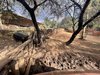
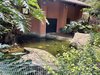
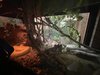
Picking up where we left off, getting off the boardwalk, and exiting the "Forest Floor" Section, you head into the Reptile House past the Pygmy Hippo Enclosure. Before entering the house an outdoor enclosure with a pool confronts you, This pool was once the summer home for the Zoo's West African Dwarf Crocodile, but now houses African Helmeted Turtle. Immediately left of the turtle pool is, the entrance to the Reptile house and a view over a separation paddock for the Pygmy Hippos.
Turtle Pool:

Pygmy Hippo Seperation Yard:

The Spice Route and Reptile House:
Picking up where we left off, getting off the boardwalk, and exiting the "Forest Floor" Section, you head into the Reptile House past the Pygmy Hippo Enclosure. Before entering the house an outdoor enclosure with a pool confronts you, This pool was once the summer home for the Zoo's West African Dwarf Crocodile, but now houses African Helmeted Turtle. Immediately left of the turtle pool is, the entrance to the Reptile house and a view over a separation paddock for the Pygmy Hippos.
Turtle Pool:
Pygmy Hippo Seperation Yard:
Attachments
Reptile House
The Reptile House is a large room, with a beautiful wooden roof and large open doors on three sides of the building. The building contains 9 Enclosures for 9 reptile species. Formerly, it focused on strictly African Herps, the introduction of a female Burmese Python broke that streak.
The archway that makes up the entrance to the building has two terrariums in each pillar, one for Puff Adder and another for Mole Snake.
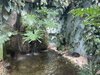
Like all of the other exhibits in this house, the enclosures are extremely natural-looking with a lot of foliage and natural elements.
On the Right side of the building another 4 terrariums for Jameson's Mamba, Blanding's Tree Snake, Forest Cobra, and Burmese Python can be found.
The Python Enclosure was formerly the winter exhibit for the West African Dwarf Crocodile.
On the left side of the building, there are 3 enclosures for Rinkhals, Ball Python, and West African Gaboon Viper.

Burmese Python Enclosure, formerly WA Dwarf Crocodile:

Gaboon Viper Exhibit, formerly home to Burmese Python:
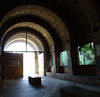
Exiting the Reptile house, the old 1970s entrance that is no longer in use is seen to the left, on your right, the Spice Route continues, and in front of you a large enclosure for Greater Flamingos and Lesser Flamingos.

The Reptile House is a large room, with a beautiful wooden roof and large open doors on three sides of the building. The building contains 9 Enclosures for 9 reptile species. Formerly, it focused on strictly African Herps, the introduction of a female Burmese Python broke that streak.
The archway that makes up the entrance to the building has two terrariums in each pillar, one for Puff Adder and another for Mole Snake.
Like all of the other exhibits in this house, the enclosures are extremely natural-looking with a lot of foliage and natural elements.
On the Right side of the building another 4 terrariums for Jameson's Mamba, Blanding's Tree Snake, Forest Cobra, and Burmese Python can be found.
The Python Enclosure was formerly the winter exhibit for the West African Dwarf Crocodile.
On the left side of the building, there are 3 enclosures for Rinkhals, Ball Python, and West African Gaboon Viper.
Burmese Python Enclosure, formerly WA Dwarf Crocodile:
Gaboon Viper Exhibit, formerly home to Burmese Python:
Exiting the Reptile house, the old 1970s entrance that is no longer in use is seen to the left, on your right, the Spice Route continues, and in front of you a large enclosure for Greater Flamingos and Lesser Flamingos.
Attachments
Continuing the Spice Route
The Spice Route is an area of the zoo dedicated to animals of Asian, North African, and Malagasy descent, With the idea that Spice traders would have encountered these animals on their travels those many years ago.
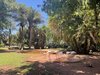
Turning Right from the Flamingo enclosure a large wetland stands to your left, the zoo in fact uses this to filter water, which is quite an interesting process. Going straight from there, the Wild Boar enclosure will be to your right. 7 animals arrived from East London Zoo in 2021 in exchange for a male Impala. On your left, is a large sprawling enclosure for 2 female Blackbuck and a herd of Water Buffalos.
Water Buffalo and Blackbuck:

Wild Boar Enclosure (Formerly home to Red River Hog)

The Spice Route is an area of the zoo dedicated to animals of Asian, North African, and Malagasy descent, With the idea that Spice traders would have encountered these animals on their travels those many years ago.
Turning Right from the Flamingo enclosure a large wetland stands to your left, the zoo in fact uses this to filter water, which is quite an interesting process. Going straight from there, the Wild Boar enclosure will be to your right. 7 animals arrived from East London Zoo in 2021 in exchange for a male Impala. On your left, is a large sprawling enclosure for 2 female Blackbuck and a herd of Water Buffalos.
Water Buffalo and Blackbuck:
Wild Boar Enclosure (Formerly home to Red River Hog)
Attachments

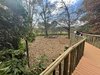
Continuing down straight, the Forest Floor Section will appear to your Right which provides a large view into the Sitatunga Exhibit which is large, lush sprawling with wet foliage and shared with a pair of male Grey Duikers, and the Scimitar Oryx Enclosure to your Left.
Sitatunga and Duiker Exhibit, the zoo only houses two female Sitatunga. (Could have been more... If you know you know...) :

Scimitar Oryx Yard, the zoo has kept and bred this species since the 60s and contributed often to rewilding efforts.
Sitatunga and Duiker Exhibit, the zoo only houses two female Sitatunga. (Could have been more... If you know you know...) :
Scimitar Oryx Yard, the zoo has kept and bred this species since the 60s and contributed often to rewilding efforts.
Attachments
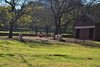
Moving further along the main path, you're confronted with two options, left toward the two more antelope enclosures or Right to the Malagasy area. We'll loop the antelope enclosures and backtrack to the Madagascar section.
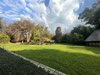
Two Antelope Enclosures, formerly holding Bontebok and Fallow Deer, have been incorporated more into the Spice Route theme over the years, with one now holding Arabian Oryx and the other Axis Deer. Two generic large grassy pens with lots of shade and space.
Arabian Oryx, the zoo first kept this species in the late 60s but these animals were phased out until in 1996, a bull and two cows were imported from Hai-Bar Wildlife Reserve in Israel.

Axis Deer, a male and several females.
Two Antelope Enclosures, formerly holding Bontebok and Fallow Deer, have been incorporated more into the Spice Route theme over the years, with one now holding Arabian Oryx and the other Axis Deer. Two generic large grassy pens with lots of shade and space.
Arabian Oryx, the zoo first kept this species in the late 60s but these animals were phased out until in 1996, a bull and two cows were imported from Hai-Bar Wildlife Reserve in Israel.
Axis Deer, a male and several females.
Attachments
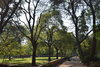
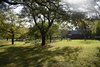
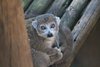
Now Backtracking to one of my favorite zones, the Malagasy and gibbon area, housing, Crowned lemurs, Mongoose Lemurs, Red-bellied Lemurs, Black-and-White Ruffed Lemurs as well as Lar Gibbons.
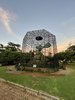
Though before reaching the main enclosures a large nearly century old-enclosure that houses Buff-cheeked Gibbons appears like a skyscraper up front.
Buff-cheeked Gibbon: The Zoo has had stunning success with this species amounting to two births in the last 5 years, one of which was this year. They currently have 1 female, two males, and an unsexed baby.

The Madagascar building opened in the early 2000s to replace the old bear grottos that formerly stood in its place. The building features top and bottom viewing for enclosure almost oversized for their inhabitants. Truly world-class.

The Zoo imported a pair of crowned Lemurs from the UK earlier this year.
Though before reaching the main enclosures a large nearly century old-enclosure that houses Buff-cheeked Gibbons appears like a skyscraper up front.
Buff-cheeked Gibbon: The Zoo has had stunning success with this species amounting to two births in the last 5 years, one of which was this year. They currently have 1 female, two males, and an unsexed baby.
The Madagascar building opened in the early 2000s to replace the old bear grottos that formerly stood in its place. The building features top and bottom viewing for enclosure almost oversized for their inhabitants. Truly world-class.
The Zoo imported a pair of crowned Lemurs from the UK earlier this year.
Attachments
Southern Safari
The Old Zoo
Johannesburg Zoos is over a century old, celebrating its 119th Anniversary in March of this year. As with all zoos originating from the Edwardian Era, or even further back, several old structures still exist and maintain use as modern zoo facilities. Joburg is especially good at maintaining History having developed the old Carnivore Grottos into exquisite Primate enclosures and the Old Pachyderm enclosures still remain with most of their intended inhabitants having never been of two bad a quality.
Old Pachyderm Half Circle
This "Original Zoo" portion takes the shape of a circle with the pachyderms on one half and primates on another.
In the past, this section was exclusively dedicated to pachyderms. However, things have changed, not only is pachyderms no longer a recognized term, but now it accommodates not only pachyderms but also various bird species.
Heading down the Stairs towards the African Elephant Enclosure a large open-pan view of the elephant enclosure is visible.

Here shown is the original Portion for the Elephants.
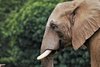
This Half-circle was split into 6 enclosures, for both African Rhinos, Hippos, and of course Elephants. Nowadays only Elephants, Hippos, and a few birds remain. With the arrival of 2 new elephants in 2018, The Rhino enclosure was incorporated into the Elephant Enclosure now functioning as one large exhibit. because of its size, several large trees and foliage have been maintained.

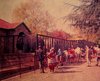
The creation of the Elephant Enclosure in the 1970s replaces this 1915 House. (Credit: Victor Hearn)

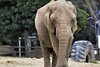
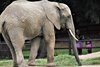
Lammie, the zoo's oldest female cow.

Mopane, a 23-year-old cow, arrived in 2018.

Ramadiba, the zoo's only bull.
Continuing straight next to the Elephant Enclosure you'll encounter the Sasol Aviary on your right, which will be covered in an upcoming post. For now, on your left, You are met with 3 Enclosures, One for a variety of waterfowl (Southern Screamer, Black Swan, Trumpeter Swan, Nene, and Spur-winged Goose.)
Next to this Aviary, are two enclosures for Common Hippopotamus. One of which, was formerly home to Capybara. After the male Hippo killed a mate, he was separated from the remaining female and moved to this exhibit. Directly adjacent to him is the female's Pool.
The Female's enclosure forms an L-shape with the male's exhibit situated in the nook.

The male's exhibit, formerly housing Capybara.

The Zoo's female Hippo.
Thanks for taking the time to read, next post we'll deep dive into the history of the other half of the Circle, notably Baboon Bend.
The Old Zoo
Johannesburg Zoos is over a century old, celebrating its 119th Anniversary in March of this year. As with all zoos originating from the Edwardian Era, or even further back, several old structures still exist and maintain use as modern zoo facilities. Joburg is especially good at maintaining History having developed the old Carnivore Grottos into exquisite Primate enclosures and the Old Pachyderm enclosures still remain with most of their intended inhabitants having never been of two bad a quality.
Old Pachyderm Half Circle
This "Original Zoo" portion takes the shape of a circle with the pachyderms on one half and primates on another.
In the past, this section was exclusively dedicated to pachyderms. However, things have changed, not only is pachyderms no longer a recognized term, but now it accommodates not only pachyderms but also various bird species.
Heading down the Stairs towards the African Elephant Enclosure a large open-pan view of the elephant enclosure is visible.
Here shown is the original Portion for the Elephants.
This Half-circle was split into 6 enclosures, for both African Rhinos, Hippos, and of course Elephants. Nowadays only Elephants, Hippos, and a few birds remain. With the arrival of 2 new elephants in 2018, The Rhino enclosure was incorporated into the Elephant Enclosure now functioning as one large exhibit. because of its size, several large trees and foliage have been maintained.
The creation of the Elephant Enclosure in the 1970s replaces this 1915 House. (Credit: Victor Hearn)
Lammie, the zoo's oldest female cow.
Mopane, a 23-year-old cow, arrived in 2018.
Ramadiba, the zoo's only bull.
Continuing straight next to the Elephant Enclosure you'll encounter the Sasol Aviary on your right, which will be covered in an upcoming post. For now, on your left, You are met with 3 Enclosures, One for a variety of waterfowl (Southern Screamer, Black Swan, Trumpeter Swan, Nene, and Spur-winged Goose.)
Next to this Aviary, are two enclosures for Common Hippopotamus. One of which, was formerly home to Capybara. After the male Hippo killed a mate, he was separated from the remaining female and moved to this exhibit. Directly adjacent to him is the female's Pool.
The Female's enclosure forms an L-shape with the male's exhibit situated in the nook.
The male's exhibit, formerly housing Capybara.
The Zoo's female Hippo.
Thanks for taking the time to read, next post we'll deep dive into the history of the other half of the Circle, notably Baboon Bend.
Attachments
Southern Safari
Baboon Bend and White Rhino Enclosure
Baboon Bend and the adjacent White Rhino enclosure certainly place as one of my favorite areas in the zoo. The Baboon used to be a row of classical Rocky Grottos for big cats, far too small for its inhabitants.
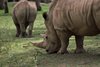
The White Rhino Enclosure is a relatively recent addition to the zoo. Having been constructed in the early 2000s originally to house a herd of Giant Eland. However, with the former Rhino yard being incorporated for elephants, the Rhinos were moved here in 2020.
(You can read more here about the history of Giant Eland at Joburg)

The Zoo is currently home to three White Rhinos - a male and two females.

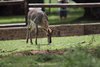
A favorite of mine, the Southern Mountain Reedbuck, which share their enclosure with the Rhinos.
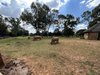
Comparison to then and now:
As stated above this is by now means an old enclosure, but it has undergone many changes since its establishment, especially in inhabitants. The Giant Eland are likely the animal missing form the zoo that I most sorely miss.

2011 (Image by @Nick@Amsterdam)

2023
Baboon Bend and White Rhino Enclosure
Baboon Bend and the adjacent White Rhino enclosure certainly place as one of my favorite areas in the zoo. The Baboon used to be a row of classical Rocky Grottos for big cats, far too small for its inhabitants.
The White Rhino Enclosure is a relatively recent addition to the zoo. Having been constructed in the early 2000s originally to house a herd of Giant Eland. However, with the former Rhino yard being incorporated for elephants, the Rhinos were moved here in 2020.
(You can read more here about the history of Giant Eland at Joburg)
The Zoo is currently home to three White Rhinos - a male and two females.
A favorite of mine, the Southern Mountain Reedbuck, which share their enclosure with the Rhinos.
Comparison to then and now:
As stated above this is by now means an old enclosure, but it has undergone many changes since its establishment, especially in inhabitants. The Giant Eland are likely the animal missing form the zoo that I most sorely miss.
2011 (Image by @Nick@Amsterdam)
2023
Attachments
Baboon Bend
Directly across from the path to the White Rhinos starts the Baboon Bend, the second half of the circle making up one of the original structures at the zoo.
The area starts off with a grassy enclosure housing Striped Hyenas, in its history it's housed many large carnivores ranging from Leopard to Jaguar.
Next up is a large open exhibit for Bat-eared Fox, it has housed Aardwolf previously.

A General View. On the left in the foreground is the enclosure for the Striped Hyenas and in the back, the Bat-eared Foxes.
Now here the fun begins, Baboon Bend's namesake.
The Zoo is currently home to 3 species of baboon and Mandrill, 2 of which are rare in captivity. Starting up, the largest of the three Baboon Enclosures for Chacma Baboon.

Joburg is the only WAZA-registered zoo to house this Chacma Baboon.
The Zoo has good success with breeding Mandrills.
That's it for today, next up I'll continue with the Baboon Bend
Directly across from the path to the White Rhinos starts the Baboon Bend, the second half of the circle making up one of the original structures at the zoo.
The area starts off with a grassy enclosure housing Striped Hyenas, in its history it's housed many large carnivores ranging from Leopard to Jaguar.
Next up is a large open exhibit for Bat-eared Fox, it has housed Aardwolf previously.
A General View. On the left in the foreground is the enclosure for the Striped Hyenas and in the back, the Bat-eared Foxes.
Now here the fun begins, Baboon Bend's namesake.
The Zoo is currently home to 3 species of baboon and Mandrill, 2 of which are rare in captivity. Starting up, the largest of the three Baboon Enclosures for Chacma Baboon.
Joburg is the only WAZA-registered zoo to house this Chacma Baboon.
The Zoo has good success with breeding Mandrills.
That's it for today, next up I'll continue with the Baboon Bend
Attachments
It's been a while since I've touched this thread but the zoo surely isn't over! To pick up where we left off, here is the rest of the Zoo's Baboon bend area 
Baboon Bend (Continued)
Walking past the enclosure for Chacma Baboon a typical, converted carnivore grotto meets your eye, in appearance it's very similar to the enclosure for the Chacmas but about half the size and a hundred times less lush the the already plant-lacking Chacma enclosure. Thus exhibit houses a small group of Hamadryas Baboons.

Until 2005, the current Hamadryas Baboon exhibit housed Siberian Tigers.
Next to the Hamadryas Baboons lies, what looks like a copy and paste enclosure for the zoo's Yellow Baboons. Yellow Baboons are a gem in captivity and make for a nice treat to any Zoo Nerd.

The Zoo has a small group of this very interesting and rare primate species.
Next to the Yellow Baboons, you will find the Mandrill enclosure which has been covered in a previous post. Next to that, one of my favourite enclosures in the whole park: The African leopard exhibit. In design it's very similar to the Chacma enclosure but far far more planted.


Although certain not the greatest in the world by any means, it is made up for by the Zoo's leopard, Forrest, who is extremely active, friendly and lively having been raised by humans. The enclosure housed Snow Leopard until 2011.
Baboon Bend (Continued)
Walking past the enclosure for Chacma Baboon a typical, converted carnivore grotto meets your eye, in appearance it's very similar to the enclosure for the Chacmas but about half the size and a hundred times less lush the the already plant-lacking Chacma enclosure. Thus exhibit houses a small group of Hamadryas Baboons.
Until 2005, the current Hamadryas Baboon exhibit housed Siberian Tigers.
Next to the Hamadryas Baboons lies, what looks like a copy and paste enclosure for the zoo's Yellow Baboons. Yellow Baboons are a gem in captivity and make for a nice treat to any Zoo Nerd.
The Zoo has a small group of this very interesting and rare primate species.
Next to the Yellow Baboons, you will find the Mandrill enclosure which has been covered in a previous post. Next to that, one of my favourite enclosures in the whole park: The African leopard exhibit. In design it's very similar to the Chacma enclosure but far far more planted.
Although certain not the greatest in the world by any means, it is made up for by the Zoo's leopard, Forrest, who is extremely active, friendly and lively having been raised by humans. The enclosure housed Snow Leopard until 2011.
Hello,
I will come to south africa this august and will try to visit 3 institutions : Johannesburg Zoo; Pretoria Zoo, and the Bothongo rhino and lion rerserve.
May some of you have some advice about those visits (visit time, which place I have to see ...) ?
Thank you so much
Johan
I will come to south africa this august and will try to visit 3 institutions : Johannesburg Zoo; Pretoria Zoo, and the Bothongo rhino and lion rerserve.
May some of you have some advice about those visits (visit time, which place I have to see ...) ?
Thank you so much
Johan

Jaguar_X
Active Member
Hi @JohanB67
Sorry for the very late reply, I actually wrote out a whole lot the other day, but lost it due to closing the site by accident.
You are planning on visiting three zoos with very different atmospheres...
Let's start at the beginning, please take into account that this is South Africa, a third-world country that doesn't have the fanciest or most impressive enclosures out there, and some are old and outdated, but in general animal care is at the utmost importance and even though some enclosures might be on the smaller size, the animals are not sickly or neglected.
Also please do not look at the Zootierliste holdings for any of these zoos and expect a complete or up to date list of their holdings, I will attach a google sheet that is 95% accurate and much more reliable than any other source out there...
Now that we have that out of the way let's start with a breakdown of each zoo.
Bothongo Lion & Rhino Park:
Johannesburg Zoo
Pretoria Zoo (South African National Zoological Gardens)
If you want another zoo or are thinking about visiting some place instead of these, I would recommend Monte Casino Bird Gardens, it is small but species rich and has an extremely good collection for South Africa, though as the name suggests it is mostly birds, but it also has a very impressive herp collection and a few mammals that aren't common in South African zoos.
Feel free to ask any follow-up questions or to ask for any clarifications.
(The sheet I was talking about at the start)
Kind Regards
Stian
Sorry for the very late reply, I actually wrote out a whole lot the other day, but lost it due to closing the site by accident.
You are planning on visiting three zoos with very different atmospheres...
Let's start at the beginning, please take into account that this is South Africa, a third-world country that doesn't have the fanciest or most impressive enclosures out there, and some are old and outdated, but in general animal care is at the utmost importance and even though some enclosures might be on the smaller size, the animals are not sickly or neglected.
Also please do not look at the Zootierliste holdings for any of these zoos and expect a complete or up to date list of their holdings, I will attach a google sheet that is 95% accurate and much more reliable than any other source out there...
Now that we have that out of the way let's start with a breakdown of each zoo.
Bothongo Lion & Rhino Park:
A rather strange experience, they have a fairly good collection, boasting multiple rare species both locally and internationally. This includes Suni, Klipspringer, Southern Aardwolf, Mainland Clouded Leopard and a few more.
It is part safari park and can only be accessed via vehicle (private and tours, but I am unsure how the latter works)
The Safari park includes quite a lot of species and you can see many native and exotic hoovestock species here. It also has 4 drive-thru camps that house: Lion, "White" Lion, African Wild Dog and South African Cheetah.
The zoo part is split in 3, one at the back of the safari park and one at the entrance and one across the road from the entrance, there is however no extra cost to visit any of these so don't mis out.
The one at the back of the park houses most of the exotic animals.
There are many other tourist locations in the area so don't be scared to spend a whole day in the area, the zoo shouldn't take a whole day.
The Bothongo Lion & Rhino Park also has a cave on the premises that is definitely worth the visit and a closed part of the cave has been reopened this year again to visitors. The cave visit however is an additional cost.
It is part safari park and can only be accessed via vehicle (private and tours, but I am unsure how the latter works)
The Safari park includes quite a lot of species and you can see many native and exotic hoovestock species here. It also has 4 drive-thru camps that house: Lion, "White" Lion, African Wild Dog and South African Cheetah.
The zoo part is split in 3, one at the back of the safari park and one at the entrance and one across the road from the entrance, there is however no extra cost to visit any of these so don't mis out.
The one at the back of the park houses most of the exotic animals.
There are many other tourist locations in the area so don't be scared to spend a whole day in the area, the zoo shouldn't take a whole day.
The Bothongo Lion & Rhino Park also has a cave on the premises that is definitely worth the visit and a closed part of the cave has been reopened this year again to visitors. The cave visit however is an additional cost.
Johannesburg Zoo
Probably (one of the) best kept and most species rich large zoo in Africa at the moment.
The zoo has an impressive collection. Including a freshwater aquarium!
The zoo visit will definitely take up most of the day and can get quite busy, so I recommend going early and preferably not during weekends, but even so once you are in the zoo you really loose track of all the people due to its sheer size.
It is currently the only zoo in South Africa with elephant in a zoo setting and has many species unique to the zoo (for South Africa at least).
The zoo has an impressive collection. Including a freshwater aquarium!
The zoo visit will definitely take up most of the day and can get quite busy, so I recommend going early and preferably not during weekends, but even so once you are in the zoo you really loose track of all the people due to its sheer size.
It is currently the only zoo in South Africa with elephant in a zoo setting and has many species unique to the zoo (for South Africa at least).
Pretoria Zoo (South African National Zoological Gardens)
One of the largest zoos property size wise in the world. Please wear comfortable shoes and set out a whole day if you want to see everything the zoo has to offer.
It is the second oldest zoo in South Africa and this can be seen in some of the infrastructure, especially in the surrounding areas... it is situated in an old part of Pretoria and thus it is quite a bad area.The zoo does have secure parking though and inside the zoo grounds it is perfectly safe, and I have never had or heard of any problems.
The collection has fluctuated over the years and is currently not the best, but still good. The zoo has an aquarium housing both freshwater and saltwater species. It also has a very impressive reptile collection and also houses quite a few species seen nowhere else in South Africa.
Luckily the zoo is currently being renovated at a large scale, but this sadly also means a few areas are currently not really accessible.
Both the giant walk-through aviary and cable-car are currently not operating or dilapidated.
Stormy Bay, housing Cape Fur Seal and South American Fur Seal is currently also not open to the public, but maybe it might be open by the time you visit, it does seem rather complete, at least the outdoors portion.
All the birds are once again on display and all the primates are as of typing this, still on display.
It is the second oldest zoo in South Africa and this can be seen in some of the infrastructure, especially in the surrounding areas... it is situated in an old part of Pretoria and thus it is quite a bad area.The zoo does have secure parking though and inside the zoo grounds it is perfectly safe, and I have never had or heard of any problems.
The collection has fluctuated over the years and is currently not the best, but still good. The zoo has an aquarium housing both freshwater and saltwater species. It also has a very impressive reptile collection and also houses quite a few species seen nowhere else in South Africa.
Luckily the zoo is currently being renovated at a large scale, but this sadly also means a few areas are currently not really accessible.
Both the giant walk-through aviary and cable-car are currently not operating or dilapidated.
Stormy Bay, housing Cape Fur Seal and South American Fur Seal is currently also not open to the public, but maybe it might be open by the time you visit, it does seem rather complete, at least the outdoors portion.
All the birds are once again on display and all the primates are as of typing this, still on display.
Please visit as early as possible and plan your route if you want to not worry about time, rather have too much time on your hands than not enough, I recommend starting by visiting the top part of the zoo (across the river) as it is a steep climb to get to the very top (though it is currently rather overgrown, but the views are definitely worth the visit in my opinion). The top area also houses many hoovestock yards which are large and this causes the paths to be long and also generally rather sunny, which is not what you want when you are tired of walking by the end of the day.
The reptile collection is probably the best of any zoo in South Africa (some Reptile Parks probably have some better collections though).
The reptile collection is probably the best of any zoo in South Africa (some Reptile Parks probably have some better collections though).
If you want another zoo or are thinking about visiting some place instead of these, I would recommend Monte Casino Bird Gardens, it is small but species rich and has an extremely good collection for South Africa, though as the name suggests it is mostly birds, but it also has a very impressive herp collection and a few mammals that aren't common in South African zoos.
Feel free to ask any follow-up questions or to ask for any clarifications.
(The sheet I was talking about at the start)
Kind Regards
Stian
Thank you so much Stian,
My problem is that I will miss some time because I only have the 10th and 11th august full day and half day on the 12th because I have to drive to Limpopo.
My most target species in Pretoria are the bushpig (Potamochoerus larvus) and the steenbok (maybe the african groshack wrotten in your list), and the Suni at Bothongo and at Johanneburg zoo, the baboons, some antelopes and the Cap otter but I don't find them on your sheet.
So I do not know which zoo I have to give up and visit on half a day. I was first thinking on Pretoria zoo but with your advice, I hesitate
My problem is that I will miss some time because I only have the 10th and 11th august full day and half day on the 12th because I have to drive to Limpopo.
My most target species in Pretoria are the bushpig (Potamochoerus larvus) and the steenbok (maybe the african groshack wrotten in your list), and the Suni at Bothongo and at Johanneburg zoo, the baboons, some antelopes and the Cap otter but I don't find them on your sheet.
So I do not know which zoo I have to give up and visit on half a day. I was first thinking on Pretoria zoo but with your advice, I hesitate

Thank you so much Stian,
My problem is that I will miss some time because I only have the 10th and 11th august full day and half day on the 12th because I have to drive to Limpopo.
My most target species in Pretoria are the bushpig (Potamochoerus larvus) and the steenbok (maybe the african groshack wrotten in your list), and the Suni at Bothongo and at Johanneburg zoo, the baboons, some antelopes and the Cap otter but I don't find them on your sheet.
So I do not know which zoo I have to give up and visit on half a day. I was first thinking on Pretoria zoo but with your advice, I hesitate
Both the zoos will take 5-6+ hours, but Bothongo can definitely be fit into half a day. I want to say I did it in under 3 hours. I could've spent more time in the large drive-thru portion as I was rushed on time, but even still I think I saw the majority of species that the drive-thru had to offer.
All 3 places were pretty much empty when I went back in November. The zoos are quite large to cover on foot, but golf carts can be rented at both if desired. We rented one for Pretoria and it honestly felt like I could walk faster than them (this wasn't true as when I got out and my wife drove ahead I couldn't quite keep up at a walk, but they were pretty slow). Personally, I found it annoying to have to get in and out of the cart constantly as I am someone that takes photos of every single exhibit, but if that isn't something you will be looking to do it could definitely speed up you pace.
My only other piece of advice or heads up is for Pretoria. At the back of the zoo, there are steps that take you up and around the mountain ungulate habitats and also go up above the exhibits for the lions and tigers. It is quite a steep hike up and unless you're a completionist like me (i.e. need to see every possible corner/angle of the zoo) it isn't really worth it. There are a couple of aviaries up there all with Southern Ground Hornbills in them that you will miss out on by not going and it will give you a different look at the tiger, lion, and goat habitats, along with a nice look at the city, but overall there is not much up there that really makes the effort work it. Even with the Ground Hornbills, you will see them in at least one, if not 2-3 other places in the zoo. EDIT to add that there is a cable car that can take you up there, but it was not running on my visit and I'm not sure if it is operable.
Nice and thank you for those advice, so I may spend the 2 full days in both Joha and Pret zoo and the half day in Bothongo. As I am also one who want to photography most species and all enclosures.
May I ask you if the suni were easy to see in the walking part of the park ? Were they mooving or asleep ?
Thank you
May I ask you if the suni were easy to see in the walking part of the park ? Were they mooving or asleep ?
Thank you
Nice and thank you for those advice, so I may spend the 2 full days in both Joha and Pret zoo and the half day in Bothongo. As I am also one who want to photography most species and all enclosures.
May I ask you if the suni were easy to see in the walking part of the park ? Were they mooving or asleep ?
Thank you
The Suni were quite easy to spot and were active when I was there, but I was there in the late afternoon. They're exhibit is viewed essentially from the outside of the "walking" portion of Bothongo to the left of the restaurant, if I remember correctly.
FYI I'm not sure if Bothongo still has the Brown Hyena as I did not see them on my visit and they're exhibit was occupied by Aardwolf instead, which is probably just as equally unusual depending on where you are from.