zooboy28
Well-Known Member
Perth Zoo has one: Perth Zoo's first dragons
And so just one eludes us! Where and when will it turn up?
Perth Zoo has one: Perth Zoo's first dragons


The wikipedia entry has two potential maximum longevities - 30 years and 50 years, although they might refer to wild and captive individuals possibly.
As for introducing females to this male - how many do you risk? He might kill the next ten females introduced to him before choosing a mate. Is ther any way to reduce this risk? Introduce females larger than him, or give the female means to escape him?
Thursday 14th March 2013
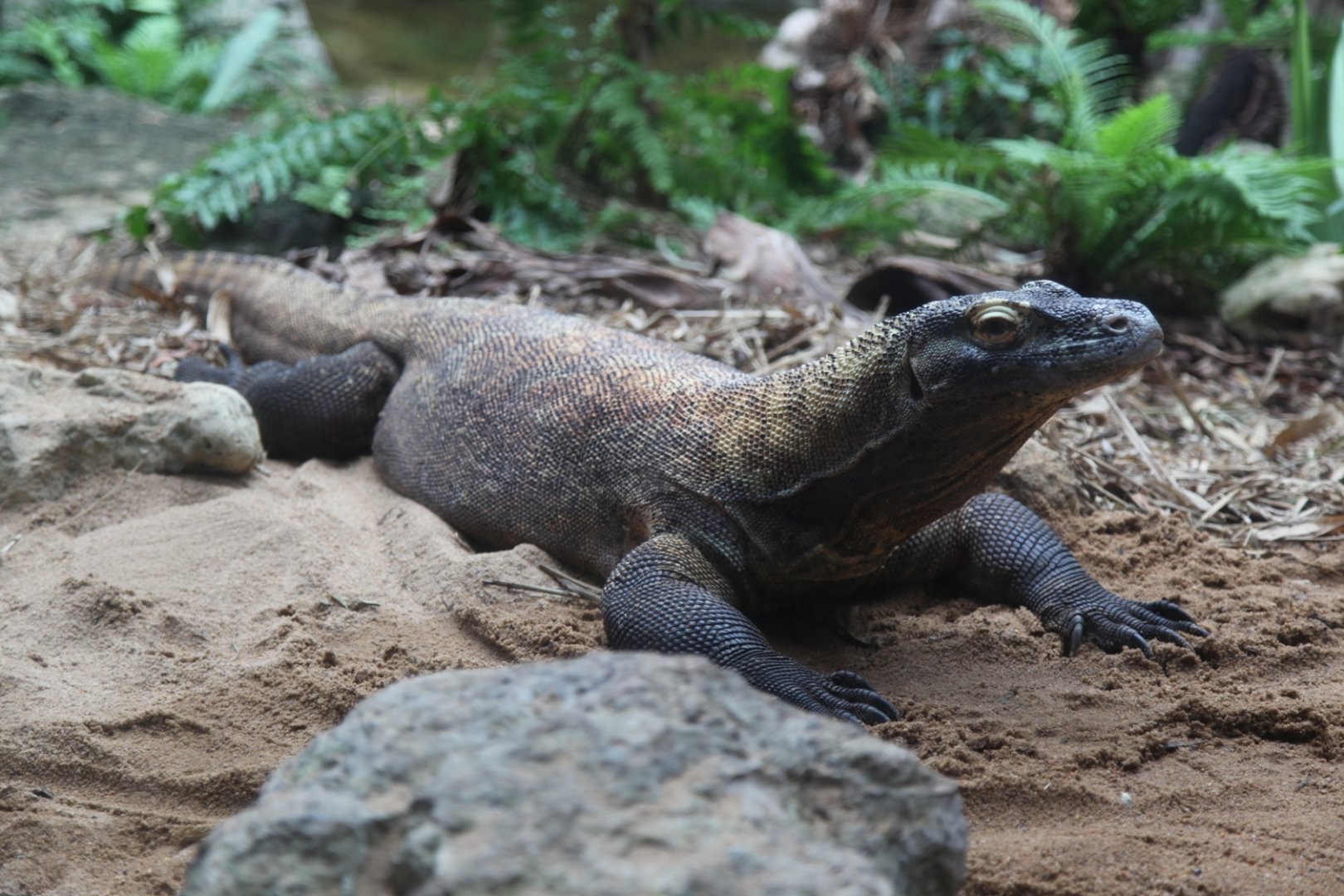
Recently, Taronga Zoo welcomed two 16 month old Komodo Dragons from Los Angeles Zoo. The juveniles joined Komodo Dragon Tuka at Reptile World. Tuka has been a Zoo visitor favourite for over 20 years now and the two juveniles can be seen by visitors in the exhibit next door to him.
The intention is that this pair will be on display together, however in the wild fights over food are common. While this won’t be a problem while they are small, when they reach their adult weight of up to 90 kilos and potentially three meters in length, these brawls can be lethal.
Keepers have begun using red point lasers to signal meal time. This training method has been used in a number of zoos and is based on the Komodo’s ability to distinguish different colours and targets.
The aim is to train the dragons to associate the red light with dinner and move to separate areas of the exhibit to devour their meals. Eating separately will reduce the likelihood of squabbles over food.
The Komodo Dragon is the largest and strongest lizard species in the world. However, this species is considered to be an endangered with an estimated population of only 3,000.

Have just been reading this thread, and have a few questions:
It states Cairns Tropical Zoo were sent two Komodo dragons, are these Kozzie (M) and Indah (F)? I'm confused as they arrived separately. Now Cairns Tropical Zoo has closed, where were they dispersed to?
Is Australia Zoo's male Komodo dragon also part of this clutch?
Does anyone know the names of Taronga Zoo's pair?
only the male was sent to Cairns at that time. The female didn't arrive until a year later (but I don't know where she came from). She is now at Australia Zoo.Have just been reading this thread, and have a few questions:
It states Cairns Tropical Zoo were sent two Komodo dragons, are these Kozzie (M) and Indah (F)? I'm confused as they arrived separately. Now Cairns Tropical Zoo has closed, where were they dispersed to?
Is Australia Zoo's male Komodo dragon also part of this clutch?
Does anyone know the names of Taronga Zoo's pair?
yes, NZ can now import Komodo dragons. Auckland is likely to do so at some point.Zoofan15 said:I gather that Komodos are relatively easy to import into Australia? Do you know if New Zealand can import them from Australia, or the rest of the world? If so, it'd be good to see the New Zealand Zoos exhibiting this species.
it's possible. I don't think it is likely they have been exported. They may have gone to somewhere else in Australia though (e.g. back to Wyndham, although that place closed down a couple of years ago now). I don't know one way or another.Zoofan15 said:So we can assume the 4 out of the 5 original Australia Zoo Komodos have passed on, given that they don't appear to have been sent anywhere else. Maybe the two females were killed during introductions to males, as I hear this is unfortuantely quite common, and has happened at Taronga.
there's a book called "The Keepers And The Kept" about Taronga, and there's some info in there about the dragons. The female (only one is mentioned) was injured by the male and she died a year later. "The female suffered further injury, from which she never fully recovered, and died just over a year later."Zoofan15 said:I was reading somewhere that Tuka almost killed his second mate twice and it was reccomended that no further introductions took place. A change of management meant this decision was overturned or ignored and the third encounter was fatal for the female. Another source referred to the second mate arriving after the 'premature death' of his first mate. It almost implied she died of reasons unrelated to a failed introduction. Can anyone confirm either way, or provide details on any of these females?
offspring produced parthenogenetically only receive genes from the mother, so it isn't the best idea to use it as a breeding technique (the babies aren't clones of her but they only get half the genes they would from a normal pairing, so they are not exactly diverse). Also in Komodo dragons, the eggs which are produced through parthenogenesis all hatch out as males due to the way their sex chromosomes work.I've heard of female Komodo dragons reproducing asexually. I'm assuming this rarely happens otherwise they wouldn't risk male-female introductions?
offspring produced parthenogenetically only receive genes from the mother, so it isn't the best idea to use it as a breeding technique (the babies aren't clones of her but they only get half the genes they would from a normal pairing, so they are not exactly diverse). Also in Komodo dragons, the eggs which are produced through parthenogenesis all hatch out as males due to the way their sex chromosomes work.
both Chester and London had females which produced eggs this way in 2006.How interesting, I was wondering if the recent import of juveniles was from an asexual breeding situation, but it obviously wasn't if only males are produced.
There was a high profile zoo that had such an event recently, but I can't remember which one...
Edit: It was Chester Zoo in 2006
Female Komodo Dragon Has Virgin Births