Knowsley Safari Park Knowsley Safari Park 2021

BillBoy80

Well-Known Member
5+ year member
{Note from mods - this thread continues from here: Knowsley Safari Park 2020 [Knowsley Safari Park]}


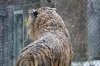
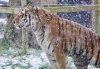
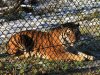
A male tiger Miron arrived at Knowsley a few days ago from Copenhagen Zoo (born at Moscow Zoo in 2014). They plan to introduce him to Sinda over the coming weeks.

He apparently weighs in at 220kg, which makes him considerably larger than Kuzma (190kg) who visited last year (from Banham) who was introduced to the other Knowsley female Bira. Unfortunately that pairing did not result in successful breeding 65031F80-4678-4402-A036-853CD0AD2C8D.jpeg

Apparently he’s already been demonstrating that he is quite a character. There was an unfortunate incident with him back in 2018 which made the news here in the UK Tiger killed by mate in front of visitors at Copenhagen Zoo | Daily Mail Online
 

Attachments
  • 65031F80-4678-4402-A036-853CD0AD2C8D.jpeg
    65031F80-4678-4402-A036-853CD0AD2C8D.jpeg
    333.4 KB · Views: 66
Last edited by a moderator:

Miron arrived this week at Knowsley Safari park from Copenhagen Zoo as part of the European Breeding programme. He is an Amur (Siberian) tiger who was born in Moscow in 2014 weighing in at 220kg (34 stone)

He is clearly a real character and has arrived on Merseyside to unusually snowy conditions for these parts. He will be gradually introduced to Sinda one of the parks sister tigers (born in April 2008 at Port Lympne).

In 2020 the park had male Kuzma on loan from Banham Zoo but unfortunately the breeding programme with Sinda’s sister Bira did not prove to be successful.

670BBAD8-4BCB-468F-BF8F-3B5F302BE790.jpeg A7E22EC8-4047-4FF0-8365-B8E022A02477.jpeg 25129720-C05C-4B1B-BBAA-F112B03D1EFA.jpeg 780F39D7-F5BF-4F99-873A-583EC5DDB44A.jpeg CC65F39F-40C2-4E98-9002-83675703BBD5.jpeg 0E2BEDF0-35F9-45FE-B5B8-C943019A3F02.jpeg 199D2E1E-C10A-4E45-ADCA-A793E63F939F.jpeg E2DE74E5-8FF5-4481-A916-4AB64D2F726E.jpeg 4A3D4C9A-F833-498D-A47E-ED2DE255FA01.jpeg 208D3EA1-D4FB-4522-9F3D-8E24345537AC.jpeg
 

Attachments

  • 670BBAD8-4BCB-468F-BF8F-3B5F302BE790.jpeg
    670BBAD8-4BCB-468F-BF8F-3B5F302BE790.jpeg
    177.6 KB · Views: 62
  • A7E22EC8-4047-4FF0-8365-B8E022A02477.jpeg
    A7E22EC8-4047-4FF0-8365-B8E022A02477.jpeg
    253.1 KB · Views: 67
  • 25129720-C05C-4B1B-BBAA-F112B03D1EFA.jpeg
    25129720-C05C-4B1B-BBAA-F112B03D1EFA.jpeg
    165.4 KB · Views: 63
  • 780F39D7-F5BF-4F99-873A-583EC5DDB44A.jpeg
    780F39D7-F5BF-4F99-873A-583EC5DDB44A.jpeg
    164.4 KB · Views: 66
  • CC65F39F-40C2-4E98-9002-83675703BBD5.jpeg
    CC65F39F-40C2-4E98-9002-83675703BBD5.jpeg
    191.4 KB · Views: 66
  • 0E2BEDF0-35F9-45FE-B5B8-C943019A3F02.jpeg
    0E2BEDF0-35F9-45FE-B5B8-C943019A3F02.jpeg
    211.5 KB · Views: 68
  • 199D2E1E-C10A-4E45-ADCA-A793E63F939F.jpeg
    199D2E1E-C10A-4E45-ADCA-A793E63F939F.jpeg
    175.9 KB · Views: 69
  • E2DE74E5-8FF5-4481-A916-4AB64D2F726E.jpeg
    E2DE74E5-8FF5-4481-A916-4AB64D2F726E.jpeg
    171.6 KB · Views: 64
  • 4A3D4C9A-F833-498D-A47E-ED2DE255FA01.jpeg
    4A3D4C9A-F833-498D-A47E-ED2DE255FA01.jpeg
    156.4 KB · Views: 65
  • 208D3EA1-D4FB-4522-9F3D-8E24345537AC.jpeg
    208D3EA1-D4FB-4522-9F3D-8E24345537AC.jpeg
    231.5 KB · Views: 65
Last edited:
nice photos Billboy80. Very apt for this time of year with this beast.

agree with the Pertinax comment also, its certainly one for the keepers to keep an eye on!! I'm sure they have plans in place as best they can to deal with a 30 stone chap.
 
Something I haven't seen mentioned elsewhere on the forum that isn't entirely related to the safari park but is taking place on the Knowsley estate and I did see mentioned today on the safari park's Facebook page.

A new project called Reclaiming Reds has been created; the plan currently involves controlling grey squirrels with a combination of experimental fertility control and culling - killed squirrels will provide supplementary food to the carnivores in the safari park.

Once the grey squirrel population is reduced, the project will investigate the possibility of returning red squirrels to the Knowsley estate, an area where they were last recorded in 2016.

More information can be found on the website below (although it is still in its early stages, there is still some detail on the FAQs page):
Reclaiming Reds – Knowsley – A place where red squirrels can thrive
 
Once the grey squirrel population is reduced, the project will investigate the possibility of returning red squirrels to the Knowsley estate, an area where they were last recorded in 2016.

This seems like a very recent date for Red squirrels in the area. Perhaps they have spread inland or a wanderer from the Lytham St Annes area?
 
This seems like a very recent date for Red squirrels in the area. Perhaps they have spread inland or a wanderer from the Lytham St Annes area?

There were regular red squirrels at my in laws garden up until approximately 2016, (give or take a year) they live right at the mouth of the river Mersey, (Liverpool side) not too far from a place called Formby, which has a red squirrel reserve in some pine woodland. The numbers here to have reduced dramatically over time. About 20 years ago I could spend a few minutes in these woods and see red squirrels, last time I visited, I walked around 3 hours or so and saw nothing. the small areas in NW England where the red squirrels once thrived has fragmented and disappeared more and more with a direct increase in the grey squirrel population and areas they thrive.

As for KSP having red squirrels on their grounds, I recall seeing one only once, but admit I was never looking for them and I have spent plenty time there since 2006.


As for reintroductions of red squirrels, the perfect place to do this in my opinion is the Isle of Man. They have no grey squirrel population at all, plenty of woodland. However, it’s up to Isle of Man government, as never have they had squirrels on their island before. However introducing something new is always potentially introducing some risk.
 
they live right at the mouth of the river Mersey, (Liverpool side) not too far from a place called Formby, which has a red squirrel reserve in some pine woodland. The numbers here to have reduced dramatically over time. About 20 years ago I could spend a few minutes in these woods and see red squirrels, last time I visited, I walked around 3 hours or so and saw nothing.
Formby was where I meant when I said Lytham St Annes. I hadn't realised that isolated Red colony was in decline. Previously it was flourishing though I have heard it stated this population is actually of the continental race, descended from squirrels that were introduced in the early half of 20th century after being acquired as pets, but I have never seen them so can't comment further.

I think an introduction in an area like Knowsley even after removing Grey squirrels may not work longterm. Greys will return- unless there is a natural geographic barrier- either water or very unsuitable habitat in between(as at Formby) to stop them. Many years ago about a dozen Reds were released in Regents Park in London -from within the zoo I think as an experiment- they were okay for a while but did not last.
 
Last edited:
I have heard it stated this population is actually of the continental race, descended from squirrels that were introduced in the early half of 20th century after being acquired as pets, but I have never seen them so can't comment further.

I think an introduction in an area like Knowsley even after removing Grey squirrels may not work longterm. Greys will return- unless there is a natural geographic barrier- either water or very unsuitable habitat in between(as at Formby) to stop them. Many years ago about a dozen Reds were released in Regents Park in London -from within the zoo I think as an experiment- they were okay for a while but did not last.


What you say about some red squirrels in this area as above I have never heard before, it is very interesting. I would really like to know what you mean about not seeing them, could you possibly identify these from 'wild ones'. I say this because some of the ones I have seen in the In Laws garden have had a white chest patch, which I thought was quite unusual as I have never seen this over the years before, is this typical of these possibly? Also, in addition it's difficult to say just viewing them, but I am inclined to think the ones from this Liverpool area are slightly smaller than those from the Formby reserve area.

Also, totally agree what you say, there is no point whatsoever reintroducing red squirrels around here, or probably anywhere, as until the grey population is removed they will always die out unfortunately.
 
I would really like to know what you mean about not seeing them, could you possibly identify these from 'wild ones'. I say this because some of the ones I have seen in the In Laws garden have had a white chest patch, which I thought was quite unusual as I have never seen this over the years before, is this typical of these possibly?

A white Chest patch is typical for all Red Squirrels- its actually the whole underside and chest which is white.

The main differences between the Continental and British races of the European Red squirrel are as follows;

1. Continental is somewhat larger.(doesn't help if nothing to compare with)

2. Continental is a darker red (it has seperate brown and black colour phases too in some area)

3. British race(uniquely) has a pale whitish-coloured tail and ear tufts in spring/summer. Known as 'bleaching' it doesn't occur in continental races.

No 3 is probably the easiest method of identifying which race any individual squirrel belongs too, but only if you can clearly see the tail and ear tuft colour in summer.
 
2. Continental is a darker red (it has seperate brown and black colour phases too in some area).

"Continental" red squirrels come indeed in several color morps. Among red ones, different tones can be found starting from orange-red so this alone should not be used to differentiate from the UK race.

Just bit of an info. Czech rescue station for orphaned young squirrels accepted last year 83 animals coming from all parts of the country. Color mix was as following: black 37, bright red 18, brownish-red 11, black with red line around belly 10, mahagon 4, brown 3.
 
I would also add that continental red squirrels were introduced to the UK in the past, so I cannot see how they should be differentiated.
 
I would also add that continental red squirrels were introduced to the UK in the past, so I cannot see how they should be differentiated.
I watched a video of the Formby Reds. But cannot find further evidence of origin as yet.
 
How long ago is 'the past'? that's quite useful to know.
I cannot recall where I had originally seen this (it was years ago) but I did find this:
https://www.animalaid.org.uk/wp-content/uploads/2017/02/historygreysquirrels.pdf
'in 1793 Scandinavian Reds were brought in to save the species'
Also this one:
Red squirrels decline
'In the last 150 years for this reason red squirrels had to be introduced in various areas in the UK from the continent – mostly from Sweden and central Europe' and 'that the vast majority of red squirrel population currently living in the UK are descendants of squirrels recently introduced from Scandinavia'
Basically the red population was so low that continental animals were imported, even after the greys were in the country. So in my mind they aren't a distinct subspecies.
 
There has just been a live Q&A on Facebook regarding their Red squirrel project which was very informative. Mainly asking for people to join in recording their sightings around the local areas.
There is the possibility that in future Red squirrels can be introduced to the Knowsley estate but nothing is guaranteed atm. Very interesting and worth a watch if possible
 
Yesterday on their social media, Knowsley posted a picture of an enclosure undergoing renovation. More news will be "shared soon". Looks like its on the foot safari but not 100%, hopefully home for a new arrival.
 
Yesterday on their social media, Knowsley posted a picture of an enclosure undergoing renovation. More news will be "shared soon". Looks like its on the foot safari but not 100%, hopefully home for a new arrival.
I think it will likely just been the Bush Dogs returning as the notices have suggested they have been temporarily located out on the Safari Drive whilst construction is taking place.
 
I think it will likely just been the Bush Dogs returning as the notices have suggested they have been temporarily located out on the Safari Drive whilst construction is taking place.

Did their enclosure need revamping? I haven't been for 4 years
 
Back
Top