Labenne Zoo Labenne Zoo News

Went there in spring,please find below a non-exhaustive list of species :

Mammals (wild species only) :
Variegated lemur
Mayotte brown lemur
Ring-tailed lemur
Common fallow deer
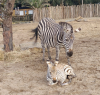
Grant's zebra
Timber wolf
Eurasian lynx
Meerkat
Yellow mongoose
Patagonian mara
Red-necked wallaby
Serval
Porcupine

Birds
Blue crane
Demoiselle crane
Sarus crane
Brolga crane
White-naped crane
Siberian crane
Red-crowned crane
Sandhill crane
Western black-crowned crane
Southern grey-crowned crane
Wattled crane
Black-necked crane
Abdim's Stork
Marabou
Saddle-billed stork (2,1)
Scarlet ibis
Buff-necked ibis
Chilean flamingo
Galah
Salmon-crested cockatoo
Green-winged macaw
Blue-and-yellow macaw
turquoise-fronted amazon
Black-headed parrot
Blue-headed parrot
Sun parakeet
Common emu
Green peafowl
Papuan hornbill
Palawan hornbill (present in backstage, planned for 2023)
Silvery-cheeked hornbill
Southern ground hornbill
Black-casqued hornbill
Red shoveler
Ringed teal
White-headed duck
Spectacled owl
Verreaux's eagle
Temminck's tragopan
Western crowned-pigeon
Blue-headed quail-dove
Common hill myna
Chestnut-eared aracari (present in backstage, planned for 2024)
 
I looove that bird list, it's amazing how much this place is improving collection and exhibit-wise. I'd get some more interesting mammals as well though.
I might go over to Labenne the next weekend.
 
I recall I was thinking it would be cool not long ago if some zoo in Europe could import the real Jabiru [Jabiru mycteria] - but I guess for now zoos of Europe will have to make do merely with jabiru-imposters of Africa and Australia..

In French, the word Jabiru is used for several species of storks, including the African Saddle-billed Stork, that is kept and bred in Labenne Zoo, and appears on the logo of the snack.
There aren't any Asian nor Australian Black-necked Storks ("Jabiru d'Asie") in European zoos yet. The first used to be quite common in the past, but the latter has been really rare in European zoos, according to Zootierliste it has been only reported from 2 zoos and not after the 1920s.
 
Same for Spanish, the saddle-billed stork is a jabiru!
After several months of wanting but not being able to get to Labenne, I finally made it. I made a four-hour visit this morning, and I really enjoyed myself since this park is very nostalgic to me, a lot has changed since my last visit (More than 10 years ago) and I've really enjoyed all of the upgrades the park has undergone through the years.
I'll try and type down a proper review and upload the pictures to the Gallery tomorrow. Saw all my objective species except for the Black-necked crane and Temminck's tragopan. The tragopans were signed but there was no trace of the cranes, which was one of the species I was looking forward to the most.
 
Labenne is a park that has changed a lot. Back when it was still called Oceafaunia, all you got were a bunch of sandy paddocks with your run-of-the-mill small zoo species lineup and some pinioned parrots confined to their perches. This has drastically changed since, with the bigger chunk of the zoo having completely shifted gears (I’d go as far as to say that I only remember five exhibits still being the same as back in the days, with the rest having been transformed into entirely different exhibits or getting considerable revamps).
I left the park thinking positively about the entire thing, most new developments have been pretty good, and parts I expected to enjoy less (From pictures, the wolf exhibit seems worse than it was) were not as bad as I expected. The crane/stork aviaries are nothing special but they work properly and I expected them to be smaller, the new African area looks good and the exhibits seem very adequate, the walkthrough aviary is also very cool, they have brought in some very good species,... My biggest complaint would be the new lynx exhibit, it’s pretty nice for the animal but it just looks ugly and doesn’t fit the park in my opinion. In general, glad to see so many changes, a far cry from what the zoo used to be. There are some remnants of those times, such as the fallow deer paddock with almost broken fencing, that I hope will be taken over by newer developments.
Talking about new developments, they seem to be building new staff facilities near the marabou aviary. There is also an indoor house similar to what the lemurs and meerkats have next to said aviary, so maybe a new exhibit is on it’s way over at that area? The emu paddock seems to be also being worked on, it was empty on my visit with one emu in with the fallow deer and two others in the old serval enclosure at the entrance of the zoo. I hope they build something new in this exhibit, the new serval enclosure is way better suited for the animals size-wise but it’s still usable space that could house something (I was thinking an African aviary with dik-diks would really fit the zoo, or something of the style).
I will definitely go back to the zoo whenever they display anything new (Those Palawan hornbills sound very enticing) or they build new developments, it’s close to the place where I live so I have to take advantage of it.
 
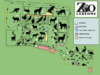
Since the zoo doesn't have a public map, I've decided to illustrate it based on my visit back in June. It's based on an old schematic map I found taped within the barn area of the sheep and goats at the zoo, but I can't find it anywhere on the internet. This is basically a better way of visualizing the zoo, which accompanied by the pictures I posted in the gallery can give you a pretty decent idea of what Labenne is.
-
Zoo de Labenne Map.png

Map key:
  1. Mediterranean spur-thighed tortoise (Testudo graeca graeca)
  2. Southern screamer (Chauna torquata), Magpie goose (Anseranas semipalmata), Ringed teal (Callonetta leucophrys), Red shoveler (Spatula platalea), Chiloe wigeon (Mareca sibilatrix), White-faced whistling duck (Dendrocygna viduata), Harlequin duck (Histrionicus histrionicus), White-headed duck (Oxyura leucocephala), Great white pelican (Pelecanus onocrotalus), Roseate spoonbill (Platalea ajaja), Scarlet ibis (Eudocimus ruber), Buff-necked ibis (Theristicus caudatus), Eurasian crane (Grus grus grus), Demoiselle crane (Anthropoides virgo) and Chilean flamingo (Phoenicopterus chilensis)
  3. Spectacled owl (Pulsatrix perspicillata)
  4. Alpaca (Vicugna pacos)
  5. Northern lynx (Lynx lynx lynx)
  6. Common fallow deer (Dama dama)
  7. Verreaux's eagle (Aquila verreauxii)
  8. Mackenzie valley wolf (Canis lupus occidentalis)
  9. Common emu (Dromaius novaehollandiae)
  10. Bennett's wallaby (Notamacropus rufogriseus) and Patagonian mara (Dolichotis patagonum)
  11. Ring-tailed lemur (Lemur catta)
  12. African crested porcupine (Hystrix cristata) and Meerkat (Suricata suricatta)
  13. Serval (Leptailurus serval)
  14. Yellow mongoose (Cynictis penicillata)
  15. Common brown lemur (Eulemur fulvus) and Goldfish (Carassius auratus domestica)
  16. West African pygmy goat (Capra aegagrus hircus)
  17. Anglo-Nubian goat (Capra aegagrus hircus) and Cameroon sheep (Ovis orientalis aries)
  18. Large bird aviary row:
    • Saddle-billed stork (Ephippiorhynchus senegalensis) and Hooded vulture (Necrosyrtes monachus)
    • Wattled crane (Bugeranus carunculatus)
    • Western black-crowned crane (Balearica pavonina pavonina) and Black-casqued hornbill (Ceratogymna atrata)
    • Southern grey-crowned crane (Balearica regulorum regulorum)
    • Madagascar crested ibis (Lophotibis cristata)
    • Siberian crane (Leucogeranus leucogeranus) and Papuan hornbill (Rhyticeros plicatus)
    • Saddle-billed stork (Ephippiorhynchus senegalensis) and Abdim's stork (Ciconia abdimii)
    • Southern ground hornbill (Bucorvus leadbeateri)
    • Green peafowl (Pavo muticus) and Red-crowned crane (Grus japonensis)
    • Indian sarus crane (Antigone antigone antigone)
    • White-naped crane (Antigone vipio)
    • Brolga (Antigone rubicunda)
    • Sandhill crane (Antigone canadensis)
  19. West African pygmy goat (Capra aegagrus hircus), Ouessant sheep (Ovis orientalis arise) and Mediterranean miniature donkey (Equus africanus asinus)
  20. Southern screamer (Chauna torquata), Sun conure (Aratinga solstitialis), Black-headed parrot (Pionites melanocephalus), Blue-headed parrot (Pionus menstruus), Blue-and-gold macaw (Ara ararauna), Green-winged macaw (Ara chloropterus) and Scarlet macaw (Ara macao). Blue-headed quail-dove (Starnoenas cyanocephala) in a small adaptation aviary.
  21. Moluccan cockatoo (Cacatua moluccensis)
  22. Western crowned pigeon (Goura cristata) and Common hill myna (Gracula religiosa)
  23. Galah (Eolophus roseicapilla)
  24. Dromedary (Camelus dromedarius), Dwarf zebu (Bos primigenius indicus) and Grant's zebra (Equus quagga boehmi)
  25. Marabou (Leptoptilos crumenifer)
  26. Guinea pig (Cavia aperea porcellus) and Red-shouldered turquoise-fronted amazon (Amazona aestiva aestiva)
  27. Empty exhibit (Former serval and porcupine enclosure, housing two young emus in my visit)
 

Attachments

  • Zoo de Labenne Map.png
    Zoo de Labenne Map.png
    119.3 KB · Views: 98
The owners built a row of breeding aviaries for cranes and it works well.
The zoo director, arrived less than two years ago, is a bird lover so we could expect more rare bird species. For future developpements, I don't know more but with this location, it's quite sure the zoo could go up in the near future.
 
There seem to be Palawan hornbills and Chestnut-eared aracari yet to be exhibited, so I'm guessing that's a new development we can expect. I've also heard they plan for terrain expansions sometime, but I doubt these claims' legitimacy.
Last year was a pretty eventful year for the zoo, they got many important species introductions and the opening of a restauration point, so let's see what this year awaits for Labenne. From what they have shown on social media they are upgrading guest facilities renovating the paths or building a covered area next to Le Jabiru, they planted some vegetation in front of the alpacas, and they are building new staff facilities,... They have also connected the pygmy goat and Cameroon sheep exhibits giving them more space. No news for any new enclosures or species to be shown has been given thus far this year, but we are still in February.
 
New species:
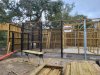
- The zoo has started construction of a new building that seems to be near the entrance and will open for this summer 2024! They have shared pictures of the new exhibit, and they have also hinted at what it might house, with the hints being "Amérique du Sud - Écureuil - Bec orange". I've done my best with French and I feel like this translates to "South America - Squirrel - Orange beak", so maybe a South American squirrel and toucans will be housed here? Squirrel monkeys? We will find out once the building is done.
-
I've also seen pictures of construction in the patch of land that divides the fallow deer and lynx exhibit, what used to be part of the donkey, sheep and goat paddock. The donkeys and company have been restricted to the upper part of their exhibit, in front of the snack bar and next to the crane aviaries, and the lower part seems like is going to be the area for a new construction, maybe a new exhibit? I've also seen pictures of sacred ibises in the painted stork aviary, this being a new species for the park. I do not know which species of sacred ibis they belong to, but African sacred is the easiest guess, although I wouldn't be surprised if Labenne acquired Oriental white ibises, Madagascar sacred ibises or Australian sacred ibises.

Zoo de Labenne's Facebook
436579182_969800765152726_8176996279344665397_n.jpg
 

Attachments

  • 436579182_969800765152726_8176996279344665397_n.jpg
    436579182_969800765152726_8176996279344665397_n.jpg
    260.9 KB · Views: 33
Back
Top