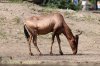
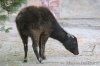
Great shot by @Therabu of the last Bornean bearded pig in Europe.

full
 
That makes a lot of sense... :confused: so this animal has three names ? o_O

I have never heard Julius for him, but the other two are right. I was there last May and talked to the keepers. It's like with our rabbit at home: first we gave him the name Calinou, but now we call him Bobby most time. ;) Now I want to share my favorite animal I have seen so far, the last hartebeest in Europe at zoo Wroclaw.

Edit: And his name is Klemens.
 

Attachments

  • Alcelaphus caama Wroclaw.JPG
    Alcelaphus caama Wroclaw.JPG
    147.4 KB · Views: 15
Last edited:
Lately I've read / learned about quite a few examples of the last individuals of a species kept by a zoo (blue ducks in UK, Mauritius kestrel in UK and in USA, Douc langur in Europe, Nilgiri langur and "Baby" in Germany etc).

I find these last individuals of species in zoos to be quite an interesting subject not the least because of what it often says about the shortcomings of zoos and ex-situ programes but also because the animals themselves seem enigmatic and tragic in a certain sense.

What examples of the last captive individuals in a zoo (either nationally, regionally or globally) can you think of that you've seen and that have somehow moved you ?

Look forward to reading your replies.

Did You make this photo of the Jentink's duiker? It's my biggest wish to see this species alive!
 
Did You make this photo of the Jentink's duiker? It's my biggest wish to see this species alive!

No unfortunately I didn't :(, I posted the name of the photographer of the animal in the comment.

I would dearly like to see this species too.

I have never heard Julius for him, but the other two are right. I was there last May and talked to the keepers. It's like with our rabbit at home: first we gave him the name Calinou, but now we call him Bobby most time. ;) Now I want to share my favorite animal I have seen so far, the last hartebeest in Europe at zoo Wroclaw.

Edit: And his name is Klemens.

Thanks for sharing this @Marcus Burkhardt !
 
No unfortunately I didn't :(, I posted the name of the photographer of the animal in the comment.

I would dearly like to see this species too.


Thanks for sharing this @Marcus Burkhardt !

Here is one of my photos of Idris: Bubalus quarlesi Krefeld.JPG

And with the jentinks, yes, for me it is like I will never find my peace of mind before seeing them. I post sometimes on Facebook what I can find about their zoo history and a lot of people are interrested in them. I am also a big fan of yellow-backed duikers, but for conservation reasons it would have been better that the jentinks zoo population became stable. A comeback of this species would be great!
 

Attachments

  • Bubalus quarlesi Krefeld.JPG
    Bubalus quarlesi Krefeld.JPG
    112.3 KB · Views: 12
Here is one of my photos of Idris: View attachment 472291

And with the jentinks, yes, for me it is like I will never find my peace of mind before seeing them. I post sometimes on Facebook what I can find about their zoo history and a lot of people are interrested in them. I am also a big fan of yellow-backed duikers, but for conservation reasons it would have been better that the jentinks zoo population became stable. A comeback of this species would be great!

That is really interesting @Marcus Burkhardt , you definitely seem like you have a very strong interest in this species and in ungulates in general.

I know the Jentink's duiker are an incredibly elusive animal to see in the wild and that some of the countries where they are occur are not exactly recommended destinations for research or tourism like Liberia and Sierra Leone.

However, have you considered getting involved in any conservation projects with the species or visiting Africa as an ecotourist?
 
Last edited:
That is really interesting @Marcus Burkhardt , you definitely seem like you have a very strong interest in this species and in ungulates in general.

I know the Jentink's duiker are an incredibly elusive animal to see in the wild and that some of the countries where they are occur are not exactly recommended destinations for research or tourism like Liberia and Sierra Leone.

However, have you considered getting involved in any conservation projects with the species or visiting Africa as an ecotourist?

Thanks for Your interest. Yes, I would like to go to west Africa one day, at least if I could not see a Jentink's duiker, I could study his homerange, and maybe see at least diurnal duikers with luck. The zebra duiker is such a case, it's diurnal and still occurs in a bit higher numbers. Gola national park has Jentinks duikers and offers guided tours where You can say what You want to see, but I really don't know how big the chances are. But Jentinks are unfortunately also hunted, and the hunters also need to see them (except for snare hunting). There are also camera traps that show that C. jentinki occasionally is diurnal. There are a lot places in Africa to visit. Topis are also a high goal to see for me.

I am included in conservation projects, but my donations go to the Asian Wild Cattle Specialist group. And I am member of the WWF. I don't know a trustworthy organization to donate for west African rainforest. You can inform you on my website how I raise money for Asian wild cattle: Painting for conservation: A collaboration with the IUCN SSC ASIAN WILD CATTLE SPECIALIST GROUP
 
Back
Top