
This year for my wife and I's now annual tradition of packing up and heading to visit a couple Kansas zoos over the weekend picked the Lee Richardson Zoo in Garden City and the Great Bend-Brit Spaugh Zoo in Great Bend. Living in Omaha, these are two of the farthest ventures into Kansas for us, hence why it took us four years from when we started the Kansas trips to get here.
On Friday night, we left Omaha around 4 pm and made the 4 1/2 hour drive down to Great Bend where we made base camp for the weekend. On Saturday, we made the relatively quick 1 hr 45 min drive to Garden City for the day.
I posted new photos of the zoo in the gallery: Lee Richardson Zoo Gallery
I also have a species list here: Lee Richardson Zoo 2024 Species List
We got to the zoo around 12:30 pm on this day, not in a big rush to get here at open since it would be an early morning with the drive, but the zoo also closes at 7 pm! We did stop for lunch before coming to the zoo and I'm glad we did! The zoo's gift shop and concession stand was closed on this day so we would not have been able to grab a quick bite while at the zoo. The gift shop being closed was a huge bummer as my wife and I like to get a shirt from every zoo we visit, and it looks like it is open every day, just for whatever reason, the only day I might get to this zoo, they were closed.
I should also mention that this is one of the many free zoos in the State of Kansas. Like David Traylor Zoo and the Great Bend-Brit Spaugh Zoo, amongst a couple others, this zoo is either run by the City that it is in so it offers free admission, or by a Friends of the Zoo group. In this case, the zoo is a department of City government. While it is free to walk through the zoo, there is an option to drive your car around the zoo to see animals and park at some locations to get out for $10.

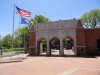
Upon entering the zoo, you go through the historic looking gates in the photo above into a small courtyard that has the Safari Shoppe located just to your right after entering. Got to be honest, I really love these old school architecture gates as it just makes you feel like you are entering an establishment that has been here for a while (zoo opened in 1927).
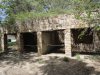
Just past the entrance courtyard you will find a lot of other historical accoutrements like an old Steam Train Engine, and old farmhouse, and some zoo history preserved as well. There seems to be an old island exhibit that will be repurposed in the future to an ambassador animal meet-and-greet but the zoo also kept some old exhibits around to show how far the zoo has come.

I really love when zoos do this to show the evolution of what zoos used to be and to what zoos are now. There is a sign in front of these (posted in the gallery) that discusses the history of this zoo. I've been to a couple of zoos that have chosen to educate visitors this way, and I find it fascinating. A couple of other zoos I've seen with this is Como Zoo in Minnesota, Pueblo Zoo in Colorado, and Memphis Zoo with the Hippo Pool, and I know there are a couple other places that have done this as well.
Starting off exhibits-wise, depending on which way you decide to go, forward or right from the zoo entrance, if you go forward, you will come to the African set of exhibits featuring some of the biggest players in American zoos: Rhino, Giraffe, and Lions.
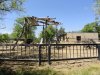
The Eastern Black Rhino and "Reticulated" Giraffe exhibits are from an older era you can tell, especially since the second rhino yard was the former African Elephant yard. This is easily identifiable due to the much taller fencing around it, but also the enrichment found within. Not sure the exact year that the zoo went out of elephants, but it doesn't seem all that long ago.

The pair of giraffe exhibits aren't really noteworthy, except they have a yard for a bull when needed. Other exhibits in this area are massive yards for Addax in one and East African Crowned Cranes and Stanley Cranes in the other. As one will find in this zoo, this becomes part of a trend here. This zoo has plenty of absolutely massive exhibits which can be great, but very few inhabitants in them. For instance, most of the hoofstock exhibits here are some of the largest you may find in an AZA zoo, but they mostly have 3 or fewer individuals (many have exactly two). The African Lion exhibits here are of a decent size, but are pretty generic in my opinion.
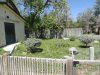
One of the better exhibits in the zoo, and perhaps one of the best exhibits in this country, can be found for Fennec Fox. While there is an indoor holding building you can see into that is filled with sand and would be similar to other zoos, the outdoor portion is great for the small fox. I believe this used to be for African Spurred Tortoise, but it looks to be great for its new inhabitant. I would have loved to see the zoo's fox out here running around.

In this area of the zoo is the Aviary Building, but it really doesn't focus on African species at all. It's more of a cluster of birds they have on hand. And while this zoo doesn't have many birds, or anything other than mammals it seems, the birds they do have in here are quite nice: Crested Coua, Bearded Barbet, Bali Mynah, and Chinese Hwamei (!).
Even though this is an older building, I do like the exhibits in here despite the mesh wire making photography more difficult. I get it though, better mesh than glass for bird inhabitants. A couple things in here that were a little bit of a letdown, half the smaller exhibits were empty at the time of my visit, they were not barren by any means (see photos in gallery), so something either just left or something is on the way. The other one is that the zoo still has a plexiglass barrier from COVID times in place in front of the wire mesh of the Bali Mynah, Goeldi's Monkey exhibit. With as much natural light that comes in here from skylights, the glare, combined with the distance between the plexiglass and the mesh makes getting photos of the animals inside close to impossible without high end gear.

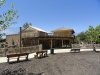
Moving on throughout the zoo, near the Aviary building is the newish seeming Primate Forest - Lemurs! facility. It appears this facility opened around 2020 and reminds me a lot of the Mission Madagascar complex at the David Traylor Zoo in Emporia, Kansas. I would not be shocked if this zoo took inspiration from that and applied the same influence here. The only difference to me is that the David Traylor complex has more verticality to the outdoor portions of the exhibit, and has small exhibits for other Madagascar fauna like tortoises or tenrecs. This complex only has a pair of lemur exhibits with Red Ruffed, Ring Tail, and Black & White Ruffed varieties.

Right next to the Primate Forest complex is a trio exhibits for South American animals featuring Maned Wolf, Greater Rhea, Giant Anteater, and some Alpaca and Patagonian Cavy. All three of these yards are massive like the African plains hoofstock yards, and in the case of the anteater/rhea yard, just comically huge. From this point on, most of the open paddocks are hard to convey the sense of size in the ZooChat gallery just because of how big they are. At no point can you really get most of the exhibit, let along half of their size.
And that's what brings me to say that most of this zoo feels empty. I hate to say it because I feel like this zoo can be or has been pretty great. Don't get me wrong, I loved visiting this zoo, but I think this zoo is the perfect case study for exhibit size and animals within and getting feedback from common zoo visitors. Take for instance here are the biggest habitats in the zoo: Addax, Crowned/Stanley Cranes, Maned Wolf, Rhea/Anteater, Bison/Elk, Bactrian Camel, Przewalski Horse. And here are the number of animals in each: Addax (2), Crowned (5)/Stanley (1), Maned Wolf (1), Rhea (1)/Anteater (1), Bison (2)/Elk (1), Bactrian Camel (2), Przewalski Horse (2). This doesn't mention another massive exhibit that was empty (that appears to have held Gaur and then Banteng at one point). Only two of the other larger exhibits had more than 3 animals in them, Red Kangaroo and the Alpaca/Patagonian Cavy exhibit.
I don't think many visitors to this zoo may care considering it is a free zoo, but from what I read about Detroit on here, it seems like it may be similar, except you have to pay to get in there. And I totally get that there is a fine line about exhibit size and actually seeing animals not only in design of exhibit but in discussions here on ZooChat. Regardless of that discussion, this zoo doesn't have a problem with seeing the animals in the massive habitats, to me it is more about the stock of which in each, particularly the hoofstock.
With all that being said, all the South American and the North American hoofstock yards are nothing really of note other than they are large grassy fields with a tree or two here or there for the couple inhabitants they hold. The one exception seems to be the under construction Bighorn Sheep yard that will have some rocky mounds in it and looks like it will be pretty neat looking when it is done.
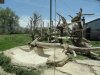
That brings us around to Cat Canyon, a trio of cat exhibits featuring Cougar, Jaguar, and Bobcat, and a recently constructed Bald Eagle exhibit just outside of the entrance. I guess you could say that the cat exhibits are all decent in that they provide climbing opportunities, but they kind of lack in foliage within the exhibits themselves. Lack of shade appears may be an issue in the hot summer months. See below for an example habitat that is the Jaguar exhibit. All three of the cat species here were active during our viewing (they Jaguar got up shortly after this photo below was taken), so it was a treat to get up close to all three.

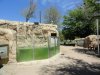
Adjacent to the Cat Canyon is three different exhibit complexes, first is Down Under which features a large flat grassy enclosure for some Red Kangaroo, nothing special. Second is a pair of exhibits in Kansas Waters which looks like a dried out river bed with a small North American River Otter exhibit carved out of it, and an empty former Swift Fox exhibit that featured a tunnel with a dome viewing from within the exhibit. There is a boardwalk that gets you above and between both of these exhibits that also provides overhead viewing of the Sloth Bear exhibit that is part of Wild Asia.

Speaking of Wild Asia, this is the third exhibit complex next to Cat Canyon and makes this by far the densest exhibit/species area of the zoo. I would not be shocked if most people that frequent the zoo with their vehicle drive past the rest of the zoo just to park near the Wild Asia entrance and only walk around this portion. As noted above, the rest of the zoo can feel quite empty, but this section features a cluster of exhibits that many on here may have swung too far from the massive exhibits to too small for their current inhabitants.
Wild Asia opened in 1998 and it appears some shuffling of species has happened over time as one would expect. For now, the complex holds Amur Leopard, Snow Leopard, Sarus Crane, Pallas Cat, Red Panda, Chinese Goral, Siamang, Karakul Sheep, Bactrian Camel, Hooded Crane, Sloth Bear, Pygmy Slow Loris, and Green Tree Python.
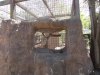
Of all the species listed above, the three exhibits that would probably be on the smaller side for the respective species would be for Amur Leopard, Snow Leopard, and Siamang. The leopard exhibits are what you would have easily found across the country at many zoos for big cat exhibits built during that time. Wire box enclosures that are long in width but narrow in depth. Although, there was one part of the Snow Leopard exhibit I found interesting, in the rock work of the exhibit around the front of the habitat is a little alcove that would provide shade, but it is near the front so guests can get a look at the big cat within if it goes here to rest.

The sloth bear exhibit looks to have been expanded and is a pretty good size with varied terrain, even though the zoo's sloth bear recently passed away and they are waiting for a new one. The Goral/Hooded Crane and Sarus crane yards are all adequate for their inhabitants, although I would rather see the Goral in an empty exhibit next to the Sarus Crane that has tons of rocks to climb and tall grass within. The zoo had 4 goral on exhibit during this visit. It appears the Red Panda have moved into an exhibit that was built for some other species as it is of good size and looks to be one of the better red panda exhibits around.
Inside the Animals of the Night building you find just two exhibits, one for Green Tree Python and one for Pygmy Slow Loris. As excited I was at the possibility of getting pretty close to one of these and without a massive crowd huddled around the exhibit like at the Smithsonian Zoo or Memphis, the only glimpse I had of this one was its back hanging out of a privacy box in the corner of the exhibit.
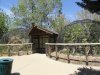
The zoo recently acquired some Red Billed Blue Magpie and they were zipping around in their aviary just outside the entrance of Wild Asia adding some color and energy to this area. The last couple of exhibits in this area feature a small yard for a very vocal Karakul Sheep, a long and narrow Siamang wire box enclosure that doesn't provide as much climbing enrichment one would hope (but hey, the wire fence of the whole enclosure doubles as climbing space), but then an interesting combination of Pallas Cat exhibits. This pair of oddly shaped domes I believe were the original Red Panda exhibits, but now make for pretty decent Pallas Cat exhibits.

These two exhibits as you can see are very lushly planted with climbing structures overgrown with vegetation. As I was looking for one of the cats, an older gentlemen came walking over and said, "I've never seen one of the cats in these exhibits and I've been coming here for a long time!" I had to smile and tell him he was in luck as I spotted one in the enclosure on the right hidden amongst the vegetation, yet almost in plain sight.
The last couple of exhibits found around the zoo is another massive yard for Przewalski's Horse across the street from the Bactrian Camel yard, and a waterfowl pond that has an area fenced off for a flock of Chilean Flamingo.
There is an education building on-site that has some small animal exhibits inside including a Black Footed Ferret exhibit, but I can't tell you the others as the building is closed on weekends! Their hours are only weekdays and is closed for the lunch hour on those days. So any of you ZooChatters that plan a visit here, don't do on the weekend if you want to see all the exhibits I guess!
One additional note, there is a free history museum just to the right of the entrance in the first photo that is worth the short amount of time to go through if history is your thing. There is a small area talking about the Big Pool next door to the zoo and how the zoo's elephants used to swim in there during the pool's offseason. There are other exhibits that talk about the fossil record of this part of Kansas and then some other history including things about nearby Dodge City and the rustlers and gangs from ages past.
On Friday night, we left Omaha around 4 pm and made the 4 1/2 hour drive down to Great Bend where we made base camp for the weekend. On Saturday, we made the relatively quick 1 hr 45 min drive to Garden City for the day.
I posted new photos of the zoo in the gallery: Lee Richardson Zoo Gallery
I also have a species list here: Lee Richardson Zoo 2024 Species List
We got to the zoo around 12:30 pm on this day, not in a big rush to get here at open since it would be an early morning with the drive, but the zoo also closes at 7 pm! We did stop for lunch before coming to the zoo and I'm glad we did! The zoo's gift shop and concession stand was closed on this day so we would not have been able to grab a quick bite while at the zoo. The gift shop being closed was a huge bummer as my wife and I like to get a shirt from every zoo we visit, and it looks like it is open every day, just for whatever reason, the only day I might get to this zoo, they were closed.
I should also mention that this is one of the many free zoos in the State of Kansas. Like David Traylor Zoo and the Great Bend-Brit Spaugh Zoo, amongst a couple others, this zoo is either run by the City that it is in so it offers free admission, or by a Friends of the Zoo group. In this case, the zoo is a department of City government. While it is free to walk through the zoo, there is an option to drive your car around the zoo to see animals and park at some locations to get out for $10.
Upon entering the zoo, you go through the historic looking gates in the photo above into a small courtyard that has the Safari Shoppe located just to your right after entering. Got to be honest, I really love these old school architecture gates as it just makes you feel like you are entering an establishment that has been here for a while (zoo opened in 1927).
Just past the entrance courtyard you will find a lot of other historical accoutrements like an old Steam Train Engine, and old farmhouse, and some zoo history preserved as well. There seems to be an old island exhibit that will be repurposed in the future to an ambassador animal meet-and-greet but the zoo also kept some old exhibits around to show how far the zoo has come.
I really love when zoos do this to show the evolution of what zoos used to be and to what zoos are now. There is a sign in front of these (posted in the gallery) that discusses the history of this zoo. I've been to a couple of zoos that have chosen to educate visitors this way, and I find it fascinating. A couple of other zoos I've seen with this is Como Zoo in Minnesota, Pueblo Zoo in Colorado, and Memphis Zoo with the Hippo Pool, and I know there are a couple other places that have done this as well.
Starting off exhibits-wise, depending on which way you decide to go, forward or right from the zoo entrance, if you go forward, you will come to the African set of exhibits featuring some of the biggest players in American zoos: Rhino, Giraffe, and Lions.
The Eastern Black Rhino and "Reticulated" Giraffe exhibits are from an older era you can tell, especially since the second rhino yard was the former African Elephant yard. This is easily identifiable due to the much taller fencing around it, but also the enrichment found within. Not sure the exact year that the zoo went out of elephants, but it doesn't seem all that long ago.
The pair of giraffe exhibits aren't really noteworthy, except they have a yard for a bull when needed. Other exhibits in this area are massive yards for Addax in one and East African Crowned Cranes and Stanley Cranes in the other. As one will find in this zoo, this becomes part of a trend here. This zoo has plenty of absolutely massive exhibits which can be great, but very few inhabitants in them. For instance, most of the hoofstock exhibits here are some of the largest you may find in an AZA zoo, but they mostly have 3 or fewer individuals (many have exactly two). The African Lion exhibits here are of a decent size, but are pretty generic in my opinion.
One of the better exhibits in the zoo, and perhaps one of the best exhibits in this country, can be found for Fennec Fox. While there is an indoor holding building you can see into that is filled with sand and would be similar to other zoos, the outdoor portion is great for the small fox. I believe this used to be for African Spurred Tortoise, but it looks to be great for its new inhabitant. I would have loved to see the zoo's fox out here running around.
In this area of the zoo is the Aviary Building, but it really doesn't focus on African species at all. It's more of a cluster of birds they have on hand. And while this zoo doesn't have many birds, or anything other than mammals it seems, the birds they do have in here are quite nice: Crested Coua, Bearded Barbet, Bali Mynah, and Chinese Hwamei (!).
Even though this is an older building, I do like the exhibits in here despite the mesh wire making photography more difficult. I get it though, better mesh than glass for bird inhabitants. A couple things in here that were a little bit of a letdown, half the smaller exhibits were empty at the time of my visit, they were not barren by any means (see photos in gallery), so something either just left or something is on the way. The other one is that the zoo still has a plexiglass barrier from COVID times in place in front of the wire mesh of the Bali Mynah, Goeldi's Monkey exhibit. With as much natural light that comes in here from skylights, the glare, combined with the distance between the plexiglass and the mesh makes getting photos of the animals inside close to impossible without high end gear.
Moving on throughout the zoo, near the Aviary building is the newish seeming Primate Forest - Lemurs! facility. It appears this facility opened around 2020 and reminds me a lot of the Mission Madagascar complex at the David Traylor Zoo in Emporia, Kansas. I would not be shocked if this zoo took inspiration from that and applied the same influence here. The only difference to me is that the David Traylor complex has more verticality to the outdoor portions of the exhibit, and has small exhibits for other Madagascar fauna like tortoises or tenrecs. This complex only has a pair of lemur exhibits with Red Ruffed, Ring Tail, and Black & White Ruffed varieties.
Right next to the Primate Forest complex is a trio exhibits for South American animals featuring Maned Wolf, Greater Rhea, Giant Anteater, and some Alpaca and Patagonian Cavy. All three of these yards are massive like the African plains hoofstock yards, and in the case of the anteater/rhea yard, just comically huge. From this point on, most of the open paddocks are hard to convey the sense of size in the ZooChat gallery just because of how big they are. At no point can you really get most of the exhibit, let along half of their size.
And that's what brings me to say that most of this zoo feels empty. I hate to say it because I feel like this zoo can be or has been pretty great. Don't get me wrong, I loved visiting this zoo, but I think this zoo is the perfect case study for exhibit size and animals within and getting feedback from common zoo visitors. Take for instance here are the biggest habitats in the zoo: Addax, Crowned/Stanley Cranes, Maned Wolf, Rhea/Anteater, Bison/Elk, Bactrian Camel, Przewalski Horse. And here are the number of animals in each: Addax (2), Crowned (5)/Stanley (1), Maned Wolf (1), Rhea (1)/Anteater (1), Bison (2)/Elk (1), Bactrian Camel (2), Przewalski Horse (2). This doesn't mention another massive exhibit that was empty (that appears to have held Gaur and then Banteng at one point). Only two of the other larger exhibits had more than 3 animals in them, Red Kangaroo and the Alpaca/Patagonian Cavy exhibit.
I don't think many visitors to this zoo may care considering it is a free zoo, but from what I read about Detroit on here, it seems like it may be similar, except you have to pay to get in there. And I totally get that there is a fine line about exhibit size and actually seeing animals not only in design of exhibit but in discussions here on ZooChat. Regardless of that discussion, this zoo doesn't have a problem with seeing the animals in the massive habitats, to me it is more about the stock of which in each, particularly the hoofstock.
With all that being said, all the South American and the North American hoofstock yards are nothing really of note other than they are large grassy fields with a tree or two here or there for the couple inhabitants they hold. The one exception seems to be the under construction Bighorn Sheep yard that will have some rocky mounds in it and looks like it will be pretty neat looking when it is done.
That brings us around to Cat Canyon, a trio of cat exhibits featuring Cougar, Jaguar, and Bobcat, and a recently constructed Bald Eagle exhibit just outside of the entrance. I guess you could say that the cat exhibits are all decent in that they provide climbing opportunities, but they kind of lack in foliage within the exhibits themselves. Lack of shade appears may be an issue in the hot summer months. See below for an example habitat that is the Jaguar exhibit. All three of the cat species here were active during our viewing (they Jaguar got up shortly after this photo below was taken), so it was a treat to get up close to all three.
Adjacent to the Cat Canyon is three different exhibit complexes, first is Down Under which features a large flat grassy enclosure for some Red Kangaroo, nothing special. Second is a pair of exhibits in Kansas Waters which looks like a dried out river bed with a small North American River Otter exhibit carved out of it, and an empty former Swift Fox exhibit that featured a tunnel with a dome viewing from within the exhibit. There is a boardwalk that gets you above and between both of these exhibits that also provides overhead viewing of the Sloth Bear exhibit that is part of Wild Asia.
Speaking of Wild Asia, this is the third exhibit complex next to Cat Canyon and makes this by far the densest exhibit/species area of the zoo. I would not be shocked if most people that frequent the zoo with their vehicle drive past the rest of the zoo just to park near the Wild Asia entrance and only walk around this portion. As noted above, the rest of the zoo can feel quite empty, but this section features a cluster of exhibits that many on here may have swung too far from the massive exhibits to too small for their current inhabitants.
Wild Asia opened in 1998 and it appears some shuffling of species has happened over time as one would expect. For now, the complex holds Amur Leopard, Snow Leopard, Sarus Crane, Pallas Cat, Red Panda, Chinese Goral, Siamang, Karakul Sheep, Bactrian Camel, Hooded Crane, Sloth Bear, Pygmy Slow Loris, and Green Tree Python.
Of all the species listed above, the three exhibits that would probably be on the smaller side for the respective species would be for Amur Leopard, Snow Leopard, and Siamang. The leopard exhibits are what you would have easily found across the country at many zoos for big cat exhibits built during that time. Wire box enclosures that are long in width but narrow in depth. Although, there was one part of the Snow Leopard exhibit I found interesting, in the rock work of the exhibit around the front of the habitat is a little alcove that would provide shade, but it is near the front so guests can get a look at the big cat within if it goes here to rest.
The sloth bear exhibit looks to have been expanded and is a pretty good size with varied terrain, even though the zoo's sloth bear recently passed away and they are waiting for a new one. The Goral/Hooded Crane and Sarus crane yards are all adequate for their inhabitants, although I would rather see the Goral in an empty exhibit next to the Sarus Crane that has tons of rocks to climb and tall grass within. The zoo had 4 goral on exhibit during this visit. It appears the Red Panda have moved into an exhibit that was built for some other species as it is of good size and looks to be one of the better red panda exhibits around.
Inside the Animals of the Night building you find just two exhibits, one for Green Tree Python and one for Pygmy Slow Loris. As excited I was at the possibility of getting pretty close to one of these and without a massive crowd huddled around the exhibit like at the Smithsonian Zoo or Memphis, the only glimpse I had of this one was its back hanging out of a privacy box in the corner of the exhibit.
The zoo recently acquired some Red Billed Blue Magpie and they were zipping around in their aviary just outside the entrance of Wild Asia adding some color and energy to this area. The last couple of exhibits in this area feature a small yard for a very vocal Karakul Sheep, a long and narrow Siamang wire box enclosure that doesn't provide as much climbing enrichment one would hope (but hey, the wire fence of the whole enclosure doubles as climbing space), but then an interesting combination of Pallas Cat exhibits. This pair of oddly shaped domes I believe were the original Red Panda exhibits, but now make for pretty decent Pallas Cat exhibits.
These two exhibits as you can see are very lushly planted with climbing structures overgrown with vegetation. As I was looking for one of the cats, an older gentlemen came walking over and said, "I've never seen one of the cats in these exhibits and I've been coming here for a long time!" I had to smile and tell him he was in luck as I spotted one in the enclosure on the right hidden amongst the vegetation, yet almost in plain sight.
The last couple of exhibits found around the zoo is another massive yard for Przewalski's Horse across the street from the Bactrian Camel yard, and a waterfowl pond that has an area fenced off for a flock of Chilean Flamingo.
There is an education building on-site that has some small animal exhibits inside including a Black Footed Ferret exhibit, but I can't tell you the others as the building is closed on weekends! Their hours are only weekdays and is closed for the lunch hour on those days. So any of you ZooChatters that plan a visit here, don't do on the weekend if you want to see all the exhibits I guess!
One additional note, there is a free history museum just to the right of the entrance in the first photo that is worth the short amount of time to go through if history is your thing. There is a small area talking about the Big Pool next door to the zoo and how the zoo's elephants used to swim in there during the pool's offseason. There are other exhibits that talk about the fossil record of this part of Kansas and then some other history including things about nearby Dodge City and the rustlers and gangs from ages past.
Attachments
-
 01 Zoo Entrance.JPG151.6 KB · Views: 40
 -
 277 Old Exhibits.JPG283.5 KB · Views: 38
 -
 13 Black Rhino Exhibit 2.JPG237.4 KB · Views: 41
 -
 52 Fennec Fox Exhibit.JPG274.3 KB · Views: 38
 -
 41 Bali Mynah, Goeldi's Monkey Exhibit.JPG164.5 KB · Views: 38
 -
 77 Primate Forest - Lemur Building.JPG203.8 KB · Views: 38
 -
 164 Jaguar Exhibit.JPG212.6 KB · Views: 37
 -
 188 Kansas Waters, North American River Otter Exhibit.JPG223.4 KB · Views: 38
 -
 205 Snow Leopard Exhibit Alcove.JPG191 KB · Views: 39
 -
 247 Pallas Cat Exhibits.JPG271.5 KB · Views: 38
