List of species I've seen

That is not a common name I have ever heard before. I'm assuming it's another name for Patas Monkeys?


Yes, it's a much more adequate common name for the rather unimaginative "patas monkey".

NAMAQUA DOVE
full

Photo by @Mo Hassan. Berlin zoo, Germany

NANDAY CONURE
full

Photo by @KevinB. Vogelpark Avifauna, Netherlands

NARROW-LINED PUFFER
full

Photo by @ronnienl. Marine life park, Singapore

NARROW-STRIPED MONGOOSE
full

Photo by @Giant Eland. Zoo Plzeň, Czech republic
 
PARKINSON'S RAINBOWFISH
full

Photo by @vogelcommando. Brussels aquarium, Belgium

PATAGONIAN CONURE
full

Photo by @TNT. Lincolnshire wildlife park, UK

PEACOCK MANTIS SHRIMP
full

Photo by @devilfish. Aqua Terra zoo, Austria

PEARL-SCALED BUTTERFLYFISH
full

Photo by @Kakapo. Aquarium de La Rochelle, France

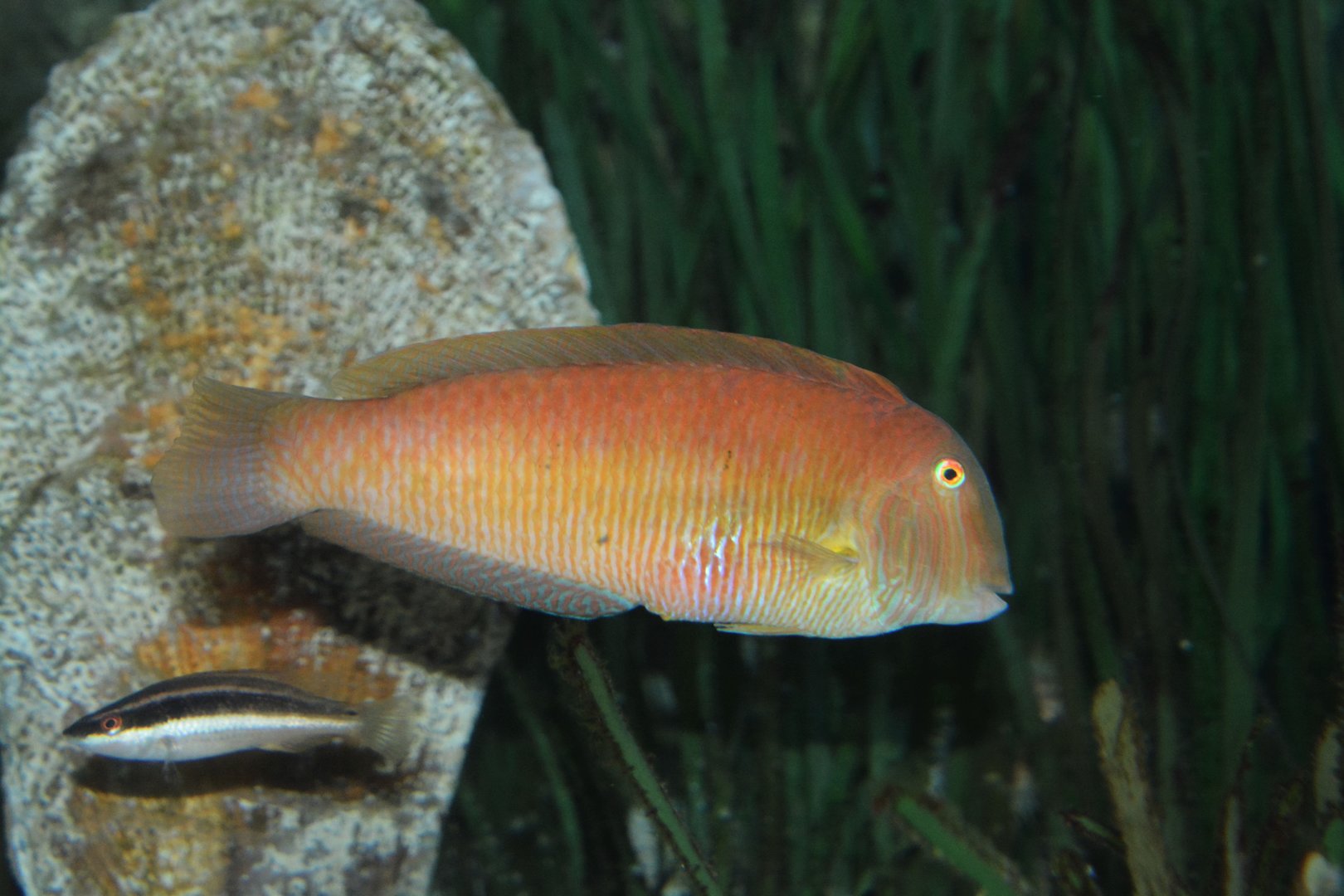
PEARLY RAZORFISH
full

Photo by @Kakapo. Aquarium de La Rochelle, France. Excuse the bad quality, but at the moment this is the only photo of this species in the Gallery

PELAGIC STINGRAY
full

Photo by @Maguari. Berlin zoo aquarium, Germany
 
PEPPERED COCKROACH
full

Photo by @ChunkyMunky pengopus. Cincinnati zoo and botanical garden, USA

PERUVIAN PELICAN
full

Photo by @Daniel Sörensen. Weltvogelpark Walsrode, Germany

PERUVIAN STICK INSECT
full

Photo by @ChunkyMunky pengopus. Cincinnati zoo and botanical garden, USA

PETER'S ELEPHANT-NOSED FISH
full

Photo by @Zooish. River wonders, Singapore

PHILIPPINE DUCK
full

Photo by @Macaw16. Washington wetland centre, UK

PHILIPPINE LEAF INSECT
full

Photo by @birdsandbats. Toledo zoo, USA
 
I don't care which subespecies is it. They're just Macaca nemestrina and for this thread I'm using species, that is the basic unit of animal (and other kingdoms) classification.

(Yes, I know you will tell me they are two different species, but you must use a much more convincent argument if you want make me accept such a ridiculous absurd change).

PREVOST'S SQUIRREL
full

Photo by @Zooish. Singapore zoo, Singapore

PRICKLY LEATHERJACKET
full

Photo by @wstefan. Karlsruhe aquarium, Germany

PRINCESS OF BURUNDI
full

Photo by @KevinB. Royal Museum for Central Africa Tervuren, Belgium
 
Another new species for the Gallery:
PULSING XENIA
full

Photo by @Kakapo. In an aquarium or pet shop in Zaragoza, Spain

PURPLE GLOSSY STARLING
full

Photo by @Julio C Castro. San Diego zoo, USA

PURPLE HERON
full

Photo by @KevinB. Planckendael, Belgium

PURPLE MORT BLEU BUTTERFLY
full

Photo by @Kakapo. Artis royal zoo, Netherlands

Another new species for the Gallery:
PURPLE URCHIN
full

Photo by @Kakapo. Sea World San Diego, USA
 
PURPLE-NAPED LORY
full

Photo by @vogelcommando. Vogelpark Avifauna, Netherlands

PURPLE-TAILED IMPERIAL PIGEON
full

Photo by @Jackwow. Edward Youde aviary, Hong Kong

PURPLE-THROATED FRUITCROW
full

Photo by @ronnienl. Zoo Wuppertal, Germany

PUTTY-NOSED GUENON
full

Photo by @Tomek. Zoo Barcelona, Spain

PYGMY SLOW LORIS
full

Photo by @Giant Eland. Omaha's Henry Doorly zoo, USA
 
I don't care which subespecies is it. They're just Macaca nemestrina and for this thread I'm using species, that is the basic unit of animal (and other kingdoms) classification.

(Yes, I know you will tell me they are two different species, but you must use a much more convincent argument if you want make me accept such a ridiculous absurd change).

Shall we start with the clear morphological difference, both in the face, but also in the genital swellings that have been clearly described in literature. Or the clear genetic difference between both species and the behavioural differences between them (more arboreal versus more terrestrial). And shall we then add the existence of a narrow hybrid zone at the Isthmus of Kra, which is a boundary between biogeographical zones, which is a clear indicator that populations were separated for a considerable time before making secondary contact.

Here is the literature itself:

Taxonomy, Evolutionary and Dispersal Events of Pig-Tailed Macaque, Macaca nemestrina (Linnaeus, 1766) in Southeast Asia with Description of a New Subspecies, Macaca nemestrina perakensis in Malaysia

Notes on the taxonomy of Macaca nemestrina leonina Blyth, 1863 (Primates: Cercopithecidae)

https://onlinelibrary.wiley.com/doi/10.1111/j.1756-1051.2012.00121.x

Boundary zone between northern and southern pig-tailed macaques and their morphological differences - Primates

So plenty of evidence if you are open to change.
 
Thanks, that's very useful and I've learned a lot of things. I only had a brief overlook (the first one is a very long article to read it exhaustively, and now I should be in bed since couple hours ago), but saw enough. The second and third articles are ones I can't access (anyway the third one seems unrelated wiith the subject), and the fourth is ony an abstract that emphatizes the morphological differences between two taxa (and obviously there MUST be differences, otherwise they would be not two taxa, but I don't find them enough distictive for calling the taxa "species"). But with the first article alone, there is plenty of coverage of the subject. I learned things such as:
-what I believed to be species Macaca siberu and Macaca pagensis are actually also subspecies of Macaca nemestrina (tough as they're narrowly endemic insular taxa, the lack of hybridation may raise them to species level more quickly than in northern-southern pig taileds)
-there is an hybridation zone of both taxa (that should imply or at least make very probable that the two taxa cannot be different species. But would be interesting to know if the hybrids are sterile or not)
-genetic research has been done already and the conclusion was to keep these taxa as subspecies, before other authors decided to spilt.

So, despite I wanted to avoid any taxonomy discussion in this thread (but little is what I can do for avoid fire in an already burnt house!), I must be very grateful to you, because now I can have a much more informated base for know about the classification of these taxa.
 
Back
Top