OdySea Aquarium List of Species On Exhibit 12/5/16

geomorph

Well-Known Member
15+ year member
This is an attempt to list every species on exhibit as well as describe every exhibit at OdySea Aquarium in Scottsdale, Arizona during my visit on 12-5-16. I am arranging the list by the current visitor map by the named zones as they are encountered along its primarily one-way route. I am including species for which there is a sign on each exhibit; as is usual for aquariums, not every species is signed, especially in the largest tanks. This is not intended to be a full account of the collection. Also, species on exhibit are sometimes moved, so some that were there one day may have disappeared from public view the next. All exhibits are indoors. Almost all the exhibits have titles above their species identification signs and the visitor map, so I will refer to them here within quotation marks. I will post each zone in a separate reply in the thread for clarity.

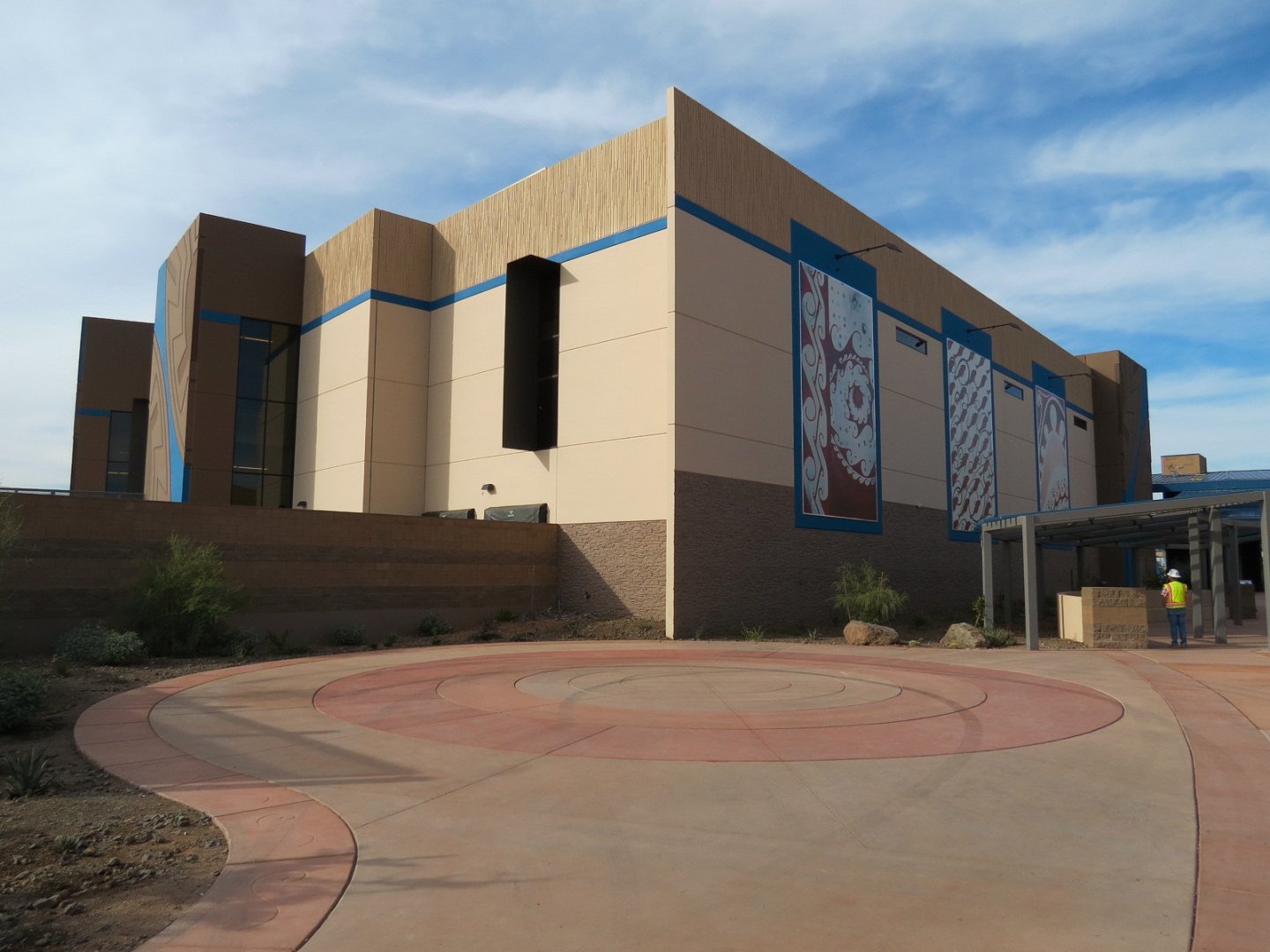
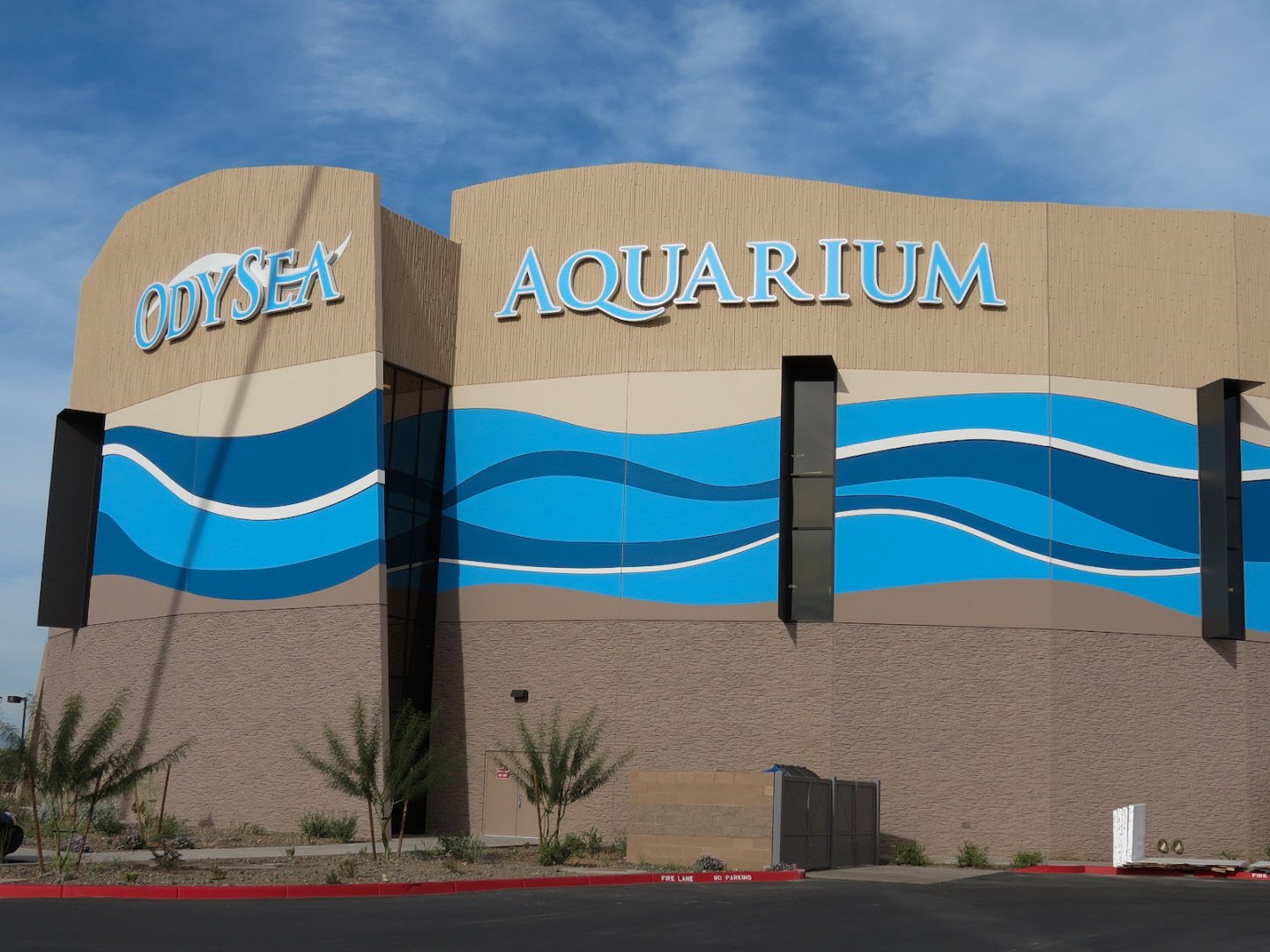
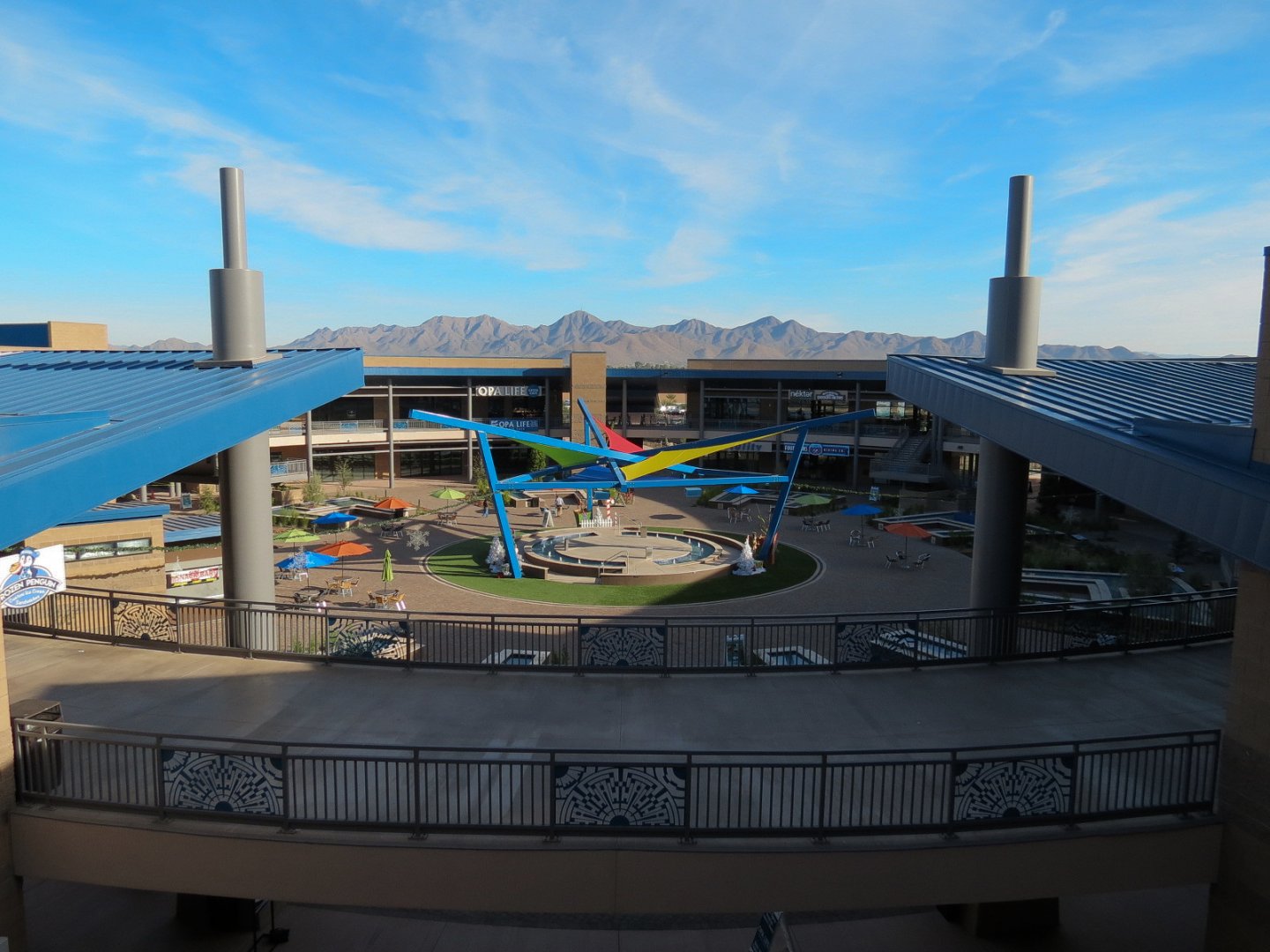
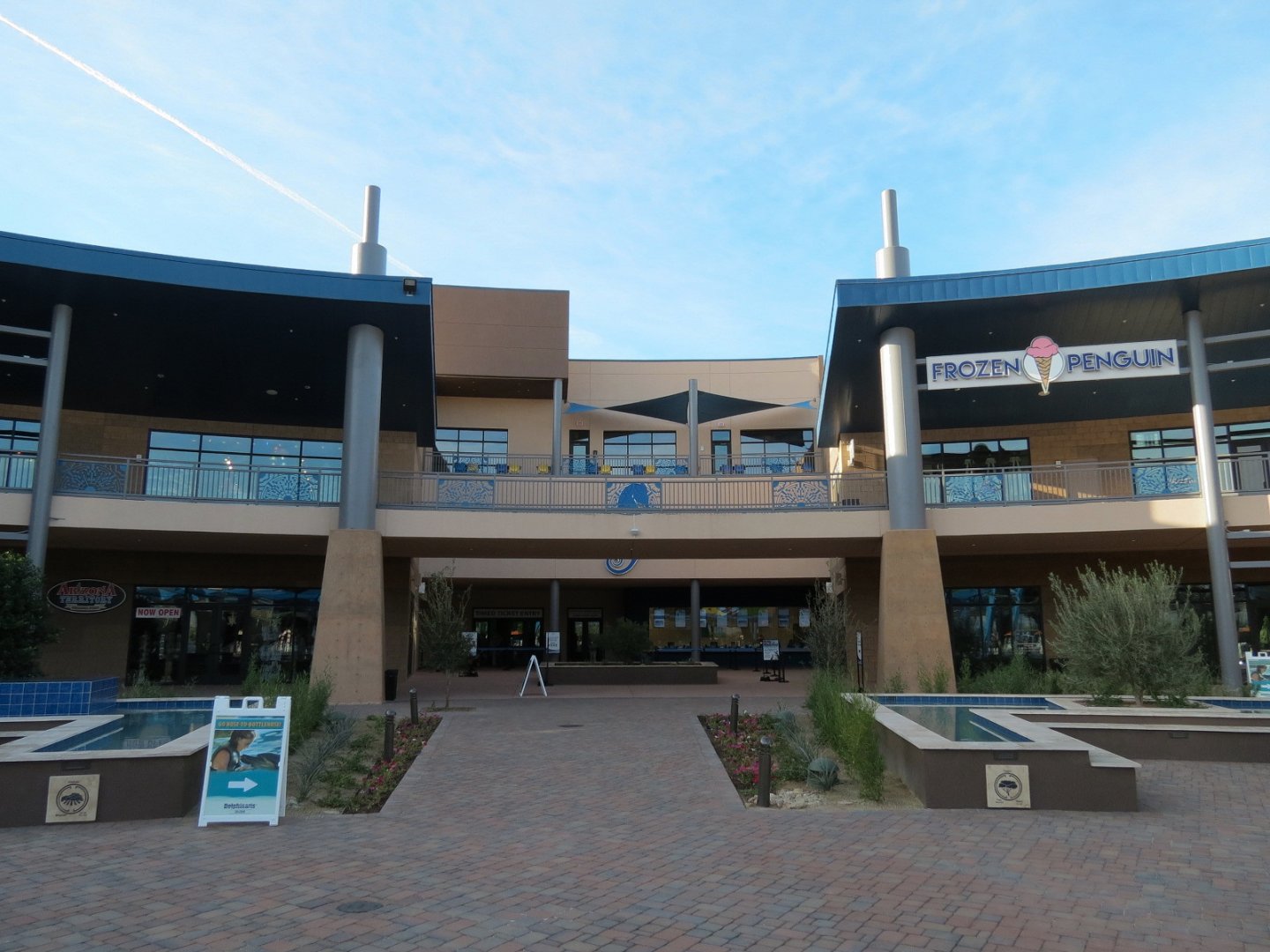
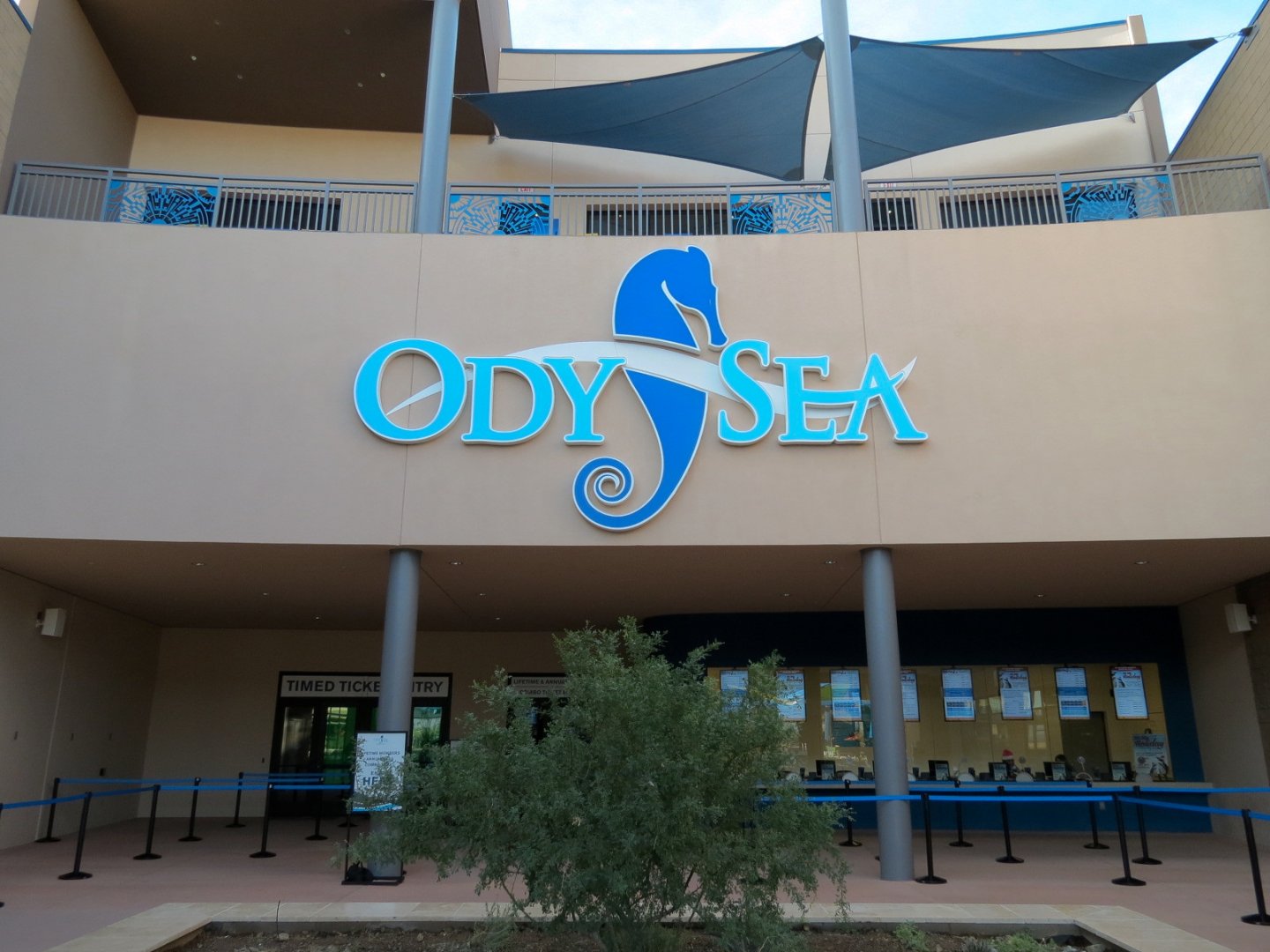
This major aquarium opened recently in September 2016 and is part of a larger development called OdySea In The Desert. The new development includes Butterfly Wonderland (opened in May 2013 and listed separately in another of my threads), OdySea Mirror Maze (opened May 2013), an outdoor 2-level mall of small shops and restaurants (slowly finding and opening tenants and most are not major chains/franchises), and Dolphinaris (opened October 2015, a swim-with dolphins experience that is adjacent to but operated separately from the aquarium and I did not enter). The modern buildings that compose the development are arranged in a roughly circular pattern around a a central gathering space, and the masterplan for the complex shows the possibility of more buildings being added on the perimeter as well as a large ferris wheel ride. The complex is located in the desert but adjacent to a major freeway.

The aquarium itself has been criticized online for having its grand opening before it was ready, but most issues of water quality and exhibit stocking had been remedied by the time of my visit and it was blissfully uncrowded in early December. It was enjoyable and worth a visit; I rank it at #15 of the 54 aquarium facilities I have visited.

ENTRANCE: (9 Exhibits)
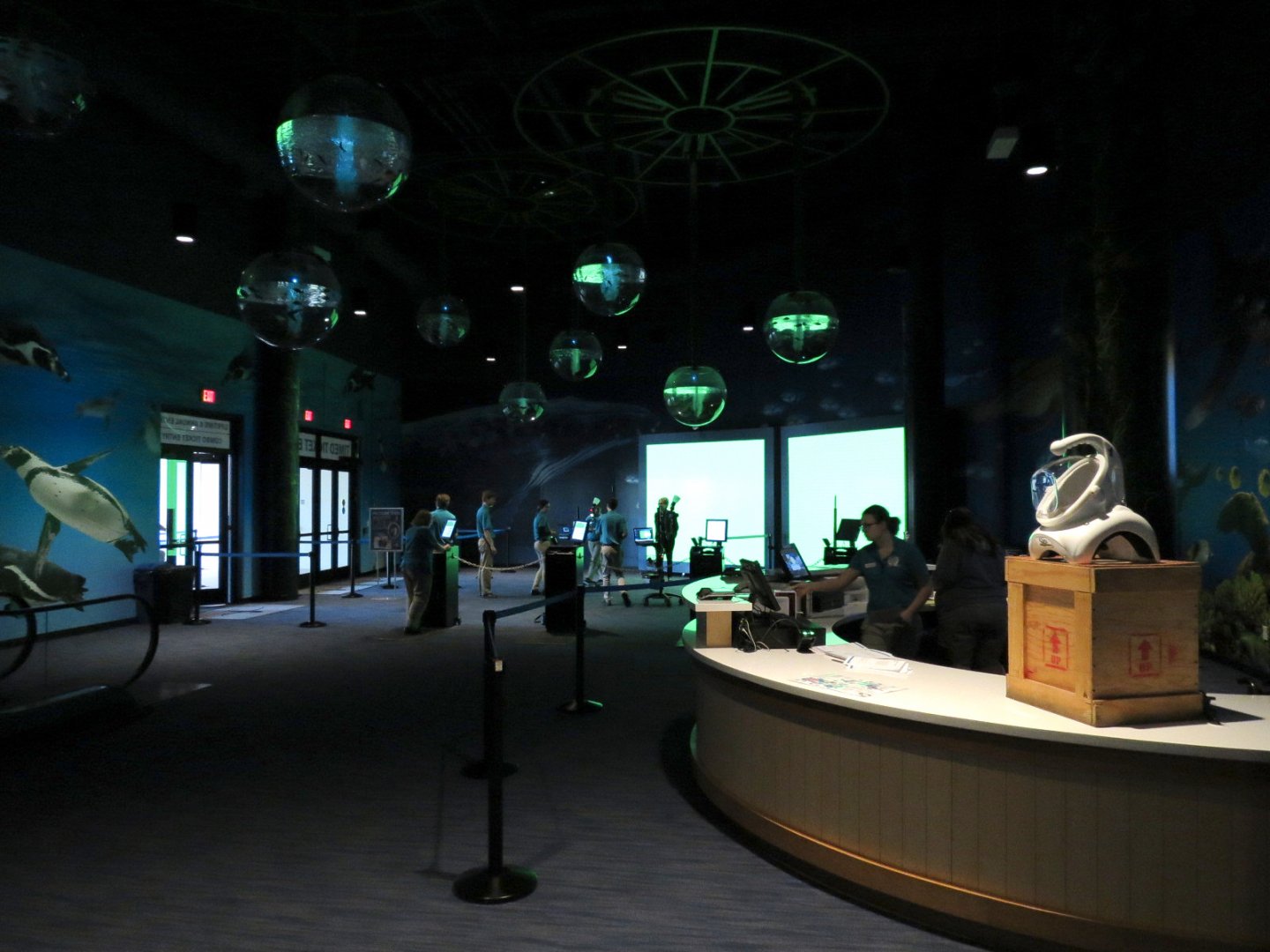
The 2-story lobby space is entered after visitors purchase tickets from the ticket window outside the aquarium. The lobby is a half-round shape and has a green-screen area for professional photo taking (for purchase), ticket-taking stands, a concierge desk, and an elevator and escalator up to the second level for the primarily one-way visitor path. Also, a short hallway leads to restrooms, both of which feature a viewing window above the sinks that looks into the "Shark Waters" exhibit in the "Living Sea Carousel" zone described later (I am not counting this as an exhibit in this zone). The lobby is modern and dimly lit, with large photo-realistic graphics of fish and penguins and a whale on the walls, and the following exhibits:

"Aqua Lobby", 9 small-sized globe tanks suspended from the tall ceiling above the lobby:
Unsigned and unidentified, website mentions Lake Malawi Cichlid


AMERICAN RIVERS: (8 Exhibits)
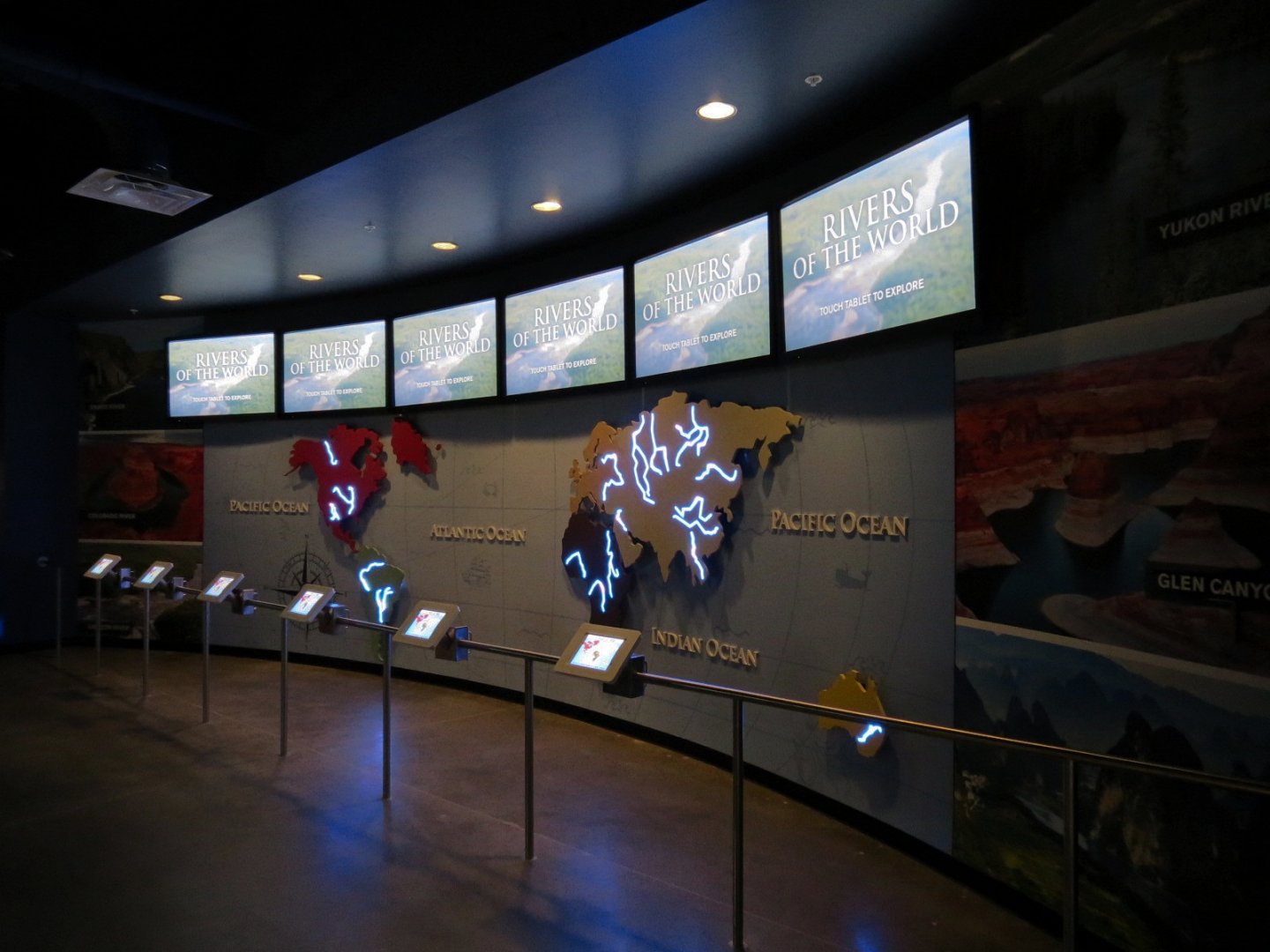
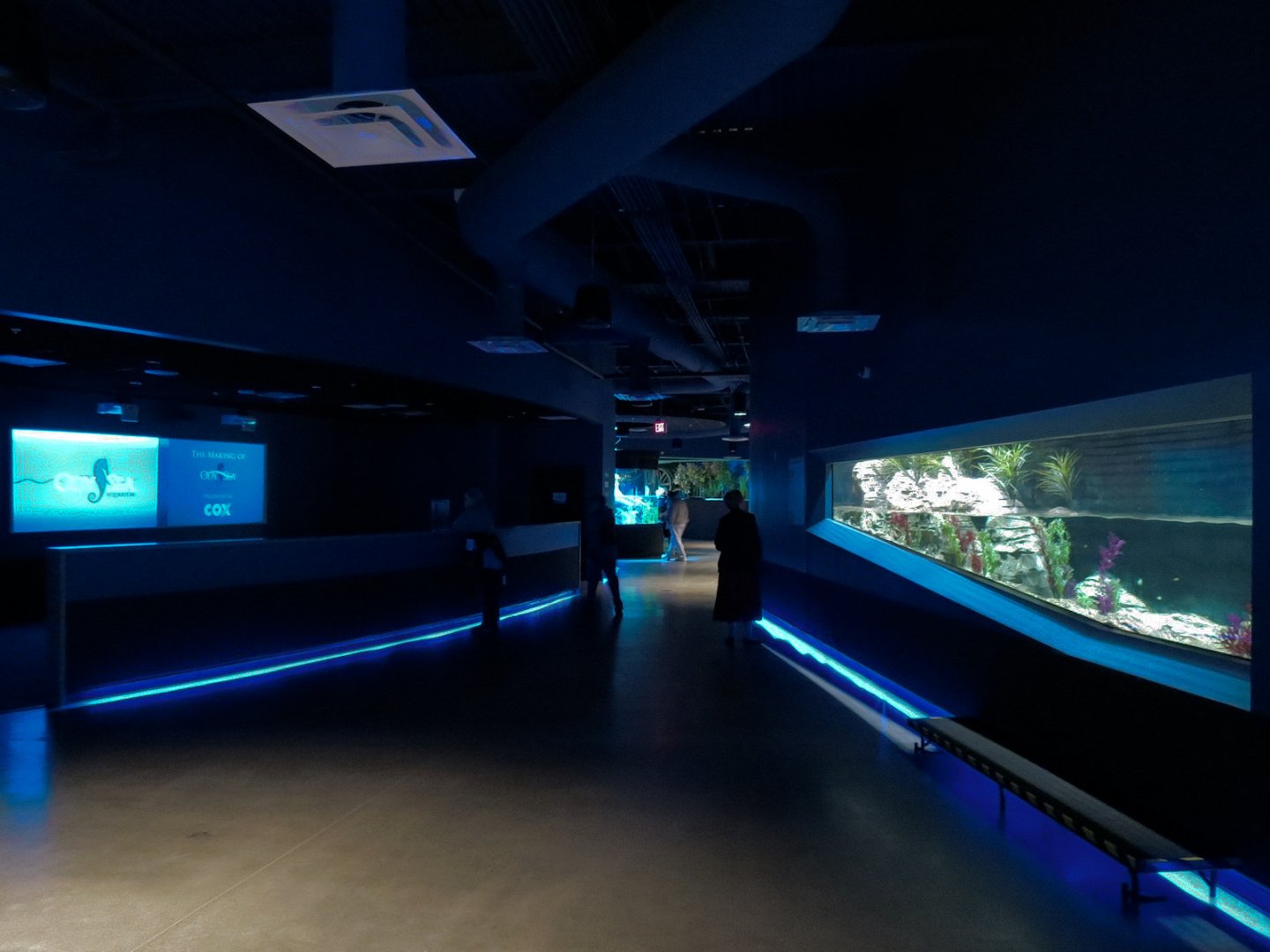
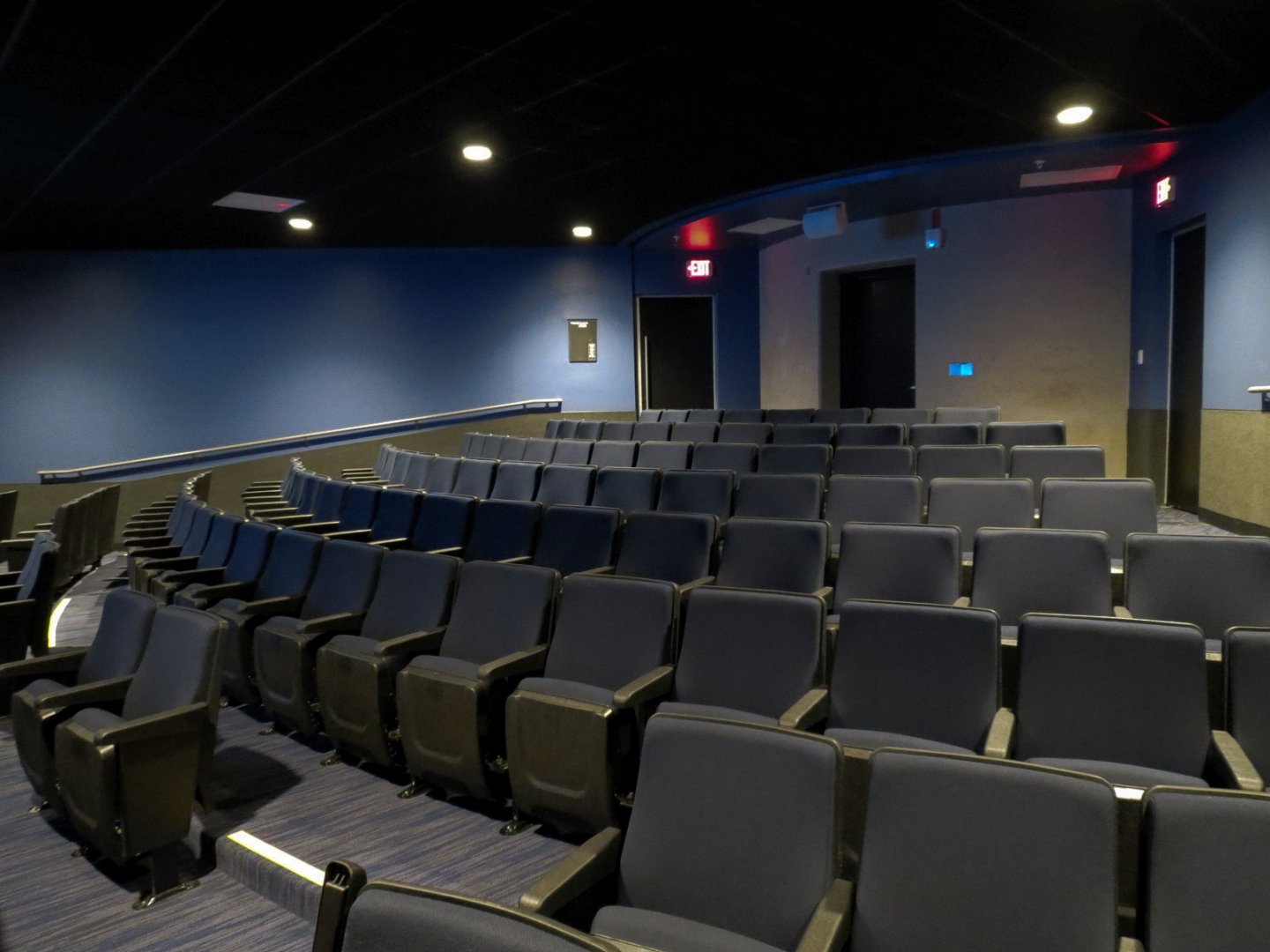
This is the first exhibit gallery on the aquarium's primarily one-way visitor path and it is on the second level of the aquarium. Exhibits are located in a long irregularly-shaped curving hallway which is dimly lit. Walls are painted dark blue, exposed utility ductwork is overhead, and some sections have continuous recessed lighting bands along the floor-to-lower wall interfaces. The effect is rather industrial and minimal with no additional thematic elements except for the theming in the exhibits themselves. A few exhibits do not contain live animals: one is called "Rivers of the World Interactive Map" with 6 touchscreens mounted in front of 6 wall screens and a lit world map; the other is "Learning Cove", a small theater alcove with benches to watch a projected video on the wall, currently showing a short video 'The Making of OdySea Aquarium.'
"Turtles", a medium-sized open-top round tank:
Red-eared Slider
Yellow-bellied Slider

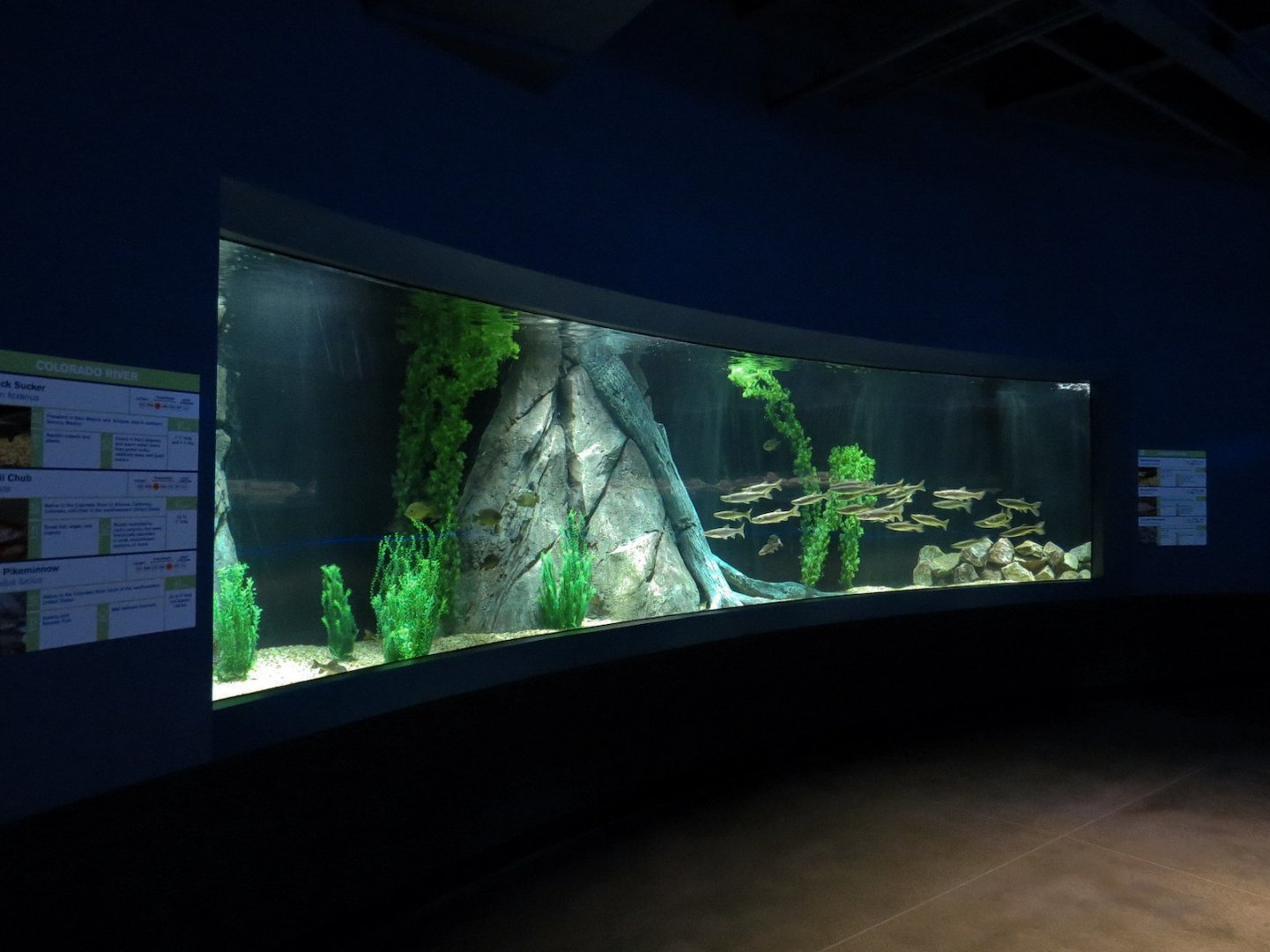
"Colorado River", a large-sized wall tank:
Bluegill Sunfish
Bonytail Chub
Colorado Pikeminnow
Razorback Sucker
Roundtail Chub

"Shoreline", a medium-sized wall tank:
Kelp Bass
Opaleye
Surf Perch

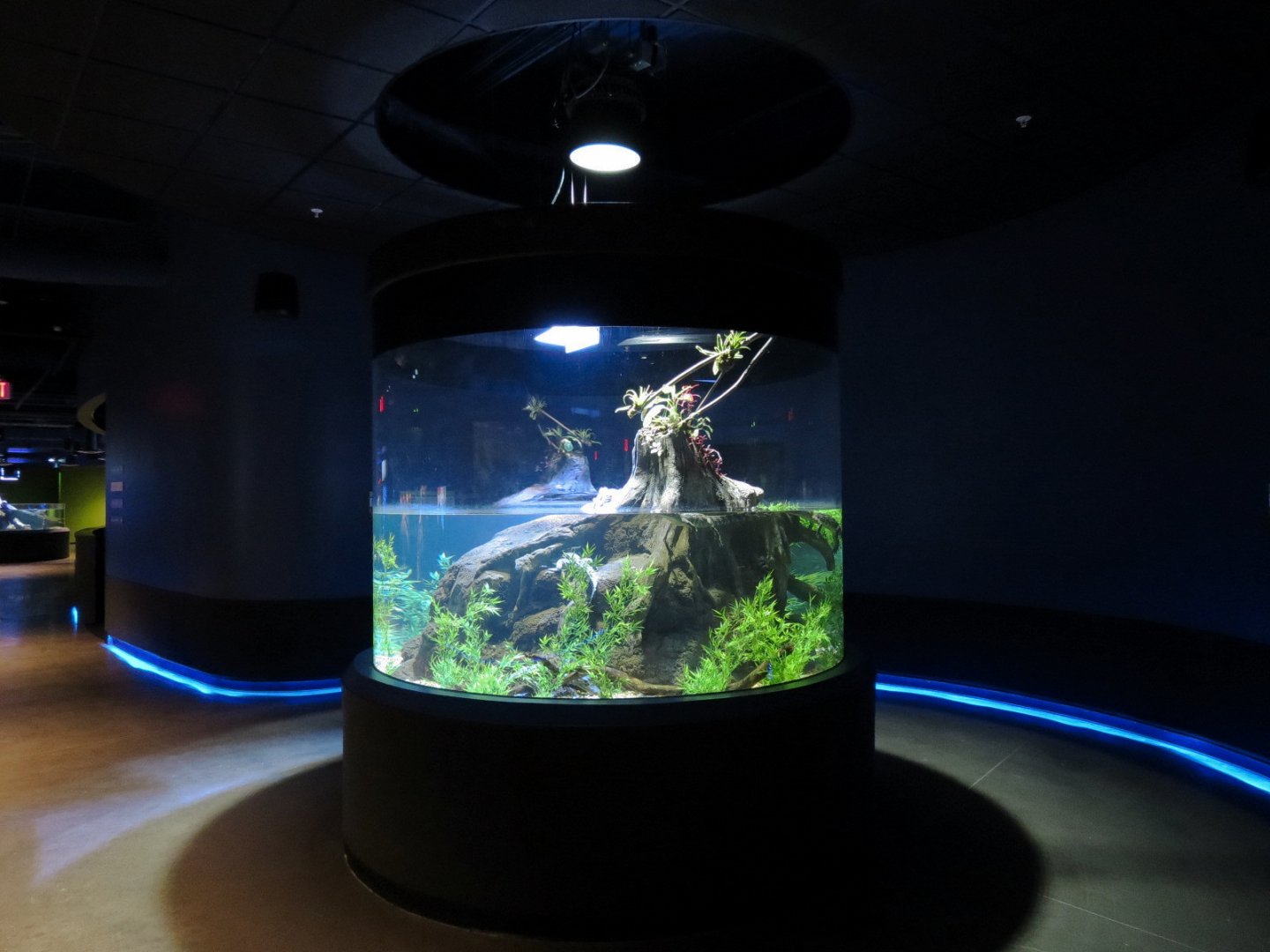
"American Rivers", a medium-sized round column tank:
American Eel
Black Crappie
Common Carp
Largemouth Bass

"Siamese Crocodiles", a medium-sized round column tank/terrarium:
This exhibit is out-of-place in the geographic theme of this zone, and appeared to be far too small for the 7 or so small inhabitants within:
Siamese Crocodile

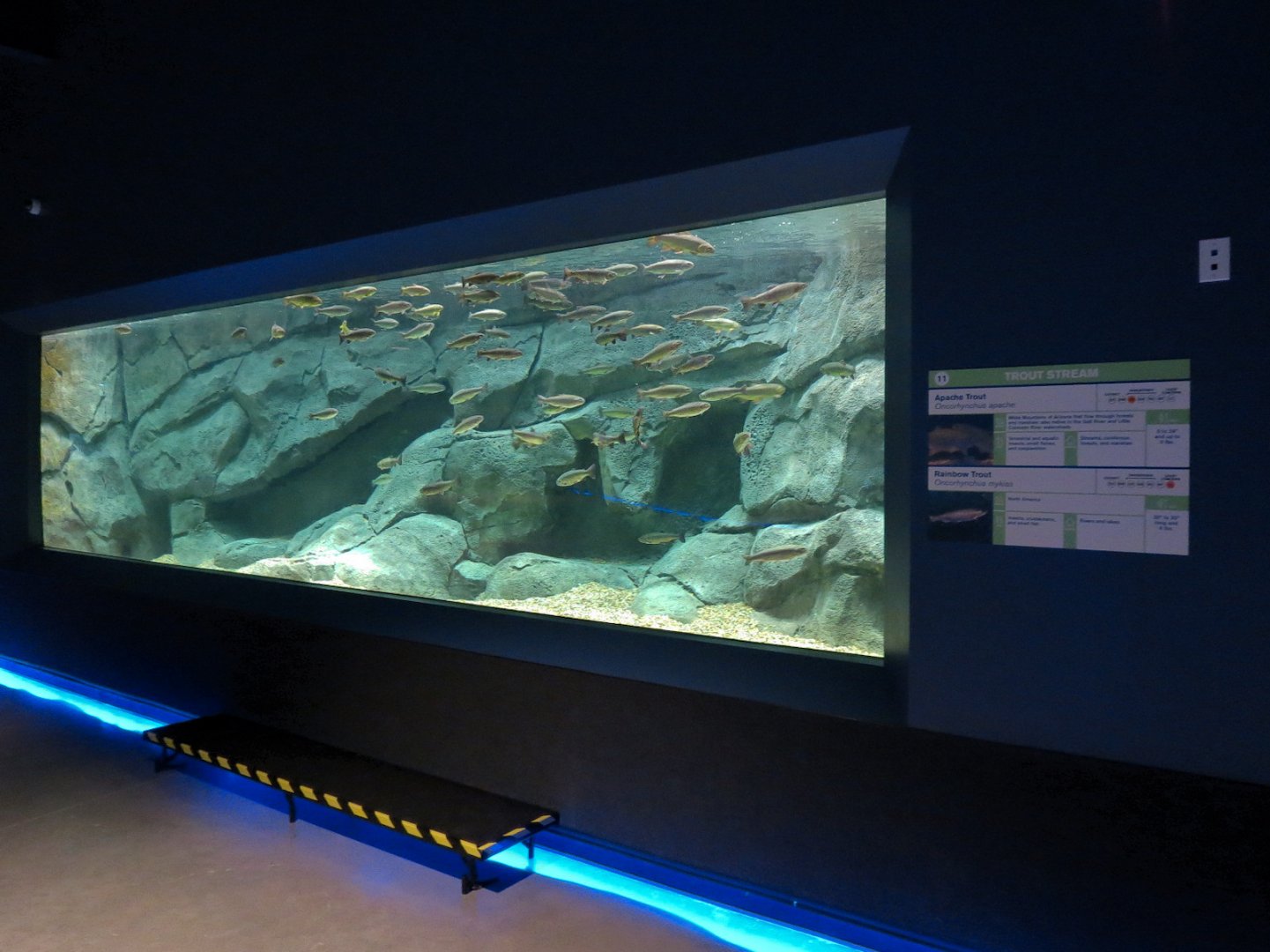
"Trout Stream", a large-sized wall tank:
Apache Trout
Rainbow Trout

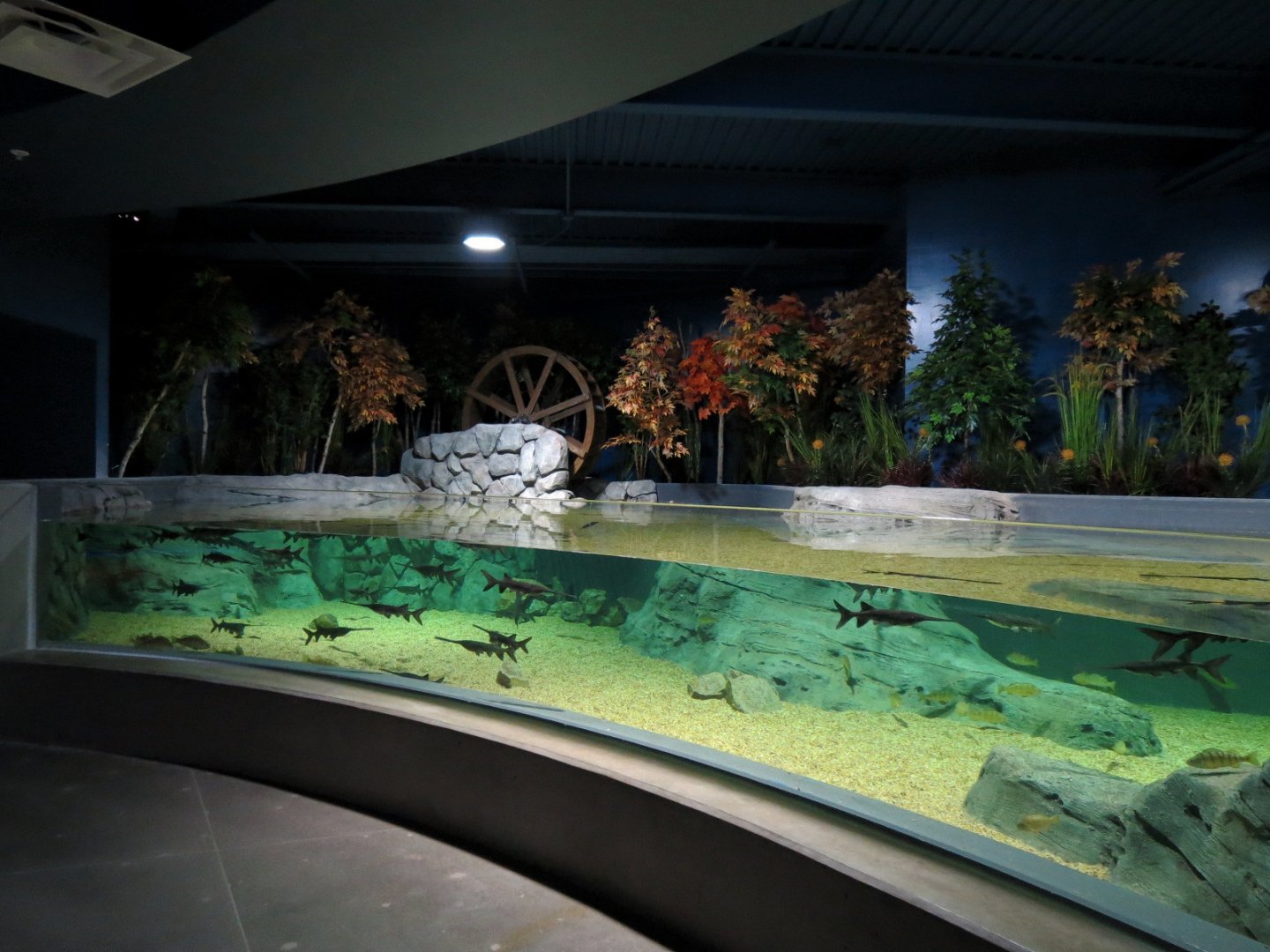
"Paddlefish", a large-sized shallow open-top tank:
This exhibit is an impressive display of what appeared to be over 50 paddlefish inhabitants:
Paddlefish
Yellow Perch

"Gars", a large-sized half-hexagonal wall tank:
Alligator Gar
Channel Catfish
Longnose Gar


RAINFOREST RIVERS: (7 Exhibits)
The second exhibit gallery is nearly identical in design style to the first and feels like a continuation; most visitors will hardly notice the transition unless paying attention to the signs. Perhaps this was intentional to allow flexibility in the collection display here. Most of the exhibits feature South American fish.

"Piranhas", a medium-sized wall tank viewed from either side:
This exhibit is titled "Asian Barbs" on the map so its original display had already been changed to:
Cory Catfish
Red-bellied Piranha

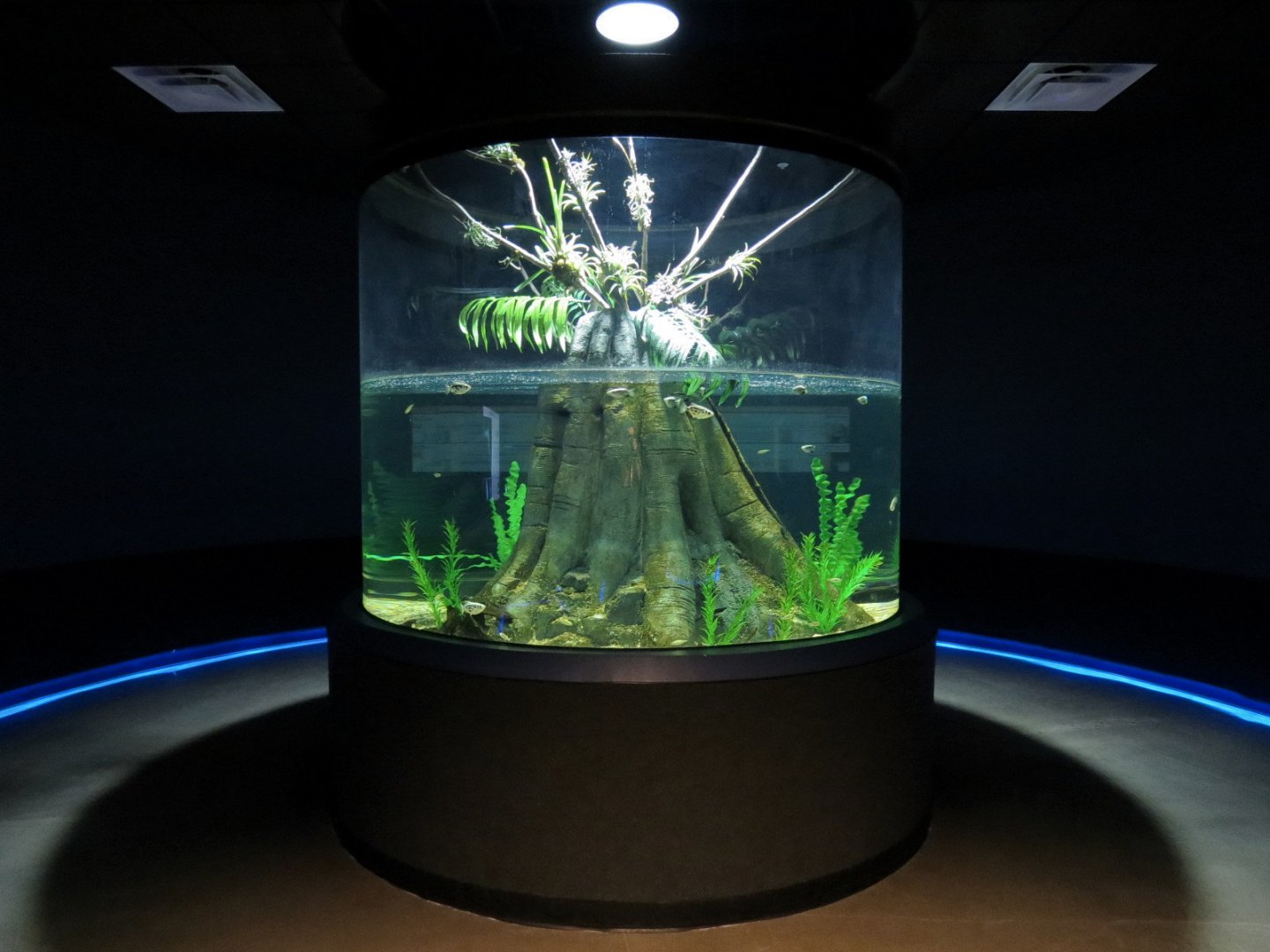
"Archer Fish", a medium-sized round column tank/terrarium:
Banded Archerfish
Figure 8 Puffer
White Cloud Minnow

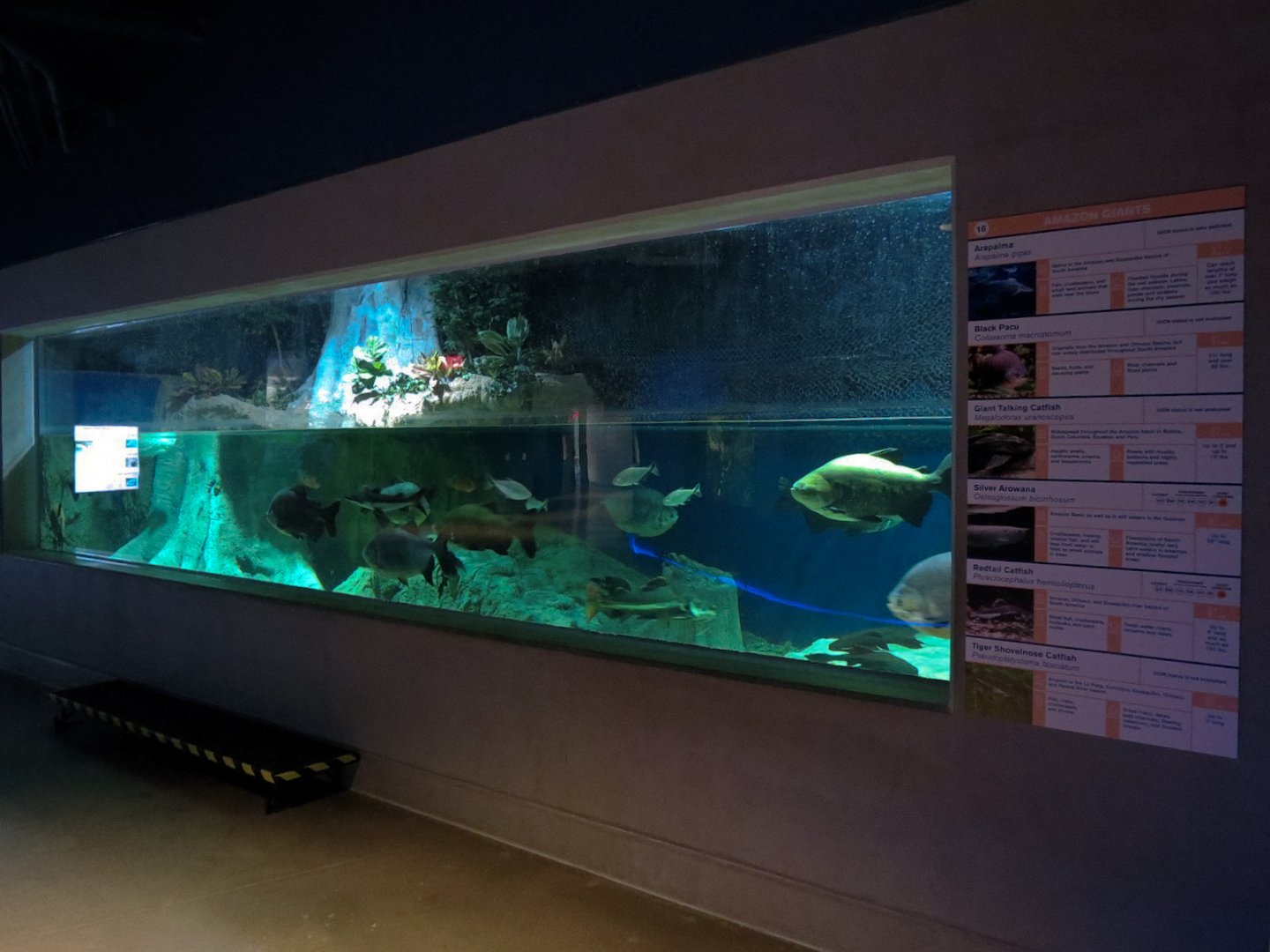
"Amazon Giants", a large-sized wall tank:
Arapaima
Black Pacu
Giant Talking Catfish
Redtail Catfish
Silver Arowana
Tiger Shovelnose Catfish

"River Rays", a medium-sized wall tank:
Banded Leporinus
Ceja River Stingray
Mata Mata Turtle
Pleco
Silver Dollar Fish

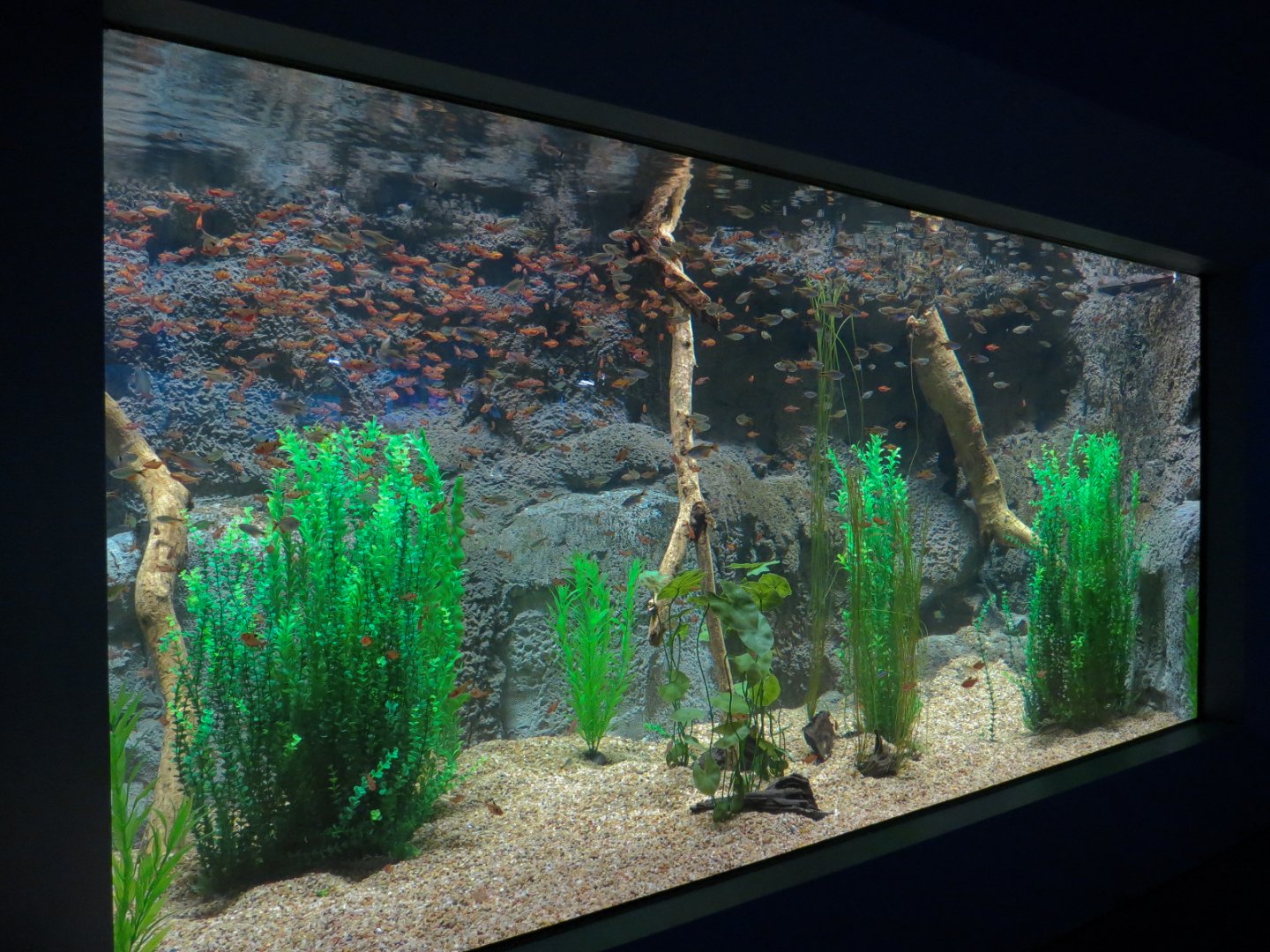
"Amazon River Fish", a medium-sized wall tank:
Buenos Aires Tetras
Cardinal Tetras
Gold Tetras
Neon Tetras
Serpae Tetras

"Flooded Forest", a medium-sized wall tank:
Peacock Bass
Texas Cichlid

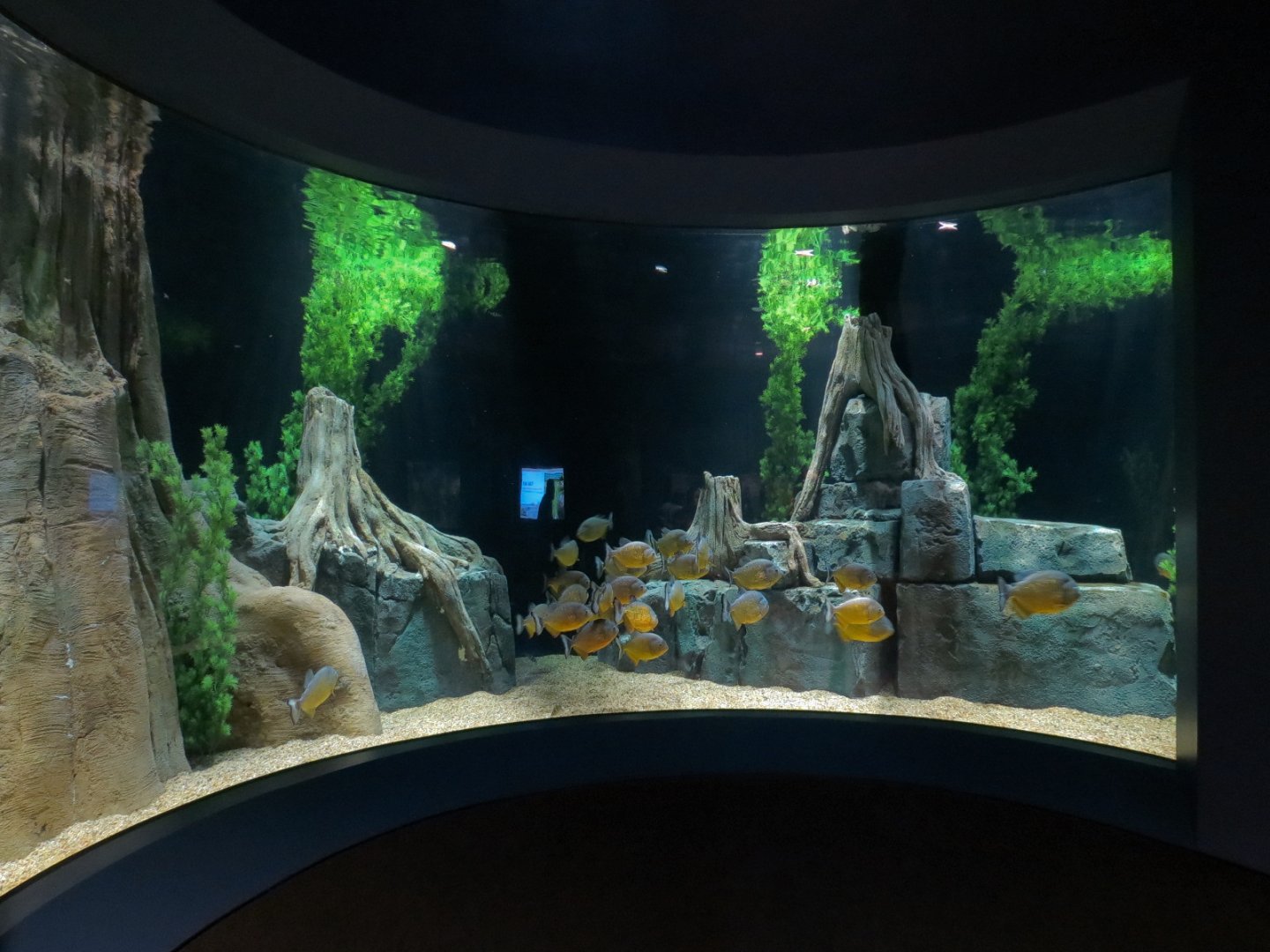
"Piranha", a medium-sized half-donut shaped wall tank:
Banded Leporinus
Bigtooth River Stingray
San Francisco Piranha


OTTER BANKS: (1 Exhibit)

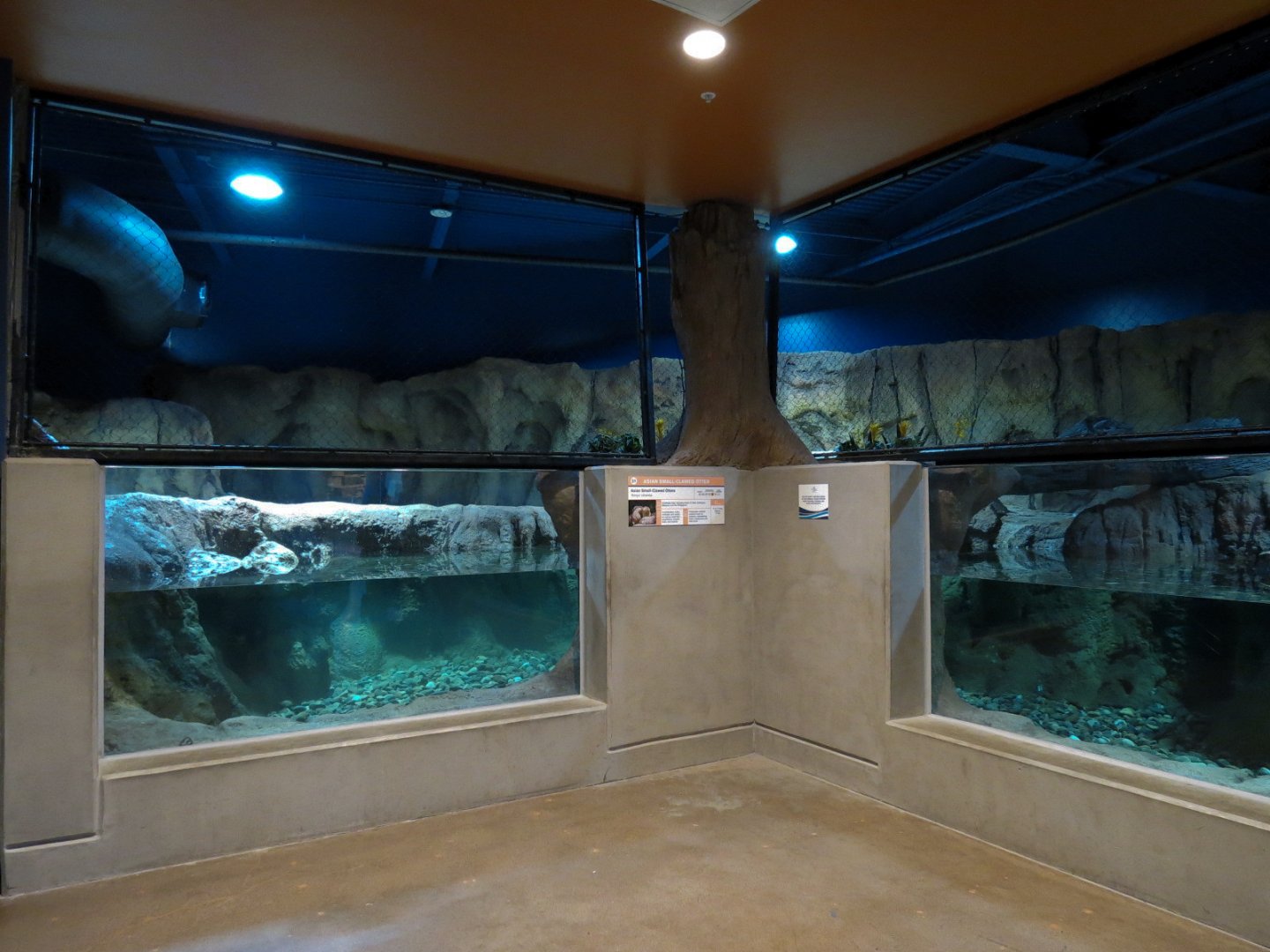
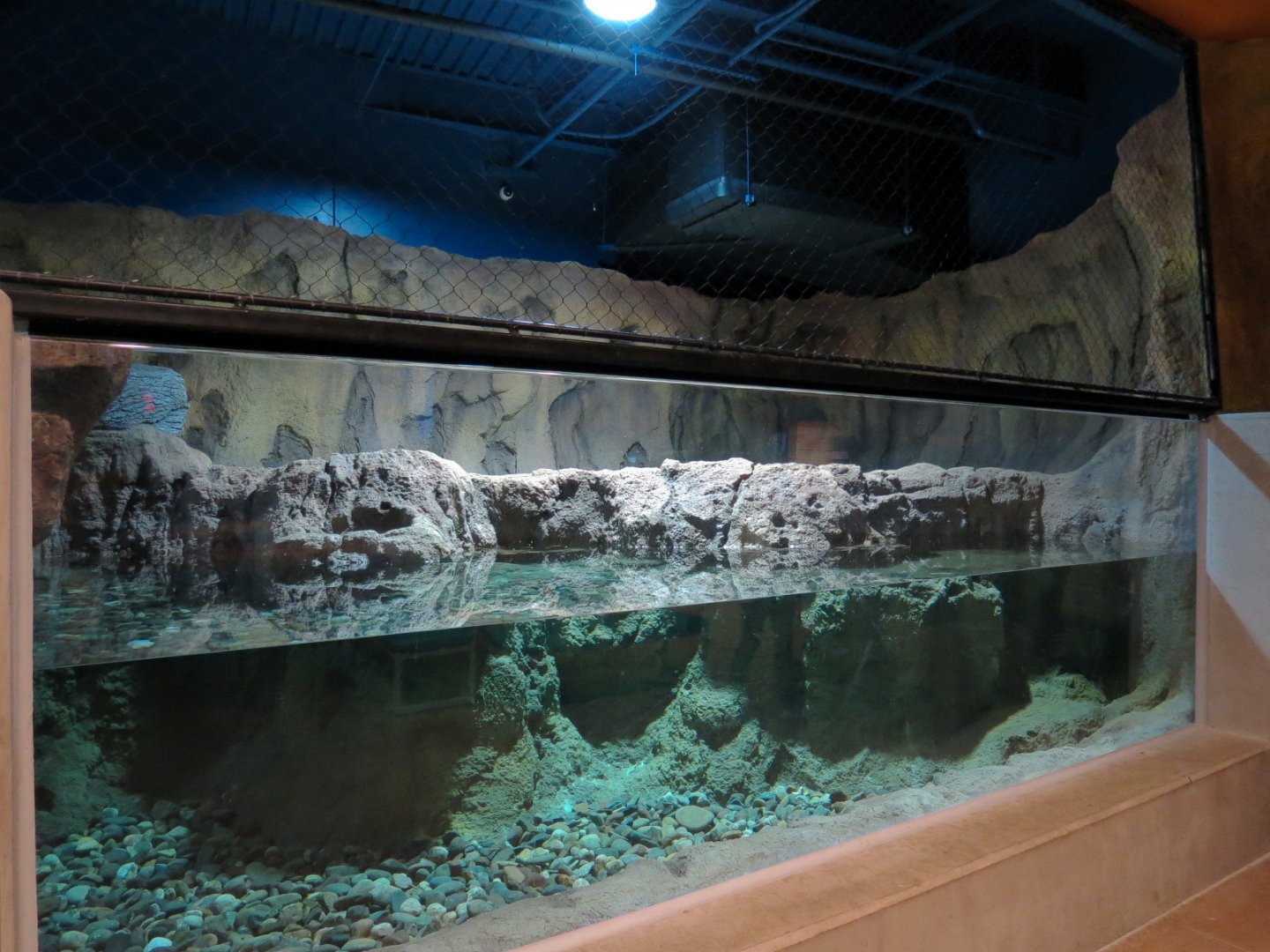
"Asian Small-clawed Otters", a large-sized room exhibit:

This exhibit is lined with simulated rocks walls, floors, and a pool in a roughly L-shaped space, above which are dark-blue-painted upper walls and an industrial ceiling. Nearly all lighting in the space is artificial from overhead flood lamps and visitor path ceiling lights; very little of the natural lighting from the adjacent skylit atrium that houses the two following zones described below reaches this space. Visitors view the exhibit from one of two half-height windows that allow underwater views or through the wire mesh screen that encloses the rest of the space up to the ceiling. In addition, a smaller window looks into a small rocky den that connects to the main exhibit for:
Asian Small-clawed Otter


TIDE TOUCH POOL: (1 Exhibit)
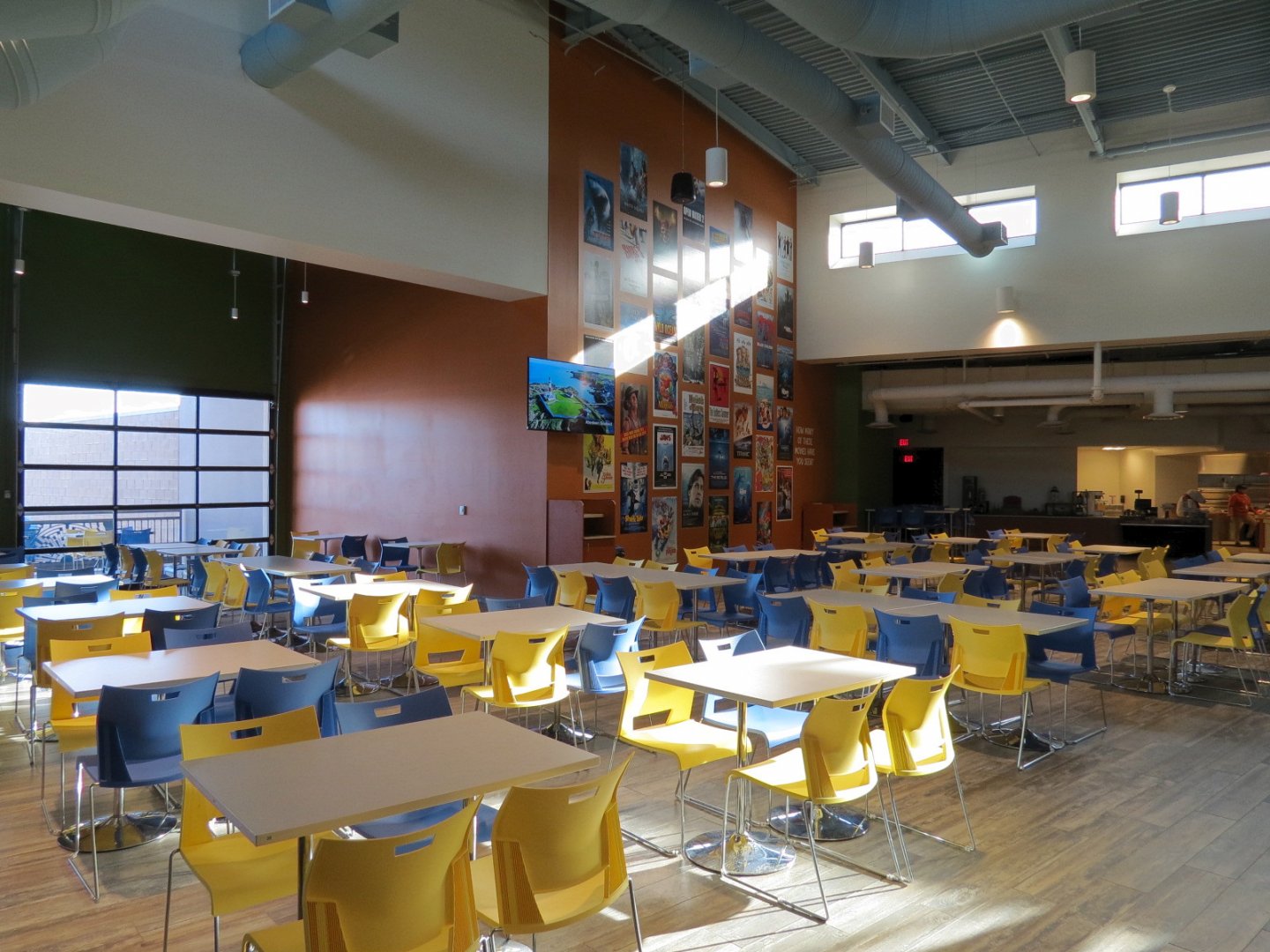
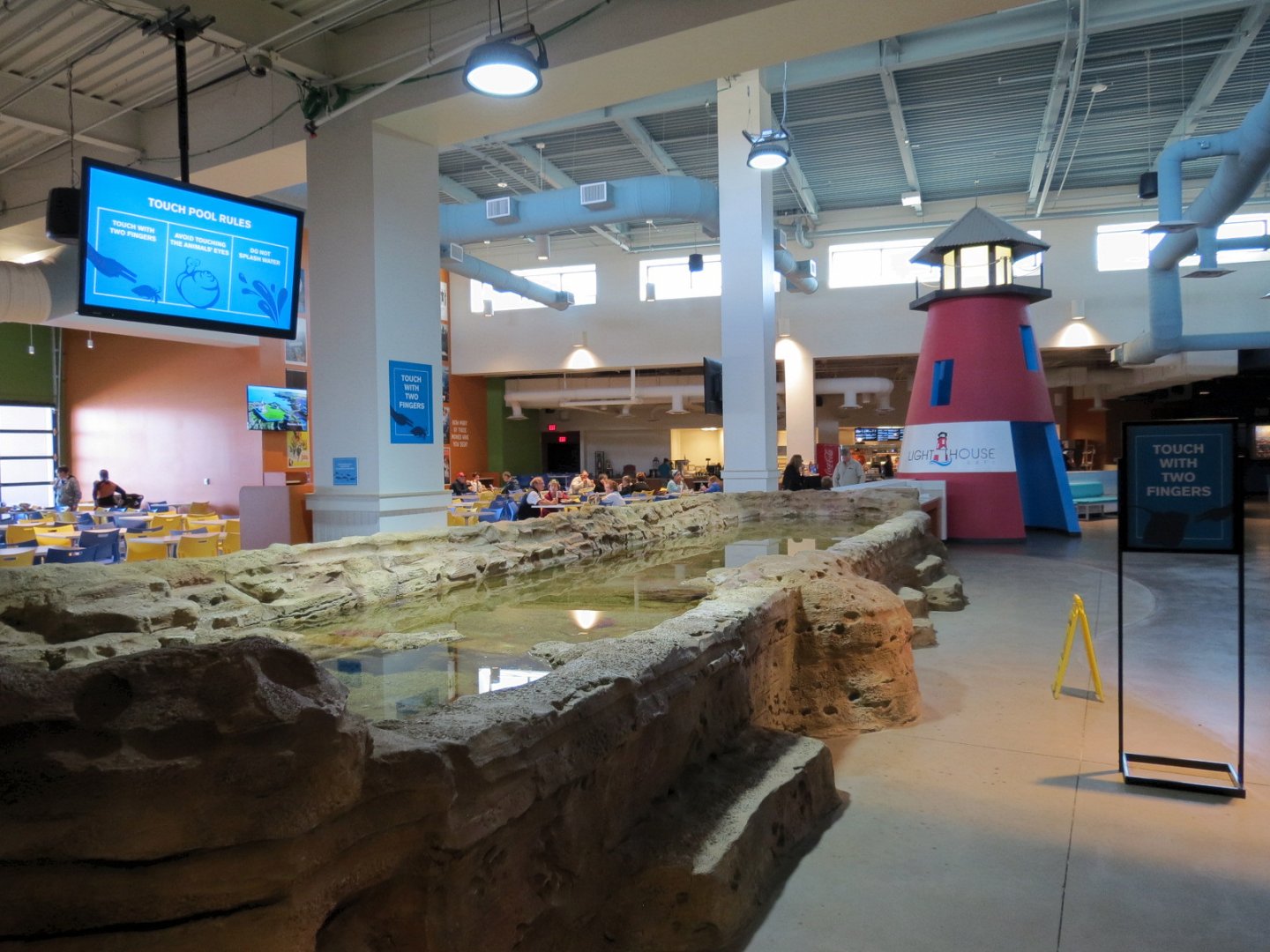
In contrast to the other zones in the aquarium, this one and the one described below share a much larger, taller, brighter space than the others. A ceiling of exposed steel I-beams and corrugated metal panels covers the roughly rectangular space, with a ring of clerestory windows allowing natural light in. Large air circulation ducts painted blue are suspended from the ceiling in this modern space. The space contains the "Lighthouse Cafe", a very large counter-service dining space that also has large roll-up doors with windows that lead to a dining balcony with views of the OdySea In The Desert Mall below and the desert mountains beyond. A large simulated lighthouse serves as the entrance to the cafe ordering area. Also contained in the space is the zone called "SeaTREK" described below, and this zone which has 1 exhibit that separates the cafe dining area from the visitor path:

"Tide Touch Pool", a long shallow raised pool contained in simulated rocky ledges:
Unsigned and unidentified species; their website mentions Chestnut Cowrie, Giant California Sea Cucumber, Nudibranchs, Sea Stars. I observed Anemones.


SEATREK: (1 Exhibit)
This is the other exhibit zone housed below the large tall ceiling area with natural lighting from the clerestory.

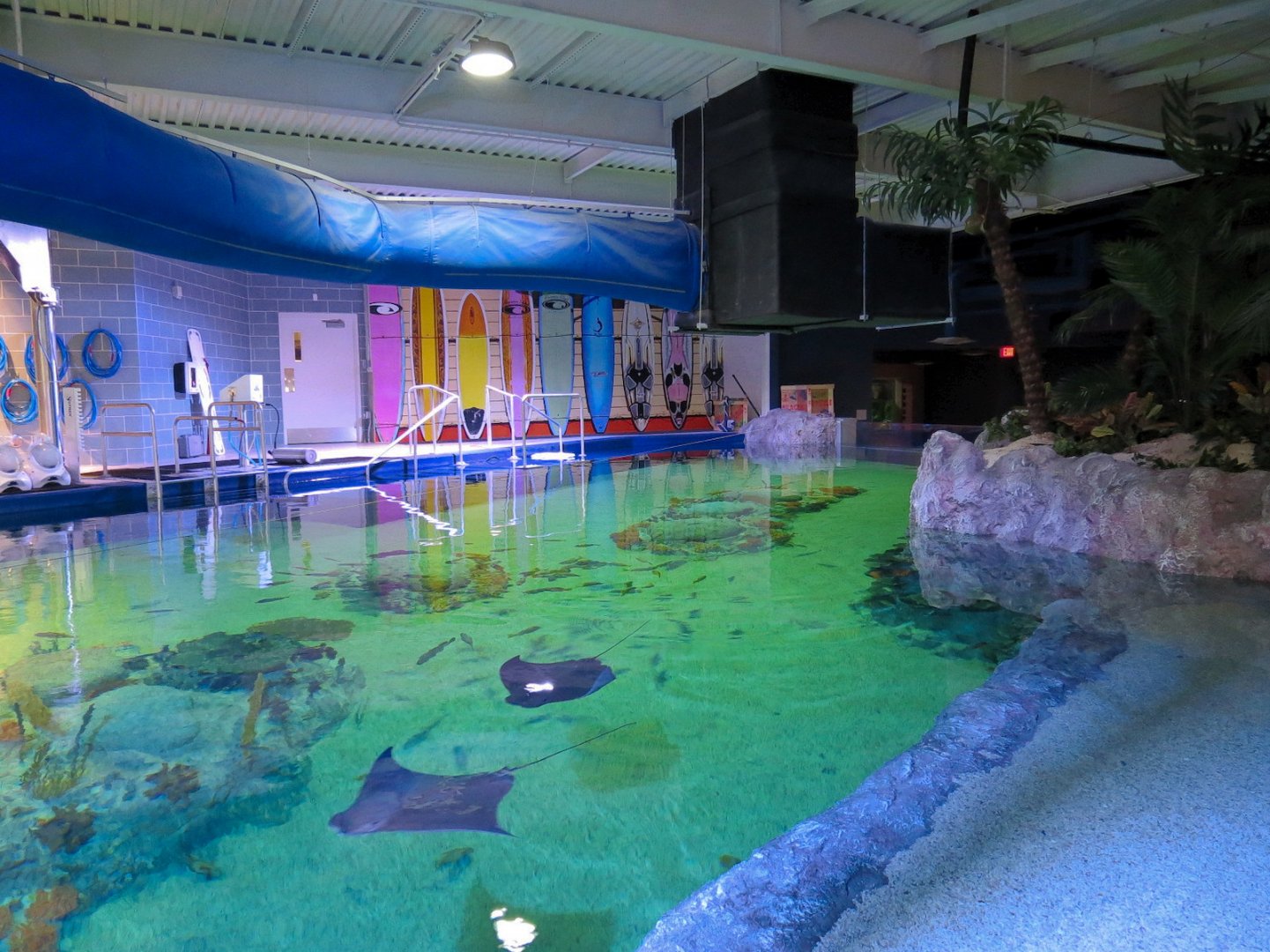
"SeaTREK'S Stingray Bay", a very large open-top tank:
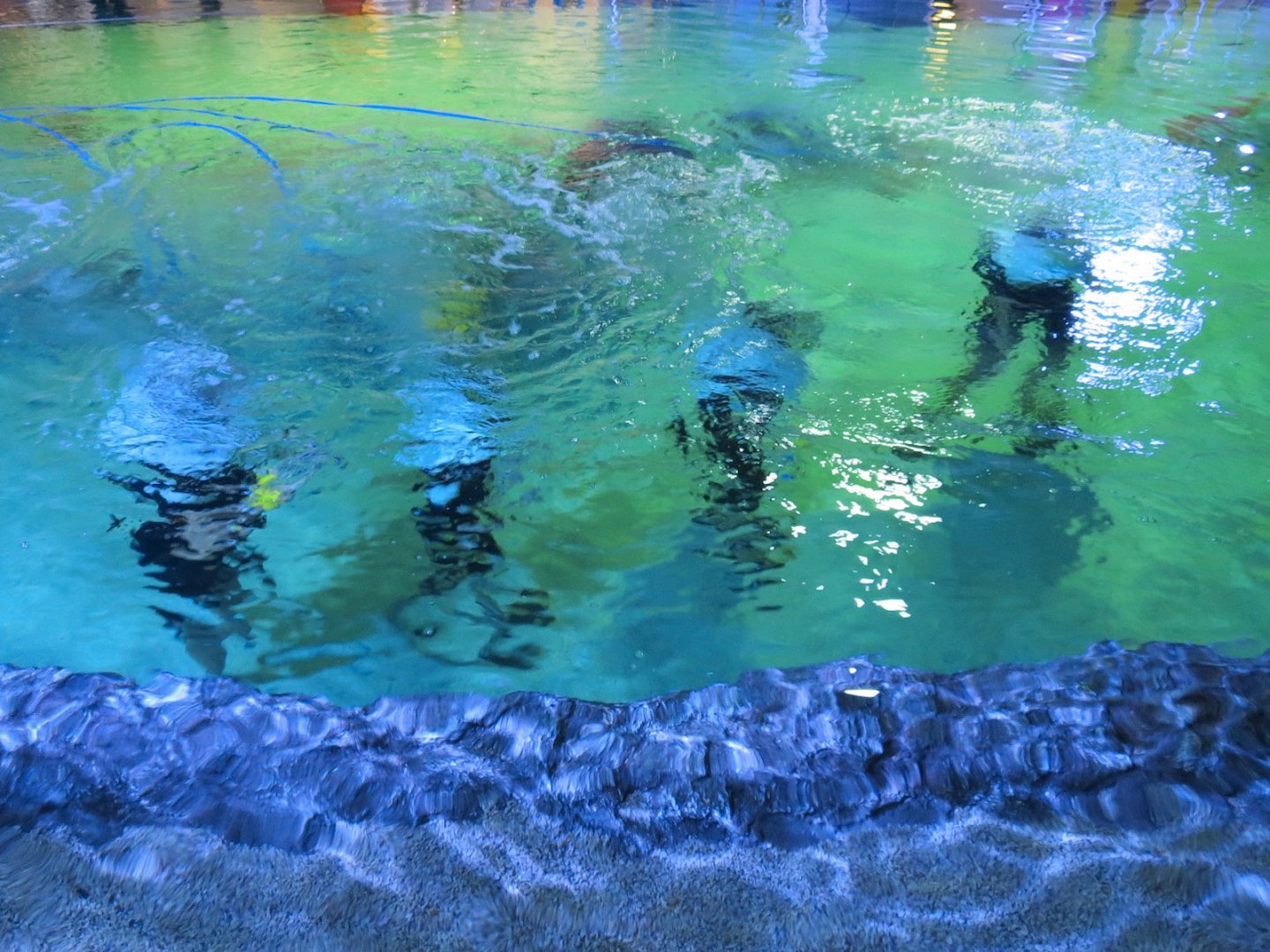
This feature exhibit can be viewed by visitors on all 4 sides of its long angled-rectangular shape...for a price. This is due to the fact that the long platform ledge above the water's surface on the far side is for staff and visitors involved in the SeaTREK helmet diving experience which is not included with general admission. Divers suit up, get safety lessons, and enter the exhibit to walk on its sandy floor from the far side. General admission visitors can view the exhibit from either end through underwater viewing windows that peer down into the deeper depths of the tank, or from a long raised area at the water's surface to attempt to touch its inhabitants. A handwashing station is nearby. The tank itself is contained in plain walls with a flat sandy open floor for divers to walk upon, except for a few simulated reef outcrops submerged in the middle. It contains:
Blue Tang
Cownose Ray
Unicorn Fish
Zebra Shark
Their website also mentions Nurse Shark and Whipray


PENGUIN POINT: (2 Exhibits)
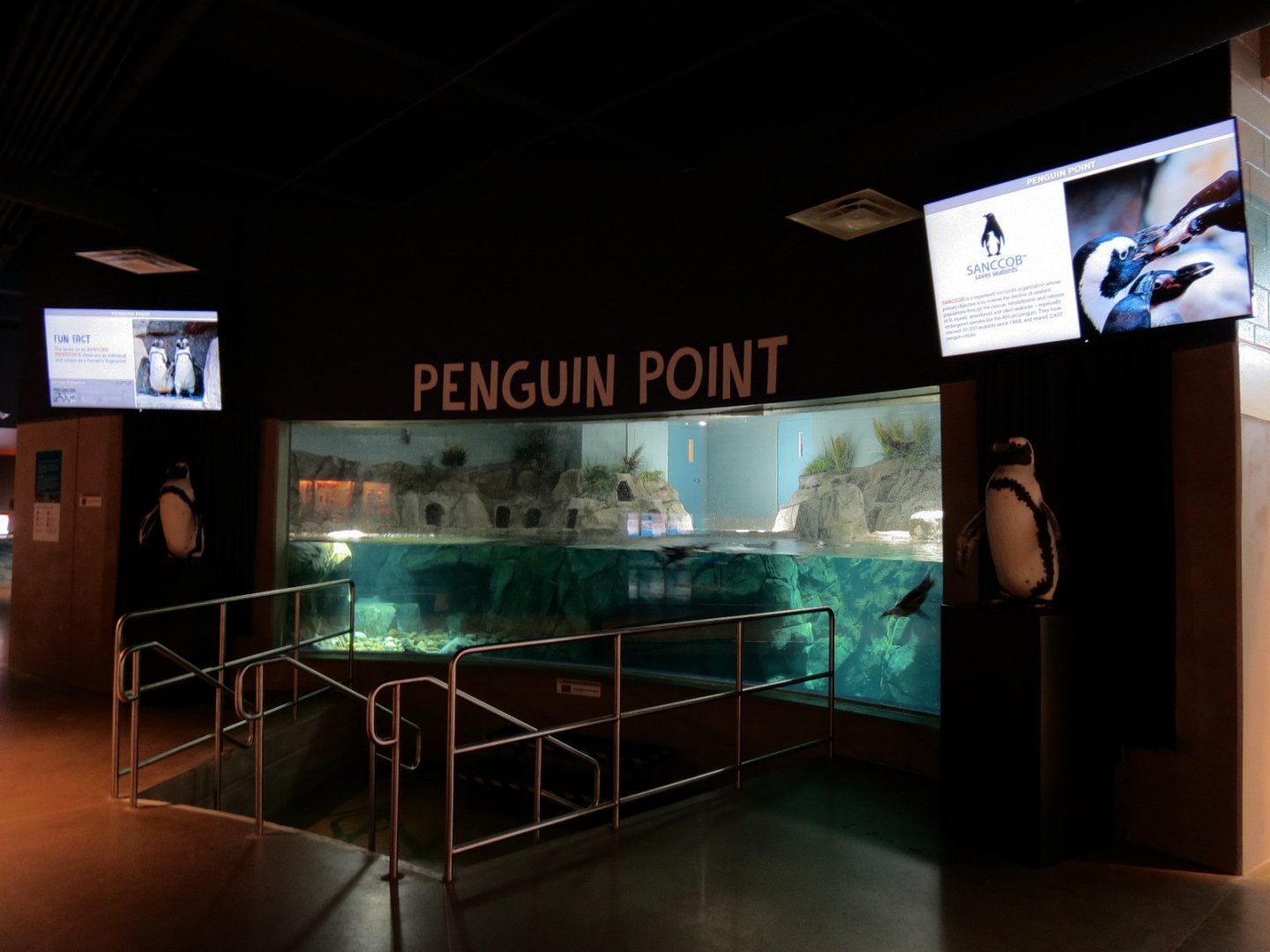
This zone reverts back to the lower ceiling and dimmer lighting of the rest of the aquarium halls in contrast to the two previous zones described above. It is in a large irregularly-shaped room that has 2 areas that are not live animal exhibits: one is "Interactive Water Play" (a raised table with mechanical elements to move and divert water for children) and "Discovery Desk" (a check-in desk for visitors that are participating in the up-charge animal encounters and tours.). One such animal encounter takes place in one of the 2 live animal exhibits nearby:

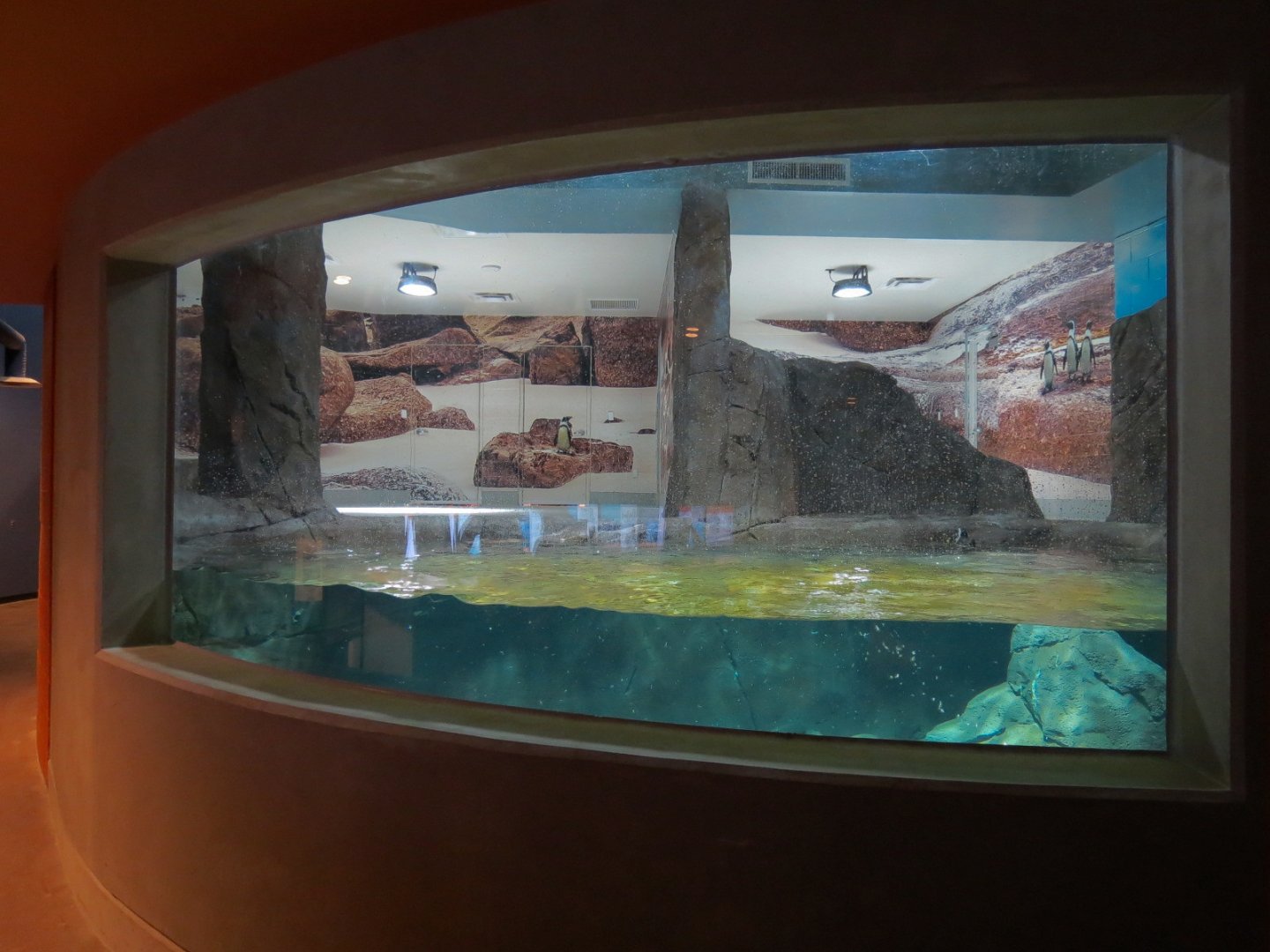
"Penguin Interaction Program", a medium-sized room exhibit:
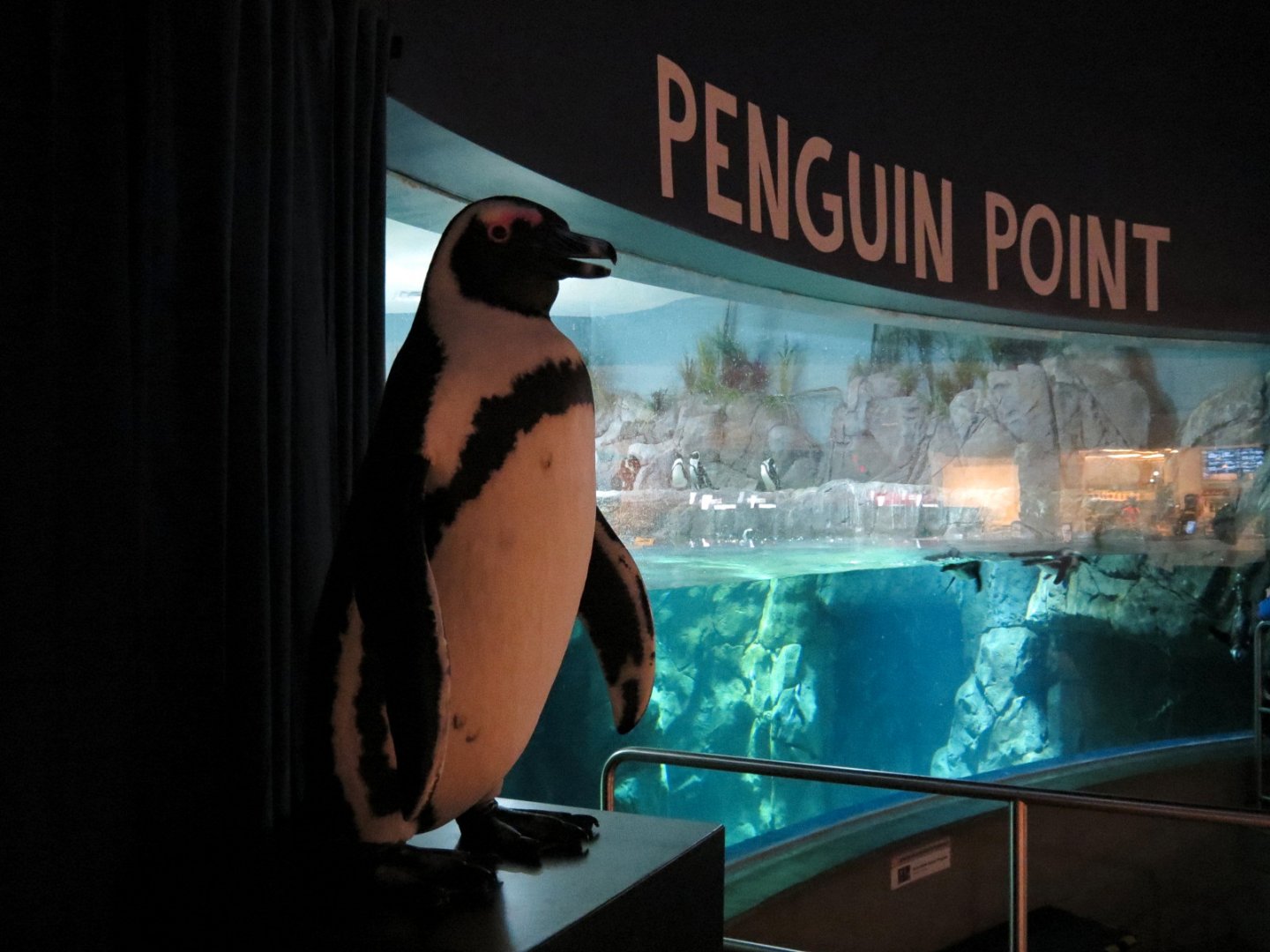
This exhibit is viewed from a curved viewing window with partial underwater viewing by general admission visitors; those paying for the "Penguin Interaction Program" (not yet operating during my visit) were anticipated to enter the room itself with a keeper to stand on a small ledge area at the water's surface on the far side of the pool to feed (and touch?) the inhabitants. The pool and a few wall elements are lined in simulated rock, while the rest of the smooth walls are covered in photo-realistic graphics of South African shorelines and penguins. All lighting is artificial, from floodlamps mounted in the smooth white ceiling above. This exhibit actually attaches behind the walls to the adjacent one; the two exhibits can be closed from each other to isolate the more cooperative individuals for the future interaction program for:
African Black-footed Penguin

"African Black-footed Penguin", a medium-sized room exhibit:
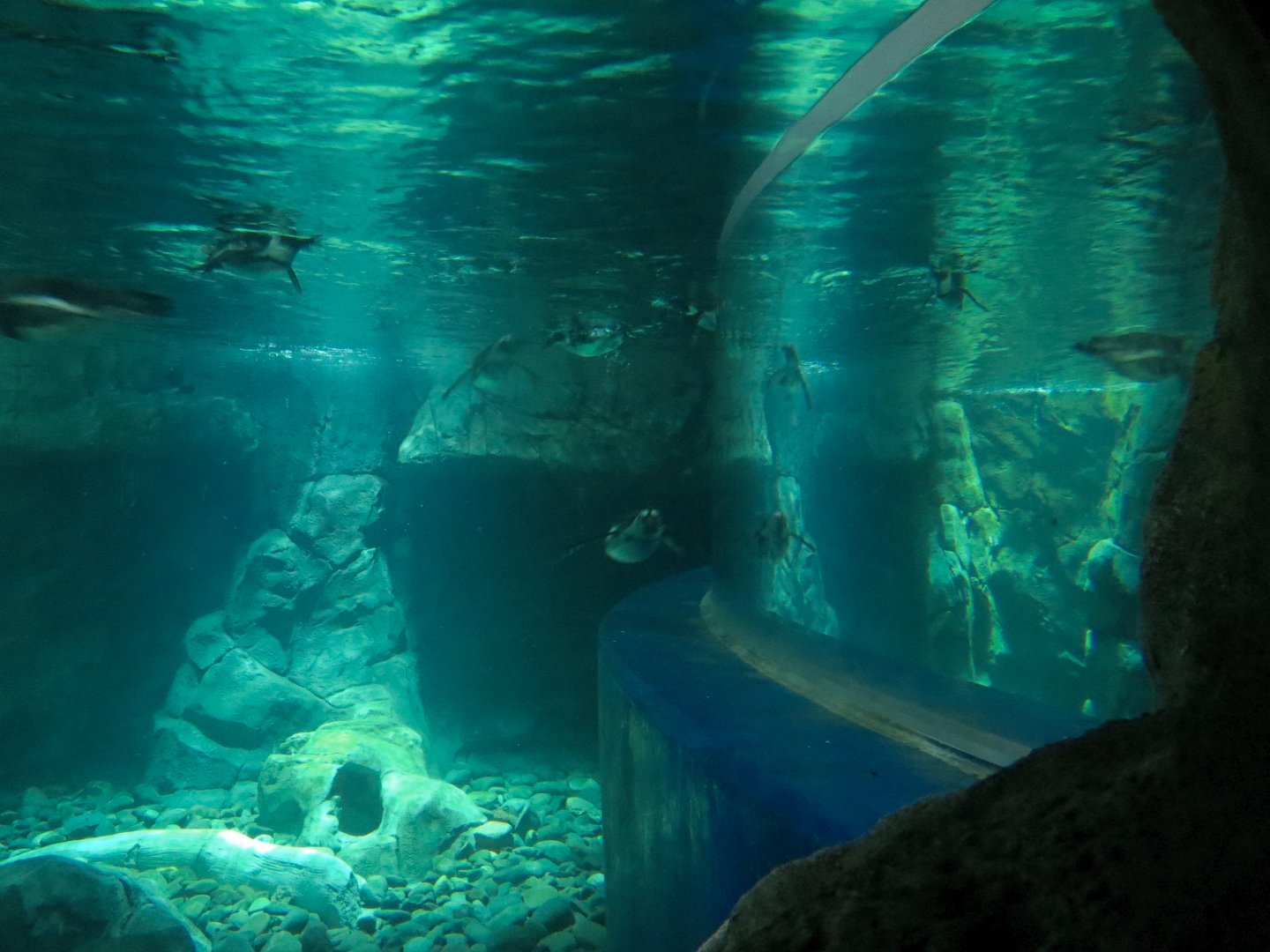
This main exhibit in the zone is slightly larger than the other and has more features, although both have the same style of ceiling and artificial lighting. This one has more simulated rockwork, including multiple above-water small burrows on the narrow shore ledge. It also has a larger viewing window, with a pair of larger-than-life-size mechanical penguins, one on each side, that occasionally 'come to life' and give a presentation about their species! There is also a crawl tunnel on one side, where smaller visitors can see the exhibit through a pop-up window on the shore or a pair of small round underwater windows to see:
African Black-footed Penguin


DEEP OCEAN: (1 Exhibit)
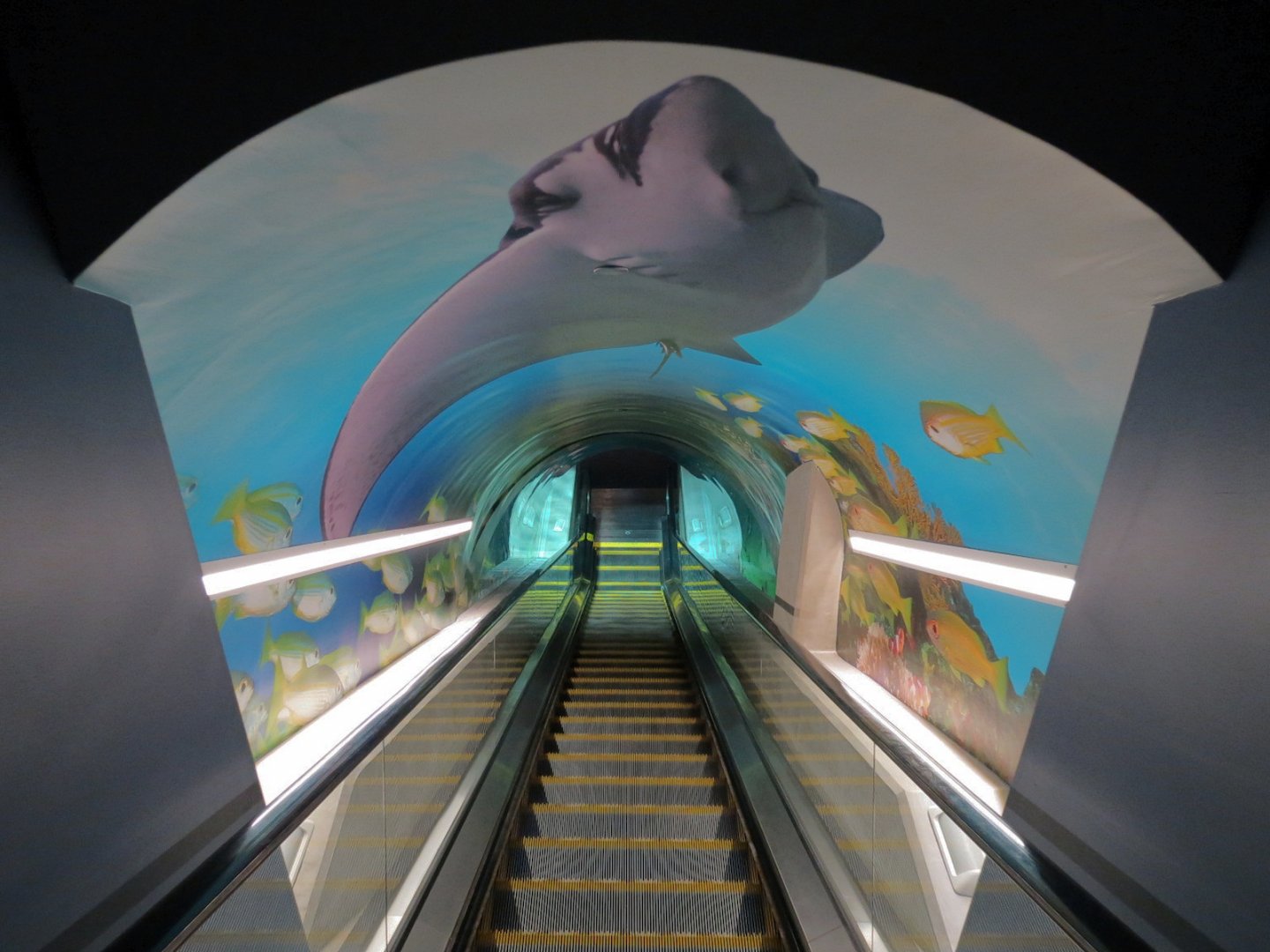
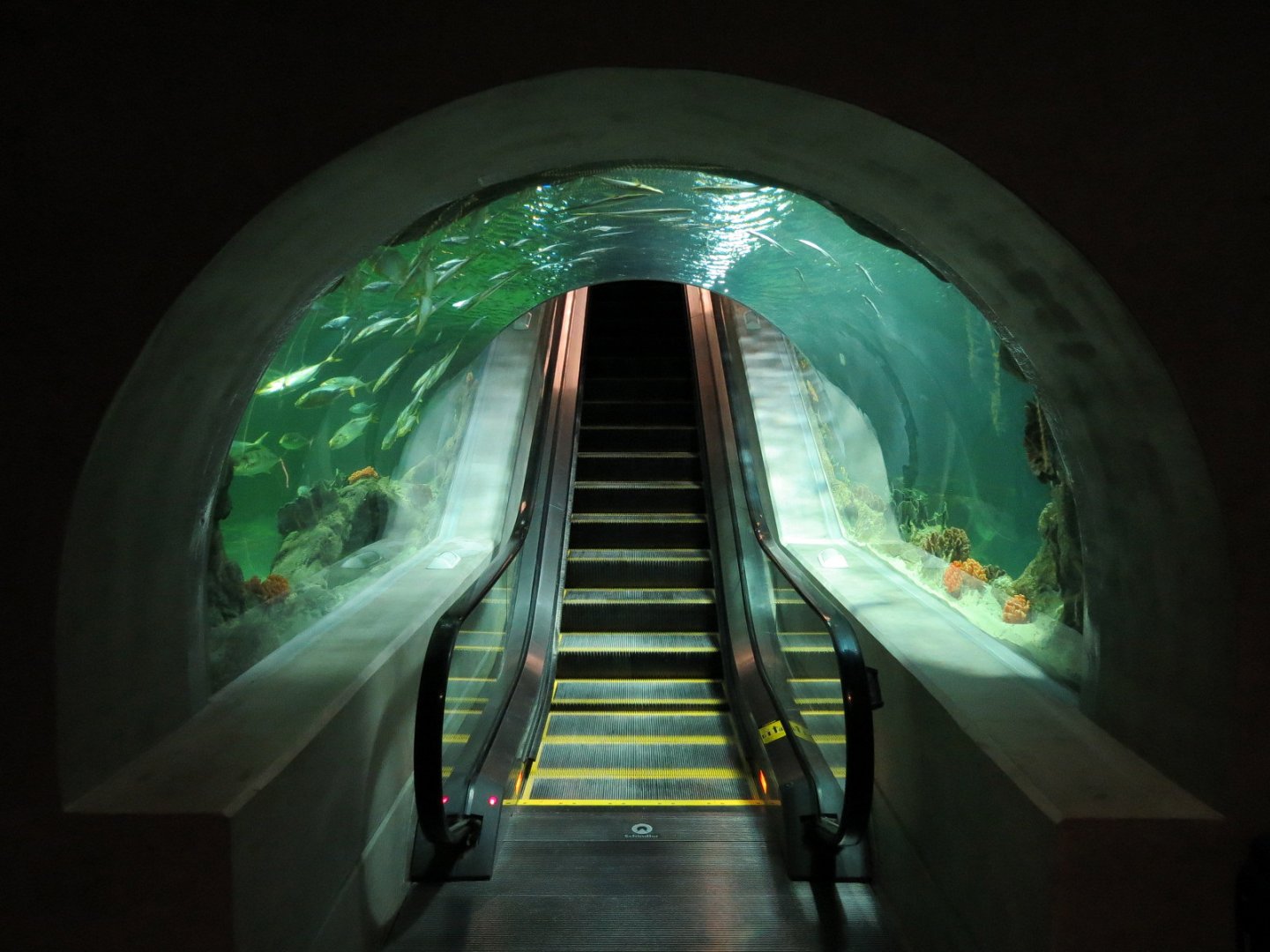
This zone begins on the second level of the aquarium and descends back down to the first level, where the rest of the zones are located. It begins with the "Deep Ocean Escalator", a standard escalator in a narrow hallway that visitors ride down. Halfway down, some large fish graphics cover the walls and low ceiling, and then further down at the bottom of the escalator the walls and ceiling become a viewing tunnel for a brief look into:

"Sharks of the Deep", a very large wall tank:
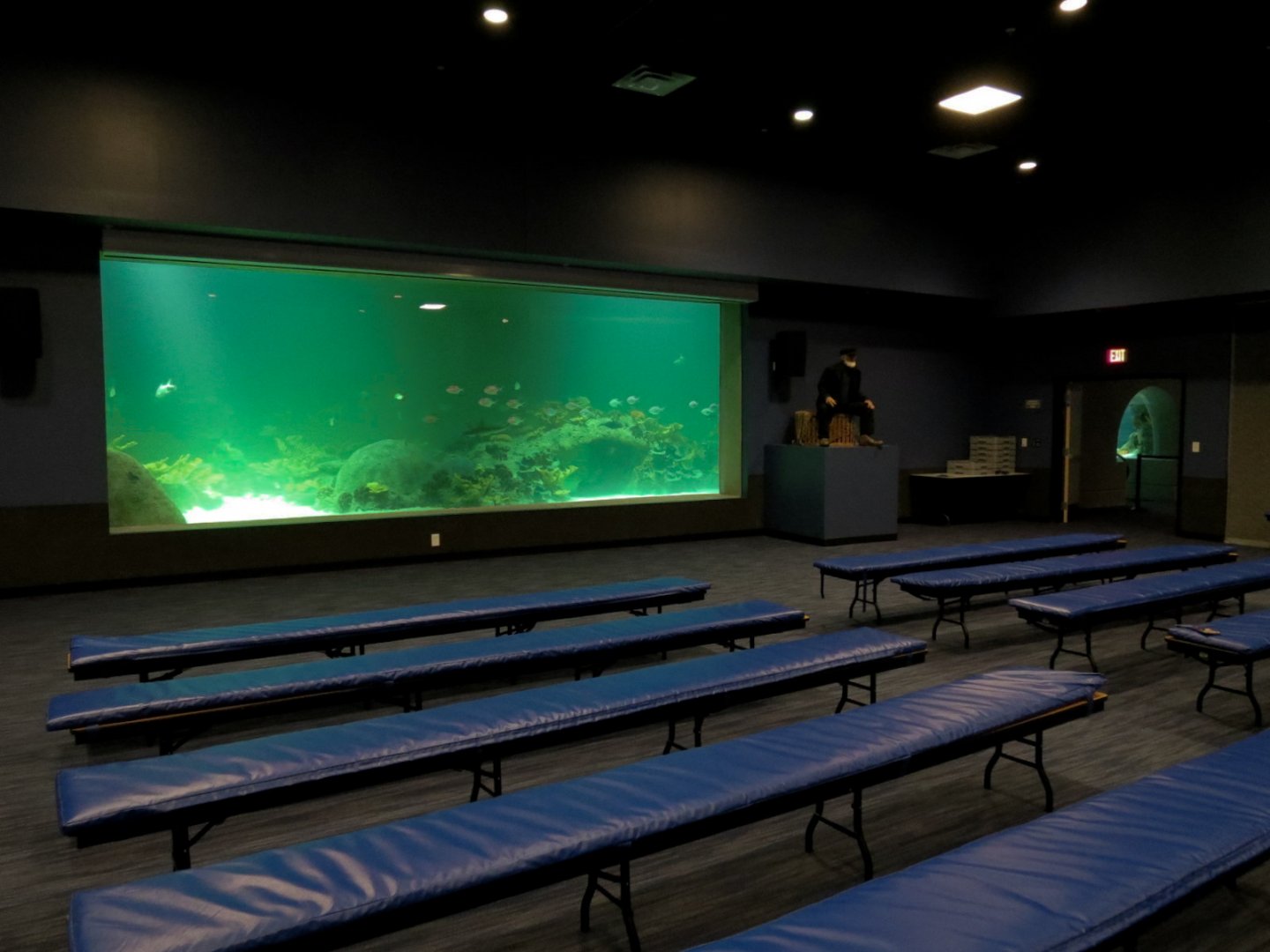
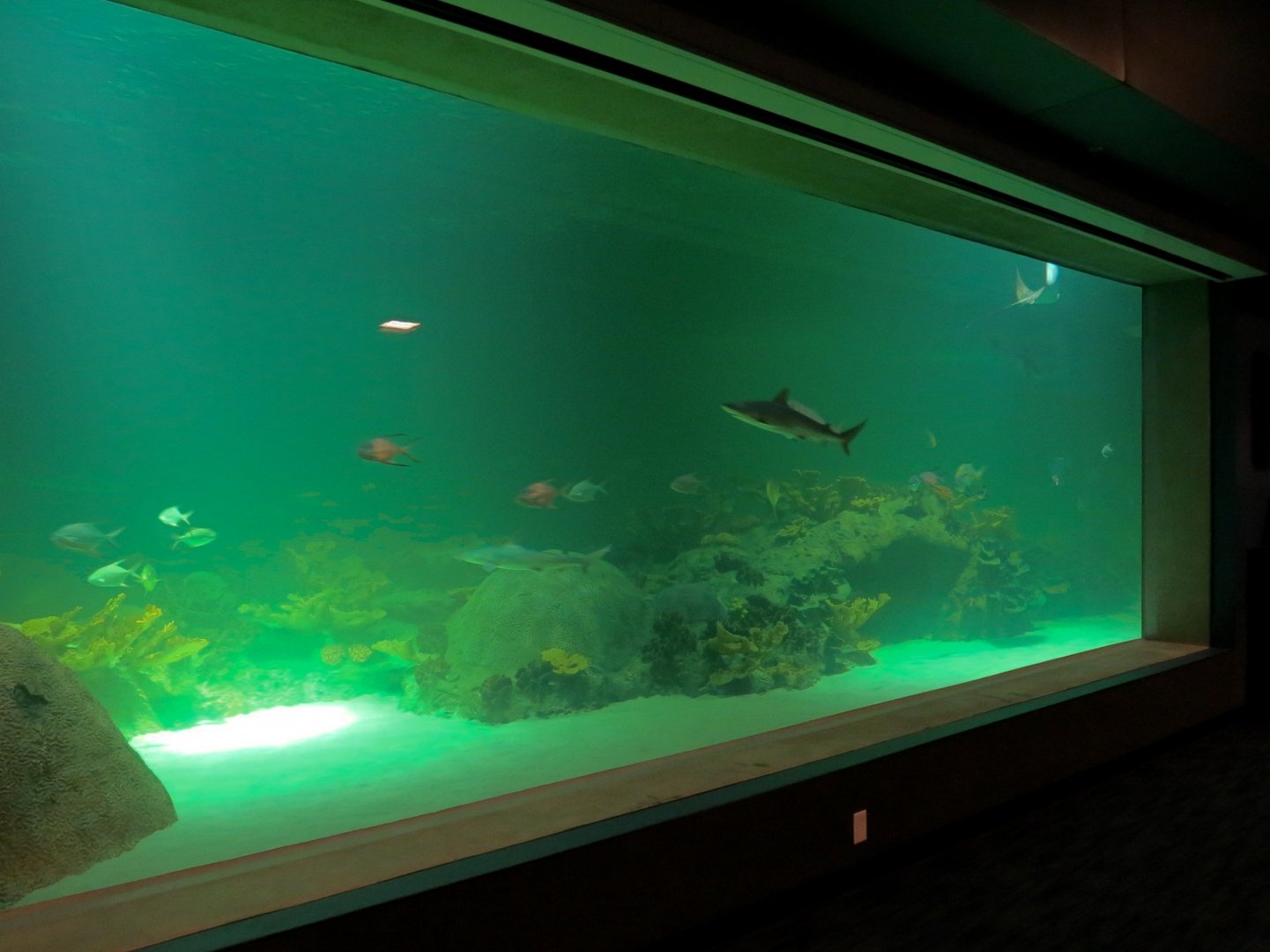
This feature exhibit is first viewed from the escalator tunnel as well as a round window in a wall nearby after stepping off the escalator, but the primary viewing area is actually contained in the adjacent room called "Deep Ocean 3D Theater". Visitors enter the theater before the show (included with general admission) and can view the exhibit through a single very large viewing window at the front of the theater. The theater has a flat floor and plain modern interior, with rows of moveable benches; it appears to be a flexible events rental space when not in theater use. Shortly before the show, a robotic figure on a platform next to the viewing window who is supposed to be a salty old seafarer comes to life with a brief cliche-ridden announcement that the show is about to start, but then he becomes silent and is never brought to life again. He has nothing to do with the exhibit or the film! The theater goes dark and a large screen descends from the ceiling to entirely cover the exhibit viewing window to show the film 'Underwater Giants', a short presentation viewed with 3D glasses about humpback whales and whale sharks. Upon its conclusion, the screen lifts to reveal the exhibit viewing window again and visitors are encouraged to exit. Within the large habitat itself are various reef outcrops among a sandy floor, and plain side and back walls that are dimly lit to visually disappear. It contains:
Bonnethead Shark
Golden Trevally
Scalloped Hammerhead Shark
Spotted Eagle Ray
Their website also mentions Cownose Ray and Leopard Shark


BIZARRE + BEAUTIFUL: (7 Exhibits)
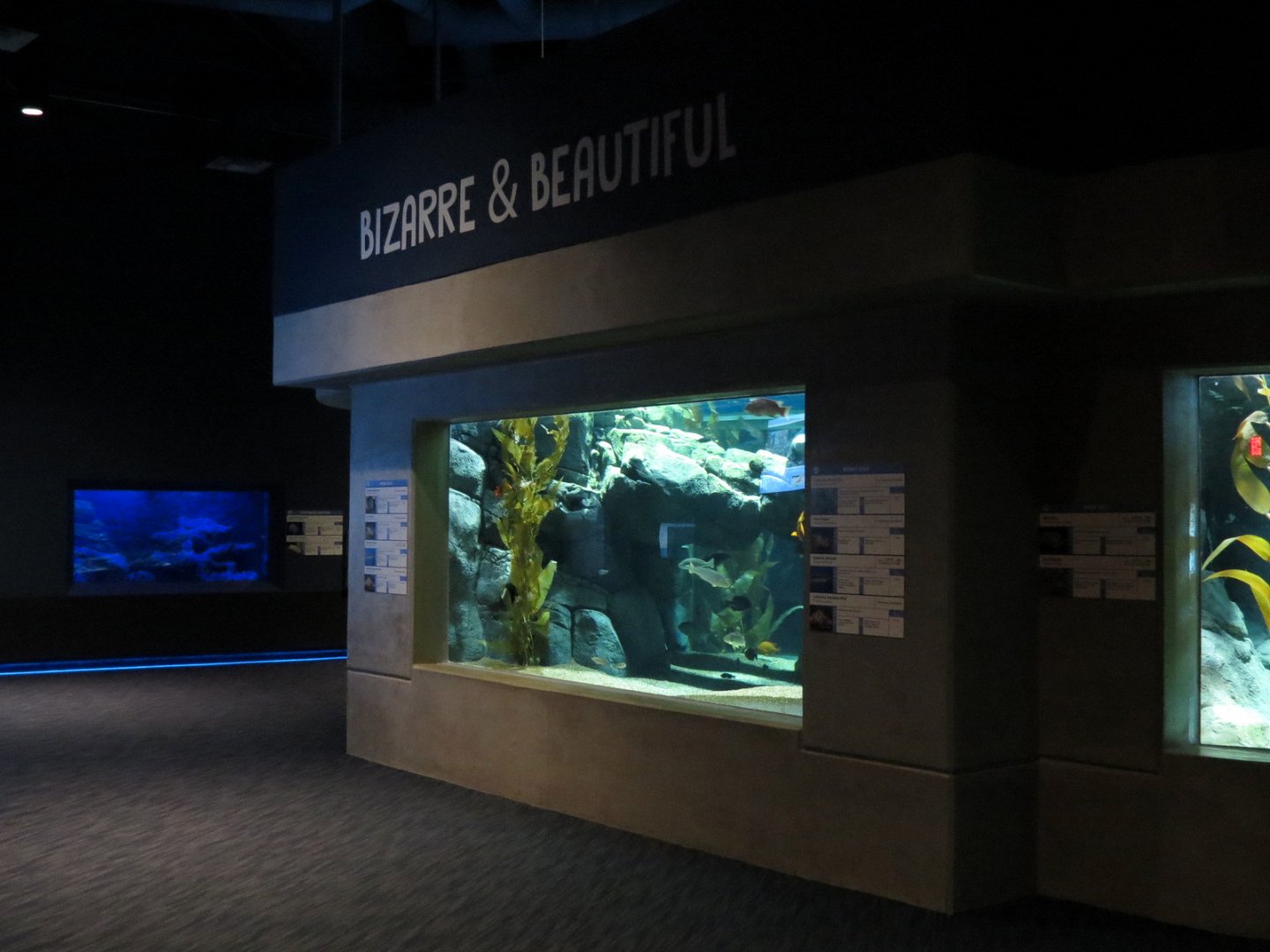
This spacious hall acts as the waiting area for visitors before they enter the "Deep Ocean 3D Theater" described above. It is another dimly lit plain modern hall that is devoid of theming except for the details within the exhibits themselves.

"Moray Eels", a medium-sized wall tank viewed from both sides:
California Moray Eel
California Scorpion Fish
Horn Shark
Senorita Wrasse

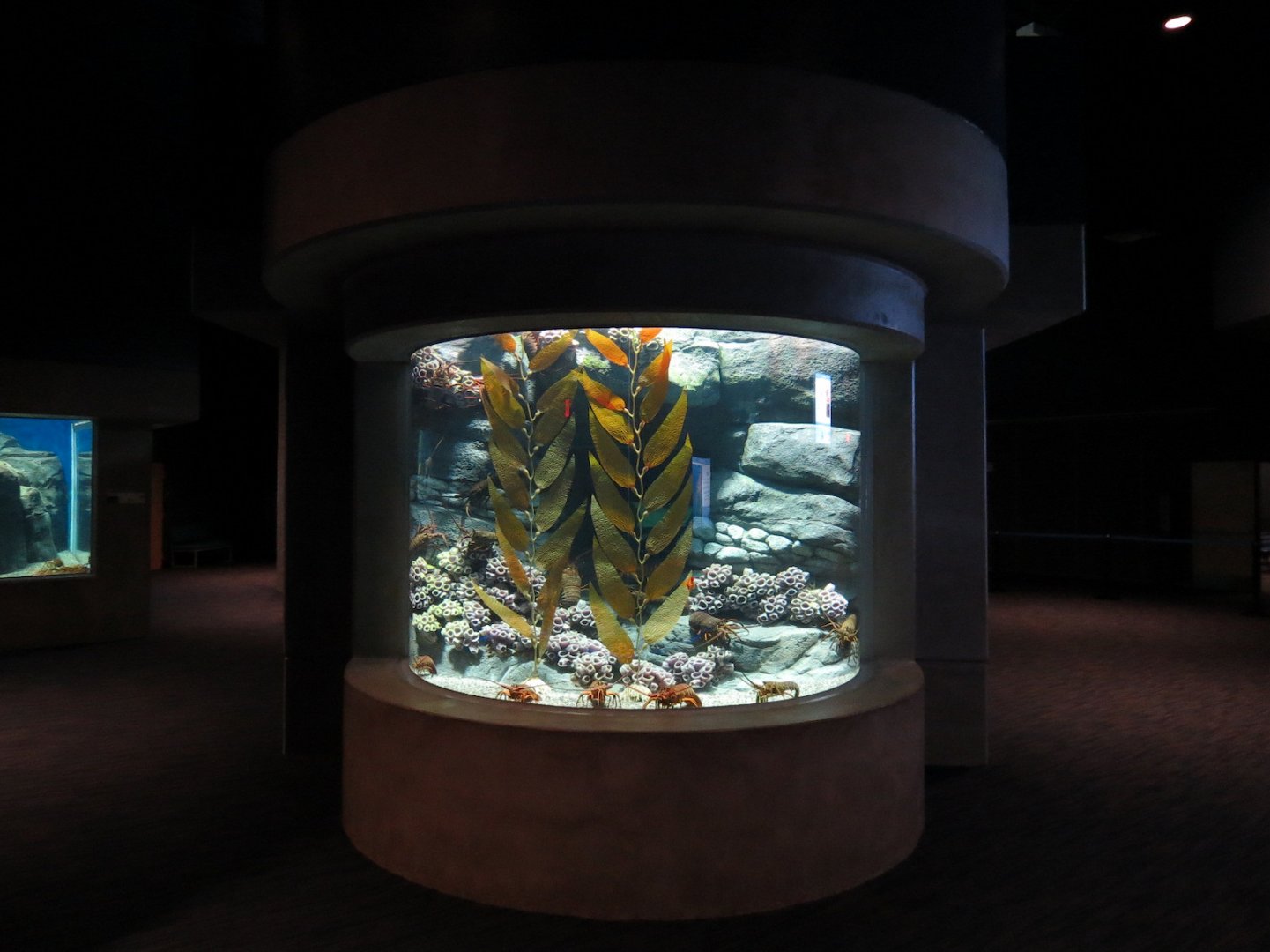
"Spiny Lobster", a medium-sized half-round wall tank:

This exhibit is titled "Spot Prawn Shrimp" on the map so its original display had already been changed to:
California Spiny Lobster
Kelp Bass

"Wolf Eel", a medium-sized half-round wall tank:
This exhibit is titled "California Spiny Lobsters" on the map so its original display had already been changed to:
Surf Perch
Wolf Eel

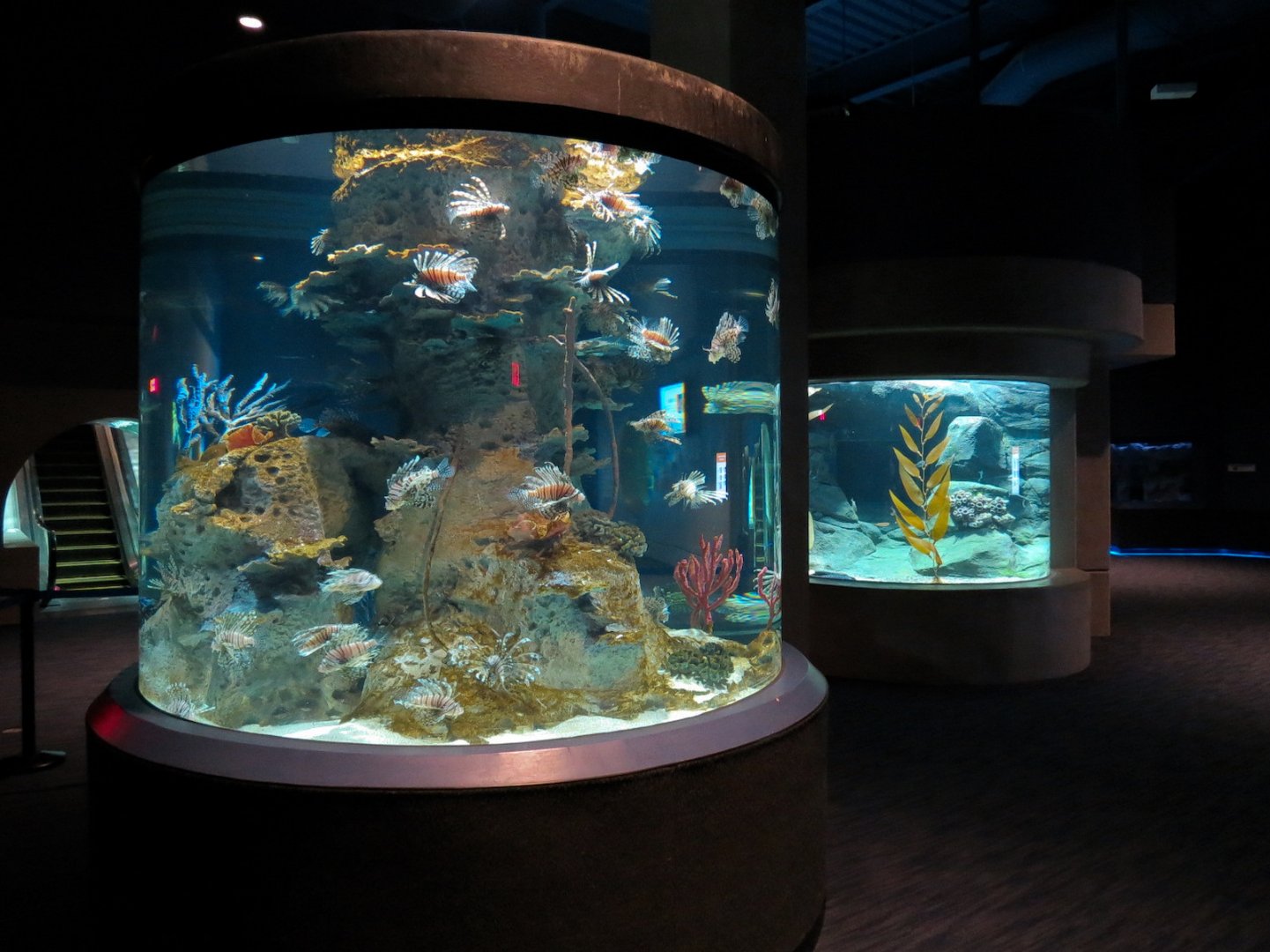
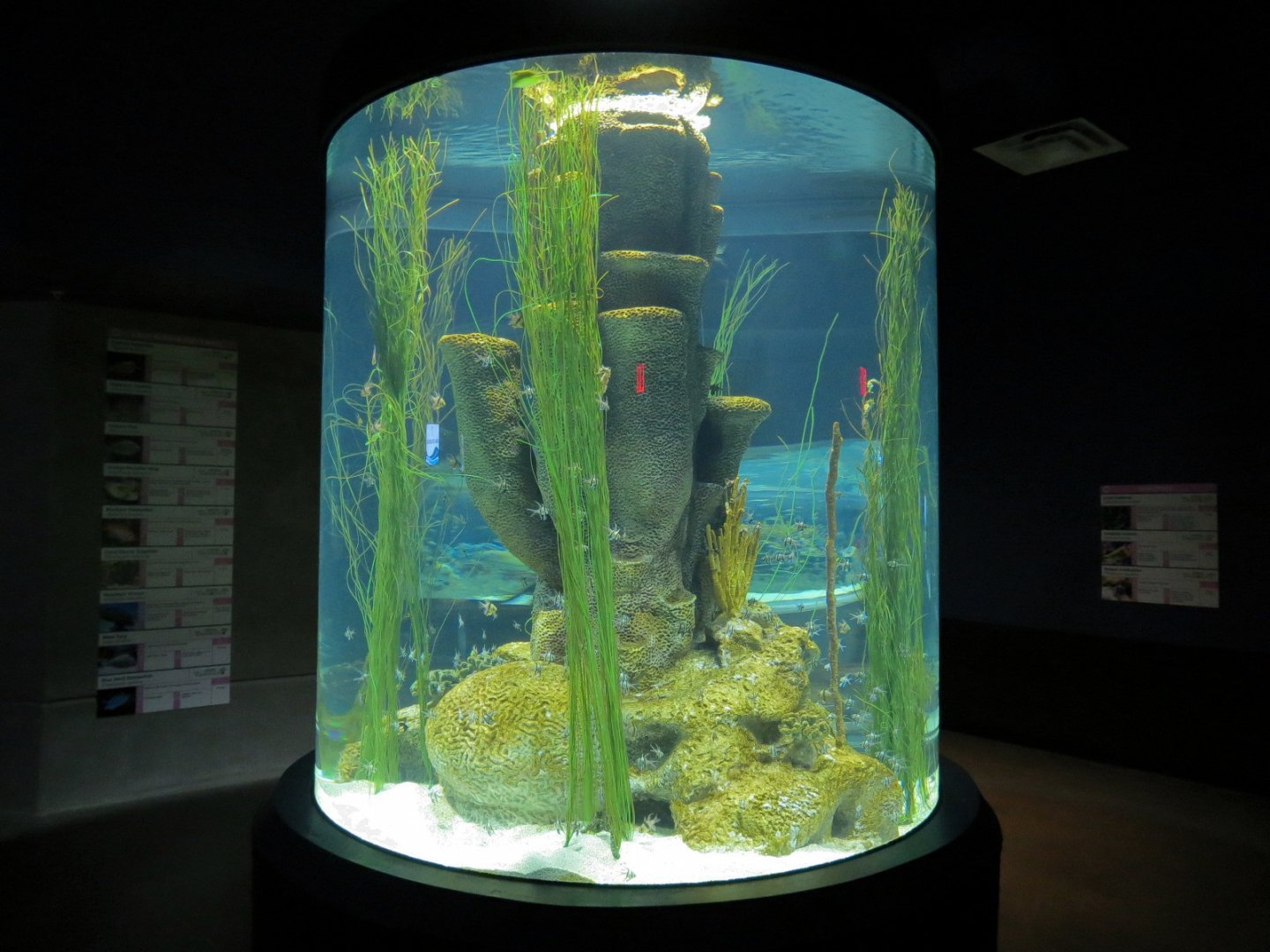
"Lionfish", a medium-sized round column tank:
This exhibit has an impressive number of:
Lionfish

"Chambered Nautilus", a medium-sized wall tank:
Chambered Nautilus
Deep Water Isopod

"Dungeness Crab", a small-sized angled wall tank:
This exhibit is titled "Giant Pacific Octopus" on the map so its original display had already been changed to:
Dungeness Crab

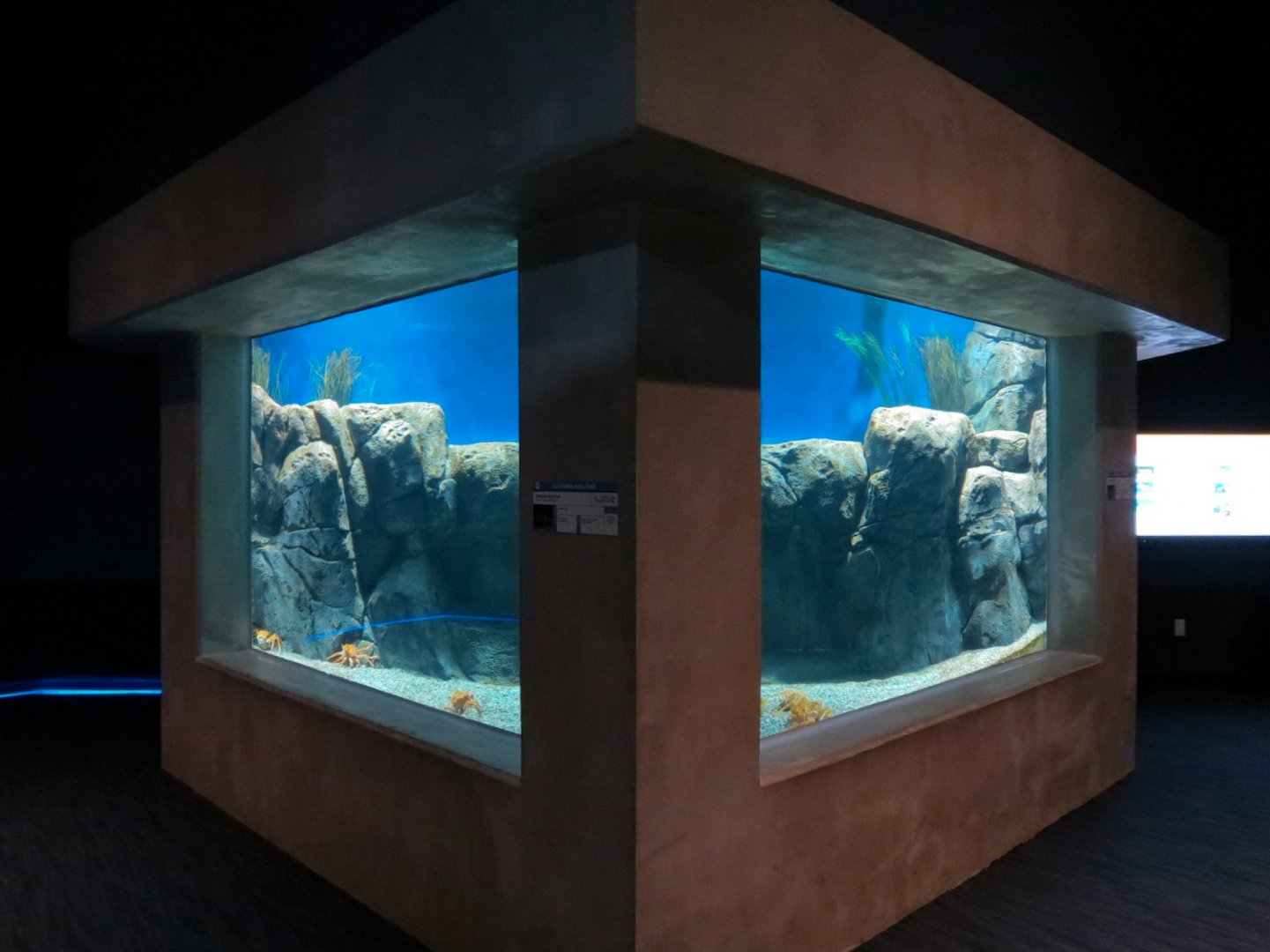
"California King Crab", a medium-sized angled wall tank:
This exhibit has a crawl tunnel behind it with an additional pop-up bubble window to view:
California King Crab


REEF JEWELS: (7 Exhibits)
After exiting the "Deep Ocean 3D Theater" described above, visitors enter this narrow dimly-lit hallway with plain grey walls.

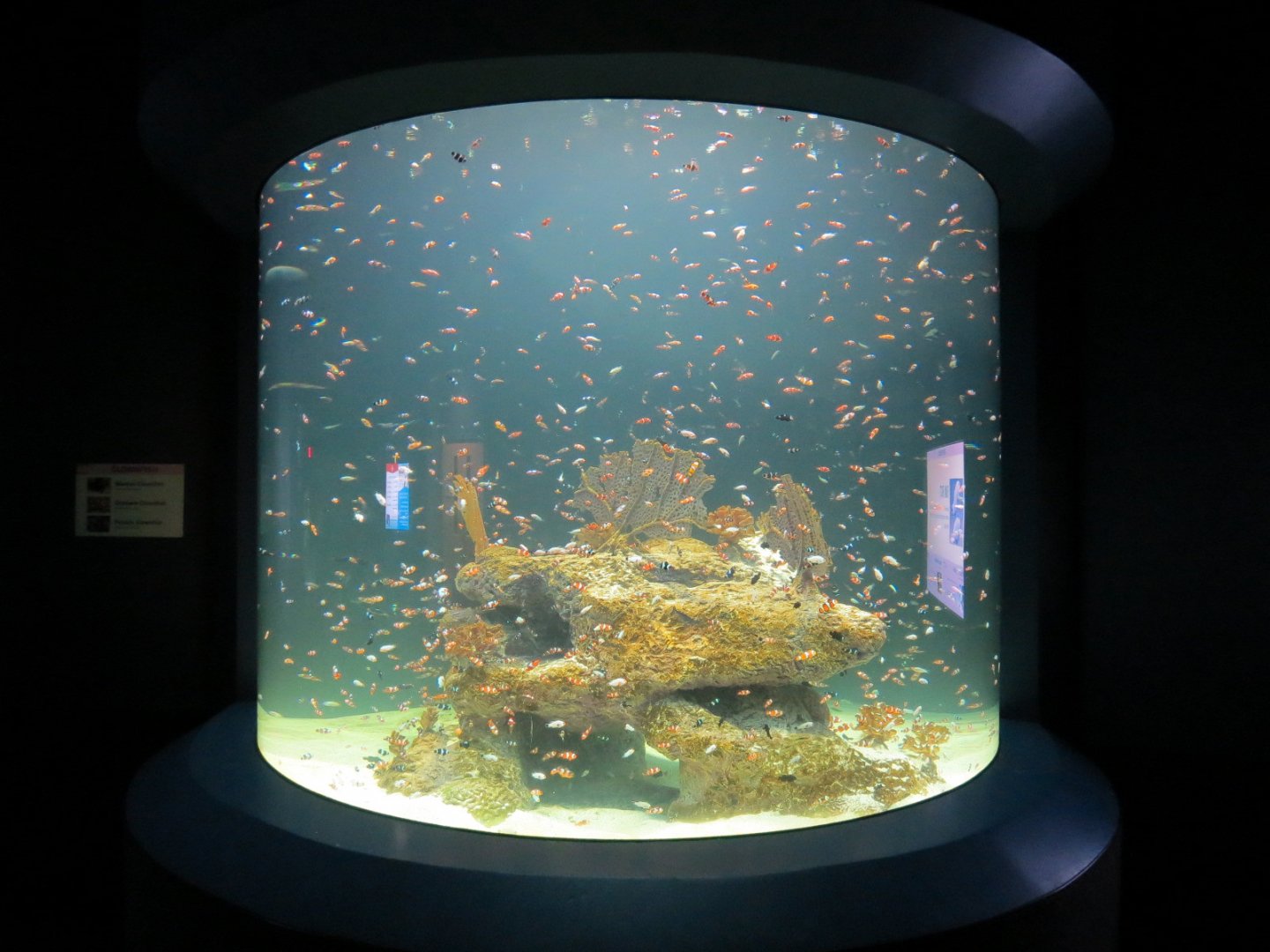
"Clownfish", a medium-sized round column tank:
This exhibit is packed with a dizzying number of:
Maroon Clownfish
Ocellaris Clownfish
Percula Clownfish

"Red Sea", a medium-sized wall tank:
Emperor Angelfish
Humbug Damselfish
Longnose Butterflyfish
Lyretail Anthias

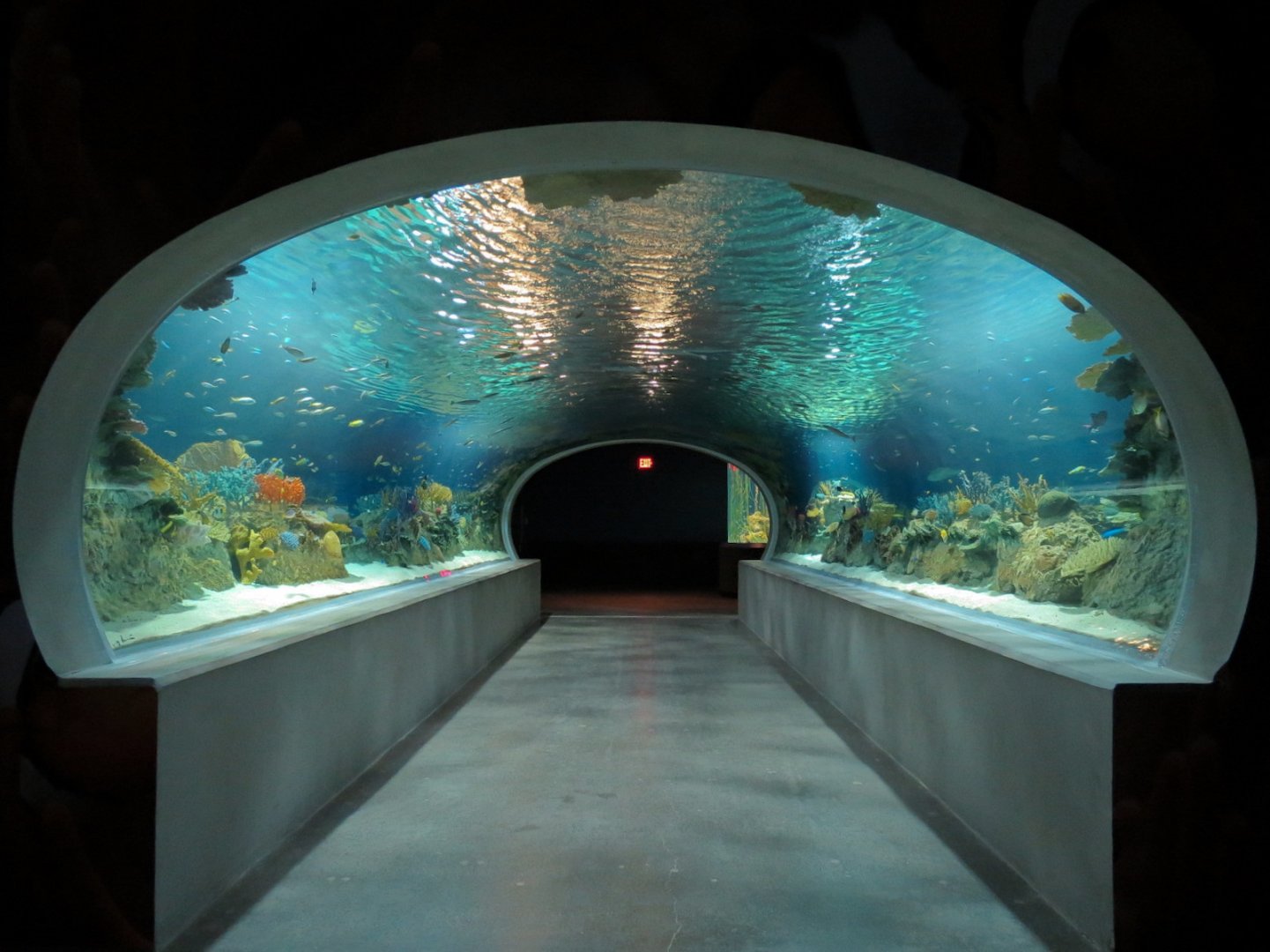
"Great Barrier Reef Tunnel", a large-sized tunnel tank:
This almost-feature exhibit is viewed from a standard tunnel walkway as well as a single round window after exiting the tunnel; the simulated reef is well-detailed but the plain blue backdrop walls where there are no reef walls are a little too close to the walkway to visually disappear in the background. It contains:
Blackbar Soldierfish
Blue Devil Damselfish
Coral Beauty Angelfish
Foxface Rabbitfish
Harlequin Tuskfish
Naso Tang
Napolean Wrasse
Orange Shoulder Tang
Unicornfish
Their website also mentions Hepatus Tang, Magnificent Sea Anemone, Maori Wrasse, and Moorish Idol, but it is unclear if they are referring to this tank.

"Seahorses", a medium-sized round column tank:
Bangaii Cardinalfish
Lined Seahorse
Longhorn Cowfish

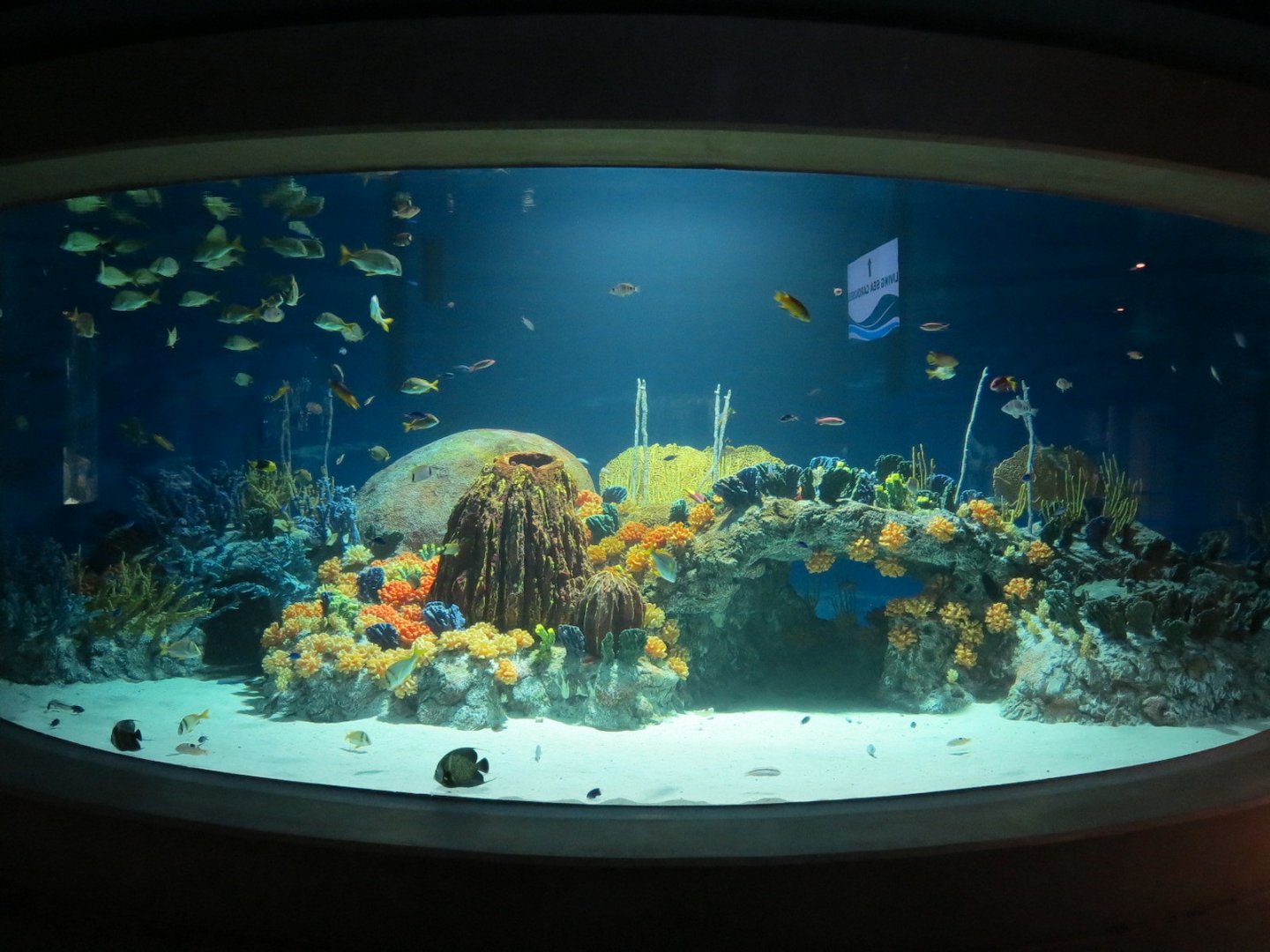
"Jewels of the Caribbean", a medium-sized wall tank:
French Angelfish
Green Moray
Queen Angelfish
Rooster Hogfish

"Sea of Cortez", a small-sized angled wall tank:
Convict Tang
Longnose Butterflyfish
Mexican Rock Wrasse

"Jawfish", a small-sized angled wall tank:
Fairy Basslet
Yellow-head Jawfish


Thank you very much for this comprehensive, exhaustive walk-through of a brand-new aquarium. With approximately 140 aquariums in existence in the United States (I have 141 on my Master List), it is fair to say that OdySea is one of the largest of that group.
 
Thanks for the tour, Geomorph. I looked at the aquarium's website and they have pictures of sea lions and sea turtles on it, but you didn't mention exhibits for these species. Did you see any areas where they may be developing future exhibits for these species? Is it false advertising on the website?
 
DavidBrown, they do have exhibits for sea lions and sea turtles, they are in the next zone that I will post soon!
 
LIVING SEA CAROUSEL: (4 Exhibits)
The end of the hallway of the previous zone, "Reef Jewels", serves as the waiting area for the entrance to this next zone which is composed of a theater experience to view its 4 feature exhibits. It is included with general admission and there is no separate ticket to enter it. The theater is actually a ride; it is a large circular platform that rotates, divided by walls into 6 wedge-shaped theater sections with sloping floors to provide good sightlines from the 8 curving rows of upholstered seats that face the outer edge of the circle. By dividing the carousel theater in 6 separate sections, it allows the ride/show to focus its visual and audio experience onto each exhibit independently from the others. Each stop of the carousel in each section lasts about 5 minutes, so the total ride/show length is about 25 minutes. Visitors enter the entrance theater first, with its overhead lights on full, to find their seats. Once seated, they are looking at the entrance doors through which they entered, and a staff member gives instructions to stay seated during the ride/show; but in case of emergency or the desire to leave, visitors can proceed to the back of the theater where a non-moving floor section at the core of the theater circle has a staff member posted. Once all 6 theater sections have been cleared to rotate by staff, the lights in the entrance theater dim and it begins to move in tandem with the other 5 sections to the next stop, which is the first of 4 stops that have a single large underwater exhibit viewing window lit artificially from above. The sixth stop is the exit section, where the lights return to normal levels and visitors are asked to stand and proceed out of the theater into the next aquarium zone called "Ocean Art", described below.

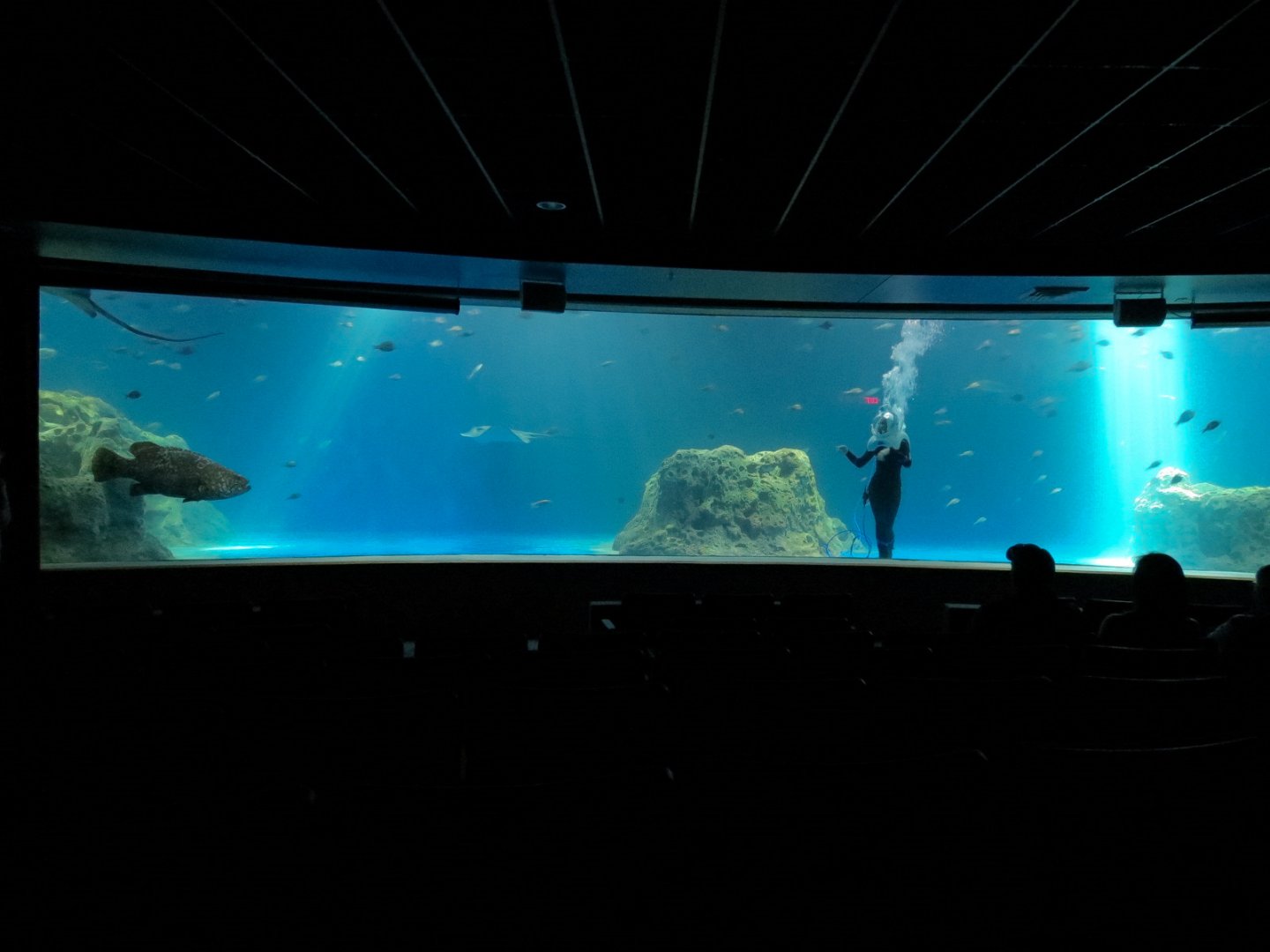
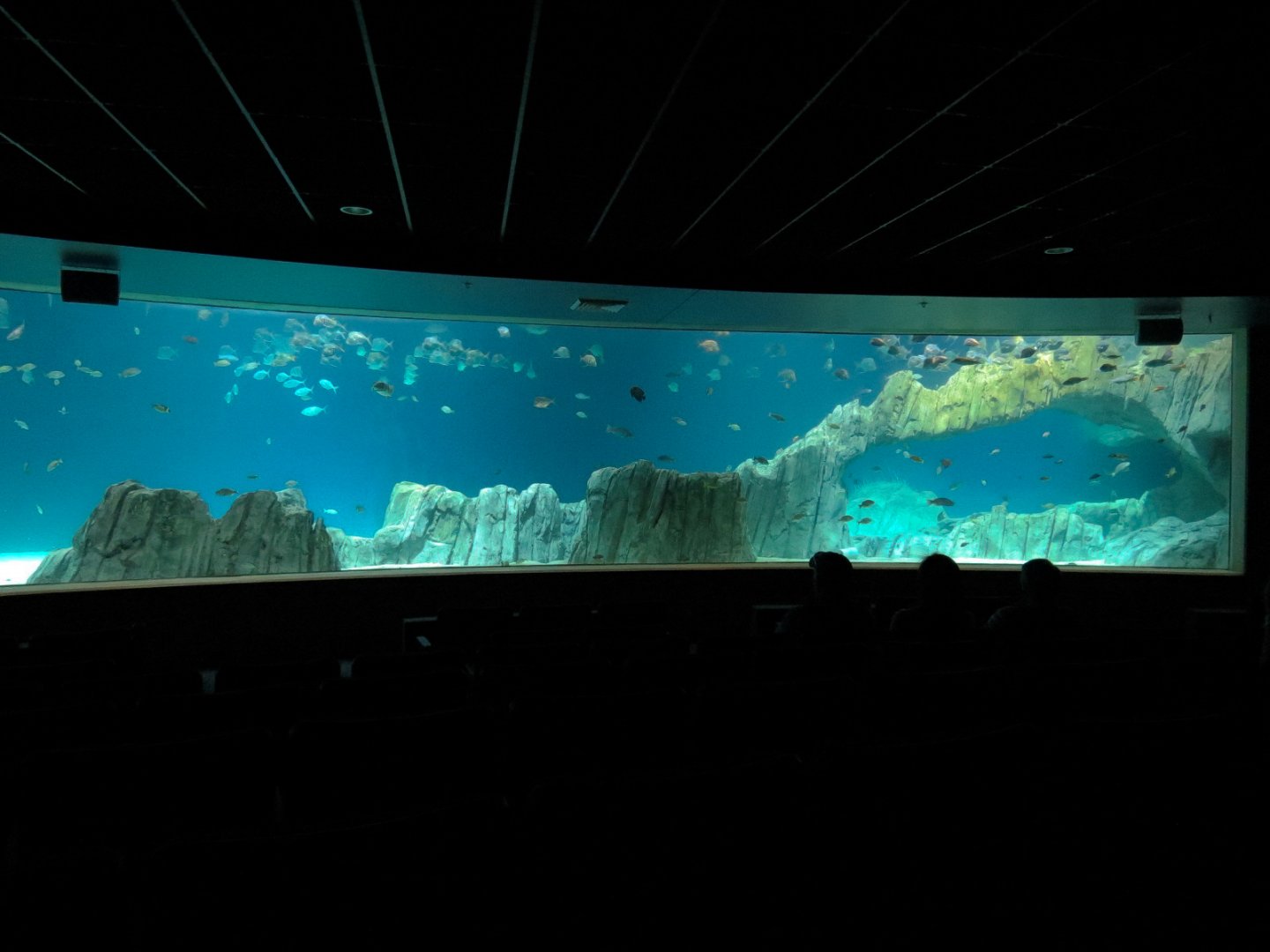
"Open Ocean", a large-sized wall tank:
The first exhibit stop of the rotating theater does have a round wall viewing window just outside the carousel entrance so that visitors who do not ride it can get a glimpse into part of this exhibit's space. However, the main view is from the carousel theater; when the theater stops in front of it, curtains are closed and a short projected video plays on two screens before the curtains part to reveal the habitat behind them. A staff member at the front of the theater speaks on the amplified sound system to a staff diver in the tank with audio capability within the diving helmet; they banter about some of the habitat and species details before opening up the discussion to visitor questions for the diver to answer. The habitat itself has a flat sandy floor and bare blue-painted walls, with three simulated reef outcrops. Before the theater rotates to the next stop, the curtains close and screens descend so it is ready to repeat the presentation for the next theater that will rotate into its position. Like the other 3 exhibits, there are no species signs for the inhabitants within the theaters, but the diver did mention among the numerous species:
Hawaiian Stingray (2 large individuals)
Queensland Grouper (1 large individual)
Tarpon

"Sea Turtle Reef", a large-sized wall tank:
The second exhibit stop of the rotating theater has a pre-recorded audio presentation while visitors view a habitat with a flat sandy floor, plain blue-painted walls, and a more complex seascape of simulated rocky outcrops and an arch. There is a wider variety and number of tropical fish in this exhibit, but the only species identified in the recording are the specific reptiles:
Green Sea Turtle (2 rescued individuals)
Loggerhead Turtle (1 rescued individual)

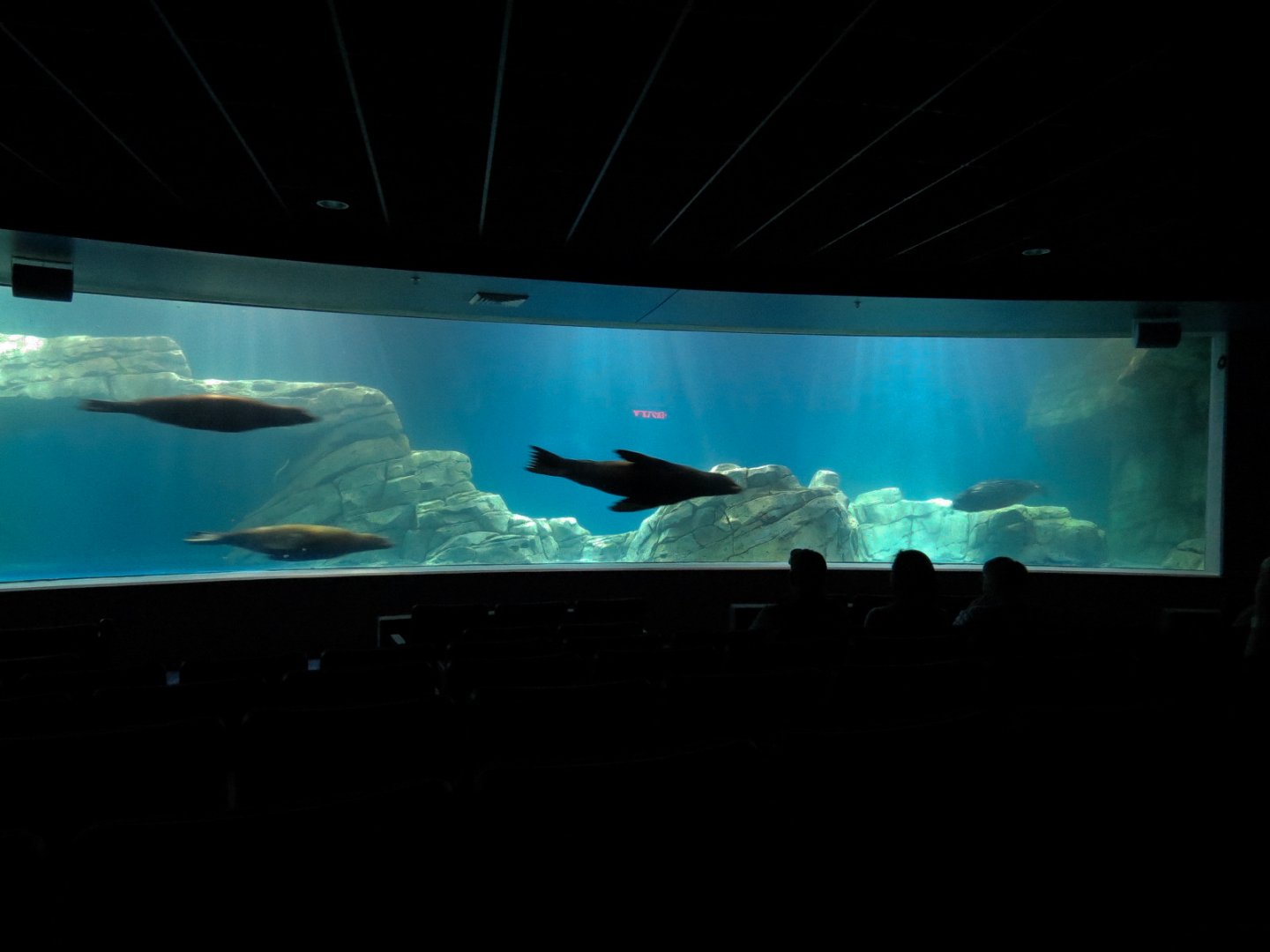
"Sea Lion Sound", a large-sized wall tank:
The third exhibit stop of the rotating theater has a pre-recorded audio presentation while visitors view a habitat with plain blue-painted walls and an assemblage of simulated rocky floor and outcrops and an arch. This habitat appears to be too small for the number of sea lions within, but their above-water habitat is not visible from the theater (I did not take the up-charge behind-the-scenes tour but I imagine it might view that area and hopefully it is spacious).
California Sea Lion (I counted 5 individuals)
Harbor Seal (I counted 1 individual)

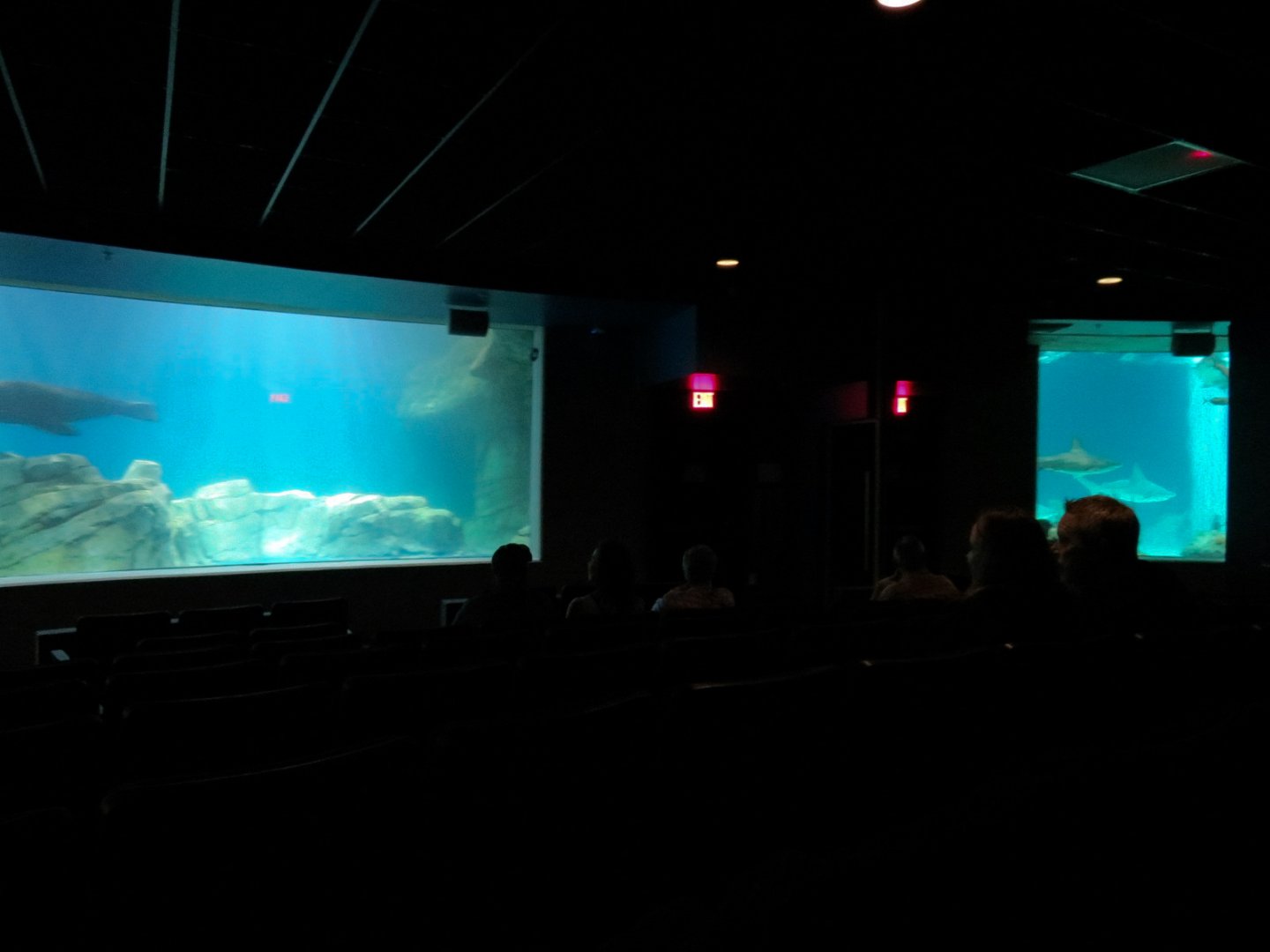
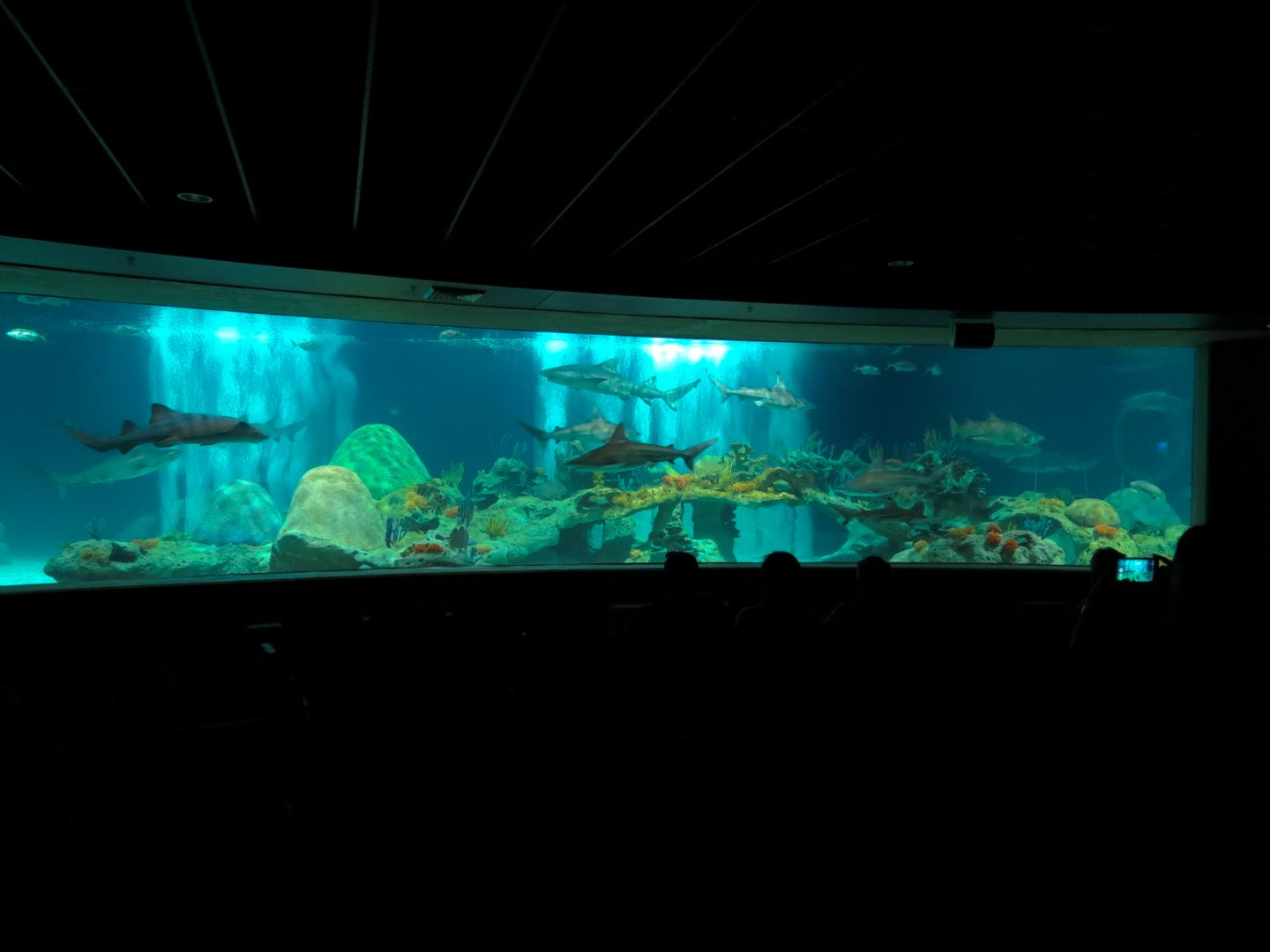
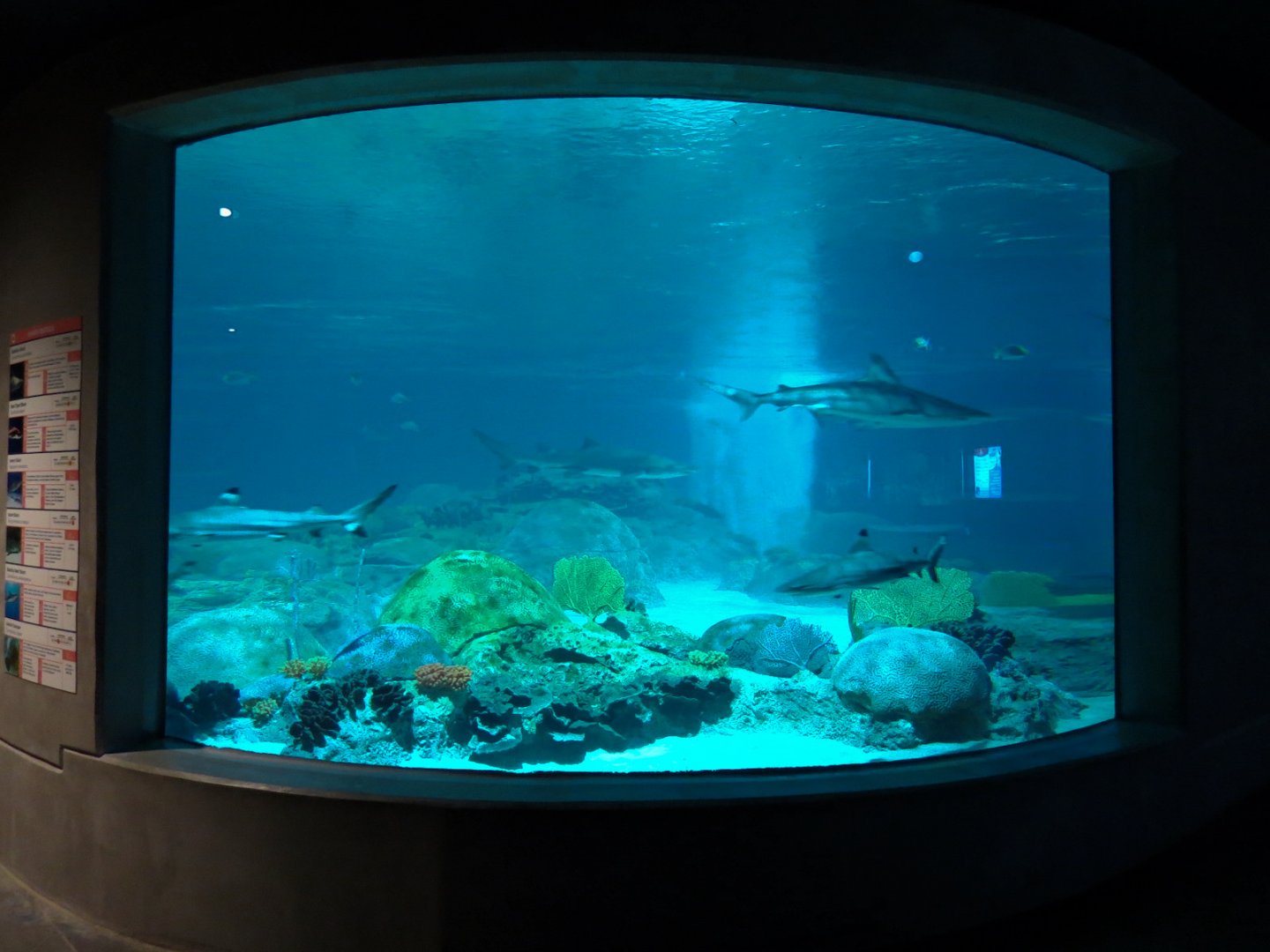
"Shark Waters", a very large-sized wall tank:

The fourth exhibit stop of the rotating theater has a pre-recorded audio presentation while visitors view a much larger habitat with a sandy floor, plain blue-painted walls, multiple simulated reef outcrops with simulated corals, and curtains of air bubbles near its center. This habitat can also be viewed by visitors who do not ride the theater carousel; there are viewing windows from each of the 'Entrance" zone restrooms described at the beginning of this thread as well as from a large curved wall viewing window and a smaller round wall viewing window at the exit of the carousel. Those latter windows do have identification signs for some of the major inhabitants within, but there are plenty of other smaller species that are unsigned. The signs are for:
Blacktip Reef Shark
Goliath Grouper
Lemon Shark
Nurse Shark
Sandbar Shark
Sand Tiger Shark


That Living Sea Carousel is an interesting exhibit concept. Did it work as a satisfying exhibit experience for you? If you are a sea lion or sea turtle or shark fan and want to watch them for an extended amount of time is there any way to do that, or is this kind of like Kilimanjaro Safari at DAK where you would need to get on the ride again in order to see them again for a brief time?
 
DavidBrown, I enjoyed the carousel presentation but it is true that the sea turtle and sea lion exhibits are only viewed from the carousel so visitors would need to experience it again to see the inhabitants again; the first and fourth exhibits have viewing windows outside of the theater so visitors can spend more time seeing them, although "Open Ocean" only has a small viewing area and window.
 
OCEAN ART: (6 Exhibits)
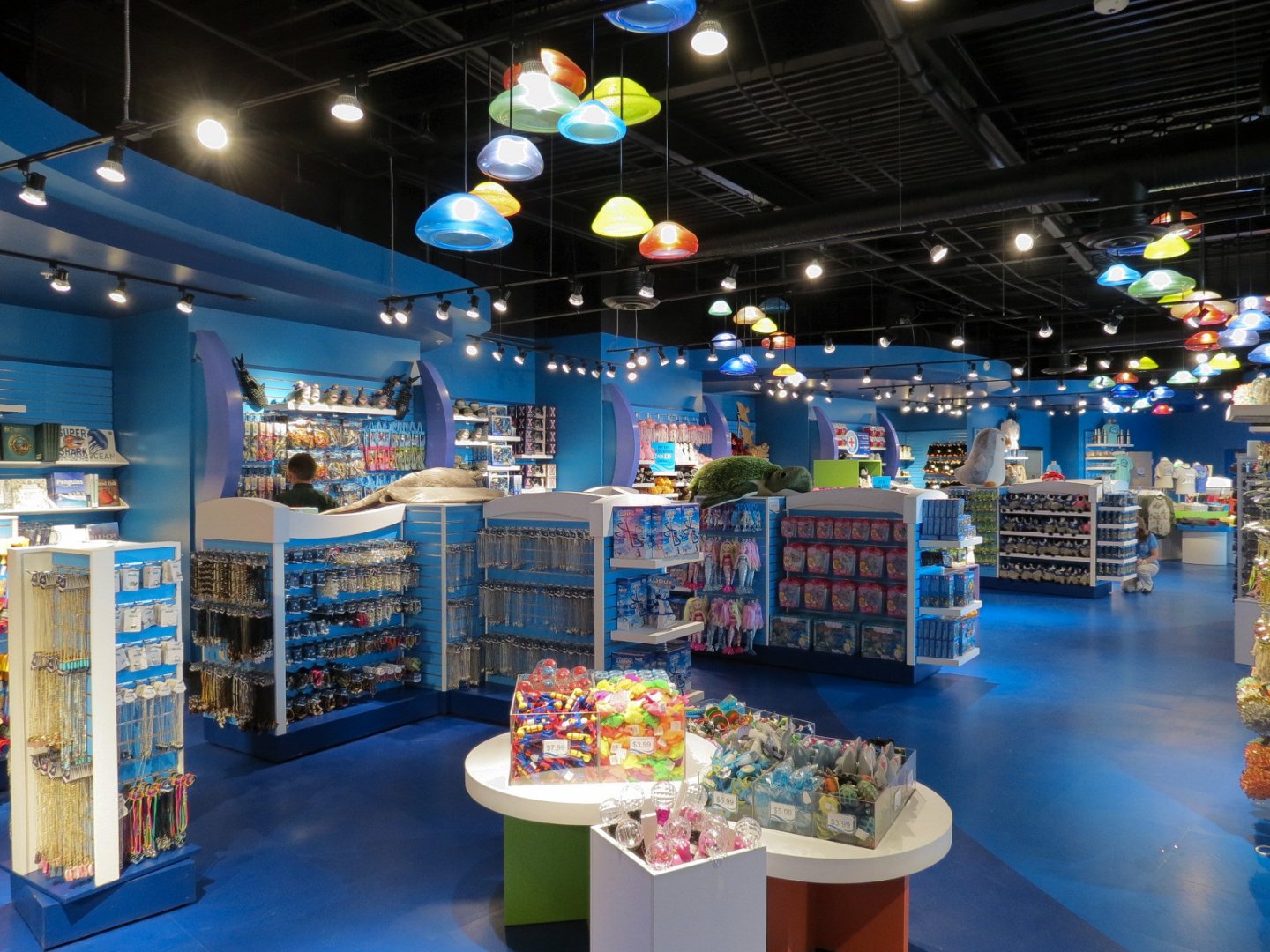
After exiting the "Living Sea Carousel" this irregularly-shaped modern hall is the final zone before visitors ascend an escalator to the "OdySea Treasures Gift Shop" which is the exit to the aquarium and empties onto the upper level walkway of the circular outdoor mall. Exhibits in this zone have minimal theming so that the tanks are more abstract environments.

"Moon Jellies", a medium-sized round column tank:
Empty

"Sea Nettles", a medium-sized round column tank:
No Sea Nettles were inside, but there were some:
Moon Jelly

"Sea of Color", 3 identical medium-sized wall tanks that have partitions between them to allow water flow between them:
Blue Tang
Pyramid Butterfly
Red Tooth Triggerfish

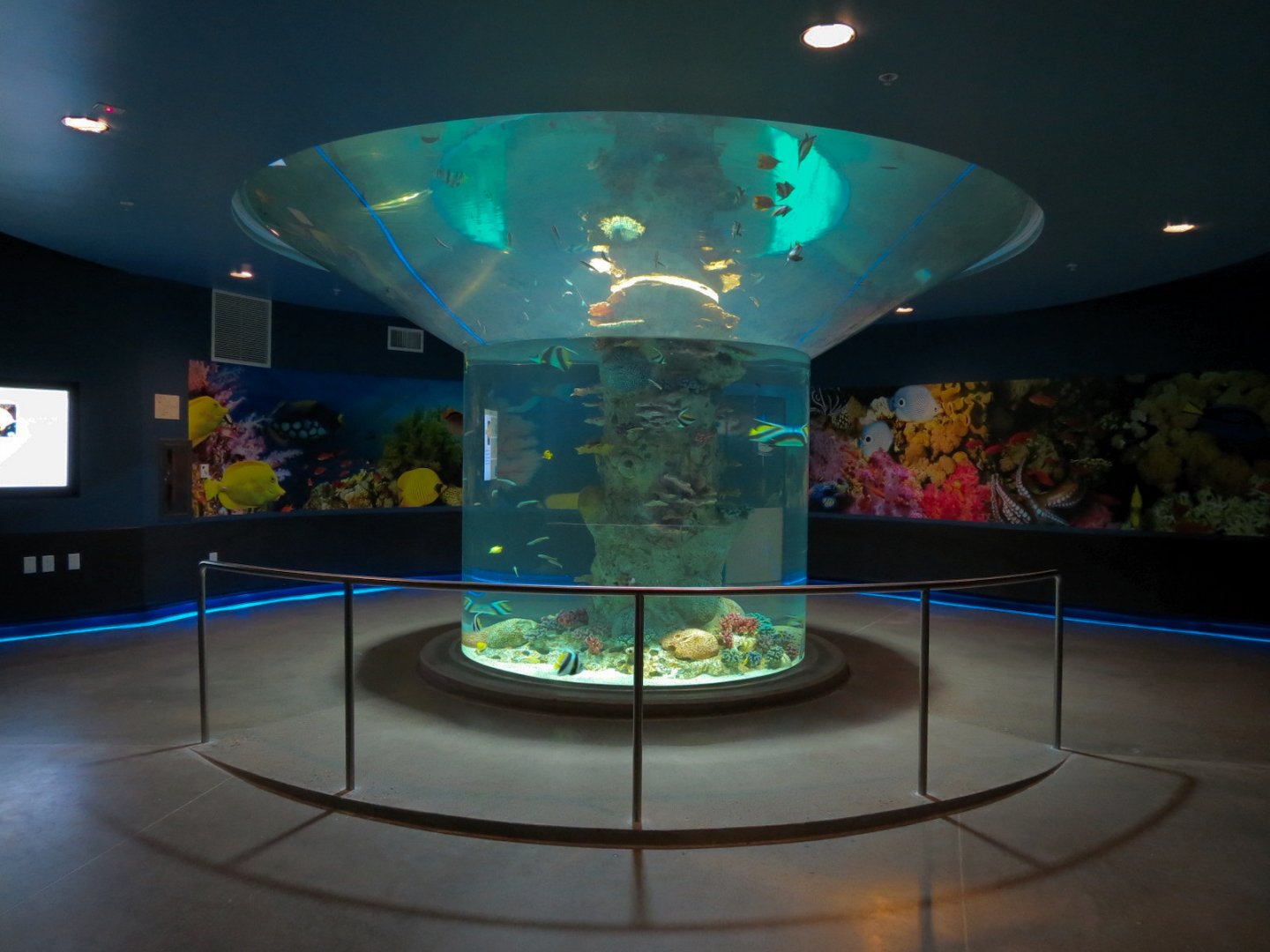
"Ocean Blue Martini", a medium-sized round column tank in the shape of a martini glass:
Bannerfish
Hepatus Tang
Yellow Tang


SUMMARY:
By my count, the total number of exhibits currently at OdySea Aquarium is: 54

By my count, the total number of species in permanent exhibits is: 128 (actual number is probably far greater)
The number of species I counted can be broken down into the following categories:
Mammals: 3
Birds: 1
Reptiles: 6
Amphibians: 0
Fish: 106 (actual number is probably far greater)
Invertebrates: 12 (actual number is probably greater)
 
Back
Top