Lost, rare, and non-existant media of Indonesian zoos and public aquariums

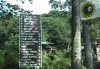
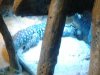
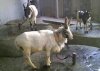
The only known photo of Cihampelas Point's underground mini zoo, which showcase the zoo's jacob sheeps.

Source:
Kliping Bandung: Wuiiih...Ada Kebun Binatang di FO!

kambing-tanduk-emapt-insert.jpg

The blogspot also talk into detail about Cihampelas Point's zoo, which roughly translated to:

Competing to provide big discounts or door prizes for visitors is a common thing for any factory outlet in the long holiday season like now. But, what about the rare animals that are present at the factory outlet? Hmm...

One example is the Cihampelas Point (formerly known as Paris van Java) which is on Jalan Cihampelas 184. Not a discount they offer to visitors, but a dozens of unique and rare animals are the main attraction to attract visitors.

"We just want to be different. Precisely what is different is what attracts the visitors," said one of the worker, Soenyali Soly, to the reporters when we meet at his office.

According to him, the initial idea of making a mini zoo in the middle of a factory outlet was the wish of the manager who is also a hotel manager in Bandung. The manager has a unique hobby of collecting exotic animals.

"From there came the intention to create an factory outlet concept which is said to be different from the others," said Soly.

Inside, visitors who shop at Cihampelas Point or commonly abbreviated as Cipo, are served with a variety of rare and unique animal. Some are made separately and in cages, such as a special room that accommodates a variety of displays of freshwater fish, such as arowana.

"The manager liked arowana and the collection reached hundreds," he said, adding that at the end of May 2009, the manager officially opened a mini zoo.

Before entering the aquarium with dozens of fish, visitors can enjoy the chirping of birds kept outside the aquarium. The birds are constantly chirping like morning atmosphere.

Shifting from birds, rare and unique animal welcome visitors. Cages measuring 2mx2m and 3 meters high are arranged on the left and right sides of the room.

The left side, the large Iguana looks dumbfoundedly hiding behind the artificial branches inside. Meanwhile, on the right, you can see a small monkey like a gibbon jumping over a branch designed in its cage.

Not only that, two pythons approximately 3 meters long coiled in their cage. Turtles that are claimed to be rare also enliven the atmosphere of the mini zoo in the middle of the Cihampelas Point shopping center.
 

Attachments

  • kambing-tanduk-emapt-insert.jpg
    kambing-tanduk-emapt-insert.jpg
    9.5 KB · Views: 73
A blog that talked about the history of rare cetaceans in captivity, which include Irrawaddy dolphins in Ocean Dream Samudra.

Source:
A History of Captive Rarities and Oddities (Part 2) | Dolphin Project

Jaya Ancol Onceanarium (also named Ocean Dream Samudra) in Jakarta, Indonesia, was the first aquarium to set up a captive colony. Using motorized canoes and nets, the staff drove and caught six dolphins in September 1974 from Semayang Lake, which would go on display for the park’s opening that year. The oceanarium would go on to capture four more in October 1979 and ten in August 1978 from the same location. In 1984, another six were captured in the Mahakam River system.

A few of the finless dolphins were trainable, and after a reported 3 months of training, they performed ‘Pesut’ stage shows, where the dolphins and scuba-equipped trainers put on a show entirely submerged in a unique, underwater theater.

The other Irrawaddies were used for their experimental captive breeding program. The success was poor: the first calf, a female named Isui, was born July 4, 1979 after a 14-month gestation period. Another calf, an unnamed male, was born December 11 but died shortly afterward. A female, Budiyati, was born February 14, 1981; she, along with Isui, were listed as alive in 1984. Yet it was never reported if either captive-born individuals lived long enough to produce their own offspring.

Due to extremely spotty record-keeping, their longevity at the facility isn’t entirely known. From the scant notes that were kept, it appears to have been poor: two dolphins from the 1974 capture died 10-20 days later due to gastrointestinal stress, while two from the 1978 capture died after 30 and 115 days later due to pneumonia and liver cirrhosis, and ‘constitutional heart weakness,’ respectively. A male from the 1979 capture would die from ulcers after 20 days in captivity. The fate of the six dolphins caught 1984 is unknown. Two individuals, either from the 1984 collection or a later capture, were photographed in the very early’s 1990’s.

Photos of Ancol's Irrawaddy dolphins are also available in Getty Images.

Irrawaddy Dolphins Orcaella Brevirostris Jaya Anca Aquarium Indonesia High-Res Stock Photo - Getty Images
 
A preserved remain of SeaWorld Indonesia's sand tiger shark, before the refurbishment of SeaWorld Ancol's museum.

It was, for some reason, underrepresented. There's no sign which talked about the shark. But in the newly refurbished museum, the shark has finally gained acknowledgement and spotlight that it deserve.

Source: @Fargusno

IMG_20220907_125319_336.jpg
 

Attachments

  • IMG_20220907_125319_336.jpg
    IMG_20220907_125319_336.jpg
    34.6 KB · Views: 72
Amboina box turtles in a pond near a toilet in the Rainforest Restaurant, which was currently under renovation along with the Elephant Plaza.

Source: @Fargusno

IMG_20220907_130904_831.jpg
 

Attachments

  • IMG_20220907_130904_831.jpg
    IMG_20220907_130904_831.jpg
    149.3 KB · Views: 70
Last edited:
Safari Journey in Taman Safari Bogor. Circa 2008.

  • The now greater flamingo exhibit houses common hippos, with several Chapman's zebras free-roaming.
  • Common cranes at the Safari Journey.
  • In the African Village, the blue wildebeest used to freely entered the southern white rhinos exhibit.
Additionally, the site that is now the white lion exhibit at the Baby Zoo used to be an exhibit for Sumatran tiger.

 
Last edited:
Taman Safari Bogor in 2007.

  • The emus were used to be free-roaming, before being confined to an exhibit with common impalas.
  • An exhibit for lowland nyalas in the African Village, which were later used for South African ostrich and finally demolished in 2019.
  • A much more different exhibit for saltwater crocodiles in the African Village.
  • There was no capybara exhibit, it used to be a resting platform for Javan banteng. The capybaras were added in the early 2010's.
 
Taman Safari Bogor, along with several unrelated footages of Tangkuban Perahu in Bandung and Anyer Beach in Banten. Circa 2005.


Discovered by @Caribbean Flamingo
  • The tree-exhibit that houses owls in the Safari Journey used to have two species of owls in the same exhibit, namely the spotted wood owl and barred eagle-owl.
  • An changeable hawk-eagle used to be displayed in Safari Journey, in what is now the white-bellied sea eagle exhibit.
  • Aside from the exhibit in African Village, the white rhinos used to have a second exhibit in what is now the European bison exhibit.
  • A simple hut in African Village, used for decorational purposes. Also for the South African ostriches to lay their eggs.
  • White Bengal tigers that are used to be displayed together with Sumatran tigers in the Safari Journey.

 
Taman Safari Prigen. Circa 2005.

  • Before there were Australian Outback, the eastern grey kangaroos were displayed in the Safari Adventure. They were also apparently housed together with an southern cassowary.
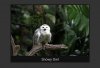
  • An lone sable antelope in Safari Adventure.
  • The only known traces of Taman Safari Prigen's red panda.

IMG_20220908_070243_133.jpg


Attachments

  • IMG_20220908_070243_133.jpg
    IMG_20220908_070243_133.jpg
    56.2 KB · Views: 68
An black-and-white tegu in Reptile Tunnel, Taman Safari Bogor.

Source: @Fargusno

Taman Safari Bogor used to display a pair in the Reptile Tunnel, before being replaced by a pair of green iguanas in around 2018-2020.

IMG_20220909_191154_288.jpg
 

Attachments

  • IMG_20220909_191154_288.jpg
    IMG_20220909_191154_288.jpg
    39.7 KB · Views: 70
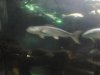
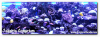
Jakarta Aquarium's aquascape with tiger barb, rosy barb, rainbow shark, red and boeseman's rainbowfish
Originally was an aquarium for young Jullien's golden carps and wallago catfish, the smaller freshwater fish is in the waterfall basin. As Jakarta Aquarium began acquiring larger freshwater fish, these smaller fish were moved to the carp's tank, as the larger fish were displayed in the waterfall basin including the now larger Jullien's golden carps and wallago catfish.

The aquarium then briefly houses American paddlefish, then a variety of smaller predator fish, then finally payaras and goliath tigerfish, with the addition of small bigtooth river stingray and Florida gar.

1564394832.jpg
 

Attachments

  • 1564394832.jpg
    1564394832.jpg
    29.3 KB · Views: 68
Back
Top