Lost, rare, and non-existant media of Indonesian zoos and public aquariums

Old map from 2016, posted by @snowleopard in the Ragunan Zoo (Who have been very helpful in gathering these informations :))

IMG_0710.jpeg

Zoo Map - 2016 - ZooChat

It's worth noting that most older maps like this one and current online maps are sometimes innacurate and left out a lot of stuffs. But, this map might be good enough to give an insight to what the zoo looked like only a few years ago, which had drasticly changes in term of species.

In contrast to current map shown in the zoo ground, this map showed the zoo appears rotated. The north and west entrances, the two most popular entrance point of the zoo, is shown in this map located at the south and east respectively, same with the other entrances. The current ground zoo map is accurate in term of directions and points, regardless on which entrance you entered.

These are noticable differences from today.
  • In the Children's Zoo, llama was signed as the mini zoo's inhabitant. Either this is the actual llama or were actually alpacas, I'm not sure. No llamas or alpacas are kept in the Children's Zoo or anywhere within the zoo.
  • There's appears to be an additional smaller Australian pelican exhibit near the Children's Zoo entrance. As it was not present this year, its more than likely that the exhibit has been drained and demolished for some unspecified reasons.
  • There is an icon labelled as "ular mayang sari" near the Children's Zoo. This is formerly the zoo's snake presentation and attraction.
  • As had been known previously, the zoo's zebra had been displayed in the current sitatunga exhibit behind the giraffes and is shown in this map.
  • In the exhibit complex near the main Sumatran elephant exhibits, the current muntjac and agile wallaby/dusky pademelon exhibits had been once occupied by Bawean deers, Malayan tapirs, and Arabian oryx. The deers and tapirs have been moved to the rather secluded part of the zoo (Especially the tapir), while the Arabian oryx (Formerly housed in the current muntjac exhibit) has been phased out of display due to either being deceased or taken off-display.
  • The currently main capybara exhibit have had previously houses North Sulawesi babirusas. While nearby, the current South African ostrich exhibit appears to had housed agile wallaby/dusky pademelon.
  • There's appears to had been a secondary Komodo dragon exhibit/complex near the main and current one, which wasn't seen anywhere within the zoo this year. It's likely that these had now been an off-display holdings and breeding facility for these dragons (Which can be seen near the current Komodo dragon exhibit).
  • There were once more exhibits in the southern part of the zoo, including aviaries for Bali myna (The larger icon possibly indicated a more special breeding facility) and exhibits for horses (Possibly for rides as well).
  • In the Schmutzer Primate Centre (Which there hasn't been any accurate and up-to-date map recently), it was shown that they still have their ring-tailed lemurs in these area of the zoo. From observations, it appears that the current Bornean white-bearded gibbon exhibit is where the lemurs were once housed.
  • In the bear complex in the main carnivora complex, it was signed that the area once had more diverse bear species with the addition of the American black bears. The single black bears have occupied it's current exhibit, with the bears of the carnivora complex mostly consisted of sun bears and atleast an Sri Lankan sloth bear.
  • In the main herbivore complex, the nilgai and water buffalos once occupy the current Bawean deers exhibits, with the buffalos and Javan rusa deers also occupied the current smaller capybara exhibits in this area. The three massive grassland exhibit also are then-signed to house nilgai (Two exhibits) and Javan rusa deers (One exhibit), which as of August now houses Malayan sambar, water buffalo, and one empty exhibit.
  • The map also signed two exhibits/icons for elands, which the zoo had the East African eland subspecies. This (sub)species are nowhere to be seen in the zoo as of this year and are likely to be phased out.
  • The current American black bear exhibit was assigned as for an "European bear", which was in reality was a Syrian brown bear. The subspecies was kept a while ago since the 90's and up to the 2000's, so I'm not sure if they had been displayed until 2016. The animal might possibly be off-display like the sloth bear once was, but considering since when the bear was kept, its also likely that it has passed away.
  • The 2016 map also suggest that the current small bird aviary complex was once a Komodo dragon exhibit, meaning that the aviary complex was fairly new.
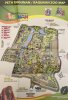
Again, worth noting that the map is still possibly innacurate (It misses the former porcupine complex and main outdoor turtle/tortoise exhibit which was already there for a long time), so this can be viewed as a assumption based on the 2016 map.
 

Attachments

  • IMG_0710.jpeg
    IMG_0710.jpeg
    139 KB · Views: 145
Another piece of recent history from Ragunan Zoo.

In 2017, Ragunan received an Sumatran clouded leopard from BKSDA. The only information I gathered are that the clouded leopard was confiscated by the authority from a private owner. It then underwent extensive quarantine as well as habituation and research period for weeks. They also have plans to found a mate for the clouded leopard, which even the interviewed staff said that it would be a "difficult task" due to the scarcity of holders of this (sub)species. The clouded leopard does appears to had been displayed as shown in an picture by Pierre de Chabannes (Though possibility of being taken at a off-display holding is also likely).

As on 2024, no clouded leopards have been on-display and the fate of the individual is so far publicly unknown.

Sunda clouded leopard
 
Surabaya Zoo former species pt. 1
  • ocellate river stingray (Potamotrygon motoro)
  • streaked spinefoot (Siganus javus)
  • mangrove horseshoe crab (Carcinoscorpius rotundicauda)
  • prickly leather-jacket (Chaetodermis penicilligerus)
 
Surabaya Zoo former species pt. 2
  • three spot cichlid (Amphilophus trimaculatus, now become Cichlasoma trimaculatum)
  • painted spiny lobster (Panulirus versicolor)
  • Dussumier's halfbeak (Hyporhamphus dussumieri)
  • tiger grouper (Epinephelus fuscoguttatus)
  • orange-spotted spinefoot (Siganus guttatus)
  • laced moray (Gymnothorax favagineus)
  • Banggai cardinalfish (Pterapogon kauderni)
  • Russell's snapper (Lutjanus russellii)
 
Surabaya Zoo former species pt. 3
  • red-bellied piranha (Pygocentrus nattereri)
  • pearl arowana (Scleropages jardinii)
  • common seahorse (Hippocampus kuda)
 
Surabaya Zoo former species pt. 4
  • redtoothed triggerfish (Odonus niger)
  • bicolor angelfish (Centropyge bicolor)
  • bluespotted ribbontail ray (Taeniura lymma)
 
Surabaya Zoo former species pt. 5
  • sharpnose guitarfish (Glaucostegus granulatus)
  • copperband butterflyfish (Chelmon rostratus)
  • narrow-lined pufferfish (Arothron manilensis)
 
Dussumier's halfbeak (Hyporhamphus dussumieri)
Timestamp?

  • sharpnose guitarfish (Glaucostegus granulatus)
Are you sure about this ID? Glaucostegus granulatus are considerably rare and have a much more straighter snout (As opposed to the individual seen in that video, which have its snout more rounder). It safe to assume that it's an glaucostegus typus, which are more common that what people think they are here in Indonesian aquaria and saltwater aquarium market.
 
Timestamp?


Are you sure about this ID? Glaucostegus granulatus are considerably rare and have a much more straighter snout (As opposed to the individual seen in that video, which have its snout more rounder). It safe to assume that it's an glaucostegus typus, which are more common that what people think they are here in Indonesian aquaria and saltwater aquarium market.
Yes, you're right. That's a common shovelnose ray (Glaucostegus typus)
 
Surabaya Zoo former species pt. 6
  • brownbanded bamboo shark (Chiloscyllium punctatum)
  • crescent grunter (Terapon jarbua)
  • sergeant major (Abudefduf saxatilis)
 
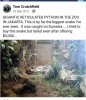
More into this story, Mr. Crutchfield attempted to buy the Sumatran-originated snake from the zoo officials for around $5,0000. The offer is of course declined.

Ragunan does have a collection of large reticulated pythons and somewhat quite known for it.
IMG_20250105_080842_940.jpg
 

Attachments

  • IMG_20250105_080842_940.jpg
    IMG_20250105_080842_940.jpg
    112 KB · Views: 76
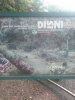
From an billboard recently seen in Ragunan, the gorillas at Ragunan were once all kept together. As they grew older and now female gorillas yet, these males has become more aggresive and territorial towards each other.

IMG20250206113733.jpg
 

Attachments

  • IMG20250206113733.jpg
    IMG20250206113733.jpg
    120.1 KB · Views: 54
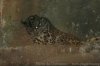
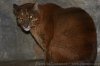
In the old gallery of Pierre de Chabannes, specifically in his photos of Taman Safari Bogor, photos of the park's Asian golden cat and Sumatran clouded leopard taken in the early 2000's appears to show these cats in what seems to be a very different exhibit, unlike their recent exhibit at the Big Cat Center (The clouded leopard exhibit now houses caracal).
Asiatic Golden Cat Exhibit - ZooChat
Caracal Exhibit - ZooChat

These are likely the only media or even information on the specific, "cave exhibit". Aside from the Reptile Tunnel, the only "cave" exhibit is inside the Bird Aviary, even then these are very, very small for them and unlikely for Taman Safari to have them there, even for that time. Another option, and might be the logical one, is that these are off-display holding or even just another angle of the current exhibit. Though, with the latter, the entire Big Cat Center reportedly used to only houses leopard in the 2000's, before being divided into smaller exhibits later on in the decade.

Wether this are Taman Safari Bogor's first attempt of a cat house or might just be a different perspective of the current exhibits might be a question that are not likely to be answered soon.

Photo credit to Pierre de Chabannes.
Neofelis diardi _1_.JPG

Catopuma temmincki temmincki _3_.JPG

Taman Safari Indonesia
 

Attachments

  • Neofelis diardi _1_.JPG
    Neofelis diardi _1_.JPG
    27.9 KB · Views: 36
  • Catopuma temmincki temmincki _3_.JPG
    Catopuma temmincki temmincki _3_.JPG
    27.3 KB · Views: 35
One of the indoor exhibits within the massive orangutan tunnel at the Schmutzer Primate Centre once had large flying foxes in the 2010's, located in one of the exhibit that now houses Sunda porcupine. The zoo still have the flying foxes on display, now located in the small mammal house.

Photo of the current exhibit.
IMG20240718122835.jpg

Photo of the flying foxes.
upload_2025-3-11_2-52-50.jpeg
Learn, Live and Dream: Liburan Murah di Ragunan
 

Attachments

  • IMG20240718122835.jpg
    IMG20240718122835.jpg
    72.1 KB · Views: 32
  • upload_2025-3-11_2-52-50.jpeg
    upload_2025-3-11_2-52-50.jpeg
    18.3 KB · Views: 28
In 1981, there are apparently a species exchange between Surabaya Zoo and Samudra Ancol, then Gelanggang Samudra Jaya Ancol.

The exchange deal result in Surabaya giving their dugong in exchange for one of Ancol's Irrawaddy dolphin. This interesting revelation means that Ancol have had dugong much earlier before SeaWorld Ancol even opened in 1994, this time for their Samudra Ancol (First opened in 1974). Before they first opened, Samudra Ancol already have had several Irrawaddy dolphins that were wild-caught from Kalimantan a few years earlier. There had been a number of breedings, but ultimately all of them died out but Samudra Ancol still remain a dolphin park.

It was reported previously that Surabaya had a wild-caught female dugong since 1973. I wonder if this was the same individual, or another unreported individual. It's also interesting to know that Surabaya once had Irrawaddy dolphins too. Regardless, Surabaya really used to have everything, despite their bare-minimun to horrible animal living condition conditions.

Despite of this, the way they were "presented" is definitely a product of that time.

Screenshot_2025-03-12-02-57-16-08.png

Screenshot_2025-03-12-02-57-36-88.png

Source
Arsip Jakarta on Instagram: "Tahun1981,Ancol dan Kebun Binatang Surabaya menjalin kerjasama dalam pertukaran hewan untuk memperkaya koleksi satwadan meningkatkan konservasi! Terlihat momen perpindahan satwa yang menjadi bagian dari upayamenjaga keberagaman fauna di Indonesia.Sebuah langkah majudalam dunia konservasi dan edukasi lingkungan!️ Siapa yang pernah berkunjung ke Ancol atau Kebun BinatangSurabaya di era ini?Bagikan kenanganmu di kolom komentar! _______ In1981,Ancol and Surabaya Zoo collaborated in animal exchangeto enrich the animal collection and improve conservation! The moment of animal transfer is seen as part of an effort tomaintain fauna diversity in Indonesia.A step forward in the world ofconservation and environmental education!️ Who has visited Ancol or Surabaya Zoo in this era?Share yourmemories in the comments column! #bw #bwphotography #jakartatempoedoeloe #ancol #jakartautara #seaworld #arsip #jakarta"
 

Attachments

  • Screenshot_2025-03-12-02-57-36-88.png
    Screenshot_2025-03-12-02-57-36-88.png
    425.4 KB · Views: 26
  • Screenshot_2025-03-12-02-57-16-08.png
    Screenshot_2025-03-12-02-57-16-08.png
    399.7 KB · Views: 28
In an really fast-paced compilation, some footage of Ragunan Zoo from 1973, shortly after their moving from their old park at Cikini to the current location, showcases some animals that are likely a transfer from the previous zoo, including some that are new informations. The same post confirms that Ragunan currently have over 295 different species, making them one of the largest in term of collection in Indonesia.
  • Purple heron (Ardea purpurea manillensis)
  • Sulawesi bear cuscus (Ailurops ursinus)
  • Asian vine snake (Ahaetulla prasina)
  • Black crowned crane (Balearica pavonina)
  • Black swan (Cygnus atratus)
Source
Arsip Jakarta on Instagram: "#SobatArsip pasti tau dong kebun binatang Ragunan? Kebun binatang pertama di Indonesia ini dulunya berlokasi di Jalan Cikini Raya, Jakarta Pusat dengan nama Planten en Dierentuin, dan dikelola oleh perhimpunan penyayang flora dan fauna Batavia pada tahun 1864. Tahun 1964, Gubernur DKI Jakarta saat itu, Soemarno Sosroatmodjo, membuat Badan Persiapan untuk pemindahan satwa yang berada di Jalan Cikini ke Pasar Minggu, Jakarta Selatan. Selesai pembangunan pada tahun 1966, Ali Sadikin, Gubernur DKI Jakarta periode tersebut, meresmikan Taman Margasatwa Ragunan. Saat ini, Taman Margasatwa Ragunan memiliki berbagai koleksi yang terdiri dari 295 spesies dan 4040 spesimen. #SobatArsip kalau main ke Ragunan suka lihat hewan apa sih? Spill yuk di kolom komentar ☺️ ___ #SobatArsip surely knows about Ragunan Zoo? The first zoo in Indonesia was previously located on Jalan Cikini Raya, Central Jakarta under the name Planten en Dierentuin, and was managed by the Batavia flora and fauna lover association in 1864. In 1964, the Governor of DKI Jakarta at that time, Soemarno Sosroatmodjo, created a Preparatory Body for the transfer of animals on Jalan Cikini to Pasar Minggu, South Jakarta. After construction was completed in 1966, Ali Sadikin, Governor of DKI Jakarta for that period, inaugurated the Ragunan Wildlife Park. Currently, Ragunan Wildlife Park has various collections consisting of 295 species and 4040 specimens. #SobatArsip When you go to Ragunan, what animals do you like to see? Let's spill in the comments column ☺️ #reels #ragunan #zoo #rekreasi #keluarga #kebunbinatang #arsip #jakarta"
 
Off all the former species in many different zoos and aquarias, the Irrawaddy dolphins at Ancol have the most information about.

From 1975 to 1988, there were 28 dolphins captured from the Mahakam River and sent to Jakarta. It was reported that most of them adapted very poorly, leading to so many death and another capture.

Ever since the first Conservation Law took effect in 1990 and then another in 2024, sourcing animals from the wild became more regulated, eventually the capture of the dolphins from Mahakam seized. Now, wild-caught animals at zoos mostly derived from rescues and confiscation, though shady businesses often happened.

https://www.google.com/url?sa=t&source=web&rct=j&opi=89978449&url=https://regional.kompas.com/read/2020/09/17/10114501/pesut-mahakam-pernah-dibawa-ke-jakarta-untuk-atraksi-pertunjukan?page=all&ved=2ahUKEwjYqKeA-oKMAxWj4jgGHeIiIQYQFnoECBsQAQ&usg=AOvVaw2RO_3NJFWs3QiF2ycL5l7X
 
Back
Top