Malayan Sun Bears in Australasian Zoos (Discussion)

On the topic of National's bears, via their social media, I found out Artaki and Otay are displayed together and actually get along well. They do have two enclosures for them though, if separation is required eg. for the birth of cubs. It was also mentioned they were still attempting to breed their pair, but have had no success following Mary back in 2010; and also interestingly, Artaki is the dominant individual between the pair especially around food.

They may be reluctant to seperate them as a closely bonded pair of a typically solitary species is something special, but it might be what’s needed to help them find their spark. It almost sounds like they’ve become too familiar with each other.

Males are typically the dominant member of this species. Bakti was very much dominant over Chomel, especially when she was in season; though interestingly, when pregnant, the roles reversed.

Chomel became aggressive to Bakti to the point where he would hide in the furthest dens to escape her and was once dragged out the den Chomel wanted to use - a clear indication of how important privacy is to an expectant mother.
 
They may be reluctant to seperate them as a closely bonded pair of a typically solitary species is something special, but it might be what’s needed to help them find their spark. It almost sounds like they’ve become too familiar with each other.

It does seem like they've become much too familiar with each other for a breeding pair. Sometimes this can be a good thing, other times, not so much. Mr Hobbs and Mary were also very close, whilst on the other hand, Perth's pair live seperate from one another.

It was stated that Otay was a very submissive individual and often chose to spend time alone up in her nest. They did mention she was much harder to train compared to Artaki and more wary around keepers, something her traumatic childhood has brought onto her.
 
It does seem like they've become much too familiar with each other for a breeding pair. Sometimes this can be a good thing, other times, not so much. Mr Hobbs and Mary were also very close, whilst on the other hand, Perth's pair live seperate from one another.

It’s interesting to see what bears can be mixed and what can’t. Chomel and her daughter lived together as a pair until Chomel’s death when Sasa was three years old.

After this, Sasa (on contraception) was successfully introduced to her father, Sean. This provided both bears with the stimulation of each other’s company and was in preparation for the move to the new exhibit, which doesn’t lend itself well to the separation of bears for an extended time (it’s a single exhibit with three dens).
It was stated that Otay was a very submissive individual and often chose to spend time alone up in her nest. They did mention she was much harder to train compared to Artaki and more wary around keepers, something her traumatic childhood has brought onto her.

Although it’s great the region has rescued so many bears, it’s left a legacy of bears with a range of post-traumatic issues which has complicated breeding efforts.

Wellington were so lucky to receive two mother raised, well socialised bears from the USA for breeding.
 
There are several interesting points that have been raised. I do wonder whether extra mother-raised individuals imported into the region could make a satisfactory difference to the success rate. If a zoo was to commit to good set up, maybe housing a number of individuals of both sexes would give more selection choice (like what we see with cheetahs)? Is the breeding success rate of bears in substandard conditions in Asia due to cubs being pulled? Definitely agree that keeping pregnant females well away from humans and other bears is the best way forward. Need to encourage the progressive small zoos to take on this species.
 
There are several interesting points that have been raised. I do wonder whether extra mother-raised individuals imported into the region could make a satisfactory difference to the success rate. If a zoo was to commit to good set up, maybe housing a number of individuals of both sexes would give more selection choice (like what we see with cheetahs)? Is the breeding success rate of bears in substandard conditions in Asia due to cubs being pulled? Definitely agree that keeping pregnant females well away from humans and other bears is the best way forward. Need to encourage the progressive small zoos to take on this species.

A central breeding hub would be of great benefit to the region - even if it only housed two pairs. It would allow swapping of mates and perhaps even stimulate the bears to breed. Whether any zoo would want to invest in the infrastructure for this I don’t know - though it could pay off (literally) through the succession of bear cubs produced that would bring in the crowds.

Alternatively, a decent founder base of captive bred mother raised bears would at least ensure zoos had a well socialised pair. If every zoo in Australia had had a Bakti and Chomel, imagine what the regional population could look like now?

The breeding success in Asian facilities are likely due to the mate choice available. An underperforming bear can be subbed out like they do with pandas. This combined with satisfying their basic needs for privacy, which some of the Australasian zoos don’t allow them with large open exhibits.
 
What would you guys suggest be the spatial measurement size needed allocated to make suitable quality exhibits for at least 4 Sun Bears? Something in the vicinity of 5,000 sq m?
 
What would you guys suggest be the spatial measurement size needed allocated to make suitable quality exhibits for at least 4 Sun Bears? Something in the vicinity of 5,000 sq m?

I’d say you could go smaller than that. Bakti and Chomel’s main exhibit (which was an adequate size) was 372 m2; and despite me thinking they looked smaller in person, the two Perth exhibits are both around 500 m2. Bearing in mind standards have improved since then, I’d say somewhere in the region of 3000-4000 m2 for a really decent complex.

As @Kifaru Bwana pointed out, breeding has occurred in far substandard conditions in facilities across Asia - and Wellington Zoo accomplished the breeding of several litters in a complex for two adults that was just under 500 m2 in size (main exhibit plus maternity annex).
 
Oh right cool thanks guys. Out of interest did a (very) rough measurement of Mary's exhibit at Taronga, used two different map tracers that are fairly reliable, and it seems Taronga's exhibit for her currently stands at a little more than 450 sq m. From curiosity again did the same measurement of the old Sun Bear exhibit (current Red Pandas) that was Raya's home until '97 and Lucille's, Mr Hobbs's and Victoria's home upon arriving at Taronga for their first two years at the zoo. It seems that exhibit is around 330 sq m (good for the current Red Pandas, not suitable for Sun Bears obviously by todays standards but Taronga acknowledged that more than 20 years ago), was before my time but to think that the exhibit held two or three American Black Bears for about twelve years prior to Taronga swapping for Raya with a Malaysian Zoo (though Hix did say they planted the exhibit for the Black Bears and added a waterfall, before that he mentioned the poor Sun Bears that lived there in the '70s were still contending with rocks and concrete).
 
Oh right cool thanks guys. Out of interest did a (very) rough measurement of Mary's exhibit at Taronga, used two different map tracers that are fairly reliable, and it seems Taronga's exhibit for her currently stands at a little more than 450 sq m. From curiosity again did the same measurement of the old Sun Bear exhibit (current Red Pandas) that was Raya's home until '97 and Lucille's, Mr Hobbs's and Victoria's home upon arriving at Taronga for their first two years at the zoo. It seems that exhibit is around 330 sq m (good for the current Red Pandas, not suitable for Sun Bears obviously by todays standards but Taronga acknowledged that more than 20 years ago), was before my time but to think that the exhibit held two or three American Black Bears for about twelve years prior to Taronga swapping for Raya with a Malaysian Zoo (though Hix did say they planted the exhibit for the Black Bears and added a waterfall, before that he mentioned the poor Sun Bears that lived there in the '70s were still contending with rocks and concrete).

I find it fascinating to see how these exhibits have been repurposed over the years. Auckland Zoo had three bears pits for Polar, black and brown bears. The Polar bear pit was filled in: but the black bear pit was repurposed for meerkats in 1991 until it’s demolition in 2018; and the brown bear pit is still in place today as a red panda exhibit.

Wellington’s old sun bear complex was similarly comprised of three old bear grottos (renovated for their use) - two comprising the main exhibit; and a third for the maternity annex.
 
@Zoofan15 Ah so the maternity annex that Chomel used many times in her life was once a singular Sun Bear exhibit and the main exhibit was a combination of two former exhibits too, Wellington planned out their early '90s renovations on those old three exhibits very well thought out for Chomel and Bakti, it was a good use of old exhibits by combining two for a main exhibit double the size and having a maternity one off display.

Its great seeing Red Panda's inheriting old Bear exhibits as a lot of them have about triple or quadruple the roaming space of what they were living with before.
 
@Zoofan15 Ah so the maternity annex that Chomel used many times in her life was once a singular Sun Bear exhibit and the main exhibit was a combination of two former exhibits too, Wellington planned out their early '90s renovations on those old three exhibits very well thought out for Chomel and Bakti, it was a good use of old exhibits by combining two for a main exhibit double the size and having a maternity one off display.

Its great seeing Red Panda's inheriting old Bear exhibits as a lot of them have about triple or quadruple the size of what they were living with before.

I don’t know if the maternity annex was specifically a sun bear exhibit - though Wellington Zoo did previously have sun bears. There was a story by a former keeper online about one sharing an exhibit with other bear species and getting killed by them one day.

I do know one of the two exhibits use to make the larger exhibit was the old Polar bear exhibit, with the terraced slope: Polar bear enclosure, Wellington Zoo | Items | National Library of New Zealand | National Library of New Zealand

The maternity annex was noted to have been a remodelled bear grotto ‘now isolated from the main thoroughfare), implying the path configuration was rather different back then.
 
Oh right cool thanks guys. Out of interest did a (very) rough measurement of Mary's exhibit at Taronga, used two different map tracers that are fairly reliable, and it seems Taronga's exhibit for her currently stands at a little more than 450 sq m. From curiosity again did the same measurement of the old Sun Bear exhibit (current Red Pandas) that was Raya's home until '97 and Lucille's, Mr Hobbs's and Victoria's home upon arriving at Taronga for their first two years at the zoo. It seems that exhibit is around 330 sq m (good for the current Red Pandas, not suitable for Sun Bears obviously by todays standards but Taronga acknowledged that more than 20 years ago), was before my time but to think that the exhibit held two or three American Black Bears for about twelve years prior to Taronga swapping for Raya with a Malaysian Zoo (though Hix did say they planted the exhibit for the Black Bears and added a waterfall, before that he mentioned the poor Sun Bears that lived there in the '70s were still contending with rocks and concrete).

The former bear grottos (which currently hold the Red Panda) are actually massive, and having two seperate enclosures combined, I would say it may even be roughly be the same size as the current Sun Bear enclosure, if not larger. Not really sure though, but the current Sun Bear enclosure definitely is smaller than it looks online.
 
@Zoofan15 Omg that poor little Sun Bear, that's crazy that they thought a group of Himalayan black bears could have a little Sun Bear living with them

I’m guessing they were placed together on the basis of both being black coloured bears from Asia, with similar crescent shaped markings on their chest.

It’s quite possible they arrived as young animals and lived together for a period of time without incident. A male Himalayan black bear can reach a size of 100-200kg, which is about double the weight of a sun bear.

To my knowledge, they’re the only zoo in Australasia to have mixed different species of bear. Auckland Zoo had three exhibits for brown, black and Polar bears and the Perth Zoo had several bear exhibits, with several species and subspecies represented.
 
@Zoofan15 Yeah the similarities between Sun Bears and Asian Black Bears can be seen definitely, would be curious if any zoos had kept a subspecies of Asian Black Bear with a Sloth Bear at some time due to the closer adult size being closer. Yeah I think your point about if the Sun Bear and the Asian Black Bear(s) had been together as cubs without any issues of aggression coming from the Black Bear cub(s) then the Zoo would have thought that they had a very successful co-habitation of two very beautiful black-coated Asian bear species living together (would imagine the term 'complimenting each-other' may have been the thought at the time). Its probable too that like you said they co-existed without issue until like many unfortunate incidents there happened to just be that unfortunate day where before any keeper intervening could occur the poor Sun Bear was dead.

That's interesting about Auckland Zoo's three exhibits, did they have different Brown Bear subspecies over different decades? This is just an assumption but were their three Bear exhibits alongside one another?

Yeah with Perth Zoo's 1955 constructed (concrete nightmare) Bear row (apparently also had expanded work done on it in 1959) I think it was 6 enclosures side by side all up and yeah Perth Zoo probably held the most subspecies of Brown Bear at any one time during that era. With the passing of the (male?) Kodiak-Grizzly cross in Jan '87 and their Hokkaido Browns in mid '85 (and before that their Polar Bears leaving in '80 and their young Asian Black Bear in the '70s I'm assuming going elsewhere) they were then able to build better (though very small by todays standards) exhibits for their remaining Bears - Belinda, Mawar and Shah the Sun Bears (one or two of those three may have been a Bornean Sun Bear as PZ apparently kept Malayan and Bornean Sun Bears at the same time at some point) and Barney and Missy their Syrian Brown sibling pair. As Tetrapod, Hix, Newzooboy and others have recalled the then vacant other Bear enclosures in the old row were then later occupied by Striped Hyenas, African Hunting Dogs and possibly Maned Wolves and Dingoes until the row was (to the relief of its residents and the general public) put out of use before being bulldozed.

There's footage on Youtube of either Belinda, Mawar or Shah pacing in their exhibit and when reaching the wall rolling on it and reversing their pace: (6:55)
{lots of other animals too the Orangutans, Cotton-Top Tamarins and Red-Handed Tamarins, poor Tricia alone in her cell of an old enclosure, a Lioness I would bet everything was the mother of Alistair, Otter and Little Penguins in their old enclosures including Boobies and Terns that co-habitated with the Little Penguins, Saltwater Crocodile (the late Simmo's predecessor) in the old pond near the old Gibbon and Macaque rows, Emu, Red Kangaroos, Numbat, Maras, the Siamang pair in their second last enclosure they inhabited until construction on the African Savannah started, the Hamadryas Baboon, Sulawesi Crested Macaque groups in their old pens and a Muller's Gibbon, the Zebras in their pre-Savannah enclosure, the Himalayan Tahrs in their exhibit they occupied until leaving the zoo in late '94 and construction of the old Butterfly House began on the spot their exhibit stood). (Zoo part of video starts at 2:29) {it's interesting too for how much of the footage you can still hear the Siamangs calling out in the background, fortunately not long after this they got an aviary like exhibit that was about twice the size of the one seen in this video) - Sorry this is a Sun Bear forum and got sidetracked
 
Last edited:
That's interesting about Auckland Zoo's three exhibits, did they have different Brown Bear subspecies over different decades? This is just an assumption but were their three Bear exhibits alongside one another?

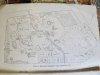
The Polar bear pit was next to the brown bear pit, which in turn was opposite the black bear pit. The brown bear pit initially housed Syrian bears; while the black bear pit initially housed North American black bears. According to the NZ Mammals thread, it later housed Asian black bear.

The Polar bear pit was filled in following the passing of the last bears in 1995. The dens are apparently still intact and used as a storage facility.

The black bear pit was renovated for Slender-tailed meerkats in 1991. You could crawl through the remnants of the old dens to sew the meerkats through underground tunnels. It was demolished in 2017 when construction on the South East Asia precinct began.

The brown bear pit is still intact and has been renovated for Nepalese red panda. It’s currently off display, but still visible if you look over the fence.

upload_2022-3-10_19-3-33.jpeg
 

Attachments

  • upload_2022-3-10_19-3-33.jpeg
    upload_2022-3-10_19-3-33.jpeg
    146.8 KB · Views: 16
The Polar bear pit was next to the brown bear pit, which in turn was opposite the black bear pit. The brown bear pit initially housed Syrian bears; while the black bear pit initially housed North American black bears. According to the NZ Mammals thread, it later housed Asian black bear.

The Polar bear pit was filled in following the passing of the last bears in 1995. The dens are apparently still intact and used as a storage facility.

The black bear pit was renovated for Slender-tailed meerkats in 1991. You could crawl through the remnants of the old dens to sew the meerkats through underground tunnels. It was demolished in 2017 when construction on the South East Asia precinct began.

The brown bear pit is still intact and has been renovated for Nepalese red panda. It’s currently off display, but still visible if you look over the fence.

View attachment 534641

@Zoofan15 Oh nice, thats a really cool use for the old Brown Bear and Black Bear exhibits being used for the Meerkats and the Red Pandas (sounds like an interesting viewing experience for the Meerkats too), oh cool thanks for the map

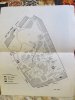
The bear pit next to the Polar bear pit (renovated and now housing red pandas) has a dividing wall I assumed came with the renovations.

Apparently it’s decades old and shown on this map from 1965. It was used to divide the pit in two and add Sloth bear. The brown and black bears had also swapped exhibits by this point.

Note, sun bear were also at the zoo by this point and housed near the entrance.

upload_2022-3-10_19-15-6.jpeg
Photo by @zooboy28

The old bear pit in 2020:

upload_2022-3-10_19-18-40.jpeg
Photo by @Zoofan15
 

Attachments

  • upload_2022-3-10_19-15-6.jpeg
    upload_2022-3-10_19-15-6.jpeg
    83.3 KB · Views: 16
  • upload_2022-3-10_19-18-40.jpeg
    upload_2022-3-10_19-18-40.jpeg
    223.9 KB · Views: 16
Last edited:
Back
Top