Melbourne Zoo Melbourne Zoo history

Thought perhaps where have circled in blue on this 1973 aerial of Melbourne Zoo is where the Leopards were filmed in that 1985 episode of the Zoo Family. Maroon circled is where assume '(Big) Cat Alley/Row' was, yellowy-orange circle is assumedly 'Lion Park' and purple circle is what assume was to be the site of the 'Great Ape Grottoes'?

MZoo-aerial-1973.jpg


& below same aerial coloured circles free

Melbourne-Zoo-aerial-1973.jpg

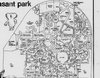
That’s definitely the Lion Park you’ve identified in your aerial shots, but I believe the blue circle is Big Cats as shown on this map from 1978, with bears inhabiting the exhibits in maroon:

upload_2022-12-17_16-39-40.jpeg
 

Attachments

  • upload_2022-12-17_16-39-40.jpeg
    upload_2022-12-17_16-39-40.jpeg
    195.8 KB · Views: 43
@Zoofan15 Oh right yeah cheers, can see them clearly indicated in the map you shared

It’s interesting to note the large amount of space designated as “off limits.” Melbourne Zoo were the leading breeder in the region of several small felids such as Temminck’s golden cat and Leopard cat due to having dedicated off display housing to accomodate breeding.
 
Trying to roughly measure the space where the (Big) Cat 'Alley' would of stood and wondered perhaps if each cage was about 24-25 metres deep and about 14m wide each possibly? or if scale is different perhaps 10m wide and 20m deep each roughly.

the larger enclosure in 'Lion Park' looked to be about 75m wide and 35-40m deep.
either that or about 54m x 27m (depending on accuracy of measurement comparison scale while admit is certainly flawed).

However if the 2nd scale comparison is close to accurate those cages in the 'Bear Row' would of only been roughly 100 sq m each (10m x 10m) yikes.
 
Last edited:
Arboreal primates must have opened after 1978 as per the map. I suspect around 1980-1. Does anybody know how many exhibits were initially constructed and what the additions were?
And sorry but don't really remember the sizes of the Great ape or big cat exhibits. They weren't big. Isn't the existing walk-through lemur built within the confines of some of the old ape exhibits?
Lion exhibit was a decent size for a city zoo, until they split it into two for the hunting dogs. Not the best for viewing animals, but the overhead tunnel was fun for children.
 
Thought perhaps where have circled in blue on this 1973 aerial of Melbourne Zoo is where the Leopards were filmed in that 1985 episode of the Zoo Family. Maroon circled is where assume '(Big) Cat Alley/Row' was, yellowy-orange circle is assumedly 'Lion Park' and purple circle is what assume was to be the site of the 'Great Ape Grottoes'?

MZoo-aerial-1973.jpg


& below same aerial coloured circles free

Melbourne-Zoo-aerial-1973.jpg

The Blue Circle was the Big Cat cages; not sure about the Maroon circled area - which is further south and has been ‘off display’ for as far as I can remember. I’d assume this is the off display Cat breeding facility that Zoofan15 has always mentioned.

And yes, the other two are indeed the Great Ape grottoes and Lion Park. You can virtually see how small the great ape grottoes were from this view. All three weren’t even half the size of Lion Park combined.
 
Trying to roughly measure the space where the (Big) Cat 'Alley' would of stood and wondered perhaps if each cage was about 24-25 metres deep and about 14m wide each possibly? or if scale is different perhaps 10m wide and 20m deep each roughly.

The first estimation of about 25 by 15 sounds about right; although some of the cages were differently shaped. One I recall was more of rectangular shaped horizontally and was a little smaller than all the others.

the larger enclosure in 'Lion Park' looked to be about 75m wide and 35-40m deep.
either that or about 54m x 27m (depending on accuracy of measurement comparison scale while admit is certainly flawed).

Calculations seem about spot on. ;)

Arboreal primates must have opened after 1978 as per the map. I suspect around 1980-1. Does anybody know how many exhibits were initially constructed and what the additions were?

They initially constructed only the first six enclosures I believe. Then, in 1986 they would’ve added the final three enclosures. Not sure what species were where at the time unfortunately though. The current enclosure that used to hold WC Gibbon and now holds Cotton Top Tamiran was initially two seperate enclosures (hence the two viewing windows).

Isn't the existing walk-through lemur built within the confines of some of the old ape exhibits?

Yes, it’s built over all three. Some of the architecture remains. The back wall of the Ruffed Lemur enclosure; and also the moat is pretty much the same as it was for the grottoes too.
 
Arboreal primates must have opened after 1978 as per the map. I suspect around 1980-1. Does anybody know how many exhibits were initially constructed and what the additions were?

The arboreal treetop walk opened in 1980 (I don't have an exact date - I have some vague childhood memory of there being a large rock at the south entrance with a plaque that probably said. Pretty sure it's been gone since the gorilla rainforest creation).

According my notes, construction began in 1977 (though I didn't note the source of that info).

Over the pandemic, using Street View, Google Earth satellite images, Zoo Family episode footage and photos I've taken over the years, I tried to map out the exhibits; this is what I came up with...

There are currently 9 exhibits. Imagine them numbered 1 - 9 when you enter from the south.
Exhibit 1 - 5 are original
Exhibit 6 is part of the extension - it is connected to #5 via a tunnel
Exhibit 7 is part of the extension
Exhibit 8 - 9 are original.

The boardwalk is widened between #6 - #7, which is also part of the extension (it's more narrow in 1985 Zoo Family footage). The plaque for the extension resides between exhibits 6 & 7.

Per my working notes in 2020:
Originally I assumed this extension to be the viewing platforms "with brick" (AT6,7,8,9). Have since confirmed the following from ZF:
Based on ZF SE1E8 @ 10:00, ATT6 & ATT7 are the extension. In 1985, this was simply a 45 degree turn, with no increase in the width of the pathway.


As I think someone else mentioned in this thread, the extension was opened Dec 19, 1986 - by Sir Eric Pearce - per the plaque that is still there (or was when I took a photo of it).

Now, with all this said - there is a thread somewhere here on zoochat mentioning some of the exhibits being demolished. I haven't / can't account for that in my list of exhibits. I did make the following note in 2020:

"Entrance appears to have been reconfigued, based on ZF S1E9 @ 19:35. If this is the entrance, which I assume it is, it's more flat and veers right, rather than immediate incline and left turn in street view 2014.
This may have been a rainforest change, or a change in 2006 when first viewing area was demolished. Latter seems plausible, since I feel like I have vague memory of this changing - though who knows."


My hazy childhood memories of the entrance (which may either be prior, or during rainforest construction) is somewhat different than how the current day entrance is. It's really hard to gauge whether that's because of exhibits that are now gone, or just that the bamboo foliage is just so thick (and has been for decades). I kinda remember the netting of the exhibits being way more visible as you approached, before actually reaching the walkway. Again, I haven't accounted here for any original exhibits that may have been demolished.

I would have never remembered this if Zoo Family hadn't triggered my memory, but I'm pretty sure there was a sign at the (old) entrance, that listed out information about primates - maybe even what was on exhibit. Man, that is such a way back young childhood / Melbourne Zoo in the 80's memory. Pretty certain that didn't exist after the rainforest construction began, and definitely feels like a very early zoo memory for me. That and the 70's looking wooden signs - wow, those take me back!
 
Last edited:
Discovered this video of 'Zoo Family' which was shot at Melbourne in the 80's and it featured some really interesting shots of some of the former enclosures around the zoo at the time.


7.33 - A row featuring a Leopard? Not sure whereabouts in the zoo this was.

Not sure if there was resolution on this, but I believe the leopard footage is all behind the scenes of big cat row.

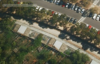
Note the slight curvature of the staff walk way behind the cages behind the exhibits. As Kylie runs off at 7:44 there is a grassy area between the walkway and the perimeter wall. I believe that's now a service road, as seen in the attached satellite image below.

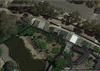
Although big cat row is gone, and public side of that area is a lot different these days, I don't think much has changed behind the scenes, based on more recent satellite images (though that staff walkway may no longer have fencing over the top). 12/2018 is a particular clear image in Google Earth, post big cat row.

The curvature in the footage would only make sense to be on either northern part of the zoo perimeter, and since the west side had Australian fauna (which also went right to the perimeter wall - so no potential for an off limits area), it makes sense to me this would be along the east wall - hence behind the scenes of big cat row.
 

Attachments

  • Screenshot_2023-01-15_22-59-11.png
    Screenshot_2023-01-15_22-59-11.png
    815.5 KB · Views: 9
Not sure if there was resolution on this, but I believe the leopard footage is all behind the scenes of big cat row.

Note the slight curvature of the staff walk way behind the cages behind the exhibits. As Kylie runs off at 7:44 there is a grassy area between the walkway and the perimeter wall. I believe that's now a service road, as seen in the attached satellite image below.

Although big cat row is gone, and public side of that area is a lot different these days, I don't think much has changed behind the scenes, based on more recent satellite images (though that staff walkway may no longer have fencing over the top). 12/2018 is a particular clear image in Google Earth, post big cat row.

The curvature in the footage would only make sense to be on either northern part of the zoo perimeter, and since the west side had Australian fauna (which also went right to the perimeter wall - so no potential for an off limits area), it makes sense to me this would be along the east wall - hence behind the scenes of big cat row.

You seem to be right - those cages are from behind the Big Cat Row.

Those cages no longer exist afaik. That satellite image is old; looks to be from 2015/2016 based on the rest of the zoo. The second stage of the Carnivore precinct is not yet completed as you can still see the Lemur Islands.
 
You seem to be right - those cages are from behind the Big Cat Row.

Those cages no longer exist afaik. That satellite image is old; looks to be from 2015/2016 based on the rest of the zoo. The second stage of the Carnivore precinct is not yet completed as you can still see the Lemur Islands.

Correct, that satellite image is from Jan 2014, before Big Cat Row was redeveloped, to show how the Zoo Family footage related to the BCR.

Attached in this reply is one from Dec 2018 after it was developed. The behind the scenes area (post Carnivore precinct) looks largely the way it was when it was Big Cat Row to me. Nov 2022 images look the same too, but I've screenshotted Dec 2018 because the resolution is clearer.Screenshot_2023-01-16_17-27-14.png
 

Attachments

  • Screenshot_2023-01-16_17-27-14.png
    Screenshot_2023-01-16_17-27-14.png
    1,022.9 KB · Views: 38
Now, with all this said - there is a thread somewhere here on zoochat mentioning some of the exhibits being demolished. I haven't / can't account for that in my list of exhibits.

That thread is here: Melbourne Zoo visits... [Melbourne Zoo] and the exact comment I was referring to is this:

the treetop monkeys and apes is literally falling apart. the enclosure that had lovebirds in it had been demolished much as the grey parrot cage was before it.

Re-reading that, I realize now the author probably actually meant the inhabitants had done significant damage to the exhibit; not that the zoo had demolished / removed this exhibit. ha!

So there is a good chance there was initially 7 exhibits built in 1980 and 2 added in 1986 for the extension - being the 9 that still currently exist; and my comments about any being demolished probably should be ignored. :)
 
Footage of Melbourne Zoo on youtube from sometime in the early 1940s; so can imagine given the time era what to expect: concrete and bars, orangutans offered cigarettes, macaques riding ponies, elephant rides and all that, but it's interesting to see rarities such as platypuses swimming around in a concrete pond which would have been a rare viewing in those days (well still is even in Australia) imagine that Healesville sanctuary back then would of been perhaps the only other public animal park besides MZ itself to keep platypuses.

Footage film credited to Ray Pennington:

 
Footage of Melbourne Zoo on youtube from sometime in the early 1940s; so can imagine given the time era what to expect: concrete and bars, orangutans offered cigarettes, macaques riding ponies, elephant rides and all that, but it's interesting to see rarities such as platypuses swimming around in a concrete pond which would have been a rare viewing in those days (well still is even in Australia) imagine that Healesville sanctuary back then would of been perhaps the only other public animal park besides MZ itself to keep platypuses.

Footage film credited to Ray Pennington:


Thanks for sharing @steveroberts.

It looked very much a typical zoo of its era - animals as a source of entertainment, public feeding encouraged (or at least allowed) and minimal safety barriers.

It was nice to see footage of that large Chacma baboon walking along the fence line; but disturbing to see it in subsequent footage wearing human clothes, riding bikes and racing macaques on horseback. I’m glad zoos have evolved to what they are today, where this would now be condemned as the abomination it is.
 
Footage of Melbourne Zoo on youtube from sometime in the early 1940s; so can imagine given the time era what to expect: concrete and bars, orangutans offered cigarettes, macaques riding ponies, elephant rides and all that, but it's interesting to see rarities such as platypuses swimming around in a concrete pond which would have been a rare viewing in those days (well still is even in Australia) imagine that Healesville sanctuary back then would of been perhaps the only other public animal park besides MZ itself to keep platypuses.

Footage film credited to Ray Pennington:


Thanks for sharing!

That monkey enclosure looks very unique, and perhaps a one of a kind; I haven’t seen anything like it architecturally before in a zoo. It looks really interesting. There seemed to be a water part too. Perhaps it was a mixed species enclosure?
 
Thanks for sharing!

That monkey enclosure looks very unique, and perhaps a one of a kind; I haven’t seen anything like it architecturally before in a zoo. It looks really interesting. There seemed to be a water part too. Perhaps it was a mixed species enclosure?

That exhibit was quite something. Inspired by the popularity of London Zoo’s Baboon Hill, Taronga similarly had a large architecturally impressive exhibit adjacent to the elephants dedicated to holding a sizeable troop. They were fascinating displays during an era of small cages.

In the video of Melbourne, if you look to the left of the exhibit in the water, you can see what appears to be penguins. Not sure what species, but they’re larger and darker than the Little blue penguins, which are seen in a different exhibit in the same video. An interesting combination nonetheless!
 
Thought this article may interest some.

It features some interesting photos of the Cheetah and Seal enclosures from the 80's.

From the Archives, 1998: Storm wreaks havoc at Melbourne Zoo

Melbourne Zoo - Cheetah History

I struggle to imagine Cheetah at Melbourne Zoo!

Apparently they had 2.0 Cheetah at the time of this incident:

1.0 Nakuru
Born at Taronga Western Plains Zoo 22/10/1988
Arrived at Melbourne Zoo 26/10/1992
Sent to Werribee Open Range Zoo 31/07/2002 (died 2004)

1.0 Ovambo
Born at Taronga Western Plains Zoo 22/10/1988
Arrived at Melbourne Zoo 26/10/1992
Sent to Werribee Open Range Zoo 31/07/2002 (died 2003)

Nakuru and Ovambo replaced a pair of nine year old males (who arrived with Aug in 1983), which were transferred to Dubbo in October 1992.

They were the sons of a male named Augus, who lived at Melbourne Zoo between 1983 and 1985. He sired 12 offspring at Dubbo (five of which survived to adulthood).

Nakuru and Ovambo never sired offspring, but have relatives in the region via their brothers (Kibo and Mikumi) – who were the founders of Orana Wildlife Park’s successful breeding programme.

After Nakuru and Ovambo were transferred to Werribee, a female named Lula (1996) arrived December 2002. She returned to Werribee in March 2003.

Melbourne Zoo’s last Cheetah was a male who died 10 days after he arrived:

1.0 Twande
Born at Fossil Rim Wildlife Center 30/05/1995
Sent to Werribee Open Range Zoo 28/04/1996
Sent to Perth Zoo 19/09/2003
Sent to Werribee Open Range Zoo 28/10/2003
Arrived at Melbourne Zoo 25/10/2004
Died at Melbourne Zoo 04/11/2004
 
Wow even Melbourne had Cheetahs for ages on top of their already incredible felid collection, every single big cat and pretty much the majority of available captive smaller wild felids not long ago
 
Back
Top