You are using an out of date browser. It may not display this or other websites correctly.
You should upgrade or use an alternative browser.
You should upgrade or use an alternative browser.
Memorials to individual animals in zoos
- Thread starter Onychorhynchus coronatus
- Start date

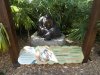
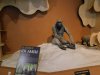
Gorilla "Idi Amin", the first and only gorilla in South America untill 2011 (now there are more individuals, in the same institution he lived. Know more about gorillas at the place here: The change of zoos in Brazil through time (Belo Horizonte zoo)) lived in Belo Horizonte zoo, Brazil, from 1975 (when he was around two years old) until his death in 2012, caused by various health problems. His body was taxidermized and exposed on PUC Minas Gerais Museum, and signs were installed at a plaza right beside the gorilla exhibit at the zoo, as well as a gorilla family painted mural, to remember his legacy. "Idi" never bred, but it was for him that the EAZA certified BH zoo as adequate enough to receive more gorillas (from howletts and Loro parque), resulting in a healthy and thriving group that breeds regularly nowadays at the place.


Attachments



In terms of Alfred in Bristol Zoo, isn't there also a memorial-type area in the cafe?
Onychorhynchus coronatus
Well-Known Member
In terms of Alfred in Bristol Zoo, isn't there also a memorial-type area in the cafe?
I have absolutely no idea.
I've been to Bristol zoo many years ago but don't remember anything like that.
Perhaps someone who has visited more recently will be able to confirm this.
Onychorhynchus coronatus
Well-Known Member
Gorilla "Idi Amin", the first and only gorilla in South America untill 2011 (now there are more individuals, in the same institution he lived. Know more about gorillas at the place here: The change of zoos in Brazil through time (Belo Horizonte zoo)) lived in Belo Horizonte zoo, Brazil, from 1975 (when he was around two years old) until his death in 2012, caused by various health problems. His body was taxidermized and exposed on PUC Minas Gerais Museum, and signs were installed at a plaza right beside the gorilla exhibit at the zoo, as well as a gorilla family painted mural, to remember his legacy. "Idi" never bred, but it was for him that the EAZA certified BH zoo as adequate enough to receive more gorillas (from howletts and Loro parque), resulting in a healthy and thriving group that breeds regularly nowadays at the place.
View attachment 480173
View attachment 480177
View attachment 480179
Thanks for sharing @David Matos Mendes !
I know that "Idi Amin" (very unfortunate name) was a very popular animal for BH zoo and for the staff and visiting public and his death must have been a very sad event.
What are your personal memories of this animal ?
I think the gesture to preserve him as a taxidermy specimen was done with the best intentions but I don't think the result and condition of the specimen really does this gorilla justice.
I much prefer the mural of the gorillas in some ways as a tribute to him and his species.
Thanks for sharing @David Matos Mendes !
I know that "Idi Amin" (very unfortunate name) was a very popular animal for BH zoo and for the staff and visiting public and his death must have been a very sad event.
What are your personal memories of this animal ?
I think the gesture to preserve him as a taxidermy specimen was done with the best intentions but I don't think the result and condition of the specimen really does this gorilla justice.
I much prefer the mural of the gorillas in some ways as a tribute to him and his species.
Yes, to begin, his name was indeed very unfortunate (maybe that's why the zoo only refers to him nowadays as "Idi") but most of the people in BH didn't know about the origin of the name.
Actually, he was a kind of icon for the entire city. Everything that happened to him was noticed on the news, and people liked to know what was going on in his life.
I have one single memory of him, even visiting the zoo duzens of times when he was still alive, I only got to see the individual once, but I have this sight very clear in my mind. I was something around five years old at the time (so it probably happened on 2008), and never saw him again untill his death on march 8th 2012. The truth is that he was really shy, passed a lot of time hiding, and the whole mistery of going to the zoo without knowing if you would get to see him on his massive jungle was surely one of the many motives he was so special for everyone. Many people would visit the entire zoo, and at the end, stay in front of his enclosure for hours waiting for him to show up. It was such a personality...
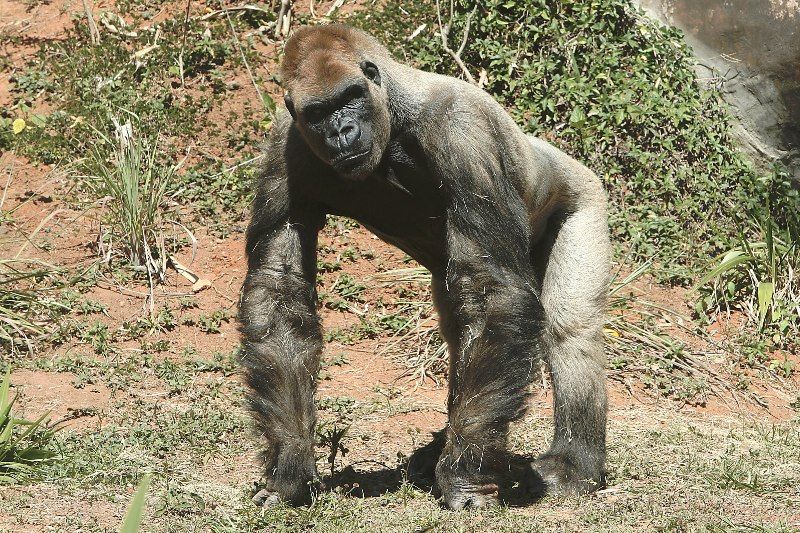
Indeed the taxidermy work on his body wasn't such a success, but it wasn't only fault of the professionals involved on the piece, once Idi was already showing many signs of illnesses in his body, and was already quite skinny and old (age estimated on 37), so, sincerely, his appearence in the last days wasn't very different from what the mounted body looks like... Anyway, his fur wasn't that light, so I definitely don't know what happened during the preservation proccess...
Take a look at how he looked like some months before his death (picture from Leo Fontes/O Tempo/ futura press)
Anyway, I also preffer the mural, and would really like if a statue of him was built in this plaza beside the gorilla enclosure some day.
Onychorhynchus coronatus
Well-Known Member
Yes, to begin, his name was indeed very unfortunate (maybe that's why the zoo only refers to him nowadays as "Idi") but most of the people in BH didn't know about the origin of the name.
Actually, he was a kind of icon for the entire city. Everything that happened to him was noticed on the news, and people liked to know what was going on in his life.
I have one single memory of him, even visiting the zoo duzens of times when he was still alive, I only got to see the individual once, but I have this sight very clear in my mind. I was something around five years old at the time (so it probably happened on 2008), and never saw him again untill his death on march 8th 2012. The truth is that he was really shy, passed a lot of time hiding, and the whole mistery of going to the zoo without knowing if you would get to see him on his massive jungle was surely one of the many motives he was so special for everyone. Many people would visit the entire zoo, and at the end, stay in front of his enclosure for hours waiting for him to show up. It was such a personality...
Indeed the taxidermy work on his body wasn't such a success, but it wasn't only fault of the professionals involved on the piece, once Idi was already showing many signs of illnesses in his body, and was already quite skinny and old (age estimated on 37), so, sincerely, his appearence in the last days wasn't very different from what the mounted body looks like... Anyway, his fur wasn't that light, so I definitely don't know what happened during the preservation proccess...
Take a look at how he looked like some months before his death (picture from Leo Fontes/O Tempo/ futura press)
Anyway, I also preffer the mural, and would really like if a statue of him was built in this plaza beside the gorilla enclosure some day.
I don't know if he was called that name for some racist reason decades back or it was because he was wild caught and from Africa and perhaps at that time Idi Amin as a dictator was a famous African figure in the news.
I didn't know he was so popular amongst people in the city but it doesn't suprise me as great apes often are popular animals for visitors to zoos and often develop an iconic status. It sounds like "Idi" had a character a bit like "Bantu" at Chapultepec, being solitary and retiring away from the visitors and also having a lot of fans amongst visitors.
Yes, I suppose you are right about the physique of the specimen as he does look like a very skinny / underweight gorilla in that picture you've shared and it is obvious that he wasn't very well.
I don't know if he was called that name for some racist reason decades back or it was because he was wild caught and from Africa and perhaps at that time Idi Amin as a dictator was a famous African figure in the news.
I didn't know he was so popular amongst people in the city but it doesn't suprise me as great apes often are popular animals for visitors to zoos and often develop an iconic status. It sounds like "Idi" had a character a bit like "Bantu" at Chapultepec, being solitary and retiring away from the visitors and also having a lot of fans amongst visitors.
Yes, "Idi" and "Bantu" possibly had very similar fames. And the fact that Idi was the only one in his continent and was so old brought a special taste for viewing him.
Also don't know if his name was this one due to racism or if it was because of the fame of the man itself, but a fun fact is that his girlfriend, who arrived together with him at the zoo was called "Dada" (the last name of dictator Idi Amin). She didn't live very long though. Only survived for three years after the arrival...
Onychorhynchus coronatus
Well-Known Member
Yes, "Idi" and "Bantu" possibly had very similar fames. And the fact that Idi was the only one in his continent and was so old brought a special taste for viewing him.
Also don't know if his name was this one due to racism or if it was because of the fame of the man itself, but a fun fact is that his girlfriend, who arrived together with him at the zoo was called "Dada" (the last name of dictator Idi Amin). She didn't live very long though. Only survived for three years after the arrival...
I dont know David, could be just the fame of Idi Amin but the fact is there is a lot of casual racism in this country (not being "woke" there but we both know that this is an unfortunate fact) and back when he arrived in the 70's it would have been a lot stronger and more out in the open.
Either way it was an unfortunate and poor choice of name and one that was a product of the time I suppose.
Anyway the important point is that its great that so many visitors to the zoo were fond of watching this particular gorilla and felt a connection to this animal as an ambassador of his species.
Last edited:
I dont know David, could be just the fame of Idi Amin but the fact is there is a lot of casual racism in this country (not being "woke" there but we both know that this is an unfortunate fact) and back when he arrived in the 70's it would have been a lot stronger and more out in the open.
Either way it was an unfortunate and poor choice of name and one that was a product of the time I suppose.
Anyway the important point is that its great that so many visitors to the zoo were fond of watching this particular gorilla and felt a connection to this animal as an ambassador of his species.
Yes, I also think it was for pure racist conotation. Zoos at the time were mere amusement places, specially in our country, and there were lots of "jokes" with the names of the animals (many of them with a very bad taste IMO) Rio used to name their elephant seals with senators names, and a rhino was named "cacareco" (wich means something old and lame) and there are many other examples... In "Idi's" case, it was actually way worse due to the racism consisted on it, and we gotta remember that at this time, we were on a dictatorship, in wich the rights of black people (and all minorities in general) simply weren't discussed. A very sad situation, but it's great that the zoo has long ago abandoned this amusement park stile and "humour", and it's nice that the animal's legacy is well remembered nowadays.
Onychorhynchus coronatus
Well-Known Member
Yes, I also think it was for pure racist conotation. Zoos at the time were mere amusement places, and there were lots of "jokes" with the names of the animals (many of them with a very bad taste IMO) Rio used to name their elephant seals with senators names, and a rhino was named "cacareco" (wich means something old and lame) and there are many other examples... In "Idi's" case, it was actually way worse due to the racism consisted on it, and we gotta remember that at this time, we were on a dictatorship, in wich the rights of black people (and all minorities in general) simply weren't discussed. A very sad situation, but it's great that the zoo has long ago abandoned this amusement park stile and "humour", and it's great that the animal's legacy is well remembered nowadays.
Yes, of course , I mean that kind of naming was a product of its time and as you say it was the period of the dictatorship where these kind of casually racist attitudes were widely encouraged and the norm.
Even with Bolsonaro in power today and how the country appears to be sliding back into authoritarianism and cryptofascism I really can't imagine zoos doing that kind of thing with naming animals that way today.
Yeah, even with this wave of idiocy reaching the country, zoos are waaay different from what they were at the time (even though we still need many improvements) this would not be acceptable...Yes, of course , I mean that kind of naming was a product of its time and as you say it was the period of the dictatorship where these kind of casually racist attitudes were widely encouraged and the norm.
Even with Bolsonaro in power today and how the country appears to be sliding back into authoritarianism and cryptofascism I really can't imagine zoos doing that kind of thing with naming animals that way today.
Onychorhynchus coronatus
Well-Known Member
Yeah, even with this wave of idiocy reaching the country, zoos are waaay different from what they were at the time (even though we still need many improvements) this would not be acceptable...
Yes, I can't think of anyone involved in zoo work in this country who are supporters of Bolsonaro or the far right and the two actually don't go together because the administration have caused so many problems for these institutions.
Yes, fortunately none of them seems to like Bolsonaro's atitude, but I unfortunately know some people that were fired from their work in zoos because they had shown themselves against the government on social media. Seems like if we are against, we are oblied to stay quietYes, I can't think of anyone involved in zoo work in this country who are supporters of Bolsonaro or the far right and the two actually don't go together because the administration have caused so many problems for these institutions.

Onychorhynchus coronatus
Well-Known Member
Yes, fortunately none of them seems to like Bolsonaro's atitude, but I unfortunately know some people that were fired from their work in zoos because they had shown themselves against the government on social media. Seems like if we are against, we are oblied to stay quiet
Yep, there is sadly a creeping march of authoritarianism into institutions and censorship in Brazil.
To be clear, conservation should be non-partisan and we should try to refrain from talking about partisan politics (I know I'm guilty of doing this but I would prefer not to) and instead focus on biodiversity conservation but of course a large part of conservation involves policymaking and who ultimately decide policy but the government ?
The current administration in Brazil as you already know is no ally of conservation and in fact might be classed as the most anti-environmental / anti-conservation government on the planet.
Anyway, yeah, depressing times...
Last edited:
Yep, there is sadly a creeping march of authoritarianism into institutions and censorship in Brazil.
To be clear, conservation should be non-partisan and we should try to refrain from talking about partisan politics (I know I'm guilty of doing this but I would prefer not to) and instead focus on biodiversity conservation but of course a large part of conservation involves policymaking and who ultimately decide policy but the government ?
The current administration in Brazil as you already know is no ally of conservation and in fact might be classed as the most anti-environmental / anti-conservation government on the planet.
Anyway, yeah, depressing times...
Oh, yeah, politics are definitely not my favourite issue to talk about, but it's so attached to conservation, as you said... Difficult times indeed. Let's hope for better ones.
Onychorhynchus coronatus
Well-Known Member
Oh, yeah, politics are definitely not my favourite issue to talk about, but it's so attached to conservation, as you said... Difficult times indeed. Let's hope for better ones.
There is a light at the end of the tunnel, but things will get worse before they get better.

felis silvestris
Well-Known Member


Faith_Icarus
New Member
At the entrance of Parco Natura Viva, in Italy, there is a statue of Pippo, an hippopotamus that was the first animal of the zoo, discarded from a travelling circus, and basically the reason the zoo itself was built.