MOG2012's Spec Exhibit Thread

@MOG2012, how about an ecology-focused complex that highlights the apex predators (and their prey) of both North and South America?

IMG_1853.jpeg
Photo Credit: @ZooElephantMan

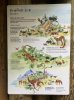
Essentially, I’ve played around a similar idea a few times in the past, with the following signage from the Queens Zoo (NY) being a major inspiration for such a concept.

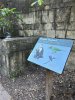
Ideally, you could choose to have separate exhibits for living prey species of the respective predator (Caiman x Jaguar; Elk x Grey Wolf, etc.); or, perhaps, make the choice to use statues to represent said prey, as is the case with the Philadelphia Zoo’s “Statue Safari” (see below).

IMG_1190.jpeg
Photo Credit: yours truly, Austin the Sengi

Either way, there are plenty of extant predators from either continent to choose from; thus, making this idea a more creative take on a typical North/South American exhibit complex.


Hope this helps :D
 

Attachments

  • IMG_1853.jpeg
    IMG_1853.jpeg
    100.2 KB · Views: 84
  • IMG_1190.jpeg
    IMG_1190.jpeg
    181.6 KB · Views: 82
2. the Cat of Many Names - (10 exhibits)
This exhibit was inspired by
@Austin the Sengi 's suggestion.

Once entering the exhibit, there is a metal statue (similar style of Houston Zoo) of Puma concolor which is in a defensive pose, facing visitors. Inside the entrance building, visitors can see a tall map of the Americas, with a colored range of Puma concolor along with their regional names. Additionally, there are several displays, videos, and photos of Puma concolor which highlight their presence in pop culture, their adaptations, and their different habitats. On the back wall of the building, there is a look into one of the five Puma concolor habitats with a door on either side of the building which leads into the looping trail.

The enclosure I’m mentioning is 1,500 sq. m large and 8 m tall with mesh-netting. At the start of the trail, there are several looks into the enclosure including underwater viewing. There is Douglas fir, bigleaf maple, evergreen huckleberry, and sweet cicely along with a creek and a 7,200 litre pool. Additionally, there are cedar platforms, rock outcrops, and logs with dens that have cameras. In this enclosure, there is a sister pair of 0.2 Cougar Puma concolor couguar which are rescued from Mount St. Helens. The enclosure is representing the Pacific Northwest forests they live in along with the following enclosure.

full

Possible Look | @snowleopard

Opposite to that exhibit, there is a 4,800 sq. m large, and 6.5 m tall enclosure which houses a breeding pair of 1.1 American Beaver Castor canadensis, a herd of 1.4 American Elk Cervus canadensis canadensis, a solitary 0.1 North American Porcupine Erthizon dorsatum, and a flock of 1.5 Wild Turkey Meleagris gallopavo. There is an artificial dam with a camera, a 450,000 litre pool, a channel, and underground viewing. Additionally in this area, there is Douglas fir, red alder, Pacific willow, red osier dogwood, slough sedge, Indian plum, and hardwood logs. In the more forested area, there is bigleaf maple, western red cedar, evergreen huckleberry, Yorkshire fog grass, trailing blackberry, rock piles, vertical logs, pine trunks, and open-fronted shelters. Additionally, there are also roost poles, dust-bath pits, berry brambles, broadleaf lupine, red fescue, and rope bridges.

full

Possible Look | @TinoPup

Then, there is the second Puma concolor exhibit. It simulates the Southwestern deserts and is 1,000 sq. m large and 7 m tall with mesh-netting. There is honey mesquite, prickly pair, Joshua tree, and big sagebrush along with sandstone, logs, a 7,500 oasis pool, and burrow boxes. It’s home to a pair of 1.1 Mountain Lion Puma concolor couguar which are rescues from the Peloncillo Mountains. The corresponding prey enclosure is 3,500 sq. m large and 5.5 m tall with mesh netting. There are several sandstone outcrops, earthen mounds, dens, shelters, logs, mud wallows, and a 16,000 litre pool. Additionally, there is honey mesquite, Creosote bush, catclaw acacia, Palo verde, brittlebush, blue grama grass, fourwing saltbush, and Teddy bear cholla. It houses a squadron of 3.3 Collared Peccary Pecari tajacu and a breeding herd of 2.5 Desert Bighorn Sheep Ovis canadensis nelsoni.

full

Possible Look of Feline Enclosure (with better viewing) | @Coelacanth18
full

Possible Look of Mixed Enclosure | @Rhino0118

The next Puma concolor exhibit simulates the Florida Everglades and is 1,200 sq. m large and 6 m tall with mesh-netting. There is bald cypress, Sabal palm, saw-grass, and pickleweed along with a channel, deep pool, and underground viewing. Additionally, there are den boxes and floating platforms which provide a home for a pair of brother 2.0 Florida Panther Puma concolor couguar. The prey enclosure is 1,400 sq. m large and 6 m tall with mesh-netting. There is a shallow 76,800 litre pool, underwater viewing, a creek, mud wallows, burrow boxes, rocky outcrops, shelters, hide boxes, and hardwood logs. Additionally, there is live oak, bald cypress, Carolina willow, cabbage palm, sawgrass, false holly, gallberry, bahiagrass, and dewberry. It’s home to a trio of 1.2 Nine-banded Armadillo Dasypus novemcinctus and a herd of 1.4 White-tailed Deer Odocoileus virginianus.

full

Possible Look into Panther Enclosure | @Pleistohorse
full

Possible Look into Deer Enclosure | @CuseZoofan

The fourth Puma concolor enclosure simulates the Guiana Shield and is 1,350 sq. m large and 7 m tall with mesh-netting. There is moriche palm, wild cashew tree, açaí palm, and torpedo grass along with a seasonal pool filled with aquatic plants and underwater viewing. Additionally, there are earthen mounds, sandstones, climbing platforms, logs, and raised dens. There is a solitary 1.0 Deer Cat Puma concolor couguar which is a rescue from the Davis Mountains. The opposite enclosure is 2,700 sq. m large and 8 m tall with a 288,000 litre pond, a channel, islands, and underwater viewing. Additionally, there is açaí palm, pink trumpet tree, ice-cream bean, Malabar chestnut, arrowroot, red palulu, velvet bean vine, umbrella cichlid, and switchgrass along with wooden platforms,wooden decks, logs, boulders, dens, nest boxes, and open shelters. There is a breeding herd of 3.5 Capybara Hydrochoerus hydrochaeris and a breeding pair of 1.1 Hoffmann’s Two-toed Sloth Choloepus hoffmanni.

full

Possible Look into Cat Enclosure | @Zooplantman
full

Possible Look into Wetland Enclosure | @Sarus Crane

The final Puma concolor enclosure is 700 sq. m large and 9 m tall with mesh netting while also simulating the Andes Mountains. There is netleaf oak, limber pine, mountain gooseberry, and huckleberry along with a rock cliffs, elevated platforms, a waterfall, several pools, and a heated den. It’s home to a solitary 0.1 Puma Puma concolor couguar which is a rescue from the Rocky Mountains. The final enclosure is a 2,400 sq. m large and 4.5 m tall paddock with a bachelorette herd of 0.8 Alpaca Lama pacos and a bachelorette herd of 0.5 Llama Lama glama. There are rocky outcrops, Andean birch, Andean butterfly bush, Puna grass, Atacama patagonia bush, yareta, windmill grass, and alfalfa. Additionally, there is an open-faced barn, logs, wooden platforms, and drinking troughs. Visitors can enter during designated times to pet and feed the camelids.

full

Possible Look of Puma Enclosure | @Dhole dude
full

Possible Look of Camelid Enclosure | @MagpieGoose

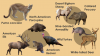
Screenshot 2025-06-13 7.07.24 PM.png
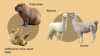
Screenshot 2025-06-13 7.07.28 PM.png
Animal Photos | @Mr Gharial , inspired by the style of @Austin the Sengi

Next, I'm doing an East Africa exhibit that focuses on the endangered/rare animals of the wetlands to the mountains to the forests to the savanna. Can you guess what animals will be in the complex?
 

Attachments

  • Screenshot 2025-06-13 7.07.24 PM.png
    Screenshot 2025-06-13 7.07.24 PM.png
    410.1 KB · Views: 68
  • Screenshot 2025-06-13 7.07.28 PM.png
    Screenshot 2025-06-13 7.07.28 PM.png
    351.9 KB · Views: 70
I'm going to take a quick pause on the Southeast Asia exhibit to talk about how I design my exhibits and the thinking put into it. This will be a two-post ordeal.

Step 1: First, I usually come up with a theme that isn't that common, or isn't even present in zoos. Sometimes they're cultural based (like my Land of the Pharaohs and Caesar's Menagerie exhibits from my spec Zoo), based on the animals traits (like my City of Lights exhibit), or purely from biogeographical habitats. For the purpose of this explanation (both posts), I will design an exhibit featuring animals from East Asia (location) with the theme of dragons focusing mainly on herps, calling it "Land of the Dragons"

Step 2: Then, I would find a headliner (s) species. Something (s) to base this exhibit around which would draw in crowds. From the top of my mind, Chinese Alligator (Alligator sinensis) and Chinese Giant Salamander (Andrias davidianus) would work.
full

Chinese Alligator, Image Credit -> @Astrotom3000
full

Chinese Giant Salamander, Image Credit -> @JigerofLemuria

Step 3: What are some species that would go well near the headliners (ie. predator-prey relationships, animal opposites (ie. Nile crocodiles and Nile hippos), etc.) Well I would diversify the reptiles and amphibians so that would mean I would have a snake, lizard, turtle, and frog/toad. For snakes, Mang Mountain Pitviper (Protobothrops mangshanensis) and Burmese Python (Python bivittatus) which would showcase the two main "types" of snakes (constrictors and ones with venom) with pythons also being thought to be a possible cause of the dragon myth (ancient Greco-Romans described the dragons as being from India and being able to eat elephants whole which is likely an exaggerated description of reticulated pythons. For lizards, Chinese Crocodile Lizard (Shinisaurus crocodilurus) and Chinese Water Dragon (Physignathus cocincinus) would work well, with the later having the name "dragon" and both having crocodilian like traits Both species use camouflage and/or speed to get their prey which the salamanders and alligator do. For turtles, maybe I can have a land tortoise and a pond turtle so Impressed Tortoise (Manouria impressa) would be a conservation priority tortoise with the following being the most common, Endangered East Asian turtles (in AZA) that would fit in this Zoo exhibit: Black-breasted Hill Turtle (Geoemyda splengeri), Chinese Big-headed Turtle (Platysternon megacephalum megacephalum), Chinese Three-striped Box Turtle (Cuora trifasciata), Common Thread Turtle (Mauremys sinensis), and McCord's Box Turtle (Cuora mccordi). Finally, for amphibians I’m choosing Oriental Fire-bellied Toad (Bombina orientalis) and Anderson’s Crocodile Newt (Echinotriton andersoni).

full

Mang Mountain Viper, Image Credit -> @lintworm
full

Burmese Python, Image Credit -> @pachyderm pro
full

Asian Water Dragon, Image Credit -> @TheGerenuk
full

Chinese Crocodile Lizard, Image Credit -> @PangolinLover0514
full

Impressed Tortoise, Image Credit -> @Jakub
full

Black-Breasted Hill Turtle, Image Credit -> @ro6ca66
full

Chinese Big-Headed Turtle, Image Credit -> @olhl.animal.photography
full

Chinese Three-Striped Box Turtle, Image Credit -> @Zoofan15
full

Common Thread Turtle, Image Credit -> @Ituri
full

McCord's Box Turtle, Image Credit -> @NNM.
full

Oriental Fire-Bellied Toad, Image Credit -> @vogelcommando
full

Anderson's Crocodile Newt, Image Credit -> @RatioTile

Step 4: After having a core set of species, I typically start trying to diversify the roster. As this is a herpetarium(ish), having another lizard, snake, some birds, fish, and inverts could fit. For lizards, a nocturnal smaller one would fit as it would show the diversity of lizards so a Chinese Cave Gecko (Goniurosaurus hainanensis), I was also thinking about the possibility of having Asian water monitors but as there is already enough large-ish reptiles, I decided to nix it. For snakes, maybe an island living one could work showing how island life has both significant similarities and differences so maybe a Tokara Habu (Protobothrops tokarensis) which is from a group of Japanese islands could work. For birds, passerines are one of the most common types of East Asian birds (other than waterfowl) so Chinese Hwamei (Garrulax canorus), and Red-billed Leiothrix (Leiothrix lutea) work as they are both SSP program animals with breeding programs. For fish, larger fish could work so Northern Snakeheads (Channa argus) and Grass Carps (Ctenopharyngodon idella). Finally, finding some inverts for this exhibit was hard but I found the Chinese Mantis (Tenodera sinensis) which are the most common species of mantis in captivity.

There was a photo of Chinese Cave Geckos but I couldn't fit it entirely on (image count), Image Credit -> @vogelcommando
full

Tokara Habu, Image Credit -> @TinoPup
full

Chinese Hwamei, Image Credit -> @Leo K.
full

Red-billed Leiothrix, Image Credit -> @KevinB
full

Northern Snakehead, Image Credit -> @Astrotom3000
full

Grass Carp, Image Credit -> @German Zoo World
full

Chinese Mantis, Image Credit -> @CMP

As I didn't expect for this post to have so many photos already, I'll continue with the rest of this explanation (2+ parts) on Friday/the weekend with the mixed species step. What do you think so far?

Notes: A lot of the inspiration for the roster were from various existing Asian oriented Zoo exhibits such as Bronx Zoo, Omaha Zoo, and San Diego Zoo. Also, as I was looking up photos for the exhibit, I didn't intentionally mean for the roster to be similar to @Aardwolf 's and @Mr Gharial 's similar East Asian themed exhibits. Another thing I wanted to mention is that this exhibit was planned for a temperate Zoo, likely in New England.
Here’s a remake of these steps with more specificity and clarity.

  • Step 1
    • Establish the zoo’s geographic location, climate zone, and constraints
    • Define the exhibit’s theme and purpose. Themes might be:
      • Biogeographic
      • Behavioral/Trait-Based
      • Cultural/Historical
      • Other
    • Ensure the concept supports educational, and/or conservation goals of the zoo
  • Step 2
    • Identify the focal species that will best represent your exhibit’s theme, and visitor appeal potential
  • Step 3
    • Identify secondary species that would complement or contrast the focal animals. Consider relationships such as:
      • Trophic Connections
      • Behavioral or Visual Contrasts
      • Conservation Value
  • Step 4
    • Expand your species list to reflect the natural biodiversity of your chosen theme. Include species of multiple taxa and roles to create a cohesive, immersive environment
  • Step 5
    • For each planned species, identify potential compatible animals that could naturally coexist
  • Step 6
    • Fill in the gaps. Are there any missing niches, species, taxa, enclosure types, etc.

  • What’s Next to Come? (within the next couple months)
    • The Atypical Animals of East Africa exhibit on this thread (maybe next week?)
    • Temporary Halloween Exhibition for my Las Vegas Zoo thread (in two weeks)
    • Remaking of the Spec Zoo Animal Analysis thread with more enclosure designs and accuracy
    • Remaking of my Zoo New England Masterplan
    • Northern Europe exhibit on this thread
    • the Zebra House & the Lion House on the Las Vegas Zoo thread
    • the Las Vegas Zoo (small approach, 5-20 acres) Map on Fantasy Zoos in the Gallery
 
Back
Top