Moles in Captivity

A bit of an update of the Eastern Mole at Lakeside Nature Center: I was able to get in touch with husbandry staff there and ask a few questions. The enclosure is custom made by them, the animal is described as active and moving around in it's enclosure most of the time and is occasionally taken out for keeper talks, primary diet is mostly earthworms and other insects but also occasionally frozen pinkies, the mole came to them from a local who brought it in for rehab after their dog grabbed it, and the most shocking of all to me: the animal has been there since 2017!

5 years is far longer than the Star-nosed mole at the National Zoo in the 90's. Could just be that Eastern mole live longer.
 
A bit of an update of the Eastern Mole at Lakeside Nature Center: I was able to get in touch with husbandry staff there and ask a few questions. The enclosure is custom made by them, the animal is described as active and moving around in it's enclosure most of the time and is occasionally taken out for keeper talks, primary diet is mostly earthworms and other insects but also occasionally frozen pinkies, the mole came to them from a local who brought it in for rehab after their dog grabbed it, and the most shocking of all to me: the animal has been there since 2017!

5 years is far longer than the Star-nosed mole at the National Zoo in the 90's. Could just be that Eastern mole live longer.
I love you. Thank you for your service.
 
After corresponding with the husbandry staff at lakeside, they shared a picture of the "mole of the hour" and said it was okay for me to share with others. So, here she is in all her glory!

image006.jpg

I'm hoping to get out there to see her in person before the end of the year if I can swing it.
 

Attachments

  • image006.jpg
    image006.jpg
    42.6 KB · Views: 130
Hello fellow mole fans, I was able to swing it!

By swing it I mean that yesterday I was able to visit the Lakeside Nature Center in Kansas City, home to the only mole of any species on display in North America, as best as we can tell.

LNC has been home to an Eastern Mole Scalopus aquaticus of unknown sex and age for approximately 5 years. In addition to having a public facing enclosure, the animal is occasionally used for programming both on site at LNC and around the community.

I was graciously given access to the animals enclosure to get reference photos of my own, which are included here.

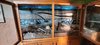
Side view of enclosure, showing 4 interconnected chambers. The Mole cannot leave the tube structure, the surrounding substrate is for aesthetics.
20221211_151707.jpg

Front view of the mole enclosure with the doors open to get rid of the glare.
20221211_152555.jpg

The mole of the hour! They were asleep when I arrived but still in full view. After the enclosure was opened they roused and started exploring, pushing dirt around, and smelling what turned out to be me. They were rather shy but very easy to see.
20221211_152845.jpg

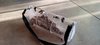
The mole's transport container, like the enclosure was a custom job done by the same person. Its around two feet long and eight inches in diameter. The keeper assured me that "the mole does bite" so when it is out for programs it stays within the pod with enough substrate to cover itself if it wants.
20221211_155328.jpg

Thank you so much to The Lakeside Nature Center for their hospitality! It is a charming little facility with a cast of well cared for rehab animals turned ambassadors. Absolutely worth the visit if you are in the area, it is 5 minutes from the zoo and can be seen in its entirety in about an hour.
 

Attachments

  • 20221211_151707.jpg
    20221211_151707.jpg
    83.4 KB · Views: 127
  • 20221211_152555.jpg
    20221211_152555.jpg
    124.1 KB · Views: 120
  • 20221211_152845.jpg
    20221211_152845.jpg
    59.8 KB · Views: 116
  • 20221211_155328.jpg
    20221211_155328.jpg
    97.2 KB · Views: 118
I'm awfully sorry to be kind of commandeering this thread but I have another sort of update on captive moles in North America.

I had the opportunity to speak with Dwight Kuhn, a photographer who specializes in smaller animals, especially those with unique traits or behaviors.

While I somehow forgot to ask when it happened and exactly how many he had, Dwight kept at least two Star-nosed moles privately for an entire summer as part of a photo study. The animals were housed in set that was decorated to resemble their natural habitat that consisted of a 30 gallon aquarium with a wooden platform off of one side that had a nest box and an area of natural dirt for digging. Again habitrail tubes were used. The animals were fed earthworms and could eat upwards of 50 a day. No breeding occurred despite the animals apparently thriving in Dwight's care before being released after he got the pictures he needed. From what I understand, most of the Star-nosed mole photos in this gallery are from this enclosure.

Dwight's methods of capture (as well as husbandry) were remarkably similar to those of Ken Catania who I spoke with several months ago. So it came as quite a shock that Dwight had never met or even heard of Ken! Regardless, the captive husbandry of at least Eastern and Star-nosed moles does not seem to be quite the insurmountable task as it may have seemed. Display to the public however may be an whole other thing entirely but I will say that the Eastern mole exhibit at Lakeside Nature Center certainly "worked" for me. I was also there long enough to see several other visitors view the exhibit and express vocal interest or enjoyment.

Perhaps there will be more mole exhibits in the future. I certainly hope so.
 
Last edited:
A brief update to the post above:

I introduced Ken and Dwight via email and unintentionally connected a few dots in the whole mystery.

Dwight kept the moles in the summer of 1982 in Dexter, Maine. Around that time he got in contact with Bill Mcshea, a researcher at the national zoo, as well as Ed Gould, the zoo's director at the time. Both visited Dwight in Maine and Dwight appears to be one of the people who helped get the exhibit and research project at the zoo going. It would be Ed Gould who hired Ken to work on the very same exhibit/project nearly around a decade later. The very same exhibit that @Tim May saw all those years ago.

Had Dwight not failed with water shrews in the early 80's, he never would have switched priority to the moles. Had he never switched to the moles he would have never been able to help Bill and Ed of the National zoo. Had he not helped Ed, Ed would not have ever hired Ken to collect and care for more moles. Finally if Ken had never been hired @Tim May likely would have never seen a mole at the zoo and would not have been able to share the memory that lead to this adventure. Wild, huh?

Ken had been aware of Dwight and described him as a legend, they seemed quite pleased to meet. Dwight is largely retired now and while Ken is not currently involved with moles, he has hopes for future projects involving them.

Introducing these two "great mole minds" has been one of the highlights of my career, and I am honored to have spoken to each of them. Both expressed that they to hope to see the species on display to the public in the future. As much as I agree, I will admit that this project has really been more about the journey than the destination and that the real moles were the friends I made along the way.
 
A brief update to the post above:

I introduced Ken and Dwight via email and unintentionally connected a few dots in the whole mystery.

Dwight kept the moles in the summer of 1982 in Dexter, Maine. Around that time he got in contact with Bill Mcshea, a researcher at the national zoo, as well as Ed Gould, the zoo's director at the time. Both visited Dwight in Maine and Dwight appears to be one of the people who helped get the exhibit and research project at the zoo going. It would be Ed Gould who hired Ken to work on the very same exhibit/project nearly around a decade later. The very same exhibit that @Tim May saw all those years ago.

Had Dwight not failed with water shrews in the early 80's, he never would have switched priority to the moles. Had he never switched to the moles he would have never been able to help Bill and Ed of the National zoo. Had he not helped Ed, Ed would not have ever hired Ken to collect and care for more moles. Finally if Ken had never been hired @Tim May likely would have never seen a mole at the zoo and would not have been able to share the memory that lead to this adventure. Wild, huh?

Ken had been aware of Dwight and described him as a legend, they seemed quite pleased to meet. Dwight is largely retired now and while Ken is not currently involved with moles, he has hopes for future projects involving them.

Introducing these two "great mole minds" has been one of the highlights of my career, and I am honored to have spoken to each of them. Both expressed that they to hope to see the species on display to the public in the future. As much as I agree, I will admit that this project has really been more about the journey than the destination and that the real moles were the friends I made along the way.
Thanks for sharing. I read the more detailed descriptions in the thread. It's a wonderful story and promising to the possibilities of husbandry. I think most species may really only be as impossible to keep as the lack of effort there is to keep them. Considering the commonly cited lifespan for eastern moles is just 6 years, I need to get to KC asap!
 
I visited Lakeside Nature Center today and spent two and a half hours there, with probably two-thirds of that time spent in Night Life. I did not get to see the Mole, or if I did, it was covered in dirt or something. I would've settled for a twitch to confirm but no dice whatsoever. They put food in the enclosure and I was still there another hour. No luck.

The real reason I am posting is to report that based on what two staff members there told me there, separately, it sounded to me that the current mole is a new individual and still extremely shy and not showy, and they are spreading the food to encourage more activity, but he so far prefers to stay in the lowest 'module' of the enclosure and covered in dirt.

Reporting this both so people know they still keep mole but also to say it's not a guarantee you'll see it despite above reports of an active individual.
 
I visited Lakeside Nature Center today and spent two and a half hours there, with probably two-thirds of that time spent in Night Life. I did not get to see the Mole, or if I did, it was covered in dirt or something. I would've settled for a twitch to confirm but no dice whatsoever. They put food in the enclosure and I was still there another hour. No luck.

The real reason I am posting is to report that based on what two staff members there told me there, separately, it sounded to me that the current mole is a new individual and still extremely shy and not showy, and they are spreading the food to encourage more activity, but he so far prefers to stay in the lowest 'module' of the enclosure and covered in dirt.

Reporting this both so people know they still keep mole but also to say it's not a guarantee you'll see it despite above reports of an active individual.
Thank you for your report! I'm sorry to hear you weren't able to see it. It is very interesting to hear that they have a new individual, hopefully he becomes more acclimated to the setup and shows better in the future.
 
  • Like
Reactions: JVM
I visited Lakeside Nature Center today and spent two and a half hours there, with probably two-thirds of that time spent in Night Life. I did not get to see the Mole, or if I did, it was covered in dirt or something. I would've settled for a twitch to confirm but no dice whatsoever. They put food in the enclosure and I was still there another hour. No luck.

The real reason I am posting is to report that based on what two staff members there told me there, separately, it sounded to me that the current mole is a new individual and still extremely shy and not showy, and they are spreading the food to encourage more activity, but he so far prefers to stay in the lowest 'module' of the enclosure and covered in dirt.

Reporting this both so people know they still keep mole but also to say it's not a guarantee you'll see it despite above reports of an active individual.


Sad to hear the old girl finally passed, but excited to know that the center has evidently committed to displaying the species for at least one more try.
 
JAZA lists Mogera imaizumii (Small Japanese Mole) kept at Aquamarine Fukushima but I don't know if this is current.
 
Back
Top