Monarto Safari Park Monarto Safari Park News 2024

At least by Monarto receiving Pak Boon and Tang Mo, who have lived together for many years, that’s the hierarchy partially resolved. I’m not saying Thong Dee would have disrupted things (she’s not a dominant personality), but it would have been an additional complication. Thong Dee last gave birth 2016, so unless she conceives in the next two years, it’s unlikely she’ll be able to conceive again. She’s well represented via her eldest son, so I think they’re accepting of that being her fate.

I don’t believe Monarto will acquire more elephants in the future as once the herd is settled, they’ll be a reluctance to rock the boat. If Pak Boon fails to produce a daughter/daughters, it may become a necessity, but I’m of the opinion it’s their intention going forward to form a herd around Pak Boon. Even globally, she’s a genetically valuable female and Putra Mas is the region’s most genetically valuable bull. Three calves from them is no bad thing, with even a bull calf having more applications than any Melbourne/Werribee bull calf such as Roi-Yim.

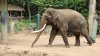
I agree with that point about the value of Putra Mas’s genetics a lot. He is the only elephant in the region, with PROPER massive Tusks. Every other bull has small ones. His genes are impressive and hope they continue long into the future.

Look at those things... crazy. Go putra mas!! :) _93534258_237a0203.jpg
 

Attachments

  • _93534258_237a0203.jpg
    _93534258_237a0203.jpg
    141.6 KB · Views: 63
Last edited:
I agree with that point about the value of Putra Mas’s genetics a lot. He is the only elephant in the region, with PROPER massive Tusks. Every other bull has small ones. His genes are impressive and hope they continue long into the future.

Look at those things... crazy. Go putra mas!! :) View attachment 700449

Wow, those are impressive. I’d be curious to see how a son of Putra Mas would turn out should he ever sire one. So far he’s had two female calves, but if he ends up producing three calves with Pak Boon over the next decade, Monarto will likely get a bull calf from him.
 
I agree with that point about the value of Putra Mas’s genetics a lot. He is the only elephant in the region, with PROPER massive Tusks. Every other bull has small ones. His genes are impressive and hope they continue long into the future.

Look at those things... crazy. Go putra mas!! :) View attachment 700449

He is an impressive bull.
He is also the only adult male allowed to keep his tusks. All the others have there cut short or removed.
I would love for western plains to let guns grow out.
 
He is an impressive bull.
He is also the only adult male allowed to keep his tusks. All the others have there cut short or removed.
I would love for western plains to let guns grow out.

Oh? Is it standard to cut the tusks? I think that's a bad move tbh, doesn't it mess with the genetics. Years of poaching for tusks in India and asia have completely genetically removed the tusks in not just females, but lots of males too. Sure, for the safety of the keeper its all well and good, but not for the elephant imo. I hope they don't cut the tusks
 
Last edited:
I don't see how trimming effects genetics. Poaching for tusks could select for smaller or a lack of tusks, but that's a change over generations based on tuskless/smaller-tusked individuals surviving to breed.
I'd be interested in pros and cons of tusk trimming-- certainly from an aesthetic standpoint it is a shame!
 
Oh? Is it standard to cut the tusks? I think that's a bad move tbh, it messes with the genetics. Years of poaching for tusks in India and asia have completely genetically removed the tusks in not just females, but lots of males too. Sure, for the safety of the keeper its all well and good, but not for the elephant. I hope they don't cut the tusks
I don't see how trimming effects genetics. Poaching for tusks could select for smaller or a lack of tusks, but that's a change over generations based on tuskless/smaller-tusked individuals surviving to breed.
I'd be interested in pros and cons of tusk trimming-- certainly from an aesthetic standpoint it is a shame!

Trimming tusks has no influence on genetics. Cows are no less attracted by tuskless bulls as they are tusked bulls and it also has no influence on male hierarchy.

Bulls held in city zoos are supposedly more susceptible to tusk breakages, but there’s many exceptions to this phenomenon globally. Regionally, a number of bulls have lost one or both tusks but some have been circumstantial. Heman in an accident with the moat; Luk Chai had brittle tusks.
 
He is an impressive bull.
He is also the only adult male allowed to keep his tusks. All the others have there cut short or removed.
I would love for western plains to let guns grow out.

Wait no, Putra Mas actually can't have them taken off, only cut a small bit. Theres too many nerve endings in them now since they've grown so big, and it would cause extreme pain and infection if they cut them off. Its like an adult tooth. Alright cool, cool
 
Wait no, Putra Mas actually can't have them taken off, only cut a small bit. Theres too many nerve endings in them now since they've grown so big, and it would cause extreme pain and infection if they cut them off. Its like an adult tooth. Alright cool, cool
They can remove tusks if there is reason to.

The only scenario they would remove Putra Mas’ tusks would be a medical reason e.g. an infection such as one caused by a partial breakage.

Heman and Ongard each had one tusk removed previously; while Luk Chai and Man Jai had both their tusks removed.
 
The only scenario they would remove Putra Mas’ tusks would be a medical reason e.g. an infection such as one caused by a partial breakage.

Heman and Ongard each had one tusk removed previously; while Luk Chai and Man Jai had both their tusks removed.

Im still not convinced that western plains zoo and MZ management didn't make that decision, to play devils advocate. Bulls are held all around the world with tusks, yet two facilities have either cut tusk very short, or removed them on health reasons.
Maybe there was health reasons, but the health reason of they may break in the future isnt a husbandry standard that should warrant removal.
 
Im still not convinced that western plains zoo and MZ management didn't make that decision, to play devils advocate. Bulls are held all around the world with tusks, yet two facilities have either cut tusk very short, or removed them on health reasons.
Maybe there was health reasons, but the health reason of they may break in the future isnt a husbandry standard that should warrant removal.
In both cases there were indeed health issues that required removal of both tusks for both males.

In Man Jai's case, he did have an infection in both tusks. As @Zoofan15 said, bulls in city zoos are much more susceptible to tusk breakages; especially juvenile bulls who rough house a lot. Infections can easily set in as a result, requiring removal of the tusks to prevent further spread of the infection.
 
In both cases there were indeed health issues that required removal of both tusks for both males.

In Man Jai's case, he did have an infection in both tusks. As @Zoofan15 said, bulls in city zoos are much more susceptible to tusk breakages; especially juvenile bulls who rough house a lot. Infections can easily set in as a result, requiring removal of the tusks to prevent further spread of the infection.

Pathi Harn and Luk Chai both used to engage in regular sparring (to the point their contact sessions were reduced to 2-3 a week). Luk Chai had lost his tusks by then (unrelated); and so I was hoping Pathi Harn wouldn’t lose his.

Historically, many bulls like Heman and Bong Su matured in comparative isolation (or without male peers); so sparring is a natural but recent phenomenon within the region.
 
Last edited:
Is that the most in the region?

Yes it would be. Werribee (5.12 in June 2023) and Wellington have sizeable herds; with Auckland’s being slightly smaller (around 10-15 and mostly/all females).

It would be quite a sight to see a herd of 29, which will presumably be allowed to continue growing. They breed like rabbits as evidenced by the population expansion we’ve seen to date at Monarto (and regionally).
 
Last edited:
Back
Top