Monarto Safari Park Monarto Safari Park News 2025

Not sure if/when it has been reported, but I visited Monarto last Wednesday (Did the Keeper for a Day Experience - absolutely amazing!) and found out that they house Leopard Tortoises alongside their Radiated Tortoises and (now 10-year-old) Aldabra Giant Tortoises.

I also discovered that the Elephant precinct is set to have a bridge similar to that of Werribee's that allows guests to walk from the Ridge Track into this new central plaza with access to a few different viewing points into the majority of the paddocks. I'm excited to be able to see it in action once construction is complete!

Finally, I confirmed Isaac the bongo is still alive and well :)
upload_2025-5-24_18-22-39.jpeg
 

Attachments

  • upload_2025-5-24_18-22-39.jpeg
    upload_2025-5-24_18-22-39.jpeg
    137.4 KB · Views: 73
Not sure if/when it has been reported, but I visited Monarto last Wednesday (Did the Keeper for a Day Experience - absolutely amazing!) and found out that they house Leopard Tortoises alongside their Radiated Tortoises and (now 10-year-old) Aldabra Giant Tortoises.

I also discovered that the Elephant precinct is set to have a bridge similar to that of Werribee's that allows guests to walk from the Ridge Track into this new central plaza with access to a few different viewing points into the majority of the paddocks. I'm excited to be able to see it in action once construction is complete!

Finally, I confirmed Isaac the bongo is still alive and well :)
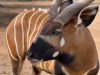
View attachment 795108

It’s good to hear Isaac is still alive and well. He turned 13 years old in January, so hopefully has a few years in him yet. Ekundu at Taronga will turn a staggering 20 years of age if he makes it to November! 15-20 years is apparently the captive life expectancy, but very few bongo in Australian zoos have made it to their late teens.

That’s really exciting about the elephant bridge. Plans for Monarto’s exhibit were put together very last minute (versus Werribee’s which had a decade of planning behind it). That’s not a criticism, but rather an observation they’ve had the benefit of taking inspiration from Werribee’s complex, which most would agree is the best in the world at this point in time.
 
It’s good to hear Isaac is still alive and well. He turned 13 years old in January, so hopefully has a few years in him yet. Ekundu at Taronga will turn a staggering 20 years of age if he makes it to November! 15-20 years is apparently the captive life expectancy, but very few bongo in Australian zoos have made it to their late teens.

That’s really exciting about the elephant bridge. Plans for Monarto’s exhibit were put together very last minute (versus Werribee’s which had a decade of planning behind it). That’s not a criticism, but rather an observation they’ve had the benefit of taking inspiration from Werribee’s complex, which most would agree is the best in the world at this point in time.
The best part in my view is that Monarto can use Werribee's elephant exhibit/complex as a model with its world class planning, I am so glad they are building a concrete pool for them, hopefully its a deep one
 
The best part in my view is that Monarto can use Werribee's elephant exhibit/complex as a model with its world class planning, I am so glad they are building a concrete pool for them, hopefully its a deep one

It’s definitely inspired them, which is only natural. Auckland’s aerial lines for their great apes were pioneering within the region, but now serval zoos have (or are building) something similar.

A deep pool will be essential for Putra Mas to fully submerge. There’s multiple pools for the different paddocks and based on the schematic, it’s clear some are bigger than others which hints thought has been given to future calves joining the herd/breeding.
 
It’s good to hear Isaac is still alive and well. He turned 13 years old in January, so hopefully has a few years in him yet. Ekundu at Taronga will turn a staggering 20 years of age if he makes it to November! 15-20 years is apparently the captive life expectancy, but very few bongo in Australian zoos have made it to their late teens.

That’s really exciting about the elephant bridge. Plans for Monarto’s exhibit were put together very last minute (versus Werribee’s which had a decade of planning behind it). That’s not a criticism, but rather an observation they’ve had the benefit of taking inspiration from Werribee’s complex, which most would agree is the best in the world at this point in time.
It is one thing to celebrate longevity in a species, it is quite another to have to reflect on the very fact that quite fast now and in mode of accelaration the bongo ZAA program has come into free fall (and/or F.U. whichever way one looks at it). Pretty soon the ZAA program for Eastern bongo may become an endangered species in its own right and be beyond servicable and beyond functional rescue itself.

I just fail to understand how amateurish some of the exotic species zoo management programs are being run and managed at/by ZAA. It seems the organisation is largely internalised and pandering to a rather oblivious to the global world uninformed bureacratic administration. While it may somewhat assist in native species conservation - which I personally do not think is working as effectively as it should either ... -, it may become rather self servicing "Excuse mes" and fail to (have to) address the real and wider issues of conservation importance/relevance.
 
Last edited:
It is one thing to celebrate longevity in a species, it is quite another to have to reflect on the very fact that quite fast now and in mode of accelaration the bongo ZAA program has come into free fall (and/or F.U. whichever way one looks at it). Pretty soon the ZAA program for Eastern bongo may become an endangered species in its own right and be beyond servicable and beyond functional rescue itself.

I just fail to understand how amateurish some of the exotic species zoo management programs are being run and managed at/by ZAA. It seems the organisation is largely internalised and pandering to a rather oblivious to the global world uninformed a bureacratic administration. While it may somewhat assist in native species conservation - which I personally do not think is working as effectively as it should either ... -, it may become rather self servicing "Excuse mes" and fail to (have to) address the real and wider issues of conservation importance/relevance.
Very well said @Kifaru Bwana It appears at this point the Bongo species in Australian zoos is unfortunately likely doomed, As far as we can tell there is little concern among the few holders in the country, As far as we know only one private regional zoo has shown interest in importing them.
The slow sleepy attitude appears to be common in some of out major zoos perhaps them being government owned where everyone is just doing a job could be part of the problem, The management needs people who understand animal species and have real animal savvy instead of the status quo we have now.
Look at the Black rhino situation currently they are badly in need of new bloodlines or they will go the same way as the current Bongo situation, It seems they are avoiding importing at all costs, The now never going to happen White rhino import from South Africa after 13 years has fizzed out to nothing, It smells of plain bad management and lack of understanding of current issues
 
Last edited:
Wild Africa precinct officially opens:

From socials:

Today we're celebrating the official opening of the Monarto Safari Resort and the exciting Wild Africa precinct – over a decade in the making!

Wild Africa is 550 hectares of open plains, inhabited by free-roaming mixed herds of some of Africa’s most iconic species. Situated adjacent to Monarto Safari Park, Wild Africa is the first of its kind in Australia to offer unique safari experiences for guests of the stunning Monarto Safari Resort.


Board custom-built safari trucks to explore Wild Africa, and come face to face with Cheetah, zebra, giraffe, rhinos, Eland, Scimitar-horned Oryx, Blackbuck, Waterbuck, Ostrich, Addax, Barbary Sheep and hippos as they roam the open plains.

This has been a long-term vision for Zoos SA, in particular Peter Clark, Director Monarto Safari Park who has championed this dream for nearly 20 years.

Further article (focussed on the resort):

https://karryon.com.au/luxury/monarto-safari-resort/
 
Wild Africa precinct officially opens:

From socials:

Today we're celebrating the official opening of the Monarto Safari Resort and the exciting Wild Africa precinct – over a decade in the making!

Wild Africa is 550 hectares of open plains, inhabited by free-roaming mixed herds of some of Africa’s most iconic species. Situated adjacent to Monarto Safari Park, Wild Africa is the first of its kind in Australia to offer unique safari experiences for guests of the stunning Monarto Safari Resort.


Board custom-built safari trucks to explore Wild Africa, and come face to face with Cheetah, zebra, giraffe, rhinos, Eland, Scimitar-horned Oryx, Blackbuck, Waterbuck, Ostrich, Addax, Barbary Sheep and hippos as they roam the open plains.

This has been a long-term vision for Zoos SA, in particular Peter Clark, Director Monarto Safari Park who has championed this dream for nearly 20 years.

Further article (focussed on the resort):

https://karryon.com.au/luxury/monarto-safari-resort/
This is excellent news and a long time in the making, maybe perhaps now to enhance the African Safari experience adding some new species to the exhibits would add even more interest to the zoo. I do recall not that long ago that the zoo was going to add two new "mystery antelope species", I not sure if this has been forgotten about or is in the works but such a massive area would look wonderful having a wide mix of African species just like a real African savanna!
 
This is excellent news and a long time in the making, maybe perhaps now to enhance the African Safari experience adding some new species to the exhibits would add even more interest to the zoo. I do recall not that long ago that the zoo was going to add two new "mystery antelope species", I not sure if this has been forgotten about or is in the works but such a massive area would look wonderful having a wide mix of African species just like a real African savanna!

It appears the anticipated Southern white rhinoceros import won’t be going ahead, so I guess Monarto will have to decide whether to obtain comparable numbers from elsewhere (e.g. Europe or from within the region) or alternatively, scale back their projected rhino holdings. Whether the latter would add weight to importing additional antelope species remains to be seen.

I recall you mentioning Impala and Sable antelope as species of interest a few years ago @Zorro and in an update last year, @Swanson02 advised Monarto has a wish list featuring Impala, Sable antelope and Greater kudu (with the latter two also being on the live import list).
 
It appears the anticipated Southern white rhinoceros import won’t be going ahead, so I guess Monarto will have to decide whether to obtain comparable numbers from elsewhere (e.g. Europe or from within the region) or alternatively, scale back their projected rhino holdings. Whether the latter would add weight to importing additional antelope species remains to be seen.

I recall you mentioning Impala and Sable antelope as species of interest a few years ago @Zorro and in an update last year, @Swanson02 advised Monarto has a wish list featuring Impala, Sable antelope and Greater kudu (with the latter two also being on the live import list).
I agree the White rhino import from South Africa is not happening and yes the next option is likely to be obtaining some rhino stock from a number of European zoo collections.
Actually Werribee zoo use to have both Sable antelopes and Greater Kudu I am not sure what the numbers of Sable were but likely too small to maintain any sort of breeding program, As far as Kudu are concern my understanding was that they had 1.7 animals and as unlikely as it sounds the male was castrated which was counter productive is the least considering how many other species of antelope species in the region are badly inbred eg. blackbuck, Eland and others!

I am not aware of any major zoo that has yet taken advantage of the change in importation laws but hopefully if it does happen that they can use the Nyala importation into New Zealand as its model and actually import a larger number of the same species which has a chance to establish a long term breeding program rather than make the same mistakes again of just importing a "pair" or a "trio" of something.
 
Last edited:
I agree the White rhino import from South Africa is not happening and yes the next option is likely to be obtaining some rhino stock from a number of European zoo collections.
Actually Werribee zoo use to have both Sable antelopes and Greater Kudu I am not sure what the numbers of Sable were but likely too small to maintain any sort of breeding program, As far as Kudu are concern my understanding was that they had 1.7 animals and as unlikely as it sounds the male was castrated which was counter productive is the least considering how many other species of antelope species in the region are badly inbred eg. blackbuck, Eland and others!

I am not aware of any major zoo that has yet taken advantage of the change in importation laws but hopefully if it does happen that they can use the Nyala importation into New Zealand as its model and actually import a larger number of the same species which has a chance to establish a long term breeding program rather than make the same mistake again of just importing a "pair" or a "trio" of something.

I’ve noticed a number of breeding recommendations being given for white rhinoceros regionally of late (with several planned transfers), likely as a result of the South African import being abandoned (assuming reports it has been are accurate). I agree imports from Europe would be valuable in further diversifying the bloodlines we have considering some lines have become notably more successful than others (e.g. the Kruger/Moesha line).

I agree the Lowland nyala import model should be replicated. It should be seen as a long term investment as with comparable numbers, subsequent imports wouldn’t be required for decades.

In planning, Monarto will need to consider compatibility of species (including the risk of hybridisation). Kudu can breed with Eland and Lowland nyala for example; but that’s not to say new species can’t be brought in and this managed effectively.
 
I’ve noticed a number of breeding recommendations being given for white rhinoceros regionally of late (with several planned transfers), likely as a result of the South African import being abandoned (assuming reports it has been are accurate). I agree imports from Europe would be valuable in further diversifying the bloodlines we have considering some lines have become notably more successful than others (e.g. the Kruger/Moesha line).

I agree the Lowland nyala import model should be replicated. It should be seen as a long term investment as with comparable numbers, subsequent imports wouldn’t be required for decades.

In planning, Monarto will need to consider compatibility of species (including the risk of hybridisation). Kudu can breed with Eland and Lowland nyala for example; but that’s not to say new species can’t be brought in and this managed effectively.
The good thing about the new Wild Africa at Monarto would be there are a few seperate sections so species can be shown without the risk of interbreeding with closely related species!
 
Waterbuck birth:

From socials:

We’re excited to welcome a baby waterbuck to the herd — the fifth waterbuck born at the park, bringing our total to seven now calling Monarto home.

This little one is part of our ongoing efforts to support healthy populations of this incredible antelope species. Every new arrival helps us better understand herd dynamics, animal behaviour, and how to care for and protect wildlife well into the future.
 
Waterbuck birth:

From socials:

We’re excited to welcome a baby waterbuck to the herd — the fifth waterbuck born at the park, bringing our total to seven now calling Monarto home.

This little one is part of our ongoing efforts to support healthy populations of this incredible antelope species. Every new arrival helps us better understand herd dynamics, animal behaviour, and how to care for and protect wildlife well into the future.
I believe that it would be a timely thing to import say about 10 new Waterbuck between the current holders seeing that they are limited in numbers in the region and to avoid inbreeding in the near future and work from here to find any further new holders within the region!
 
I believe that it would be a timely thing to import say about 10 new Waterbuck between the current holders seeing that they are limited in numbers in the region and to avoid inbreeding in the near future and work from here to find any further new holders within the region!

Agreed. The entire regional population descends from 1.2 Waterbuck imported from the US in 1995. They’re on the live import list and held across 25 European collections and 38 North American collections, so it would be completely achievable to import some new founders.

The New Zealand population appears to have stagnated, so it’s good to see Monarto (and also Altina) announce births this year.
 
Agreed. The entire regional population descends from 1.2 Waterbuck imported from the US in 1995. They’re on the live import list and held across 25 European collections and 38 North American collections, so it would be completely achievable to import some new founders.

The New Zealand population appears to have stagnated, so it’s good to see Monarto (and also Altina) announce births this year.
So I can't understand "what's stopping them"? o_O
 
Back
Top