Hello Zoochatters!
My partner (of Greek origin) and I, and our Greek friend, just visited the island of Crete for the first time, spending five nights in Heraklion, with day trips to other parts of the island. Not much has been written about on this site about this island and its zoological and palaeontological treasures, so I thought I’d fix that with a bit of a review.
The first attraction we visited was just to the east of our base city, CRETAquarium Thalassokosmos, a few seconds’ walk from the sea, which mostly specialises in marine fishes, invertebrates, and turtles found locally in the eastern Mediterranean, with some Indo-Pacific species as well. As a fairly new institution, having first opened in 2005, it felt modern inside, with a combination of electronic and traditional signage, mostly bilingual in Greek and English, with some older “spinning” signs with additional languages, for example, Russian, of species names. Most interpretation was the electronic type, which listed basic information and a picture, with a “more information” arrow to expand to learn more about the species. This was great, as I was able to learn the Greek names for a lot of taxa, and didn’t have to translate a lot to my companions, as they were more familiar with a lot of the species by their native names.
The largest animals on display were sandbar sharks, a green turtle, and a loggerhead turtle, all in different large tanks with other inhabitants. Other highlights include groupers of various species (including Epinephelus costae and E. marginatus), flying gurnards living with red scorpionfish, a large open-topped tank (unfortunately unsigned) featuring rough rays and red gurnards, and various wrasses.
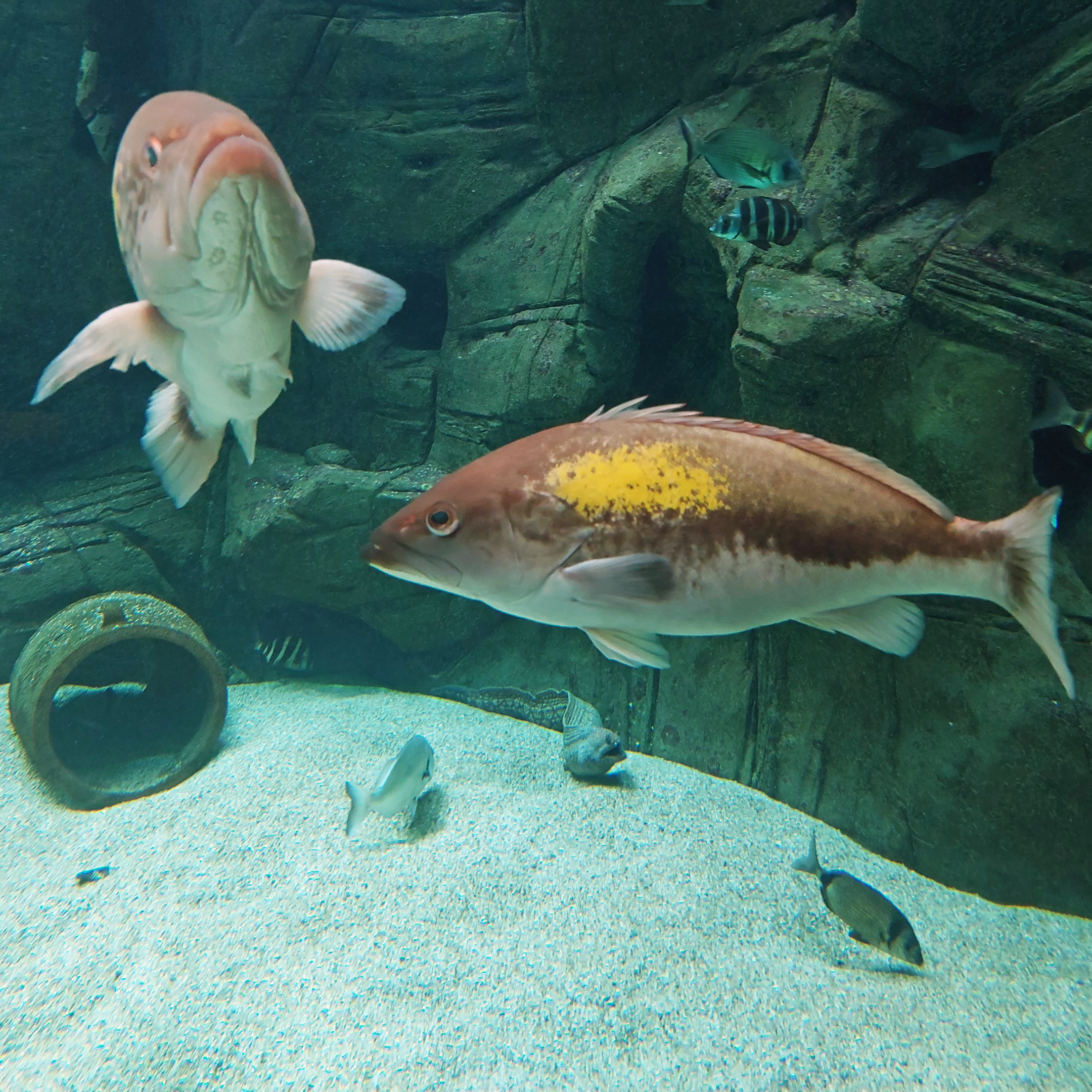 Gold-blotch groupers (Epinephelus costae), with miscellaneous other fish in the background
Small tanks included top-down views of benthic animals like common sole, greater weever, wide-eyed flounder, and Atlantic stargazer. Invertebrates on display, some of which were new to me, included shame-faced crabs, slipper lobsters, a common octopus, and violet sea urchins, as well as the ubiquitous moon jellyfish.
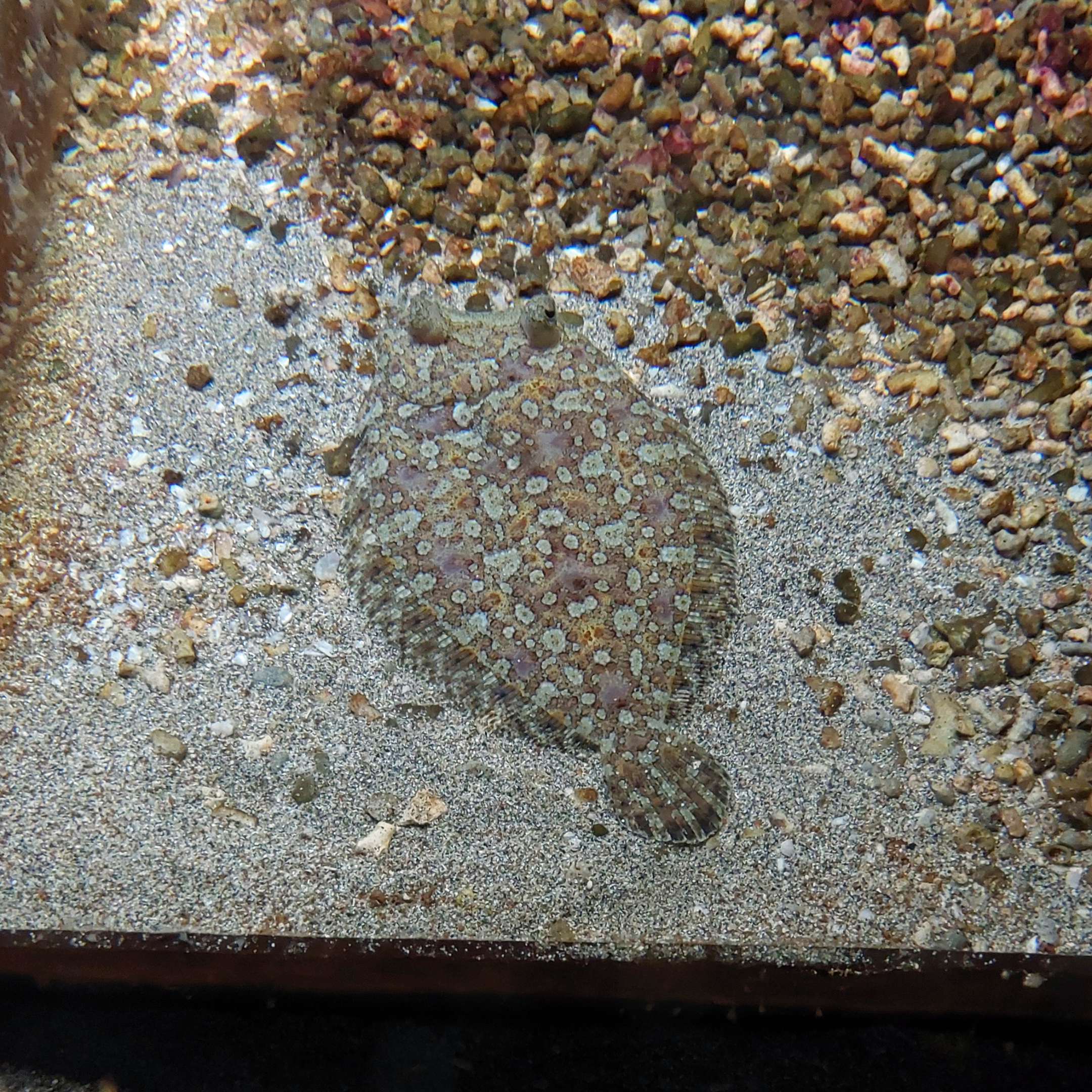 Wide-eyed flounder (Bothus podas)
Some of my favourite displays were focused on Lessepsian migrants, species native to the Red Sea that invaded the Mediterranean Sea via the Suez Canal. Many of these species, including the locally notorious silver-cheeked toadfish (Lagocephalus sceleratus) and devil firefish (Pterois miles), were on display.
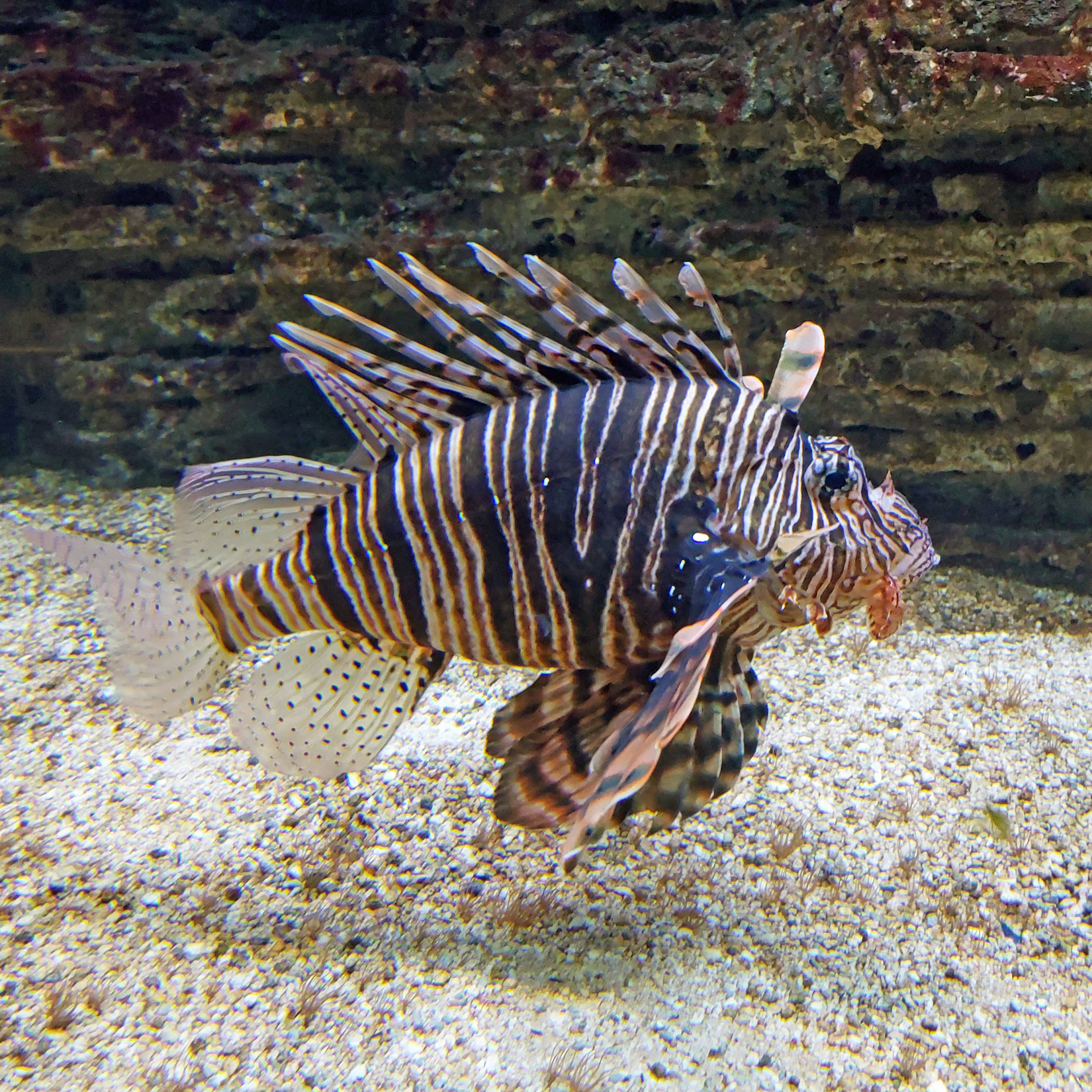 Devil firefish (Pterois miles)
As the first Mediterranean specialist aquarium I have visited, with low expectations going in, I was pleasantly surprised by the quality of exhibits and range of species, having a greater appreciation for the uniqueness of this ecosystem after my visit than before.
Straight after CRETAquarium, we headed back to Heraklion to visit the Natural History Museum of Crete. Even if you’re not a fan of stuffed specimens or fossils, stick around as this museum has more than meets the eye!
Set over five floors of a coastal building belonging to the University of Crete, the Natural History Museum of Crete does three things very well. The first of those is dioramas. Those at this museum celebrate the flora and fauna of various habitats of the eastern Mediterranean Basin. Mountaintops are represented by ibex and black grouse in the Alps and mouflon and chukar in Cyprus, for example. These and the other habitats represented are hyper-specific in terms of geographical locale and habitat, so you can wander between dioramas to note how forests in western Türkiye differ from those of Lebanon, for example.
The next strength of the museum’s displays is their comparative catalogues of Cretan and eastern Mediterranean species. All of the island’s few terrestrial mammals, from the endemic spiny mouse and white-toothed shrew to hedgehogs, martens, and badgers, were laid out in taxidermic format for comparison, with their English, Greek, and in some cases, specific Cretan, names, like the Cretan badger (Meles canescens arcalus), which earned its subspecific name from the local Cretan name for the animal, άρκαλος (árkalos). Birds are less complete but with no notable exceptions, much like Tring’s British ornithological displays, but in much better condition, as well as models or taxidermy (I never can tell which!) for reptiles and amphibians, and displays for insects, bats, and flora.
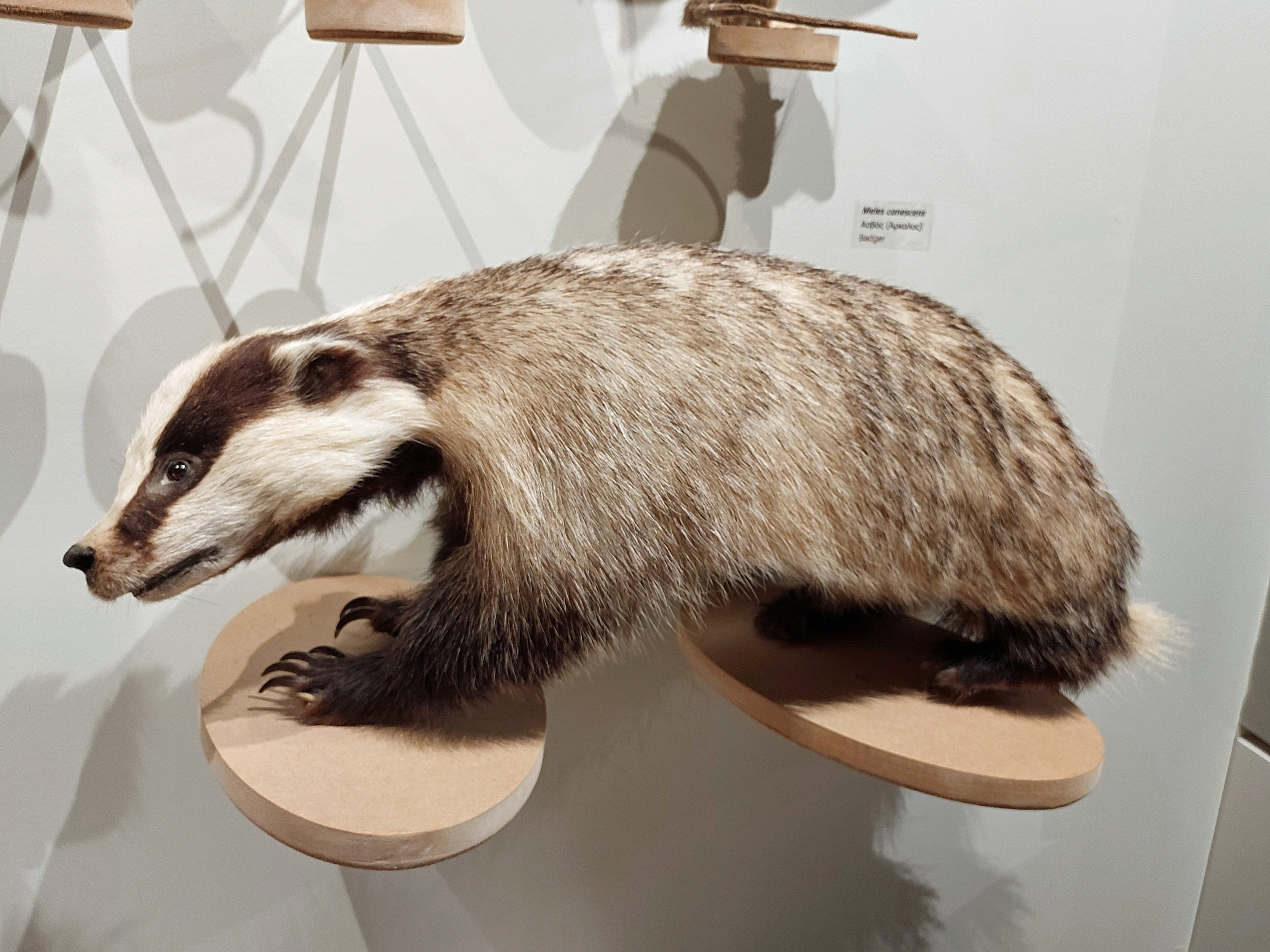 Cretan badger (Meles canescens arcalus)
 Cretan shrew (Crocidura zimmermani)
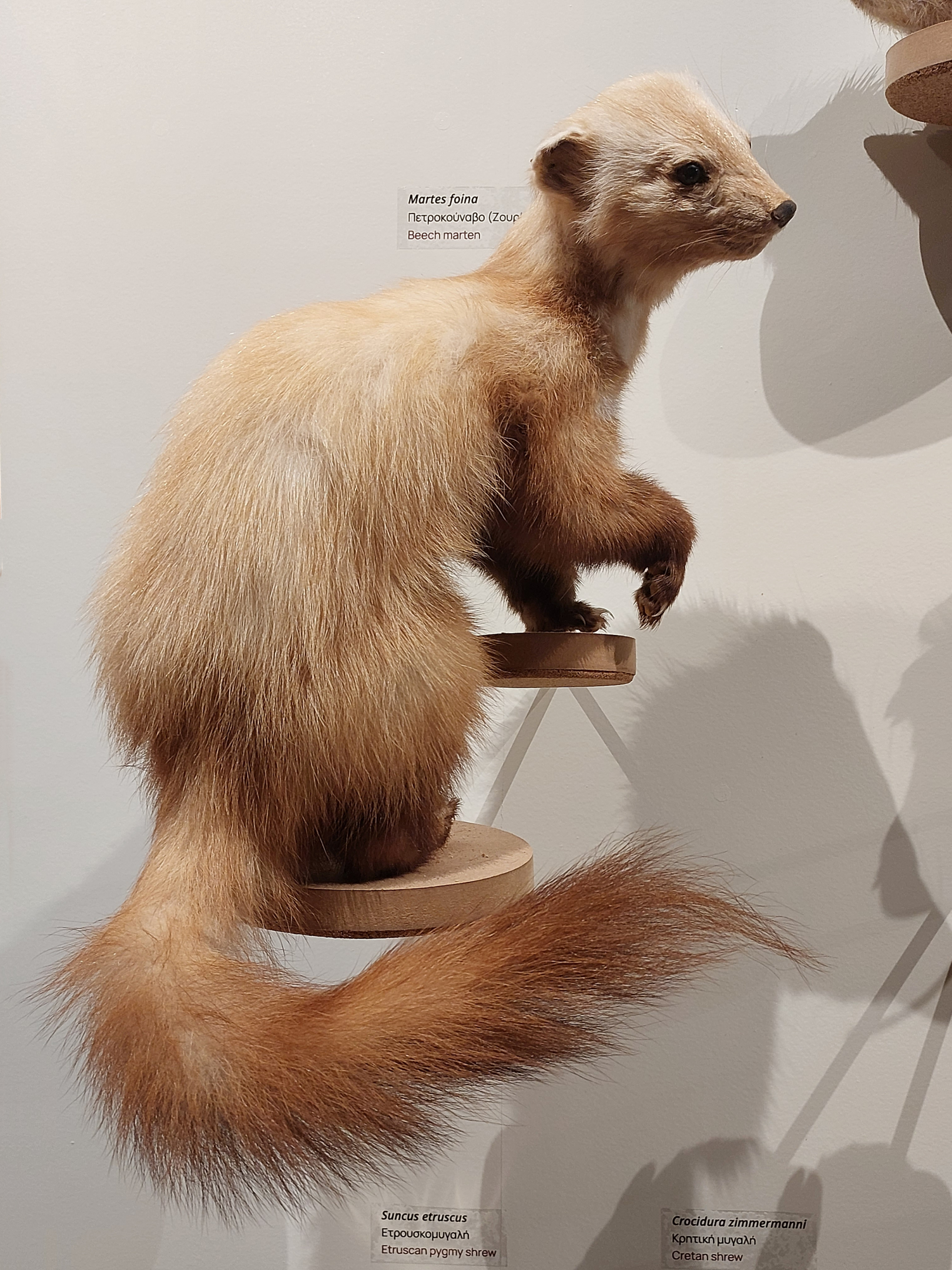 Cretan stone marten (Martes foina bunites)
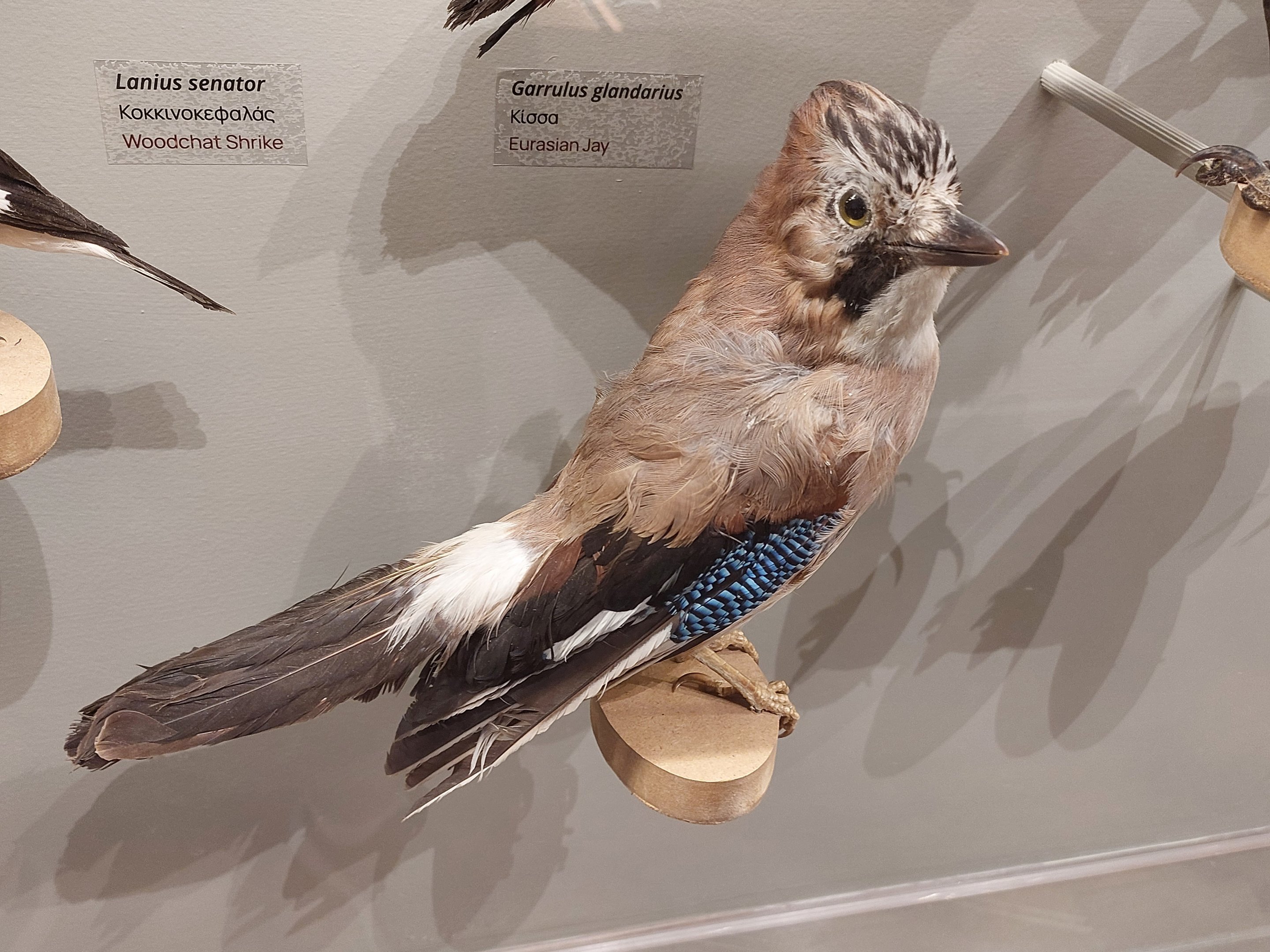 Cretan jay (Garrulus glandarius cretorum)
The third strength caught me completely by surprise: the living museum. Since discovering Zoochat and Zootierliste many years ago, the act of visiting zoos and other collections often has few surprises: I tend to know what to expect before visiting a place. For some reason, the museum didn’t come up on my radar, so you can imagine my surprise on seeing what I thought were more realistic dioramas, with running water, for smooth newts and yellow-bellied toads, then realising these were exhibits for real live animals! These amphibian displays, and one for freshwater crabs, were followed by each subsequent display in this section, all of which held live animals. I’ve only seen a “living museum” once before, at Manchester Museum, apart from the occasional exhibit at the NHM back home, but I was stunned to find not only common European and generally Palaearctic reptiles and amphibians on display, but some real rarities. Amongst those, the Cretan frog (not rare in Crete, surely, but nowhere else in captivity, according to Zootierliste), Cretan spiny mouse (only in 3 European collections), and forest dormouse (only 2 collections outside of Russia) are the rarest that I could actually see. A small nocturnal section included Moorish gecko and various native invertebrates, and a few terrapins in a small pond was present in the bottom floor, unlabelled, but which I believe were red-eared and yellow-bellied sliders, and the native Balkan or western Caspian turtle (Mauremys rivulata).
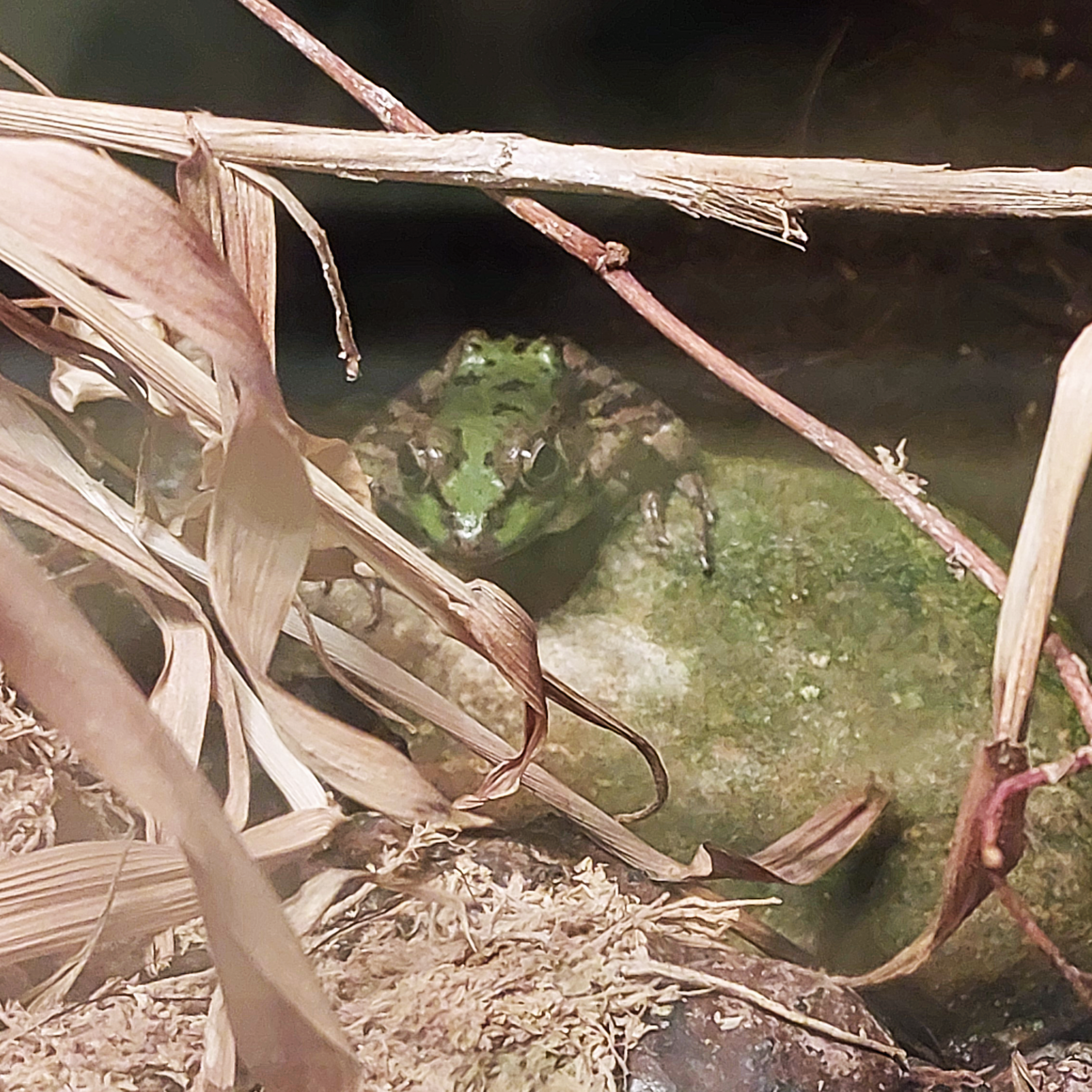 Poor image of Cretan frog (Pelophylax cretensis)
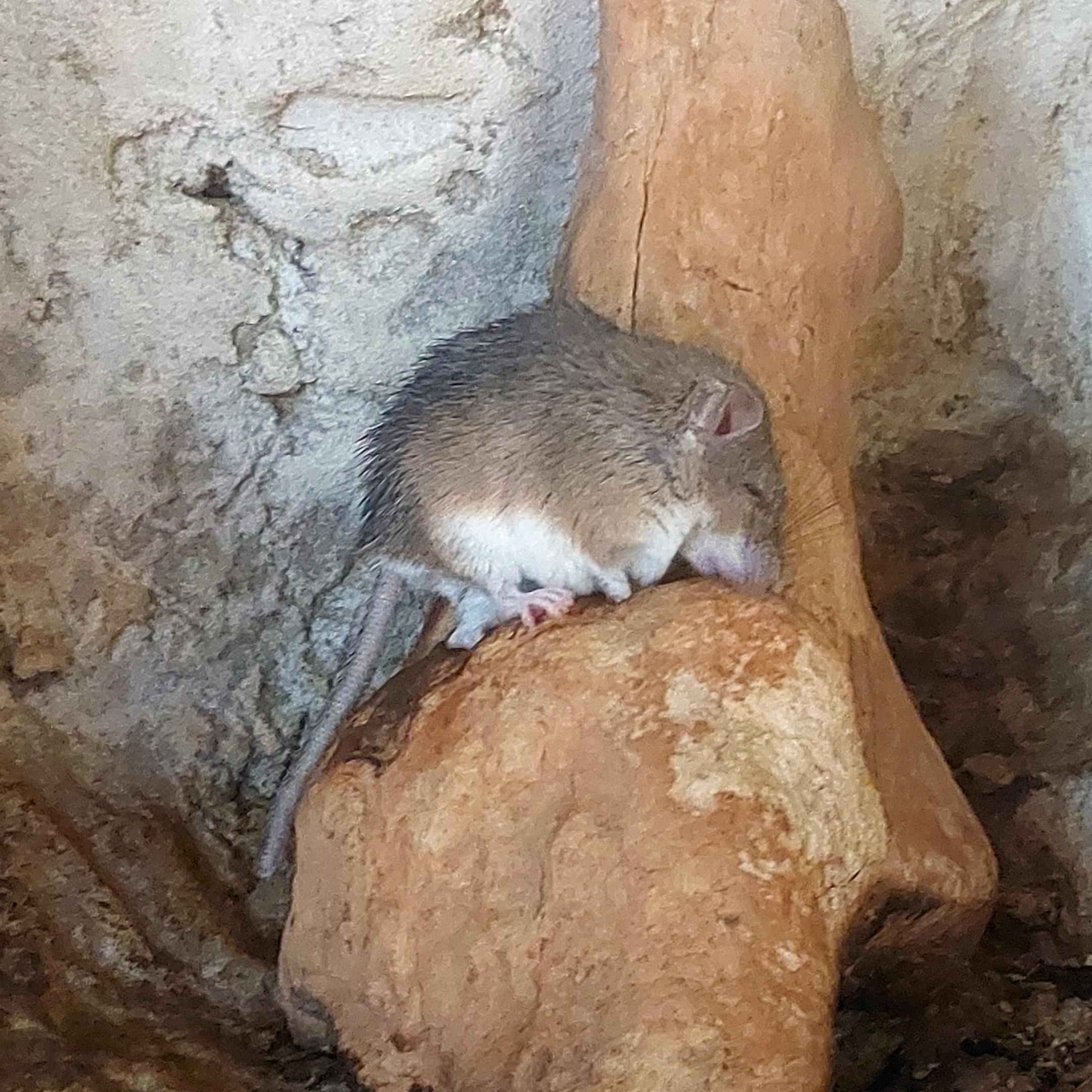 Cretan spiny mouse (Acomys minous)
I've added all living vertebrate species seen/signed at the museum to Zootierliste, for those curious about the other species held.
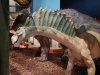
The museum also has interactive displays on optical illusions and mirrors, as well as some dinosaur animatronics, models, and skeletal models and casts, with unusual animals being on display. I’d never seen an animatronic Amargasaurus or Megaraptor before, let alone one of the former being eaten by one of the latter animals! Some native fossils were also on display, including remnants of Metaxytherium medium – a sea cow – and fossil deer, elephants, and hippopotamus.

Animatronic Amargasaurus
The next day we spent around an hour at the Palaeontological Museum of Rethymno, in the city of Rethymno, a little over an hour’s drive to the west of Heraklion. The museum is housed in the 17th Century Veli Pasha mosque, with only the main room open to the public. In that room are Cretan specimens of extinct fauna, including the dwarf elephant (Palaeoloxodon cf. creutzburgi), dwarf hippopotamus (Hippopotamus creutzburgi), and dwarf deer (Candiacervus ropalophorus). This latter animal is represented by a partial skeleton including its oddly-proportioned limbs and parts of its ridiculously long club-shaped antlers. Private collections of European ammonites, nautiloids, shark teeth etc. were also on display. Photography is not allowed inside the museum, although some pictures can be seen online, e.g. on the Google Maps listing, of some of the more impressive specimens. I was glad to finally get to see a fairly complete Candiacervus ropalophorus, having come across it during my research and not having seen it in any other museum to date.

Palaeontological Museum of Rethymno
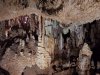
The only other somewhat zoological attraction we visited on our trip was Sfendoni Cave, located in the mountain village of Zoniana, at the foot of Crete’s tallest mountain, Psiloritis. The cave, home to the endemic isopod Graeconiscus guanophilus (“guano-loving Greek woodlouse”), is one of the largest in Greece, of which a significant portion is open to the public to explore by guided tour. Three species of bat shelter in the cave: Blasius’ horseshoe bat (Rhinolophus blasii), lesser horseshoe bat (R. hipposideros), and Geoffroy’s bat (Myotis emarginatus); unfortunately, we didn’t see any during our visit, as the bats hide in the more inaccessible parts of the cave at the time of day we visited (late afternoon). I did see a gorgeous red-backed shrike outside the cave entrance on my way out, however, and a small flock of what I suspect were griffon vultures in the distance, circling in the wake of a late summer storm.

Inside of Sfendoni Cave
Overall, I can thoroughly recommend a visit to the isle of Crete, especially if you have access to a car and somebody who speaks Greek, although the latter is certainly not a barrier as the vast majority of people I spoke to spoke at least some English. The food is out of this world: if you’re ever in Crete, have a souvlaki, a bifteki, or a saganaki on me!
My partner (of Greek origin) and I, and our Greek friend, just visited the island of Crete for the first time, spending five nights in Heraklion, with day trips to other parts of the island. Not much has been written about on this site about this island and its zoological and palaeontological treasures, so I thought I’d fix that with a bit of a review.
The first attraction we visited was just to the east of our base city, CRETAquarium Thalassokosmos, a few seconds’ walk from the sea, which mostly specialises in marine fishes, invertebrates, and turtles found locally in the eastern Mediterranean, with some Indo-Pacific species as well. As a fairly new institution, having first opened in 2005, it felt modern inside, with a combination of electronic and traditional signage, mostly bilingual in Greek and English, with some older “spinning” signs with additional languages, for example, Russian, of species names. Most interpretation was the electronic type, which listed basic information and a picture, with a “more information” arrow to expand to learn more about the species. This was great, as I was able to learn the Greek names for a lot of taxa, and didn’t have to translate a lot to my companions, as they were more familiar with a lot of the species by their native names.
The largest animals on display were sandbar sharks, a green turtle, and a loggerhead turtle, all in different large tanks with other inhabitants. Other highlights include groupers of various species (including Epinephelus costae and E. marginatus), flying gurnards living with red scorpionfish, a large open-topped tank (unfortunately unsigned) featuring rough rays and red gurnards, and various wrasses.
Gold-blotch groupers (Epinephelus costae)
Gold-blotch groupers (Epinephelus costae) at CRETAquarium Thalassokosmos, Heraklion
Small tanks included top-down views of benthic animals like common sole, greater weever, wide-eyed flounder, and Atlantic stargazer. Invertebrates on display, some of which were new to me, included shame-faced crabs, slipper lobsters, a common octopus, and violet sea urchins, as well as the ubiquitous moon jellyfish.
Wide-eyed flounder (Bothus podas)
Wide-eyed flounder (Bothus podas) at CRETAquarium Thalassokosmos, Heraklion
Some of my favourite displays were focused on Lessepsian migrants, species native to the Red Sea that invaded the Mediterranean Sea via the Suez Canal. Many of these species, including the locally notorious silver-cheeked toadfish (Lagocephalus sceleratus) and devil firefish (Pterois miles), were on display.
Devil firefish (Pterois miles)
Devil firefish (Pterois miles) at CRETAquarium Thalassokosmos, Heraklion
As the first Mediterranean specialist aquarium I have visited, with low expectations going in, I was pleasantly surprised by the quality of exhibits and range of species, having a greater appreciation for the uniqueness of this ecosystem after my visit than before.
Straight after CRETAquarium, we headed back to Heraklion to visit the Natural History Museum of Crete. Even if you’re not a fan of stuffed specimens or fossils, stick around as this museum has more than meets the eye!
Set over five floors of a coastal building belonging to the University of Crete, the Natural History Museum of Crete does three things very well. The first of those is dioramas. Those at this museum celebrate the flora and fauna of various habitats of the eastern Mediterranean Basin. Mountaintops are represented by ibex and black grouse in the Alps and mouflon and chukar in Cyprus, for example. These and the other habitats represented are hyper-specific in terms of geographical locale and habitat, so you can wander between dioramas to note how forests in western Türkiye differ from those of Lebanon, for example.
The next strength of the museum’s displays is their comparative catalogues of Cretan and eastern Mediterranean species. All of the island’s few terrestrial mammals, from the endemic spiny mouse and white-toothed shrew to hedgehogs, martens, and badgers, were laid out in taxidermic format for comparison, with their English, Greek, and in some cases, specific Cretan, names, like the Cretan badger (Meles canescens arcalus), which earned its subspecific name from the local Cretan name for the animal, άρκαλος (árkalos). Birds are less complete but with no notable exceptions, much like Tring’s British ornithological displays, but in much better condition, as well as models or taxidermy (I never can tell which!) for reptiles and amphibians, and displays for insects, bats, and flora.
Cretan badger (Meles canescens arcalus)
Stuffed Cretan badger (Meles canescens arcalus) at the Natural History Museum of Crete, Heraklion
Cretan shrew (Crocidura zimmermani)
Stuffed Cretan shrew (Crocidura zimmermani) at the Natural History Museum of Crete, Heraklion
Cretan stone marten
Stuffed Cretan stone marten (Martes foina bunites) at the Natural History Museum of Crete, Heraklion
Cretan jay
Stuffed Cretan jay (Garrulus glandarius cretorum) at the Natural History Museum of Crete, Heraklion
The third strength caught me completely by surprise: the living museum. Since discovering Zoochat and Zootierliste many years ago, the act of visiting zoos and other collections often has few surprises: I tend to know what to expect before visiting a place. For some reason, the museum didn’t come up on my radar, so you can imagine my surprise on seeing what I thought were more realistic dioramas, with running water, for smooth newts and yellow-bellied toads, then realising these were exhibits for real live animals! These amphibian displays, and one for freshwater crabs, were followed by each subsequent display in this section, all of which held live animals. I’ve only seen a “living museum” once before, at Manchester Museum, apart from the occasional exhibit at the NHM back home, but I was stunned to find not only common European and generally Palaearctic reptiles and amphibians on display, but some real rarities. Amongst those, the Cretan frog (not rare in Crete, surely, but nowhere else in captivity, according to Zootierliste), Cretan spiny mouse (only in 3 European collections), and forest dormouse (only 2 collections outside of Russia) are the rarest that I could actually see. A small nocturnal section included Moorish gecko and various native invertebrates, and a few terrapins in a small pond was present in the bottom floor, unlabelled, but which I believe were red-eared and yellow-bellied sliders, and the native Balkan or western Caspian turtle (Mauremys rivulata).
Cretan frog
Cretan frog (Pelophylax cretensis) at the Natural History Museum of Crete, Heraklion
Cretan spiny mouse (Acomys minous)
Cretan spiny mouse (Acomys minous) at the Natural History Museum of Crete, Heraklion
I've added all living vertebrate species seen/signed at the museum to Zootierliste, for those curious about the other species held.
The museum also has interactive displays on optical illusions and mirrors, as well as some dinosaur animatronics, models, and skeletal models and casts, with unusual animals being on display. I’d never seen an animatronic Amargasaurus or Megaraptor before, let alone one of the former being eaten by one of the latter animals! Some native fossils were also on display, including remnants of Metaxytherium medium – a sea cow – and fossil deer, elephants, and hippopotamus.
Animatronic Amargasaurus
The next day we spent around an hour at the Palaeontological Museum of Rethymno, in the city of Rethymno, a little over an hour’s drive to the west of Heraklion. The museum is housed in the 17th Century Veli Pasha mosque, with only the main room open to the public. In that room are Cretan specimens of extinct fauna, including the dwarf elephant (Palaeoloxodon cf. creutzburgi), dwarf hippopotamus (Hippopotamus creutzburgi), and dwarf deer (Candiacervus ropalophorus). This latter animal is represented by a partial skeleton including its oddly-proportioned limbs and parts of its ridiculously long club-shaped antlers. Private collections of European ammonites, nautiloids, shark teeth etc. were also on display. Photography is not allowed inside the museum, although some pictures can be seen online, e.g. on the Google Maps listing, of some of the more impressive specimens. I was glad to finally get to see a fairly complete Candiacervus ropalophorus, having come across it during my research and not having seen it in any other museum to date.
Palaeontological Museum of Rethymno
The only other somewhat zoological attraction we visited on our trip was Sfendoni Cave, located in the mountain village of Zoniana, at the foot of Crete’s tallest mountain, Psiloritis. The cave, home to the endemic isopod Graeconiscus guanophilus (“guano-loving Greek woodlouse”), is one of the largest in Greece, of which a significant portion is open to the public to explore by guided tour. Three species of bat shelter in the cave: Blasius’ horseshoe bat (Rhinolophus blasii), lesser horseshoe bat (R. hipposideros), and Geoffroy’s bat (Myotis emarginatus); unfortunately, we didn’t see any during our visit, as the bats hide in the more inaccessible parts of the cave at the time of day we visited (late afternoon). I did see a gorgeous red-backed shrike outside the cave entrance on my way out, however, and a small flock of what I suspect were griffon vultures in the distance, circling in the wake of a late summer storm.
Inside of Sfendoni Cave
Overall, I can thoroughly recommend a visit to the isle of Crete, especially if you have access to a car and somebody who speaks Greek, although the latter is certainly not a barrier as the vast majority of people I spoke to spoke at least some English. The food is out of this world: if you’re ever in Crete, have a souvlaki, a bifteki, or a saganaki on me!