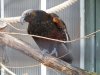
Thanks for putting one up. I'm interested in 'Swooses'... looks like the Swan parent in this one was Black Swan?Not the best photograph I'm afraid! Can't seem to embed the photo using my phone annoyingly, will try and fix it on the computer later.

Swoose - ZooChat
You are using an out of date browser. It may not display this or other websites correctly.
You should upgrade or use an alternative browser.
You should upgrade or use an alternative browser.
Mo's March Madness in Madrid and (Frankfurt-am-) Main

Thanks for putting one up. I'm interested in 'Swooses'... looks like the Swan parent in this one was Black Swan?
I assume so but as it's ended up looking like a goose with Black Swan colouration I doubt we'll ever know the goose parent. When I find my old hard drive I'll check to see if I managed to get any other photographs of it, though from memory this was the only decent one.

Hello everyone, and thanks for all the helpful advice, both zoo-specific and in general.
I intended to post a day-by-day account of my trip from start to finish, but as will become clear in this condensed version, I was not in the best of health at any point during my trip. However, that did not ruin the trip, only lessened my enjoyment at times.
I’ll split the post into six, one for each day I visited a collection or museum.
Day 1: Zoo Madrid
I woke up on the day of my flight feeling terrible, with a sort of cold and tickly cough. I fed myself full of Sudafed and continued on my trip. I would be staying in Madrid for three nights with my partner, after which we’d go our separate ways for the remainder of the week.
My cold worsened over the next 24 hours, so was highly debating whether to just rest all day on the day I had planned to visit Zoo Madrid, or to brave it. After a delicious, rather invigorating breakfast and a check on the weather, I decided to carry on with the original plan, if a little late. Zoo Madrid opens at 11am, rather late for a zoo, but it is open until later than many.
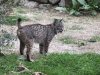
If I had more energy I would have walked through the park as recommended, but that wasn’t to be, so my partner and I took an Uber. I had planned to visit the European section, then work our way around to visit some of our favourite animals, so that’s what we did. I saw both Iberian lynxes, sleeping out in the open, and was satisfied that I had at least seen them (the last remaining felid currently kept in a public zoological facility in Europe, excluding Russia, that I had not seen).
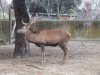
Other highlights of the zoo were: a magnificent Spanish red deer stag, yellow-footed rock wallabies with a joey out of pouch, binturongs, southern cassowary, great barracudas in the Aquarium, giant otter, Sumatran elephants, Asian black bear, and sun bears.

Spanish red deer
I kept my eyes peeled for wild birds, which were plentiful, especially the white storks that were everywhere. There seemed to be an impromptu bird concert of sorts at the emu enclosure: a few male blue peafowl were displaying to females, with house sparrows and feral pigeons watching, as well as spotless starlings and tree sparrows. I later also saw a short-toed treecreeper. There were also abundant wild rabbits, which would be the first time I’d seen them in the wild in their native range.
Once we became tired, after the no-show giant pandas, we decided to loop back to the lynxes in case they were already awake in the mid-afternoon. Just as we got there, they woke up, and treated us to amazing views of a gorgeous species of feline.

Iberian lynx
Day 2: Faunia Madrid
Although my cold symptoms weren’t much better, I decided to commit a few hours to visiting Faunia Madrid. I’m glad I did. The zoo’s smaller size allowed me to see it all without getting over-tired and allowing me to take long breaks when needed.
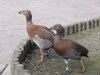
I enjoyed watching the black-tailed prairie dogs gathering nesting material near the lake at the entrance, and kept my eyes out for unusual waterfowl. I didn’t see the “swoose” but snapped a few photos of what I thought were ashy-headed geese, later suspecting them to be a hybrid between that species and the ruddy-headed goose, both of course congeneric and from a similar part of the world, with overlapping features between the two. I wasn’t able to find a picture of a hybrid of those two species, so am still tentative in my identification.

Hybrid geese (Ashy-headed × Ruddy-headed)
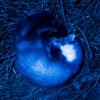
Sombras silenciosas did not disappoint. Full of interesting animals at every turn, with mostly blue lighting to help illuminate its inhabitants. Although I couldn’t get great photos of anything, I enjoyed watching moholi bushbabies, two-toed sloths (all I think Linné’s, unfortunately), Brazilian porcupines, bettongs, Nancy Ma’s douroucoulis, eastern quolls, and my highlight, an inactive but very cute stone marten sleeping in front of the glass.

Stone marten
I also enjoyed seeing Adélie’s penguins for the first time, in amongst the other Antarctic penguins they are kept with. Ring-tailed and red ruffed lemurs in Bosque Africano, toco toucans and Andean cock-of-the-rock in La Jungla, and various venomous and poisonous herps in Veneno were other highlights. As was seeing the end of a Steller’s sea lion show.
Day 3: Wildpark Alte Fasanerie
I flew to Frankfurt and left my baggage at the reception of Hotel Am Zoo, a three-minute walk away from Zoo Frankfurt itself (the hotel’s only redeeming feature, more later). I didn’t have a lot of time left in the day, so for that reason and because I was beginning to lose enthusiasm for Tierpark Donnersberg thanks to some of the posts in this thread, I decided to head to a local Wildpark, close to the suburb of Hanau, one with a particular unique inhabitant. I had arranged in advance a minibus to pick me up from the Hanau Hauptbahnhof to take me to the Wildpark and one to take me back a few hours later (using an on-demand shuttle bus).
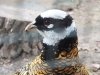
As well as pheasants of various species, including Reeves’ pheasant and a tenebrosus-morph common pheasant, the park has typical native/naturalised wildlife, including deer, wisent, wolves, badgers, wildcats, raccoons, owls, etc. It was raining lightly, and I was not in the best of health, so walked around slowly, concentrating on the small carnivores, such as the stone marten.

Reeves' pheasant
Unfortunately, I didn’t see any badgers or martens despite leaving at close to 6 pm, but got good views of their polecat-ferrets, wildcat, and the big draw for me, tanuki. That is, Japanese raccoon dog, which were active towards the end of my visit. They honestly don’t look that different to N. procyonoides, and indeed the park only identify it as Marderhund, which refers to both species if I’m not mistaken.

Tanuki
There were big delays on the train back to Frankfurt, with the train stopping for a long while at every station. The driver made long and detailed announcements, but I couldn’t understand any of them. I ended up leaving the train a few stops before intended and getting an Uber the rest of the way.
At the hotel, I was dismayed to find out I was on the 4th floor and the elevator was out of order. I asked for assistance with my luggage, but none was given. I made sure to make my trips up and down only as absolutely necessary, so I didn’t go back down until heading for Zoo Frankfurt the next morning.
Day 4: Zoo Frankfurt
This being my second visit to Zoo Frankfurt, but my first in 5 years, there were a few significant changes and a species that I wasn’t able to see last time (yellow-backed duiker).
I headed straight for the duiker but didn’t have any luck – must still be too cold. I enjoyed Grzimekhaus a number of times (how could I not?), as well as the Faust-Vogelhalle and much of the too-hot Exotarium. My other big must-see was the three species of sengi or elephant shrew, including the unique in captivity rufous sengi (which evaded me when it was at Cologne).

Rufous sengi
On my last walk around Grzimekhaus, I managed to catch a glimpse of that species, and was also lucky to witness feeding of enrichment to aye-ayes, for which the keeper turned on the lights, so I was able, for the first time, to clearly see in person just how weird these lemurs are.

Aye-aye
I didn’t have any luck with the yellow-backed duiker, but I still had a hope of seeing the species in Nuremberg.
Other highlights: yellow-bellied toads with tadpoles, my first ever view of a Haitian giant galliwasp, kea being trained, red siskins, a yellow wagtail, red-crowned cranes displaying, and a playful spectacled bear.
Day 5: Stuttgart Museum am Löwentor
I was really beginning to feel ill, with every movement an effort. Staying in the Bad Cannstatt region of the city, I was ideally located for Wilhelma and the two natural history museums, so I chose to visit the palaeontological museum on the first half day in Stuttgart.
It’s an impressive museum, clearly recently renovated with a lot of updated signage which is always good to see, i.e. some of the taxonomic changes are from within the last few years. The museum’s focus is mainly on fossils of the city and surrounding state of Badem-Wurttemberg, of which there are many, going back to the Paleogene through to the Pleistocene, with special emphasis on Triassic and Jurassic faunas and Miocene through to Pleistocene. Other displays include Ediacaran fauna from the Burgess Shale and some dinosaurs from other parts of the world, although Germany is not lacking at all on the latter front (as far as Triassic forms are concerned).
There was also a special exhibition called “Rock Fossils” featuring fossils named after bands and musicians, from Bowie and the Beatles to Cannibal Corpse and Rotting Christ. As entertaining as it was, with interpretation and music to listen to via headphones, there were few actual specimens to see, which was disappointing to me. No cast of Masiakasaurus knopfleri (for Mark Knopfler of Dire Straits) or Barbaturex morrisoni (for Jim Morrison of The Doors), only pictures and text in German and English for the majority of the specimens. Some had enlarged models. Some of the few real specimens were a series of eight Burmese amber-encased stoneflies, named the Rolling Stoneflies, each named after a different member of The Rolling Stones.
Day 6 or 7: Wilhelma
I was clearly getting to be really unwell by this point, having rested for a whole day, besides going to get dinner at a nearby pub/restaurant. I therefore had to sacrifice one zoo, which would have to be Nuremberg, as it involved a lot of travel. The next day I was feeling no better, but decided to brave it at Wilhelma, with three target Oceanian species: kaka, quokka, and wombat. I wouldn’t have to traverse the whole park to see these three, and my chances were good, for at least one of them.
I was impressed with the place. I knew it would be impressive, but it is so meticulously planted, even for a botanical garden, with animals almost taking a back seat to plants, especially in the greenhouses. At least that was my first impression. As well as how busy it was; well, it was a Saturday.
I was happy to see four brand new (to me) species of bird in the very first exhibit I got to, featuring scaled pigeons newly arrived from Walsrode, crested quail-dove, blue ground dove, and yellow oriole. I also loved the Kleinsäuger- und Vogelhaus, with so many new bird species for me, such as African pygmy falcon, rock pratincole, red-throated bee-eater, and Bruce’s green pigeon, as well as moco, king bird of paradise, and roadrunner.
I headed straight for Terra Australis after the greenhouses and stepped inside to see enclosures for Goodfellow’s tree kangaroos, koalas, and northern blue-tongued skink. Then came the dark part. I knew it was dark, but I have never felt like I did when I walked in. “Disorientated” is the closest word, mixed with “dizzy” and “claustrophobic,” normally never feeling those latter sensations, especially not in a zoo setting. I fumbled my way towards an exit sign after bumping into glass and mock rock several times and ended up in the previous room with the koalas, fighting the tide of people moving in the opposite direction just to rid myself of this uneasy feeling. Could have been down to my illness but it was just too dark and disorientating. It goes without saying that I didn’t see any animals in the dark part. Never mind, the big highlight for me was diurnal and it was sunny and relatively warm at this point, so I head around the corner to look for quokkas.
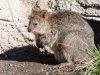
I was not disappointed. I saw I think all three individuals, as they roamed around their outdoor enclosure. A stunningly cute little marsupial that I hope does very well in Europe as it deserves to be seen in more zoos.

Quokka
Next was the North Island kaka in the Subtropenterrasse. I started on the lower terrace and saw kea and red-legged partridge, before getting to the kaka’s enclosure. I sat on a bench and rested for quite a while, even dozing off, and when I opened my eyes, I saw the kaka!

North Island kaka
I basked in the glow of the sun and the kaka and headed down rather than up towards the rest of the terraces due to my lagging energy. I had planned to drop by the terrarium, the wombats, and maybe the Vogelfreifluganlage.
Terrarium was nice, but very busy. I saw several native reptiles in outdoor vivaria, including my first wall lizards. In the indoor section, I scooted past the aquaria as I didn’t have the energy for much more, so saw some nice reptiles for the first time, including Mexican west coast rattlesnake (Crotalus basiliscus), ringed wall gecko (Tarentola annularis), and gold dust day gecko (Phelsuma laticauda). I saw a matamata opening its huge mouth.
And that was all I could cope with. I still had the rest of the day and much of the next day to rest before flying home on Sunday evening. Once I got home, the next day I spoke to a doctor who, considering the length of my illness, symptoms, vital signs, and ongoing health issues, recommended I go straight to hospital. I ended up being admitted for pneumonia, staying for much of the week. The tiredness made sense seeing as my oxygen saturation was low.
I always seem to be vulnerable to catching some kind of bug which ends up ruining my trip; since Covid, three of my international trips have been marred by something I likely caught on the trip or shortly before. But I’m incredibly lucky to have been able to do the things I did, even at a reduced speed and with reduced intensity, and to have made it home before needing to go to hospital.
Anyway, thanks for reading. I’ve added some pictures to the post but didn’t yet add them to the gallery as they are not fully edited and there is no gallery for Wildpark Alte Fasanerie. Mods, please feel free to remove photos or replace with links to gallery.
I intended to post a day-by-day account of my trip from start to finish, but as will become clear in this condensed version, I was not in the best of health at any point during my trip. However, that did not ruin the trip, only lessened my enjoyment at times.
I’ll split the post into six, one for each day I visited a collection or museum.
Day 1: Zoo Madrid
I woke up on the day of my flight feeling terrible, with a sort of cold and tickly cough. I fed myself full of Sudafed and continued on my trip. I would be staying in Madrid for three nights with my partner, after which we’d go our separate ways for the remainder of the week.
My cold worsened over the next 24 hours, so was highly debating whether to just rest all day on the day I had planned to visit Zoo Madrid, or to brave it. After a delicious, rather invigorating breakfast and a check on the weather, I decided to carry on with the original plan, if a little late. Zoo Madrid opens at 11am, rather late for a zoo, but it is open until later than many.
If I had more energy I would have walked through the park as recommended, but that wasn’t to be, so my partner and I took an Uber. I had planned to visit the European section, then work our way around to visit some of our favourite animals, so that’s what we did. I saw both Iberian lynxes, sleeping out in the open, and was satisfied that I had at least seen them (the last remaining felid currently kept in a public zoological facility in Europe, excluding Russia, that I had not seen).
Other highlights of the zoo were: a magnificent Spanish red deer stag, yellow-footed rock wallabies with a joey out of pouch, binturongs, southern cassowary, great barracudas in the Aquarium, giant otter, Sumatran elephants, Asian black bear, and sun bears.
Spanish red deer
I kept my eyes peeled for wild birds, which were plentiful, especially the white storks that were everywhere. There seemed to be an impromptu bird concert of sorts at the emu enclosure: a few male blue peafowl were displaying to females, with house sparrows and feral pigeons watching, as well as spotless starlings and tree sparrows. I later also saw a short-toed treecreeper. There were also abundant wild rabbits, which would be the first time I’d seen them in the wild in their native range.
Once we became tired, after the no-show giant pandas, we decided to loop back to the lynxes in case they were already awake in the mid-afternoon. Just as we got there, they woke up, and treated us to amazing views of a gorgeous species of feline.
Iberian lynx
Day 2: Faunia Madrid
Although my cold symptoms weren’t much better, I decided to commit a few hours to visiting Faunia Madrid. I’m glad I did. The zoo’s smaller size allowed me to see it all without getting over-tired and allowing me to take long breaks when needed.
I enjoyed watching the black-tailed prairie dogs gathering nesting material near the lake at the entrance, and kept my eyes out for unusual waterfowl. I didn’t see the “swoose” but snapped a few photos of what I thought were ashy-headed geese, later suspecting them to be a hybrid between that species and the ruddy-headed goose, both of course congeneric and from a similar part of the world, with overlapping features between the two. I wasn’t able to find a picture of a hybrid of those two species, so am still tentative in my identification.
Hybrid geese (Ashy-headed × Ruddy-headed)
Sombras silenciosas did not disappoint. Full of interesting animals at every turn, with mostly blue lighting to help illuminate its inhabitants. Although I couldn’t get great photos of anything, I enjoyed watching moholi bushbabies, two-toed sloths (all I think Linné’s, unfortunately), Brazilian porcupines, bettongs, Nancy Ma’s douroucoulis, eastern quolls, and my highlight, an inactive but very cute stone marten sleeping in front of the glass.
Stone marten
I also enjoyed seeing Adélie’s penguins for the first time, in amongst the other Antarctic penguins they are kept with. Ring-tailed and red ruffed lemurs in Bosque Africano, toco toucans and Andean cock-of-the-rock in La Jungla, and various venomous and poisonous herps in Veneno were other highlights. As was seeing the end of a Steller’s sea lion show.
Day 3: Wildpark Alte Fasanerie
I flew to Frankfurt and left my baggage at the reception of Hotel Am Zoo, a three-minute walk away from Zoo Frankfurt itself (the hotel’s only redeeming feature, more later). I didn’t have a lot of time left in the day, so for that reason and because I was beginning to lose enthusiasm for Tierpark Donnersberg thanks to some of the posts in this thread, I decided to head to a local Wildpark, close to the suburb of Hanau, one with a particular unique inhabitant. I had arranged in advance a minibus to pick me up from the Hanau Hauptbahnhof to take me to the Wildpark and one to take me back a few hours later (using an on-demand shuttle bus).
As well as pheasants of various species, including Reeves’ pheasant and a tenebrosus-morph common pheasant, the park has typical native/naturalised wildlife, including deer, wisent, wolves, badgers, wildcats, raccoons, owls, etc. It was raining lightly, and I was not in the best of health, so walked around slowly, concentrating on the small carnivores, such as the stone marten.
Reeves' pheasant
Unfortunately, I didn’t see any badgers or martens despite leaving at close to 6 pm, but got good views of their polecat-ferrets, wildcat, and the big draw for me, tanuki. That is, Japanese raccoon dog, which were active towards the end of my visit. They honestly don’t look that different to N. procyonoides, and indeed the park only identify it as Marderhund, which refers to both species if I’m not mistaken.
Tanuki
There were big delays on the train back to Frankfurt, with the train stopping for a long while at every station. The driver made long and detailed announcements, but I couldn’t understand any of them. I ended up leaving the train a few stops before intended and getting an Uber the rest of the way.
At the hotel, I was dismayed to find out I was on the 4th floor and the elevator was out of order. I asked for assistance with my luggage, but none was given. I made sure to make my trips up and down only as absolutely necessary, so I didn’t go back down until heading for Zoo Frankfurt the next morning.
Day 4: Zoo Frankfurt
This being my second visit to Zoo Frankfurt, but my first in 5 years, there were a few significant changes and a species that I wasn’t able to see last time (yellow-backed duiker).
I headed straight for the duiker but didn’t have any luck – must still be too cold. I enjoyed Grzimekhaus a number of times (how could I not?), as well as the Faust-Vogelhalle and much of the too-hot Exotarium. My other big must-see was the three species of sengi or elephant shrew, including the unique in captivity rufous sengi (which evaded me when it was at Cologne).
Rufous sengi
On my last walk around Grzimekhaus, I managed to catch a glimpse of that species, and was also lucky to witness feeding of enrichment to aye-ayes, for which the keeper turned on the lights, so I was able, for the first time, to clearly see in person just how weird these lemurs are.
Aye-aye
I didn’t have any luck with the yellow-backed duiker, but I still had a hope of seeing the species in Nuremberg.
Other highlights: yellow-bellied toads with tadpoles, my first ever view of a Haitian giant galliwasp, kea being trained, red siskins, a yellow wagtail, red-crowned cranes displaying, and a playful spectacled bear.
Day 5: Stuttgart Museum am Löwentor
I was really beginning to feel ill, with every movement an effort. Staying in the Bad Cannstatt region of the city, I was ideally located for Wilhelma and the two natural history museums, so I chose to visit the palaeontological museum on the first half day in Stuttgart.
It’s an impressive museum, clearly recently renovated with a lot of updated signage which is always good to see, i.e. some of the taxonomic changes are from within the last few years. The museum’s focus is mainly on fossils of the city and surrounding state of Badem-Wurttemberg, of which there are many, going back to the Paleogene through to the Pleistocene, with special emphasis on Triassic and Jurassic faunas and Miocene through to Pleistocene. Other displays include Ediacaran fauna from the Burgess Shale and some dinosaurs from other parts of the world, although Germany is not lacking at all on the latter front (as far as Triassic forms are concerned).
There was also a special exhibition called “Rock Fossils” featuring fossils named after bands and musicians, from Bowie and the Beatles to Cannibal Corpse and Rotting Christ. As entertaining as it was, with interpretation and music to listen to via headphones, there were few actual specimens to see, which was disappointing to me. No cast of Masiakasaurus knopfleri (for Mark Knopfler of Dire Straits) or Barbaturex morrisoni (for Jim Morrison of The Doors), only pictures and text in German and English for the majority of the specimens. Some had enlarged models. Some of the few real specimens were a series of eight Burmese amber-encased stoneflies, named the Rolling Stoneflies, each named after a different member of The Rolling Stones.
Day 6 or 7: Wilhelma
I was clearly getting to be really unwell by this point, having rested for a whole day, besides going to get dinner at a nearby pub/restaurant. I therefore had to sacrifice one zoo, which would have to be Nuremberg, as it involved a lot of travel. The next day I was feeling no better, but decided to brave it at Wilhelma, with three target Oceanian species: kaka, quokka, and wombat. I wouldn’t have to traverse the whole park to see these three, and my chances were good, for at least one of them.
I was impressed with the place. I knew it would be impressive, but it is so meticulously planted, even for a botanical garden, with animals almost taking a back seat to plants, especially in the greenhouses. At least that was my first impression. As well as how busy it was; well, it was a Saturday.
I was happy to see four brand new (to me) species of bird in the very first exhibit I got to, featuring scaled pigeons newly arrived from Walsrode, crested quail-dove, blue ground dove, and yellow oriole. I also loved the Kleinsäuger- und Vogelhaus, with so many new bird species for me, such as African pygmy falcon, rock pratincole, red-throated bee-eater, and Bruce’s green pigeon, as well as moco, king bird of paradise, and roadrunner.
I headed straight for Terra Australis after the greenhouses and stepped inside to see enclosures for Goodfellow’s tree kangaroos, koalas, and northern blue-tongued skink. Then came the dark part. I knew it was dark, but I have never felt like I did when I walked in. “Disorientated” is the closest word, mixed with “dizzy” and “claustrophobic,” normally never feeling those latter sensations, especially not in a zoo setting. I fumbled my way towards an exit sign after bumping into glass and mock rock several times and ended up in the previous room with the koalas, fighting the tide of people moving in the opposite direction just to rid myself of this uneasy feeling. Could have been down to my illness but it was just too dark and disorientating. It goes without saying that I didn’t see any animals in the dark part. Never mind, the big highlight for me was diurnal and it was sunny and relatively warm at this point, so I head around the corner to look for quokkas.
I was not disappointed. I saw I think all three individuals, as they roamed around their outdoor enclosure. A stunningly cute little marsupial that I hope does very well in Europe as it deserves to be seen in more zoos.
Quokka
Next was the North Island kaka in the Subtropenterrasse. I started on the lower terrace and saw kea and red-legged partridge, before getting to the kaka’s enclosure. I sat on a bench and rested for quite a while, even dozing off, and when I opened my eyes, I saw the kaka!
North Island kaka
I basked in the glow of the sun and the kaka and headed down rather than up towards the rest of the terraces due to my lagging energy. I had planned to drop by the terrarium, the wombats, and maybe the Vogelfreifluganlage.
Terrarium was nice, but very busy. I saw several native reptiles in outdoor vivaria, including my first wall lizards. In the indoor section, I scooted past the aquaria as I didn’t have the energy for much more, so saw some nice reptiles for the first time, including Mexican west coast rattlesnake (Crotalus basiliscus), ringed wall gecko (Tarentola annularis), and gold dust day gecko (Phelsuma laticauda). I saw a matamata opening its huge mouth.
And that was all I could cope with. I still had the rest of the day and much of the next day to rest before flying home on Sunday evening. Once I got home, the next day I spoke to a doctor who, considering the length of my illness, symptoms, vital signs, and ongoing health issues, recommended I go straight to hospital. I ended up being admitted for pneumonia, staying for much of the week. The tiredness made sense seeing as my oxygen saturation was low.
I always seem to be vulnerable to catching some kind of bug which ends up ruining my trip; since Covid, three of my international trips have been marred by something I likely caught on the trip or shortly before. But I’m incredibly lucky to have been able to do the things I did, even at a reduced speed and with reduced intensity, and to have made it home before needing to go to hospital.
Anyway, thanks for reading. I’ve added some pictures to the post but didn’t yet add them to the gallery as they are not fully edited and there is no gallery for Wildpark Alte Fasanerie. Mods, please feel free to remove photos or replace with links to gallery.
Attachments
-
 060-cervus elaphus hispanicus.JPG216.4 KB · Views: 37
 -
 263-lynx pardinus.JPG265.7 KB · Views: 36
 -
 009-chloephaga rubidiceps.JPG166.8 KB · Views: 36
 -
 021a-martes foina mediterranea.jpg144.3 KB · Views: 35
 -
 008-syrmaticus reevesii.JPG107.3 KB · Views: 37
 -
 033-nyctereutes viverrinus.JPG164.6 KB · Views: 35
 -
 170-elephantulus rufescens.JPG88.3 KB · Views: 36
 -
 201-daubentonia madagascariensis.jpeg217.9 KB · Views: 36
 -
 064-setonix brachyurus.JPG267.1 KB · Views: 38
 -
 071-nestor meridionalis septentrionalis.JPG133.9 KB · Views: 38
Hope you are on the road to recovery Mo, take care.

and the big draw for me, tanuki. That is, Japanese raccoon dog, which were active towards the end of my visit. They honestly don’t look that different to N. procyonoides, and indeed the park only identify it as Marderhund, which refers to both species if I’m not mistaken.
To clarify, they have a large group of raccoon dog but only one (a male which used to be at Gentleshaw Wildlife Park here in the UK) is Japanese - from your photo you may not have seen him, as I believe he did look very different from the others.
I hope your continued recovery goes well

Sorry to hear you had such a rough time on your trip and had to miss some target species and even a whole zoo. Very frustrating and no fun at all. Hope you have made a full recovery.
Re the 'Ashy-headed' geese. You are correct, they are definately hybrids of Ashy x Ruddy-headed. Ashy has lovely pure grey head and neck, Ruddy- as name implies, has same areas warm brown. These two are somewhere in between.
Re the 'Ashy-headed' geese. You are correct, they are definately hybrids of Ashy x Ruddy-headed. Ashy has lovely pure grey head and neck, Ruddy- as name implies, has same areas warm brown. These two are somewhere in between.