Mo’s Zoo Chronicles: A 20-Year Photographic Retrospective

In 2015, I was studying for another Master’s degree in Southampton, focusing on crocodilians, which led me to explore collections that housed these fascinating reptiles. I visited Marwell Zoo for the first—and so far only—time, as well as Crocodiles of the World (on its then-new campus) and Wingham Wildlife Park in Kent to examine their crocodilian collections. My studies also brought me to Dorset for museum research, during which I made a stop at Birdworld in Hampshire.

2015-1.JPG

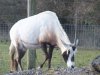
Arabian oryx (Oryx leucoryx) at Marwell Zoo


Marwell Zoo’s ungulate collection left a lasting impression on my January 2015 visit. I managed to photograph 12 species, including dorcas gazelle, which was new to me, and the Arabian oryx, which I hadn’t seen in years. This particular oryx, missing its right horn, bore a striking resemblance to a unicorn.

2015-2.JPG

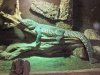
Cuban crocodile (Crocodylus rhombifer) at Wingham Wildlife Park

As part of my studies on crocodilian teeth, I visited Wingham Wildlife Park and RSCC to request shed teeth for research, though neither was able to assist. Nevertheless, my visit to Wingham’s reptile house was rewarding. The Cuban crocodile, a personal favourite species, stood out as especially magnificent. On this visit, which would still be the only one so far, I also saw Spix’s douroucouli, Argus monitor, spiny-necked monitor, western crowned pigeon, little red flying fox, albino crested porcupine and ring-tailed coati, and their so-called “pardine genets.”

2015-3.JPG

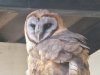
Ashy-faced owl (Tyto glaucops) at International Centre for Birds of Prey

During another trip to the Forest of Dean, I returned to the ICBP and was thrilled to photograph this rare relative of the barn owl from the Caribbean. On this visit, I also saw and photographed some little seen British natives like long-eared owl and hobby, as well as exotics like eastern Egyptian vulture, pharaoh eagle-owl, greater kestrel, lappet-faced vulture, oriental bay owl, and immature black-winged kite.

2015-4.JPG

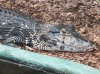
Black caiman (Melanosuchus niger) at Crocodiles of the World

Crocodiles of the World became another research stop for my project on crocodilian teeth. While there, I enjoyed exploring their extensive collection, which featured various caimans and crocodiles, including my first saltwater crocodiles and this stunning black caiman. It’s an excellent collection and I hope to visit again.

2015-5.JPG

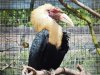
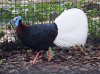
Male Papuan hornbill (Rhyticeros plicatus) at Birdworld

I enjoyed the avian collection at Birdworld, seeing many species for the first time, such as Namaqua dove, white woodpecker, crowned lapwing, Sclater’s crowned pigeon, and this impressive Papuan hornbill.

Next, a dwarf ratite, blue-eyed beauties, and a visit with a viverrid.
 

Attachments

  • 2015-1.JPG
    2015-1.JPG
    144.7 KB · Views: 150
  • 2015-2.JPG
    2015-2.JPG
    200.1 KB · Views: 161
  • 2015-3.JPG
    2015-3.JPG
    118.1 KB · Views: 152
  • 2015-4.JPG
    2015-4.JPG
    242.7 KB · Views: 164
  • 2015-5.JPG
    2015-5.JPG
    191.5 KB · Views: 148
2016 was a monumental year for me, both personally and in my zoo adventures. In October, I met my now partner, and earlier in the year, I embarked on my first solo trip to Europe, revisiting Paris and venturing into Germany for the first time.

2016-1.JPG

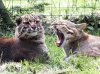
Asian golden cat (Catopuma temminckii moormensis) at Parc des Félins


While in Paris, as well as visiting the newly reopened Paris Zoo de Vincennes, I took a day trip to Parc des Félins, renowned for its comprehensive catalogue of cats. The park housed nearly every species and subspecies of cat kept in European collections, and I was fortunate to encounter numerous firsts, such as the southern oncilla, Angolan lion, bobcat, and Sri Lankan leopard. It also featured taxa I hadn’t seen in years, like the Arabian wildcat, Geoffroy’s cat, and this, the Chinese subspecies of Asian golden cat, then called C. t. tristis, but now known as C. t. moormensis. The Zoo also kept the nominate subspecies as well, which I also saw.

2016-2.JPG

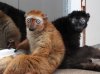
Blue-eyed lemurs (Eulemur flavifrons) at Cologne Zoo


My first German zoo experience was Cologne Zoo in May 2016. The highlights included my first sightings of ratels and red-shanked doucs. However, my favourite photo from this visit features a pair of blue-eyed lemurs, perfectly showcasing their strikingly unique eye colour—a feature that distinguishes them from all other lemurs.

2016-3.JPG

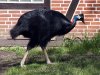
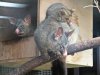
Dwarf cassowary (Casuarius bennetti westermanni) at Walsrode Weltvogelpark


My second German zoo would be the bird paradise that is Walsrode. I took over a thousand photos in one day, of birds of almost all types. Notable firsts include shoebill, king bird-of-paradise, Australian brush-turkey, giant coua, cuckoo-roller, Pesquet’s parrot, crimson-rumped toucanet, and so many more. My favourite pair of birds however was the northern cassowary (C. unappendiculatus rufotinctus) and the now-deceased dwarf cassowary. Reflecting on this visit, the memory of seeing the latter species feels even more precious.

2016-4.JPG

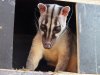
Banded civet (Hemigalus derbyanus) at Wildkatzenzentrum Felidae


I made my first trip to Wildkatzenzentrum Felidae, a small private facility focusing on carnivorans, on my first visit to Berlin in 2016. I was taken around the collection, seeing probably my favourite animal ever, the greater grison, for this first time. Additionally, I was particularly keen to see this species of civet, one I have been fascinated by ever since I learned about it in Walker’s Mammals of the World when I was 11 or 12, and was elated when the keeper invited me inside its enclosure to get this and a lot of other photos. Both civets were sleeping but were easily coaxed to life with the prospect of snacks.

2016-5.JPG

Chacoan mara (Dolichotis salinicola) at Tierpark Berlin


What can be said about Berlin’s two super-zoos that hasn’t already been said before by people much more eloquent than I? I was in awe at the coverage, quality, welfare, and just about every other aspect of both Zoo Berlin and Tierpark Berlin, which I visited on consecutive days. I somehow made my way around all of both parks (I think Welt der Vogel was closed on my visit to Zoo Berlin). One memory I cherish from Tierpark Berlin was seeing Chacoan maras in their sandy enclosure, and wondering why these cute rodents weren’t more widespread in collections. My other highlights are too many to name. I got bit by the Berlin bug, and would soon return…

Coming next, a Cretan caprine, Lea Valley and London lemurs, and a leucistic lion.
 

Attachments

  • 2016-1.JPG
    2016-1.JPG
    220.6 KB · Views: 131
  • 2016-2.JPG
    2016-2.JPG
    119.3 KB · Views: 141
  • 2016-3.JPG
    2016-3.JPG
    236.3 KB · Views: 132
  • 2016-4.JPG
    2016-4.JPG
    176 KB · Views: 130
  • 2016-5.JPG
    2016-5.JPG
    168.8 KB · Views: 134
In 2017, I visited Greece for the first time, spending half a day at the zoo in Athens, Attiko Parko. I also made my first visit to Ventura Wildlife Park in the Hertfordshire town of Ware, where I was living at the time. The only other zoo visits were to my usual trio of London Zoo, LWC, and Paradise Wildlife Park.

2017-1.jpg

Kri-kri, or Cretan wild goat (Capra hircus cretica) at Attiko Parko


In January, my partner and I explored Attiko Parko during a trip to Greece that included stops in Thessaloniki and Athens. Despite the chilly weather, we enjoyed seeing a diverse range of animals, including some rather pale European brown bears, African chameleon, Carpathian wild boar, Angolan lion, black-naped oriole, African green pigeon, bottlenose dolphin, Mediterranean monk seal, siamang, and gang-gang cockatoo. It was also the first place I would see the unorthodox mix of cheetah with white rhinoceros.

2017-2.JPG

White-naped crane (Antigone vipio) at London Wetland Centre


Though I had stopped working and volunteering at the London Wetland Centre by 2016, I remained a member and still visited whenever possible. Alongside their collection of wildfowl from across the world, and the Asian short-clawed otters mentioned before, LWC has also kept several species of crane at one time or another. This white-naped crane, part of the East Asian rice paddy exhibit, shared its home with mandarin ducks, falcated teal, and other wetland birds.

2017-3.JPG

Ring-tailed lemur (Lemur catta) at London Zoo


In June 2017, I visited London Zoo on a Zoo Lates visit, for the first time. While this evening visit allowed me to photograph the elusive Panay cloudrunner for the first and last time, the photo didn’t come out well. Instead, here’s a shot of a ring-tailed lemur from the newly opened lemur walkthrough.

2017-4.JPG

Red-fronted lemur (Eulemur rufus/rufifrons) at Ventura Wildlife Park

I’ve been visiting the Van Hage Garden Centre in Ware for a long time, even before I came to live in the town for seven years, mostly for its small, domestic-heavy collection with free entry, at one time having (never seen) small-spotted genet, ring-tailed coatis, Patagonian maras, and other common exotics. In 2017, part of the grounds became home to Ventura Wildlife Park, and I visited for around an hour in June. As well as this red-fronted lemur, the collection also contained, at the time, fossa, straw-necked ibis, Swainson’s lorikeet, Cuban hutia, greater hedgehog tenrec, woma python, red kangaroo, Grant’s zebra, and others.

2017-5.JPG

White lion (Panthera leo krugeri) at Paradise Wildlife Park


In December, I returned to Paradise Wildlife Park with my mum and partner. Among the highlights was this stunning male “white” lion, belonging to the Transvaal subspecies/population of the African lion. On previous visits, I had seen white lion cubs.

In the next post, a rare rhinoceros, a Canadian up-close, and a carnivore at Cedars.
 

Attachments

  • 2017-1.jpg
    2017-1.jpg
    225.8 KB · Views: 129
  • 2017-2.JPG
    2017-2.JPG
    102.5 KB · Views: 130
  • 2017-3.JPG
    2017-3.JPG
    218.5 KB · Views: 139
  • 2017-4.JPG
    2017-4.JPG
    104.1 KB · Views: 136
  • 2017-5.JPG
    2017-5.JPG
    187.7 KB · Views: 135
In 2018, I made a zoo trip to southwest Germany, focused on Frankfurt and neighbouring towns, where I visited three collections, all represented in this post. I also discovered Cedars Nature Centre and its beautiful zorillas, and rediscovered Hamerton Zoo, now with a focus on Australian fauna.

2018-1.JPG

Sumatran palm civet (Paradoxurus musanga musanga) at Tierpark Donnersberg


I took a train from Frankfurt to Rockenhausen, then walked to Tierpark Donnersberg, a small collection with a lot of oddities, and with its fair share of criticism. I won’t cover that latter part here, but I did appreciate the unusual variety of animals on display. I saw Asian caracal, tufted capuchin, putative Gunnison’s prairie dog, various agouti species, my beloved greater grison, screaming hairy armadillo (signed as pichi), melanistic jungle cat, and African civet. My patience waiting by the enclosure for the Sumatran palm civet paid off, yielding a glimpse of this monochrome individual—a strikingly different appearance from the more common palm civet varieties.

2018-2.JPG

Western red panda (Ailurus fulgens) at Opel Zoo


I visited Opel Zoo on the outskirts of Frankfurt on a cold, snowy day. As a result, many animals were not active, but I relish the memory of seeing such animals as blue wildebeest and cheetah in the snow. Rather surreal for me, coming from southern England where this much snow is a rarity. My main draw was the brown hyaenas, which were both active. I also saw my first bush hyraxes and got great views of Bactrian deer, Persian fallow deer, and this red panda.

2018-3.JPG

South-central black rhinoceros (Diceros bicornis minor) at Zoo Frankfurt


I spent a pleasant day at Zoo Frankfurt, where I saw Cape fur seal, tammar wallaby, Australian freshwater crocodile, ploughshare tortoise, Asian garden dormouse, black-and-rufous sengi, Cape ground squirrel, and mhorr gazelle, all for the first time. I was of course impressed (an understatement, perhaps) by the small mammal house, Grzimek-Haus, with its incredible diversity of displays. I would also see my last (to date) Ethiopian klipspringer, and first and last south-central black rhino. Housed indoors due to the cold, this was the last individual of its subspecies on display in Europe, a poignant reminder of the rarity of this animal.

2018-4.JPG

Zorilla (Ictonyx striatus) at Cedars Nature Centre


I discovered Cedars Nature Centre thanks to Zoochat and Zootierliste, both of which I was by now heavily using to plan future zoo visits. Although I was now living in Shepherd’s Bush in west London, I was making frequent visits back to Ware to visit the parents, and stopped in one day en route to see their zorillas. While my early photos of the zorillas were decent, I’d refine my technique on subsequent visits, combined with better luck. I also saw and photographed Oswald, their Virginia opossum, my first (and so far only) didelphid.

2018-5.JPG

Canada lynx (Lynx canadensis) at Hamerton Zoo


Returning to Hamerton Zoo for the first time in eight years was a treat. The collection had evolved significantly, with an impressive focus on Australian fauna, including barking owls, common ringtail possums, and Australian brush-turkeys. Other notable sightings included northern oncilla and spotted-tailed quoll. The star of the day, however, was the Canada lynx, captured in one of my best photos from the visit.

Up next, a possum portrait, a Bulwer’s bird in Belgium, and jaguar jeopardy.
 

Attachments

  • 2018-1.JPG
    2018-1.JPG
    148.3 KB · Views: 126
  • 2018-2.JPG
    2018-2.JPG
    210.2 KB · Views: 128
  • 2018-3.JPG
    2018-3.JPG
    173.9 KB · Views: 124
  • 2018-4.JPG
    2018-4.JPG
    142.9 KB · Views: 123
  • 2018-5.JPG
    2018-5.JPG
    188.5 KB · Views: 128
Just caught up on this thread and all of these small carnivorans, especially the viverrids and euplerids, are making me so incredibly jealous! Incredible photos of some truly incredible animals.
 
2019 was a year of revisits and new experiences, including two trips to Hamerton Zoo, a long-overdue return to Chester Zoo, and first-time visits to Belfast and Pairi Daiza. Here are some of my standout moments.

2019-1.JPG

Family of common brushtail possums (Trichosurus vulpecula vulpecula) at Hamerton Zoo


In April, I managed to capture a shot of a family of common brushtail possums at Hamerton Zoo, active in the late afternoon. This was also the only time I’ve seen the golden possums active. On my August visit, I would see some of the new Antipodean arrivals in dingo, spinifex hopping mouse, and squirrel glider, which were not on show earlier in the year.

2019-2.JPG

Bulwer’s pheasant (Lophura bulweri) at Pairi Daiza


I had wanted to visit Pairi Daiza and its impressive collection for quite a while, and finally made it come to fruition on a trip to Belgium in May 2019. Target species included Lear’s and Spix’s macaws, curl-crested aracari, bear cuscus, St. Vincent amazon, giant panda, greater bird-of-paradise, Lyle’s flying fox, Tasmanian devil, olive ridley turtle, and Asian black bear, all of which were seen well, as well as this, the Bulwer’s pheasant. The park’s geographical theming and artistic artefacts didn’t detract from the experience for me, though they were certainly dramatic! I originally planned two days but managed to cover most of the highlights in one, allowing for a relaxed visit to Antwerp Zoo on the second day.

2019-3.JPG

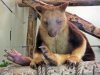
Goodfellow’s tree kangaroo (Dendrolagus goodfellowi buergersi) at Belfast Zoo


An unexpected highlight of 2019 was my trip to Belfast to film an episode of Mastermind for the BBC (specialist subject: mustelids, of course). While in the city, I visited Belfast Zoo for the first time. Although I missed the spotted-necked otters, I was delighted to see white-nosed coatis again—making a resurgence in Europe—and this sleepy Goodfellow’s tree kangaroo. Other notable sightings included western rockhopper penguins and a striking leucistic gentoo.

2019-4.JPG

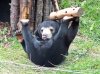
Malayan sun bear (Helarctos malayanus malayanus) at Chester Zoo


With a break between jobs in September, I finally returned to Chester Zoo after six years, exploring the Islands complex for the first time. Although parts of Monsoon Forest were still recovering from the previous year’s fire, I saw several new species, including dusky pademelon and Balabac chevrotain. One of my favourite shots from this visit was of a Malayan sun bear engaging with its enrichment—perfectly capturing its playful, inquisitive nature.

2019-5.JPG

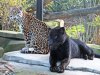
Jaguars (Panthera onca) at Paris Zoo de Vincennes


In November, I took my partner to Paris for his first visit, including brief trips to both city zoos. While the Ménagerie was relatively uneventful, the jaguar enclosure at Paris Zoo de Vincennes left a lasting impression. We watched a melanistic jaguar and its spotted offspring for ages; their beauty was captivating, and their presence elicited a visceral response in my partner. The hidden melanistic jaguar startled him when it finally revealed itself, a moment we still laugh about.

Up next, All Things Beaver, an ogling owl, and a gorgeous genet
 

Attachments

  • 2019-1.JPG
    2019-1.JPG
    138.1 KB · Views: 114
  • 2019-2.JPG
    2019-2.JPG
    224.7 KB · Views: 125
  • 2019-3.JPG
    2019-3.JPG
    131.1 KB · Views: 117
  • 2019-4.JPG
    2019-4.JPG
    244.7 KB · Views: 107
  • 2019-5.JPG
    2019-5.JPG
    242.2 KB · Views: 113
I’m actually surprised, given what a bum year 2020 was for everyone, that I managed to get four zoo visits in! One was pre-lockdown, to All Things Wild in February. The others were in my birthday week in September, when things were relatively relaxed, when I felt secure enough to leave the house, fully masked, to get back to one of my favourite hobbies. I visited a new collection, Ark Wildlife Park, revisited Hamerton, and went to Woburn Safari Park, somewhere I hadn’t been for around twenty years.

2020-1.JPG

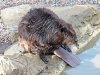
American beaver (Castor canadensis) at All Things Wild


I chose to visit All Things Wild on a February day off, due to its proximity to a rail station (Honeybourne) and a few unusual animal residents. Despite its mostly domestic and common exotic collection, All Things Wild does (or did, in some cases) have some surprising species. Top of my list was the pardine genet (a real one this time), but there was also golden jackal and silver domestic fox, all of which would be new for me. I also had never seen an American beaver (at least, not since before 2004, as I don’t have a record of it). I was not too confident about getting to see beavers, since all my experience with the genus has been with the European species, which is always asleep whenever I’ve seen it. But the three individuals I saw that day were very showy, exploring their habitat and interacting with enrichment and with each other. I like this image of a bedraggled beaver sitting on its backside, with tail dipping in the water.

2020-2.JPG

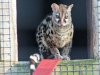
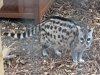
Pardine genet (Genetta pardina) at All Things Wild


I did indeed see all the target species, including the pardine genet. It took a while and a little coaxing to get this shot. The neighbouring kookaburras were being fed, so I thought I’d try to stake out the opening to the hide where the genet was likely to be. I made a quiet kissing sound, like you would make to encourage a cat to approach, which hardly ever works, to be honest, but this time, it did. The genet peeped its head out to investigate, but quickly retreated. Patience and perseverance paid off, as some twenty minutes later, the animal was comfortably sitting just outside its shelter.

2020-3.JPG

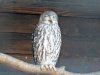
Barking owl (Ninox connivens) at Hamerton Zoo


This photo might not be my clearest, but it’s among my favourites for sheer comedic value. The barking owls at Hamerton were the first this century to be seen outside of Australia, and they are always an interesting stop at one of the most interesting collections in the country. This was the first visit to Hamerton since they added Syrian brown bear.

2020-4.JPG

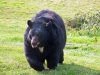
American black bear (Ursus americanus) at Woburn Safari Park


With the American black bear finally photographed, I completed my collection of all eight bears of the world photographed. I have video footage somewhere (maybe) of American black bears at Woburn decades ago but I haven’t seen this species before or since at anywhere else (I think it was technically on display at Tierpark Berlin on my first visit, but unseen). The bear was only seen on the last drive of the day, after which we’d definitely be leaving, so it was excellent luck that it decided to come lumbering out of the undergrowth, covered in burrs, slowly approaching the car.

2020-5.JPG

European genet (Genetta genetta genetta) at Ark Wildlife Park


My final zoo visit of the year was to this primarily animal rescue facility in Lincolnshire, which I had booked a private tour as a birthday treat. This involved getting slightly closer than normal, even allowing me to go inside with certain animals, including their domestic foxes of various colour morphs. The collection included African civet and three species of genet, all housed together. While the rusty-spotted and Haussa genets were huddled up together in their hide, the small-spotted genet could be coaxed awake and I got this nice view of it. On this visit, I also saw Japanese squirrel, a large group of raccoon dogs, European lynx, serval, jungle cat, and common palm civet, as well as a variety of herps.

Up next, lockdown in London, a beautiful boky, and a colourful corvid.
 

Attachments

  • 2020-1.JPG
    2020-1.JPG
    233.1 KB · Views: 103
  • 2020-2.JPG
    2020-2.JPG
    141 KB · Views: 109
  • 2020-3.JPG
    2020-3.JPG
    114.8 KB · Views: 106
  • 2020-4.JPG
    2020-4.JPG
    219.2 KB · Views: 106
  • 2020-5.JPG
    2020-5.JPG
    209 KB · Views: 104
Pardine genet (Genetta pardina) at All Things Wild

I did indeed see all the target species, including the pardine genet. It took a while and a little coaxing to get this shot. The neighbouring kookaburras were being fed, so I thought I’d try to stake out the opening to the hide where the genet was likely to be. I made a quiet kissing sound, like you would make to encourage a cat to approach, which hardly ever works, to be honest, but this time, it did. The genet peeped its head out to investigate, but quickly retreated. Patience and perseverance paid off, as some twenty minutes later, the animal was comfortably sitting just outside its shelter.

And a *genuine* Pardine Genet at that!
 
2020-3-jpg.755932


Barking owl (Ninox connivens) at Hamerton Zoo


This photo might not be my clearest, but it’s among my favourites for sheer comedic value.
Just for interest's sake, connivens in the scientific name means "winking".
 
And a *genuine* Pardine Genet at that!

Indeed! I was disappointed after seeing the supposed pardine genets at Wingham some years ago, before they moved to Shepreth, and came here to find out what they really were. I think it was one of my first forays to this forum.

Just for interest's sake, connivens in the scientific name means "winking".

That's correct, coming from the same Latin root as the word "conniving." Latham, who named the species as Falco connivens in 1801, gives the English common name for this bird as "Winking Falcon."
 
With full time work, a house move, and the tail-end of an international pandemic, 2021 was not a great year for zoo visits. In fact, I only managed to visit one, London Zoo, which would end up being my home zoo again after moving to Bow in east London.

2021-1.JPG

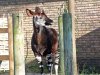
Okapi (Okapia johnstoni) at London Zoo


I did not have a huge amount of choice for photos to represent this year, so you’re gonna get the five best photos of the day. One of these was this male okapi (I don’t know his name), seen on my November 2021 visit.

2021-2.JPG

Narrow-striped boky (Mungotictis decemlineata decemlineata) at London Zoo


I was very pleased to be able to see this euplerid as often as I like, as it’s now on permanent display at my home zoo. The shot is a little over-exposed, something I neglected to fix, but it might have been beyond the limitations of the software I was using. Still, these animals rarely sit still for long enough to get a decent photo, so this counts as one of the best of the year.

2021-3.JPG

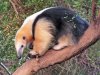
Southern tamandua (Tamandua tetradactyla tetradactyla) at London Zoo


I was treated to excellent views of the Zoo’s tamanduas, as they both walked around on the ground and climbed separate trees, one right where I was standing.

2021-4.JPG

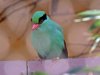
Javan green magpie (Cissa thalassina) at London Zoo


I tried looking for this beautiful and endangered bird at Chester Zoo in 2019, but had no luck. Fortunately, this individual was visible in the outer aviaries at the Blackburn Pavilion. Although some of the foreground mesh can be faintly seen (unavoidable with the standoff hedges), I like how the overall turquoise tone can still be seen, and how the black eye stripe can be seen in 3-d.

2021-5.JPG

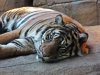
Sumatran tiger (Panthera tigris sumatrae) at London Zoo


I like the look in the tiger’s eyes in this photo. I’m running out of words. 2021 was a worse year than 2020, it seems.

Up next, a missing mustelid at Magdeburg, Pholidota in Prague, and bristles in the Bronx.
 

Attachments

  • 2021-1.JPG
    2021-1.JPG
    215 KB · Views: 91
  • 2021-2.JPG
    2021-2.JPG
    200.8 KB · Views: 91
  • 2021-3.JPG
    2021-3.JPG
    207 KB · Views: 93
  • 2021-4.JPG
    2021-4.JPG
    89.8 KB · Views: 98
  • 2021-5.JPG
    2021-5.JPG
    145.3 KB · Views: 100
2022 marked a significant return to international zoo visits, with three exciting trips that introduced me to some remarkable collections and rare species. 2022 would see my first visit to Czechia, with visits to Prague and Plzen, of course, another trip to eastern Germany, taking in Berlin, Magdeburg, and Leipzig, and another New York trip.

2022-1.JPG

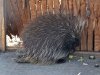
North American porcupine (Erethizon dorsatum) at Zoologischer Garten Magdeburg


I hoped to be able to bring you a photo of a marbled polecat or Grandidier’s vontsira, on this, my first visit to Zoo Magdeburg. But no. In a zoo in a country still taking strict precautions against Covid (my simple face masks were not of a high enough standard and I had to get the N95 type), I perhaps chose the wrong destination for this first overseas travel post-Covid. But I did see some nice animals, including dhole, axis deer, Carpathian lynx, agile wallaby, Spix’s moustached tamarin, and this North American porcupine.

2022-2.JPG

Koala (Phascolarctos cinereus cinereus) at Zoo Leipzig


My main target for Zoo Leipzig was the Chinese pangolin. I made a beeline straight for it, but found roadblocks on the path heading towards the elephant house, and concluded, frustratingly, that they must be off-show for Covid reasons. I still decided to make the most of this visit, and got pleasing views of koala, Indian sloth bear, chimpanzee, bonobo, blue-headed quail-dove, island flying fox, eastern quoll, and more. But no pangolins. Yet.

2022-3.JPG

Cape porcupine (Hystrix africaeaustralis) at Bronx Zoo


I took my partner on his first trip to North America, for a week in New York City. I was not in the best of health, and didn’t carry out all of my planned visits, but I did get to revisit Bronx Zoo, twice, in fact. For my first visit, I booked an experience – not something I usually do, but not knowing what species would be brought out, with the potential for something really unusual, for me, like a Hoffmann’s sloth or a prehensile-tailed porcupine, I was anticipating an interesting experience. Staff members brought out five individual animals: a young female red kangaroo, a young American alligator, a tawny frogmouth, an emu, and this, a Cape porcupine. It was introduced as a crested porcupine, but having had a great view of its diagnostic feature, white quills in the rump region, and knowing that most “crested porcupines” in the US are Cape porcupines, I can safely identify this as a Cape.

2022-4.jpg

Chinese pangolin (Manis pentadactyla pentadactyla) at Prague Zoo


At last! I visited Prague Zoo on two consecutive days in September 2022, and it quickly became my favourite zoo. It has a bit of everything, with very good standards of welfare, good transport links, and lots of interesting animals for the zoo nerd. The list of new taxa for me is long, but to give just a few highlights from the two visits: two Chinese pangolins, one of which was climbing; my first Nile lechwe; west Caucasian tur and Barbary sheep on their cliff; scruffy-looking Pel’s fishing owls; tiny Etruscan shrews; and Gabon talapoins in the new exposition for gorillas.

2022-5.JPG

Cape fox (Vulpes chama) at Zoo Plzen


In the first hour after arriving, I explored Plzen’s African mammal house in normal lighting, and got to see so many wonderful species, including this Cape fox. Unfortunately, I was meant to spend two days at Plzen, but got sick on my last day in Prague. I still got to Plzen on time but rested the whole day, going to the Zoo on my only day there. However, I was lucky to be able to secure a tour of the small mammal and reptile holdings, where I saw some interesting species that are completely off-show. Included in that are the last Panay cloudrunners in captivity (or even in the world?), of which there now appears to be only one surviving. Still, despite my illness, I saw a LOT of species on that day, some highlights being marsh mongoose, Mechow’s mole-rat, lesser Egyptian jerboa, western tree hyrax, Haussa genet, slender mongoose… that’s just from the first hour. Although not my favourite zoo I have been to, it certainly stands out as being one where you can see a lot of species in reasonably good exhibits.

In the next post, a Bohemian bear, a badger in Brno, and… does anyone else smell popcorn?
 

Attachments

  • 2022-1.JPG
    2022-1.JPG
    275.2 KB · Views: 84
  • 2022-2.JPG
    2022-2.JPG
    264.2 KB · Views: 85
  • 2022-3.JPG
    2022-3.JPG
    171.1 KB · Views: 91
  • 2022-4.jpg
    2022-4.jpg
    166.5 KB · Views: 88
  • 2022-5.JPG
    2022-5.JPG
    247.7 KB · Views: 88
In 2023, I made two overseas trips, one to Czechia and Austria, and one to Berlin, mostly to right wrongs that happened in the earlier trip. My March-April 2023 trip had grand plans, starting in Prague, then visiting a few collections in Czechia before visiting Vienna, then heading home via Nuremburg and Berlin. I got sick (again!) in Vienna and had to change plans, before getting to visit any collections there. I also squeezed in another visit to Chester Zoo in the summer.

2023-1.png

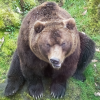
Kamchatka brown bear (Ursus arctos beringianus) at Zoo Dĕčín


After excellent visits to Prague and Plzen, I spent a snowy few hours at Zoo Dĕčín, in the northwest of Czechia, close to the German border. One of the draws was this magnificent brown bear, probably the biggest I have ever seen. Other than this, I saw my first European mink, east Caucasian tur, and magnificent bird-of-paradise.

2023-2.png

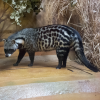
African civet (Civettictis civetta) at Zoo Dvůr Králové


After leaving Dĕčín, I spent two nights at the hotel inside Zoo Dvůr Králové, also in Czechia. I regrettably visited in the low season, so some exhibits and the whole safari park were closed, but being based on site, I had free reign to explore the Zoo whenever I wanted. This meant that I would be guaranteed to see every carnivore active, crucial for things like civets and genets that typically awaken early or late in the day. Early on my second day, one of the African civets was active and I got excellent clear views of it. Other animals I saw and photographed for the first time at Dvůr Králové include three species of bush viper, striated heron, lesser kudu, northern springhare, Cape coral snake, black-winged lovebird, western reef-egret, and Cape shoveler.

2023-3.png

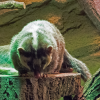
Javan ferret badger (Melogale orientalis) at Zoo Brno


I visited Zoo Brno mostly for this beauty, held in only one zoo outside of Asia. At the time, a pair of Javan ferret badgers could be seen in the Zoo’s restaurant; I believe they went off-show shortly after my visit. I’ve been fascinated by rare and unusual carnivores, including ferret badgers, since childhood, so to finally see them was a dream come true. I did not spend very long at the Zoo: the weather was bad and I was tired from so many hills over the past few days, but I did get great views of a family of Siberian wolverines, Pallas’ cat, and corsac fox.

2023-4.png

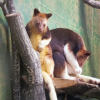
Goodfellow’s tree kangaroos (Dendrolagus goodfellowi buergersi) at Chester Zoo


In June 2023, I made my most recent visit to Chester Zoo. I was hoping to see the Coquerel’s sifakas but they were inactive on my visit, but these tree kangaroos more than made up for it, in my opinion.

2023-5.png

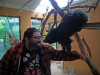
Palawan binturong (Arctictis binturong whitei) with me at Wildkatzenzentrum Felidae


Okay, so I admit I didn’t exactly take this photo, but at least I’m in it. My last zoo trip of the year would be to both Berlin zoos, plus Magdeburg (still no marbled polecat or vontsira!), but also another tour of Wildkatzenzentrum Felidae. This time, I booked a private tour, so I was able to take advantage of an English-language guide who could answer all my questions. As well as seeing my first Egyptian mongooses and Barbary striped hyaenas (with newborn pup), I was treated with an interaction with one of their Palawan binturongs. I was given a jacket to wear, and I went in the enclosure with the keeper. The binturong sniffed me, checked me out, then climbed on my shoulders and groomed me. This was an unforgettable experience, so a visit to Wildkatzenzentrum is highly recommended for carnivore fans.

In the final post of the year, a mammal in Madrid, a striped something in Sussex, and a mysterious mongoose.
 

Attachments

  • 2023-1.png
    2023-1.png
    1.4 MB · Views: 84
  • 2023-2.png
    2023-2.png
    1.2 MB · Views: 77
  • 2023-3.png
    2023-3.png
    1.3 MB · Views: 80
  • 2023-4.png
    2023-4.png
    1.2 MB · Views: 81
  • 2023-5.png
    2023-5.png
    1.3 MB · Views: 80
So, here we are in 2024. This year, I visited Spain for the first time, made a pilgrimage to Wilhelma for quokka and kaka, revisited Hamerton, discovered two great collections in Crete, finally saw the small Indian mongoose at London Zoo, visited Howletts for the first time, and got to go on a tour of Bede’s Zoo. And the year’s not over yet, although I don’t have any more zoo trips planned.

2024-1.png

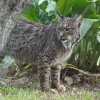
Iberian lynx (Lynx pardinus) at Zoo Aquarium Madrid


With my March 2024 visit to Madrid, I had finally seen every species of wild cat currently kept in European zoos (I make that 30 species, excluding domestic cat). I was nervous about not being able to get a good view of the Iberian lynx but a visit to their enclosure towards the end of my visit turned out to be very fruitful. I spoke briefly about my visit in another post, but I was very pleased with my visit to Zoo Madrid, despite ill health. I had a cold coming on before I left for Spain, which worsened on my first day. My visit to Faunia Madrid was good too, where I finally saw Adélie penguin, stone marten, and Steller’s sea lion, but no grey brocket deer (I was under the impression they had left the collection so didn’t look very hard for them).

2024-2.png

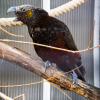
North Island kaka (Nestor meridionalis septentrionalis) at Wilhelma, Stuttgart


By the end of my Spanish-German trip, I was really sick. I was just about mustering the energy to walk around zoos at an extremely slow pace, avoiding hills and slopes. I thought that if I could just see at least one of my three top highlights for Wilhelma (kaka, quokka, and wombat), I would be happy. Luckily, with perseverance, a lot of rest stops, and a hell of a lot of coughing, I ticked two of those off. The quokkas were easy, but very rewarding after a puzzlingly too dark experience at Terra Australis (why, Stuttgart, why?). I didn’t see wombats (not too surprising), but I had great luck with the kaka. I made my way up, very slowly, towards the enclosure in the subtropical terrace, and stopped for a very long rest (even a bit of a nap) on the bench adjacent to the enclosure. When I got up, I checked the enclosure and the kaka had just popped out for a short while, allowing me to get this and some other photos. I headed back towards the exit after this, feeling satisfied with this interaction. Soon after leaving Stuttgart for London, I went to hospital for pneumonia, something that seemed inevitable after the progression of my cold and cough.

2024-3.png

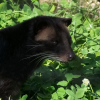
White-bearded masked palm civet (Paguma larvata leucomystax) at Hamerton Zoo


Hamerton has kept this beautiful species for a couple of years, but due to their general inactivity and the placement of barriers, I haven’t been able to get a good shot. My luck changed when I passed the more recent holding where the “Javan” binturongs used to be at the entrance, in the afternoon, when this individual was checking out its habitat. I’m guessing this is the mother of the young civets that were born this year. Thankfully, it stood still long enough to get this great photo. I decreased the exposure in Photoshop Elements to de-emphasise the mesh that otherwise obscured the image, hence the darkness.

2024-4.png

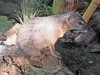
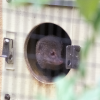
Small Indian mongoose (Urva auropunctata) at London Zoo


In September, I spent a long while staking out Mongoose Madness in Land of the Lions, hoping to catch a glimpse and a blurry grainy photo of the elusive small Indian mongooses that have inhabited this habitat since last year. The individuals originated in Guadeloupe (where they were historically introduced as pest control), and were held by Chester Zoo behind the scenes since 2019. I was rewarded for my efforts with a couple of fleeting glimpses, including a mongoose running and then hiding in the nest box. Although the habitat is open, the mongooses are very shy and tend to run and hide in this box behind another fence, hence why my image is rather obscured. Bearing all this in mind, I consider this image to be rather miraculous. My stars aligned in that my camera, which often has trouble with autofocus, decided to actually focus on the mongoose rather than the bars in front. I took this as a win, and it easily made my top 5 photos of the year.

2024-5.png

Grandidier’s vontsira (Galidictis grandidieri) at Bede’s Zoo


So yes, I finally got to see Grandidier’s vontsira in October this year! I reached out to get access to this school zoo a while ago and was denied, but this year, I got to know the deputy head of the school, John Tuson, zoo enthusiast and author of two recent books on the zoos of UK/Ireland and Germany, respectively. He took me on a tour of the Zoo’s collections, including binturong, kinkajou, northern white-faced owl, a variety of reptiles, amphibians, invertebrates, and small mammals, as well as this, their most famous holding, the Grandidier’s vontsira. It was a wonderful few moments watching this wild-caught individual in its indoor holding, hunting for mealworms. Finally, I’ve now seen all the euplerid species kept in captivity.

So, with the year drawing to a close today, I want to thank you all for reading and following along with my zoo adventures. I wish everyone a happy, zoo-filled New Year and all the luck in the world!

My plans for next year are still tentative, but they may include revisiting some old favourites in Czechia, followed by forays into neighbouring countries, including a revisit to Austria, later in the year.

I’d love to hear your thoughts on this thread. Has it inspired any of you to write something similar about your own experiences?
 

Attachments

  • 2024-1.png
    2024-1.png
    1.2 MB · Views: 73
  • 2024-2.png
    2024-2.png
    1.1 MB · Views: 66
  • 2024-3.png
    2024-3.png
    1,004.7 KB · Views: 72
  • 2024-4.png
    2024-4.png
    925.7 KB · Views: 72
  • 2024-5.png
    2024-5.png
    1.3 MB · Views: 69
Fantastic thread @Mo Hassan! I have thoroughly enjoyed reading about your trips and the fantastic species you have encountered over the last 20 years with some great photos to boot.

It has certainly inspired me to make a similar thread however, I don't nearly have as many zoos under my belt as you nor an excellent species diversity but I'm sure I can rustle something up that may provide interest.
 
Back
Top