Most Interesting Non-Animal Features at American Zoos and Aquariums

3.) Los Angeles Zoo - Old Griffith Park Zoo

To be pedantic, this isn't actually *in* the current LA Zoo, but is only a brief walk/drive away

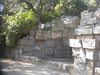
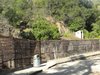
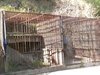
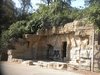
As zoos modernize and develop, there is always the question of what to do with old exhibits. Some zoos renovate them, incorporating historic elements into new exhibits, such as the Bronx Zoo's Lion House being converted to Madagascar!, or St. Louis Zoo incorporating old rockwork into the expanded bear habitats. Some repurpose them into non-animal roles, such as the aforementioned Carnivora Café at Toledo Zoo. And some leave them in place as a reminder of the evolution of zoos. Many zoos across the country have one or two old cages set up as exhibit pieces, but few have something like the old Griffith Park Zoo in Los Angeles.

The old zoo, which opened in 1912, was abandoned with the new facility about 50 years later. All that remains are a few cages and some rockwork to give the impression of former enclosures. It's a very unique site - the closest thing I can think of to this is the old Crandon Park Zoo in Miami. It's a haunting place (which I would imagine would be spooky as heck at night), but a pleasant enough picnic spot during the day. I do feel like it could benefit from some interpretive signage.

I'll be taking a break for the weekend, but by all means - if you've got something else to add, share it!
 

Attachments

  • Old Zoo Enclosures I.JPG
    Old Zoo Enclosures I.JPG
    240.6 KB · Views: 16
  • Old Zoo Enclosures II.JPG
    Old Zoo Enclosures II.JPG
    240.2 KB · Views: 15
  • Old Zoo Enclosures III.JPG
    Old Zoo Enclosures III.JPG
    260 KB · Views: 16
  • Old Zoo Enclosures IV.JPG
    Old Zoo Enclosures IV.JPG
    281.5 KB · Views: 15
I am partial to carousels.

I think the most beautiful is at the Beardsley Zoo in Connecticut. It is inside a large barn like building…which takes a bit from the experience…but otherwise it is a very grand work of art.

My second favorite is less historic and culturally significant than Beardsley’s…but for its colors, mounts, setting, and general glamour…Texas's San Antonio Zoo carousel is absolutely beautiful.
Ah, I love those as well, and so does my son. The historic one at Columbus Zoo is really nice, it is also in a protected building. The more modern "endangered species" units at some zoos are nice as well, ZooTampa has a good large one, Jackson Zoo has a small version.
 
I love it when zoos have a real dedicated botanical garden. Many zoos are "XYZ Zoo and Botanical Garden", but few have a dedicated large space for the garden part. ZooTampa had a pretty good medium sized garden area in the past, but it does not any longer. Riverbanks Zoo & Botanical Garden has a nice dedicated botanical gardens across the river (but attached and inside the grounds) from the zoo part. ABQ Biopark has a great botanical gardens that is in the park, but a separate ticket from the zoo.
 
It's a very unique site - the closest thing I can think of to this is the old Crandon Park Zoo in Miami.
The old bear dens at the Franklin Park Zoo is another abandoned zoo exhibit out there, and is just a short walk from the zoo itself. A really cool experience to go visit it- I made the walk out to the bear dens after a visit to Franklin Park Zoo in 2022.
 
The old bear dens at the Franklin Park Zoo is another abandoned zoo exhibit out there, and is just a short walk from the zoo itself. A really cool experience to go visit it- I made the walk out to the bear dens after a visit to Franklin Park Zoo in 2022.

Here is a nice video on YouTube that covers the bear dens and their history (as I believe there are no pictures of them uploaded to zoochat):

I believe the bear dens were also built the same year as the old LA Zoo (1912), which adds to the similarities.
 
There is a lot of WPA era projects at the Buffalo zoo and they are preserved well, but the Gate at the corner is or Amherst St and Parkside Ave is the most historic because it was designed by an African American Architect John Brent. there is also a mural next to the gate now honoring the designer.
https://buffaloah.com/a/cran/cran.html
 
The inclusion of the old Los Angeles Zoo at Griffith Park is a great one; it made me think of another historical zoo site all the way on the opposite side of the country. I was actually going to include this in one of the honorable mention posts of 'America's 100 must-see Exhibits', but it fits better here. Maryland Zoo's Main Valley was the original portion of the zoo that had been sealed off for many years. It was recently reopened to reduce foot traffic and provides a fascinating showcase of cherished history. Enclosures from the late 1800s and early 1900s still remain including the iron bar cages, cement bear dens, and a 1926 elephant house. Technically there are a few animals still present: the crane barn was recently renovated which houses several larger birds and snowy owls inhabit a cage once home to tigers. However, its clear animals are the afterthought here with the focus being on the historical elements. Few zoos provide such a raw look at their past and its been kept up quite nicely.

full

@TinoPup
full

@TinoPup
full

@NAIB Volunteer
full

@TinoPup
full

@TinoPup
 
The inclusion of the old Los Angeles Zoo at Griffith Park is a great one; it made me think of another historical zoo site all the way on the opposite side of the country. I was actually going to include this in one of the honorable mention posts of 'America's 100 must-see Exhibits', but it fits better here. Maryland Zoo's Main Valley was the original portion of the zoo that had been sealed off for many years. It was recently reopened to reduce foot traffic and provides a fascinating showcase of cherished history. Enclosures from the late 1800s and early 1900s still remain including the iron bar cages, cement bear dens, and a 1926 elephant house. Technically there are a few animals still present: the crane barn was recently renovated which houses several larger birds and snowy owls inhabit a cage once home to tigers. However, its clear animals are the afterthought here with the focus being on the historical elements. Few zoos provide such a raw look at their past and its been kept up quite nicely.

full

@TinoPup
full

@TinoPup
full

@NAIB Volunteer
full

@TinoPup
full

@TinoPup

The difference between Baltimore's Main Valley and LA's Griffith Park is that the Main Valley was constantly being tweaked and modified to remain in use until the early 2000s (and, to a degree, some of those enclosures are still being used), so you don't get as much of the historic character of them. Masterplans for Baltimore include the redevelopment of that space, so many of those exhibits will be lost in the next decade or so, though the most historically significant and interesting features - the Round Stand, the Round Cage, and the Elephant House - will be saved.
 
What a great idea for a thread! I’d like to nominate the Patricia and Byron J. Gambulos ZooZeum at the Oklahoma City Zoo. Housed in a WPA building from 1935, the ZooZeum is located next to the Elephant Pavilion. Originally built as a bathhouse, it also previously served the Zoo as a train barn. Since 2011, it has served as a museum about the OKC Zoo’s history.

It also displays temporary exhibits on topics like conservation, veterinary medicine, and changes in animal husbandry. I’ve always found this to be a great way to educate guests and offer an indoor respite on hot days.
 
What a great idea for a thread! I’d like to nominate the Patricia and Byron J. Gambulos ZooZeum at the Oklahoma City Zoo. Housed in a WPA building from 1935, the ZooZeum is located next to the Elephant Pavilion. Originally built as a bathhouse, it also previously served the Zoo as a train barn. Since 2011, it has served as a museum about the OKC Zoo’s history.

It also displays temporary exhibits on topics like conservation, veterinary medicine, and changes in animal husbandry. I’ve always found this to be a great way to educate guests and offer an indoor respite on hot days.
I just visited OKC earlier this year and was very impressed with the ZooZeum!
 
I was going to mention the Maryland Zoo Main Valley, too! I also think the interactive play features in their Children's Zoo/ Maryland Wilderness is one of their big selling points for families with kids. It's not a whole exhibit without animals, but it's the non-animal elements of the exhibit that make it stand out. I don't know if this is more common outside the area, but I haven't seen another children's zoo like this one before. Rather than just having one nature themed playground, the interactive features are spread through the entire Maryland Wilderness exhibit, letting kids hop on lily pads across a marsh, climb inside a turtle shell or a bird's nest, crawl through a cave, pop up in plastic bubbles in an exhibit full of box turtles, slide down a big slide in the trunk of a giant fake tree, and cross a swinging bridge.

Also, the National Zoo is home to Uncle Beazley, a model triceratops (with very antiquated anatomy) who was made for a TV movie, 'lived' on the National Mall for quite a while, and then was moved to the zoo. He's just kind of a local icon.
 
4.) St. Augustine Alligator Farm and Zoo - Gomek Forever

There's always a challenge to figure out how to commemorate an iconic zoo animal that has passed way. Do you do a plaque? Or how about a statue, such as the one of gorilla Willie B at Zoo Atlanta? Maybe donate the body to a natural history museum, such as Bushman the Lincoln Park Zoo gorilla or Su Lin, the Brookfield Zoo giant panda, both at Chicago's Field Museum?

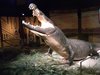
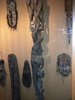
Perhaps the most interesting commemoration of a passed zoo animal that I can recall is "Gomek Forever," a shrine to St. Augustine Alligator Farm's legendary saltwater crocodile. In a pavilion overlooking the main gator swamp (and not far from the (live) saltwater crocodile habitat) is a shrine to the massive beast, who is preserved for the ages. The building tells the story of the crocodile's life, from his capture in New Guinea to his arrival at SAAF to his ultimate passing. The museum contains an impressive collection of New Guinea artifacts and artwork, including examples pertaining to crocodiles.

Note, this exhibit slightly breaks my no-live animals rules, as the building also contains some very small snake terrariums. I make the argument that these features are greatly overshadowed by the rest of the building, making this a mostly non-animal attraction (and as such, if anyone later has suggestions for something that's also 99% non-animal but you want to see added, well, no reason for me to be pedantic about it).
 

Attachments

  • Gomek III.JPG
    Gomek III.JPG
    145.7 KB · Views: 12
  • New Guinea Carvings.JPG
    New Guinea Carvings.JPG
    167.2 KB · Views: 13
5.) Tulsa Zoo - Statue of Ganesha

I've always been very interested in the idea of presenting animals not only in their ecological context, alongside other animals and plants, but in their cultural context as well (a la Conway's bullfrog paper). While it's a rare zoo that goes all-in on this exhibit concept, some dabble with it, such as the Asian elephant exhibit at Tulsa Zoo, which incorporates a small museum on Asian elephants. Of this, one of the most noteworthy - and unexpectedly controversial - features was a six-foot tall granite statue of the Hindu god Ganesha, located outside Elephant Encounter.

This statue might not have drawn much criticism or controversy if it was in, say, Washington or Massachusetts, but this is Oklahoma. It led to complaints from some members of the public that the zoo was promoting Hinduism. This in turn led to a vocal segment of the community demanding an exhibit on Biblical creationism as a counterbalance (not only to this, but to evolution-themed exhibits elsewhere in the zoo). Such plans did not come to fruition, but the statue (which still stands today) serves as an excellent reminder of the challenges that zoo-based education can run into when it brushes up against politics, religion, and other hot-button social issues.

There is no mention on the signage of the statue about the controversy (after all, why poke the bear and risk starting the whole brouhaha over again?) but for those who know the story, it feels like a little victory to see it still in place. I know that it was one of the sights I was most interested in seeing during my recent trip to Tulsa.

Hindu statue at Tulsa's zoo spurs plans for creation exhibits
 

Attachments

  • 121 Ganesha Statue.JPG
    121 Ganesha Statue.JPG
    236.9 KB · Views: 16
5.) Tulsa Zoo - Statue of Ganesha

I've always been very interested in the idea of presenting animals not only in their ecological context, alongside other animals and plants, but in their cultural context as well (a la Conway's bullfrog paper). While it's a rare zoo that goes all-in on this exhibit concept, some dabble with it, such as the Asian elephant exhibit at Tulsa Zoo, which incorporates a small museum on Asian elephants. Of this, one of the most noteworthy - and unexpectedly controversial - features was a six-foot tall granite statue of the Hindu god Ganesha, located outside Elephant Encounter.

This statue might not have drawn much criticism or controversy if it was in, say, Washington or Massachusetts, but this is Oklahoma. It led to complaints from some members of the public that the zoo was promoting Hinduism. This in turn led to a vocal segment of the community demanding an exhibit on Biblical creationism as a counterbalance (not only to this, but to evolution-themed exhibits elsewhere in the zoo). Such plans did not come to fruition, but the statue (which still stands today) serves as an excellent reminder of the challenges that zoo-based education can run into when it brushes up against politics, religion, and other hot-button social issues.

There is no mention on the signage of the statue about the controversy (after all, why poke the bear and risk starting the whole brouhaha over again?) but for those who know the story, it feels like a little victory to see it still in place. I know that it was one of the sights I was most interested in seeing during my recent trip to Tulsa.

Hindu statue at Tulsa's zoo spurs plans for creation exhibits
When you said it spurred controversy I was expecting something big (in which case I would kind of understand, to some degree) - but six feet tall? Really, people were mad about that?
 
American Trail in the fall at the National Zoo is stunning. (first time uploading photos, apologies for the blur)
IMG_2460.jpeg IMG_2663.jpeg
 

Attachments

  • IMG_2460.jpeg
    IMG_2460.jpeg
    211.7 KB · Views: 101
  • IMG_2663.jpeg
    IMG_2663.jpeg
    238.2 KB · Views: 102
Lincoln Park Zoo has not one but two historic restaurant buildings.

The Patio at Café Brauer, located on the Nature Boardwalk, is a Chicago historic landmark dating to 1908. The building was added to the National Register of Historic Places and was restored for a few million dollars by the zoo, both in 1986-87, and has since operated as a small family restaurant with a second floor for private events. Overlooking the pond, the outdoor dining area once offered views of paddle boats; today, you can look on to a restored pond with fish, plants and birds.

1920px-Cafe_Brauer_in_Chicago.jpg


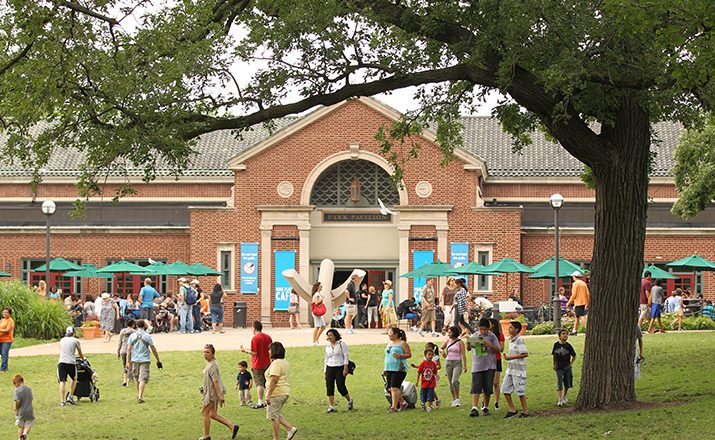
Perhaps of great interest to zoo nerds though, is the Park Place Café, located just south of Pepper Family Wildlife Center. There is plenty of indoor and outdoor seating and a food court with a pretty big selection including Mexican food, Italian food, grill items, salads, ice cream and more. The building was first opened in 1923 as the first aquarium in Chicago (seen here) and from 1937 for sixty years instead served as the zoo's Reptile House, with crocodilians in the basement now replaced with toilets. This article discusses the change.

ttd_ppl.jpg
 
6.) New York Aquarium - William Beebe's Bathysphere

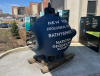
Though William Beebe had been hired as the Bronx Zoo's curator of birds, his far-ranging interests led him to become one of America's first and most prolific of zoo-based researchers. Ironically for someone who ostensibly was supposed to be focused on birds, his most famous achievement may have been his studies of marine life, accomplished through the Bathysphere. Devised in partnership with engineer Otis Barton, the bathysphere is a small, claustrophobic sphere with a small viewing window, lowered into the sea on a cable, which Beebe used to obtain some of the first in situ observations of marine life in its natural element. At the time, the device was used to set records for deepest dive ever made by a human, taking the intrepid naturalist to depths of over 3000 feet.

upload_2025-4-2_8-46-12.png
 

Attachments

  • upload_2025-4-2_8-46-12.png
    upload_2025-4-2_8-46-12.png
    593.8 KB · Views: 59
7.) Wonders of Wildlife Museum and Aquarium - National Collection of Heads and Horns

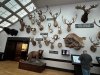
Taken as a whole, Wonders of Wildlife will never rank too highly on my favorite facility list, and I will admit that I found the taxidermy galleries in some ways to be more enjoyable than the aquarium itself. That was especially true when I same the National Collection of Heads and Horns. Not so much because of the quality of the taxidermy or display - this was actually one of the least impressive displays, compared to the Wildlife Dioramas seen elsewhere. Rather, it was because of the role in zoo history. The original National Collection of Heads and Horns was on display at the Bronx Zoo, which itself was founded in large part by "penitent butcher" big game hunters. To these men of the Boone and Crockett Club, Teddy Roosevelt among them, there was a close association (paradoxical to some) between their love of hunting and their desire to protect wildlife - the killing of the individual, the saving of the species. Whether or not one agrees with this viewpoint, it does harken back to the earliest day of American zoo-based conservation.

upload_2025-7-18_11-59-19.jpeg
 

Attachments

  • upload_2025-7-18_11-59-19.jpeg
    upload_2025-7-18_11-59-19.jpeg
    266.1 KB · Views: 31
Back
Top