Mother natures insane gallery.

Indeed. When its health deteriorates, its immune system effectively shuts down, leaving the little creature to die a prolonged death in which it gets "very sick and [staggers] around", with its body in an absolutely horrific condition.

Nature is, unfortunately, not always as beautiful as it's often portrayed.

Yep, "Le petite mort" sadly does not exist for the Antechinus but the "Le mort lente" does.

Poor little guys :(
 
Please note that the mass mortality in male Antechinus allows enough more food for their future young. This means that the young Antechinus don't have to compete with their fathers for food, so have more chance of surviving to be able to breed themselves.

Yes but the seeming altruism of this is controversal.

There is an advantage to the males dying in this way which is ultimately that they have a greater likelihood of their genes being passed on to their offspring, "the selfish gene".

Doing it to death: suicidal sex in 'marsupial mice'
 
The Hingemouth is undoubtedly a unique fish, being its very own species, genus, and family.
It lives in freshwater river systems in Central africa, and eats phytoplankton.
6-1.jpg

Image Credit: Epound.com

The true weirdness of the fish is its extraordinary mouth. It can extend a "trunk", to feed on phytoplankton. Sort of like a vacuum. It only has 2 teeth whatsoever, both, strangely enough, on the lower jaw. Not much research has been done on this fish, so their population trend is unknown. The swim blatter has 2 compartments that act like lungs, so they can survive perfectly in oxygen-poor environments. Any of these in captivity?
 
The Hingemouth is undoubtedly a unique fish, being its very own species, genus, and family.
It lives in freshwater river systems in Central africa, and eats phytoplankton.
6-1.jpg

Image Credit: Epound.com

The true weirdness of the fish is its extraordinary mouth. It can extend a "trunk", to feed on phytoplankton. Sort of like a vacuum. It only has 2 teeth whatsoever, both, strangely enough, on the lower jaw. Not much research has been done on this fish, so their population trend is unknown. The swim blatter has 2 compartments that act like lungs, so they can survive perfectly in oxygen-poor environments. Any of these in captivity?

I don't know for certain but I would find it very unlikely that a fish as curious as this one hadn't been kept at some point in captivity.
 
The Hingemouth is undoubtedly a unique fish, being its very own species, genus, and family.
It lives in freshwater river systems in Central africa, and eats phytoplankton.
6-1.jpg

Image Credit: Epound.com

The true weirdness of the fish is its extraordinary mouth. It can extend a "trunk", to feed on phytoplankton. Sort of like a vacuum. It only has 2 teeth whatsoever, both, strangely enough, on the lower jaw. Not much research has been done on this fish, so their population trend is unknown. The swim blatter has 2 compartments that act like lungs, so they can survive perfectly in oxygen-poor environments. Any of these in captivity?
Yes the hingemouth has been in captivity at least in the past I believe they were exported for the aquarium trade from West Africa some time ago under the name of 'African mudfish'. But they were never very popular as they are too drab and secretive for most, very sensitive presumably requiring 'blackwater' conditions and as far as I know did not reproduce in captivity. I don't know if there are still any around, I've never seen one in my lifetime but sure someone somewhere will have them. They probably still get brought in but very rarely
 
Yes the hingemouth has been in captivity at least in the past I believe they were exported for the aquarium trade from West Africa some time ago under the name of 'African mudfish'. But they were never very popular as they are too drab and secretive for most, very sensitive presumably requiring 'blackwater' conditions and as far as I know did not reproduce in captivity. I don't know if there are still any around, I've never seen one in my lifetime but sure someone somewhere will have them. They probably still get brought in but very rarely
Thank you for that information! Yes, It would make sense for the animal to be secretive and not too popular in the aquarium trade or in zoological institutions. They are still a fascinating animal nonetheless.
 
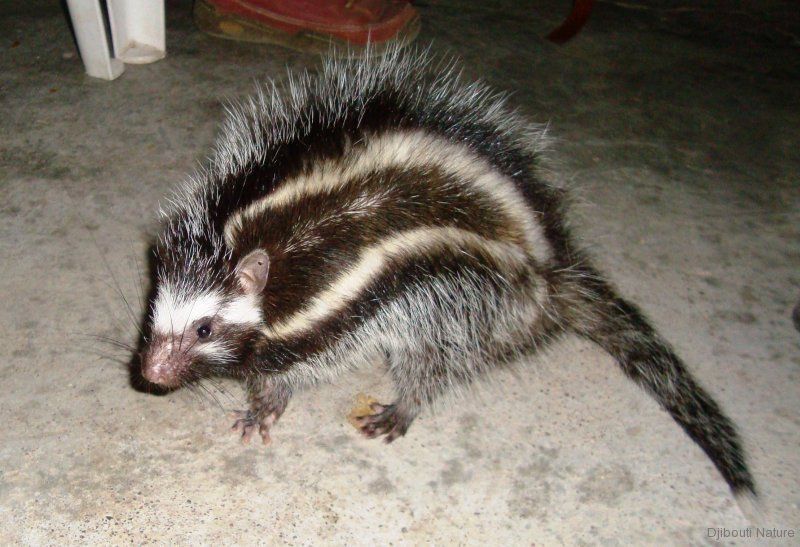
The Crested rat more resembles a porcupine than a rat, but is a very unique animal in its very own subfamily, Lophiomyinae.
6ab7378411e29b5cfc23770b8924d4bf.jpg

Image source: Pinterest
This rats undeniable unique characteristics start at its porcupine like body, and its unique markings. When the animal is threatened or excited, its large spine-like fur on the top of its "mane" sticks up in alarm. Its large nose like a coendu has a very keen sense of smell, and its raccoon-like toes are perfect for grabbing things. An interesting reported practice of this species, is to smear its crests on the poisonous plant, Acokanthera schimperi, on which where it lives. It does this in turn making it poisonous, so it is a non faulty defense mechanism. In captivity, this animal is known to eat insects, but in the wild it is primarily a herbivore, feeding on leaves, fruit, and other plant material. This species range is from Ethiopia to Somalia.
 
Maned Rats were kept in zoos, and are found in some countries which allow wildlife export (e.g. Kenya) so potentially could be brought back to human care.

David Attenborough vs. imprinted bird of paradise. I wonder in which zoo it was filmed?

 
David Attenborough vs. imprinted bird of paradise. I wonder in which zoo it was filmed?

Ive seen this video multiple times, its delightful. :)
Just wondering, how can you tell it was a zoo? If he said that than I must have not been listening that great. :p
 
Amphipods probably are my favorite Crustaceans, with the sheer amount of diversity spread throughout this entire order. One of the least studied yet fascinating species is Crassicorophium bonellii.
amphipoda_crassicorophium_bonellii_07-05-18_1.jpg

Image credit: aphotomarine.com
This strange species of amphipod is one out of the 3 species in its genus, but this one has to be the most unique. This animal supplies itself with amazing waterproof silk-like material, imagine an orb-weaver spider doing the same. It spills out of its legs and creates its very own little shelter for itself, a house. The similarities to this species and spiders is eerily similar. In fact, the silk itself is actually very closely related to the silk produced by land spiders, but sort of like a water-proof version. Actually, more studies are being done on this fascinating animal, and scientists think that its tolerance of saltwater could be used for medical applications.
 
The aptly named Blanket octopus has to be one of the most aesthetically beautiful Cephalapods in the sea.
The Common blanket octopus, (Tremoctopus violaceus) Is 1 out of the 4 members in its genus, the blanket octopuses. The sexual dimorphism in this species is highly recognizable, females being 2 meters long, whereas the males grow to about 2.4 cm! This species has a highly unique mating behavior. The third right arm in the male octopus is called the hectocotylus, which is a pouch filled with sperm. Basically, when the couple is ready to mate, the male releases the sperm. Then he gives some to the female, so she can use it when she's ready to fertilize their eggs. This species is often preyed upon the sleek and agile blue shark, Tuna of various species, and Billfish of various species. Female octopuses (which posses the blanket) can curl and unfurl their blanket as needed. It is theorized that the blanket makes the octopus appear bigger and more intimidating, but it can also distract predators.
 
Back
Top