MRJ Does Uganda - a travel blog

Days 8, 9 and 10 - Murchison Falls National Park.

Going to bed next to the Nile you have interesting neighbors. we were staying in another tented accommodation, albeit more substantial and luxurious, on our first night here. We had to be escorted back to our tent after dinner, due to dangerous animals. And they were not joking. Walking out onto the deck I swung the spotlight around and counted nine hippos. immediately in front of me. We went to sleep to the sounds of grazing hippos.

Murchison Falls have a similar range of large mammals as does Kidepo Valley, take out eland, and add hippos. However the difference is that it is that there is a lot more feed for herbivores, and that in turn means more carnivores. We headed out early in the morning for a game drive and encountered lots of everything, including three good views of lions.

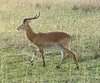
There were thousands of Uganda kob, a beautiful antelope, and no doubt good cat food!

Kob.jpg

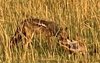
One delight was watching a side-striped jackal, It was off to one side of us, ran ahead and then crossed the road in front of us to be joined by a cub. It then regurgitated food for the cub. Sorry the photo is not great but best I could do with an iPhone.

Jackal.jpg

There were plenty of birds, we recorded 90 species, but only a little over a third had not been seen on the trip before. Bird of the location (@Hix ) was the rock pratincole, an unusual bird in it's own right, but also a new Family for me.

This was also the location where we first really got into small mammals, thanks to our guide, Sam, starting with bats, First was the yellow-wing bat, which roosts in acacia, and flies out if disturbed. They seem easy enough to see if you know the correct habitat. Sam saw a couple before we managed to see one. It flew out in front of the car then across a clearing before disappearing, looking like a huge yellow butterfly.

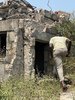
Next were smaller bats roosting in older buildings. Sam took us first to a couple of sheds at the airstrip then a derelct lime kiln. He bravely entered first to check for leopards, not unexpected as there were signs one had been there in the last couple of weeks.

sam.jpg

Fortunately Sam survived. That night we did a night drive, encountering several species, including most surprisingly two porcupines. The next day we were looking a thicket for birds I noticed a mongoose at the bottom. It turned out to be the rarely-seen Pousargues's mongoose, and that was certainly the mammal of the location (@Hix ).

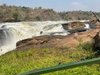
On the second day we had lunch at the Murchison Falls, which are a stunning sight. Other famous falls, such as the Victoria Falls, are broad curtains of water. Here the whole flow of the Nile is forced into a narrow channel between the rocks. I tried to load fantastic video, but it was too big, so you will have to do with this.

falls.jpg

After lunch we were meant to go directly to the next stop but there was vehicle issues so we ended up stuck besides the Nile bridge in what is normally a pleasant spot but is currently a construction site while it was fixed. Only good thing was a small band playing traditional instruments,

Accommodation: For the first night we stayed at the Twiga Safari Lodge. This was the most luxurious lodge we stayed at and certainly dinner was the best meal we have had - equal to a western restaurant meal. Accommodation was a similar but larger tent compared to the previous night, with a much larger ensuite. The whole place was obviously a cut above. On night two we stayed at the Pakuba Safari Lodge which was on a long way away. Food was back to normal and rooms resembled a '50's motel room. But it did have a large pool which was great to relax in for a half hour or so.
 

Attachments
  • Kob.jpg
    Kob.jpg
    135.6 KB · Views: 27
  • Jackal.jpg
    Jackal.jpg
    118.2 KB · Views: 27
  • sam.jpg
    sam.jpg
    156.8 KB · Views: 26
  • falls.jpg
    falls.jpg
    114 KB · Views: 28
Last edited by a moderator:
Sorry folks, not sure why the images don't show.
 
Definitely a bit envious about the barbet!

Also, if you managed to get photographs, that one would be a new species for the gallery.
Unfortunately no, hard enough to get in the binoculars.
 
Is the best road of Uganda also a major highway (in the African sense), in which case it might be a death trap for animals... Wonder whether it has anything to do with the oil mining developments in the same area....
Not so much a death trap in that excluding tourist transport it would be lucky to see a vehicle every half hour from what I could see, Of course that could change.
 
Last edited:
What happened to Bird of the Day and Mammal of the Day? We haven't seen them since Day 4.

:p

Hix
Hate to disappoint my fans, so I'll make sure to do it, but as an additional post. Today we arrived at Queen Elizabeth National Park on day 16, and the mammal of the day is the spotted hyena and the bird the red-fronted bee-eater. I'll go back and add a few for missed days too.
 
Day 10 continued.

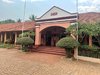
We only had a couple of hours drive once we finally left Murchison Falls National Park, and only saw animals and birds we had seen before. Our destination was a bit of an indulgence, the Masindi Hotel in Masindi. This colonial-era hotel once housed Ernest Hemmingway as well as Katharine Hepburn and Humphry Bogart while filming "The Africa Queen". It still retains some of it's colonial character, but does not possess any Holyrood luxury.

One new species was observed in the gardens, the straw-coloured fruit bat, so that is Mammal of the Day.
BB.jpg
BC.jpg
 

Attachments

  • BB.jpg
    BB.jpg
    97.8 KB · Views: 28
  • BC.jpg
    BC.jpg
    102.9 KB · Views: 27
Day 11 The Royal Mile.

The Royal Mile is so named because it has an association with the local royal family. There are several stories, so I'm not sure what, but none have anything to do with birding.

It does have a somewhat mystical association with birdwatching, though. To read some reports birds are dripping off trees. To be honest, we found it somewhat difficult. We did have the assistance of a local guide, Raymond, and without him our list would be a lot less impressive. We also birded some open ground (lots of small vegetable patches plus thickets of uncleared scrub and long grasses) before entering the Royal Mile itself.

The Royal Mile is old-growth lowland rainforest, and in that regard quite rare. We saw 47 species, of which 30 were new, and of that 30 all but four were passerines, on top of which we saw three new families. Most species could also be considered "special", certainly there were a number of rarely seen species.

The highlight, especially for Graeme, was the trogon. For years he has wanted to see a member of the Order Trogaifornes (I have seen them in south-east Asia) and goes on about it a lot. He was a very happy man.

Anyway, that makes the narina trogon Bird of the day. For Mammal of the Day I'm choosing the beaded mouse. Not often you see a mouse during the day, and even rarer is being able to make an identification.

I don't have an iPhone photo from the Royal Mile, but here is a photo of Graeme celebrating - something.
graeme nile.jpg
 

Attachments

  • graeme nile.jpg
    graeme nile.jpg
    114.5 KB · Views: 28
Last edited:
Day 11 continued.

The drive from the Royal Mile to Kibane was uneventful, but we did get three notable new additions to the bird list. The black bee-eater in particular was a great get. We stopped at a bridge to check for otters in the stream below. The black bee-eater was sitting on top of a dead tree right in front of us. Could not be easier.

Bird of the Day has to be the Narina Trogon for Graeme. Mammal of the day the Beaded mouse because how often do you see a mouse let alone identify it (House mice excepted)

An African sunset that evening.
Sunset.jpg
 

Attachments

  • Sunset.jpg
    Sunset.jpg
    46.5 KB · Views: 29
Last edited:
Back in post above for days 8, 9, and 10 several images did not come out. I'm trying again:

Jackal
Jackal.jpg

Sam checking for leopards
sam.jpg

Murchison Falls
falls.jpg
 

Attachments

  • Jackal.jpg
    Jackal.jpg
    118.2 KB · Views: 27
  • sam.jpg
    sam.jpg
    156.8 KB · Views: 27
  • falls.jpg
    falls.jpg
    114 KB · Views: 27
Day 12

First day at Kibane (self-proclaimed Primate Capital of the World) we visited Bigodi Wetland. This is a community owned wetland and visitors are charged to enjoy it. Profits are returned to the community. There are also some facilities such as a hall come visitor centre. It is also a base for the training program for female bird guides.

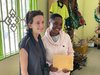
My niece Indigo had raised 300Euro by baking and selling cup cakes. She decided to donate it to the training program. We had a little ceremony where Indi passed the money over to one of the trainees. The money she raised will train three girls, showing that a little money can go a long way in conservation in developing countries.

We then did a bird walk of the swamp with one of the guides. Much of the walk is around the edge of the swamp, which of course is surrounded by farmland, so you get a nice edge effect. We saw 28 species, of which 11 were new, as well as three mammals and one snake.

Bird of the day was the shining blue kingfisher, a stunning bird. Mammal will be the Ugandan red colobus.

We spent the rest of the day at the lodge.

Indigo presenting the money she raised to a trainee.
Indigo.jpg
 

Attachments

  • Indigo.jpg
    Indigo.jpg
    86.7 KB · Views: 28
Day 13 & 15 Kibane National Park

We were at the Kibane National Park for five nights / four days. Day 12 we went to Bigodi Wetland (above), day 13 was pitta day, day 14 was a side trip to Semuliki National Park (next post) and day 15 was primate day. Day 16 was a transfer day to Queen Elizabeth National Park, This itinerary was a little different than planned and I will go into that later.

Weather: Fine as normal, but on three days we had sudden downpours at around 6pm. and lasting about thirty minutes. One even started with hail. Being a little higher in elevation it was a little cooler.

Habitat: Lowland rainforest

Day 13.

The green-breasted pitta attracts a somewhat legendary status amongst birders. Pittas are hard enough even where they are common. This one is has a particular reputation for difficulty and the recommended season is mid-year. In fact we were told after that they had not been seen here for more than two months.

Whenever we walked In a National Park, we are allocates an Uganda Wildlife Authority guide. These guides always wear camouflage fatigues and always carry an AK-47 assault rifle. Somebody suggested they are a paramilitary body and it certainly seems that way. I have also seen heavier weapons, such as light machine guns. They often act as guards, certainly against buffalos and forest elephants but also apparently insurgents, cattle rustlers and the like. Their utility as guides varies considerably, between top rate to useless to hanging 30 or 40 metres back behind the group the whole time.

Our guide, Marika, was excellent, and knew exactly what she was doing. It took about two hours to locate a pitta, then we followed it for another 30 minutes just getting fleeting views. Finally we saw it on a low perch about 10 metres away and in clear view. We only had a couple of minutes before it moved on but everyone got a good look. We climbed the hill back to the vehicle well satisfied.

Only two other birds were seen during this time, a pair of narita trogons.

Day 15.

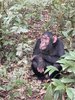
Today we took the chimpanzee trek. We were warned it might take hours to find chimps, and we might only find only one. In fact we found our first chimp after only thirty minutes. It was an adult male, lounging on the path and not at all concerned about the crowd of tourists taking their pictures. Within minutes we were with a troop, and following them as they moved slowly through the bush. We saw all ages, 10 or more animals and were very close to them, effectively mixed in with the group. While we could not approach close to them, they could come close to us. Twice I was within a hair's breadth from one. It was a fantastic experience and in many ways better than the gorilla experience we had later.

One thing we noted after the trek was that the Ugandan Wildlife Authority have the cleanest public toilets anywhere. This has been confirmed by subsequent observation. A sign of how important wildlife tourism is to Uganda.

That evening we did a night drive and picked up two pottos, two different species of galago and several bats. A great end to the day.

Birding was conducted around these activities, and as we departed on day 16. We sighted 70 species of which 21were new.

Your correspondent, contemplating the next blog.
chimp.jpg
 

Attachments

  • chimp.jpg
    chimp.jpg
    153.9 KB · Views: 28
and picked up two pottos, .

Very jealous!

And while the gorillas were always the highlight for me, the chimps were actually quite a surprise. I'd be interested to know what Graeme thought of them.

:p

Hix
 
Very jealous!

And while the gorillas were always the highlight for me, the chimps were actually quite a surprise. I'd be interested to know what Graeme thought of them.

:p

Hix
Graeme says:

Hi Hickson,
Having seen both species within a couple of days I am reinforced in my view that Chimps were more the ape highlight for me than gorillas. A family group of chimps was encountered and they exhibited a wide variety of behaviours including feeding behaviours (with me noting and photographing what they were eating etc etc) plus a wide range of vocalisations. Against the gorilla family 1.4.0 which had already eaten in the treetops and were at ground level lounging around allogrooming..well the females to the male and to each other. There was an impressive chest thumping tree bashing display from the silverback directed to wards the females...reinforcing who is boss with the females acting suitably impressed ( but it could have been a redirected repsonse to all of us gawking at them more or less saying - ok shows over. Both species impressive but chimps get the award in my view. Best regards G.
 
Day 13 & 15 Kibane National Park

We were at the Kibane National Park for five nights / four days. Day 12 we went to Bigodi Wetland (above), day 13 was pitta day, day 14 was a side trip to Semuliki National Park (next post) and day 15 was primate day. Day 16 was a transfer day to Queen Elizabeth National Park, This itinerary was a little different than planned and I will go into that later.

Weather: Fine as normal, but on three days we had sudden downpours at around 6pm. and lasting about thirty minutes. One even started with hail. Being a little higher in elevation it was a little cooler.

Habitat: Lowland rainforest

Day 13.

The green-breasted pitta attracts a somewhat legendary status amongst birders. Pittas are hard enough even where they are common. This one is has a particular reputation for difficulty and the recommended season is mid-year. In fact we were told after that they had not been seen here for more than two months.

Whenever we walked In a National Park, we are allocates an Uganda Wildlife Authority guide. These guides always wear camouflage fatigues and always carry an AK-47 assault rifle. Somebody suggested they are a paramilitary body and it certainly seems that way. I have also seen heavier weapons, such as light machine guns. They often act as guards, certainly against buffalos and forest elephants but also apparently insurgents, cattle rustlers and the like. Their utility as guides varies considerably, between top rate to useless to hanging 30 or 40 metres back behind the group the whole time.

Our guide, Marika, was excellent, and knew exactly what she was doing. It took about two hours to locate a pitta, then we followed it for another 30 minutes just getting fleeting views. Finally we saw it on a low perch about 10 metres away and in clear view. We only had a couple of minutes before it moved on but everyone got a good look. We climbed the hill back to the vehicle well satisfied.

Only two other birds were seen during this time, a pair of narita trogons.

Day 15.

Today we took the chimpanzee trek. We were warned it might take hours to find chimps, and we might only find only one. In fact we found our first chimp after only thirty minutes. It was an adult male, lounging on the path and not at all concerned about the crowd of tourists taking their pictures. Within minutes we were with a troop, and following them as they moved slowly through the bush. We saw all ages, 10 or more animals and were very close to them, effectively mixed in with the group. While we could not approach close to them, they could come close to us. Twice I was within a hair's breadth from one. It was a fantastic experience and in many ways better than the gorilla experience we had later.

One thing we noted after the trek was that the Ugandan Wildlife Authority have the cleanest public toilets anywhere. This has been confirmed by subsequent observation. A sign of how important wildlife tourism is to Uganda.

That evening we did a night drive and picked up two pottos, two different species of galago and several bats. A great end to the day.

Birding was conducted around these activities, and as we departed on day 16. We sighted 70 species of which 21were new.

Your correspondent, contemplating the next blog.
View attachment 606908
Needless to say the Mammal of the Stop was the chimpanzee and the bird was the green-breasted pitta.
 
Graeme says:

Hi Hickson,
Having seen both species within a couple of days I am reinforced in my view that Chimps were more the ape highlight for me than gorillas. A family group of chimps was encountered and they exhibited a wide variety of behaviours including feeding behaviours (with me noting and photographing what they were eating etc etc) plus a wide range of vocalisations. Against the gorilla family 1.4.0 which had already eaten in the treetops and were at ground level lounging around allogrooming..well the females to the male and to each other. There was an impressive chest thumping tree bashing display from the silverback directed to wards the females...reinforcing who is boss with the females acting suitably impressed ( but it could have been a redirected repsonse to all of us gawking at them more or less saying - ok shows over. Both species impressive but chimps get the award in my view. Best regards G.

Thanks MRJ. If you could pass on to Graeme for me:

The gorillas were always going to be the highlight for me simply because I've always preferred them over chimps. And the gorillas behaved exactly as I expected them to - quite sedately. But the chimps surprised me because, over the entire 2 hours we were with them the only vocalisation I heard was a fluffbum squealing because he couldn't have something he wanted. And the others ignored all ignored him. I know chimps in captivity have altered behaviours due to the confines and stress levels etc., but the chimps I walked with were very quiet and well-behaved - I had expected to at least see or hear somebody screaming or running wild annoying the others, especially in the group of forty I saw. But they didn't, and that made an impression.

Glad you're enjoying yourself!

:p

Hickson
 
Thanks MRJ. If you could pass on to Graeme for me:

The gorillas were always going to be the highlight for me simply because I've always preferred them over chimps. And the gorillas behaved exactly as I expected them to - quite sedately. But the chimps surprised me because, over the entire 2 hours we were with them the only vocalisation I heard was a fluffbum squealing because he couldn't have something he wanted. And the others ignored all ignored him. I know chimps in captivity have altered behaviours due to the confines and stress levels etc., but the chimps I walked with were very quiet and well-behaved - I had expected to at least see or hear somebody screaming or running wild annoying the others, especially in the group of forty I saw. But they didn't, and that made an impression.

Glad you're enjoying yourself!

:p

Hickson
Two hours, how lucky! We were only allowed one hour.

I will be posting a couple of short videos after I get home, including the chimps vocalizing.
 
Two hours, how lucky! We were only allowed one hour.
We were told only one hour too. It had been raining he night before and the chimps apparently prefer to stay in the treetops because it's all wet on the ground, and when we found them that's where they were, which made watching them difficult and photographing them even harder. But as we were about to go they started dropping down to the ground so our guides let us stay with them for longer.

:p

Hix
 
Day 14 - Semuliki National Park

We had a serious change in schedule here. We were meant to spend a full day and two nights. The schedule was changed so that we ended up leaving Kibane at 4 in the morning, arriving at Semulike about 7am. After going though the normal procedures at the park office and picking up a park guide/guard we wend to the Male hot springs around eight. Spending some time there we went to main path around nine. We spent about three hours birding the path, and after lunch returned to the vehicle and drove thrive hours back to Kibane.

The first walk to the hot springs area was to see DeBrazza monkeys, which are in trees till about nine, after which they drop to the ground during the day. We did see them, at quite a distance, over the marsh. But still got reasonable views. There were thermal vents throughout the marshes, so there was steam rising everywhere, creating quite an eerily atmosphere At the end of the walk there was a large pool that was apparently used for bathing, but we saw nobody else there.

.After this we went to the main track used by birders visiting Semuliki. This is a trach that leaves the road and ends at a stream 14km further on. Of course we had no intention of going all the way. We also saw more monkeys and two squirrels. After lunch we went a little further, noticing what appeared to be a Semulike red colobus disappear into a thicket of leaves high up a tree, and then stay there, presumably to escape the sun. After this the forest went really quiet, and we then made our way to the vehicle.

We saw 32 bird species, of which 21 were new for the year. Semuliki is part of the Congo basin, and as such many of the bird species there are not found elsewhere in Uganda. In addition the red colobus looks like being the only Ugandan monkey species I will have not seen. It was very disappointing not having more time there. I still have no explanation as to why the itinerary was changed.
 
Day 16 & 17 - Queen Elizabeth National Park

Habitat: Moist mixed savanna

We left Kibane National Park early in the morning, birding all the way out of the National Park. Once out of the National Park it was a relatively short journey to Queen Elizabeth, with no wildlife of note outside the national parks.

We arrived at our lodge, the Buffalo Safari Lodge, for a late lunch. This is one of the more opulent lodges we stayed at, with swimming pool and large rooms set in the grounds. Meals were taken on the veranda looking out towards the Kazinga Channel, so as we sat down I noticed a waterhole in the middle distance (part of the complex). First noticed was a group of buffalo then I realized there was also a family of giant forest hogs. I was thrilled as this is one species I had hoped to see.

Lunch was served in a manner that reminded me of the Rowen Atkinson scene in Love Actually. Nothing arrived quickly and everything had to be perfectly positioned. Eventually we had to walk out before the fruit was served or miss our boat trip on the Kazinga Channel.

The boat trip was fantastic for getting close to African waterbirds. First off was a huge nesting colony of pied kingfishers. We had the chance to see goliath herons close up and next to other herons. The previous sighting was at some distance with no other birds around , so we had no reference to their immense size. At one point a spotted hyena appeared out of the scrub, saw the boat, turned around and disappeared. My first hyena sighting. The only disappointment was the lack of skimmers. I have seen black skimmers in California but they would have been Graeme's first.

Driving back we saw a couple of giant forest hogs and a slender mongoose cross the road as well as a pin-tailed whydah., of which many were seen the next day. We had a swim on return, the second of the trip. At dinner several small bats circled us and we soon noted they were entering the ceiling lining. We were eating almost under their roost. They were later identified as dwarf freetail bats.

Next day started with a shock. Graeme could not get out of bed or walk. We eventually got him to the dining area and after some food he was able to move around albeit with some pain. We decided to continue with Graeme on painkillers.

We first stopped a a papyrus swamp and fairly easily found a papyrus gonolek. Further along I saw a hyena trotting up the hill. I yelled "hyena" and it turned it's head to look at me, then continued up the hill and over a ridge. We did the usual long-winded check-in and headed off for a game drive. I have to say had I been the average tourist I would have been very disappointed. There was very little to see, A few elephants and buffalo, and a couple of dozen antelope of three species. We continued our trip towards Bohoma through the southern section of the park and things did not improve on the mammal front. I guess it was just not our day.

However it was good for birds. We saw 106 species, of which 18 were new for the year. My favourate and Bird of the Day is the pin-tailed whydah, while the Mammal of the Day is the spotted hyena.

When we got to Bohema and after checking into our accommodation, Ride 4 Woman, Graeme went to the hospital a couple of doors down for a checkup. Fortunately it turned out that Graeme was not in immediate danger of dying. At dinner we had a strategy meeting. Graeme would go back to hospital for further tests the next day as requested. William and Sam would wait in case Graeme needed transport or other local support. Indigo would do some schoolwork she needed to do. And I would do the planned bird walk with a local guide, there not being anything useful I could do otherwise.

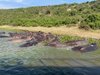
Hippos on the Kazinga Channel
Hippos.jpg
 

Attachments

  • Hippos.jpg
    Hippos.jpg
    104.9 KB · Views: 29
Back
Top