Tierpark Hellabrunn Munich zoo news

Observations from today’s visit:

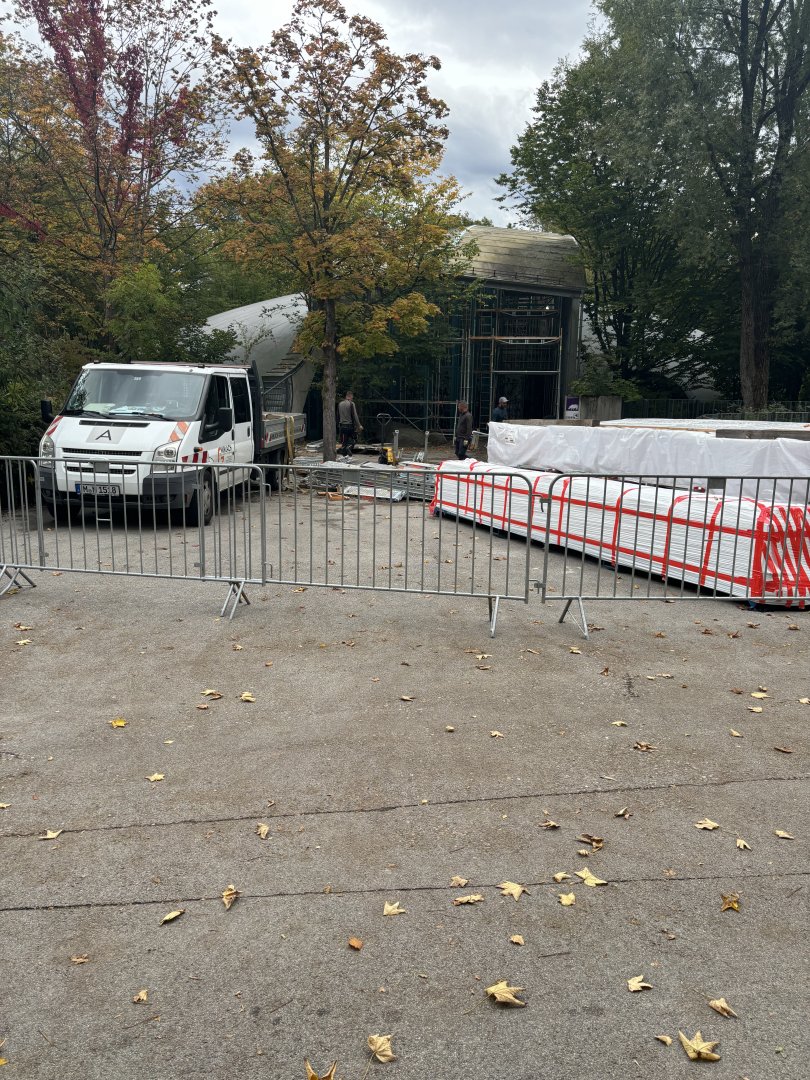
There was construction in the former markhor enclosure. There was a van parked next to the enclosure and I saw workers inside the barn.

While the visitor path next to the takin enclosure was still closed the animals were finally on display again.

The Bulgarian longhair goat from the farm area petting area were gone. Next to the enclosure was a smaller version of a sign I previously saw by the takin enclosure explaining soil hardening as a result of hoof compaction. Therefore the park must replenish the soil as they did with the zebra enclosure and takins. Speaking of goats I did not see any in the former chamois enclosure either.

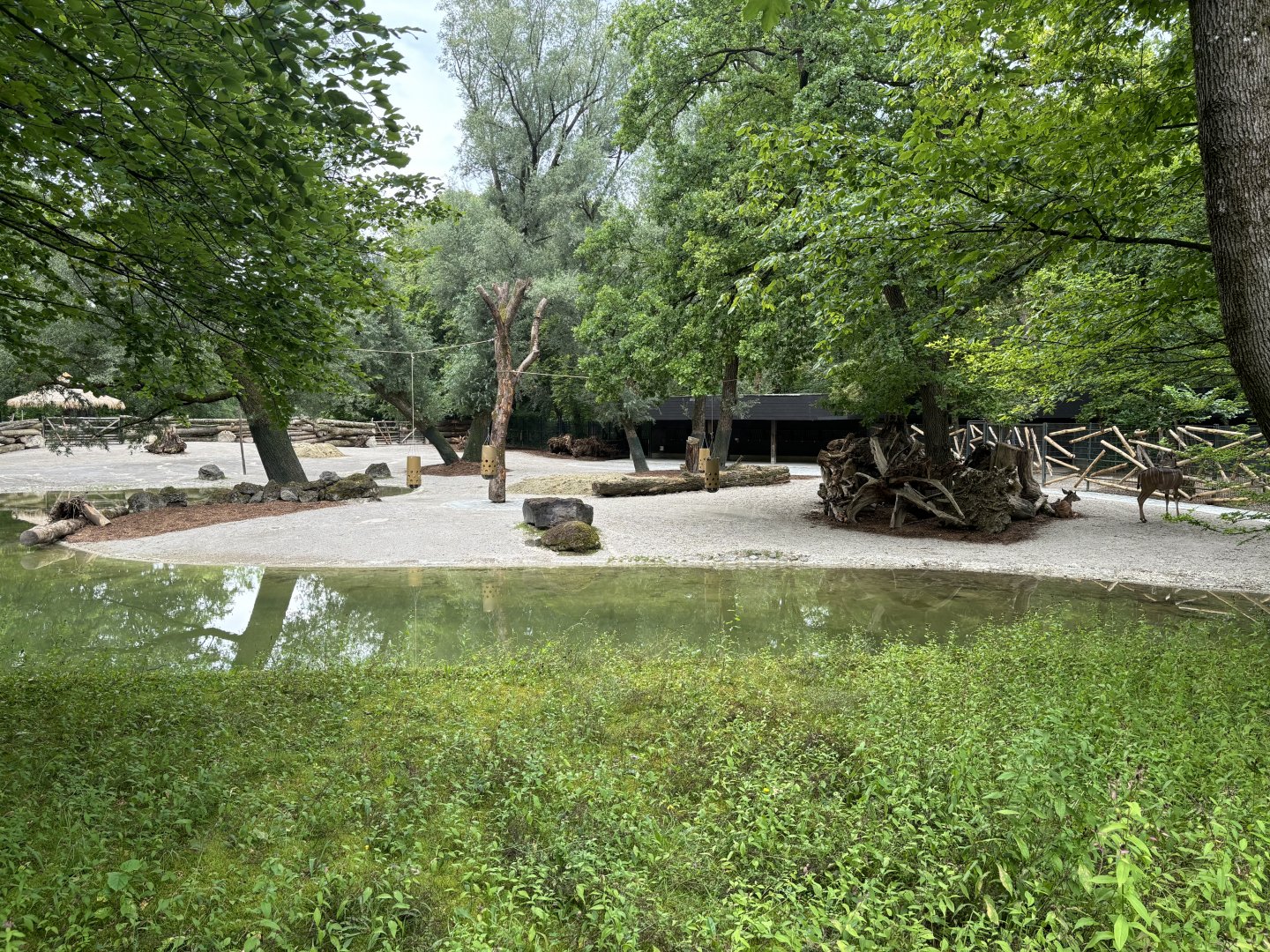
Construction/soil replenishment has started on the savanna enclosure adjacent to the zebra enclosure. The kudus, elands and ostriches were kept at a small area between the construction and the mhorr gazelle enclosure.

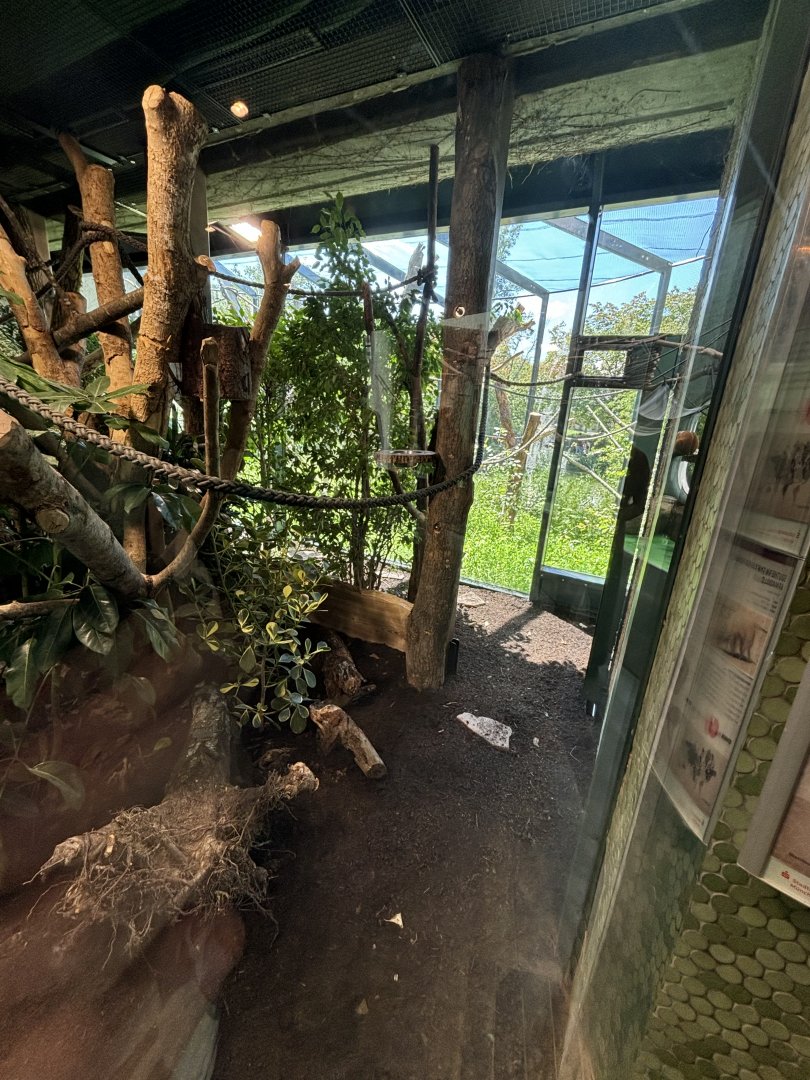
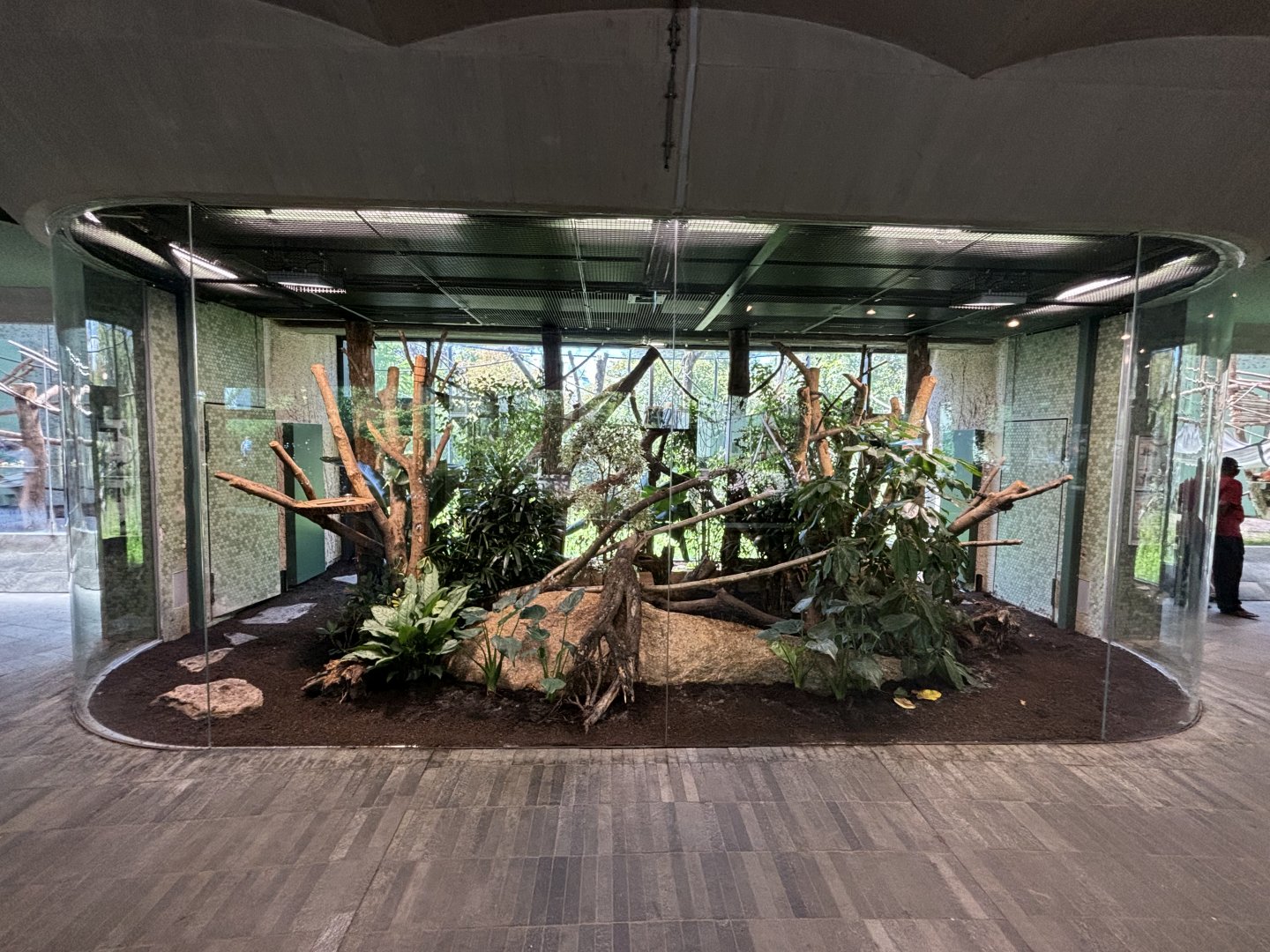
The cottontop enclosure seems to be progressing well. I did notice what seems to be a sliding door on the bottom of the wall separating the indoor and outdoor enclosure. Since the tamarins already have a door on the top half of the door, I take it there might be another animal cohabitating with the tamarins. The hole seems a bit small for agoutis so I argue the tamarins might get mixed with a smaller and more compact species (southern three banded armadillo comes to mind).

On a personal note I saw the lynx kittens which were adorable.
 
Updates from yesterday’s visit:

I saw at least one greater flamingo chick. This chick (along with other that I didn’t see) is the first chick since the zoo got rid of their American and zoomix flamingoes.

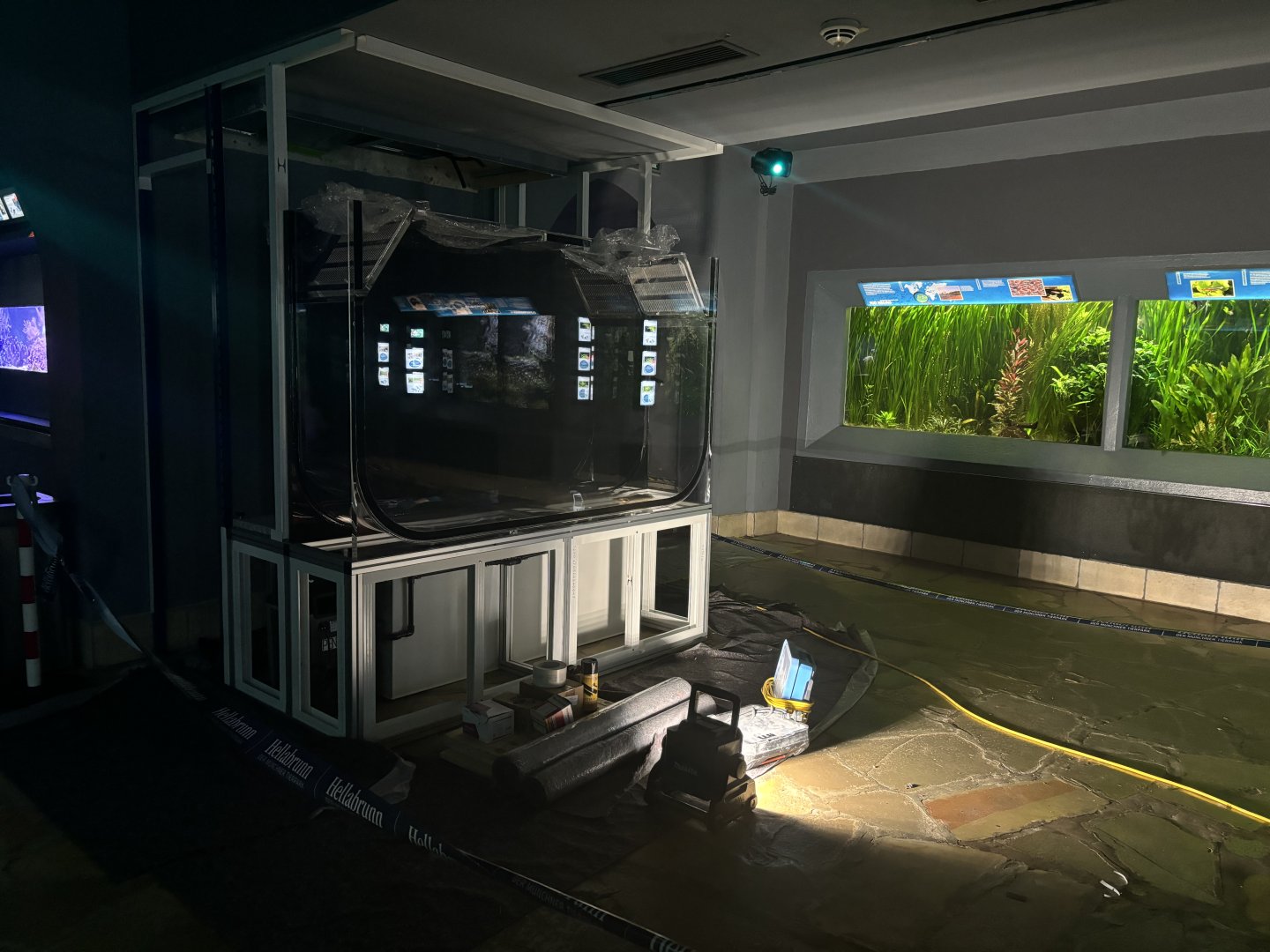
There was a new tank being installed across the Patzcuaro salamanders. Judging by the round corners it’s probably going to be a jellyfish tank. The old jellyfish tank (or the one that has the jellyfish signs was still closed.


Cotton-top enclosure still isn’t finished but both indoor and outdoor were more furnished from what I remember from my last visit. The most significant thing however was that there was another pair of signs added next to the enclosure, confirming my belief that this will be a mixed species enclosure.

The zoo has also started to renovate the Indian savanna enclosure, thus making the blackbucks off display. As previously mentioned the nilgai and chital were in the kiang enclosure.

There seems to be some minute new furnishings in the leaf-cutter ant enclosure but I only saw a small handful of ants which seemed a bit sluggish.

Work is still going on in the eland+kudu enclosure, antarctic penguin enclosure, and of course the Dschungelwelt.
 
Reposting this post because I previously used the wrong image.

Just got out of the zoo here are some updates:

The eland+kudu+ostrich section of the savanna enclosure seems to be done with the kudus given full access to the area. However I did not see any elands and the ostriches were in with the paradise cranes and mhorr gazelles.


The zoo did announce this on its socials before my visit but the total number of flamingo chicks this year is three. All three chicks were a sight to see. There weren’t any other nesting adults so I guess there won’t be any more chicks coming this year.

River trout fries were on display in the fish hatchery.

I saw the ibis chicks/fledglings for the first time in the aviary. I don’t really visit the aviary as often so I might be bit delayed with this update.

There seem to be two new Colombian black spider monkeys in the zoo’s troop, increasing the troop size from three (1.2) individuals in the start of the year to five individuals. I didn’t see any keepers so I did not ask anything about the sex ratio of the new arrivals.

The tank that was being built in the aquarium seems to have stopped with the tank and the stands being wrapped around.

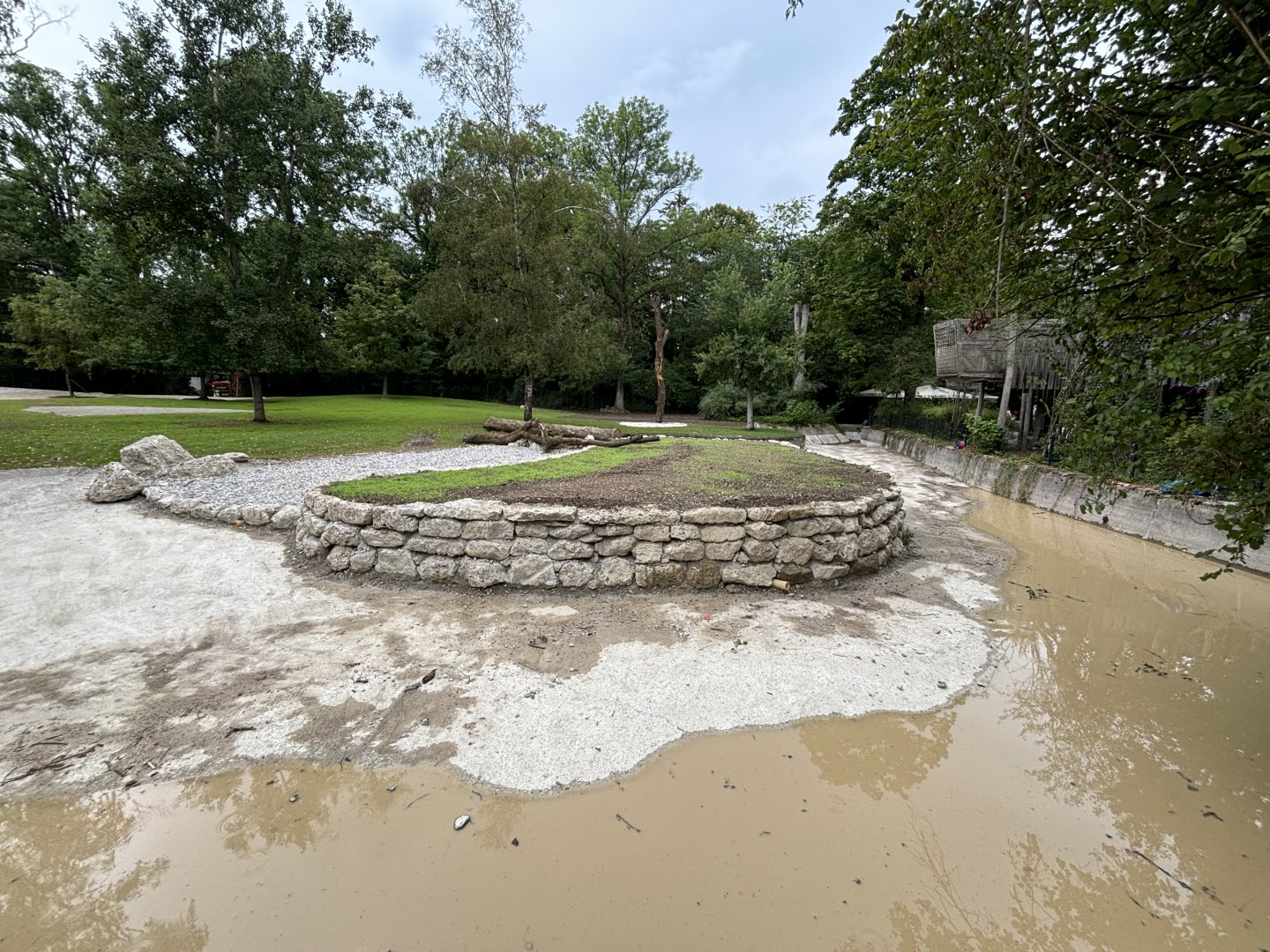
The renovation of the Asian ungulate enclosure goes on with the concrete cliff/wall being swapped with cobblestone and a strand of pebbles is added similar to the one in the takin enclosure. No other details have caught my eye.


The mouse house wasn’t as full as its usual self. Food was placed but the enclosure seemed very empty.

The cotton top tamarin exhibit antarctic penguin enclosure renovations still aren’t complete. I am under the impression that the zoo chooses to focus on renovating outdoor enclosures over indoor enclosures so the former can be completed while the weather is at its best (even with the occasional rain here in Munich)
 
Tierpark Hellabrunn has become the next zoo with a first breeding of b&r sengi (after Frankfurt, Cologne & Basel which also bred successfully the past months) , one young is being raised currently. The pair in Munich came from Leipzig.

Im Urwaldhaus gibt es Nachwuchs bei den Rotschulter-Rüsselhündchen Die Waage hats verraten. Nach einer plötzlichen und ungewöhnlichen... | By Tierpark HellabrunnFacebook
You missed Biotropica who breed them since 2019 :)

Biotropica : un bébé musaraigne-éléphant est né dans ce zoo de Normandie
 
We have gone from 5 to 15 holders of this species throughout Europe since 2020, which is very impressive to say the least. Hopefully it isn’t long before this species makes it to the UK! But I cannot help but wonder if there is enough gene pool variety for this current European population to be truly sustainable, or if new imports are needed?
 
I decided to visit the zoo this week to see the renovated enclosure and the armadillos. Unfortunately I did not see the armadillos. They were either in their nest box or behind the long plank that is in the middle of the in the enclosure. The armadillos definitely weren’t outside with the lower door being closed. On the other hand, I did see the tamarins. The tiny simians were really active switching between the indoor and outdoor enclosures. They were also visible in their new outdoor enclosure albeit sometimes they got lost in the dense undergrowth of the enclosure.
After months of being off display again, the round-eared sengi was back on display again. Personally speaking, however, the enclosure is very small for the sengi(s) and it would be better if the zoo combined this enclosure with the uromastyx and give the uromastyx more space. Speaking of enclosures that have remained empty for months the panther chameleon exhibit is still empty. The board signs are still up so I speculate that the zoo still plans to keep them.

Unfortunately not only did I not see a new flamingo chick, but also I was only able to see two chicks instead of three.

Lastly the zebra and kudu section of the savanna were merged (the gates on the walls were open). I still didn’t see any elands. In fact as I write this post I looked up the zoo’s website and it seems like the elands have been delisted from the website.
 
I was feeling bummed out so I visited the zoo today. There has been quite the difference since I last visited in the beginning of the month:

The Asian Ungulate enclosure seems complete at this point. However it seemed to be unoccupied. The enclosure is connected to the muntjac island with the gates being open. The emptiness could be explained with the construction of a visitor viewing deck on the side facing the rhinoceros.

Speaking of the rhinoceroses, the rhinoceros house was closed to visitors with the entrance of the building going through some repair or make over. That didn’t frighten the warty pigs nor the rhinoceros.


On my visit in the first of September I saw the markhor enclosure with the markhor sign. At the time I thought it was some sort of error so I did not report it. But today I saw two female markhors in the enclosure. There may or may not be other individuals.

The subantarctic penguin enclosure is filled with water again. And this time there are statues of penguin by the side that faces the zebras. I hope the exhibit will be open before the end of the year.

I did share a picture of the almost complete jellyfish tank from my last visit. There has been some development with the wall perimeter of the tank getting painted over and the barriers between it and the lake Patzcuaro salamander tank being removed*. However I wouldn’t be surprised nor disappointed if the display of jellyfish gets delayed since the aquarium did get flooded due to the heavy rain that has happened this month. This is also why the area around the shark display was taped off.

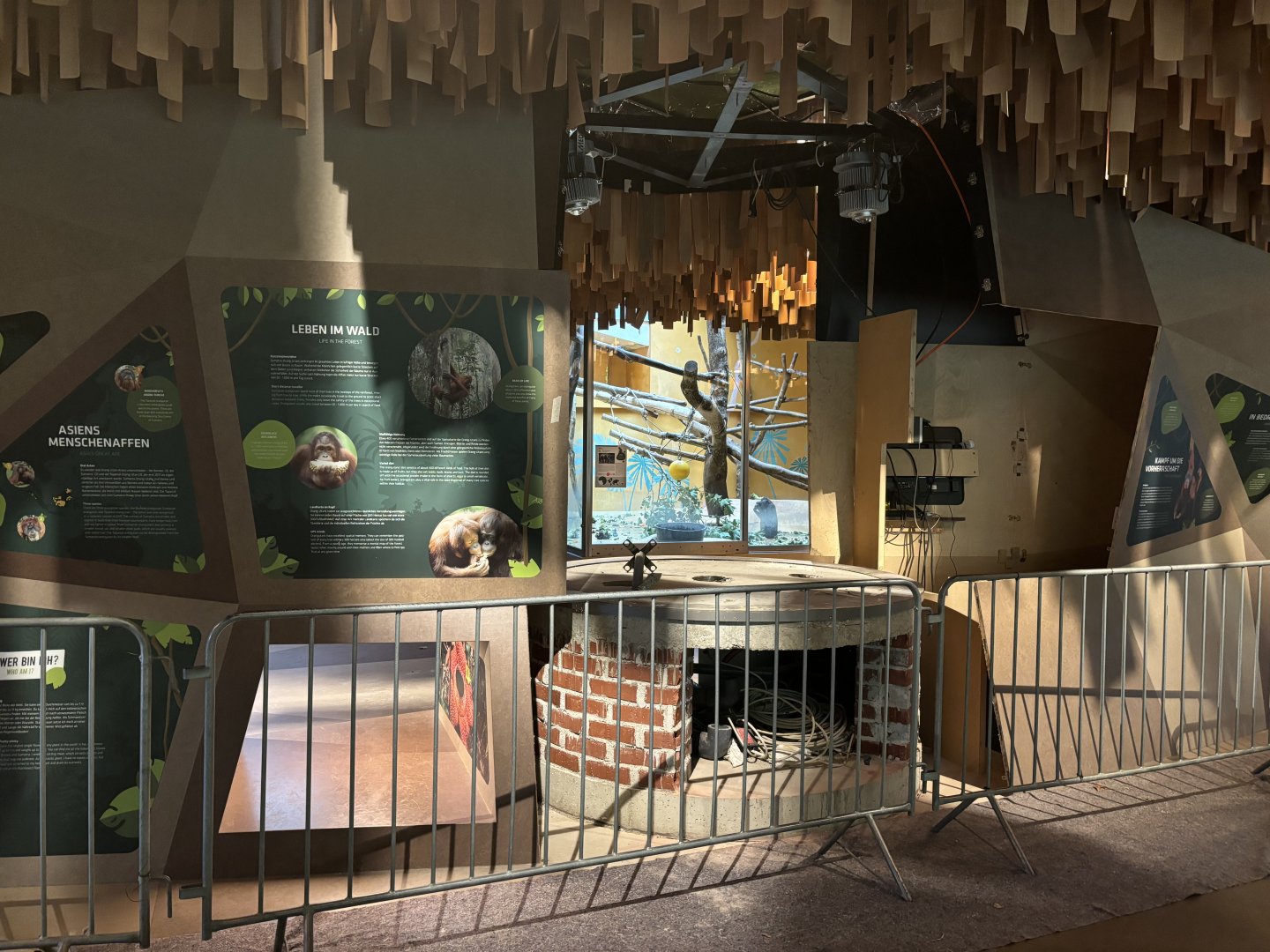
The drill half of the orang-drill house had barriers. The empty tank in the middle of the exhibit (I believe it had kissing gourami in the past) was dismantled. Personally I say good riddance, it was an eyesore to me.


Speaking of empty tanks, signs for the chameleon enclosure (which has been empty, like, since my first visit) and the green tree python (which apparently shared the enclosure with dumpy tree frogs per the information screen) were gone and turned off respectively. Let’s see what the zoo has in plan for these two tanks…

The historic bridge by the Persian fallow deer has been completely renovated. There are no signs construction remaining around the bridge.
 
On my visit in the first of September I saw the markhor enclosure with the markhor sign. At the time I thought it was some sort of error so I did not report it. But today I saw two female markhors in the enclosure. There may or may not be other individuals.
The zoo confirmed the return of the markhors. Id did get the sex of the animals I saw wrong. The zoo has three males.
 
In a Süddeutsche Zeitung article the zoo has hinted the arrival of a “very special” rodent with the name of the region in its name (probably the Bavarian pine vole), an Asian species that will move into the nilgai enclosure. Some of the residents of the Dschungelwelt have already been “ordered” but the zoo hasn’t revealed which species will arrive.
Has the arrival of Bavarian pine vole now been confirmed?

What Asian species will get / take over the nilgai enclosure?
 
Just had a brief visit today. Here are the noteworthy observations:

The section around the shark tank was still closed and the jelly tank seemed to remain as same as before. The razorfish tank next to the horse-shoe crab tank was emptied. It was necessary, in my opinion, for that tank has been very murky in the last few visits. I hope this did not follow any loss.

There was a sign in the construction in the drill-orang house saying that there will be two tropical terrariums replacing the empty tanks.

The blackbucks are finally back on display and the nilgai have moved back with them. There were still parts of the visitor path and an incomplete deck (I don’t know if this deck is designated for keepers or visitors) closed off with a barrier. I did not see a third species in the enclosure. The chital remain in the kiang enclosure keeping it occupied.
 
It was quite chilly today. But that didn’t stop me from visiting the zoo.

The white stork enclosure is now also home to Reeve’s muntjac. The enclosure was signed and I saw one stag.

The former panther chameleon enclosure now has green keel-bellied lizards (Gastropholis prasina) on display. The former green tree python enclosure is still empty.

The shark tank is accessible to the public again. Unfortunately the former filefish tank was still empty and murky. The jellyfish (?) tank still isn’t complete and the tank behind the horseshoe crabs now has a paper sign saying that the enclosure is being prepared for new animals (the tank already had screen signs saying this).

There was red and white barrier tape around the markhor enclosure. Despite that the animals were still on display.

The deck by the blackbuck and nilgai is complete. According to an announcement from the zoo, a nilgai bull has arrived.

Heads up for parents with kids: the suspension bridge between the Polarwelt and Mühlendorf is under repair so it is closed to visitors.

The Antarctic penguin enclosure is finally occupied again. There were eight king penguins and around 12 northern rockhopper penguins. The two species were separated with a wire mesh barrier. Despite the zoo using images of gentoo penguins in its advertising I have not seen any gentoo penguins.
 
35 year old Indian rhinoceros cow Rapti was found dead in the rhinoceros house. Her body was sent to Ludwig Maximillian University for a necropsy.

Rapti was an important individual to the gene pool of Indian rhinoceroses in Europe since she was sent to Munich from Nepal as an orphan. She only has one offspring, bull Puri, who lives in Basel.

Nashorn Rapti ist gestorben - Tierpark Hellabrunn
 
Back
Top