Part 10B - The Living Desert Zoo and Gardens
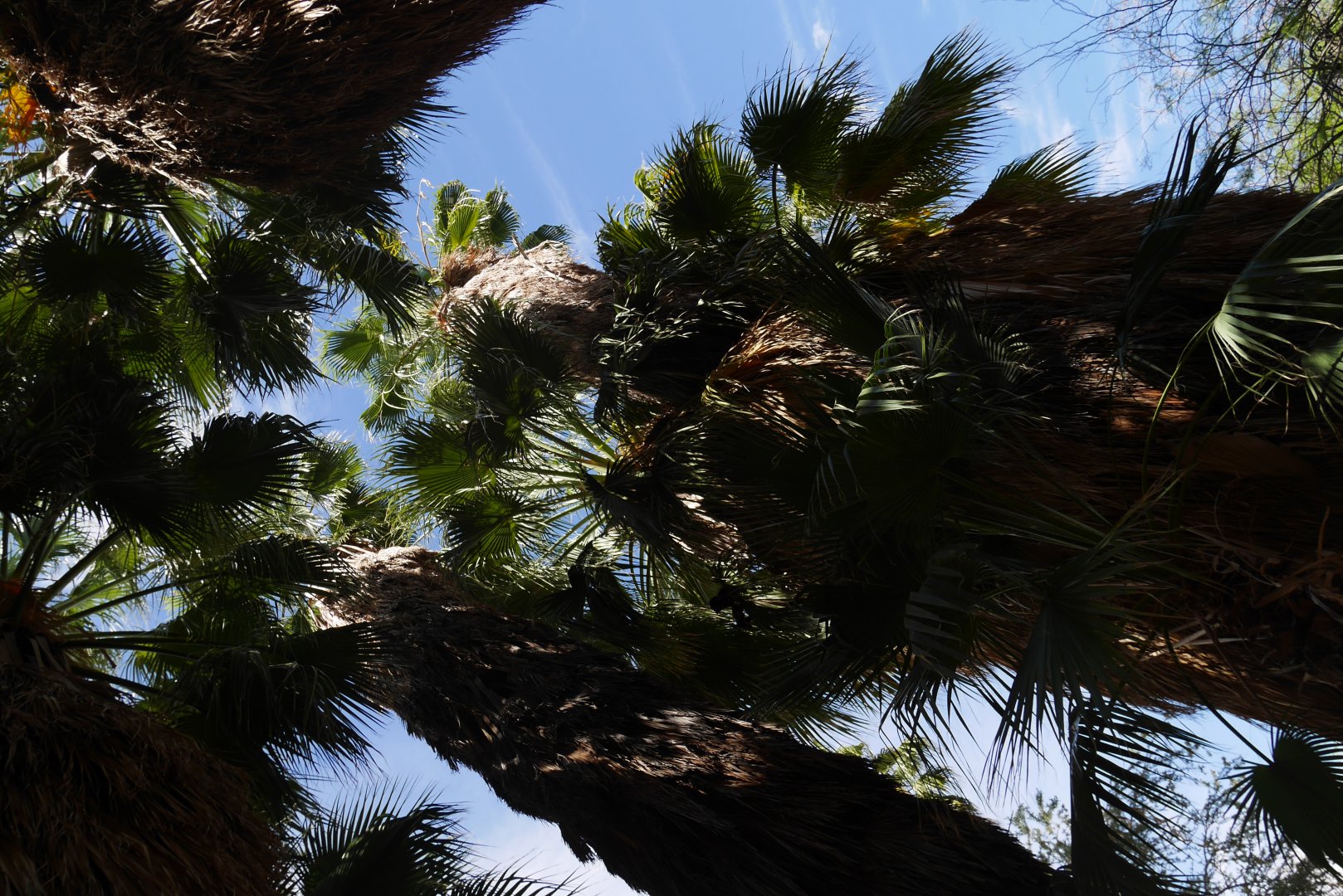
Images of statuesque California fan palms inspired my visit to the Living Desert Zoo and Gardens. The spiky fronds remind me of the dramatically jagged edges of a cartoon explosion. I was weary of the frigid winter in Canada and looking for an antidote. The exotic palms brought up associations of warmth and sunshine. In deserts, palms grow around sources of water and signify oases. Some palms can look artificial to me, but I love how the skirts of dead fronds on the Living Desert’s palms make them look balanced and wild. The Living Desert, with their alluring palm trees, seemed like the perfect gateway for discovering the desert.
Before I even got to the entrance of the Living Desert, I could see California fan palms towering in the distance and it felt like I had arrived. I guzzled water from a fountain inside the Living Desert like I had arrived at an oasis. As appealing as palm trees and fountains are in the desert; the Living Desert has a lot more to offer.
It was difficult for me to travel around the Coachella Valley and the Living Desert appealed to me as an all-in-one-destination. On my US trip I was interested in seeing zoos, gardens, natural history museums, and hiking trails. The Living Desert has all of those and more on one site!
The Living Desert is focused on showcasing the world’s deserts. It’s an independent non-profit organization. The Palm Desert site started as a nature center with trails leading into the wild desert. Animal exhibits and gardens were added. Family-friendly attractions, like a ¾ acre g-model train display, further increased the variety of offerings. The Living Desert Zoo and Gardens has become a significant tourist attraction and community resource in the Coachella Valley.
In 2018, the Living Desert was voted the tenth best zoo in America by USA Today. The Living Desert also has better aggregate ratings on travel sites than many better attended American zoos. Deserts may not seem like a crowd pleaser, but the Living Desert has developed a great reputation by focusing on them.
For now, the developed site is split between African and North American desert sections. An Australian desert section has been envisioned for the future.
The highlight of the
African section is the stunning semi-arid
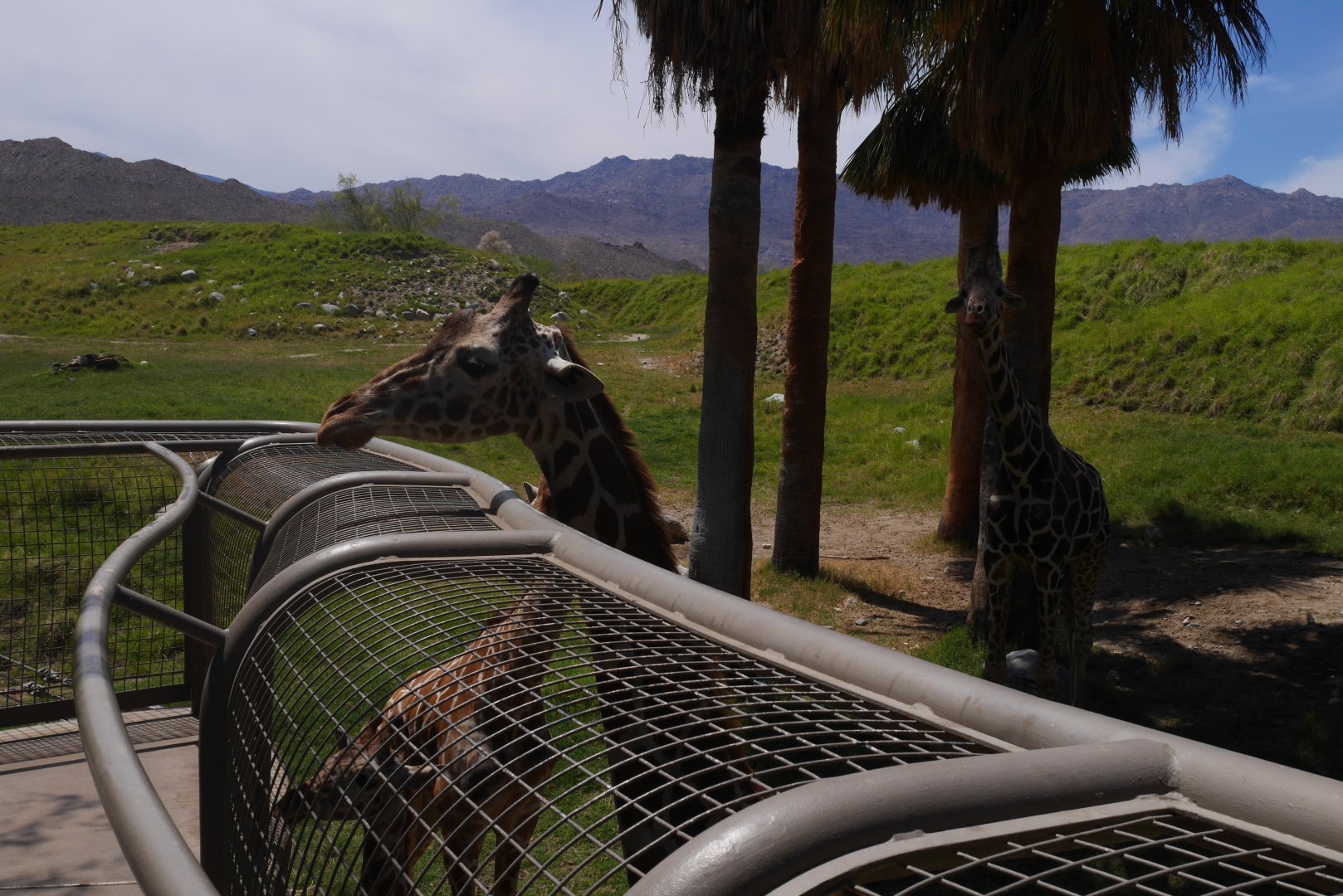
giraffe exhibit. Trees overhang the pathway, and you travel around massive artificial kopje formations that provide a slight sense of enclosure. From the elevated pathway, views unfold of a basin where giraffe, ostrich, guineafowl, and greater kudu antelope congregate. You feel dwarfed by everything, from the lofty giraffes and palm trees, the flowing mounds of grass, to the mountains beyond and the unbroken desert sky.
As striking as those visuals were, the more memorable experience was the chance to feed the giraffes! I remember giggling as the giraffes ate carrots from my hands. They’re such towering animals, but they seem incredibly gentle. The adults can grab the carrots effortlessly with their prehensile lips and tongues, so I fed a mother and her calf simultaneously to make sure they both got a good share.
To feed the giraffes I just had to pay a few dollars and wait in line about five minutes. They even took a bunch of photos with my camera of me feeding the giraffes! The fees for feeding giraffes help support the Living Desert’s giraffe conservation efforts.
The Living Desert supports ecological monitoring of giraffes in Namibia’s deserts and environmental education in Tanzania. Their support of the latter is showcased in a re-created classroom outside the giraffe exhibit.
Another well-designed area in the African section is
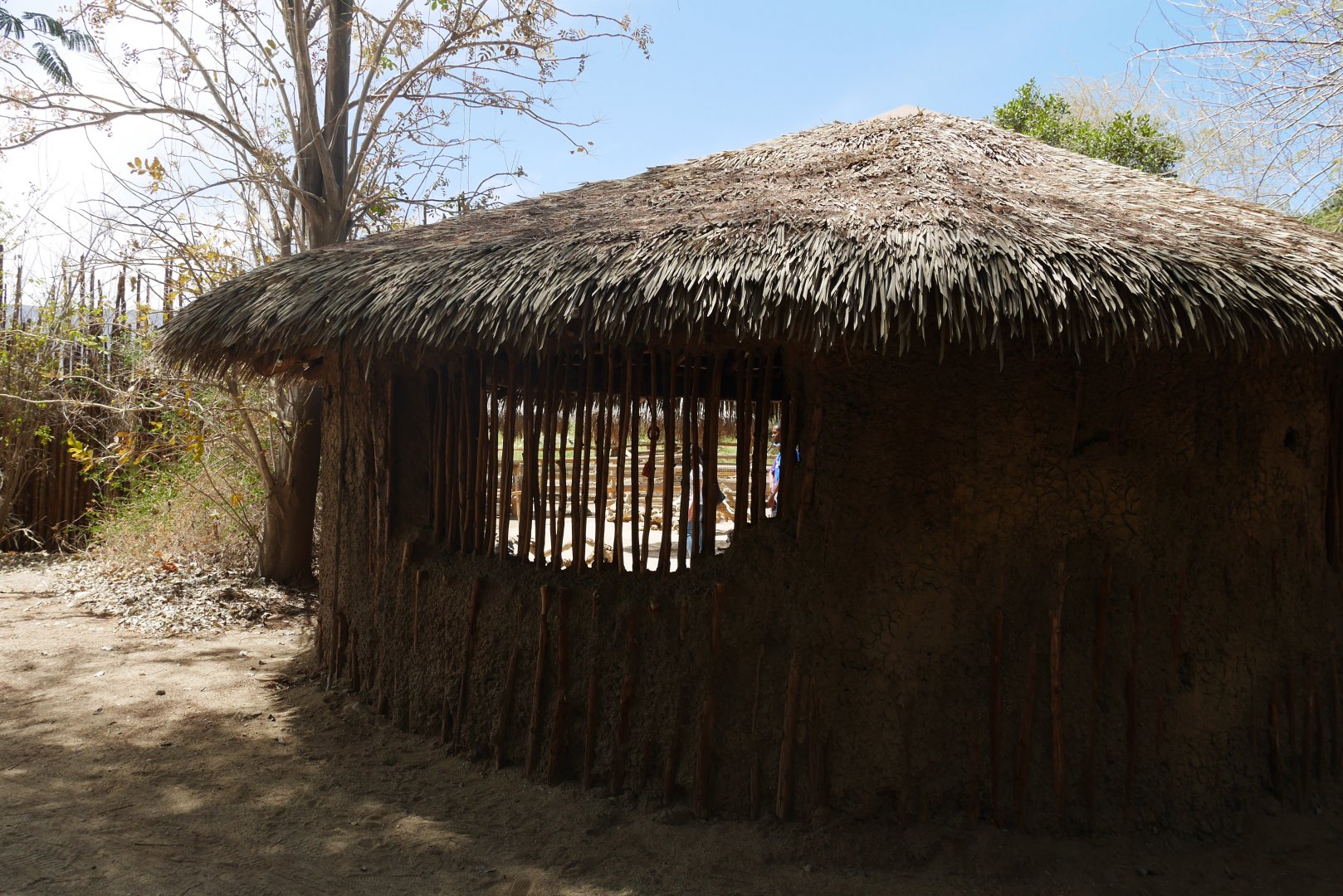
Village WaTuTu. It’s inspired by early 20th century northeast African villages and was built to house visitor services and a petting kraal. Far from looking out of place, it looks more integrated with the natural landscape than the other architecture I had seen in the Coachella Valley. The village has a great human scale and use of materials that makes it feel authentic. I ate lunch there under a beautiful thatched roof.
I couldn’t see any animals from my table, but it felt like they were nearby. Weaver birds and tortoises have exhibits within the village. From the shelter of the village, leopards and striped hyenas can be seen stalking outside. Warthogs live on the periphery of Village WaTuTu. Past the village, cheetah can be found.
The
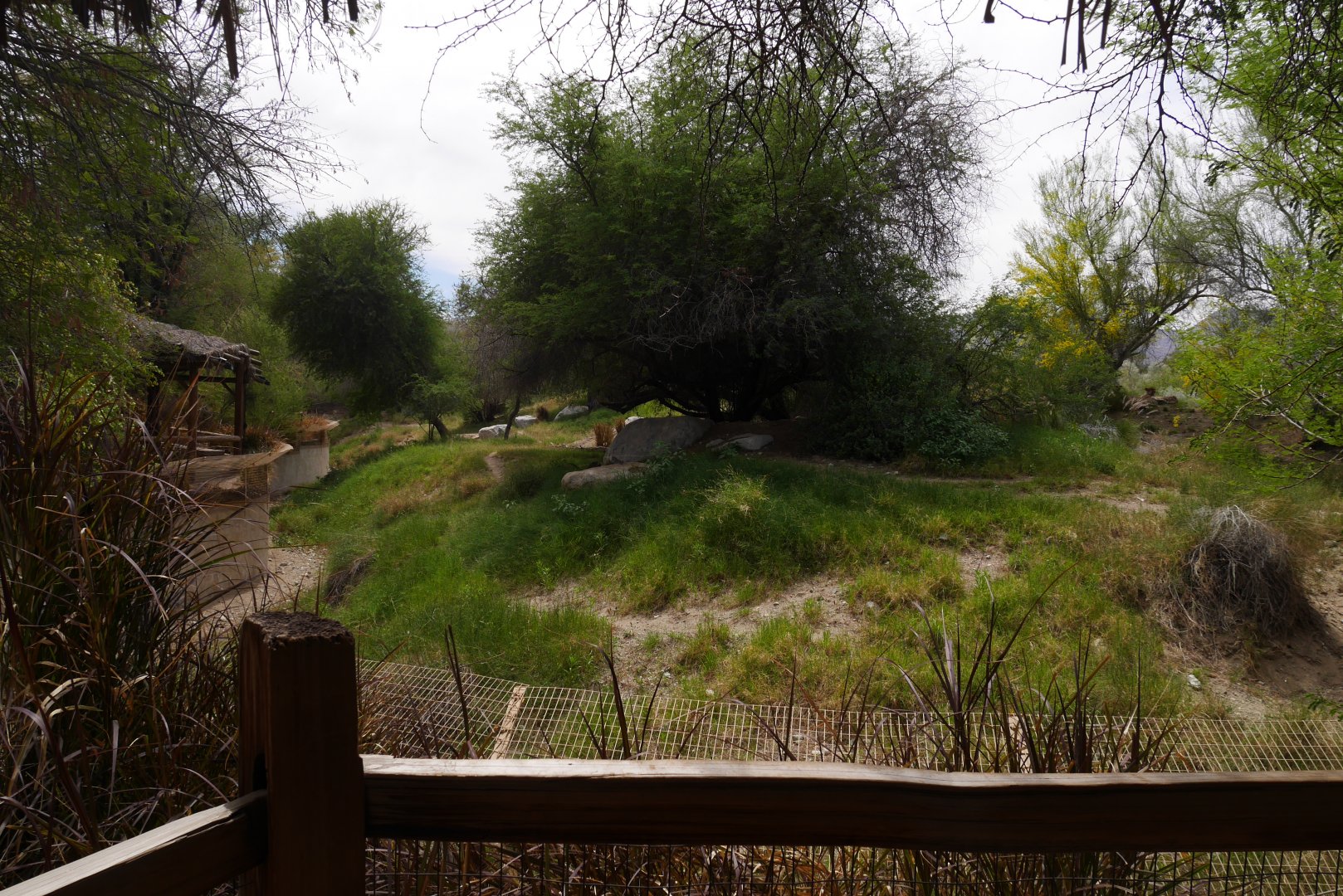
cheetah exhibit is represented graphically in the Living Desert’s logo. The logo features the lithe silhouette of a racing cheetah between jagged mountain lines and the gently curving ground split by a tuft of grass. It’s a great choice for the logo. Running cheetahs represent vitality. Cheetahs spend long periods resting to conserve energy and to recuperate after bursts of activity. Similarly, desert plants rest for much of the year and burst into life after rain. On my spring visit, the cheetahs were lounging, but their scenic ridge exhibit was alive with green desert trees and grasses.
Like many other exhibits at the Living Desert, the cheetah exhibit successfully burrows views of the wider desert landscape and mountains. This gives the exhibits a vast desert scale on a visitor-friendly sized site.
Gardens and an interesting variety of desert animals can also be found in the
African section. Charismatic African painted dogs can be seen up-close through viewing windows. Grevy’s zebra, gazelles, addax, and Arabian oryx (native to the Arabian Peninsula) have large open exhibits that melt into the surrounding desert landscape. Critically Endangered northern bald ibis are the highlights of the aviaries. They look like miniature vultures, but with long, slender curved beaks. Meerkats can be found nearby, as well as rarer small carnivores like black-footed cats and sand cats. Cape porcupines and rock hyrax round out the impressive collection of African desert animals.
African savanna and rainforest exhibits are common features in American zoos, but African desert displays, like those at the Living Desert, are much more rare and unique. The African section of the Living Desert already has an impressive variety of animals and scenic exhibits. Lion, spotted hyena, black rhinoceros, and small animal exhibits will open in fall 2018. That will add more iconic African animals to what is already an impressive African section.
Unlike the African section, which has a loop layout, the
North American section is a bit more difficult to navigate.
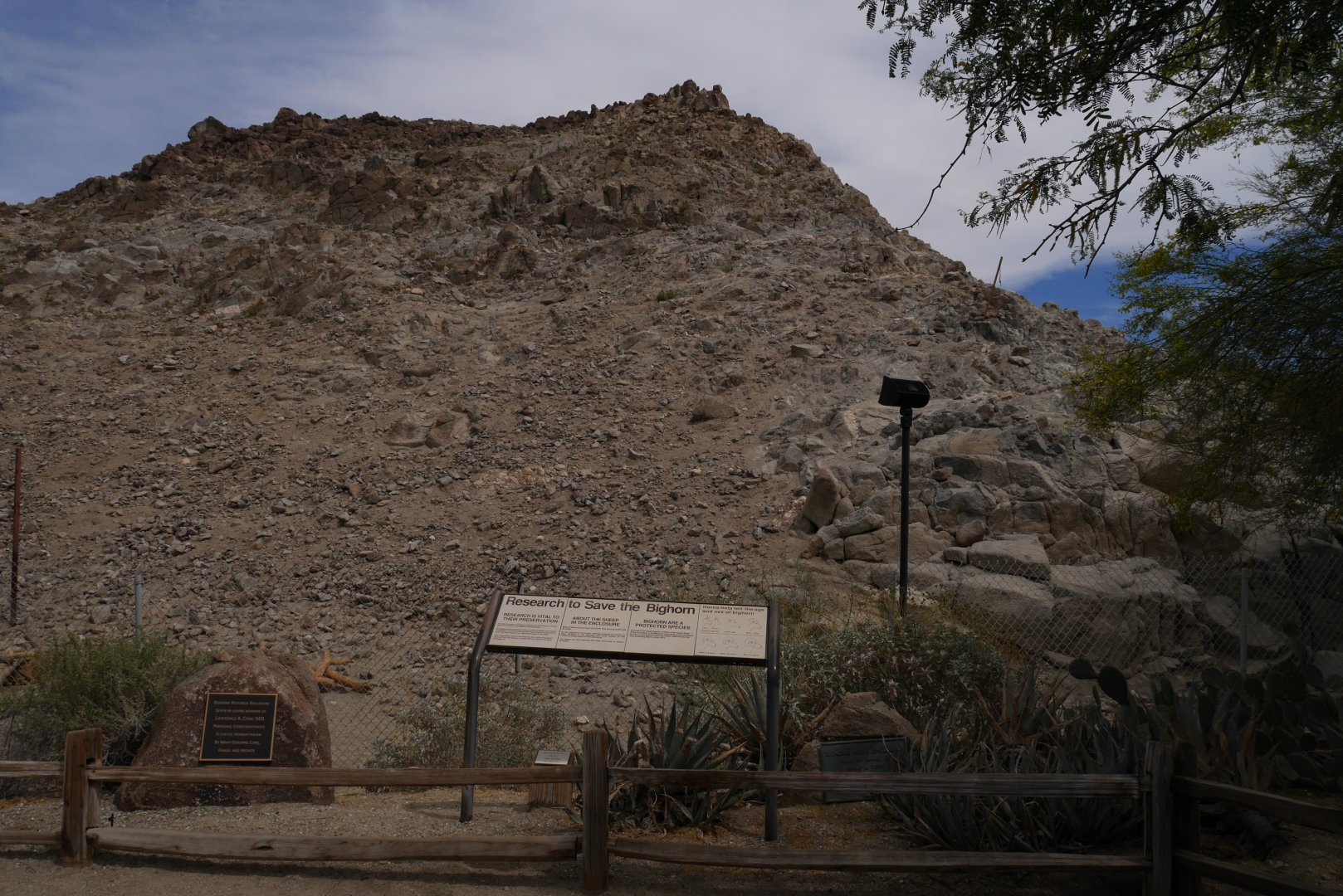
Created on an existing rocky mountain slope jutting out of the landscape, the
Bighorn Mountain is the most prominent exhibit in the North American section. I spotted a few desert bighorn sheep. They’re so well camouflaged that as soon as they stop moving they seem to disappear into the mountainside. Desert bighorn sheep are an endangered subspecies that can be found in the mountains around the Coachella Valley. The exhibit was originally populated by sick lambs caught by California Fish and Game that had nowhere else to go. Since then, sheep born in the exhibit have been reintroduced into the Coachella Valley. The mountainside exhibit at the Living Desert is a striking natural setting well suited to showcase desert bighorn sheep.
The
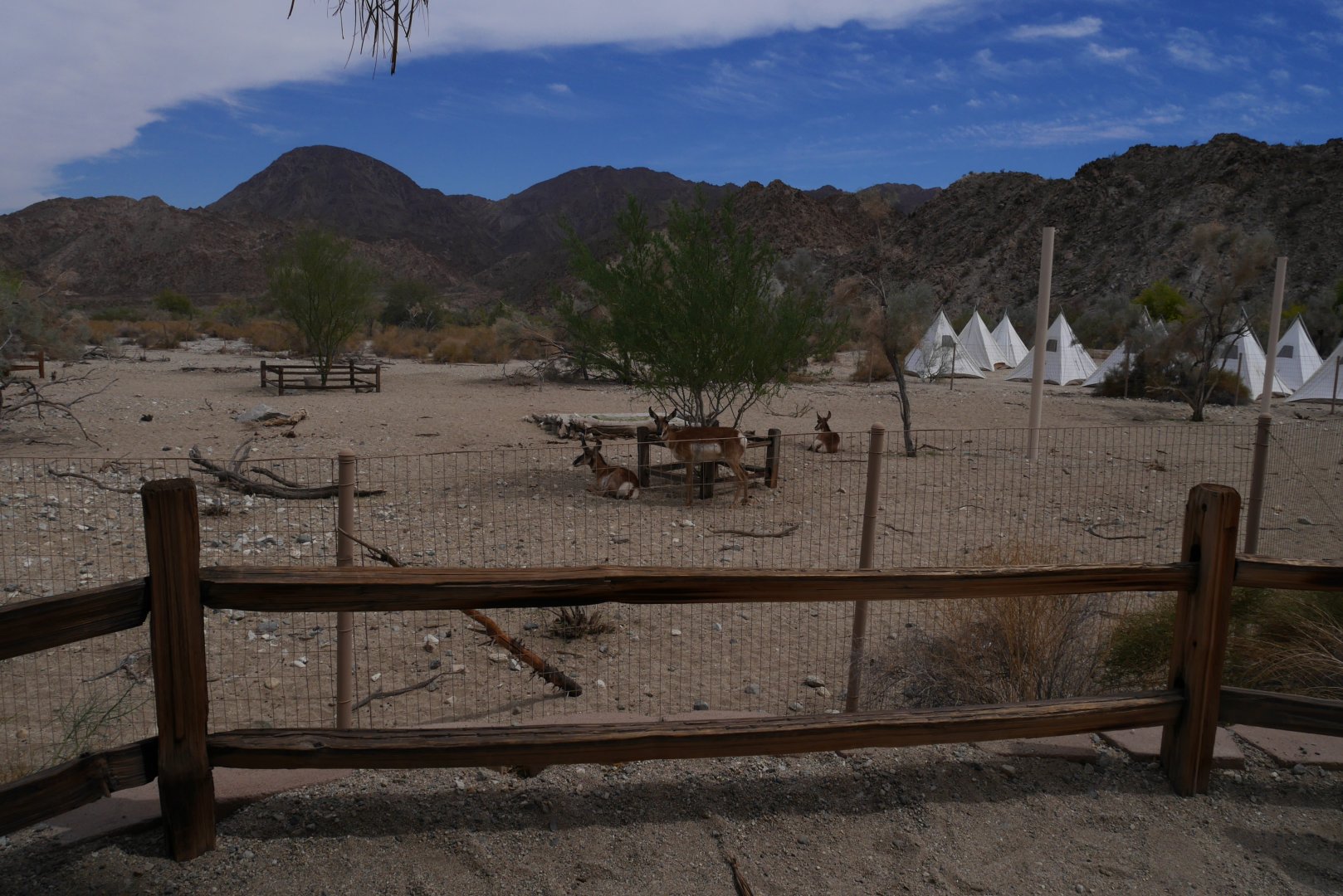
peninsular pronghorn exhibit is on a much flatter expanse of desert land that suits their habitat preference for areas with long sight lines. The exhibit burrows views of the vast landscape beyond. Most of the North American animal exhibits, including those for pronghorn, coati and coyote, are quite scattered. Eagle canyon takes a different approach.
Eagle Canyon takes up just a small part of the Living Desert, but it has a large variety and high density of animal exhibits. It mimics moving through a desert canyon. Canyons bring water from the mountains to parched desert basins and support a wide variety of plants and animals.
Eagle Canyon is the Living Desert’s version of a blockbuster immersive exhibit complex that you might see in much larger American zoos. It was the first major capital project developed at the Living Desert. They did not squander that opportunity. The design quality and attention to detail are excellent. At Eagle Canyon I had a variety of great up-close experiences with a variety of animals in intricately recreated natural habitats.
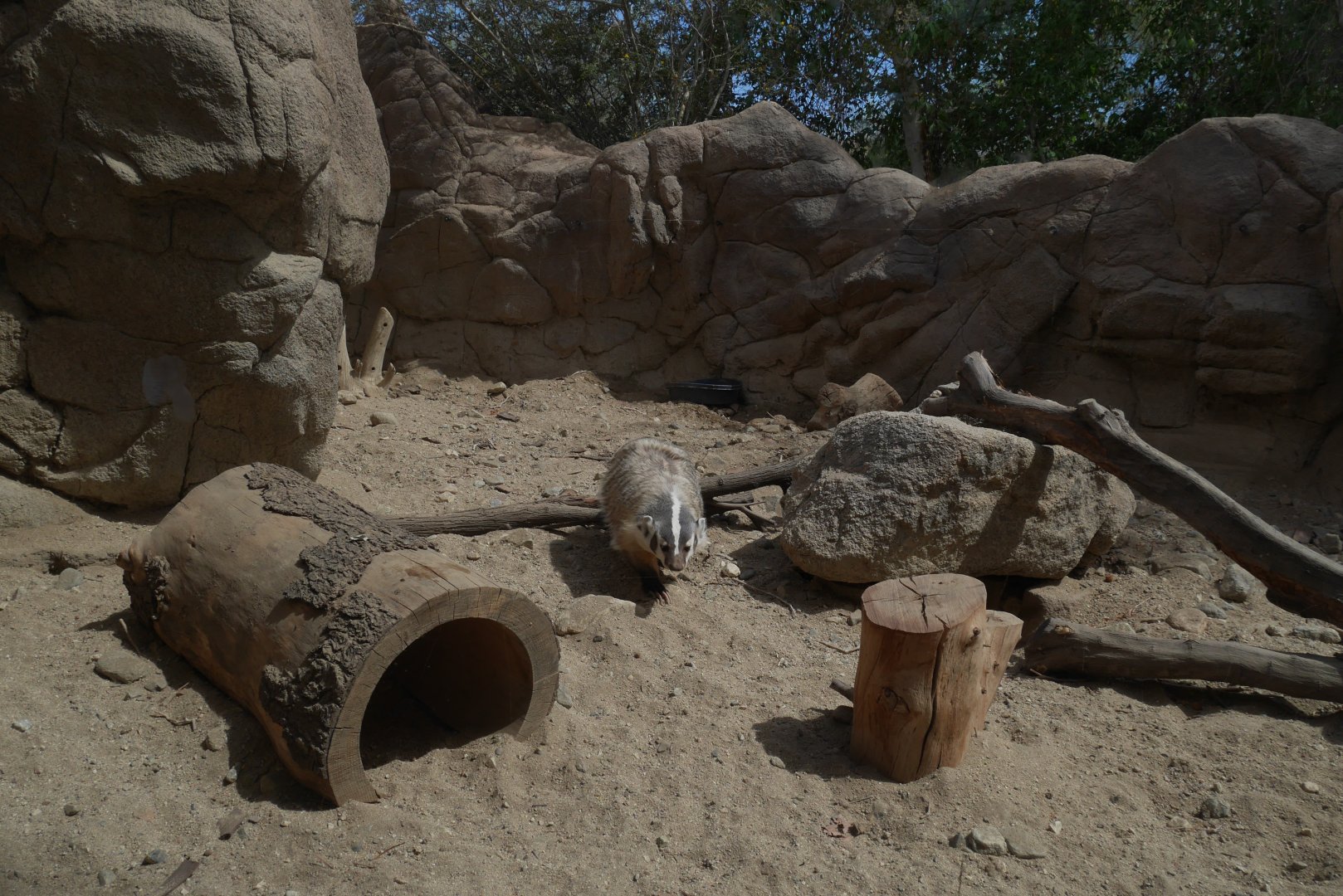
I watched a vigilant bobcat who would temporarily slouch its dignified posture to bite into meat. I was so close, I felt like a dinner guest. An exuberant badger was also captivating. The badger scuttled around, occasionally stopping to dig into the earth and sniff the depression. On a shady canyon ledge, a couple of paws were visible. When I looked closer a glaring cougar’s face materialized from the darkness. I also saw caracal cats and foxes but couldn’t find the Mexican wolves on their ridge.
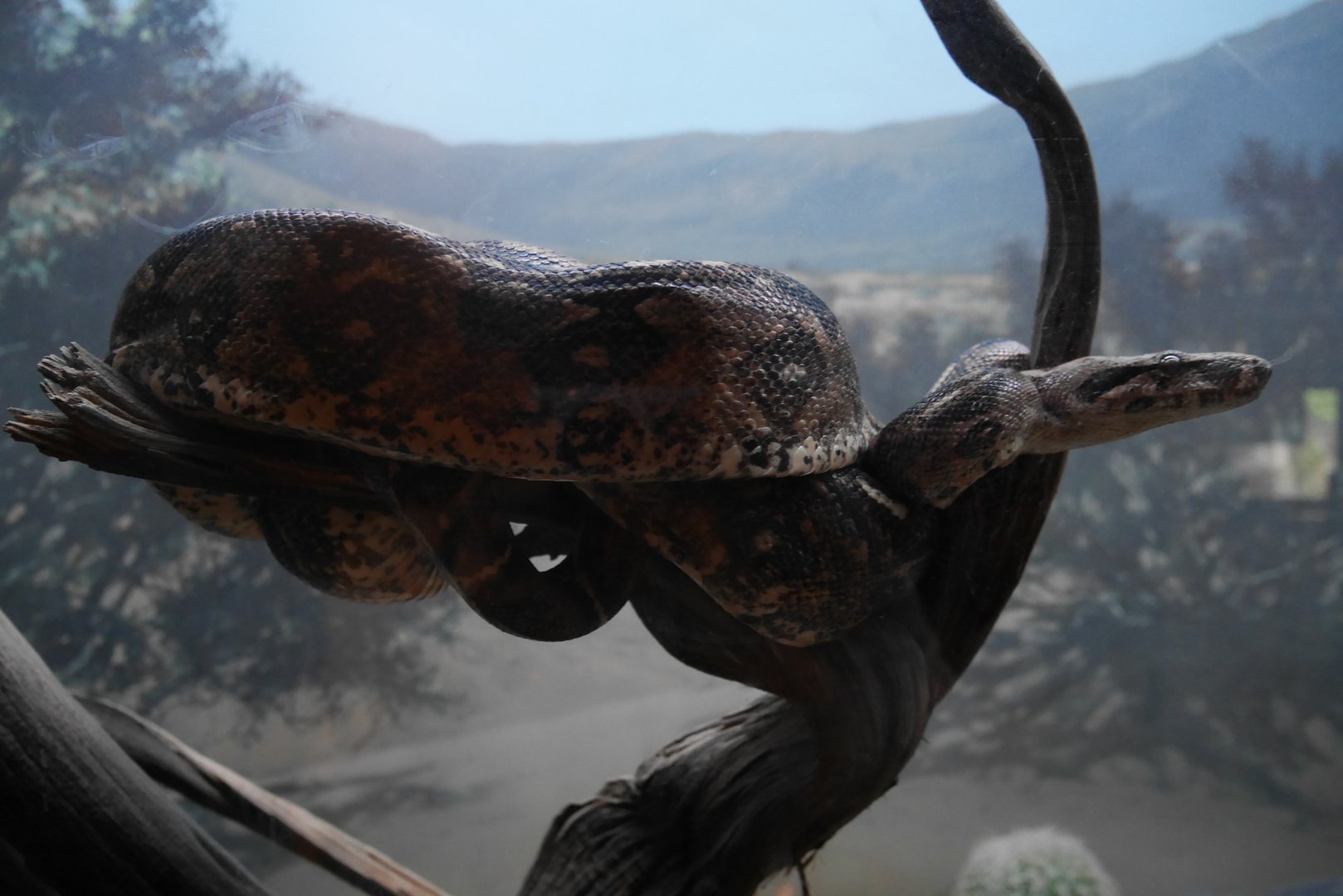
Eagle Canyon has a variety of other animals too. Inside the canyon building, there are exhibits of reptiles and other small animals. Outside, there are exhibits for peccary and eagles and a walkthrough aviary for ducks, doves and egrets.
Part of the allure and experience of Eagle Canyon is the sense of space. Most of the Living Desert has vast open spaces. Trees and simulated canyon walls create a sense of enclosure in Eagle Canyon. The spaces are more intimate than in the open desert. In the confined canyon spaces, the scale decreases and you slow down. It feels cooler and more comfortable. These experiences are heightened because of the contrast with the other spaces encountered at the Living Desert.
The
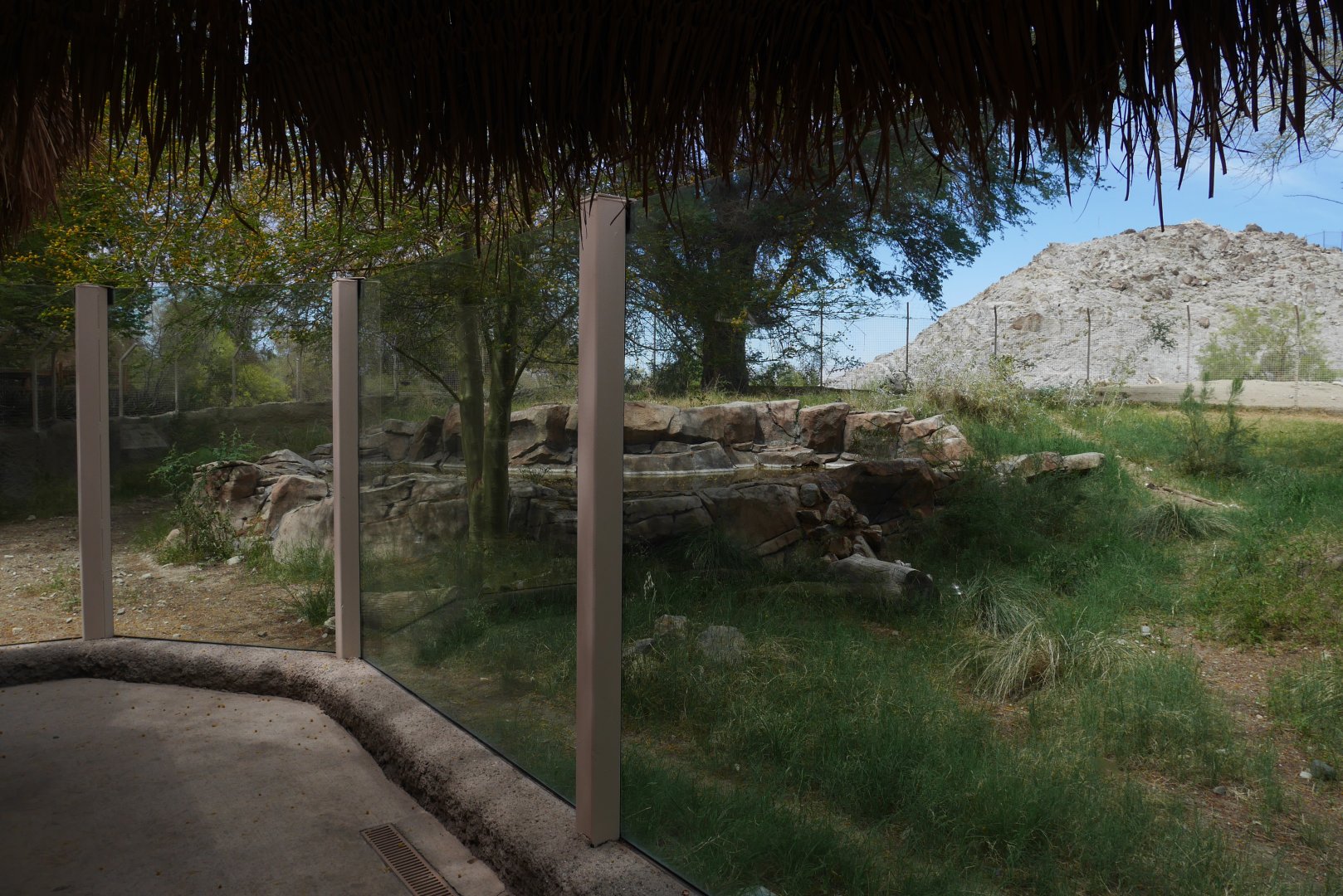
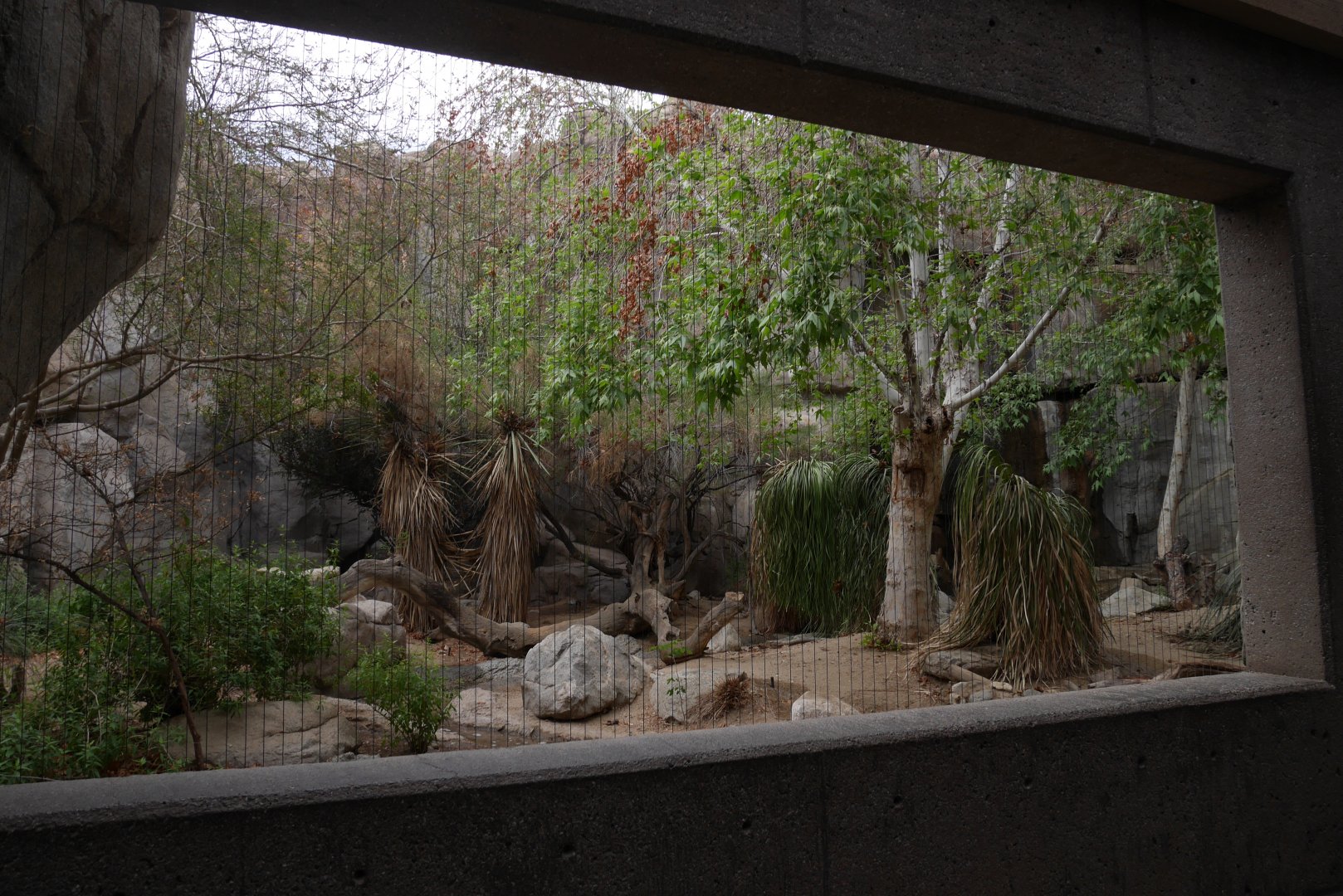
jaguar exhibit is another immersive exhibit where you can potentially get up-close to a charismatic animal. The vegetation here is denser than elsewhere at the Living Desert to represent where tropical deciduous forests meet the Sonoran Desert. Views leading up to the exhibit are restricted and a thicket forms an archway over the pathway. The views open to an abandoned silver mine with a mineshaft, rusted truck, and washbasin. Desert vegetation looks like it’s reclaiming the mining area. The jaguar’s space is elevated like a pedestal. I looked through the glass windows into the exhibit but couldn’t find the jaguar. Perhaps it was watching me from a cooler recess.
I had a bit more luck at the walk-through
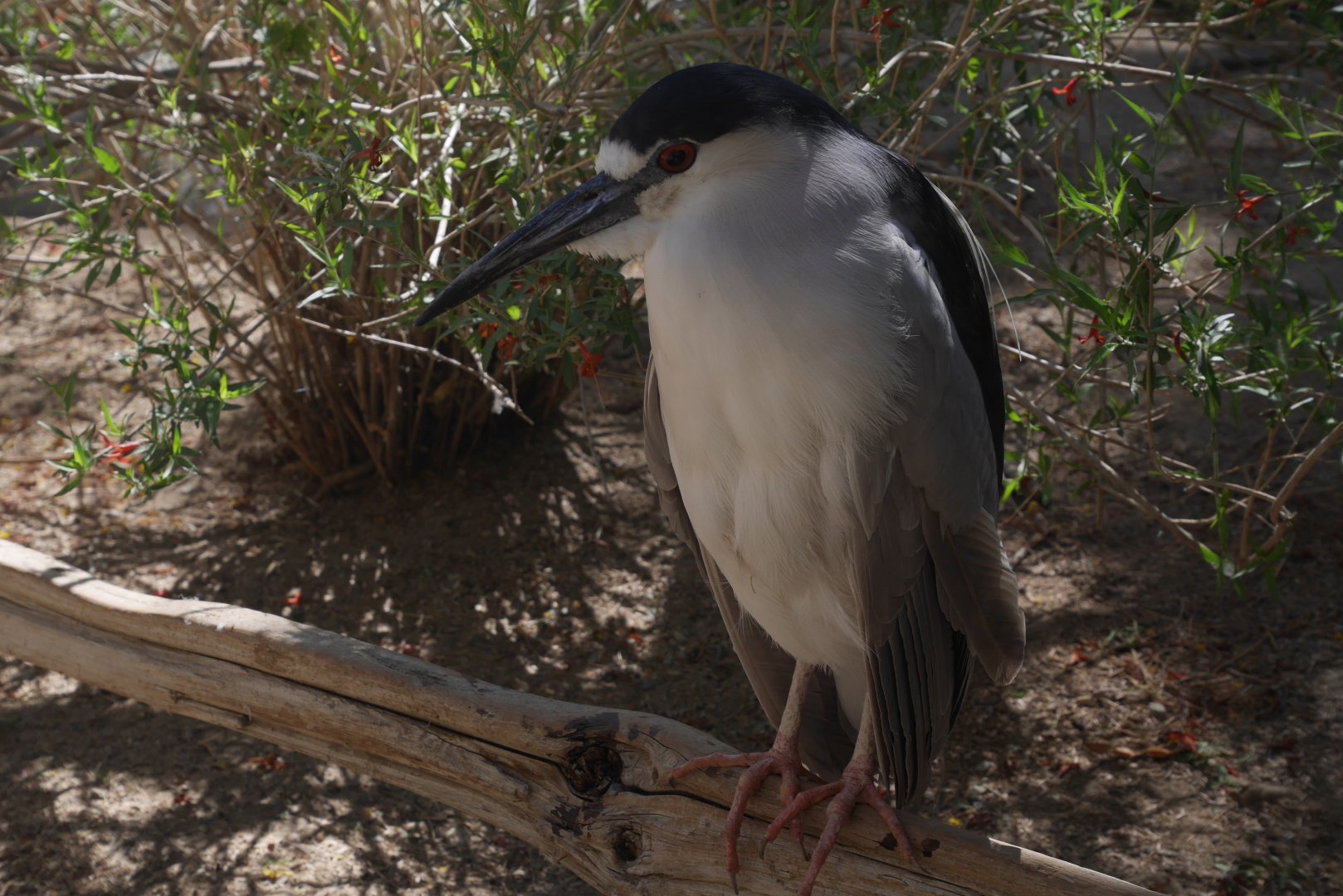
oasis aviaries. A stout black-crowned night heron was perched on the handrail. I was shocked by how unperturbed it was by my proximity. As I strolled through the aviary a speedy greater roadrunner raced by. In the heat of mid-day, active birds can still be encountered in the desert.
It was cooler in the nearby
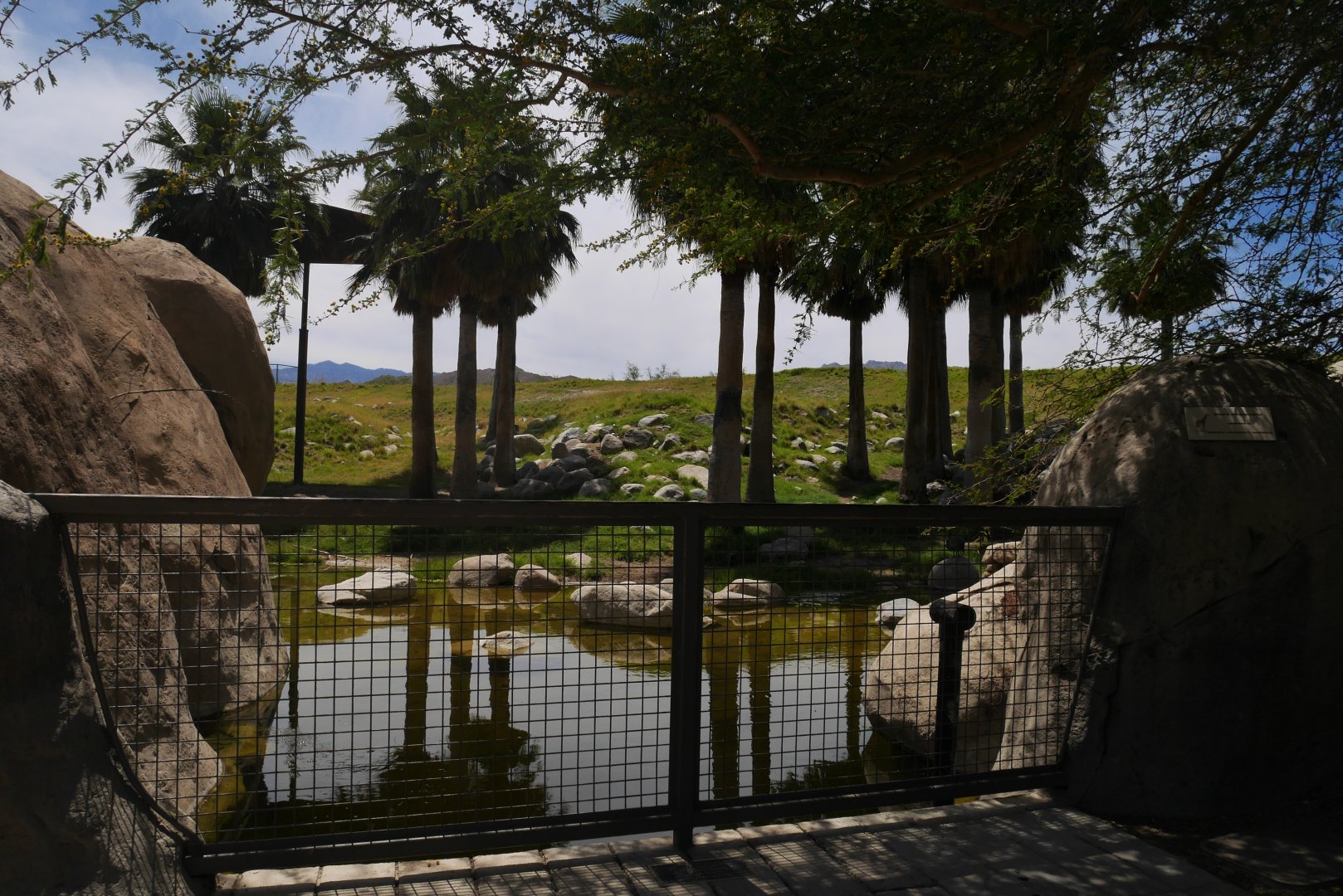
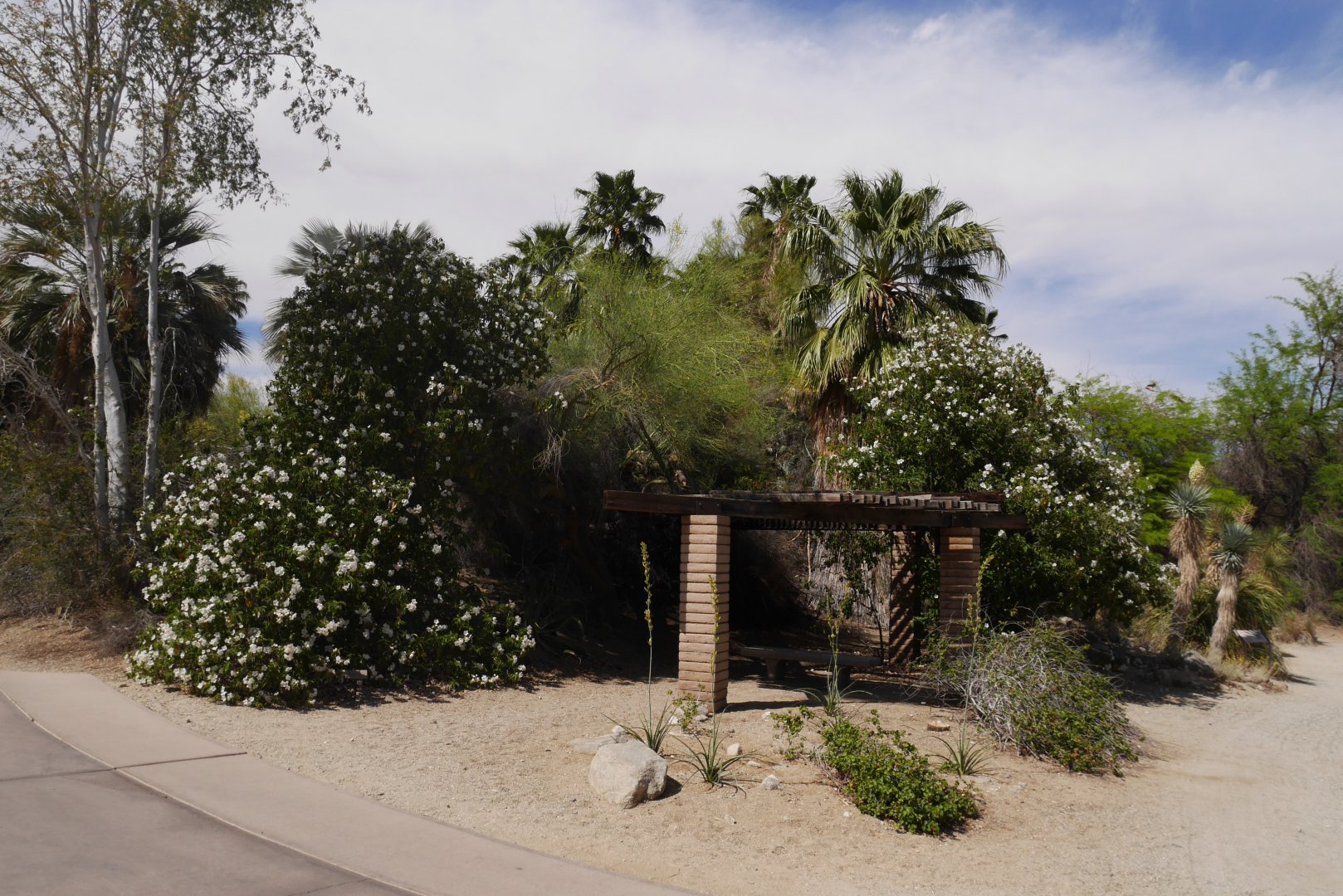
Palm Oasis. I wove around scattered boulders to reach the sheltered pond. Desert pupfish, a small Vulnerable fish adapted to extreme conditions, swam in the shallow waters. Tall California fan palms crowd around the pond. It felt like a secluded sanctuary.
There are more than a dozen themed
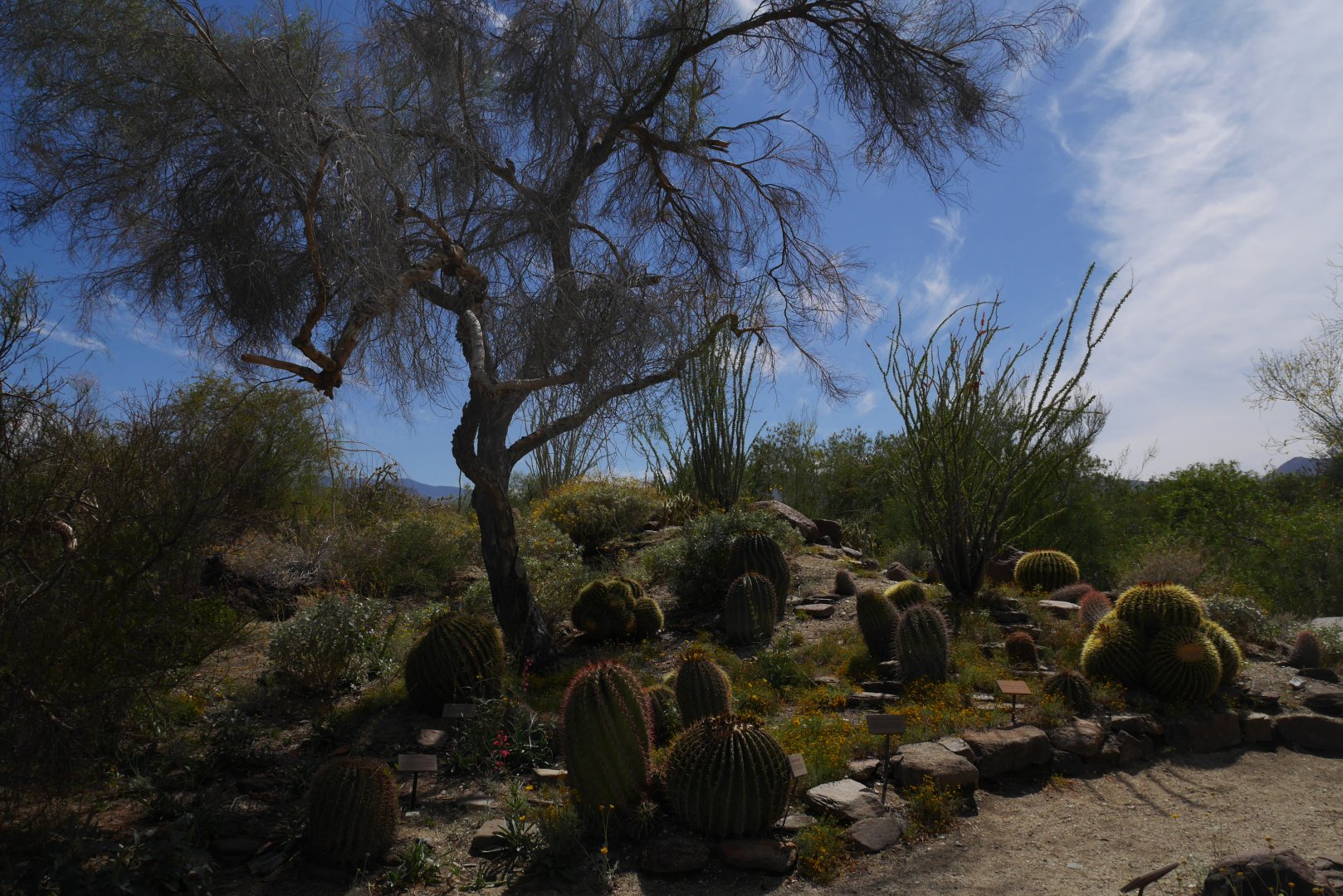
gardens around the North American section of the Living Desert. The gardens look natural, but still well-structured. Each garden is a thoughtfully arranged composition of plant forms, textures, and colors. It feels like the gardens were designed by someone with a profound love of both natural deserts and the sculptural qualities of North American desert plants.
The Living Desert’s animal care is showcased in the state-of-the-art
Tennity Wildlife Hospital and Conservation Center. Visitors can watch medical procedures and examinations take place through tall viewing windows. There’s a wealth of interactive displays and animal artifacts to explore. Stone paving within the building transitions beautifully outdoors to an enclosed garden with black lava rock and cacti. The Tennity Wildlife Hospital and Conservation Center gives the impression that the Living Desert takes great pride in their animal care work.
I didn’t have much time left and wound up missing: the Discovery Center (a natural history museum of the Coachella region); wildlife shows at the Tennity amphitheater; the reptile displays by the entrance; California landscape paintings in the administration building; and a few gardens. Of those attractions, I regret missing the Discovery Center the most. I certainly didn’t have time to go on any of the desert hiking trails, which had been a big part of my initial plans.
In addition, there were a variety of attractions I purposefully bypassed including: a walkthrough aviary where you can feed lorikeets (separate paid admittance required); an endangered species carousel; and the desert themed Gecko Gulch playground with saguaro cactus slides and giant animal sculptures. If I had children, then I would love taking them to those attractions.
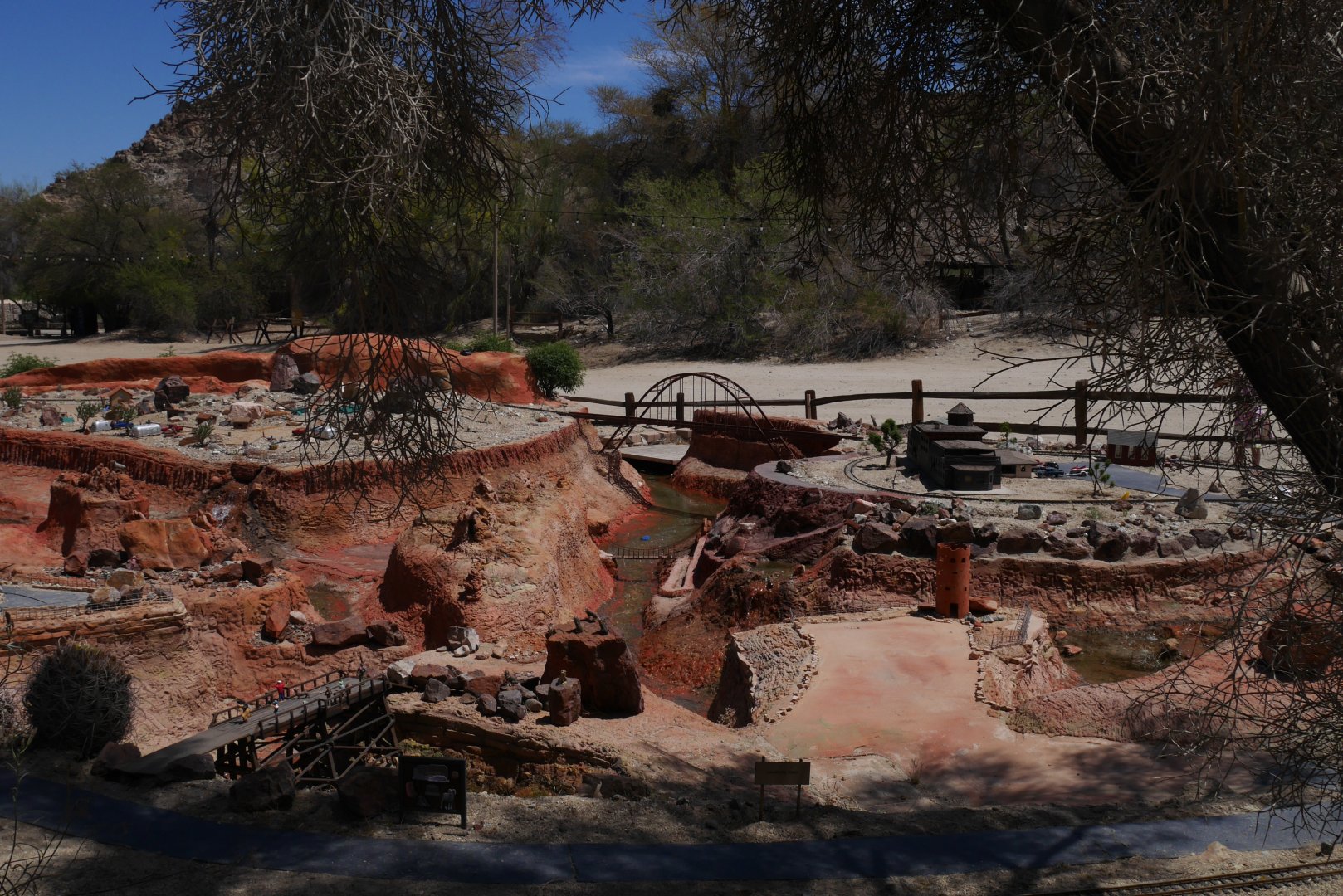
The biggest departure from The Living Desert’s mission to showcase desert life is the 3/4-acre
g-scale model train display. The small trains pass through a miniaturized desert landscape. The display began as a part of the annual WildLights holiday program. It was so popular that it became a permanent feature. Volunteers built and continue to maintain the extensive and well-executed display.
Few desert animals are active during the heat of the day. Interactive experiences with animals and other attractions help fill out the visit to the Living Desert when many of the animals are resting in the shade. The variety of attractions at the Living Desert have made it a popular community resource.
Nearly everything at the Living Desert is of exceptional quality. Their outstanding animal exhibits include those that utilize natural features (Bighorn Mountain), thoughtfully designed exhibits that burrow natural scenery (the giraffe and cheetah exhibits), and immersive habitat simulations (Eagle Canyon). I loved the natural and picturesque gardens. The Tennity Wildlife Hospital and Conservation Center is excellent. Even their other attractions, like the g-scale train display, have been deftly realized. As an independent non-profit, the Living Desert has a fraction of the resources of large American zoos. It’s evident that the facility has been built up thoughtfully with care.
The Living Desert’s focus on the world’s deserts makes it an attractive destination. Many American zoos have a cosmopolitan collection of plants and animals, and few have appealing desert displays. For desert exhibits, the Living Desert has the advantage of being within a natural desert with great views of the surrounding landscapes.
The Living Desert was a great introduction to the desert on my trip through the United States. Over the next few days, my admiration of the desert continued to deepen as I experienced more nature-based attractions there.