Newquay by a newbie
When I took out membership at Paignton last year, I knew that free visits to Newquay were one of the benefits, but I didn't manage to get there until yesterday. Luckily I picked a very good day for my first visit with nice mild weather, diffuse sunlight and the zoo was only moderately busy (I hear that it can get very crowded in the summer).
My first impressions were that the outside of the zoo looks pretty awful, but the inside is much nicer. The gardens and planting were nice, although some of aviaries were rather overgrown at the end of the season. I managed to arrive a few minutes after opening and to leave a few minutes before closing time, seeing almost all the animals and taking an embarrassing number of photos.
Urban zoos like Newquay always have a problem of fitting exhibits and gardens into a limited space. The Newquay combination of one large paddock with smaller displays is an unusual one. I liked the chance to watch the black wildebeest which are spirited creatures when they start to move around - but when all the animals are inactive, it seems rather a waste of space. Some of the other exhibits are generously sized, particularly the newer ones like the fishing cat enclosure (although I did not even see a whisker), the macaw aviary and the crested macaque pit. I felt that the older monkey enclosures were OK for the pairs of capuchins and group of squirrel monkeys. The lion and lynx enclosures are just about adequate, in my opinion, because cats are such lazy creatures.
On the other hand, although the Tropical House is nice I couldn't help feeling that it would be even nicer if it were 20% larger. Likewise the islands for the lemurs, marmosets and tamarins are not very large or particularly attractive although they do allow some privacy for the animals and good views for the public. Incidentally I think that the recent dry weather had affected water levels, if the marmosets had been brave enough they could almost have waded across their moat without getting very wet. The tapir and capybara pool had a notice saying that it had been drained for cleaning and it was just mud. The animals were on their hard standing and the emperor tamarins from the island were in pen behind the ring-tailed lemurs.
I did like some of the mixed exhibits: such as the meerkats and yellow mongoose and the African aviary behind it, although I wish that it were a little larger too with rather less luxuriant vegetation; it was nice to see cordon bleu, munias, Namaqua doves and white eyes. Likewise the parrot combination of scarlet macaws, blue-throated conures and spectacled parrotlets made a nice display. The other obvious examples are the Madagascar exhibits with crowned lemurs and narrow-striped mongooses enjoying a pile of dead leaves as enrichment and then the Madagascar lovebirds with the greater vasa parrots, which are old favourites of mine, there are said to be partridges in the aviary as well but the grass was too long to see them. Of course there are some older exhibits that are not particularly spacious or attractive; some are due to be replaced when old animals pass on and funds allow, as discussed in previous threads here.
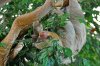
Leaving the best until last, I had seen the Owston's palm civets asleep in their ingenious nest box (which has a mirror so they can be sen without disturbing them). But when I returned about 4pm they were awake and grooming each other. I took a quick tour of the Tropical House and returned about 4.30. The Prevost's squirrels which share their enclosure were active so I watched them and after a few minutes a civet emerged for a moment. Then a keeper came to feed them just outside their house and I was able to shoot quite a few photos. For the record they got some unidentifiable meat (I think) plus a couple of mice and a large handful of earthworms. The photo below is a taster, more to follow


Alan


 a bloody nice taxon at that.