Weltvogelpark Walsrode news from Walsrode 2025

Had a nice day today at the park, here is some news! :)

New on show:
- Hawaiian goose (Branta sandvicensis)
- Red-billed starling (Spodiopsar sericeus) - Not signed
- Hooded vulture (Necrosyrtes monachus)
- Pink-eared duck (Malacorhynchus membranaceus) - Not signed
- Tasmanian rosella (Platycercus caledonicus)
- Grey-breasted parakeet (Pyrrhura griseipectus) - Not signed

Some species that have been off-show for a while are now back on show, including the Palm-nut vulture (Gypohierax angolensis) and the Harpy eagle (Harpia harpyja).

Newly signed but not yet on show:
- Copper sunbird (Cinnyris cupreus)
- Blue-fronted fig-parrot (Cyclopsitta gulielmitertii)
- Double-eyed fig-parrot (Cyclopsitta diophthalma diophthalma) - According to a zookeeper, these are the same birds as a few years ago - the holding was never paused.

I also noticed that both hornbill species that used to free-fly in the Africa free-flight area in the Paradieshalle appear to be gone, and their signage has been removed. Additionally, the park no longer keeps horned screamers, the last one passed away or moved recently.
 
Last edited:
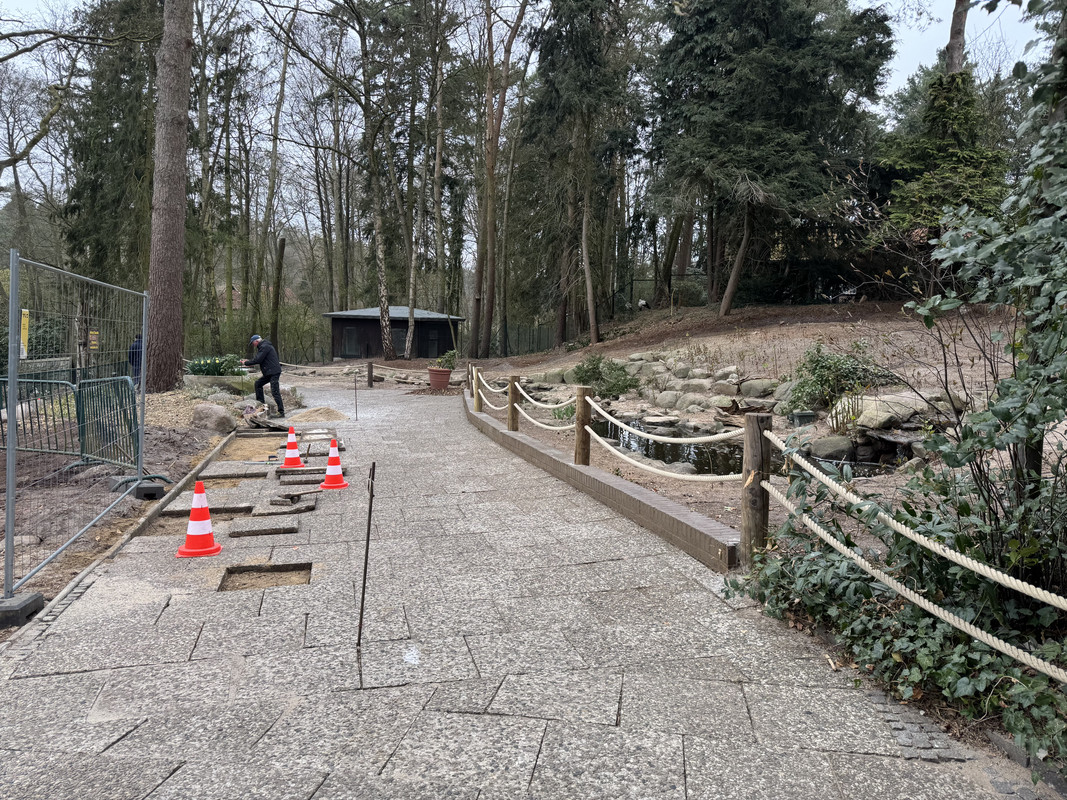
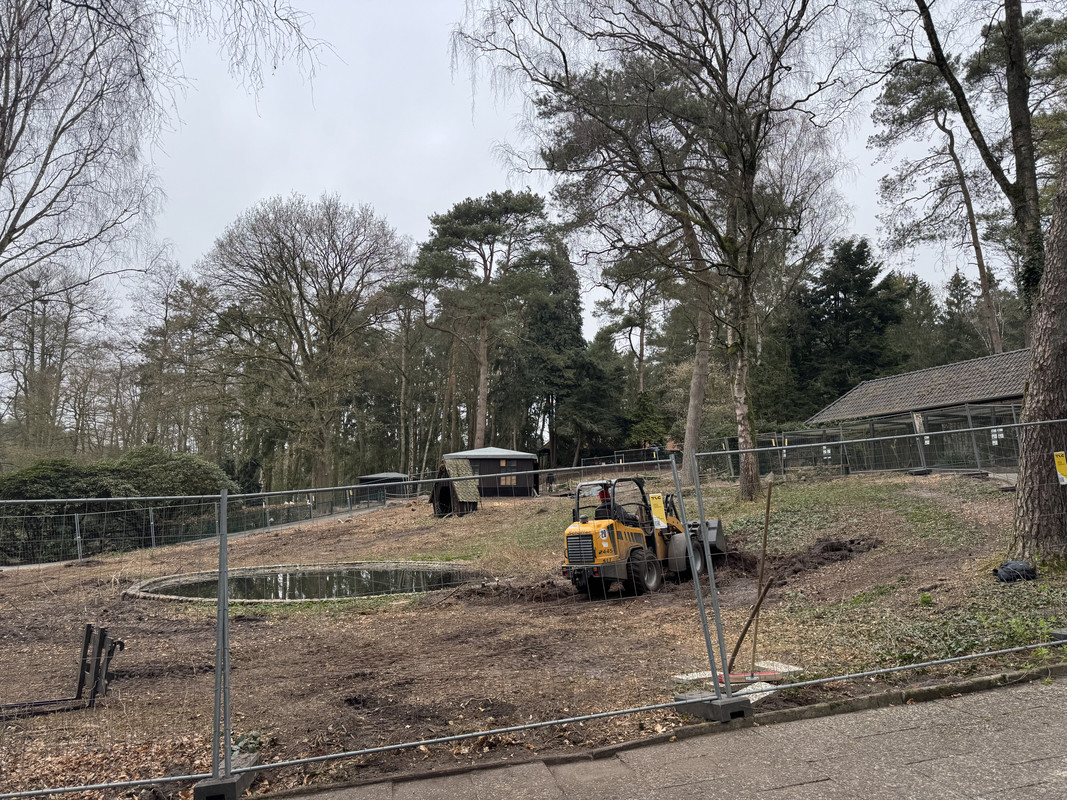
Are there any news from the new aviaries/enclosures in the European area?
Here are two photos from today:
update.jpg

IMG-3733.jpg
 
Sunny and warm day at the park today - lots of visitors (great for the park, though).
Not a lot of news, but a few interesting updates. These species are either completely new on show or are now back on show:
- Andean goose (Chloephaga melanoptera)
- Lesser yellow-headed vulture (Cathartes burrovianus)
- Upland goose (Chloephaga picta) Last on show in 2023.
- Dark chanting goshawk (Melierax metabates) Back on show after "winter break".
- Salvadori's pheasant (Lophura inornata inornata)
- Little pied cormorant (Microcarbo melanoleucos)

The last two species above are back on show after previously being kept in the Jungle Trail, which has since closed.

I also noticed at least three species that seem to be gone - or at least now got put off show:
- Bearded barbet (Pogonornis dubius)
- Sclater's crowned pigeon (Goura sclaterii)
- Eastern Oriental turtle-dove (Streptopelia orientalis orientalis)

Additionally, I got confirmation that the park no longer keeps the Fire-tufted barbet (Psilopogon pyrolophus). The copper sunbird is still signed like I reported last week, but the aviary is still empty...

There is not much to update about the European area, but they have now started to plant the heath/heide to make the "heath/moorland".
 
There is not much to update about the European area, but they have now started to plant the heath/heide to make the "heath/moorland".

Good to hear that, The European area really feels like some rundown small Zoo, both from the size, and age of the aviaries. When I was able to convince my parents to drive me the almost 3 hour distance, They really thought that we went to the wrong park not the "world largest bird park"
 
During today's visit, I spotted a few new species on show! :)
- Copper sunbird (Cinnyris cupreus)
- Cloncurry ringneck (Barnardius zonarius macgillivrayi)
- Australian king parrot (Alisterus scapularis)
- Black-headed gull (Chroicocephalus ridibundus)
- Buffy fish-owl (Ketupa ketupu aagaardi)

Not much other news at the moment, but a few species have been moved around. For example, the Grey-headed bushshrike (Malaconotus blanchoti) is now housed with the African grey parrots and the Dusky lory (Pseudeos fuscata) in the Fasanerie. Meanwhile, the Victoria crowned pigeon (Goura victoria) and the Lesser Bornean crested fireback (Lophura ignita ignita), which were previously in the Jungle Trail, are now back on show in Blick hinter die Kulissen. The Green-backed heron (Butorides striata) is also back on show, in the Paradieshalle.

The Black-casqued hornbills (Ceratogymna atrata) are now kept behind the scenes, though I noticed today that they’re still visible from the path in Blick hinter die Kulissen.

Additionally, the aviaries at the Rosencafé no longer house treepies. They still house the pheasants (Himalayan monal and Reeves's pheasant), but now also include the Javan brown wood owl (Strix leptogrammica bartelsi) and the Buffy fish-owl (Ketupa ketupu aagaardi), as mentioned earlier.
 
Last edited:
One new species on show during todays visit, the Mount Goliath stelle lory (Charmosyna stellae goliathina).

I also saw that they have taken the region/country signs to Fasanerie now (before they were only in the paradieshalle). So now it says ”Mexico” etc on the aviaries in the fasanerie as well!
 
- Hawaiian goose (Branta sandvicensis)
- Red-billed starling (Spodiopsar sericeus) - Not signed
- Hooded vulture (Necrosyrtes monachus)
- Pink-eared duck (Malacorhynchus membranaceus) - Not signed
- Tasmanian rosella (Platycercus caledonicus)
- Grey-breasted parakeet (Pyrrhura griseipectus) - Not signed

- Blue-fronted fig-parrot (Cyclopsitta gulielmitertii)
- Double-eyed fig-parrot (Cyclopsitta diophthalma diophthalma)

- Andean goose (Chloephaga melanoptera)
- Lesser yellow-headed vulture (Cathartes burrovianus)
- Upland goose (Chloephaga picta) Last on show in 2023.
- Dark chanting goshawk (Melierax metabates) Back on show after "winter break".
- Salvadori's pheasant (Lophura inornata inornata)
- Little pied cormorant (Microcarbo melanoleucos)

Mount Goliath stelle lory (Charmosyna stellae goliathina).
May I ask where those birds are kept/signed ?
 
Not much new today, but some areas of the park were restricted. Specifically, the kiwi house (including the attached lorikeet /fig parrot aviaries), the parrot house, and the breeding station were closed.

That said, these species are new on show:
- Australian sarus crane (Antigone antigone gillae)
- Maned duck (Chenonetta jubata)
- Yellow cardinal (Gubernatrix cristata)
- Black swan (Cygnus atratus)
- Brazilian red and white tarantula (Vitalius chromatus)

Additionally, the ducks from the Jungle Trail can now be seen again in other areas of the park, like the radjah shelduck (Radjah radjah), New Zealand black duck (Anas superciliosa superciliosa) and hardhead (Aythya australis).

Also, the pompadour cotinga (Xipholena punicea) is no longer on show, and no longer signed.

May I ask where those birds are kept/signed ?
Of course! :)

- Hawaiian goose (Branta sandvicensis) - First enclosure after "Reich der Mitte".
- Red-billed starling (Spodiopsar sericeus) - Fasanerie.
- Hooded vulture (Necrosyrtes monachus) - Uhu-Burg
- Pink-eared duck (Malacorhynchus membranaceus) - Fasanerie.
- Tasmanian rosella (Platycercus caledonicus) - In one of the aviaries between Pukara and the parrot house.
- Grey-breasted parakeet (Pyrrhura griseipectus) - Parrot house.
- Blue-fronted fig-parrot (Cyclopsitta gulielmitertii) - Outside kiwi house
- Double-eyed fig-parrot (Cyclopsitta diophthalma diophthalma) - Outside kiwi house
- Andean goose (Chloephaga melanoptera) - Penguin area/Patagonia
- Lesser yellow-headed vulture (Cathartes burrovianus) - Freiflughalle.
- Upland goose (Chloephaga picta) - In the large pelican pond.
- Dark chanting goshawk (Melierax metabates) - Uhu-Burg.
- Salvadori's pheasant (Lophura inornata inornata) - Blick hinter die Kulissen.
- Little pied cormorant (Microcarbo melanoleucos) - Uhu-Burg.
- Mount Goliath stelle lory (Charmosyna stellae goliathina) - Fasanerie.
 
Hawaiian goose (Branta sandvicensis) - First enclosure after "Reich der Mitte".
- Red-billed starling (Spodiopsar sericeus) - Fasanerie.
- Hooded vulture (Necrosyrtes monachus) - Uhu-Burg
- Pink-eared duck (Malacorhynchus membranaceus) - Fasanerie.
- Tasmanian rosella (Platycercus caledonicus) - In one of the aviaries between Pukara and the parrot house.
- Grey-breasted parakeet (Pyrrhura griseipectus) - Parrot house.
- Blue-fronted fig-parrot (Cyclopsitta gulielmitertii) - Outside kiwi house
- Double-eyed fig-parrot (Cyclopsitta diophthalma diophthalma) - Outside kiwi house
- Andean goose (Chloephaga melanoptera) - Penguin area/Patagonia
- Lesser yellow-headed vulture (Cathartes burrovianus) - Freiflughalle.
- Upland goose (Chloephaga picta) - In the large pelican pond.
- Dark chanting goshawk (Melierax metabates) - Uhu-Burg.
- Salvadori's pheasant (Lophura inornata inornata) - Blick hinter die Kulissen.
- Little pied cormorant (Microcarbo melanoleucos) - Uhu-Burg.
- Mount Goliath stelle lory (Charmosyna stellae goliathina) - Fasanerie.
Thank you very much
 
Some new species on show from today's visit! :)
- Eurasian teal (Anas crecca crecca)
- Chinese bamboo partridge (Bambusicola thoracicus)
- Rufous-collared pratincole (Glareola nuchalis liberiae)
- Violet turaco (Tauraco violaceus)
- Eurasian curlew (Numenius arquata)
- Brushtail possum (Trichosurus vulpecula)
- Bar-backed partridge (Arborophila brunneopectus)
 
I spotted some new species today - both new arrivals to the park and others now back on show:
Red-collared lorikeet (Trichoglossus rubritorquis) - Not signed
White-crowned pigeon (Patagioenas leucocephala) - Not signed
Giant hooded katydid (Siliquofera grandis)
Brazilian tanager (Ramphocelus bresilia)
Ruddy-headed goose (Chloephaga rubidiceps)
Cockatiel (Nymphicus hollandicus) - Back on show
Curl-crested aracari (Pteroglossus beauharnaisii) - Back on show, not signed
And magpie goose (Anseranas semipalmata) - Not on show yet


Also, the Greater Antilles Zenaida dove (Zenaida aurita zenaida) is back on show as well, and now both of the subspecies are signed in two different aviaries!
 
Some new information on Walsrode’s Kalij pheasants (Lophura leucomelanos):
I originally reported that Walsrode had two pure pairs: one of Lineated Kalij (L. l. lineata) and one of Black-breasted Kalij (L. l. lathami). However, I was later corrected by people with more experience and told that both pairs were actually subspecies crosses.

The park still claims both pairs are pure, and after learning more about Kalij pheasants, it seems the Lineated Kalijs might be considered pure by some. Most (or maybe all?) Lineateds in Europe appear to have some genetic influence from Crawfurd’s Kalij (L. l. crawfurdii), but since these birds still look like Lineateds, some people continue to classify them as such.

The black-breasted Kalij, on the other hand, definitely doesn’t seem pure. Lathami is supposed to have a solid black or bluish chest, but the male at Walsrode has noticeable silver or white markings there, something that really doesn’t match the typical appearance. According to people with more expertise, this is most likely a sign that Nepal Kalij (L. l. leucomelanos) was used relatively recently in the breeding, which might be a mistake as the females look very similar.

full
 
A friend of mine bred Black-breasted and Lineated in tiny numbers in the 1980's. Stocks were very in-bred then. The Crawfords was not kept, but White-crested and Nepal were.
The bird shown above is not a Black-breasted, it looks just like a very dark Nepal.
Black-breasted have (as you say) solid black breasts, bright white laced rumps and a quite different high crest carriage. I may have some old pictures somewhere.
Female Lineated and Crawfords are quite different to the others, which all look VERY similar.
 
Back
Top