North American Polar Bear Population 2023

Status
Not open for further replies.
Is it true part of the reason for the population decline is a form of temporary contraception attempted in the 90s turned out to be permanent?

The majority of the American population are related to each other (starting from Arki and Aussie of Brookfield and a few more generations starting from them after that).
 
Is it true part of the reason for the population decline is a form of temporary contraception attempted in the 90s turned out to be permanent?

The majority of the American population are related to each other (starting from Arki and Aussie of Brookfield and a few more generations starting from them after that).

MeiLover is totally right, their is an extreme genetic bottleneck.

Yes, the combination of both faulty birth control (that affected all 4 females from the Seneca park family, Berit, and a lot of other females) and the sterilization of males who weren’t thought to be valuable to breeding (Kiska, Kalluk, Blizzard, Neil, Buzz, etc.) and limits on importation and orphans led to very few animals left that were able to breed. Aussie and Arki had 3 surviving cubs that made it to breeding situations, and Marty produced 8 cubs between two females. His three oldest daughters in turn have produced 7 cubs themselves. Thus, the Aussie x Arki family make up roughly 16/25 (64%) of the potential breeding population. Of the nine remaining, one female has reproductive issues, one female is in her early twenties, one is 24 with a litter born last season, one was hand raised, one male is 23, and the youngest two are related to a majority of the younger Marty x Crystal animals through their mother, Crystal. Overall the population is in really bad shape, however moves have been better coordinated recently and we have two proven breeding pairs set to den this autumn.

Sorry this was lengthy, I hope it helped explain things better for you!
 
MeiLover is totally right, their is an extreme genetic bottleneck.

Yes, the combination of both faulty birth control (that affected all 4 females from the Seneca park family, Berit, and a lot of other females) and the sterilization of males who weren’t thought to be valuable to breeding (Kiska, Kalluk, Blizzard, Neil, Buzz, etc.) and limits on importation and orphans led to very few animals left that were able to breed. Aussie and Arki had 3 surviving cubs that made it to breeding situations, and Marty produced 8 cubs between two females. His three oldest daughters in turn have produced 7 cubs themselves. Thus, the Aussie x Arki family make up roughly 16/25 (64%) of the potential breeding population. Of the nine remaining, one female has reproductive issues, one female is in her early twenties, one is 24 with a litter born last season, one was hand raised, one male is 23, and the youngest two are related to a majority of the younger Marty x Crystal animals through their mother, Crystal. Overall the population is in really bad shape, however moves have been better coordinated recently and we have two proven breeding pairs set to den this autumn.

Sorry this was lengthy, I hope it helped explain things better for you!
The faulty birth control and sterilization is what I was trying to ask about and understand, yeah, more information on that would be appreciated. I'm aware of the importation and orphan issues, but I had only just heard the other day that a birth control issue was involved so that was what I was specifically interested in. My use of "part of the reason" was meant to clarify I was aware there were other issues but was asking about something specific.

The Aussie-Arki situation is sort of a separate and outside what I was trying to understand, although no doubt it was still helpful and informative... that said, it now has me wondering why Brookfield is bothering trying to breed Hudson if his bloodline is already over-represented?
 
Is it true part of the reason for the population decline is a form of temporary contraception attempted in the 90s turned out to be permanent?
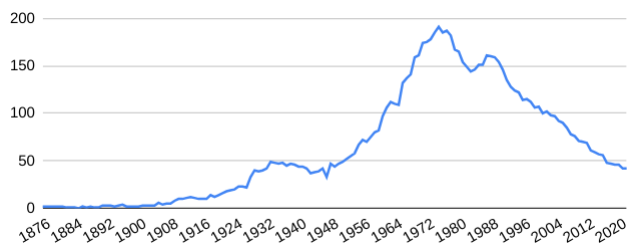
It certainly didn't help, but the polar bear population in the United States* (I can't speak for all of North America) has been in constant decline since 1975, coinciding with the introduction of the Marine Mammal Protection Act that was enacted in December 1972, limiting further imports. Even accounting for exports, deaths have historically always consistently outnumbered births the majority of the time.

Screenshot-2023-07-29-1-12-15-PM.png
 
Last edited:
upload_2023-8-7_13-57-49.png
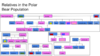
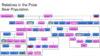
"X"s before a name indicate that the animal is deceased. A letter following a name is to distinguish between animals with the same name, and is the first letter of the location the bear passed away at. Highlighted names are those repeated in the chart, and color coded.
 

Attachments

  • upload_2023-8-7_12-0-1.png
    upload_2023-8-7_12-0-1.png
    110.8 KB · Views: 4
  • upload_2023-8-7_13-57-49.png
    upload_2023-8-7_13-57-49.png
    121 KB · Views: 39
I'm also pretty certain @Polar bear fan was referring to Talini at Lincoln Park for the reproductive issues.
I was thinking it might be Talini, but I couldn't think of why I thought that.

Let me clear this up, hahaha sorry.

Reproductive issues - Talini at LPZ
Early twenties - Haley
24 year old - Crystal
Hand raised - Luna

ofc none of these are guarantees none will breed (Luna should certainly, and neither Haley nor Crystal are IMPOSSIBLE)

Sorry for the issues!
What does 'ofc' mean?

Are those issues debilitating Talini from having cubs? You didn't mention her breeding possibilities.
 
I found the quote I was referencing earlier about contraception in polar bears:

Zoos have struggled to breed some animals, Bonner told the board. Polar bears, given contraception in the 1990s, haven't ever reversed. "They're permanently infertile," he said. There were almost 200 in U.S. zoos in the 1970s, Bonner said. There are now just 54 in all North American zoos.
This is from coverage of the St. Louis Zoo's current master plan some years ago.

I personally find it a little depressing that Brookfield and Lincoln Park's renovations both placed some emphasis on their ability to act as breeding facilities, but neither facility has ever produced cubs, and I'm skeptical either will.
 
I found the quote I was referencing earlier about contraception in polar bears:

Zoos have struggled to breed some animals, Bonner told the board. Polar bears, given contraception in the 1990s, haven't ever reversed. "They're permanently infertile," he said. There were almost 200 in U.S. zoos in the 1970s, Bonner said. There are now just 54 in all North American zoos.
This is from coverage of the St. Louis Zoo's current master plan some years ago.

I personally find it a little depressing that Brookfield and Lincoln Park's renovations both placed some emphasis on their ability to act as breeding facilities, but neither facility has ever produced cubs, and I'm skeptical either will.
Mastering the breeding of polar bears takes time, and I wouldn't count out either as a breeding facility in the coming decade, especially not Brookfield. Brookfield Zoo has a relatively young, eight-year old female who still has plenty of time to reproduce, and it often takes a few years of unsuccessful attempts before breeding occurs (and cub survival is dependent on the mother's maternal instincts). There's a learning curve in breeding for both the bears and zoo staff, so while they haven't been successful *yet*, I absolutely would not be surprised if Brookfield ends up with cubs any of the next few years. Lincoln Park is more unlikely, however they've certainly been trying with Talini, despite the obstacles in the way, and I don't foresee them trying less hard anytime soon. While they may not have cubs until after Talini passes or moves to another zoo, they remain a dedicated institution to polar bears that really wants to see cubs.
 
Mastering the breeding of polar bears takes time, and I wouldn't count out either as a breeding facility in the coming decade, especially not Brookfield. Brookfield Zoo has a relatively young, eight-year old female who still has plenty of time to reproduce, and it often takes a few years of unsuccessful attempts before breeding occurs (and cub survival is dependent on the mother's maternal instincts). There's a learning curve in breeding for both the bears and zoo staff, so while they haven't been successful *yet*, I absolutely would not be surprised if Brookfield ends up with cubs any of the next few years. Lincoln Park is more unlikely, however they've certainly been trying with Talini, despite the obstacles in the way, and I don't foresee them trying less hard anytime soon. While they may not have cubs until after Talini passes or moves to another zoo, they remain a dedicated institution to polar bears that really wants to see cubs.
I don't really feel the same optimism about Brookfield after finding out Hudson and Hope are so closely related when already part of an over-represented bloodline (Aussie x Arki) and Talini having reproductive issues. I'm not trying to blame either zoo when I'm sure they are trying their best, and Brookfield has an extensive record with breeding to their own detriment with Aussie and Arki's genes everywhere.
 
I don't really feel the same optimism about Brookfield after finding out Hudson and Hope are so closely related when already part of an over-represented bloodline (Aussie x Arki) and Talini having reproductive issues. I'm not trying to blame either zoo when I'm sure they are trying their best, and Brookfield has an extensive record with breeding to their own detriment with Aussie and Arki's genes everywhere.
Also keep in mind that there are only three males in the population able to breed and unrelated to Hope. If Koda, Nuka, or Lee become available then Hope would ideally be able to be paired with one of them, but her being with Hudson allows both a better chance of producing offspring that either of them sitting alone waiting for a mate. Hope has never bred before too, so this is very good socially for her development if she were to be in a better pairing. Optimism of success shouldn’t really be based on genetics with a population like this. The reason polar bears aren’t breeding isn’t cause they’re difficult to breed. It’s cause of JVM and Neil chafe were referring to. Birth control screwed things up for a lot of pairs, many males were sterilized, orphans can’t be bred. On the bright side many of the birth control females’ mates are getting new pairings with younger females more likely to breed. The issue is just that these females are all related, with the exception of Luna. I would expect a few years of great success soon. With the SSP’s work to ensure good pairings are being made I’d expect a few litters from each Detroit, Columbus, Hogle, Brookfield, and Buffalo while their males are still alive. Once the current group of older boys dies things will get worse, but currently the population is looking up as long as we have that current batch of boys paired with as many females as possible.

This is long and wordy, but I don’t know how to explain some of the issues being brought up as well as I wish I could. Hope* this is somewhat relavent.
 
Birth control screwed things up for a lot of pairs, many males were sterilized, orphans can’t be bred. On the bright side many of the birth control females’ mates are getting new pairings with younger females more likely to breed..
Thank you for the additional information and for affirming the birth control story, when I previously asked the responses made me wonder if this was a less significant factor than I realized and I hadn't kept the source of the quote handy so I was worried I'd gleaned it from somewhere less reputable than I thought.

Where does Kali from Saint Louis fit into this? It seems like they have intent to eventually breed them from what I read, but I know he's wild-born.
 
Thank you for the additional information and for affirming the birth control story, when I previously asked the responses made me wonder if this was a less significant factor than I realized and I hadn't kept the source of the quote handy so I was worried I'd gleaned it from somewhere less reputable than I thought.

Where does Kali from Saint Louis fit into this? It seems like they have intent to eventually breed them from what I read, but I know he's wild-born.
St. Louis, Louisville, San Diego, and likely Alaska I’m the future would all love to breed their wild born bears. The hope is to get papers filled out by a lot of people including USA and Alaska fish and wildlife profesionales. It’s just been difficult to get approval to breed and so that’s where Kali is. He is a non breeding animal until the Marine mammal act is revised or special approval is granted to St. Louis to breed him.
 
St. Louis, Louisville, San Diego, and likely Alaska I’m the future would all love to breed their wild born bears. The hope is to get papers filled out by a lot of people including USA and Alaska fish and wildlife profesionales. It’s just been difficult to get approval to breed and so that’s where Kali is. He is a non breeding animal until the Marine mammal act is revised or special approval is granted to St. Louis to breed him.
I'm glad to hear an effort is being made then at least, rather than an acceptance it isn't doable. I hope exceptions can be made routine for polar bears. Thank you.
 
Status
Not open for further replies.
Back
Top