North American Rain Forest Buildings

Here are my thoughts on the ones I've been to:
Jungle World (Bronx Zoo)- Clearly the best of the ones I've been to. While it is not as grandiose or tall as the one in Cleveland, the exhibits are relatively realistic and immersive. The path is a boardwalk rather than dirt but the rooms are heavily vegetated and you feel transported there. I like how it focuses on an Asian forest theme. Seeing a group of langurs playing in the trees through a waterfall is an amazing visitor moment and the habitat is quite good for the monkeys since they have so many climbing opportunities on realistic structures. Malayan tapirs live in a smallish muddy exhibit that is better than you'd expect. Gibbons share the habitat with them and it is perfect for them- the trees feel actually real. Asian small-clawed otters live in a great exhibit as well. A room for birds is a highlight as well. The building's main fall is a black leopard exhibit which is too small for the cats but not terribly brutal. Clouded leopards would be a much better choice.
2. The Rainforest (Cleveland Metroparks Zoo)- An enormous structure and overall very good but mixed quality. This building feels dark and mysterious, which helps entice guests in. My biggest issue with the building is not surprisingly the all-indoor orangutan exhibit. Yes they do have sunlight and height but it is small and enclosed, which I do not appreciate. They do have simulated tropical storms in the building, which creates a great sense of atmosphere and authenticity. The langur exhibit is nice but not state-of-the-art like Bronx. Giant anteaters and capybaras share a solid exhibit and gharials have an amazing pool. The fishing cat one is better than many others and even has an underwater viewing. The Indian crested porcupine/mouse deer and Asian small-clawed otter exhibits are some of the best I've seen while a dwarf crocodile exhibit is average. A python exhibit uses the ruined temple motif so common in zoos these days and a tamarin exhibit is decently sized. I would have liked it if there were more large mixed species habitats for primates and wish most if not all of the primates in the dreadful Primate Cat and Aquatics building would be moved here.
3. Amazonia (National Zoo)- This one is elevated by its conservation value and exhibits for amphibians and fish. The main room however could be so much larger and have so many more primates. I feel like this could be a better exhibit if more were there.
4. Tropics Building (Central Park Zoo)- Pleasant but forgettable. Side lemur exhibits are good enough but nothing that immersive. The best part of this building is the space given for the birds.
5. Tropical Forest (Franklin Park Zoo)- The white elephant of the zoo and, while big, all exhibits are substandard. The gorillas at least have natural light but 2500 square feet all indoors does not do justice to one of the great superstars of the zoo world. They basically just live in a pit with hay. The building is a hodgepodge and generally of average quality. Also it was the most expensive zoo exhibit ever built in America when it opened in 1989 and took away much funds from the rest of the zoo. Not worth the investment and outdated.
6. Tropic World (Brookfield Zoo)- I frankly hate this building. It looks like a plastic children's play area turned into a rainforest. In its defense it has a lot of climbing opportunities for the monkeys and I particularly can see merit in the South American section of the building. However, it is not natural at all and well past its prime. The exhibits for gorillas and orangutans are despicable and have no place at a zoo like Brookfield. Even for its age, the spectacular gorilla exhibit at Woodland Park predates the one here by three years and Jungle World only came three years later.
 
There was a boom in the 1990's when it came to massively expensive rainforest buildings and just in 1992 alone there was Cleveland, National Zoo, Omaha and Woodland Park that all opened to the public almost at the exact same time. Jumping forward to more recent times, Buffalo and Mesker Park both opened large, costly structures in 2008 but since the financial meltdown there doesn't seem to have been much impetus in designing and building grandiose indoor jungles.

Interestingly enough, Connecticut's Beardsley Zoo opened its New World Tropics Building in 1992, the exact same year as rainforest buildings opened at Cleveland, National Zoo, Omaha and Woodland Park. The Connecticut structure is a revamp of a 1950's building and the smallest of the bunch but it is still rather extraordinary that 5 American zoos opened rainforest complexes in 1992 and since then there have been very few structures built that have emulated a "jungle-like appearance".
 
There was a boom in the 1990's when it came to massively expensive rainforest buildings and just in 1992 alone there was Cleveland, National Zoo, Omaha and Woodland Park that all opened to the public almost at the exact same time. Jumping forward to more recent times, Buffalo and Mesker Park both opened large, costly structures in 2008 but since the financial meltdown there doesn't seem to have been much impetus in designing and building grandiose indoor jungles. Kansas City Zoo opened its 5-exhibit Tropics complex in 2009 but that was simply a revamp of a century-old building and European zoos have caught up and in many ways passed American zoological collections when it comes to building indoor jungles.

Here is a list of 20 Rainforest Buildings that I have visited in American zoos. I typed up the overview several years ago and it is not a comprehensive list but I thought that I'd re-post it anyway. I've visited all 20 of these zoos and many others with "rainforest type buildings" (Montreal Biodome, Topeka Zoo, etc.) but I do not have the inclination to add another group of mini-reviews as the total below is fairly comprehensive.

Alphabetical Order:

Bronx – JungleWorld (opened in 1985) now has a separate entrance fee, which is a major flaw, but this excellent recreation of an Asian rainforest is still one of the best around after around 30 years of operation. There are 3 separate environments that visitors are immersed in, and the zoo chose to showcase one continental area (Asia) really well rather than multiple continental areas haphazardly.

Brookfield – this massive structure opened in stages in the early 1980’s and with African, Asian and South American zones there is an excellent variation of species (particularly primates) on display. At the time it was probably magnificent but the decades have not been kind to it and now there is the sense that the football-field-sized interior is outdated and due for an overhaul. The sheer “fakeness” of the surroundings overwhelms even cursory zoo fans, and the gorilla and orangutan exhibits with zero outdoor areas are extremely poorly regarded these days.

Buffalo – a relatively new complex that is 18,000 sq. ft. in size and opened in 2008. An extremely pleasant environment containing modern exhibitry showcasing South American animals, and there is a great overview of the rainforest from a high observation deck.

Central Park – a two-level rainforest with smaller side exhibits but many free-roaming animals, and overall it is a decent recreation of a jungle atmosphere in the middle of New York City.

Cleveland – this absolutely enormous building, 85,000 sq. ft. in size and with reportedly 2 acres of floor space, features animals from Asia and South America and opened in 1992. Two large levels are expansive and the majority of the exhibits are top-notch, particularly the large gharial/turtle pool and the otter, small cat and numerous reptile habitats. The major downside is an all-indoor orangutan exhibit that is subpar for such an intelligent species. I seem to like this building more than most zoo fans, but for the most part almost all of the exhibits are of a fairly high quality.

Denver – Tropical Discovery opened in 1993 and while there are only 10 major exhibits (including at one time the largest indoor Komodo dragon habitat in the world) everything is well done and the idea of mini-biomes from around the planet is modern and informative.

Fort Wayne – the Jungle Dome contains an excellent walk-through aviary that is lush and thick with vegetation, and it technically could qualify as a rainforest building due to the presence of an all-indoor orangutan exhibit. Unfortunately that enclosure is dire, dim and badly in need of a swift overhaul.

Jacksonville – not a true rainforest building but the Mayan Temple area in Range of the Jaguar includes numerous indoor exhibits in a ruined temple-themed zone. The highlights of this area are the outdoor habitats for jaguars, capybaras, tapirs and a large walk-through aviary.

Kansas City – the Tropics building is more than a century old but features a new, modern, innovative area (gibbons and otters in the same exhibit and having overhead and below ground passageways) but ultimately average due to the fact that there are only 5 exhibits and there is not really any attempt at immersion.

Louisville – again not a true rainforest building but the Islands Pavilion has a walk-through aviary, numerous animal exhibits and serves as the backdrop for the Asian rotational habitats of 5 major mammals species.

Mesker Park – a 10,000 sq. ft. structure that opened in 2008 and is easily the newest, biggest and best part of an otherwise nondescript zoo. Amazonia: Forest of Riches is top-notch in almost all compartments, it uses modern exhibitry methods, and the focus on South American animals is impressive and thus the limits of this mid-sized zoo were not stretched during construction.

Minnesota – a 1.5 acre Tropics Trail building featuring animals from Africa, Asia and South America, as well as an excellent coral reef habitat. The scope of the building is impressive, particularly for Minnesotans keen to escape the winter blues in the northern city, but the size of the exhibits for many of the larger animals leaves a little to be desired. Much improved in recent years due to the switching of certain species and the opening of the permanent African area.

National – Amazonia is 15,000 sq. ft. in size and very well done as it focuses on South American animals, opened in 1992 and is two levels. The lack of large popular mammals is its downfall and also its greatest asset as the focus is on accomplishing one thing and doing that with expertise.

North Carolina – the African Pavilion used to be teeming with all sorts of rare animal species, but these days it is animal-free and the empty exhibits have been left standing and are somewhat eerily packed with dense undergrowth as the zoo has allowed the plant life to reign supreme. Now closed.

Omaha – the Lied Jungle opened in 1992 and is considered by many to be the premier rainforest building in North America. The dirt pathway on the lower level adds to the thrill, but the downside is that several of the enclosures for larger animals are definitely too small.

Rio Grande – this tropical American building features a series of well-designed visitor pathways, but many of the animal exhibits are simply average at best.

Roger Williams Park – borderline terrible building that is small, poorly designed and full of wires and ventilation pipes that remain unhidden and disconcerting to visitors. This Tropical American complex is tiny and only worth seeing for the decent, outdoor giant anteater exhibit.

Sedgwick County – this building opened in 1977 and its half-acre area holds up well 40 years later. Age has added to the aroma of the thick vegetation, and the dirt pathway and muddy signs actually create an effective immersive experience that makes this one of the better rainforest complexes in existence.

Tulsa – a showcasing of Central and South American animals in a vast building is the best complex at an otherwise disappointing zoo. The idea to focus on one continental area adds to the richness of the exhibitry.

Woodland Park – this tropical rainforest building opened in 1992 and it is smaller than many other American behemoths, but it features a decent set of indoor exhibits for South American animals. The real gems are the outdoor areas: 2 trend-setting gorilla habitats, Jaguar Cove, colobus monkeys, red-flanked duikers and red ruffed lemurs.

I know this is almost four years old, but it's such a great write-up, and I found it because I was looking around for a history of the indoor rainforest exhibit. Like you said, there was a boom in the 90s, with 1992 being the year of critical mass for openings of these things. It was also the year that Ferngully: The Last Rainforest and Medicine Man starring Sean Connery both hit theaters, so was definitely "Peak Rainforest" in a phenomenon that seemed to start in the mid 80s, when everyone started buying rainsticks from The Nature Company store and wearing "Save the Rainforest" t-shirts with toucans and poison dart frogs on them.
 
I know this is almost four years old, but it's such a great write-up, and I found it because I was looking around for a history of the indoor rainforest exhibit. Like you said, there was a boom in the 90s, with 1992 being the year of critical mass for openings of these things. It was also the year that Ferngully: The Last Rainforest and Medicine Man starring Sean Connery both hit theaters, so was definitely "Peak Rainforest" in a phenomenon that seemed to start in the mid 80s, when everyone started buying rainsticks from The Nature Company store and wearing "Save the Rainforest" t-shirts with toucans and poison dart frogs on them.
The boom had at least as much to do with crashing oil prices as Rainsticks and t-shirts.
Minnesota Zoo and Bronx had shown the promise of such exhibits but high oil prices following their openings put a halt to the idea until prices came down again.
 
The boom had at least as much to do with crashing oil prices as Rainsticks and t-shirts.
Minnesota Zoo and Bronx had shown the promise of such exhibits but high oil prices following their openings put a halt to the idea until prices came down again.

Interesting. How did oil prices influence the economic feasibility? You'll have to forgive my ignorance, my perspective is skewed, I live in Houston high oil prices mean "let the good times roll".

When travel is safe again I'll have to try to make it to more of these exhibits mentioned here, I've only been to a few. I've been going to Moody Gardens since it opened back in 1993 since it's in my backyard, beyond that only been to Dallas World Aquarium, Audubon Aquarium of the Americas in New Orleans, National Aquarium in Baltimore, and the National Zoo.
 
Interesting. How did oil prices influence the economic feasibility?
Rainforest exhibits are, almost exclusively, constructed in climates where there are winters.... just as botanical conservatories or winter gardens were (are). They eat a huge amount of energy to heat and light them. In later years small rainforest exhibits were built everywhere but these mega-exhibits are big draws in cold areas... when one can afford to maintain them.
 
I agree that SnowLeopard's write-up of the rain forest exhibits he's seen was excellent! Just a couple of notes: (1) I think the building he talks about in Kansas City was actually in nearby Topeka. (2) He also should have included nice rain forest buildings in Fort Wayne (IN) and maybe in Boston (Franklin Park).
 
Thank you @MarkinTex for your kind words and I've visited a lot more zoos since I made that comprehensive report back in 2016. The very first walk-through rainforest building in an American zoo is to be found in Topeka and it opened in 1974 and it remains standing today. The second oldest rainforest building in the USA is in the same state (Kansas) and it opened in 1977 at the Sedgwick County Zoo. Although, technically speaking, there is a reptile zoo in South Dakota called Reptile Gardens that built a 'Sky Dome' structure in 1965 and it could be argued that America's first walk-through rainforest building is to be found at that Black Hills establishment. I visited it a few years ago and it would just about qualify in my opinion. :)

In my write-up I was not mistaken about which Kansas zoo I was talking about, @ANyhuis , as at Kansas City Zoo there is the 'Tropics' building that was the zoo's original Bird House. It opened in 1909 and a century later it became a pseudo-rainforest structure in 2009 although it really isn't very jungle-like. Also, I did in fact mention Fort Wayne Children's Zoo on the list, although I could have easily added in Franklin Park Zoo as well as I visited it in 2012. (I just wasn't that impressed)

Last summer, when I spent more than a month visiting 95 different zoos and aquariums of all shapes and sizes in Western Europe, I toured a number of tropical rainforest buildings that I could add to the list. There are indoor jungles in Pakawi Park and Pairi Daiza in Belgium, Mondo Verde, Emmen and Burgers in the Netherlands, plus Cologne, Dortmund, ZOOM Gelsenkirchen, Krefeld, Walsrode and Munster in Germany. I went to all 11 of those a year ago and without a doubt the best was to be found at Burgers' Zoo in Arnhem.
 
In my write-up I was not mistaken about which Kansas zoo I was talking about, @ANyhuis , as at Kansas City Zoo there is the 'Tropics' building that was the zoo's original Bird House. It opened in 1909 and a century later it became a pseudo-rainforest structure in 2009 although it really isn't very jungle-like. Also, I did in fact mention Fort Wayne Children's Zoo on the list, although I could have easily added in Franklin Park Zoo as well as I visited it in 2012. (I just wasn't that impressed)

Goes to show how long it's been since I've visited the excellent Kansas City Zoo! But yes, I do definitely remember KC's Tropics Building now!
 
Rainforest exhibits are, almost exclusively, constructed in climates where there are winters.... just as botanical conservatories or winter gardens were (are). They eat a huge amount of energy to heat and light them. In later years small rainforest exhibits were built everywhere but these mega-exhibits are big draws in cold areas... when one can afford to maintain them.

Huh. That's funny, again shows how my perspective is skewed living down here, 3 out of 6 of the indoor rainforest exhibits I've been to have been down here where we really don't get much winter (just remembered in addition to Moody Gardens, Dallas World Aquarium, Audubon Aquarium in New Orleans, National Aquarium in Baltimore, and National Zoo, when I went to the Vancouver Aquarium it had a rainforest exhibit too - though winter is pretty mild there).

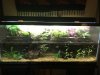
This spring as a quarantine project I turned a 55 gallon aquarium into a paludarium, complete with waterfall. The fish are all from the Amazon basin, but with the size limits of the aquarium, I had to sacrifice staying true to Amazon plant life in order to have decent looking plants that were small enough and could do well in the space.
 

Attachments

  • Paludarium.jpg
    Paludarium.jpg
    125.2 KB · Views: 2
Back
Top