You are using an out of date browser. It may not display this or other websites correctly.
You should upgrade or use an alternative browser.
You should upgrade or use an alternative browser.
Notable exhibits that are missed
- Thread starter KevinB
- Start date


Unfortunately, in a few days time another notable exhibit will be lost to history. Shedd Aquarium's famous Caribbean Reef Tank will be closing much to the dismay of, well, basically everyone. For more than five decades this rotunda served as the aquarium's glorious centerpiece and made for a spectacular first impression upon entering. The structure is fascinating and being able to completely circumnavigate a large tank stocked with a vast assortment of neat species made for an entirely unique experience. Even though a bulk of the collection here is being maintained, they will be moving to a new walkthrough tunnel exhibit that will never be as iconic as this display. To say locals are disappointed to see it go would be an understatement; just check out the comments on this instagram post (can't help but feel a little bad for the social media intern  ).
).

Here's a look at what the rotunda's replacement will look like. It's being called Wonder of Water and will consist of both saltwater and freshwater tanks at the heart of the building:

).Here's a look at what the rotunda's replacement will look like. It's being called Wonder of Water and will consist of both saltwater and freshwater tanks at the heart of the building:

CMTM
Well-Known Member
As sad as I am am to see the current tank go, I love the direction they're going! I feel like occasionally, intentionally or not, aquariums can be a bit marine-biased. Shedd has always been very well balanced in this regard and to me this update reflects that wonderfully.
Natural Historian
Active Member
Recently in the thread about Europe's 100 must see exhibits there was some talk about exhibits, exhibit complexes or animal houses that no longer exist, were notable and/or popular and are missed, and that maybe there should be a thread to discuss and reminisce about those.
I have now decided to start that nostalgic thread. I am not going to put forth any specific guidelines and will give pretty free rein to anyone participating. I do think however that at least a small amount of discussion about the exhibit(s) and if possible some images should be included.
Personally I will start this thread with two submissions: Zoo Antwerpen's Nocturama and Rotterdam Zoo/Diergaarde Blijdorp's meadow/migratory bird aviaries.
I have photos of those exhibits I have taken myself, but very few if any currently posted to the gallery, so for now I will be choosing photos others have posted. I do plan to one day add some of my own photos of these exhibits to the gallery.
Zoo Antwerpen - Nocturama
The Nocturama at Antwerp was part of the Jubilee complex, built in the late 1960's for the zoo's 125-year anniversary. This complex consisted of predator (cat and bear) exhibits on the ground floor, a Nocturama or nocturnal house on the first floor, raptor and owl aviaries on the roof/top floor and a dolphinarium on the first and top floors (later home to California sea lions). The Jubilee complex closed to visitors for renovation and was emptied of animals in late 2019. Unfortunately the planned renovation was halted in its very early stages by the Covid-19 pandemic and to my knowledge still hasn't restarted. It was however already announced in 2019 that the Nocturama would be closed and would not be part of the renovation. Most, if not all of the former inhabitants have since left the zoo.
I only grew to appreciate Antwerp's Nocturama, and in fact the very concept of nocturnal houses, in the last years of its existence. Antwerp's Nocturama was of decent size with fairly decent exhibits with some nice landscaping and held quite a nice collection with species from different continents and habitats, including mouse deer, slender loris, aardvark, springhare, tamandua, two-toed sloth, douroucouli, armadillo and Egyptian fruit bat. The original 1969 Nocturama had a lot of small exhibits with burrows visitors could view into. In the mid 2000's it was revamped with much larger mixed exhibits themed to continents and habitats (i.e. African savanna, South American forest). Some of the exhibits were renovated in later years, and an exhibit for pouched rats with a display on rats being trained to search for landmines was later added next to the entrance of the Nocturama.
Antwerp's Nocturama had its main entrance next to the sea lion underwater viewing area and an exit between the tiger (later coati and young spectacled bear) terrace and the Amur leopard cage. Next to the old lion terrace (later raccoon/skunk exhibit) was a secondary staircase entrance.
Personally I think the loss of the Nocturama as a concept and an animal house and of several of the species that were housed in it are a real loss to Zoo Antwerpen. Unfortunately given the tendency to require outdoor exhibits for larger mammal species and that the nocturnal house concept seems to be very much going out of fashion in zoos in general I don't see much of a chance for nocturnal exhibits to return to Antwerp. But personally I would love to see the Nocturama either to be renovated after all, or for the small monkey house to (partially) become a nocturnal house with some of the previously kept species, or other species.
Aardvark and springhare exhibit

By @lintworm
South American exhibit

By @lintworm
Visitor area

By @Hippo
Australian golden-bellied water-rat exibit

By @Toddy
Egyptian fruit bat cave (The bats could also acccess the South American exhibit)

By @Toddy
For more images see the Search results for Nocturama in the Zoo Antwerpen category.
Diergaarde Blijdorp/Rotterdam Zoo - Meadow bird/Migratory bird aviaries
These set of two aviaries, with the indoor bird housing set in an adjacent greenhouse, existed relatively briefly. The aviaries opened in 2007 and closed in 2014. The area was then repurposed into an African aviary with okapis and African birds. There were two aviaries, one with native Dutch meadow type birds such as avocets, lapwings and ducks and one with a more Mediterranean theme housing Southern European and migratory birds such as bee-eaters.
Personally I really liked these aviaries and the native and European collections are something that I generally find underrepresented in zoos. Something like or at the scale of the aviaries at Rotterdam I have not yet seen at other zoos. I really liked the aviaries and while I love Rotterdam's current okapi indoor exhibits in the greenhouse, the current African outdoor aviary just doesn't do it for me, and the okapi paddocks are adequate but not great.
Dutch meadow birds

By @Toddy

By @Maguari

By @korhoen

By @orycteropus
Mediterranean/Migratory bird side

By @orycteropus (Comments include species list)
Unfortunately I couldn't find images showing more of the Mediterranean part in the galley.
I am looking forward to what exhibits you guys will bring to the table in terms of zoo and exhibit nostalgia!
Exhibits that I miss is the Amazon exhibit at the Indianapolis Zoo's Waters Biome (now called Oceans). It has been replaced by a small shark touch tank. In general I don't have a problem with touch tanks, but taking out a beautiful diverse exhibit with a variety of plants and animals I think was a mistake.Recently in the thread about Europe's 100 must see exhibits there was some talk about exhibits, exhibit complexes or animal houses that no longer exist, were notable and/or popular and are missed, and that maybe there should be a thread to discuss and reminisce about those.
I have now decided to start that nostalgic thread. I am not going to put forth any specific guidelines and will give pretty free rein to anyone participating. I do think however that at least a small amount of discussion about the exhibit(s) and if possible some images should be included.
Personally I will start this thread with two submissions: Zoo Antwerpen's Nocturama and Rotterdam Zoo/Diergaarde Blijdorp's meadow/migratory bird aviaries.
I have photos of those exhibits I have taken myself, but very few if any currently posted to the gallery, so for now I will be choosing photos others have posted. I do plan to one day add some of my own photos of these exhibits to the gallery.
Zoo Antwerpen - Nocturama
The Nocturama at Antwerp was part of the Jubilee complex, built in the late 1960's for the zoo's 125-year anniversary. This complex consisted of predator (cat and bear) exhibits on the ground floor, a Nocturama or nocturnal house on the first floor, raptor and owl aviaries on the roof/top floor and a dolphinarium on the first and top floors (later home to California sea lions). The Jubilee complex closed to visitors for renovation and was emptied of animals in late 2019. Unfortunately the planned renovation was halted in its very early stages by the Covid-19 pandemic and to my knowledge still hasn't restarted. It was however already announced in 2019 that the Nocturama would be closed and would not be part of the renovation. Most, if not all of the former inhabitants have since left the zoo.
I only grew to appreciate Antwerp's Nocturama, and in fact the very concept of nocturnal houses, in the last years of its existence. Antwerp's Nocturama was of decent size with fairly decent exhibits with some nice landscaping and held quite a nice collection with species from different continents and habitats, including mouse deer, slender loris, aardvark, springhare, tamandua, two-toed sloth, douroucouli, armadillo and Egyptian fruit bat. The original 1969 Nocturama had a lot of small exhibits with burrows visitors could view into. In the mid 2000's it was revamped with much larger mixed exhibits themed to continents and habitats (i.e. African savanna, South American forest). Some of the exhibits were renovated in later years, and an exhibit for pouched rats with a display on rats being trained to search for landmines was later added next to the entrance of the Nocturama.
Antwerp's Nocturama had its main entrance next to the sea lion underwater viewing area and an exit between the tiger (later coati and young spectacled bear) terrace and the Amur leopard cage. Next to the old lion terrace (later raccoon/skunk exhibit) was a secondary staircase entrance.
Personally I think the loss of the Nocturama as a concept and an animal house and of several of the species that were housed in it are a real loss to Zoo Antwerpen. Unfortunately given the tendency to require outdoor exhibits for larger mammal species and that the nocturnal house concept seems to be very much going out of fashion in zoos in general I don't see much of a chance for nocturnal exhibits to return to Antwerp. But personally I would love to see the Nocturama either to be renovated after all, or for the small monkey house to (partially) become a nocturnal house with some of the previously kept species, or other species.
Aardvark and springhare exhibit
By @lintworm
South American exhibit
By @lintworm
Visitor area
By @Hippo
Australian golden-bellied water-rat exibit
By @Toddy
Egyptian fruit bat cave (The bats could also acccess the South American exhibit)
By @Toddy
For more images see the Search results for Nocturama in the Zoo Antwerpen category.
Diergaarde Blijdorp/Rotterdam Zoo - Meadow bird/Migratory bird aviaries
These set of two aviaries, with the indoor bird housing set in an adjacent greenhouse, existed relatively briefly. The aviaries opened in 2007 and closed in 2014. The area was then repurposed into an African aviary with okapis and African birds. There were two aviaries, one with native Dutch meadow type birds such as avocets, lapwings and ducks and one with a more Mediterranean theme housing Southern European and migratory birds such as bee-eaters.
Personally I really liked these aviaries and the native and European collections are something that I generally find underrepresented in zoos. Something like or at the scale of the aviaries at Rotterdam I have not yet seen at other zoos. I really liked the aviaries and while I love Rotterdam's current okapi indoor exhibits in the greenhouse, the current African outdoor aviary just doesn't do it for me, and the okapi paddocks are adequate but not great.
Dutch meadow birds
By @Toddy
By @Maguari
By @korhoen
By @orycteropus
Mediterranean/Migratory bird side
By @orycteropus (Comments include species list)
Unfortunately I couldn't find images showing more of the Mediterranean part in the galley.
I am looking forward to what exhibits you guys will bring to the table in terms of zoo and exhibit nostalgia!
Also Bird World at the Denver Zoo, even though it was in need of a major upgrade, I don't think totally destroying it and replacing it with (from what I understand) an Australian exhibit and not another bird exhibit is not a good idea.

Zhao yun
Well-Known Member
I haven't been there, bit judging by the photos, a real loss to the history of the aquarium. Although the new concept is promising, if possible, they could have used the old rotunda top, or at least repurpose it for another exhibit.Unfortunately, in a few days time another notable exhibit will be lost to history. Shedd Aquarium's famous Caribbean Reef Tank will be closing much to the dismay of, well, basically everyone. For more than five decades this rotunda served as the aquarium's glorious centerpiece and made for a spectacular first impression upon entering. The structure is fascinating and being able to completely circumnavigate a large tank stocked with a vast assortment of neat species made for an entirely unique experience. Even though a bulk of the collection here is being maintained, they will be moving to a new walkthrough tunnel exhibit that will never be as iconic as this display. To say locals are disappointed to see it go would be an understatement; just check out the comments on this instagram post (can't help but feel a little bad for the social media intern
Here's a look at what the rotunda's replacement will look like. It's being called Wonder of Water and will consist of both saltwater and freshwater tanks at the heart of the building:
I fully agree with what Pachy on the Shedd's reef exhibit. I can't stress how iconic it is to locals - it's The exhibit, especially dating back to the days when the oceanarium and wild reef were separate ticketed attractions, meaning for those who couldn't access the dolphins and large sharks, the reef was the biggest thing. Nickel and her predecessor Hawkeye were icons, too. A friend was discussing a trip recently and as soon as I said the reef was gone/under construction, he immediately suggested we hold off. It was also where events such as 'Sleeping with the Fishes' sleepover were held.
I imagine if there is one exhibit in Chicago that people will be talking about missing twenty years from now at any of the zoological institutions here, it'd be the Caribbean Reef.
I'm throwing out my own example, although I have been vocal about this in the past on numerous occasions:
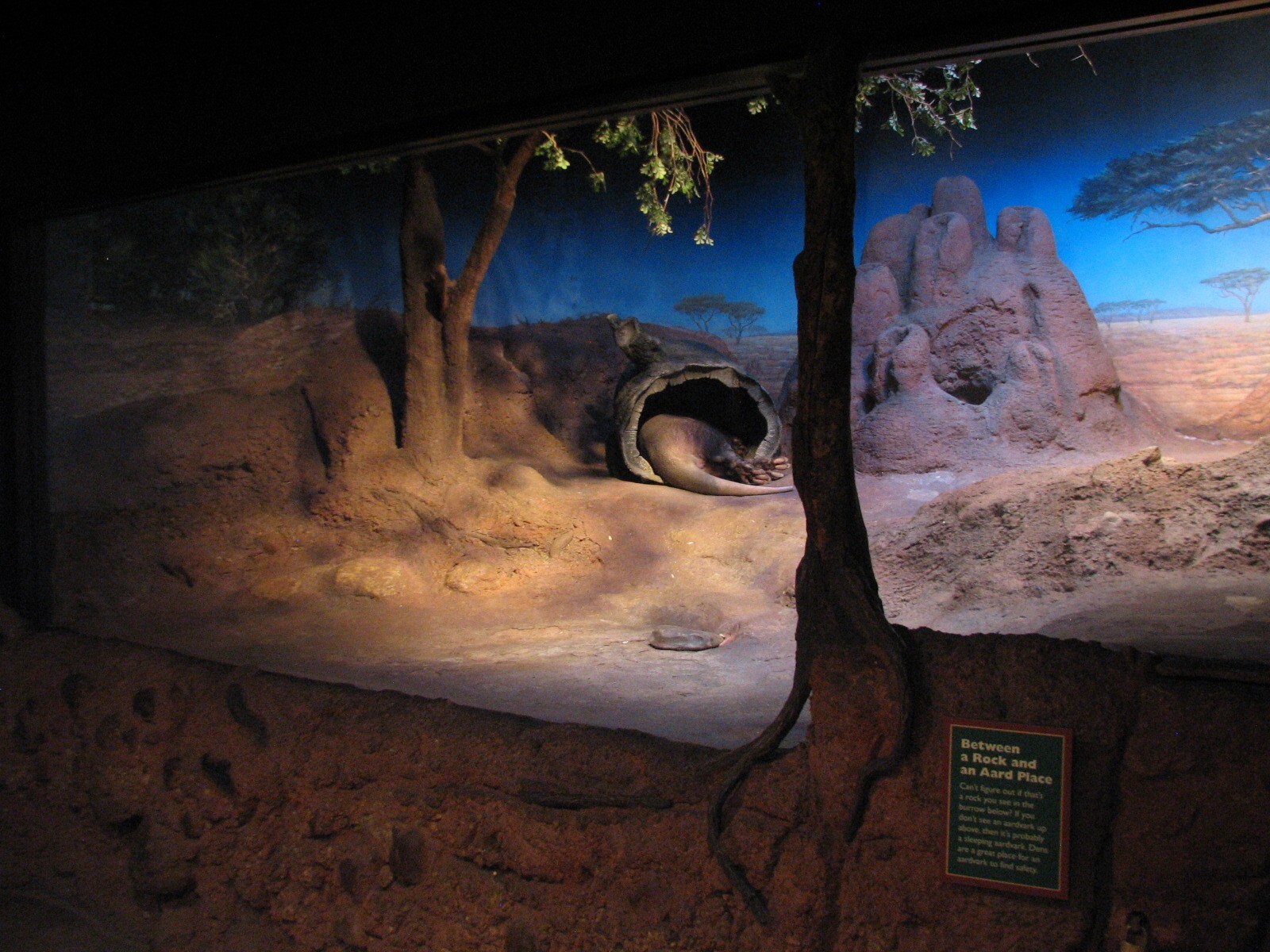
If there was a single exhibit that contributed to me joining zoochat, this is it. Brookfield's Aardvark House was easy to miss but a treasure to find, a small building with a sharp focus on a single, easily overlooked animal. Behind the scenes, the zoo bred aardvarks pretty well for a long time here. It was one of those exhibits a kid who's never seen one of these before would go in and walk out with a new appreciation. Aardvark are a unique and less conventional choice for a focus animal, but that's part of the beauty of the exhibit, especially in an age when Brookfield had nearly everything anyhow. It helped solidify my love of the zoo and remains connected to some really key childhood memories as a result. It also remains the exhibit that always pops into my head as How to Exhibit a Bullfrog in action.
I can't say for sure if this exhibit is especially remarkable on a greater scale, but I know I'm not the only zoochatter who misses this little hidden gem.
I imagine if there is one exhibit in Chicago that people will be talking about missing twenty years from now at any of the zoological institutions here, it'd be the Caribbean Reef.
I'm throwing out my own example, although I have been vocal about this in the past on numerous occasions:
Habitat Africa! The Savannah - Aardvark Exhibit
- geomorph
- 1
For details, see my review http://www.zoochat.com/22/review-brookfield-zoo-157283/
If there was a single exhibit that contributed to me joining zoochat, this is it. Brookfield's Aardvark House was easy to miss but a treasure to find, a small building with a sharp focus on a single, easily overlooked animal. Behind the scenes, the zoo bred aardvarks pretty well for a long time here. It was one of those exhibits a kid who's never seen one of these before would go in and walk out with a new appreciation. Aardvark are a unique and less conventional choice for a focus animal, but that's part of the beauty of the exhibit, especially in an age when Brookfield had nearly everything anyhow. It helped solidify my love of the zoo and remains connected to some really key childhood memories as a result. It also remains the exhibit that always pops into my head as How to Exhibit a Bullfrog in action.
I can't say for sure if this exhibit is especially remarkable on a greater scale, but I know I'm not the only zoochatter who misses this little hidden gem.

Is this next to the wombats or in the new Iyora Australian precinct?Taronga's old Wetland Birds Lake for me (it has now been turned into a macropod / emu walkthrough with very common species).

Osedax
Well-Known Member
The Wetland Birds Lake was the first thing you would see as you came into the zoo, and was home to a pair of Black Swans, a pair of Black-necked Storks, a rescued Silver Gull, a few Hardheads and Blue-billed Ducks, an Eastern Snake-necked Turtle, a pair of Brolgas, many Wandering and Plumed Whistling Ducks, Australian Shelducks and Pacific Black Ducks and an Australian Pelican named Darren. It also attracted many wild species such as Pacific Black Ducks, Dusky Moorhens, Australian Wood Ducks and Little Pied Cormorants, and was the location of the zoo's first Australian White Ibis colony.Is this next to the wombats or in the new Iyora Australian precinct?
Two years ago, all these species were removed and the lake was drained. It was replaced this year by Buru Nura (Kangaroo Country), the macropod walkthrough in the new Nura Diya Australia precinct. The main shape has been retained, as it is heritage listed. Buru Nura now houses a pair of Emus, seven Kangaroo Island Kangaroos, two Tammar Wallabies and some Swamp and Red-necked Wallabies, with plans for Red-necked Pademelons and Red Kangaroos.