the last DoC management plan was the 1995 one I believe:
www.doc.govt.nz/upload/documents/science-and-technical/TSOP07.pdf
Then there were about 75 birds in captivity, all descended from a group taken from the Antipodes in the late 1970s-80s. It mentions in the publication how some birds were released on Stephens Island in Cook Strait in an attempt to establish a wild population there but they failed for reasons unknown (post-publication it was determined that it was due to tuatara attacking/eating the parrots when they were roosting in their burrows!). There are none overseas.
The wild population (on the Antipodes, which for those overseas not familiar with NZ islands, are WAY down south in the subantarctic) is around 2-3000 and is considered stable. The only real risk to the birds is from the possibilty of introduced pests somehow arriving there, especially rats, and for this reason landing on the islands is prohibited without a licence. To see a wild one you need to go on a subantarctic cruise, from which you can rove around offshore in a small inflatable in the hopes of catching a distant sight of one should it happen to be near the beach. (Something which I can't afford to do, sadly).
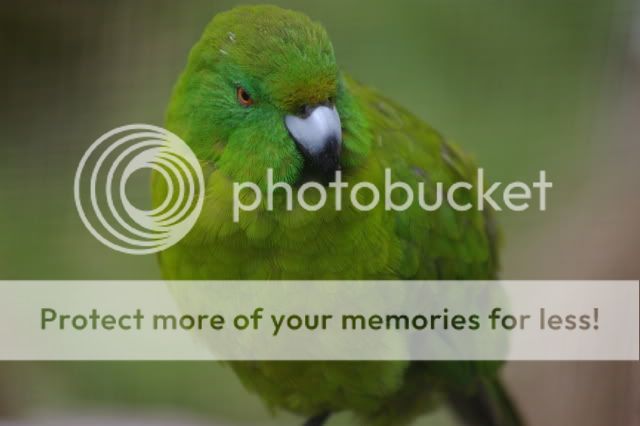
No more have ever been brought into captivity, and there was a period where none were being allowed to be bred by DoC, but now they are pairing up birds and moving them between holders to keep the captive population going. There are quite a few held by private persons (with permits of course) but I don't know current figures. At public places I have seen them recently at Orana Park (where the photo above was taken) and Willowbank in Christchurch and at the Dunedin Botanic Gardens aviary complex. I assume they would also be at Wellington Zoo, Otorohanga and Mt. Bruce. In the 1995 document there were 12 public holders but it doesn't list them.
As for the birds themselves, they are the largest of the Cyanoramphus spp and the only one without a distinctly-contrasting forehead and crown (although it is a noticeably-different shade of green to the rest of the body). They live entirely on the ground in the wild and are omnivorous, feeding not only on the usual parroty things but also by scavenging along the tide-line and on the carcasses of dead seals and penguins. An interesting article in Notornis 46 documents them regularly killing storm petrels after digging them out of their nesting burrows.
They are my favourite Cyanoramphus species.




 :
: