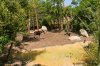
This summer, discover our new African forest area dedicated to an amazing animal, the okapi.
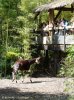
This bizarre mammal with a strange morphology evoking both a zebra and a giraffe was only discovered at the beginning of the twentieth century! Hiding in the deep forests of the Democratic Republic of the Congo, the okapi, discreet despite its large size, was only known by the Mbuti Pygmies.
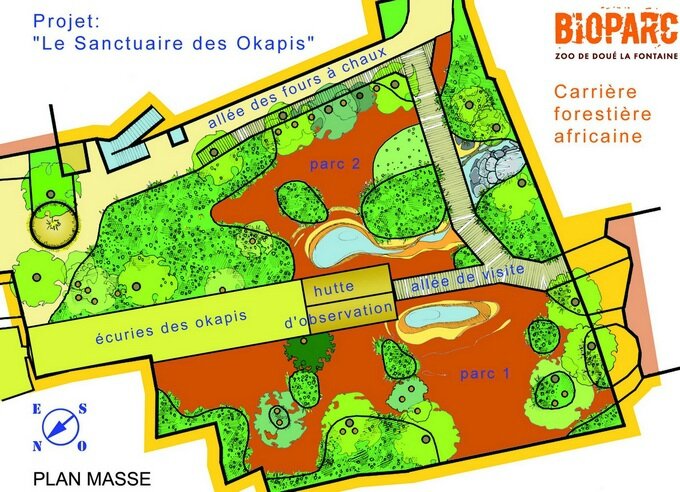
Concerned about the fate of this mysterious and threatened animal, the Bioparc managers, Pierre and François Gay, have designed a unique place in the world: a vast 4000 m2 quarry covered with a tight net 20 m above the ground that will house over fifteen species. The Bioparc is the second park in France to house this species and the only one favouring cohabitation with other species in such a large area. Indeed, the three Okapis will share their sanctuary with 15 species of most brilliantly coloured birds (touracos, hornbills, parrots, ombrettes, ibis ...) and two other mammals, the Hamlyn's monkey and the forest antelope, the Natal red duiker. As in the wild, these animals live together in near-natural conditions in the middle of dense vegetation.
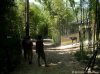
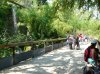
You can access this exceptional site via passageways on stilts allowing you to enter and observe the animals without disturbing them.
True to our philosophy, the Okapi sanctuary combines the notions of visitor immersion, revegetation areas and species diversity. Let's not forget the protection of biodiversity for which we act on a daily basis as part of breeding programs and our nature projects. By hosting Okapis in our park, we will provide our support for the OCP "Okapi Conservation Project" achievements in the Democratic Republic of the Congo.