Old/Obscure Taxonomically Incorrect names for Animals

...the so-called “Laughing Gull” (Leucophaeus atricilla)? Incidentally, “atricilla” means “black-tailed”, despite the fact that there is an actual Black-tailed Gull (Larus crassirostris, “thick-billed”), and that the Laughing Gull has a white tail as an adult like most gulls (perhaps there was a mistake and it was supposed to be “atricapilla”?)
Linnaeus tended not to give explanations for the names he gave to species, and there is an opinion ("undoubtably", according to Jobling) that atricilla actually was supposed to be atricapilla and that he misspelled the word accidentally.

I have also once or twice seen it suggested that atricilla is intended as a diminutive of atra rather than meaning "black-tailed". The use of cilla itself to mean "tail" derives from a Medieval mistake.
 
Though not particularly obscure, for a while, I did not realize African penguins, Jackass penguins and Black-footed penguins were all names for the same species.

I have an old book that still used 'Suricate' and treated meerkat as the more obscure name.
 
Much of my childhood knowledge of North American birds (or at least their common names, habitats, and appearances) came from a now-defunct game (Flash, of course) by the name of Where The Birds Are (the source of my profile picture). In the game, the Ring-necked Duck (of which distinct males and females occurred at the “Lake Edge—Water, Rocky Mountain National Park, Colorado”) was called “Ring-billed Duck”, evidently the more accurate name (https://www.audubon.org/news/its-time-rename-ring-necked-duck). The German (“Ringschnabelente”) and Dutch (“Ringsnaveleend”) names of the species appropriately translate to “ring-billed duck”, and even in English, the colloquial name of “ringbill” has historically seen currency (just look at the Audubon’s Birds of America entry for the species). Unfortunately, “Ring-necked Duck” did not make it onto the AOS chopping block, though (considering the linguistic precedent for “Ring-billed”) its retirement as a standard common name is arguably more welcome than that of some eponyms.
 
I recently read an article from the sixties referring to an aquarium facility intending to hold a 22 foot "blackjack whale" -- an obscure name for an orca, I'm assuming?
Incidentally, another name for the Ring-necked/billed Duck is “blackjack”, though of course it’s not a cetacean.
 
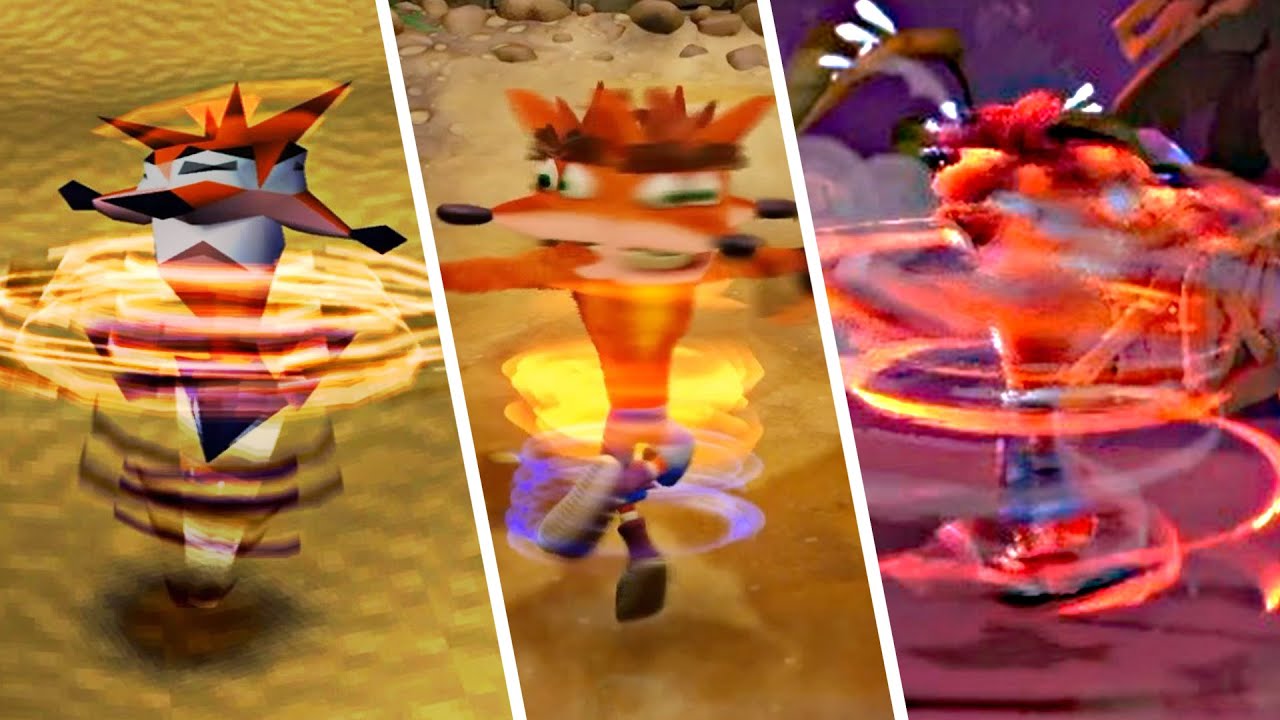
Apparently a Spanish name for the bandicoot is "topo que gira", which means "spinning mole". An interesting choice, because although bandicoots are obviously not closely related to placental moles, they aren't very close to marsupial moles either.
 
Apparently a Spanish name for the bandicoot is "topo que gira", which means "spinning mole". An interesting choice, because although bandicoots are obviously not closely related to placental moles, they aren't very close to marsupial moles either.
It makes sense they'd be spinning though, as this behavior bandicoots are well-known for:

maxresdefault.jpg
 
Nilgai deserves a shout doesn't he? Boselaphus tragocamelus...that is like 4 animals in one?
I have seen Nilgai described as the "blue bull" in writings like Kipling's. Although the bulls of the species are blue, (and the cows aren't), I assume that the name "blue bull" compares it to a domestic bull.

With canids I'd suggest it's big = wolf, small = fox with a couple of dogs dropped in there for good measure.
Not forgetting the Painted Wolf, (AKA African Hunting Dog), which is not painted, nor a Wolf or Dog, (in the Canis genus), although it is African and does hunt, (very successfully, I believe).

Also, to start another chain; Chevrotains are known as mouse-deer, but are neither mice nor deer. Babirusa means "deer pig", so that is only half accurate.
 
Last edited:
The hyrax used to be called "tlustoš" in czech in the past. One thing is that it sounds really funny and dumb, the other thing is that it basically means "fat"/"fat guy". Unfortunately, it's impossible to translate it straight into english.
 
But still not too far off considering bandicoots seem to form a clade with them and dasyuromorphs!
Actually “bandicoot” itself is a misnomer, as they were named for the bandicoot rats of India by early settlers.
 
Not forgetting the Painted Wolf, (AKA African Hunting Dog), which is not painted, nor a Wolf or Dog, (in the Canis genus), although it is African and does hunt, (very successfully, I believe).

In my life, I have known this animal, from reading zoo labels, as Cape hunting dog, painted dog, and African wild dog, but never wolf, although of course usage is often different in different countries. In any case I would regard "dog" as synonymous to "wolf" as dogs are a domesticated form of grey wolf (or closely related but now extinct other wolf species).
 
Last edited:
Apparently a Spanish name for the bandicoot is "topo que gira", which means "spinning mole". An interesting choice, because although bandicoots are obviously not closely related to placental moles, they aren't very close to marsupial moles either.
It makes sense they'd be spinning though, as this behavior bandicoots are well-known for:

maxresdefault.jpg
I'm pretty sure that "Carlos el topo que gira" is specific to Crash Bandicoot, and not to actual Bandicoots - other than that people may refer to the real animal as that because of Crash Bandicoot.
 
Actually “bandicoot” itself is a misnomer, as they were named for the bandicoot rats of India by early settlers.
It's penguins all over again :D
Heaps of Australian animals' names are corruptions or direct swaps of the names of "foreign" animals - bandicoot, emu, jabiru, and goanna all come immediately to mind.
 
Heaps of Australian animals' names are corruptions or direct swaps of the names of "foreign" animals - bandicoot, emu, jabiru, and goanna all come immediately to mind.
Emu?? What animal name did that originate from?

I thought for the longest time that goanna was of indigenous origin, and I was quite shocked when I first learned it wasn't!
 
Back
Top