Alrighty then, just got back a bit ago from an early preview in advance of the newly renovated Hubbard Orangutan Forest and I posted a bunch of photos into the gallery!
Initial thoughts: Absolutely awesome environment in the lower portion of the exhibit, theming of the absolute highest quality that would rival a Disney park. The upper part is fine, but mainly the exact same as before, but with a baffling design decision that may get tweaked sooner than later.
I will start with the upper portion, which as noted in the previous paragraph, is actually almost the exact same as before, just with some window dressing. Aside from the boardwalk redo and elevator building overhaul, the exhibits themselves are pretty much the same. In the concept art, it made it look like the main upper exhibit would actually encompass the waterfall below it, adding even more height to the exhibit, but alas, was not meant to be.
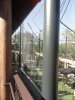
The concept art also made it look like the viewing windows on the boardwalk would allow unobstructed viewing into the netted exhibits, but oh boy that is not the case! I'm not sure what the heck happened here from a design standpoint, but the viewing windows are actually almost 10 feet from the netting of the exhibit! See this photo below.

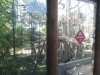
As it is also covered in dots to prevent birds from flying into the panes of acrylic or even to attempt to give some privacy to the orangutans, it makes for absolutely terrible views into the exhibts themselves. It is much easier to see the exhibit off to the sides of the viewing windows as the glare combined with the dot pattern makes photography worthless. In fact, I'm sure the only part of the day that the glare won't be bad here would be first thing in the morning. See this photo below for how this looks at around 5:45 pm, and won't be better when the sun is directly overhead for most of the day. Honestly, the photo turned out better than what my eyes were seeing.

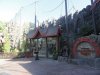
Going into the elevator to descend to the lower habitats is where the adventure begins. Even the walls of the elevator shaft were redone with fancy rockwork giving you a taste of the extensive interior work that was done. As you step out of the elevator into the lower lobby, you see instantly this is on another level from before.

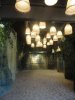
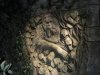
If you want to see the exhibit as intended, you enter through the elevator doors instead of the exit near the left side of the Siamang habitat. When you do, you step into darkened corridors lined with faux vegetation on the walls and ceilings, and fancy temple rockwork and tree trunks with various orangutans molded into them. The level of detail here is insane, and honestly could have filled 100 photos in the gallery with all the small things. I didn't post as many corridor shots in the gallery just so all of you can experience most of this on your own, but the opening area just gives off that vibe of anticipation.

Another really cool feature is near one corner of the indoor orangutan exhibit are some projections that are mapped to the floor on both the zoo visitor and orangutan side of the glass that lets both groups try to catch projected bugs on the floor as they zip from leaf cover to leaf cover.

The visitor corridor next to the glass viewing is so dark and vegetated/themed that to the orangutans, would have to look like the jungle. With the indirect natural light flowing into this habitat, it has an effect on photography much like Shedd Aquarium's Amazon Rising, or most of the Dallas World Aquarium.

As for the exhibit itself, where it was more of an open room with a somewhat rock backdrop and some faux trees, now feels tighter at the ground level with the cave mockrock formation, but holy smokes the amount of climbing opportunities is (almost) through the roof! Seriously, there are ropes/hoses everywhere, and they go literally up to the ceiling. The female orangutan in here was climbing along the roof for a very good chunk of the time I was in here. I feel like the tighter quarters at the bottom of the exhibit almost force the orangutans to higher levels. The pair in here were VERY active, granted they have only been in this space for about 3 weeks, so they are still somewhat exploring their new home. I also challenge someone to capture the full interior in one photograph, because the odd shape of the habitat does not lend itself to be captured in its entirety. Especially accounting for the full verticality of it.

There are some clever viewing areas in here, one space under the central temple has training areas on both sides and the frontal glass gets you up close to a pool with a gentle waterfall that drips off the cavelike face of the rock wall. Another viewing area near a large faux tree gets littler zoo enthusiasts to feel like they are climbing alongside the apes up a short rock path to a netted area, with a net on the other side for the exhibit's inhabitants so they both can play in the net.

The rest of the interior has excellent screens with educational materials featuring names and quirks of the zoo's current orangutans, but also an excellent map of the Indonesian Islands I posted to the gallery. It features touchscreens on various flora, fauna, climate, and habitats of all the islands and is an awesome way to showcase the diversity of this group of islands. The end of the corridor features a display on the exotic looking plant life found on the islands.
The last room features a glimpse into the indoor holding for the Siamang, complete with lots of swinging ropes and a netted area for them to swing about or lounge on. The outdoor portion of the Siamang habitat has to jump quite up there in terms of best netted gibbon enclosure in the country. Yes there are heavily vegetated islands that are great, but in terms of netted enclosures, this one is quite long, very vertical, and has a ton of animal enriching and eye pleasing features. Unlike the upper viewing windows, these ones peer directly into the netted area. There is also a window near the start of the indoor portion that peers down the side of this exhibit near the waterfall.

One thing to note, the old original Owen Orangutan House that had two day rooms and three smaller exhibits has been completely removed to make way for the entirety of the Siamang exhibit space. This includes the old Burmese Python/Gray's Monitor exhibit, and the two smaller corner exhibits, near the end held small birds and the other was an exhibit turned educational palm oil display.
The lower plaza also got a couple more planter beds that will eventually provide some much needed shade down here, and the Gorilla Grille got rebranded as the Orangutan Oasis. There is a small gift cart down in this area as well.
While there are some less than ideal things about the refurbishment, overall it is a massive win and the indoor portion is fantastic from a theming/environment. From entering with its sweet flowery smelling corridor much like the Polynesian Hotel's lobby at Disney World, to the constant sounds of the jungle pouring through the halls, I could spend all day in there looking at one exhibit. Adding a third massive outdoor habitat for Siamang was icing on the cake.
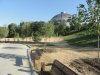
Also, they had us exit out the north side of the zoo along the new path installed from the orangutan lower plaza to near the Children's Trails, so you all get a bonus pic for the zoos now most prime real estate. The old Cat Complex ground. I will leave you with this picture and let all of you start to imagine what the future could hold here.