Once Upon a Kingdom: the Speculative Kobe Animal Kingdom Thread

Tropical Forest

I could imagine, had Chlidonias visited the kingdom a few years prior, then this area especially would have given him (or anyone for that matter) a sour taste of the entire kingdom. The first half of the exhibit used to be a separate area called the Aqua Valley, which used to house fur seals, spotted seals, beavers, capybaras and maras before the roster of animals changed over time. Unfortunately, with the presence of the pudus and bush dogs, it isn’t reaching its full potential as a walk through rainforest hall/aviary.

upload_2025-7-28_14-30-7.png
Not sure if the pudus are in a better situation by being moved to the former tapir exhibit from the North Area… credit: @Chlidonias

Just like the Asian forest, my biggest concern with this area is the fact that the visitor path goes through the middle of the green house, resulting in the formation of small inadequate enclosures and fractured territories for the free roaming species. Otherwise I don’t see any problems with the exhibit not being zoogeographically accurate. In fact I like the fact that this area isn’t bound by zoogeographical rules, making it somewhat resemble a smaller Fragile Forest or Gondwanaland. The first thing I would do with this half of Tropical forest is transferring the pudus and bush dogs to elsewhere in the park. Instead of refilling these enclosures with another species, the kingdom could demolish the enclosures only leaving the water feature of the bush dog enclosure behind as a small watering hole for the remaining species. The kingdom could rearrange the visitor path and have it on the side instead, removing the midas cichlid pond on the way as well. With the old middle path being converted to an animal territory, it could have some new plants added as perches and to function as a visual barrier for the animals. The Patagonian maras and Aldabra tortoises could be moved elsewhere in the kingdom. With the remaining animals being the sloths and four species of birds, there could be new attempts at introducing new birds such as being lilac-breasted rollers, red-billed hornbills, or superb starlings, along with the transfer of some of the scarlet ibises from the African Wetland. The area could also use a ground dwelling bird like the Palawan peacock pheasant or Edward’s pheasant, if there are any surplus pairs left in Japan. It would be great if the park tried to take part in Yokohama city’s crested argus breeding program, but I think that might be pushing it towards supernova… Another ground dwelling avian candidate is the sunbittern. Not subject to extra bio security measures, the kingdom could (re)introduce this bird to Japan, which could grab people’s attention with its butterfly-like wings.

upload_2025-7-28_14-18-17.png
A good walkthrough encourages visitors to look both up and down to spot all its residents. credit: @GiornoPizza

The finishing touches for this half of the area would be the addition of more terrestrial species such as the radiated tortoise, green iguanas, and Chacoan maras to make use of the newly formed territory, offering the guests the opportunity to search for the animals which might be hiding in the undergrowth as well as the birds on the perches. The kingdom already has the former two species, and the maras could be imported from Europe. The kingdom could cooperate with Saitama Children’s zoo to help propagate the small rodents in JAZA zoos.

In the second hallway the path should continue remain on the side of the greenhouse instead of going through the middle, making the small pond act as a barrier between visitors and the middle path which will be an animal territory. The creation of the new territory would also require the removal of the monster fish and their tank (sorry fish nerds). With the new “territory”, the tamandua are safe from a stampede of visitors and the staff can place climbing structures that allow the tamanduas to get down to the ground. Speaking of the ground, the surface of this territory could use natural substrate such as mulch for the tamanduas to dig and investigate. The armadillos should also be displayed in the new territory with feeding stations being placed in select hours in a spot where the visitors can see the animals. If the new Mexican spiny-tailed iguana isn’t a part of the walkthrough yet, then this is a great chance to offer the lizard more space by having it be a part of the walkthrough.

upload_2025-7-28_14-21-46.png
The tamanduas are the main draw of this half of the Tropical Forest. Giving them access to the ground could allow them to display more behaviors. They could still be encouraged to climb with their food being kept on the branches. credit: @Goura

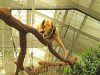
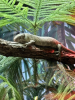
The kingdom could try experiment having the cotton-top tamarins as free range as well along with expanding their troop size. On the other hand the staff should consider controlling the population of the common marmoset troop and stop breeding them. The pygmy marmosets might have to stay inside their enclosure to stay safe from the toucans and the other primates. The cloud rats could be given to another zoo and have their enclosure instead for a nocturnal or crepuscular species of reptile ,such as a new Caledonian giant gecko or prehensile tailed skink.

upload_2025-7-28_14-34-50.png
For a tropical forest this exhibit doesn’t have much ectotherms… Maybe the kingdom should try to change that. credit: @Van Beal
 

Attachments

  • upload_2025-7-28_14-18-17.png
    upload_2025-7-28_14-18-17.png
    994.8 KB · Views: 104
  • upload_2025-7-28_14-21-46.png
    upload_2025-7-28_14-21-46.png
    1.7 MB · Views: 83
  • upload_2025-7-28_14-30-7.png
    upload_2025-7-28_14-30-7.png
    1.1 MB · Views: 91
  • upload_2025-7-28_14-34-50.png
    upload_2025-7-28_14-34-50.png
    1.1 MB · Views: 95
Tropical Wetland

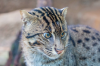
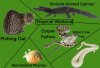
This area has become much better with the departure of the lowland tapir. The former tapir pen should be, without a doubt, used to expand the fishing cat enclosure. With some top netting this expansion could offer a better condition for a breeding pair of fishing cats, and the kingdom won’t need to use that narrow howdy-cage to try introducing the fishing cat pair to each other anymore. The fishing cat is one of the poster felines I had in mind for the park. With a larger enclosure I think the kingdom could promote this species to the public better than before.

upload_2025-7-29_15-30-53.png
Maybe the kingdom could finally achieve breeding success with fishing cats with the expansion of their habitat. credit: @DannySG


While the rest of the exhibit isn’t hideous, I do wish that the kingdom never split the alligator snapping turtle tank, just so they could display smooth fronted caiman. The size of this enclosure definitely isn’t doing any favors for either species, as sedentary they may seem. The kingdom should destroy the wall and merge the two enclosures into one for the caiman while the alligator snapping turtle could get transferred to another enclosure elsewhere in the park.

The iguanas already were transferred to the Tropical forest area in real life before I reached this part of the plan, making my plan for them moot. However now there is a new species to work with, that being the carpet python. The kingdom could make this exhibit a bit more engaging by adding green tree frogs along the carpet python.

upload_2025-7-29_15-33-39.png
As of now, the kingdom doesn’t keep any species of amphibians. If space is an issue then the kingdom could try to keep frogs mixed with the right species. credit: @TinoPup
 

Attachments

  • upload_2025-7-29_15-30-53.png
    upload_2025-7-29_15-30-53.png
    1.1 MB · Views: 81
  • upload_2025-7-29_15-33-39.png
    upload_2025-7-29_15-33-39.png
    1,007.9 KB · Views: 85
Rocky Valley (and the tiger enclosure)

The kingdom obtained its first Sumatran tiger Pump when his previous zoo Misaki Park was shut down around the time of the pandemic. The bald eagle aviary at the time (which also used to be a mixed species red river hog enclosure with shoebill and other birds in it) was converted to give Pump a new home. The kingdom then obtained tigress Aina which made it seem like the tigers will be staying here for a while. It’s a shame, because I believe that a private safari park could have stepped up and built a more appropriate breeding complex for this endangered subspecies instead of a small zoo such as Kobe Animal Kingdom, but it seems like this isn’t the case.

But what if it was the case?

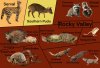
Then with the tigers gone another species which previously stayed in a small enclosure could make better use of the enclosure. The species I have in mind would be the serval(s). I get that this enclosure isn’t the largest either but it would provide the servals a better environment than their previous enclosure in the pelican aviary. The pond in the tiger enclosure could be drained and be used as a sand pit for the servals to roll in and hide from guests. The enclosure could also get some extra modifications to have whole prey or food items hung high so the keepers could have feeding talks while the servals could demonstrate their jumping ability.
upload_2025-7-31_16-49-6.png
With its stand-alone exhibit, the servals wont have any lemurs or pelicans stealing their spotlight. credit: @Goura


Across the now-serval enclosure is the first part of Rocky Valley. The wolf enclosure, which was a walkthrough shoebill and ibis enclosure before its conversion, is home to two elderly brothers Genki and Hikaru. If it wasn’t used for a large species such as grey wolves, this enclosure could have been a great one. Once the brothers pass on, the enclosure should have some shrubbery and undergrowth planted to make hiding spots for its next inhabitants, being the pudus from the tropical forest exhibit. I am under the impression that the pudus might fare better there than their narrow enclosure in the tropical forest area which also gets quite loud being an indoor exhibit. With this change, this enclosure will no longer be a part of the Rocky Valley complex

While the black bear enclosure doesn’t look bad the two sister bears don't get to use the exhibit properly due to the hotwire behind the climbing tree, making the undergrowth unreachable for the animals. Other than the phase out of the bears and the removal of the hot wire, this enclosure could use its top getting covered to play it safe for the species I have in mind for this enclosure. The kingdom could try using this enclosure to try a classic mixed species enclosure that seems to be successful in Europe, which is raccoons and striped skunks. This move would improve the welfare of the raccoons and skunks by a large margin. The enclosure would need some extra reinforcements due to the raccoons’ status as an invasive species in Japan, hence the aforementioned playing it safe part. The enclosure already provides a body of water the raccoons could use to swim or wash their food. Meanwhile the skunks could hide in the undergrowth until it’s their feeding time. With the raccoons and skunks in the bear enclosure, their older enclosures are ready to welcome new inhabitants.

upload_2025-7-31_16-48-8.png
This species mix has been getting more popular in Europe, but there aren’t any cases of this mix in Japan yet. Maybe the kingdom could change that. credit: @vogelcommando

The raccoon enclosure has a weird shape with a wall partially dividing the enclosure while functioning as a single enclosure. The kingdom could convert this odd enclosure to a desert canyon, featuring species such as the common chuckwalla, desert iguana, and the gila monster.

The skunk enclosure could get renovated to accommodate a small addition which might be difficult to source since they are not too common in the west either. The kingdom could start a small-scale program to import and breed Merriam’s kangaroo rats which could be later sent to zoos that focus on smaller species such as Saitama Children’s zoo or Adachi park of living things.

upload_2025-7-31_16-47-47.png
These small rodents surely will “hop” into the hearts of visitors. credit: @HOMIN96

The cougar area isn’t just bad because of the cougar enclosure alone. The prairie dog enclosure is also quite small, without any dirt to dig and a weird rock tower that is supposed to act as a burrow, unlike the natural habitat of the species. My proposal for this enclosure is to convert the visitor area from a roundabout to a deck. On this deck the visitors will be seeing a larger habitat for the prairie dogs which is merged between the old cougar habitat, the prairie dog habitat, and the former visitor path between the two. The rocky background of the cougar enclosure could stay as a backdrop. The prairie dog enclosure will also have some climbing props for North American porcupines, a species that has recently made a comeback in Japan. The porcupines could also make use of the overhead path that was built for the cougars which is above the doorway to the area.

While I don’t feel any animosity towards the beaver enclosure I do think that the enclosure is quite small and the beavers could benefit from being displayed elsewhere in the kingdom with a larger pool to swim in instead of a narrow donut. An aquarium tank with an island in the middle could be best optimized by turtles such as the red eared sliders, a North American species always in the need of rehoming. If the kingdom has enough space, it could also obtain other North American species such as musk turtles, map turtles, or diamondback terrapins.

upload_2025-7-31_16-48-37.png
These guys are considered slow on land, but they are speedy in water. credit @SusScrofa

The last problem enclosure is the coatimundi enclosure, which also used to be the peccary enclosure. The male coatimundi Daichi was an “emergency” acquisition since he arrived at the kingdom following the closure of Hirakata Park. It doesn’t take an expert to think that Daichi should be given to a zoo that could provide him a larger enclosure and conspecifics. The kingdom could convert this enclosure to a mixed species reptile enclosure, with eastern box turtles making use of the floor area of the tank while corn snakes could make use of the vertical space of the exhibit and hide in any corner of the enclosure. This would make the most controversial enclosure of the kingdom into one of the more interesting ones to look at.

With Rocky Valley complete, the indooor park is complete.
 

Attachments

  • upload_2025-7-31_16-47-47.png
    upload_2025-7-31_16-47-47.png
    951.9 KB · Views: 90
  • upload_2025-7-31_16-48-8.png
    upload_2025-7-31_16-48-8.png
    1.3 MB · Views: 76
  • upload_2025-7-31_16-48-37.png
    upload_2025-7-31_16-48-37.png
    1 MB · Views: 82
  • upload_2025-7-31_16-49-6.png
    upload_2025-7-31_16-49-6.png
    1.8 MB · Views: 81
Outdoor Park

Pantanal

Thank goodness for this exhibit. While it isn’t not world class, this is an exhibit that feels like it should have been built years ago. Better late than never I guess. With the tapir and peccaries finally out of the greenhouse, the area is also home to two new species (giant anteater and Azara’s agouti) and a returning species (red footed tortoise). Despite this being a big step by the kingdom, the exhibit could use a lot more to show guests the biodiversity of the Pantanal.

The first half of the exhibit, the capybara walkthrough, could use some overhead netting and be converted to an aviary. A few species that previously resided in the elsewhere in the kingdom could move to this half of the Pantanal. Capybaras are famous for being “chill” with other species as well as people, which is why guests could marvel at the harmony between the birds and capybaras, but also learn more about the avian diversity of the Pantanal region. The species are ringed teal, black-necked stilt, roseate spoonbill, and the boat-billed heron. The macaws from the second half of the Pantanal area could also move to the first half of the exhibit and hopefully never get flight restricted again.

upload_2025-8-1_15-3-18.jpeg
Why keep South American birds in an “African” aviary when you could convert a South American walk through enclosure into an aviary? credit: @Chlidonias

I can look over the fact that the second half of the Pantanal area is not a walkthrough area for the agoutis and red footed tortoises. In fact I am glad that the agoutis are in an enclosure rather than gnawing the plants. I do think a couple more species could be displayed in this exhibit. The armadillos from the nocturnal area could cohabitate with the agoutis while the tortoise log pile could be converted into a proper enclosure where they can live together with a black and white tegu, which the kingdom used to have on display in the past.

upload_2025-8-1_15-9-30.png
The armadillos might bury themselves in mulch during the day, and that’s okay. Their emergence is just as cute as them walking around their enclosure. credit: @Rhino00

One last change I would do is to add more signage. The one signage (third image of the tweet) that discusses the actual Pantanal is full of block text and is placed up high which might fail to get the visitors’s attention. Each section of the sign should be made into their own signs with larger illustrations showing the water cycle of the Pantanal, the adaptations of the animals, and the perils they face.
 

Attachments

  • upload_2025-8-1_15-3-18.jpeg
    upload_2025-8-1_15-3-18.jpeg
    187.2 KB · Views: 110
  • upload_2025-8-1_15-9-30.png
    upload_2025-8-1_15-9-30.png
    1.3 MB · Views: 85
Otter Sanctuary

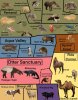
This was a great exhibit which seems to focus on quality over quantity with the number of species kept on display. However the park could try something new for the Japanese zoo world with the tapir enclosure. The tapir enclosure could get its walls raised, its top covered, and another shelter added along with some climbing rope and props. It would be nice if the kingdom tried to mix binturongs along with the tapirs, whose enclosure seems connected to the otter enclosure through the lake. Of course this would require a lot of time to pass for some of the trees to mature so they can be both climbable for the binturongs and safely have their branches trimmed to prevent any escapes.

upload_2025-8-5_11-12-26.png
If needed, the kingdom could give up on tapirs to make the enclosure more appropriate for binturongs. credit: @Goura

The otter enclosure isn’t the worst out there and while the land area seems a bit small, I think that the otters should have enough land area if they are to have access to the tapir enclosure.

upload_2025-8-5_11-7-11.png
New horizons await the otters in the Malayan tapir enclosure. credit: @Goura

Just like Pantanal, this exhibit also suffers from a small amount of signage that seems to be concentrated in one part of the entire area. There could be multiple signs talking about the problems otters face in the wild instead of just one. There could also be signs educating guests about the biodiversity of Southeast Asia featuring animals that are not displayed in the kingdom.


Squirrel Forest

The squirrel forest is fine for what it offers. While it is very similar to the one in the park’s sister location, this is one exhibit I don’t mind both kingdom parks having it at the same time.
 

Attachments

  • upload_2025-8-5_11-7-11.png
    upload_2025-8-5_11-7-11.png
    1.4 MB · Views: 74
  • upload_2025-8-5_11-12-26.png
    upload_2025-8-5_11-12-26.png
    858.3 KB · Views: 71
Aqua Valley

While moving this exhibit and its animals outdoors from indoors was a great move for the pinnipeds, the enclosures are still underwhelming for them since the pools are shallow for the marine mammals. Which is why the kingdom could give away the spotted and fur seals to an aquarium and display other species, already within the kingdom, to show the diversity of amphibious lifestyles.

The South American fur seal enclosure could be converted into an enclosure for bush dogs. The water area will be reduced until it only covers the area between the waterfall and the climbing rock. The emptied area will be filled with native substrate such as mulch, dirt, and sand. The water will be held by acrylic glass, giving visitors a chance to see the bush dogs swim, similar to the giant otter enclosure in Hagenbeck. Foliage could be added alongside dead logs for the bush dogs to mark on. The keepers could replace the logs once every couple months to encourage marking behavior. Of course the enclosure barriers will need to be raised higher to make sure the bush dogs won’t be able to escape from it, and also to comply with the animal welfare laws which requires the zoo to make sure a dangerous species like the bush dog won’t escape.

upload_2025-8-6_15-57-54.jpeg
These small loaf-like canines can finally have a greater roaming ground outdoors in the former fur seal tank. credit: @Chlidonias

The kingdom could give the American beavers the former domain of the spotted seals. The beavers could be given logs to chew and carry around the exhibit, along with a pile of logs to act as a beaver dam. An important feature of the exhibit will be the shelter of the beavers. The shelter will be a dark indoor enclosure for the beavers which will have access to it all day so visitors could watch these crepuscular and nocturnal rodents in their sleep instead of having the beavers be locked outside during the day. To ensure the privacy of the beavers and the darkness of the shelter, the display will be small slits no larger than a camera lens.

upload_2025-8-6_15-51-30.png
This move is a “dam good improvement” for the beavers who have been spending the last few years in a dark building. credit: yours truly

The penguins follow the pinnipeds in Aqua Valley. I believe this enclosure works well especially if the facility isn’t breeding its current stock, which likely has hybrid individuals. The enclosure could use some permanent netting over it as a permanent measure against avian influenza.

The empty pool across the penguins could be home to alligator snapping turtles which should be able to tolerate Hyogo’s winter as a temperate species. The habitat glass could be raised with extra barriers similar to this snapping turtle enclosure from Zie-Zoo in the Netherlands. The rocky outcrops will also have to have some extra barriers since this species is regulated as dangerous in Japan’s animal welfare law.

upload_2025-8-6_15-51-53.png
Slow and steady, this giant turtle is making way to an outdoor environment. credit: @Ding Lingwei
 

Attachments

  • upload_2025-8-6_15-51-30.png
    upload_2025-8-6_15-51-30.png
    1.2 MB · Views: 71
  • upload_2025-8-6_15-51-53.png
    upload_2025-8-6_15-51-53.png
    930.3 KB · Views: 67
  • upload_2025-8-6_15-57-54.jpeg
    upload_2025-8-6_15-57-54.jpeg
    156.3 KB · Views: 99
Domestics and co.

For an exhibit meant for domestics, these are fine enclosures but I think the animals could use some shelter from the rain or extreme sunlight. However I would move the pigs (which are still listed on the website) to the alpaca enclosure, giving the pigs, miniature horses, and sheep more space. I think the alpacas could use a larger enclosure which could be made more interesting than their current stall.

upload_2025-8-8_13-43-40.png
The alpacas were one of the first mammals to arrive to the kingdom during its transformation from Kobe Kachouen. credit: @Goura

But we are basically done with the entire park. Where can this new alpaca enclosure be built, you might ask. I am glad you asked.

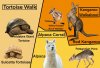
There is a parking lot in the kingdom on the north of the show stage, which is on the west side of the greenhouse. This parking lot is 5947 meters squared (or 64,013 feet squared for those of you from the US). Since this section is within the park grounds, this does not count as an expansion and therefore using it is allowed under the cornered plan. Other than utilizing the space for the benefit of animals that I still hadn’t found a place for (maras, tortoises, and alpacas) I want to destroy this parking spot mostly due to my belief that a zoo that is located right next to a train station should do its best to promote public transport (which the kingdom already does with collaborations with the Port Liner) and discourage car usage similar to how some facilities discourage the use of single-use plastics. I also believe that guests could really use a resting spot outdoors other than the show stage.

With this expansion I plan to add four areas:

  • New Alpaca Corral
  • Visitor Resting Area/Botanical Display
  • Summer Tortoise Enclosure
  • and Kangaroo Walkabout.
upload_2025-8-8_13-44-54.png
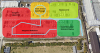
Map of the new outdoor park. Made using Google Earth, Snipping Tool, and MS Paint
 

Attachments

  • upload_2025-8-8_13-43-40.png
    upload_2025-8-8_13-43-40.png
    1.6 MB · Views: 66
  • upload_2025-8-8_13-44-54.png
    upload_2025-8-8_13-44-54.png
    859.3 KB · Views: 65
New Alpaca Corral

Let’s start with where we left off. With this alpaca enclosure the kingdom not only provides the alpacas more space, but the staff would also finally bring the Patagonian maras outdoors after years of being stuck in a narrow greenhouse with a pit of sand being the closest thing to natural substrate. The visitors can feed the alpacas with hand shovels while the maras could be offered bamboo leaves with the use of tongs. The exhibit could also be decorated with rocks in an attempt at creating a Patagonian atmosphere.

upload_2025-8-8_14-44-40.png
The maras could finally catch a break in an outdoor enclosure free from hordes of visitors walking through. credit: @Goura

Visitor resting area

The Pantanal expansion and Squirrel Forest took over space that was once used as a restaurant and a resting area. While I don’t object to this takeover due to the improved welfare of the tapirs and peccaries, I still think that there could be an area for the visitors to take a rest outdoors after walking throughout the park. Even if this resting area doesn’t provide amenities I think that visitors could get a cold drink from a vending machine nearby before taking a rest in a grassy area or surrounded by flowers, which could be part of a botanical or horticultural display.

Summer Tortoise Enclosure

This enclosure is made to be a walkthrough enclosure for tortoises, open to guests at limited hours. The enclosure will have a mud pit for the tortoises to wallow and picket fences they can go under to get away from guests. Visitors can feed tortoises vegetables and leafy greens using tongs under keeper supervision. Unfortunately this area would have to be closed off during the winter with the tortoises being brought into a heated holding area before the return of spring.

Kangaroo Walkabout

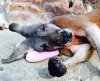
The kingdom owes much of its success to its kangaroo walkabout which started right after the park’s conversion from Kobe Kachouen. The kingdom’s mob of red kangaroos initially lived alongside toucans in what is now the second half of the Tropical Forest exhibit, before the opening of the outside park, where the kangaroos lived until the construction of Pantanal. Among the kangaroos was Mamezou, who became famous for sleeping while hugging a small pink pillow. Mamezou’s sleeping position helped the park gain publicity in its first years, further helping it grow throughout the years. Unfortunately Mamezou died in 2022 at the age of nine.

upload_2025-8-8_14-45-30.jpeg
Rest in peace Mamezou. credit: KissPress

The new kangaroo enclosure will be similar to the previous one, with picket fences that separate guests from the animals’ territory, a shade structure, and a rocky hill or two. Just like the older kangaroo walkthrough area the new one will have a separation paddock where the animals can take refuge from guests and the staff can separate males from females to manage the population of the red kangaroos and ensure guest safety.

upload_2025-8-8_14-43-53.png
The former kangaroo walkabout was a fine enclosure, which is why I don’t really know what a new kangaroo walkabout could do to be better than it. credit: @aardvark250

The red kangaroos will be sharing their habitat with yellow footed rock wallabies. The rock wallabies could be obtained from Hibiki Nada Green Park, a park that has a large mob of yellow footed rock wallabies, which could always make up some space by giving away some individuals (probably up to half a dozen individuals of the same sex). I assume this transfer would require the Australian government’s approval but I don’t think should be difficult since the kingdom is a JAZA accredited zoo. Since the kangaroo enclosure will be having rocks and hills, the wallabies will be able to display their rock climbing abilities to the visitors.

upload_2025-8-8_14-44-10.png
Hibiki Green Park has so many rock wallabies, it’s not even funny. More JAZA zoos should work with the Green Park and Australian government to help the wallabies in Hibiki thrive. credit: @Veno
 

Attachments

  • upload_2025-8-8_14-43-53.png
    upload_2025-8-8_14-43-53.png
    1.3 MB · Views: 58
  • upload_2025-8-8_14-44-10.png
    upload_2025-8-8_14-44-10.png
    1.4 MB · Views: 67
  • upload_2025-8-8_14-44-40.png
    upload_2025-8-8_14-44-40.png
    1.3 MB · Views: 61
  • upload_2025-8-8_14-45-30.jpeg
    upload_2025-8-8_14-45-30.jpeg
    202.1 KB · Views: 82
Thinking outside the box

We have finally finished the speculative park plan for Kobe Animal Kingdom. However, the “cornered plan” isn’t done yet. As I said in the introduction, I think the kingdom could do a lot more than just tackle its problematic enclosures. For a park that is going through a lot of changes, Kobe Animal Kingdom isn’t a zoo that is much recognized by the global zoo community, both by enthusiasts and the industry. For this part of the speculation project I will discuss what the kingdom can do outside the park grounds.


WAZA membership

The kingdom is a prominent member of JAZA and has a ZIMS species 360 membership, which is a great first step to be a part of a global network. I think Kobe Animal Kingdom (along with its sister location in Nasu) should take their global network to the next level and apply for a WAZA membership. Knowing that a shopping mall aquarium in Turkey was able to achieve this status I am confident that the kingdom does have the potential to join WAZA. The kingdom could exchange husbandry information with zoos from abroad and could join international breeding programs for species such as red pandas, small clawed otters, bush dogs, and Malayan tapir. The kingdom could also exchange information with other zoos and use that knowledge to improve husbandry techniques.


Conservation Projects

According to the kingdom’s website, the park takes part in four different projects to help preserve wildlife around the world (five if you count phasing out single-use plastics.) These projects are:

  • Preservation of Tshushima leopard cats by supporting rice fields that act as a habitat for the cats’ prey.
  • Taking part in the Bornean Conservation Trust Japan, an initiative between member zoos of the trust. Kobe Animal Kingdom raises funds for the trust using vending machines.
  • Mamorou Project, a JICA (Japan International Cooperation Agency) collaboration done to raise funds for snow leopards by selling items made in villages in Kyrgyzstan.
  • Breeding native endangered species such as Amami spiny mice and Miyako green lizards. This particular project did win the Ministry of Environment’s trust, which is followed by the kingdom being the first privately owned zoo to be recognized and certified by the Ministry as a zoo that conserves rare species.

Four projects is obviously better than none, but all of these projects are either based in Japan or done in collaboration with a Japanese group instead of directly supporting or funding a well-established in-situ project.

upload_2025-8-11_13-33-44.png
Guests can learn about the kingdom’s conservation activities by the Asian Forest exhibit. credit: the kingdom’s website.

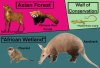
Here is a list of projects I think the kingdom could support while educating the general public about the work done by the global conservation community (which I used EAZA‘s conservation map):
  • Red Panda Network
  • Lowland Tapir Conservation Initiative
  • Kalaweit
  • BirdLife Preventing extinctions
  • SANCCOB

Research

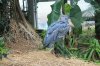
The kingdom is very tight on space, which is why it is difficult for it to establish more research and conservation projects on the park. The park could build an off site research facility far from the city to research animal breeding and conservation. Nasu Animal Kingdom already has such a facility working to breed and release Japanese ptarmigans back to the wild and I think Kobe Animal Kingdom could use such space to work with challenging or endangered species. Such a facility could be used to try breeding difficult species such as shoebills, striped possums, fishing cats, or smaller taxa such as song birds and turtles.

upload_2025-8-11_13-37-5.jpeg
There are still a lot to learn about breeding shoebills. An out-of-town facility could be more beneficial for progress than squishing two breeding pair into ou greenhouse. credit: @Chlidonias
 

Attachments

  • upload_2025-8-11_13-33-44.png
    upload_2025-8-11_13-33-44.png
    429.3 KB · Views: 58
  • upload_2025-8-11_13-37-5.jpeg
    upload_2025-8-11_13-37-5.jpeg
    235.9 KB · Views: 76
With the new roles given to the kingdom, the cornered plan for Kobe Animal Kingdom is now complete. I had a lot of fun coming up with new ideas for the kingdom while also going through its past. I hope those who have been following the thread from the start enjoyed the plans as well.

As I admitted in the introduction I still hadn’t started the plan for the “supernova plan” yet. The main reason is that I wasn’t sure if the plan I had in mind was feasible or possible to execute. I was inspired by facilities that are vertically built like the Osaka Aquarium and Haus des Meeres to add one or two more floors to the kingdom, making the greenhouses the top floor while the floors below it could be made into new exhibits housing new and some returning species. However I was stumped due to the fact that these new exhibits wouldn’t be able to receive natural sunlight like the greenhouses, making the bottom floors lose some of the appeal. There is also the issue of crowding, which was a major issue in both of the facilities I was inspired by. Despite that I feel like expanding vertically feels more enticing finding a new plot by the kingdom and using it as exhibition space or a parking lot. Which is why the thread might be in an indefinite hiatus until I find a plan that could work out.
 
As I admitted in the introduction I still hadn’t started the plan for the “supernova plan” yet. The main reason is that I wasn’t sure if the plan I had in mind was feasible or possible to execute. I was inspired by facilities that are vertically built like the Osaka Aquarium and Haus des Meeres to add one or two more floors to the kingdom, making the greenhouses the top floor while the floors below it could be made into new exhibits housing new and some returning species. However I was stumped due to the fact that these new exhibits wouldn’t be able to receive natural sunlight like the greenhouses, making the bottom floors lose some of the appeal.

You could add a second floor to only some of the greenhouses. That way only a few areas of the first floor would be deprived of natural light. Though it would limit the expansion.

You could also make some greenhouses have a taller roof so that there could be new pathways above the floor. Just a few ideas...
 
You could add a second floor to only some of the greenhouses. That way only a few areas of the first floor would be deprived of natural light. Though it would limit the expansion.

You could also make some greenhouses have a taller roof so that there could be new pathways above the floor. Just a few ideas...
Those are great ideas. When I was thinking about adding new floors under the greenhouses (while elevating the greenhouses) I was thinking that the new building could have glass panels on the exterior so the exhibits could get partial sunlight if needed. The problem with that is that I am not familiar with architecture and therefore I don’t know the layout of the walls and columns required to prevent the building from collapsing.

Another idea is to use the empty lot across the parking lot on the southern entrance. But the problem with that is that I don’t know who owns that lot or if it is still empty (google maps could be outdated…)
 
It has been a hot minute since I last posted here.

Unfortunately I still hadn’t come up with a solid plan for the “Supernova Plan”. Then why am I updating the thread you may ask. Good question.

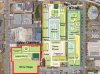
I recently have acquired a tablet. This is a great upgrade for this project in many ways. First of all I won’t have to glue myself to a tiny screen when researching and writing my plans. Second of all I finally have a platform to try digital art. It will be easier to make maps on my tablet than on ms paint using a laptop. I also realized that I can make guides akin to those made by @Mr Gharial to help me solidify the collection plan, which I did. After monkeying around on my tablet I was able to make a map of the kingdom along with a visual collection plan. Making this did motivate me to finally to start working on the Supernova Plan and finish the project and start my next speculation project, which already had a rough plan before I even started publishing my plans on this thread. So without further ado, I will start by posting the map:

upload_2025-12-6_17-39-41.jpeg
I tried adding images of animals to the map, but they end up being compressed so I decided to publish the map without the animals on it.
 

Attachments

  • upload_2025-12-6_17-39-41.jpeg
    upload_2025-12-6_17-39-41.jpeg
    209.2 KB · Views: 42
Last edited:
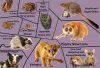
Now that I am home, I can start posting the collection plan posters. I will post the areas in the order I went on the thread, with the aardvark/former pygmy hippopotamus enclosure being the exception. That enclosure will be treated as a part of the “Flower Shower” area.

Of course I also feel like I should give credit to the great Joel Sartore. Almost all pictures in these posters are his work except for a few that are from this website (which will be credited on their respective posters) and google images.

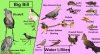
Indoor Park:

North Area:

upload_2025-12-6_22-43-26.jpeg

Wild Night Animals:

upload_2025-12-6_22-48-8.jpeg
The credit for the Japanese scops owl photo goes to @alexkant

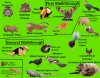
Western Wing:

upload_2025-12-6_22-48-34.jpeg
The credit for the Japanese night heron photo goes to @captain alligator . Credit also goes to @Paul.Haerle for helping me diversify the Water Lillies aviary.

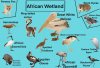
African Wetland:

upload_2025-12-6_23-2-9.jpeg

The credit for the eastern cattle egret photo goes to @CMP.

Flower Shower:

upload_2025-12-6_23-4-0.jpeg


Tropical Forest:

upload_2025-12-6_23-4-33.jpeg

Despite our disagreements over the toucan and frogmouth cohabitation I do appreciate @Paul.Haerle’s suggestion of adding scarlet ibis and turacos to the first walkthrough.

Tropical Wetland:

upload_2025-12-6_23-5-24.jpeg

South Area:


upload_2025-12-6_23-6-1.jpeg
 

Attachments

  • upload_2025-12-6_22-43-26.jpeg
    upload_2025-12-6_22-43-26.jpeg
    116.8 KB · Views: 38
  • upload_2025-12-6_22-48-8.jpeg
    upload_2025-12-6_22-48-8.jpeg
    148.8 KB · Views: 38
  • upload_2025-12-6_22-48-34.jpeg
    upload_2025-12-6_22-48-34.jpeg
    115.8 KB · Views: 36
  • upload_2025-12-6_23-2-9.jpeg
    upload_2025-12-6_23-2-9.jpeg
    126 KB · Views: 35
  • upload_2025-12-6_23-4-0.jpeg
    upload_2025-12-6_23-4-0.jpeg
    116.6 KB · Views: 35
  • upload_2025-12-6_23-4-33.jpeg
    upload_2025-12-6_23-4-33.jpeg
    182.3 KB · Views: 38
  • upload_2025-12-6_23-5-24.jpeg
    upload_2025-12-6_23-5-24.jpeg
    117.9 KB · Views: 36
  • upload_2025-12-6_23-6-1.jpeg
    upload_2025-12-6_23-6-1.jpeg
    140.4 KB · Views: 37
Last edited:
Well shoot, I forgot to label the Burmese python.

Anyways, here are the guides for the two outside areas.

Outside Park(s):

East Garden:

upload_2025-12-7_9-49-43.jpeg
I couldn’t find a way to divide this area into multiple posters/guides, so I decided to have everything from the east garden on the same guide.

West Garden:

upload_2025-12-7_9-50-16.jpeg
 

Attachments

  • upload_2025-12-7_9-49-43.jpeg
    upload_2025-12-7_9-49-43.jpeg
    120.7 KB · Views: 25
  • upload_2025-12-7_9-50-16.jpeg
    upload_2025-12-7_9-50-16.jpeg
    129.9 KB · Views: 24
Alright, now that the guides are posted I can finally start brainstorming for the Supernova Plan. For those who hadn’t been following the thread from the first post, the Supernova Plan is when I will take greater liberties with land use and animal acquisition. This is not to say that the park can go nuts and demolish surrounding buildings and obtain species like indris and Galapagos iguanas. It just means that I can use land that doesn’t seem utilized (per google maps) and can obtain species that are rare in Japan given that they do alright elsewhere in zoos in other parts of the world, as if the Kingdom can afford the paperwork to import these species to Japan and keep them.


Now the first question is, how can I expand? I previously mentioned that I want to expand vertically to make the kingdom similar to the Osaka Aquarium and Haus des Meeres. However, I later thought raising the greenhouses one story taller and adding a floor under them wouldn’t be great because of the bottom floor not being able to get proper natural sunlight, which I thought was a great feature of the greenhouses. Despite not wanting to alter the preexisting structures, I still had the desire to utilize some vertical space. But I can’t have my cake and eat it too, right? Indeed, so I just get another cake and eat that instead. What I mean by this is that I plan on building another building and make that building be a two story building instead. That’s great, but now I have a new question: where will the building be built?

I decided that the current parking lots will be replaced with new exhibit areas. I just have to find new parking lots and all should be well. However, I was given a heads-up that one of the parking lots is a multi-story facility financed by a bank loan, making it very unrealistic to just demolish it and replace it with space for animals on a whim, even on Supernova Mode. However I will go with destroying the parking lots for this thread, despite the large size of the parking lot and the loan for a few reasons:


  • I was already contemplating using the parking lots in the current perimeter before being told about the multi-story parking lot and the bank loan.
  • I have previously made decisions that are out of character for Kobe Animal Kingdom, and therefore unrealistic, such as getting rid of marketable species such as sand and Pallas’s cats and pygmy hippopotamus. I think destroying the parking lot in your own space is not too crazy
  • The kingdom being able to buy a new pair of shoebills and continue the Pantanal construction while building the parking lot gives me the impression the management of the park is confident with the financial security of the kingdom. Perhaps a bit too confident. Which is why a timeline where the kingdom just buys some extra land to build a parking lot seams feasible for me.
  • The parking lot is being built in order to accommodate more visitors. More visitors is always nice, but for a small zoo like Kobe Animal Kingdom, this would mean that the entire park will get congested. Which is why the kingdom needs more space to handle a greater number of visitors.

And this is all without just saying “because it’s the Supernova Plan”. But taking over the parking lots will be followed by more questions: then where will family units with cars park their vehicles?


The kingdom already had a plot not too far from it that acts as a parking lot, or at least used to. I still do not know if this is the case, but for the purpose of this thread I will say it is. I don’t know the ownership status of the empty lot next to this lot either, but let’s go with the thought that the kingdom can acquire the land next to it as well, for the purpose of this thread (again), and build their multi/story parking lot there.

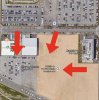
upload_2025-12-7_23-44-11.jpeg

There will be a small handful of parking spots remaining by the park itself to function as disabled parking spots and some for tour buses. To save these vehicles from having to make awkward U-turns, the road that leads to the exit by the ride corner will stay. I have a small plan to make sure it won’t get in the way of the visitors going through the park space.

upload_2025-12-7_23-40-28.jpeg
I never thought I’d be making a meme about a zoo’s parking lot today. But this is how I felt after still keeping some asphalt on the main perimeter of the kingdom.

Now that I am able to make more room for the kingdom, I just need to come up with how to use this space. Unfortunately I can’t measure surface areas using google maps, and I can’t install google earth from the app store for the life of me. Thankfully I have another tool on my hands that can help me visualize how much space the parking lots have…


With the new space I can finally say LET’S GO SUPERNOVA!
 

Attachments

  • upload_2025-12-7_23-40-28.jpeg
    upload_2025-12-7_23-40-28.jpeg
    74 KB · Views: 11
  • upload_2025-12-7_23-44-11.jpeg
    upload_2025-12-7_23-44-11.jpeg
    149.1 KB · Views: 11
Last edited:
Back
Top