You are using an out of date browser. It may not display this or other websites correctly.
You should upgrade or use an alternative browser.
You should upgrade or use an alternative browser.
Parc Merveilleux Parc Merveilleux
- Thread starter Grant Rhino
- Start date

This seems to be the only zoo in Luxembourg:
Home
It looks small but rather cute
It seems to have quite a lot of small animals (tamarins, squirrel monkeys, capybaras, wallabies, raccoons, porcupines, meerkats etc)
They have far more interesting species like Cuban hutia, jaguarundi, Morlett's crocodile, yellow billed stork, Meller's duck, elegant crested, tataupa and red winged tinamou (!), black-backed jackal, Philipine spotted deer, Sint Vincent and red-rumped aguti, red-legged honeycreeper and a very fine selection of catfish.

Just visited today! Alongside the three tinamous mentioned above, they also have Chilean tinamou now: unsigned with Elegant crested tinamous in a row of bird aviaries, and signed but not seen in a second exhibit with Elegant crested tinamous behind the Amazonia house. This puts them at 4 Tinamou species, of which 3 are very rare in zoos... Surely the best Tinamou collection in the world, or at least close?
Other than that it's a fun park - it's very children-oriented and a lot of the zoo is dedicated to playgrounds and (rather creepy!) fairy tale puppet displays. Other than that it's a pleasant small collection, fairly reminiscent of a few smaller German and Eastern European collections - it reminded me of a smaller Aachen, Heidelberg, Krakow, Zagreb...
It's a shame that because of covid regulations, both bigger indoor houses were closed. I would have liked to have seen the fish collection, some of the birds and just the building interiors - but luckily all four Tinamous were visible from outside!
Other than that it's a fun park - it's very children-oriented and a lot of the zoo is dedicated to playgrounds and (rather creepy!) fairy tale puppet displays. Other than that it's a pleasant small collection, fairly reminiscent of a few smaller German and Eastern European collections - it reminded me of a smaller Aachen, Heidelberg, Krakow, Zagreb...
It's a shame that because of covid regulations, both bigger indoor houses were closed. I would have liked to have seen the fish collection, some of the birds and just the building interiors - but luckily all four Tinamous were visible from outside!

I haven't, unfortunately! I do believe your statement - the indoor spaces definitely looked interesting from what I could see through the door...While the outdoor area of Parc Merveilleux is surely a cosy place, I feel like it's one of those places where you miss out on an awful lot by not being able to access the indoor exhibits. Have you visited before?
I'll have to return eventually to see the indoor spaces properly, but unfortunately it's quite far from Antwerp!

Kakapo
Well-Known Member
I visited this park during my very recent Luxembourg holidays from which I returned yesterday 
I tought it would be welcome and useful for zoochatters if I write a review of my visit, so here goes:
11th August 2022. Today we decided to visit the Parc Merveilleux, instead the Natural History Museum that was planned previously for today. The access is very easy from the spot where we are hosed in Hesperange, as the lines 512 and 513 goes directly to Bettembourgh gare, tough from the gare to the zoo is still a long distance of walking, but all in a single straight line. The zoo is (as noted in above messages) tremendously kid-oriented and tought for families with small children and school groups, more than any other zoo I visited previously. The gnomes, slides, domestic animals, sand playgrounds, mini trains and other child-oriented resources even dominate over the zoological collection itself. Even a very large area of the zoo, about the third part, consist basically in several big glass enclosures for... animatronic fairy tales. I check relatively well with my objetive animals, tough some of the wished ones are impossible to spot inside their big enclosures, as happened with the Alfred's deers and black-backed jackals, and many of the rare or unique fish species listed in Zootierliste are apparently absent, probably deceased. Is very noteworthy the total absence of any ABC large common species of zoo animal. There is absolutely no big cats, no great apes, no zebras, giraffes, rhinos or hippos. For me this is an advantage.
Just starting from the entrance, to the right, there is a wire enclosure signaged as if having prairie dogs, but instead, inside is only a peahen with peachicks, probably put inside here for protection of the peachicks from foxes, kids and other predators. Then follow the meerkats, fortunately no longer held in the Amazonian house as they were used to be, but now more appropiately set in the African section. In the other side a row of enclosures for lemurs, African tortoises and African parrots.

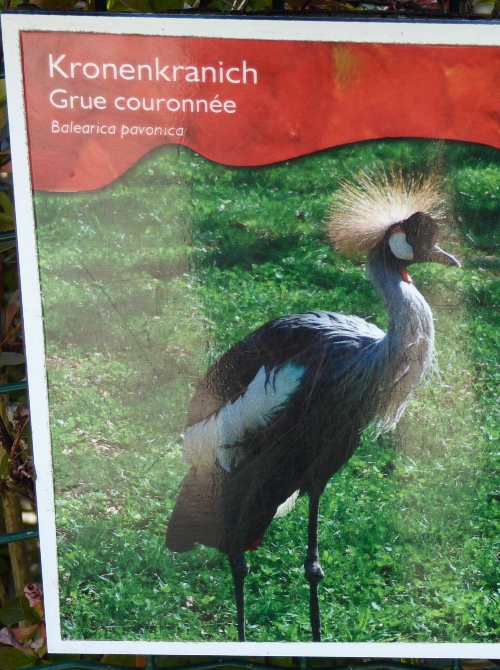
One passed the parrots, I see in the background an enclosure for barbary macaques, the largest primate in the park. After that an enclosure with sacred ibises, supposedly shared with Meller's ducks tough I don't see any of the latter. Of course, there are the mandatory ring-tailed lemurs too. Opposed to them, a couple of spotted eagle owls. I arrive to the Madagascar house, called "Majahanga", but is closed. It opens at eleven o'clock. As this is soon after, I go turning around to the path so I will end slowly to the other entry of the house already open. A side of the Madagascar house is bordered bya stream with flamingos, at the other side is the Pelican Pond with pink-backed pelicans, yellow-billed storks, some ducks (including domestic muscovy) and crowned cranes. The signage for the latter one mentions the scientific name of the other species, the black-necked crowned crane, but both the photo of the signage and the real inhabitants of the enclosure are instead grey-necked crowned cranes.
Behind the pelican pond, that is decorated with a small elephant statue inside the water, I find an enclosure for marabou storks, and after that... the black-backed jackal enclosure!! But it's impossible to find any jackal inside. I passed several times through the day, and absolutely not the least hint of a jackal, nor even looking through the windows that the "den" house have. Not a great miss as I already have photos of Plzen jackals, but I wanted to get a better photo with the jackal not sleepy nor blurry. Inside the jackal enclosure I see the very showy - but highly toxic - fruits of Arum italicum.
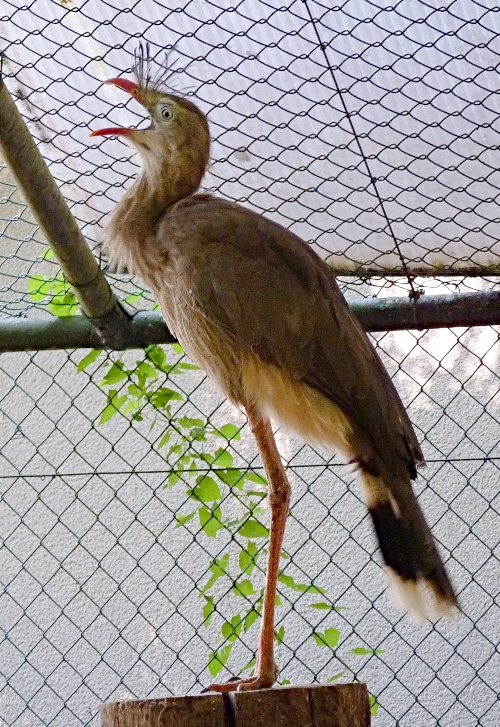
It follows a seried of wire enclosures for South American birds and small mammals. The first one, larger, holds a pair of red-legged seriemas, that when a dog walk nearby, start calling very loudly in territorial display.
Then follows the enclosure of the elegant crested tinamous, but there is not the least hint on them even passing various times by the enclosure. This zoo holds nothing less than four tinamou species, but I can't see the elegant crested, and from Chilean tinamous I don't see even any enclosure or signage. Not important, as I got quite good photos of Chilean tinamou at Best zoo, and of course I saw elegant crested at various zoos. Maybe the Chilean tinamous are no longer present at Luxembourg. After the tinamou enclosure is an unsigned enclosure for guira cuckoos, the signage plaque is present but empty.
Then comes an enclosure for sun conures, I don't see any of them in the first round, tough I will see one in a posterior passing by. In the first passing I see instead unsigned agoutis in the sun conure enclosure. What I see is a mother nursing it's pup.
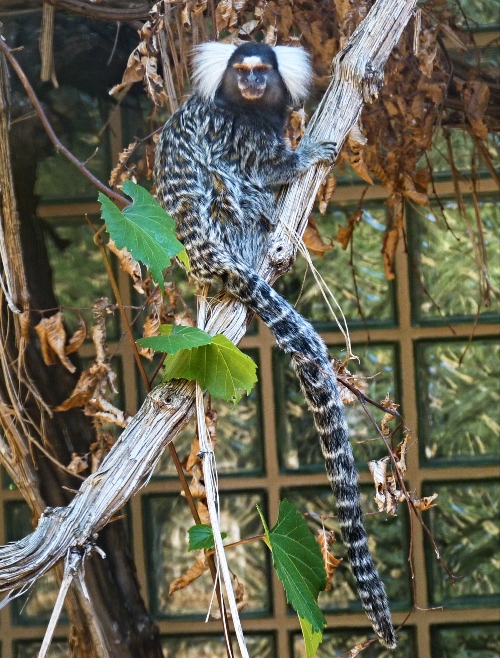
Then comes an enclosure with cotton-headed tamarin shared with common marmoset, the latter not being signaged.
In the rest of the visit I see that this association with unsigned common marmosets and signed (other marmosets or birds) is a common thing in various places of the zoo.
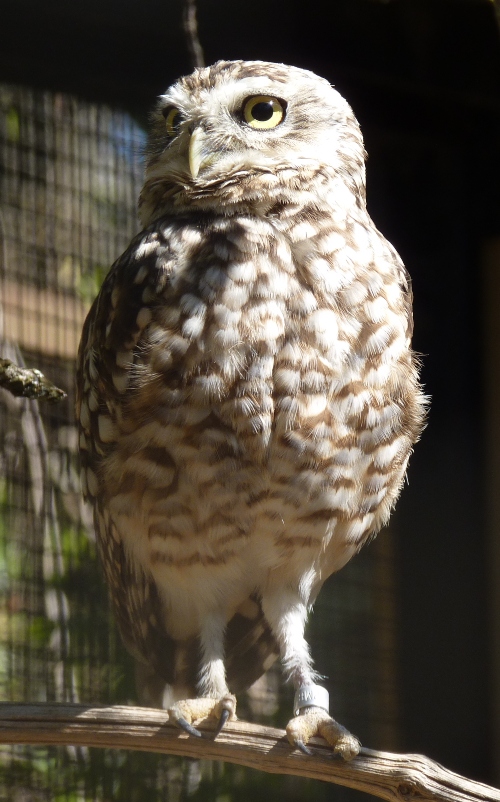
The last enclosure of this row is for burrowing owls. One of them is quite scared by the presence of a peacock loudly meowing in the roof of the enclosure.
I pass by a crested caracara enclosure and then I arrive finally to the other entrance of the Madagascar house, that now is open. The Mahajanga is probably the star spot of the zoo. The exhibits inside are quite interesting in various soil levels. There is a nocturnal zone and a treetop viewing point, a free flight zone as well as enclosures and terrariums. The plants used are mostly native from Madagascar Spiny Forest, with many examples of Euphorbia, Alluaudia, Pachypodium (including rare species!), Pandanus, Adansonia (suarezensis!), Uncarinia, Bismarckia, Kalanchoe, Stephanotis, Ravenala..., tough there are also some scattered exotic American and Asian plants, such as Pereskia grandifolia, Cissus discolor and even bromeliads. The biggest disadvantage of this zone is that is absolutely packed with dozens of kids to the point to many times being difficult to move. But probably is just because of the hour (near the opening time). Another disadvantage is that is absolutely non-accesible for disabled people or even baby trolleys. There is a small stream that one must jump over obligatedly, irregular rocks, corners when you can't see visitorsc coming, and a very narrow path with irregular steps between high cliffs. However for the usual visitor, and more so for the zoonerd visitor, this house is really magnific.
Just at the entry I see a tank with Madagascar rainbowfish of the species Bedotia geayi.
Then it comes a large enclosure for Madagascar ground boas.
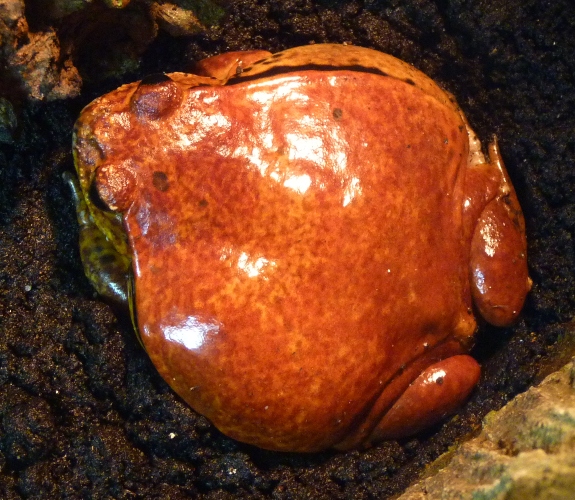
And in the opposite side, a top-view enclosure with a couple of Sambava tomato frogs.
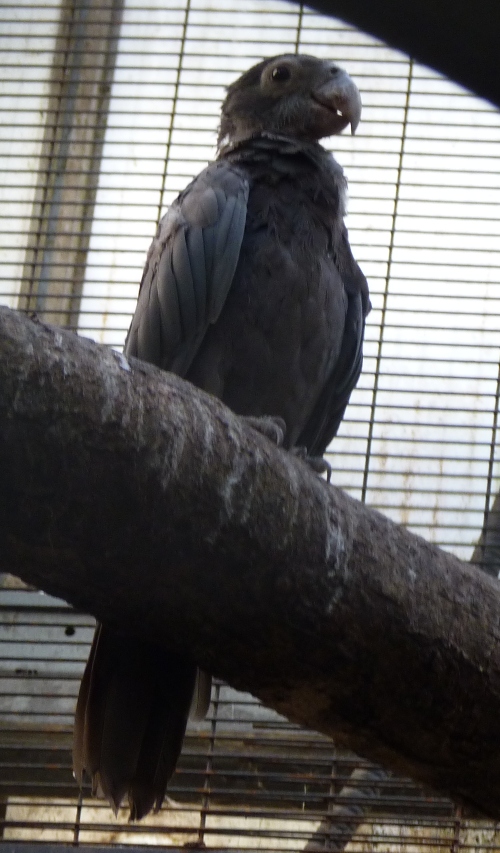
In a corner, there is a wire enclosure for a solitary greater vasa parrot:
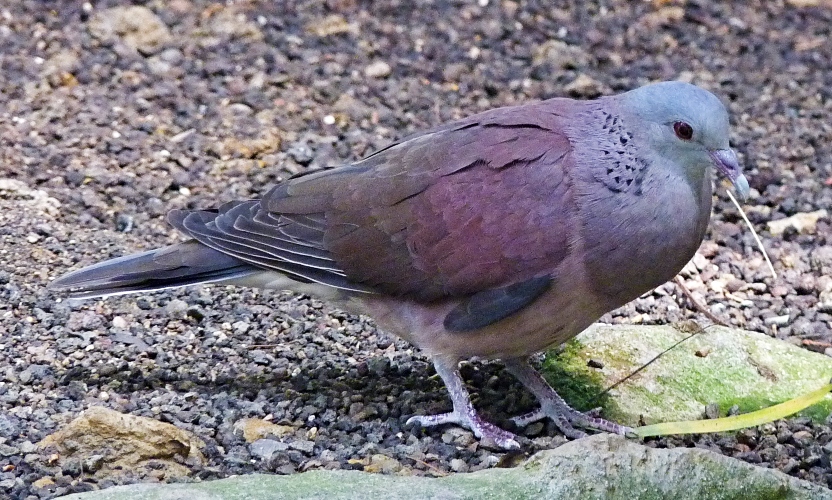
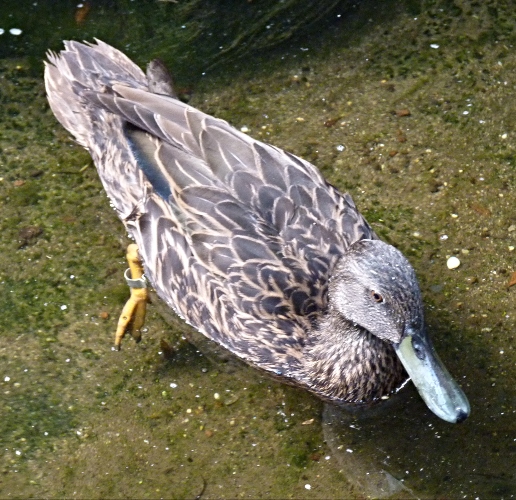
Supposedly, the free flight zone is inhabited by red fodies and Bernier's teals, but I don't see either of them, I just spot hammerkops, Madagascar turtle doves, and a single Meller's duck.
By the stream there is a column with two terraria, the lower one being empty, the upper one holds African giant land snails, but at least part of them were just empty shells. A second similar column is at the opposite side of the lower free flight zone, and bears a terrarium with Madagascar giant hissing cockroaches. Then I enter to the nocturnal zone, that begings with a big glass-fronted enclosure strongly lit with blue light. The signage is barely visible, writen over the glass in the center of the enclosure. The enclosure is high and full of branches, more appropiate for a thing like for example a mouse lemur, but the inhabitant is instead a lesser hegdehog tenrec. I must pass several times by the enclosure, not seeing absolutely the least movement inside, even checking the dark corners with the light of the mobile phone, finally I'm barely able to see the spines moving during a second inside a small box through the entry hole. Of course, the idea of get a good photo of the tenrec in this situation is just crazy. It follows a very big enclosure, equally lit by blue light, holding an active colony of Egyptian fruit bats. After that, a glass enclosure apparently inhabited, but with no light and no signage and inside I'm unable to see absolutely nothing. Then one comes up through the narrow passage with stones and bare visibility over corners, popping up in the treetop viewpoint, that starts with an enclosure for radiated tortoises. The Madagascar house ends then with two terrariums, one holding a Madagascar day gecko, the other a Madagascar iguana that didn't moved from the resting spot in any of my visits.
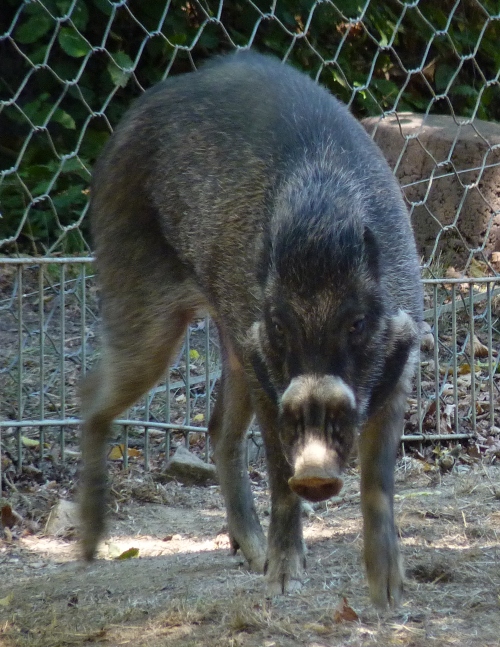
Exiting from Madagascar house I return my way from the caracaras, and I see American vultures (both turkey and black) and an enclosure for scarlet ibises. After all the complex of South American birds and small mammals, there is the enclosure of the Visayan warty pigs. They are all sleeping inside a wooden drawer. Fortunately, in my second pass for the zone I can see the hogs very active, walking in the enclosure and calling with low grunts.
I tought it would be welcome and useful for zoochatters if I write a review of my visit, so here goes:
11th August 2022. Today we decided to visit the Parc Merveilleux, instead the Natural History Museum that was planned previously for today. The access is very easy from the spot where we are hosed in Hesperange, as the lines 512 and 513 goes directly to Bettembourgh gare, tough from the gare to the zoo is still a long distance of walking, but all in a single straight line. The zoo is (as noted in above messages) tremendously kid-oriented and tought for families with small children and school groups, more than any other zoo I visited previously. The gnomes, slides, domestic animals, sand playgrounds, mini trains and other child-oriented resources even dominate over the zoological collection itself. Even a very large area of the zoo, about the third part, consist basically in several big glass enclosures for... animatronic fairy tales. I check relatively well with my objetive animals, tough some of the wished ones are impossible to spot inside their big enclosures, as happened with the Alfred's deers and black-backed jackals, and many of the rare or unique fish species listed in Zootierliste are apparently absent, probably deceased. Is very noteworthy the total absence of any ABC large common species of zoo animal. There is absolutely no big cats, no great apes, no zebras, giraffes, rhinos or hippos. For me this is an advantage.
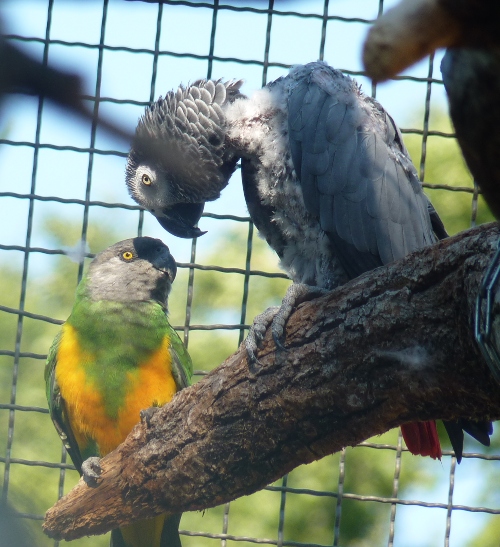
Just starting from the entrance, to the right, there is a wire enclosure signaged as if having prairie dogs, but instead, inside is only a peahen with peachicks, probably put inside here for protection of the peachicks from foxes, kids and other predators. Then follow the meerkats, fortunately no longer held in the Amazonian house as they were used to be, but now more appropiately set in the African section. In the other side a row of enclosures for lemurs, African tortoises and African parrots.
African grey parrot (Psittacus erithacus) stretching wings
Shares enclosure with Senegal parrots and spurred tortoises
One passed the parrots, I see in the background an enclosure for barbary macaques, the largest primate in the park. After that an enclosure with sacred ibises, supposedly shared with Meller's ducks tough I don't see any of the latter. Of course, there are the mandatory ring-tailed lemurs too. Opposed to them, a couple of spotted eagle owls. I arrive to the Madagascar house, called "Majahanga", but is closed. It opens at eleven o'clock. As this is soon after, I go turning around to the path so I will end slowly to the other entry of the house already open. A side of the Madagascar house is bordered bya stream with flamingos, at the other side is the Pelican Pond with pink-backed pelicans, yellow-billed storks, some ducks (including domestic muscovy) and crowned cranes. The signage for the latter one mentions the scientific name of the other species, the black-necked crowned crane, but both the photo of the signage and the real inhabitants of the enclosure are instead grey-necked crowned cranes.
Behind the pelican pond, that is decorated with a small elephant statue inside the water, I find an enclosure for marabou storks, and after that... the black-backed jackal enclosure!! But it's impossible to find any jackal inside. I passed several times through the day, and absolutely not the least hint of a jackal, nor even looking through the windows that the "den" house have. Not a great miss as I already have photos of Plzen jackals, but I wanted to get a better photo with the jackal not sleepy nor blurry. Inside the jackal enclosure I see the very showy - but highly toxic - fruits of Arum italicum.
It follows a seried of wire enclosures for South American birds and small mammals. The first one, larger, holds a pair of red-legged seriemas, that when a dog walk nearby, start calling very loudly in territorial display.
Red-legged seriema in territorial display
The pair together turned very loud when a dog walker appeared next to the enclosure
Then follows the enclosure of the elegant crested tinamous, but there is not the least hint on them even passing various times by the enclosure. This zoo holds nothing less than four tinamou species, but I can't see the elegant crested, and from Chilean tinamous I don't see even any enclosure or signage. Not important, as I got quite good photos of Chilean tinamou at Best zoo, and of course I saw elegant crested at various zoos. Maybe the Chilean tinamous are no longer present at Luxembourg. After the tinamou enclosure is an unsigned enclosure for guira cuckoos, the signage plaque is present but empty.
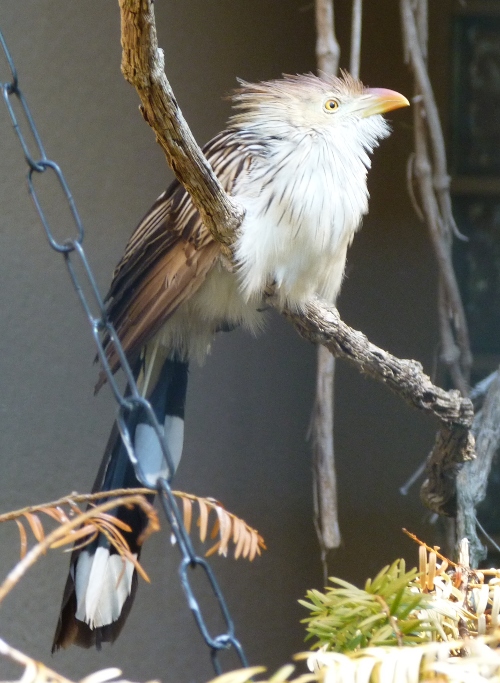
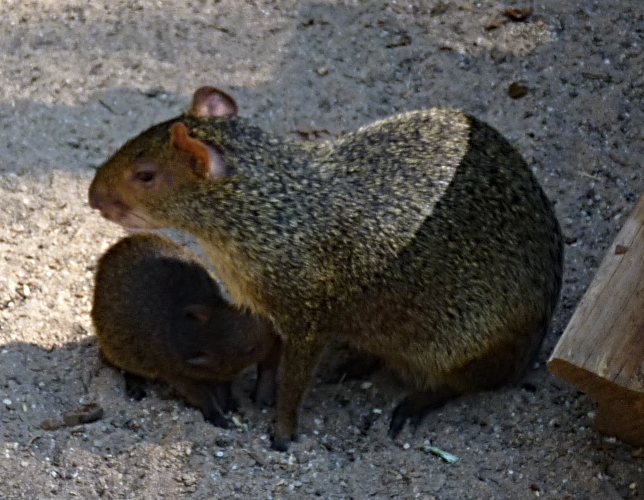
Then comes an enclosure for sun conures, I don't see any of them in the first round, tough I will see one in a posterior passing by. In the first passing I see instead unsigned agoutis in the sun conure enclosure. What I see is a mother nursing it's pup.
Then comes an enclosure with cotton-headed tamarin shared with common marmoset, the latter not being signaged.
Common marmoset
this species is present in several enclosures throughout the park, shared with other tamarin...
In the rest of the visit I see that this association with unsigned common marmosets and signed (other marmosets or birds) is a common thing in various places of the zoo.
The last enclosure of this row is for burrowing owls. One of them is quite scared by the presence of a peacock loudly meowing in the roof of the enclosure.
I pass by a crested caracara enclosure and then I arrive finally to the other entrance of the Madagascar house, that now is open. The Mahajanga is probably the star spot of the zoo. The exhibits inside are quite interesting in various soil levels. There is a nocturnal zone and a treetop viewing point, a free flight zone as well as enclosures and terrariums. The plants used are mostly native from Madagascar Spiny Forest, with many examples of Euphorbia, Alluaudia, Pachypodium (including rare species!), Pandanus, Adansonia (suarezensis!), Uncarinia, Bismarckia, Kalanchoe, Stephanotis, Ravenala..., tough there are also some scattered exotic American and Asian plants, such as Pereskia grandifolia, Cissus discolor and even bromeliads. The biggest disadvantage of this zone is that is absolutely packed with dozens of kids to the point to many times being difficult to move. But probably is just because of the hour (near the opening time). Another disadvantage is that is absolutely non-accesible for disabled people or even baby trolleys. There is a small stream that one must jump over obligatedly, irregular rocks, corners when you can't see visitorsc coming, and a very narrow path with irregular steps between high cliffs. However for the usual visitor, and more so for the zoonerd visitor, this house is really magnific.
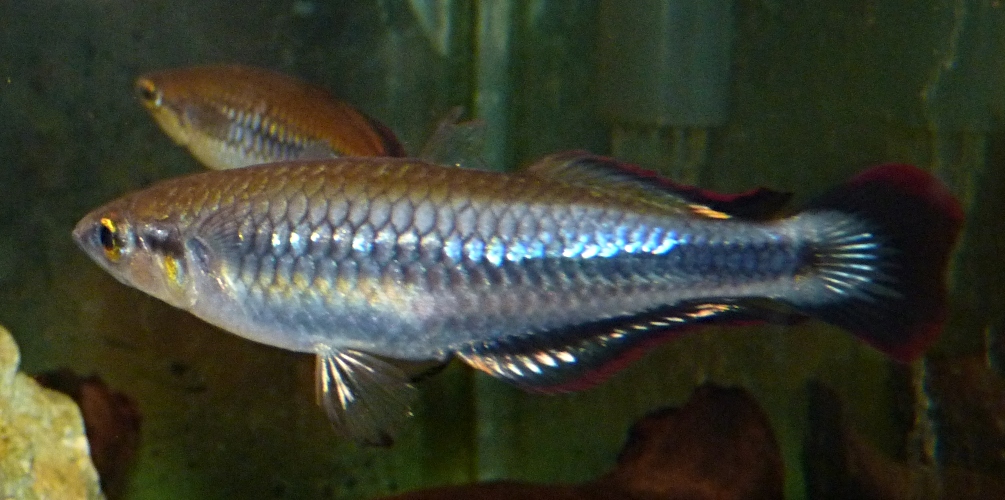
Just at the entry I see a tank with Madagascar rainbowfish of the species Bedotia geayi.
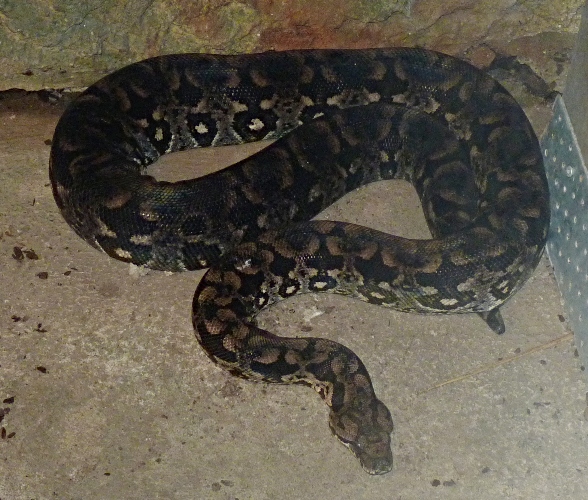
Then it comes a large enclosure for Madagascar ground boas.
And in the opposite side, a top-view enclosure with a couple of Sambava tomato frogs.
In a corner, there is a wire enclosure for a solitary greater vasa parrot:
Greater vasa parrot, or just vasa parrot
- Kakapo
- 2
Rarer in zoos (according to my experience) that lesser vasa parrots aka black parrots
Supposedly, the free flight zone is inhabited by red fodies and Bernier's teals, but I don't see either of them, I just spot hammerkops, Madagascar turtle doves, and a single Meller's duck.
By the stream there is a column with two terraria, the lower one being empty, the upper one holds African giant land snails, but at least part of them were just empty shells. A second similar column is at the opposite side of the lower free flight zone, and bears a terrarium with Madagascar giant hissing cockroaches. Then I enter to the nocturnal zone, that begings with a big glass-fronted enclosure strongly lit with blue light. The signage is barely visible, writen over the glass in the center of the enclosure. The enclosure is high and full of branches, more appropiate for a thing like for example a mouse lemur, but the inhabitant is instead a lesser hegdehog tenrec. I must pass several times by the enclosure, not seeing absolutely the least movement inside, even checking the dark corners with the light of the mobile phone, finally I'm barely able to see the spines moving during a second inside a small box through the entry hole. Of course, the idea of get a good photo of the tenrec in this situation is just crazy. It follows a very big enclosure, equally lit by blue light, holding an active colony of Egyptian fruit bats. After that, a glass enclosure apparently inhabited, but with no light and no signage and inside I'm unable to see absolutely nothing. Then one comes up through the narrow passage with stones and bare visibility over corners, popping up in the treetop viewpoint, that starts with an enclosure for radiated tortoises. The Madagascar house ends then with two terrariums, one holding a Madagascar day gecko, the other a Madagascar iguana that didn't moved from the resting spot in any of my visits.
Exiting from Madagascar house I return my way from the caracaras, and I see American vultures (both turkey and black) and an enclosure for scarlet ibises. After all the complex of South American birds and small mammals, there is the enclosure of the Visayan warty pigs. They are all sleeping inside a wooden drawer. Fortunately, in my second pass for the zone I can see the hogs very active, walking in the enclosure and calling with low grunts.
Visayan warty pig (Sus cebifrons negrinus)
Finally, a relatively common zoo animal that always eluded me... until now. Previously I only...
Last edited:
Kakapo
Well-Known Member
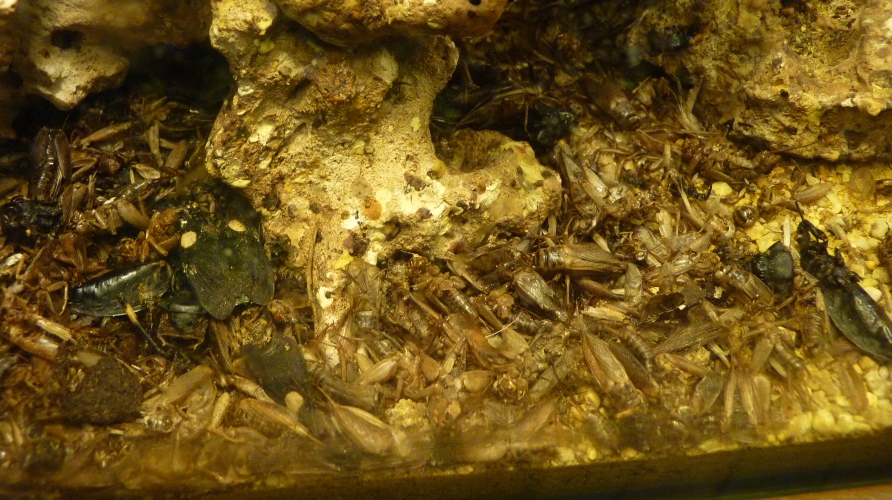
I enter then to the Amazonian house, where one of the first inhabitants are Peruvian squirrel monkeys (Saimiri boliviensis peruviensis). They share their enclosure with out-of-place koi carps in a square pond. Then comes a room with four arthropod terrariums in the same wall. The signage for all them are in a changing screen in the side of the room. The inhabitants are completely invisible. First one supposedly holds a tarantula, but I only can see wings of a migratory locust that served as dinner for the spider. Next one holds giant millipedes, equally invisible. Other holds an emperor scorpion, from which I barely see, after several passings, the claws hidden inside a hole in the moss against the left glass panel. The only terrarium where the inhabitants are conspicuos holds a colony of several two-spotted assasin bugs (Platymeris biguttatus), with adults and nymphs, and with several house crickets wandering around (more crickets that these bugs could eat in a single day). The frontal part of the enclosure is covered with a lay of remains of assasing bugs and crickets, probably accumulated during several months. Not bad for the health of the bugs, but visually unpleasant for visitor, giving the sensation of abandomenent.
In the other wall of the room there is a much larger terrarium for dart frogs. The changing screen indicates here Dendrobates tinctorius 'Azureus', Dendrobates leucomelas and Dendrobates auratus. I saw the two first, but apparently no D. auratus were inside the terrarium, instead, I see a calling male of unsigned Epipedobates anthonyi.
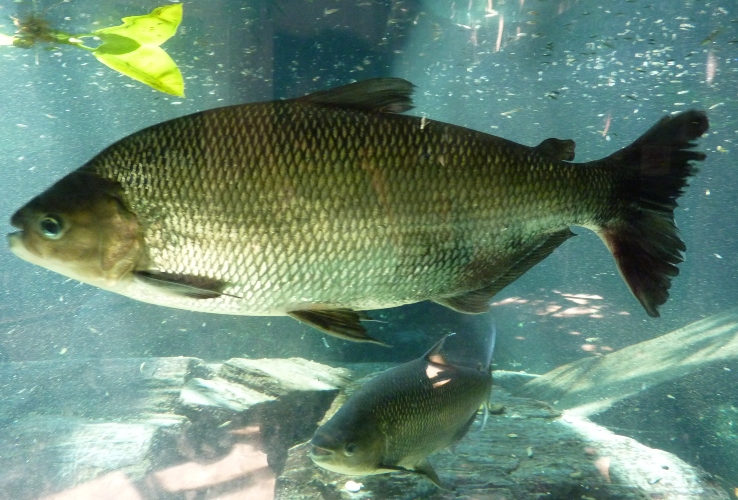
After this small room, we enter at full in the Amazon rainforest walkthrough. There are free-ranging green iguanas and, according to signage, some tamarins which I'm unable to see. First enclosure inside is a very big tank for pacus, brycon and big catfishes, spotted by very tiny guppies. One of the catfishes is Zungaro zungaro, new species for me. Brycon melanopterus is also new for me.

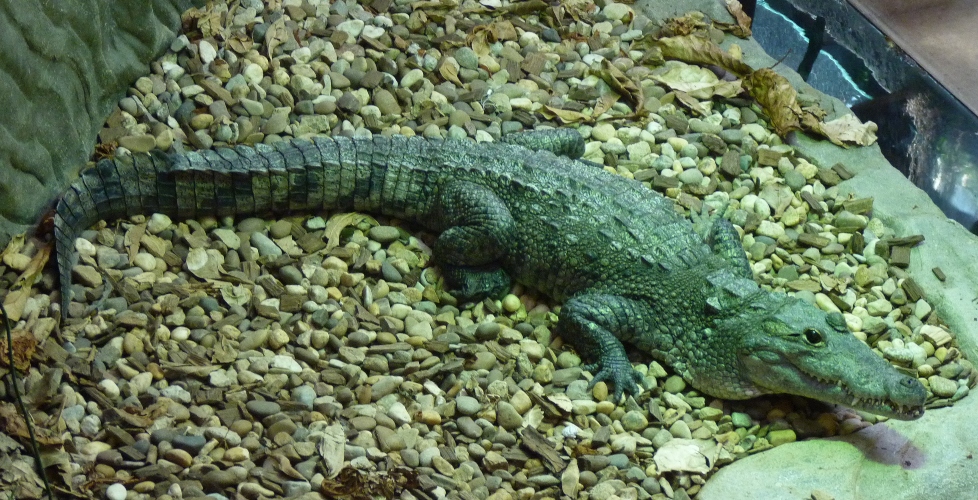
There are more enclosures and tanks at the sides. Electric eels, piranhas, Morelet's crocodiles, yacare caimans, red-tailed boas...
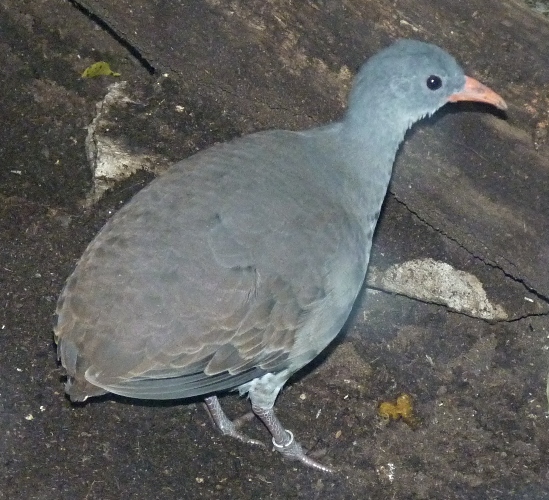
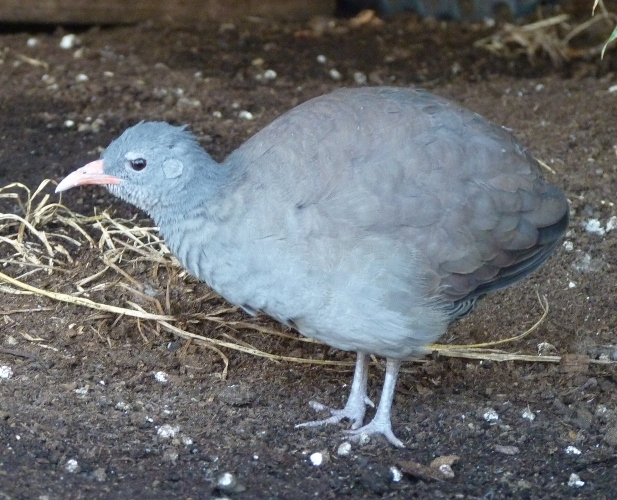
And finally, the most wished animal for me of the whole zoo appears suddenly in a glass enclosure shared with tamarins. I talk about the tataupa tinamou (Crypturellus tataupa). Quite collaborative with photographers.
After comes a couple of cane toads...
and, strickingly, a pool with Humbold't penguins. Yes, they're at least South American, but holding them in a supposedly Amazonian rainforest exhibit is a bit strange.

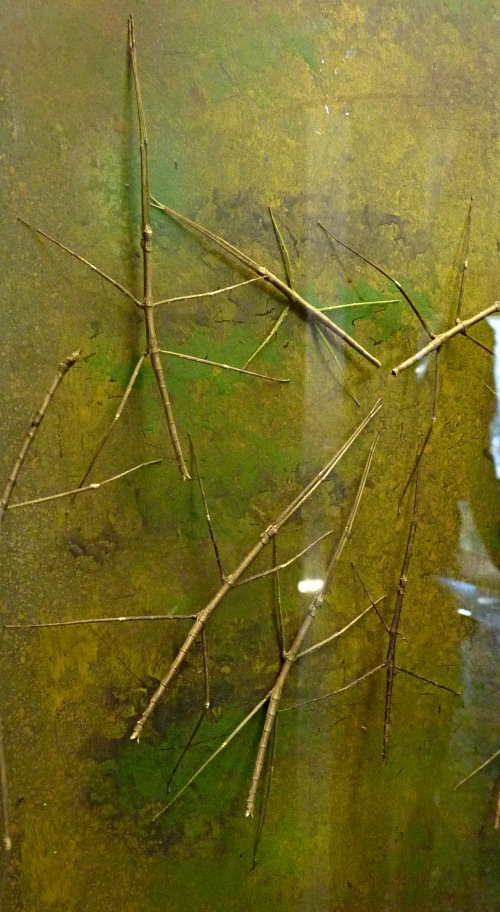
In the lower floor one can see the pacu tank from a side, and an overgrowth large tank with only two piranhas. Coming back to the penguins one enter in a small room with four terrariums, each one with a different species of stick insect. First is Extatosoma tiaratum and last and Eurycantha, probably calcarata. No idea of the two others. They absolutely lack any trace of the least signage, there is just the terrariums and the insects.
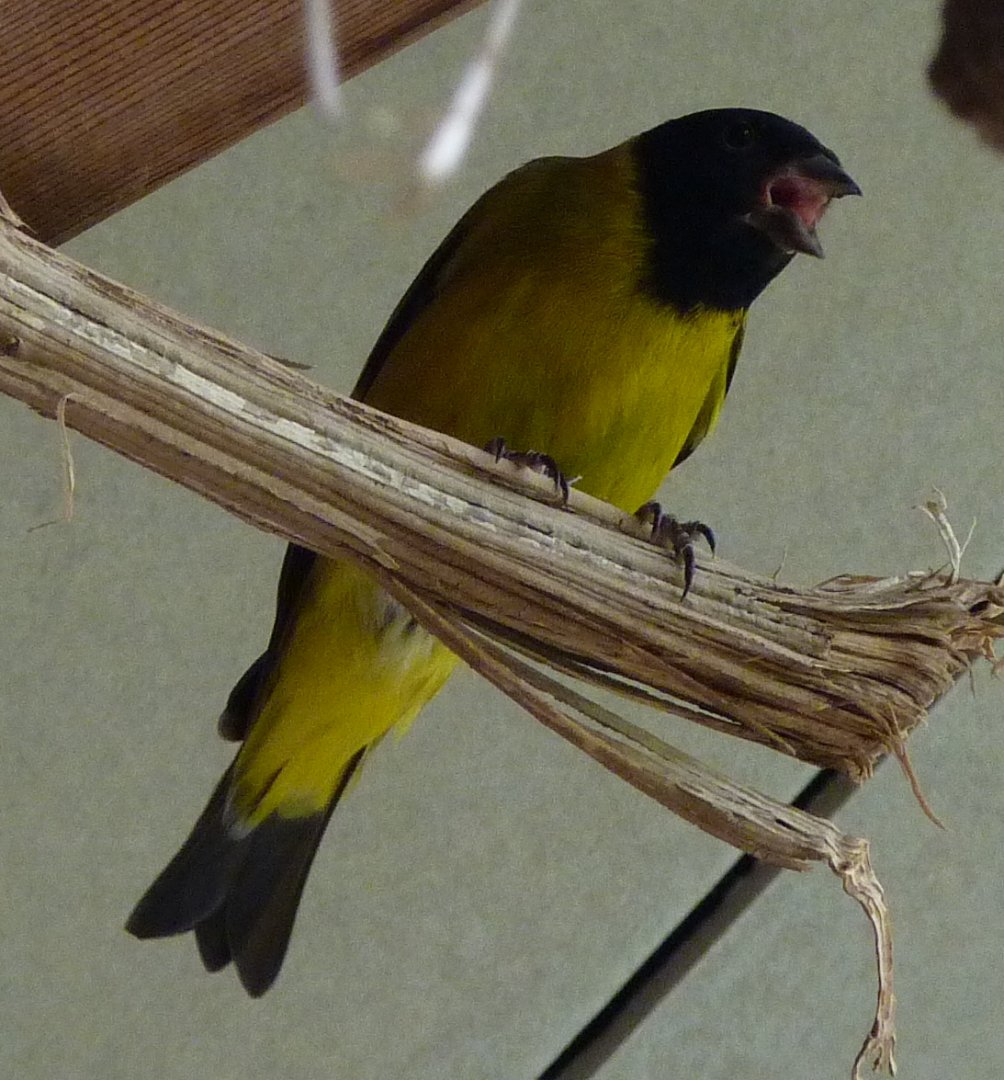
Coming out from the stick insect room one enters in the sloth enclosure, consisting in two interconnected jungle halls. I'm totally unable to spot the sloth. But I see yellow-footed tortoises, ringed teals, Brazilian tanagers and hooded siskins (this one is not in Zootierliste for this park):
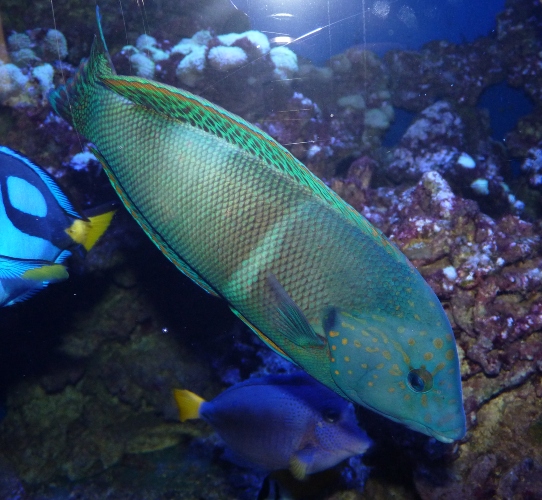
After the sloth greenhouses comes the marine aquarium, just a room with only 3 medium-sized coral reef tanks with colorful fishes common in aquaculture, and as the stick insects, there is absolutely no signage in this room.
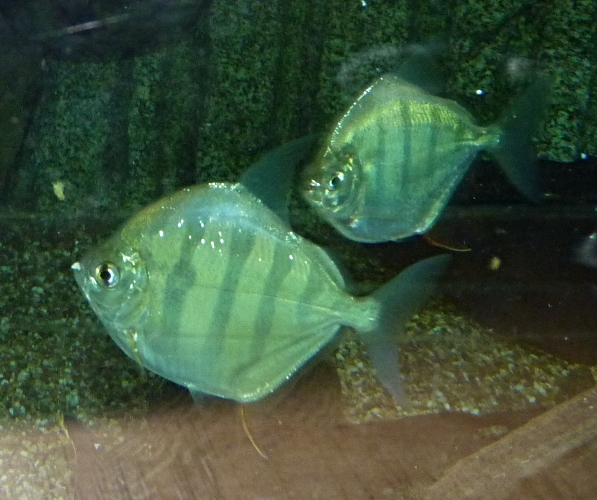
The aquarium ends in the small and full o people gift shop, that then gives pass to the minigolf, so I come back and discover a side of the Amazonian house that I skipped before. It starts with a very muddy enclosure for a three-banded armadillo, absolutely invisible except by the livecam that from time to time films inside the den. At the other side, freshwater aquariums, one with white-blotched stringrays and banded leporinus, with an enormous royal panaque, other with mutant discus fish of several colours, and the last, too low for people for view in the water with commodity, is called the "Neon Aquarium" but is fulfilled with cardinal tetras instead neon tetras, there also some mutant black tetras (Gymnocorymbus ternetzi) and plecos.
Months (maybe years?) of detritus accumulated in terrarium
Soil is covered with remains both of the inhabitants (two-spotted assasing bugs) and of their...
In the other wall of the room there is a much larger terrarium for dart frogs. The changing screen indicates here Dendrobates tinctorius 'Azureus', Dendrobates leucomelas and Dendrobates auratus. I saw the two first, but apparently no D. auratus were inside the terrarium, instead, I see a calling male of unsigned Epipedobates anthonyi.
After this small room, we enter at full in the Amazon rainforest walkthrough. There are free-ranging green iguanas and, according to signage, some tamarins which I'm unable to see. First enclosure inside is a very big tank for pacus, brycon and big catfishes, spotted by very tiny guppies. One of the catfishes is Zungaro zungaro, new species for me. Brycon melanopterus is also new for me.
Zungaro zungaro
Impressive catfish that shares enclosure with equally large red-tailed catfish (as well as...
There are more enclosures and tanks at the sides. Electric eels, piranhas, Morelet's crocodiles, yacare caimans, red-tailed boas...
And finally, the most wished animal for me of the whole zoo appears suddenly in a glass enclosure shared with tamarins. I talk about the tataupa tinamou (Crypturellus tataupa). Quite collaborative with photographers.
Tataupa tinamou (Crypturellus tataupa)
For me the biggest treasure of the park. The species is visible both outside and inside...
After comes a couple of cane toads...
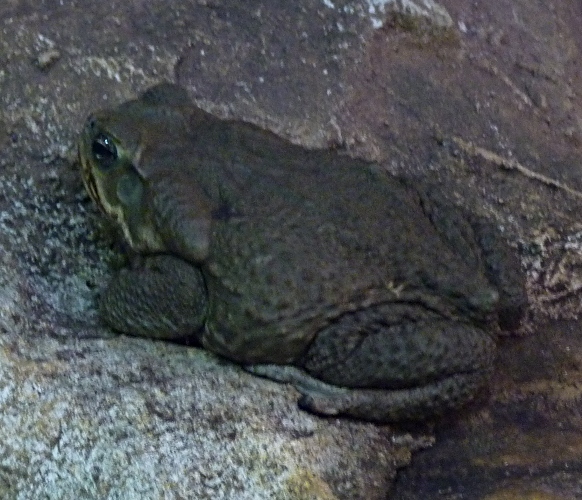
and, strickingly, a pool with Humbold't penguins. Yes, they're at least South American, but holding them in a supposedly Amazonian rainforest exhibit is a bit strange.
Humbold't penguin
I know they're at least South American but still... is a bit striking the presence of penguins...
In the lower floor one can see the pacu tank from a side, and an overgrowth large tank with only two piranhas. Coming back to the penguins one enter in a small room with four terrariums, each one with a different species of stick insect. First is Extatosoma tiaratum and last and Eurycantha, probably calcarata. No idea of the two others. They absolutely lack any trace of the least signage, there is just the terrariums and the insects.
Stick insects for ID
Parc Mervillieux, Luxembourg. They keep a row of 4 terraries for stick insects, with no signage.
Coming out from the stick insect room one enters in the sloth enclosure, consisting in two interconnected jungle halls. I'm totally unable to spot the sloth. But I see yellow-footed tortoises, ringed teals, Brazilian tanagers and hooded siskins (this one is not in Zootierliste for this park):
Carduelis magellanica
Not in zootierliste for this park
In the sloth enclosure (I was unable to find the sloth)
In the sloth enclosure (I was unable to find the sloth)
After the sloth greenhouses comes the marine aquarium, just a room with only 3 medium-sized coral reef tanks with colorful fishes common in aquaculture, and as the stick insects, there is absolutely no signage in this room.
Clown coris (Coris aygula) "Late initial phase"
Until now I only had the very striking young coloration. This "teenage" one is absolutely different
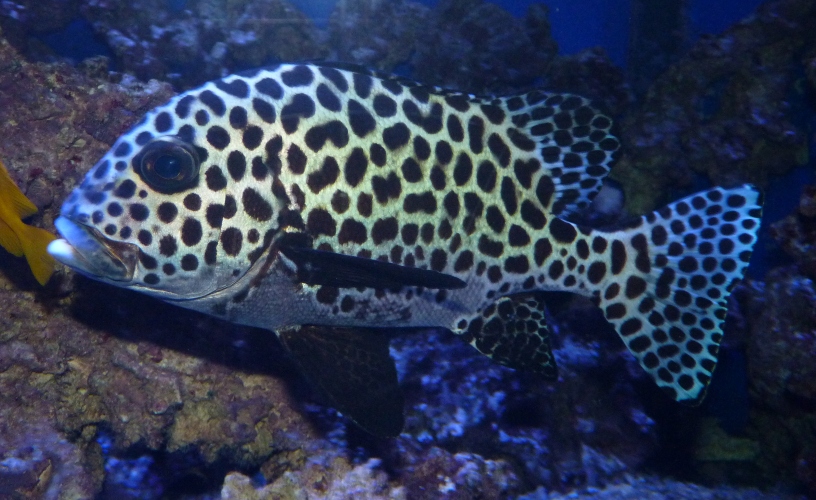
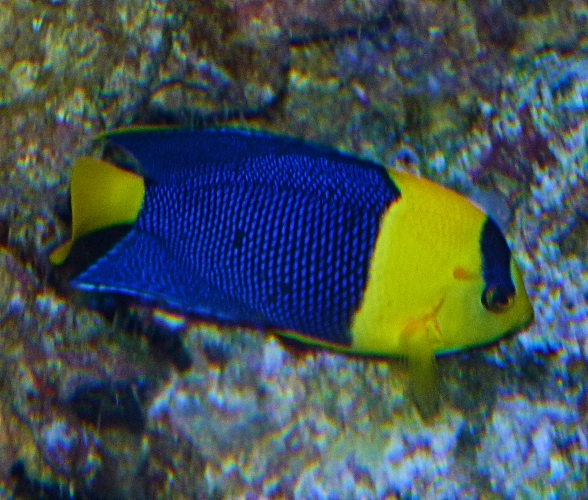
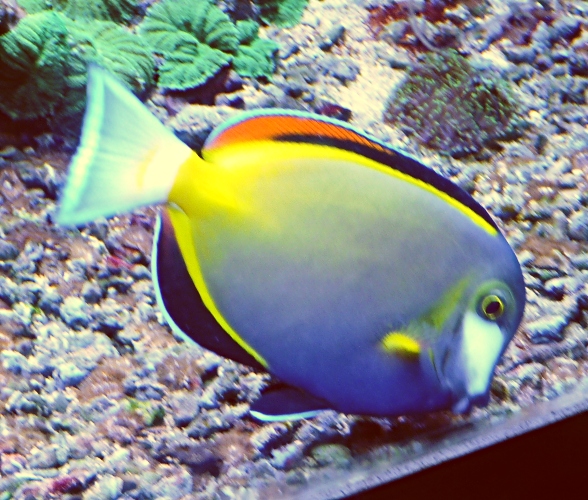
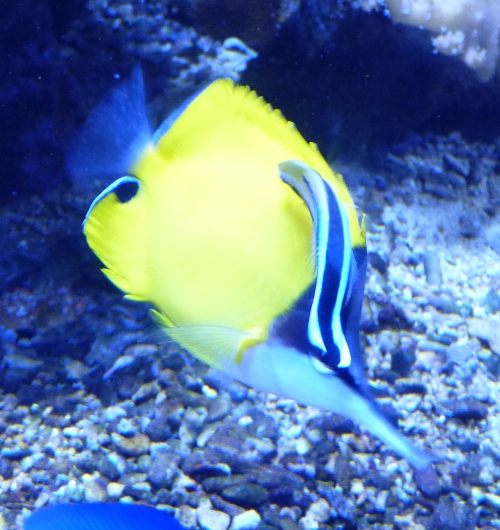
The aquarium ends in the small and full o people gift shop, that then gives pass to the minigolf, so I come back and discover a side of the Amazonian house that I skipped before. It starts with a very muddy enclosure for a three-banded armadillo, absolutely invisible except by the livecam that from time to time films inside the den. At the other side, freshwater aquariums, one with white-blotched stringrays and banded leporinus, with an enormous royal panaque, other with mutant discus fish of several colours, and the last, too low for people for view in the water with commodity, is called the "Neon Aquarium" but is fulfilled with cardinal tetras instead neon tetras, there also some mutant black tetras (Gymnocorymbus ternetzi) and plecos.

Thanks for the detailed review of this Luxembourg zoo. Do you have any shots of exhibits rather than animals? The exhibit photos always get more views on ZooChat. Other than that, I really enjoyed reading your write-up.
Kakapo
Well-Known Member
The remaining of the zoo is much more widely spaced, much more intermixed with non-animal related things, and one needs to walk more. There are coatis, raccoons, prairie dogs. Absolutely no hint of the wished Alfred's deer, just the signage. The neighbour enclosure is being dismantled and it's announced that it will hold the Visayan warty pigs (tough the current warty pig enclosure is already perfect for them). In the South American enclosure there is the typical convivence of guanacos, Patagonian hares, and capybaras. A couple of macaw aviaries, and finally, a round that starts with some Australian parrots, and an enclosure of masked lapwings with kookaburras, one of which is enjoying a meal:
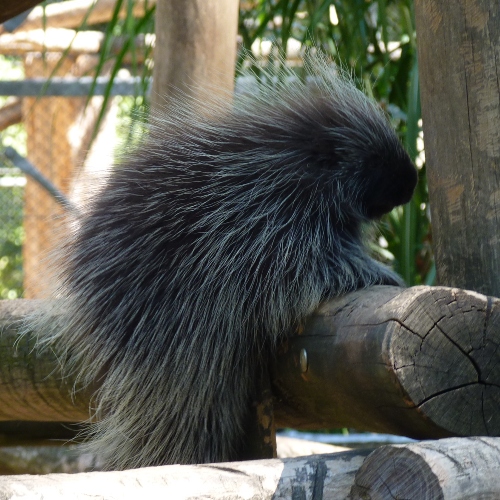
In the round I see keas, and then North American porcupines:
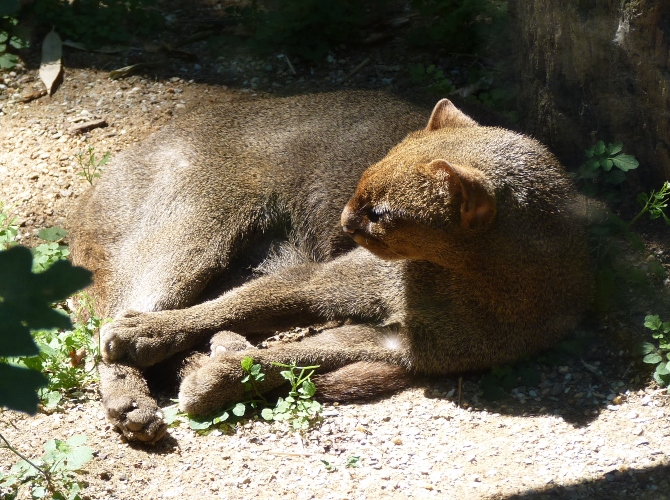
And the best of all, the wished jaguarundi!! I can't get a perfect photo of jaguarundi due to sun and the sleeping pose of the animal, but still better than the ones I previously had!
After that comes greater rheas, then emus, at the other side red-necked wallabies. Absolutely not the least hint of the dingos. From this point one enter in the boring big kid area of fairy tale animatronics. There is no animal enclosures here, except the ginormous fallow deer forest paddock at one side. Suddenly it appears an enclosure and my hope grows. I come closer to see what is inside. Oh. Pigeons. Not any exotic species of pigeon. Not even any fancy breed of domestic pigeon. Just city pigeons exactly equal to those one sees in every city of the world. And here zoochatters complaing about the spacie that non-endangered, but equally interesting, species take up in zoos and favouring phasing-out... and here is the pigeons. Sigh.
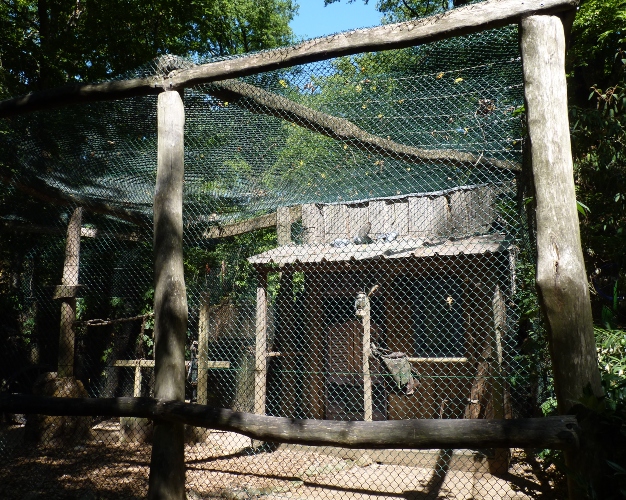
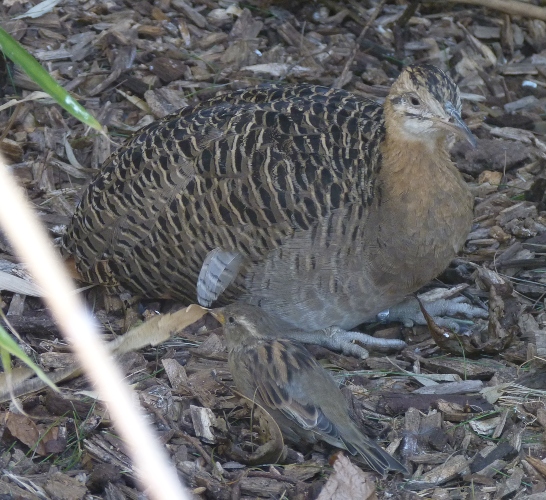
After the red panda enclosure (which I'm unable to find) comes Indian crested porcupines. The zoo comes here to the point near the Amazonian house and the restaurant rows. But I didn't saw the Amazonian house from the outside yet. And here is it, sharing with tamarins... the red-winged tinamou, the rarest tetrapod of the park, present only in 2 European zoos (the other zoo is in Portugal).
Here, a sparrow tries to camouflage perfectly against the very-same coloured background of tinamou feathers and leaf litter:
The remaining are just restaurants and playgrounds, so I give some more rounds over the zoo, seeking for animals not seen before. Finally I conclude my visit and come back to Luxembourg city.

In the round I see keas, and then North American porcupines:
And the best of all, the wished jaguarundi!! I can't get a perfect photo of jaguarundi due to sun and the sleeping pose of the animal, but still better than the ones I previously had!
After that comes greater rheas, then emus, at the other side red-necked wallabies. Absolutely not the least hint of the dingos. From this point one enter in the boring big kid area of fairy tale animatronics. There is no animal enclosures here, except the ginormous fallow deer forest paddock at one side. Suddenly it appears an enclosure and my hope grows. I come closer to see what is inside. Oh. Pigeons. Not any exotic species of pigeon. Not even any fancy breed of domestic pigeon. Just city pigeons exactly equal to those one sees in every city of the world. And here zoochatters complaing about the spacie that non-endangered, but equally interesting, species take up in zoos and favouring phasing-out... and here is the pigeons. Sigh.
Urban pigeon enclosure
After long traits with only fairy tales exhibits, planes and other kid crafts, finally an...
After the red panda enclosure (which I'm unable to find) comes Indian crested porcupines. The zoo comes here to the point near the Amazonian house and the restaurant rows. But I didn't saw the Amazonian house from the outside yet. And here is it, sharing with tamarins... the red-winged tinamou, the rarest tetrapod of the park, present only in 2 European zoos (the other zoo is in Portugal).
Here, a sparrow tries to camouflage perfectly against the very-same coloured background of tinamou feathers and leaf litter:
The remaining are just restaurants and playgrounds, so I give some more rounds over the zoo, seeking for animals not seen before. Finally I conclude my visit and come back to Luxembourg city.
Kakapo
Well-Known Member
Thanks for the detailed review of this Luxembourg zoo. Do you have any shots of exhibits rather than animals? The exhibit photos always get more views on ZooChat. Other than that, I really enjoyed reading your write-up.
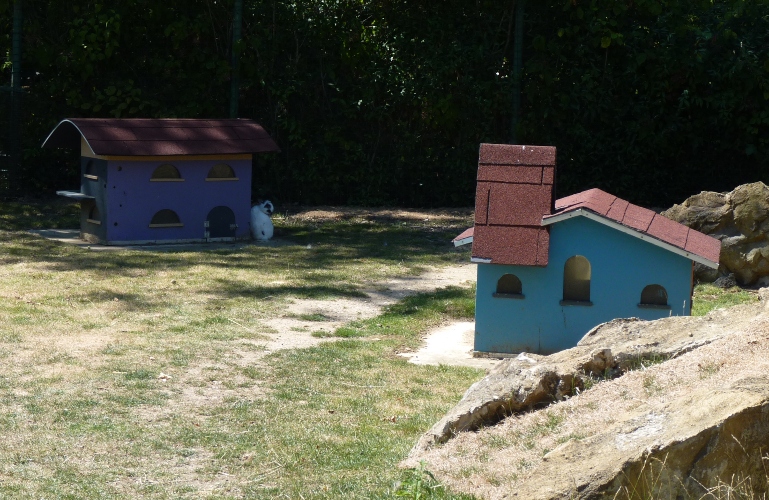
Besides the pigeon one that I just put above, I forget to include the only other exhibit enough strange/distinctive for worth a photo: a domestic rabbit enclosure with decorative colorful houses, that reinforces the childish sensation of this zoo.