Parque de la Naturaleza de Cabarceno Parque de la naturaleza de Cabarceno

Said article also says that they'll work on making paddocks for other local breeds, mentioning Pasiega cattle. Displaying of local breeds is interesting to do, but I do think that the park should focus on other aspects of, well, running a zoo.

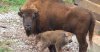
In other news, an European bison and Common waterbuck have been born at the park this last month!
 
New demostration in the park: sheepherding show

Apparently they use domestic gooses and the autoctonous sheep race "carranzana"

Due to the high livestock activity in Cantabria, I think is a great idea to show to the turists (for the spanish urbanites is great to learn how rural world works)

Parque de la Naturaleza de Cabárceno - Cantur - Cantabria - España - El Parque de la Naturaleza de Cabárceno incorpora demostraciones de pastoreo a su oferta

Why aren't they using native herding dog breeds, too?
 
Said article also says that they'll work on making paddocks for other local breeds, mentioning Pasiega cattle. Displaying of local breeds is interesting to do, but I do think that the park should focus on other aspects of, well, running a zoo.

In other news, an European bison and Common waterbuck have been born at the park this last month!
The Tauros Foundation is using some primitive European cattle breeds to produce a more natural looking wild cattle representative that can be used for grazing management.

Some Spanish breeds are used as well. The breeds mentioned on their site include Maremmana, Maronesa, Sayaguesa, Limia en Tudanca. I believe Cabarceno already hold Tudanca cattle ....
 
Last edited:
The Tauros Foundation is using some primitive European cattle breeds to produce a more natural looking wild cattle representative that can be used for grazing management.

Some Spanish breeds are used as well. The breeds mentioned on their site include Maremmana, Maronesa, Sayaguesa, Limia en Tudanca. I believe Cabarceno already hold Tudanca cattle ....

Cabarceno keeps both Tudanca and Monchina cattle, as well as the Monchina horse breed. The current Somali wild ass paddock used to house a group of purebred Andalusian horses, and some individuals of this group can still be found throughout the park grazing on the many pastures it offers. If we don't count Iberian breeds, I guess we could count the watusi cattle that also live at the park in their own exhibit to the list, as well as the many llamas occupating various paddocks throughout the zoo and the south-European water buffaloes living in with the elephants and lechwes.
 
Last edited:
I supposed that because the only native herding dogs in Cantabria are the "mastines" (I don't know how is the english name for this race) and is a protection dog not a herding dog

For the mastiff, could it be Villanu/Villano de Las Encartaciones? Or Mastín Español del Pirineo/Pyrenean Mastiff? From Cantabria there's also the Perro de agua cantábrico, and the Villanucu stretched into the area.

There's several pastoral breeds they could use, mostly from northern Spain - Carea Leonés, Can de Chira/Perro Pastor Altoaragonés, Carea Castellano Manchego, Can de Palleiro, or even the more well known Catalan Sheepdog. A lot of endangered breeds in Spain :( Anything Spanish, or even Portuguese or French, would be better than using the super common border collies and whatnot.
 
These rural representations are good for a farm, but (in my opinion) it's not the most accurate show/presentation for a zoo.
In the other hand, Cabárceno has a lot of "empty" areas, for to do that.
And @Corby93 the Mastín of course it's a herding dog. ;)
 
Birth news!:
-Third common waterbuck calf of the year was born at the park.
-Grevy's zebra foal was born at the park! It's the first time since 2018 that the Grevy's zebras at Cabárceno breed.
------------------------------------------------
-The elk are already at the park, but currently out of the view of the public. Incredibly excited to see these guys!
 
Development news!

The Eurasian elk (Alces alces alces) are finally on show! Exhibited in the two hectares enclosure where yaks used to live. I have to give these guys a visit soon or later...

Does this mean the over indulgence in domestic stock in every which way exclosure is about to end? Can we now expect more wild animal and threatened species to arrive at the park fit for a safari / rangeland setting?

I wish also they invest somewhat in native Iberian fauna like lynx and wild cat and a few of the raptor and vulture species, martens and the like as well as some more African ungulates

And maybe a fresh start with their rhinos .... at too slow a going with the current male Sagan and no breeding from cow Zola. Their last definite calf, a male (that succumbed 3 days after birth) was born November 2015 (source: studbook 2018).
 
Does this mean the over indulgence in domestic stock in every which way exclosure is about to end? Can we now expect more wild animal and threatened species to arrive at the park fit for a safari / rangeland setting?

I wish also they invest somewhat in native Iberian fauna like lynx and wild cat and a few of the raptor and vulture species, martens and the like as well as some more African ungulates

And maybe a fresh start with their rhinos .... at too slow a going with the current male Sagan and no breeding from cow Zola. Their last definite calf, a male (that succumbed 3 days after birth) was born November 2015 (source: studbook 2018).

I can't confirm anything, but I sure hope it does! The yaks left Cabárceno (I don't know where) by 2020, and the arrival for something different was highly anticipated. With the announcement for the lemur exhibit mentioned above and general rework the park is having when it comes to renovating existing infrastructure (elephant barn, fencing and hardstand in various enclosures, ungulate/wallaby stable reconstructions,...) I sense a feeling of "change", in a good way of course. I have hope that with the lemur exhibit once done the park will try and be more "experimental" with their enclosures. I do think that exhibits for smaller native mammals would be amazing, as well as a large aviary for vultures.

When it comes to what I'd like to see at the park I really think getting more caprids and cervids would be the best step to take. If you take into account that the park only houses a single wild caprine species (European mouflon, if we don't count the sheep and goats in the farm area) and three cervids (Red and fallow deer as well as the elk) you really start to notice something is missing. I'd love to see the park get back on keeping Pere David's deer, species they once exhibited but no longer house, as well as the White-lipped deer or even Finnish forest reindeer. With caprids, the Iberian ibex would be an amazing pick, as well as the Mishmi takin, Bharal, Tadjik markhor,...
But what I really want to see at the park is a final reform of all indoor housing/stables. I've never seen what the carnivore and baboon houses look like, but I'm sure that they are in need of an upgrade. I'd also love to see regulations on the tiger and bear populations, proper fencing for Barbary macaques at the Iberian fauna exhibit, an entire renovation of the farm area making the exhibits suitable for it's inhabitants, expansion of the sea lion facility... There are many things that need fixing at the park as for now.

Eurasian elk were a very pleasant surprise, there were no zoos in Spain where this species was exhibited since the death of the last male in the Madrid zoo and I always thought of them as a species that suits the park both in exhibit design and climate (Better than in Madrid for that matter,...)
 
Development news:

The new lemur exhibit has been planned to open this year and the only species confirmed to it has been the Ring-tailed lemur (Lemur catta).
This exhibit will be located next to the tiger and gorilla viewing areas and will require the construction of pavement areas for proper guest access. The exhibit will feature a 534,43m2 outdoor exhibit as well as 76,80 m2 of indoor housing.
When I first posted about this, it turned out the source was an accidental leak, so take this as the official confirmation and pretend that I never posted about lemurs at Cabárceno. :p

Parque de la Naturaleza de Cabárceno - Cantur - Cantabria - España - Cabárceno proyecta un nuevo recinto para incorporar lémures a su catálogo de especies

imagen.jpg
 

Attachments

  • imagen.jpg
    imagen.jpg
    159.2 KB · Views: 49
Back
Top