I was fortunate enough to be able to visit Perth Zoo in the late 1990's, particularly wanting to see their famous Sumatran Orangutans. From the age of Puan's last daughter at the time, I've dated it at around 1999, as she was around six years old. I'd hoped to see Atjeh as well as Puan, not realising he had died and been replaced by newer male HsingHsing. I was struck by the relative smallness of the exhibits back then and they were clearly full to capacity. I was also surprised by how small Puan was, she was a tiny female living with her last daughter Pulang. (Jersey Zoo's Gina was a similarly very diminutive Sumatran female).
You are using an out of date browser. It may not display this or other websites correctly.
You should upgrade or use an alternative browser.
You should upgrade or use an alternative browser.
Perth Zoo Perth Zoo orangutans
- Thread starter Zoofan15
- Start date

Heres the paper about the treatment for strongyloides the orangutans at Perth Zoo were treated for in the 1970s and early 1980s:
'Strongyloidiasis in Orang-utans at Perth Zoo: an apparently successful eradication programme' by Dr Rosemary Markham & Peter Leeflang
completed in June 1983
published in International Zoo Yearbook 1986
'Strongyloidiasis in Orang-utans at Perth Zoo: an apparently successful eradication programme' by Dr Rosemary Markham & Peter Leeflang
completed in June 1983
published in International Zoo Yearbook 1986
Attachments

Heres the paper about the treatment for strongyloides the orangutans at Perth Zoo were treated for in the 1970s and early 1980s:
Strongyloidiasis in Orang-utans at Perth Zoo: an apparently successful eradication
programme by Rosemary Markham & Peter Leeflang
completed in June 1983
published in International Zoo Yearbook 1986
Fantastic work in eradicating this issue which necessitated the hand-rearing of all infants prior to this (birth interval that succeeded birth in brackets).
Puan’s birth intervals give a clear indication when this came into effect:
Hand-raised:
1. Puteri (12/06/1970) 1 year, 9 months, 12 days
2. Puntjak (24/03/1972) 1 year, 11 months, 1 day
3. Unnamed (25/02/1974) 11 months, 5 days
4. Puspa (30/01/1975) 1 year, 10 months, 10 days
5. Puas (09/12/1976) 1 year, 2 months, 16 days
6. Pusung (25/02/1978) 1 year, 10 months, 21 days
7. Putik (15/01/1980) 1 year, 4 months, 21 days
Mother-raised:
8. Punya (05/06/1981) 6 years, 3 months, 17 days
9. Puluh (23/09/1987) 6 years, 2 months, 28 days
10. Pulang (21/12/1993) N/A (final infant)

Johnpaul21
Well-Known Member
Previously on this thread I mentioned I had never seen a photo of 1.0 Sungai (Young male orangutan) but after a recent trip I found him and got a good photo of him. He is probably one of the most interesting in the colony as he had sort of got his male features but also doesn't quite. You can see by the photo.
Note photo taken roughly a week ago so good to see a recent update
Note photo taken roughly a week ago so good to see a recent update
Attachments
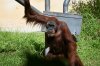

That's a great shot! He very much has his mother's features, while has grown into the look of an unflanged male rather than an older juvenile.Previously on this thread I mentioned I had never seen a photo of 1.0 Sungai (Young male orangutan) but after a recent trip I found him and got a good photo of him. He is probably one of the most interesting in the colony as he had sort of got his male features but also doesn't quite. You can see by the photo.
Note photo taken roughly a week ago so good to see a recent update
Johnpaul21
Well-Known Member
Yeah he has recently been hanging out in the enclosure closest to the Javan Gibbons so its a nice close spot to get a photo
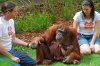
Also Keepers do not enter with the orangutans, and I assumed its always been like that at Perth Zoo? If anyone could clarify because when I saw this image of a man with Puteri and baby Teliti I was a bit confused......
Also Keepers do not enter with the orangutans, and I assumed its always been like that at Perth Zoo? If anyone could clarify because when I saw this image of a man with Puteri and baby Teliti I was a bit confused......
Attachments
Yeah he has recently been hanging out in the enclosure closest to the Javan Gibbons so its a nice close spot to get a photo
Also Keepers do not enter with the orangutans, and I assumed its always been like that at Perth Zoo? If anyone could clarify because when I saw this image of a man with Puteri and baby Teliti I was a bit confused......
Oh I believe keepers did used to enter the exhibit with the orangutans until a while back (not overly so, was more behind the scenes, but keepers did have contact with the orangs'). Wonder if thats Leif Cocks in the photo with the lady and Puteri (he's an amazing orangutan expert, years of work at the zoo, 35+ years believe, and he compiled the international Javan/silvery gibbon studbook too from memory).
Yeah he has recently been hanging out in the enclosure closest to the Javan Gibbons so its a nice close spot to get a photo
Also Keepers do not enter with the orangutans, and I assumed its always been like that at Perth Zoo? If anyone could clarify because when I saw this image of a man with Puteri and baby Teliti I was a bit confused......
Oh I believe keepers did used to enter the exhibit with the orangutans until a while back (not overly so, was more behind the scenes, but keepers did have contact with the orangs'). Wonder if thats Leif Cocks in the photo with the lady and Puteri (he's an amazing orangutan expert, years of work at the zoo, 35+ years believe, and he compiled the international Javan/silvery gibbon studbook too from memory).
I too have heard this - but only with regards to Puteri, who was handraised and very placid compared to the other orangutans. Entering the same exhibit with one of the adult males; or even one of the mother-raised females could result in serious injury.
And yes, that’s Leif Cocks (see link for more photos):
https://www.zooborns.com/zooborns/2009/11/perths-primates-dont-palm-us-off.html
I too have heard this - but only with regards to Puteri, who was handraised and very placid compared to the other orangutans. Entering the same exhibit with one of the adult males; or even one of the mother-raised females could result in serious injury.
And yes, that’s Leif Cocks (see link for more photos):
https://www.zooborns.com/zooborns/2009/11/perths-primates-dont-palm-us-off.html
Oh cool cheers for confirming. Was cool how the orangutan keepers like Dr Markham etc taught Puteri how to mother by demonstrating in Puteri's night den with a baby gibbon (think was white-handed/lar gibbon) of how to handle babies and it worked (think they did the same with Puspa or actually think Puspa learnt from watching Puteri handling her first few babies, albeit first few were shortlived {and also not sure how much contact between Puteri and Puspa could of not led to conflict given their handraised upbringings as you mentioned}.
I think Punya learnt from watching Puan with Puluh and Pulang (assume Punya was raised by Puan and stronyloides epidemic was eradicated by then when the current complex opened in the original foundational form just after Punya was born). Probably digressing here hey lol.

Osedax
Well-Known Member
I once saw a documentary about a female orangutan at Adelaide Zoo who was failing to have any surviving offspring. In that doco, one of the keepers visited Perth Zoo to see a particular female orang (probably Puteri but I can't remember) and they (the keepers - from both Perth and Adelaide) were in the exhibit with her.I too have heard this - but only with regards to Puteri, who was handraised and very placid compared to the other orangutans. Entering the same exhibit with one of the adult males; or even one of the mother-raised females could result in serious injury.
And yes, that’s Leif Cocks (see link for more photos):
https://www.zooborns.com/zooborns/2009/11/perths-primates-dont-palm-us-off.html
I once saw a documentary about a female orangutan at Adelaide Zoo who was failing to have any surviving offspring. In that doco, one of the keepers visited Perth Zoo to see a particular female orang (probably Puteri but I can't remember) and they (the keepers - from both Perth and Adelaide) were in the exhibit with her.
The female at Adelaide Zoo would have been Karta. She produced seven infants from 1995-2017, of which sadly none survived. She died in childbirth with the last infant. The last three infants were stillborn, while the first four died as neonates. It was discovered after the death of the fourth infant that Karta had an anomaly in her nipples which led to insufficient lactation (causing the infants to starve to death).
I’m guessing the documentary was filmed in the lead up to her fourth offspring (born 11/05/2011). Puteri gave birth to Teliti (her last offspring in 2009).
Johnpaul21
Well-Known Member
Thanks for all the info guys, So I'm right in saying keepers don't enter exhibits with orangutans with the exception of Puteri?
Question 2:
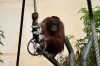
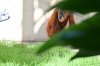
Is there anything with the colour of orangutans fur? If you see the images below one orangutan in with Sungai has very dark fur whereas my photo of on the same day of Sekera, she has very orange fur.
I don't believe it's just the lighting in the photo as no mater where they were they still looked lighter/darker as in the sun
Image 1: Orangutan with Sungai (I think Pulang maybe)
Image 2: Sekera
Question 2:
Is there anything with the colour of orangutans fur? If you see the images below one orangutan in with Sungai has very dark fur whereas my photo of on the same day of Sekera, she has very orange fur.
I don't believe it's just the lighting in the photo as no mater where they were they still looked lighter/darker as in the sun
Image 1: Orangutan with Sungai (I think Pulang maybe)
Image 2: Sekera
Attachments
Thanks for all the info guys, So I'm right in saying keepers don't enter exhibits with orangutans with the exception of Puteri?
Question 2:
Is there anything with the colour of orangutans fur? If you see the images below one orangutan in with Sungai has very dark fur whereas my photo of on the same day of Sekera, she has very orange fur.
I don't believe it's just the lighting in the photo as no mater where they were they still looked lighter/darker as in the sun
Image 1: Orangutan with Sungai (I think Pulang maybe)
Image 2: Sekera
Answer 1:
That’s correct. I’m not aware of keepers having any free contact with any of the orangutans bar Puteri (and even in her case, I don’t believe it’s a regular occurrence).
Answer 2:
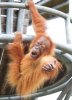
Colour variation is noted in this species - ranging from light red to almost blonde. Sekara and her offspring have relatively light fur. This is Sungai as a juvenile:

Orangutan Motherhood
Attachments
Johnpaul21
Well-Known Member
Answer 1:
That’s correct. I’m not aware of keepers having any free contact with any of the orangutans bar Puteri (and even in her case, I don’t believe it’s a regular occurrence).
Answer 2:
Colour variation is noted in this species - ranging from light red to almost blonde. Sekara and her offspring have relatively light fur. This is Sungai as a juvenile:
View attachment 788822
Orangutan Motherhood
Sungai: "Aye man watta ya doing??"


Just to clarify some points.
Perth Zoo keepers regularly had contact with various female orangs Puteri, Utama, Puspa and Punya plus youngsters (including Chester's Pulang when he was an adolescent) during the 80s-early 2000s. Most of these individuals were hand-reared and so comfortable with interaction. It was considered part of their environmental enrichment. Older females (Puan, Mawas) and adult males (Atjeh, Hsing) were not considered for interaction. Puteri was the most interactive and calmest in disposition. Puspa only tolerated a few keepers.
Both people in the photo were primate keepers (Leif, Kylie) who worked with the orangs. I'm not aware if interaction still occurs with the orangs, as all the staff from that period have now left the zoo.
The connection with Adelaide led to their female Karta being sent to Perth to gain valuable parental experience with Puteri (plus Temara) for a period of several months. It was in vain as she never successfully reared an infant before her death.
There is quite a degree of variation in the coat colours. Youngsters are the lightest, adult males the darkest.
The design of the 'Great Ape Precinct' complex (as it was originally known) allowed individuals in all five original exhibits to view each other from on top of the climbing towers. This meant that females could learn maternal behaviours without being in the same space as other females.
Perth Zoo keepers regularly had contact with various female orangs Puteri, Utama, Puspa and Punya plus youngsters (including Chester's Pulang when he was an adolescent) during the 80s-early 2000s. Most of these individuals were hand-reared and so comfortable with interaction. It was considered part of their environmental enrichment. Older females (Puan, Mawas) and adult males (Atjeh, Hsing) were not considered for interaction. Puteri was the most interactive and calmest in disposition. Puspa only tolerated a few keepers.
Both people in the photo were primate keepers (Leif, Kylie) who worked with the orangs. I'm not aware if interaction still occurs with the orangs, as all the staff from that period have now left the zoo.
The connection with Adelaide led to their female Karta being sent to Perth to gain valuable parental experience with Puteri (plus Temara) for a period of several months. It was in vain as she never successfully reared an infant before her death.
There is quite a degree of variation in the coat colours. Youngsters are the lightest, adult males the darkest.
The design of the 'Great Ape Precinct' complex (as it was originally known) allowed individuals in all five original exhibits to view each other from on top of the climbing towers. This meant that females could learn maternal behaviours without being in the same space as other females.
Johnpaul21
Well-Known Member
Thanks for the info Tetrapod, I am not sure if they still enter with Puteri but I know that they no longer enter at all with Utama as a keeper told me they were setting out some enrichment inside the night quarters so Utama could leave her enclosure so he could go inside because he said no one go's in with her anymore
The female at Adelaide Zoo would have been Karta. She produced seven infants from 1995-2017, of which sadly none survived. She died in childbirth with the last infant. The last three infants were stillborn, while the first four died as neonates. It was discovered after the death of the fourth infant that Karta had an anomaly in her nipples which led to insufficient lactation (causing the infants to starve to death).
I’m guessing the documentary was filmed in the lead up to her fourth offspring (born 11/05/2011). Puteri gave birth to Teliti (her last offspring in 2009).
I've seen this documentary too and it was filmed in the lead up to and after the birth of Karta's fifth offspring, although I agree the footage from Perth is most likely of Puteri and Teliti. The Adelaide keepers observing the Perth orangutans with their offspring caused them to realise how different (smaller) Karta's nipples were and the documentary showed their training of Karta to present the baby for feeding following the birth.
Sadly, the baby (born December 2012) was stillborn due to the umbilical cord being wrapped around its neck during delivery, but the baby was otherwise healthy. I'm not sure of the cause of death of Karta's stillborn infant in 2014. Karta died from blood loss in childbirth in 2017.
I've seen this documentary too and it was filmed in the lead up to and after the birth of Karta's fifth offspring, although I agree the footage from Perth is most likely of Puteri and Teliti. The Adelaide keepers observing the Perth orangutans with their offspring caused them to realise how different (smaller) Karta's nipples were and the documentary showed their training of Karta to present the baby for feeding following the birth.
Sadly, the baby (born December 2012) was stillborn due to the umbilical cord being wrapped around its neck during delivery, but the baby was otherwise healthy. I'm not sure of the cause of death of Karta's stillborn infant in 2014. Karta died from blood loss in childbirth in 2017.
Karta’s history is very tragic. Her sister at Denver had the same anomaly which assisted in identifying Karta’s issues and creating a contingency plan for assisted feeding. Sadly due to all subsequent offspring being stillborn, there was never a chance to implement this.
This was posted by Zoos SA, following the death of Karta and her infant in 2017:
The veterinary team also conducted a post-mortem on Karta’s infant which confirmed it was stillborn.
Dr Smith said the examination showed signs of meconium aspiration — a mixture of meconium and amniotic fluid which a baby can inhale — blocking its airways. He said the risk of foetal distress includes maternal blood loss from the placental bleeding and breech presentation.
“The maternal blood loss compromised the foetus and caused its death,” he said. “The ultrasound performed the day before indicated no such signs of foetal distress.”

Interestingly, her sister at Denver (Nias), also had the same problem meaning it was likely a genetic issue that led to the females have much smaller nipples and being unable to feed their offspring properly.I've seen this documentary too and it was filmed in the lead up to and after the birth of Karta's fifth offspring, although I agree the footage from Perth is most likely of Puteri and Teliti. The Adelaide keepers observing the Perth orangutans with their offspring caused them to realise how different (smaller) Karta's nipples were and the documentary showed their training of Karta to present the baby for feeding following the birth.
Sadly, the baby (born December 2012) was stillborn due to the umbilical cord being wrapped around its neck during delivery, but the baby was otherwise healthy. I'm not sure of the cause of death of Karta's stillborn infant in 2014. Karta died from blood loss in childbirth in 2017.
In Nias's cases, keepers in Denver had to supplement feed her two babies themselves; proving it could work. It just appears that Karta had unfortunate luck with her last few births following Adelaide diagnosing the problem in 2011 - which came after her sister at Denver had been identified with the same issue after birthing the previous year.
Interestingly, her sister at Denver (Nias), also had the same problem meaning it was likely a genetic issue that led to the females have much smaller nipples and being unable to feed their offspring properly.
In Nias's cases, keepers in Denver had to supplement feed her two babies themselves; proving it could work. It just appears that Karta had unfortunate luck with her last few births following Adelaide diagnosing the problem in 2011 - which came after her sister at Denver had been identified with the same issue after birthing the previous year.
I didn't know that Nias had only given birth to her first offspring in 2010 - that goes towards explaining why it hadn't been identified earlier. Once Denver had experienced the issue, as others as mentioned this was able to assist the Adelaide keepers and unfortunately all of Karta's subsequent infants were stillborn.