
I visited the zoo on August 2nd during my Philly vacation. I hadn’t been to the zoo since 2007 and had visited the zoo often in the late 90’s and early 2000’s so I knew my experience was going to be drastically different from those times I had in the past. In June I had emailed the zoo to see if the McNeil Avian Center or Small Mammal House would be open. The zoo replied and the person said, “I am not allowed to officially answer yes because we have constantly been adjusting to the change in required restrictions, but I can say that our current plan based on our newest updates from the city includes them being open in early August”. This would not be the case that day and upon entry, an employee said they were still both closed due to not being able to easily social distance. Thanks a lot people for not wearing masks! Although the McNeil Avian Center was closed, I was still eager to get the most out of my day. Thankfully my Jacksonville Zoo membership helped get me in at half price. The zoo is nice but for my tastes in species I’d like to see I don’t think its necessarily worth the $24 admission price. I had gotten to the zoo by 9:30 AM via a taxi for $10 from 30th Street Station which is a spectacular work of Art Deco/Greek revival architecture! I walked up the path and had forgotten how much of an incline there is at the start of the zoo. I saw that the Black & White Ruffed Lemurs were active so I filmed them. The zoo has a strong primate collection which makes it a bucket list destination for those interested in them. The zoo has fairly close enclosures, so I wasn’t really worried using only my phone for filming in 4K 60fps. I brought my camera as well just in case.
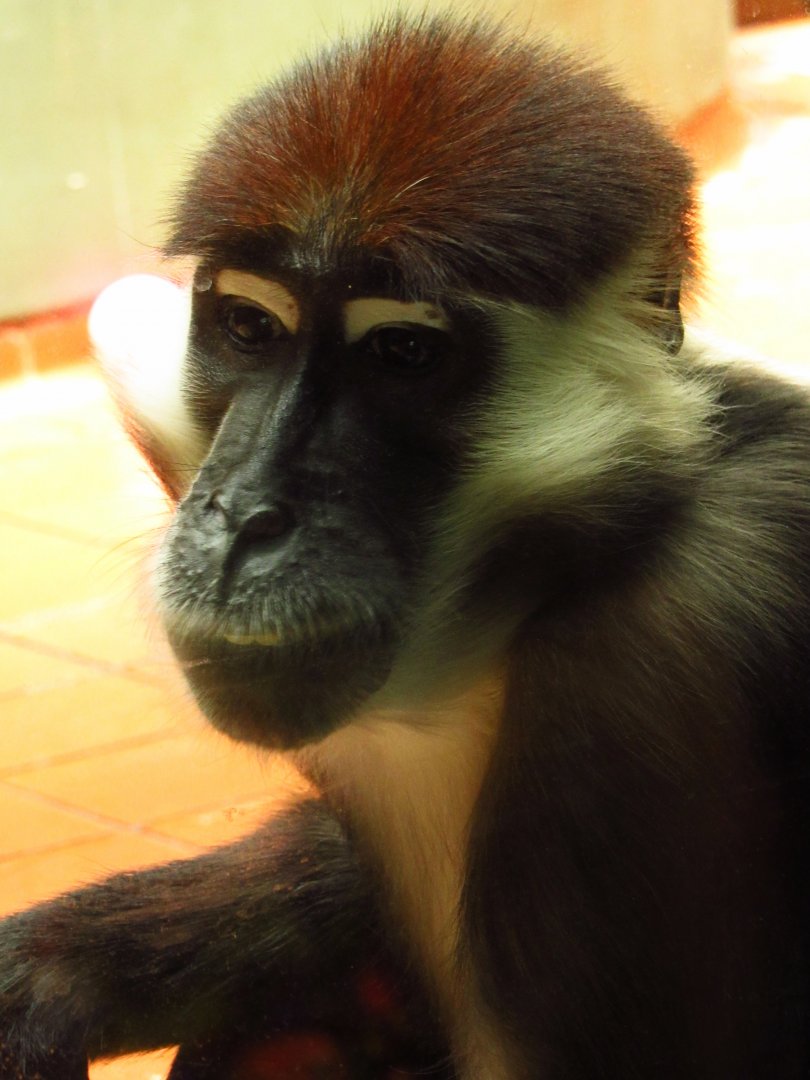
My first stop was the Rare Animal Conservation Center. This building is home to different species, mostly primates that are rare and endangered. One of the species in it is a pair of Eclectus Parrots which are a species I remember from the old 1916 Bird House before it got renovated into the McNeil Avian Center. My main impetus for visiting was Storm the zoo’s Red-Capped Mangabey. I’ve always liked large Old-World Monkeys and I had forgotten how big Mangabeys get. The Golden-Bellies in Cleveland look large but that’s due to their long hair. Storm is easily the size of an 8–10-year-old child and looks like a baboon that went on a Weight Watchers diet. Storm is actually diabetic and is alone because the zoo couldn’t socialize him with other Red-Capped Mangabeys. Its funny how evolution works, because I remembered that the Cercocebus mangabeys like Storm evolved into Drills and Mandrills while the Lophocebus mangabeys evolved into the savanna baboons. Except for Golden-Bellied’s the Cercocebus mangabeys look like the precursors of savanna baboons, Papio with their slim bodies and moderate muzzle length. I talked with one of Storm’s keepers and she stated that the AZA is phasing out Red-Caps which is so unfortunate. I know that AZA & EAZA is focusing on Storm’s cousin the White-Naped Mangabey, but it’d be nice to have both. I couldn’t stop looking at him. The facial contrasts of black skin with white eyelids and red hair looks so cool! I was at the art museum the day before and Samuel Gross from Eakin’s famous painting The Gross Clinic came to mind due to the sideburn similarities. I hope he lives a long time.
Next up were the Francois Langurs. They had babies and they were active. The group was relatively active and moving around. Later in the day, I saw them outside while the keepers were cleaning their indoor area. At this point, I had been doubting whether coming to the zoo was a mistake. Seeing Storm and the Francois Langurs flipped my perception as I headed to PECO Primate Preserve.
I made my way to PECO Primate Reserve and saw that they had installed taller barriers surrounding the large outdoor gorilla and orangutan enclosures. I don’t know whether it was a response to the Harambe incident at Cincinnati but they weren’t there in 2007. Still, it seemed mostly as I remembered it and I made my way inside. I was surprised that they had Aye-Aye’s since I had never seen them before. I saw one and it was up and moving around. The problem was it was so dark that was nearly impossible to film. Luckily, I had not only my iPhone but another older one so I used it as a flashlight to get the Aye-Aye’s visible on film. It worked and I headed to see the other species. One species I particularly liked was the White-Faced Saki. It was grooming itself and moving around. It’d be great to see a Bald Uakari one day. One species the zoo used to have but doesn’t anymore is the Spectacled Langurs which I could’ve seen in years prior. My next stop was the gorillas and orangutans. The Western Lowland Gorillas were having their afternoon siesta, but I got really lucky with the orangutans. The Sumatran Orangutans were supposedly having a keeper training day in the lower area but were up and about in the indoor area when I dropped by. They were climbing on the ladder and right next to glass enabling me perfect views without having to zoom in at all. Then they went back downstairs.
I made my way to Big Cat Falls. I remembered the old Carnivore House and how the two main outdoor enclosures seemed adequate but the smaller cages on the edge of the building were barely any bigger than the cats themselves. You could also go inside and see them being fed. Big Cat Falls is a nice upgrade and it’s built in a way that you forget where you are because everything is next to each other, around corners and tightly packed together. My only complaint would be to make the path next to the Lions a little closer. There is like 20 feet distance from where you are standing and the mesh that contains the lions. It don’t think it’d hurt to move it closer so you wouldn’t have to zoom in so far. I had to wait a while for the female Amur Tiger Koosaka to wake up. I forgot how big Amurs can get. She was easily the size of the male Malayan Tiger in Jacksonville with a little more height. I couldn’t find the male tiger anywhere, so I guess he was inside and out of the heat or on the Zoo360 trail.
By this point, it was time for lunch I ate at Tiger Terrace. For those with milk allergies, you won’t be able to eat the buns that come with the burgers as they’re made with milk. Therefore, I was able to eat a burger patty by itself and some fries with a drink. I must commend the staff as they were very professional about it and looked up the ingredients to make sure I wouldn’t have any problems. If you like pretzels the zoo has a Philly Pretzel Factory location right outside the Rare Animal Conservation Center. I stopped by later in the afternoon to get a Powerade as it was hot and I needed to hydrate.
After lunch, I quickly stopped by KidZoo U. I remembered when the elephants left the zoo in 2007-2008 but figured that the hippos and rhinos would stay. However, since Xavira the Indian Rhino passed away in 2011 and the hippos were moved to African Plains unless they were going to restock the exhibits the area could be restored into another exhibit. I’m sorry if the zoo ends up reading this thread, but I am not at all a fan of Kid Zoo U! I get the idea, but there are other places that kids and their families can go to see domestic farm animals whether they are ALBC rare breeds or not! Some places that come to mind are Peter Wentz Farmstead in nearby Lansdale where you can get a valuable history lesson on 18th Century farming practices while learning about how places like Peter Wentz helped the cause of the American Revolution. Another great option would be Merrymead Farm also in Lansdale. I know the zoo ultimately had the final say in what they were going to do to the old Paul Cret Pachyderm House but this was my idea…. turn the building into a museum about the history of the zoo while using it and the exhibits as an Indian Rhino breeding facility. It's quite simple really. Originally there were six yards, one for the hippos, one for the male rhino Sanjay, another next to it for the male Okapi Kesho followed by Xavira’s and lastly the elephants. What the zoo could have done is made a Basel Zoo type Indian Rhino enclosure where the old hippo yard that used to contain Cindy & Unna as well as the next one could have been the bull rhino yard. The Okapi yard and Xavira’s old yard could’ve been a female and young yard. The elephant yard could have been modified into a courtship yard since it was round and may have provided enough room for a pair of rhinos to do their courting in a large enough area. The yards would be covered with mulch like Basel and there would be multiple pools as well. Perhaps even muntjac or Barasinghas could be mixed in as well? Barasinghas lived at the zoo decades ago. Why not make a return?
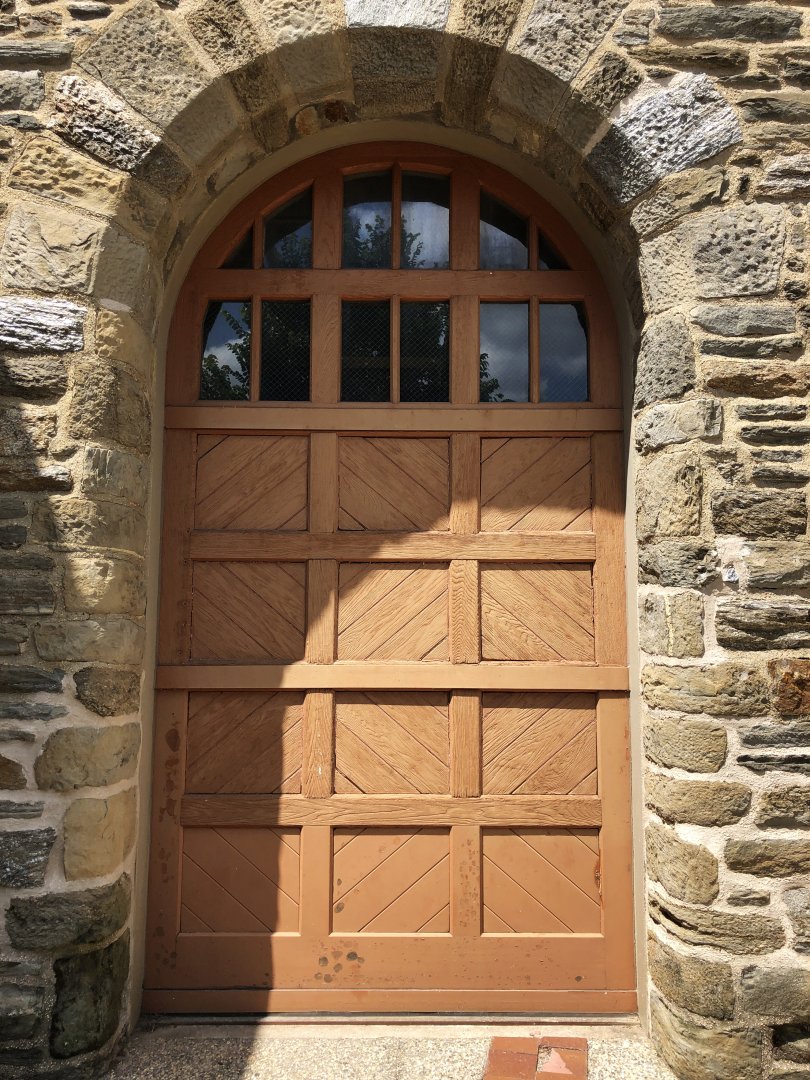
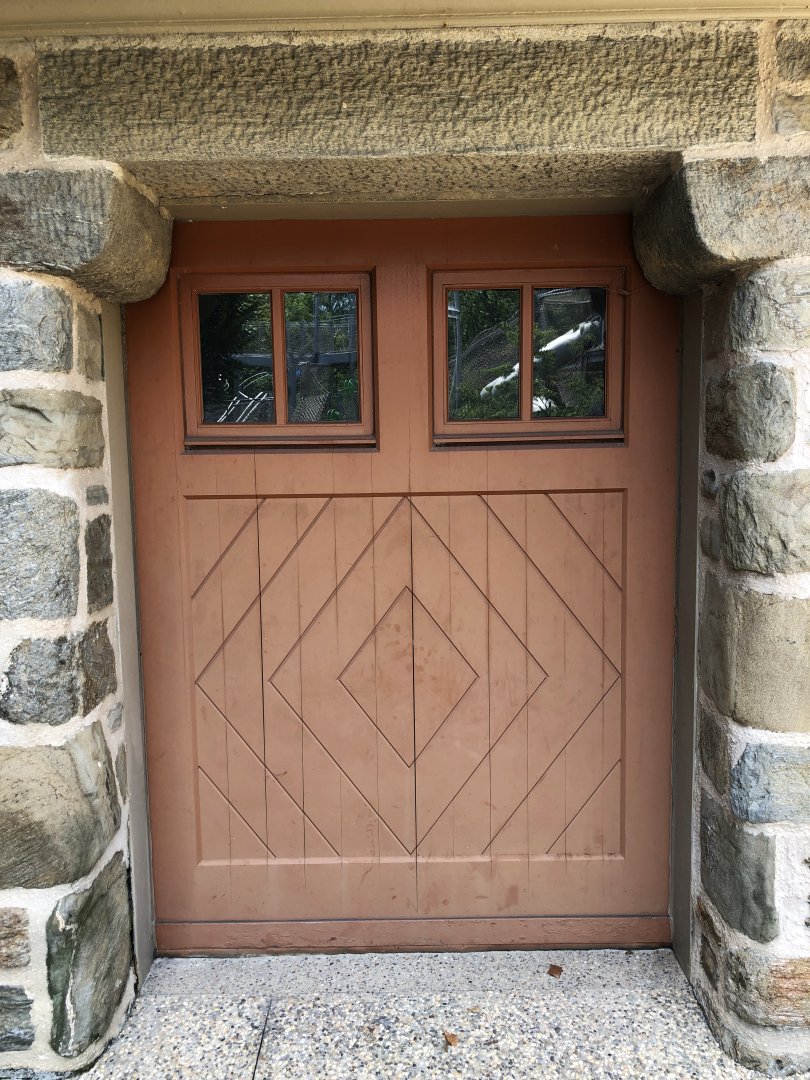
Inside the building would be stalls for the rhinos but with mulch for flooring. The ditches that separated guests from the rhinos would be removed and cable would be installed so guests could get closer while preventing an accident for the rhinos potentially falling in the moat. All the stall space until the elephant stalls would be utilized. The old elephant stalls would be torn down and become a museum-type space with exhibits detailing the history of the zoo and its pachyderms over the years. The Academy of Natural Sciences has the skeleton of Bolivar the elephant, which hasn’t been on public display since the 1920’s. Also, they have Pete the Indian Rhino’s skeleton. These could be displayed in this space along with other zoo artifacts and specimens from the older days of the zoo detailing its long history. Currently, the only structures still standing from the early days of the zoo is the entrance gates and the Antelope House both designed by Frank Furness in the late 1800’s. I think this could have been a great way to continue the zoo’s pachyderm legacy while still embracing the history and sharing it with zoo patrons. I also thought this would be a great idea since the only other Indian rhinos within a large distance is the Bronx Zoo and you have to ride the monorail to see them for a very short limited time. Before leaving the area, I stopped by the doors where the elephants and rhinos used to walk out. It was so incredible to think that this is where they once were and now I was able to be there too. I also discovered that the large red door that the elephants came out of was 12 feet tall. I guess the zoo in the 40’s was planning on housing a bull at some point? I don’t know whether it’s the effects of weather and aging or a choice but the doors are now cinnamon-colored. I wish they would paint them the vibrant red they used to be. The one positive thing that came out of my experience at Kid Zoo U was I discovered the Royal Palm Turkeys. I thought they were cool because they look like a hybrid of a Painted Stork and white turkey.
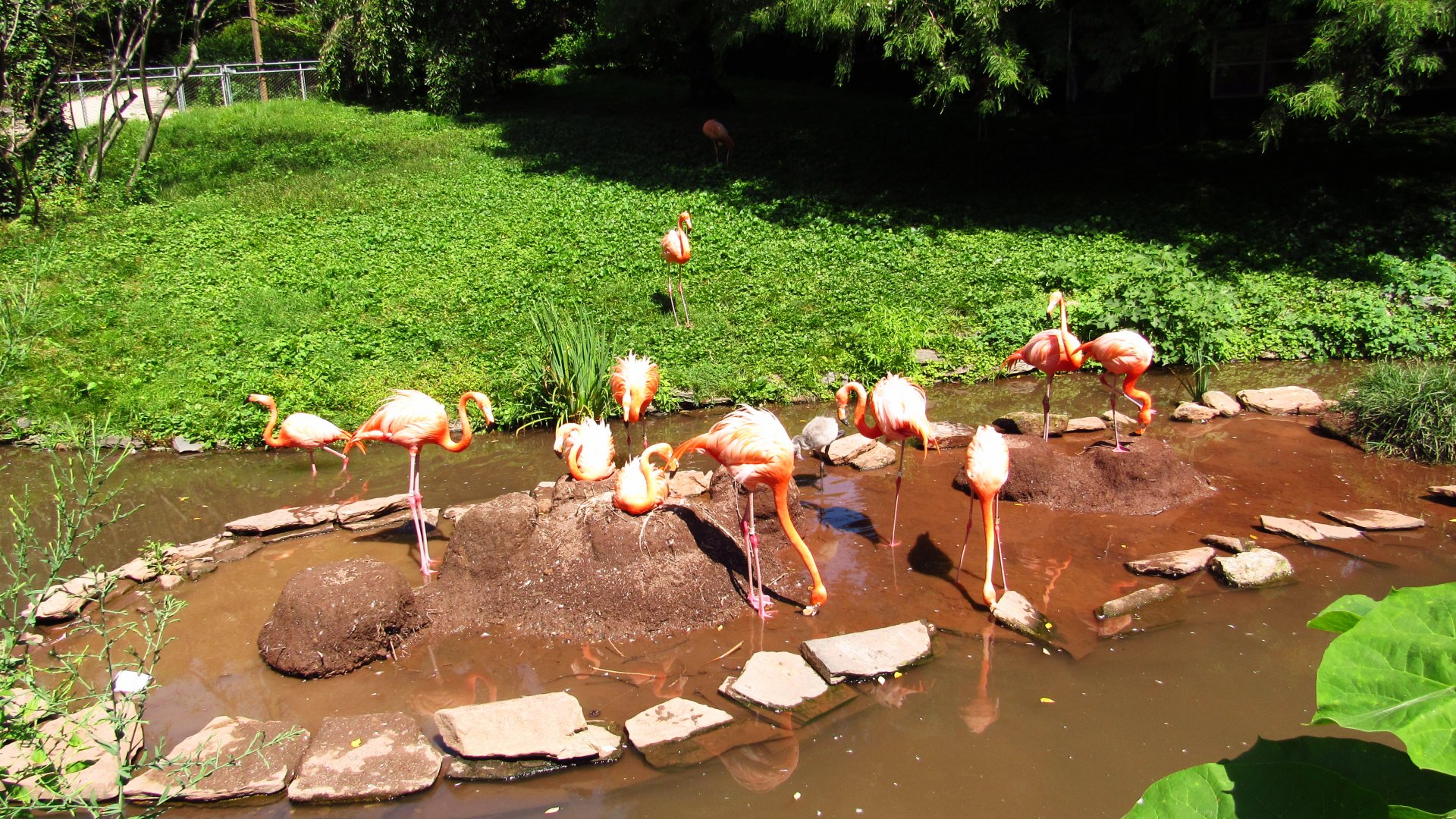
Next, I went into the Reptile House and found it was absolutely crowded. I wanted to stay in but with a certain majority of people not wearing masks and nobody socially distancing I decided to leave and not take a chance on catching the Delta variant. My next stop was Bear Country. I was able to see the Andean Bear come out of his den and walk around for a little bit and then I saw the Sloth Bear. I don’t know which one it was but was awesome finally seeing one up close and moving around. I could hear it sniffing and making the suction sound with its mouth. The long shaggy hairs they have add to their unusual and appealing appearance. It was walking around and even got to the edge of the moat. I’ve never been that close to one before so alongside Storm, the sloth bear was a highlight for me. Following the bears, I saw the Humboldt Penguins at Penguin Point and birds in Bird Valley. The American Flamingos had a chick with its grey feathers.
I was also able to see the Trumpeter Swans up close. However, the Wattled Cranes were sleeping but since they’re at Jacksonville I can see them whenever I want. The zoo used to have Hooded Cranes and I wish they were still there. I made my way toward the McNeil Avian Center to see Cleo & Oscarina the Southern Ground Hornbills. I remembered in 2007 they used to be near the hippos but now reside in the big green flight enclosure where Princess the Andean Condor used to live. Oscarina was holding a toy in her beak and they were both at the fence so I could get up close to them. Their red coloring was a little faded so I assume summer for them is non-breeding season. The next day I would see SGH’s along with other hornbill specimens in the Academy of Natural Sciences’ bird collection to get measurements for future size charts. Apparently, the hornbills are very much people-oriented birds and like to be next to the fence.
Next up was African Plains. This section of the zoo other than the new hippo exhibit and the integration of the White Rhino into the zebra’s exhibit hasn’t changed at all. I first viewed the big grassy field behind the McNeil Avian Center where I saw Will the Saddle-Billed Stork and the new pair of White Storks.
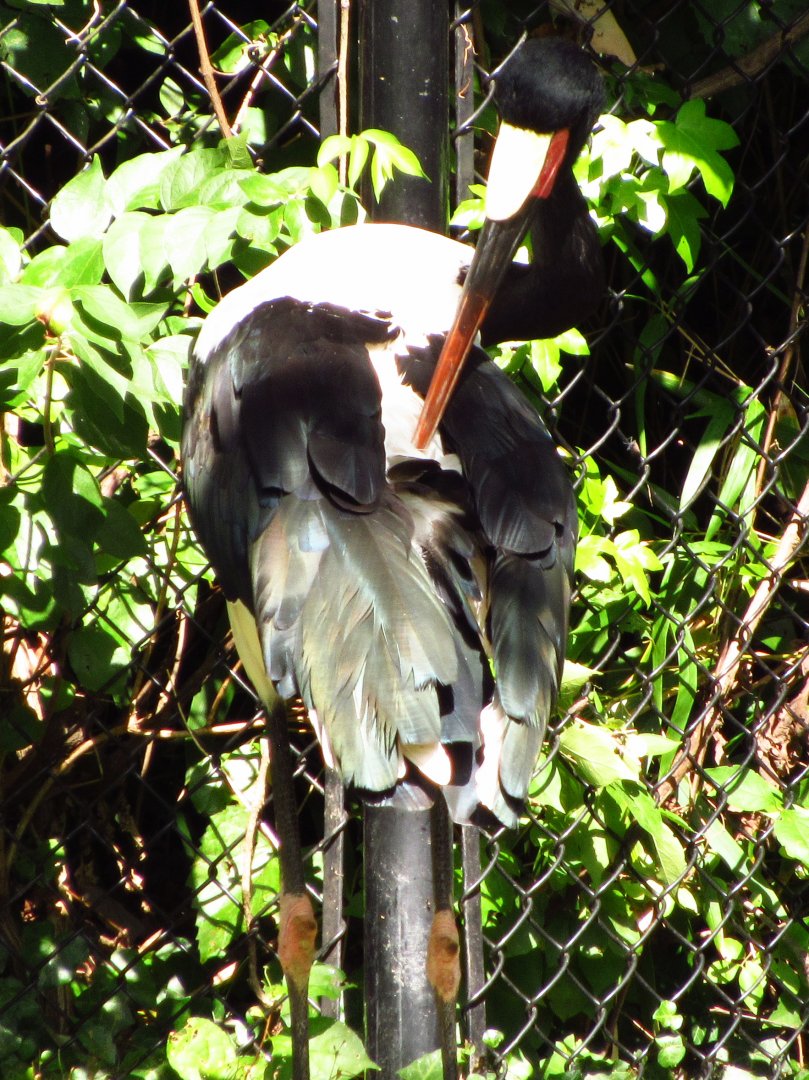
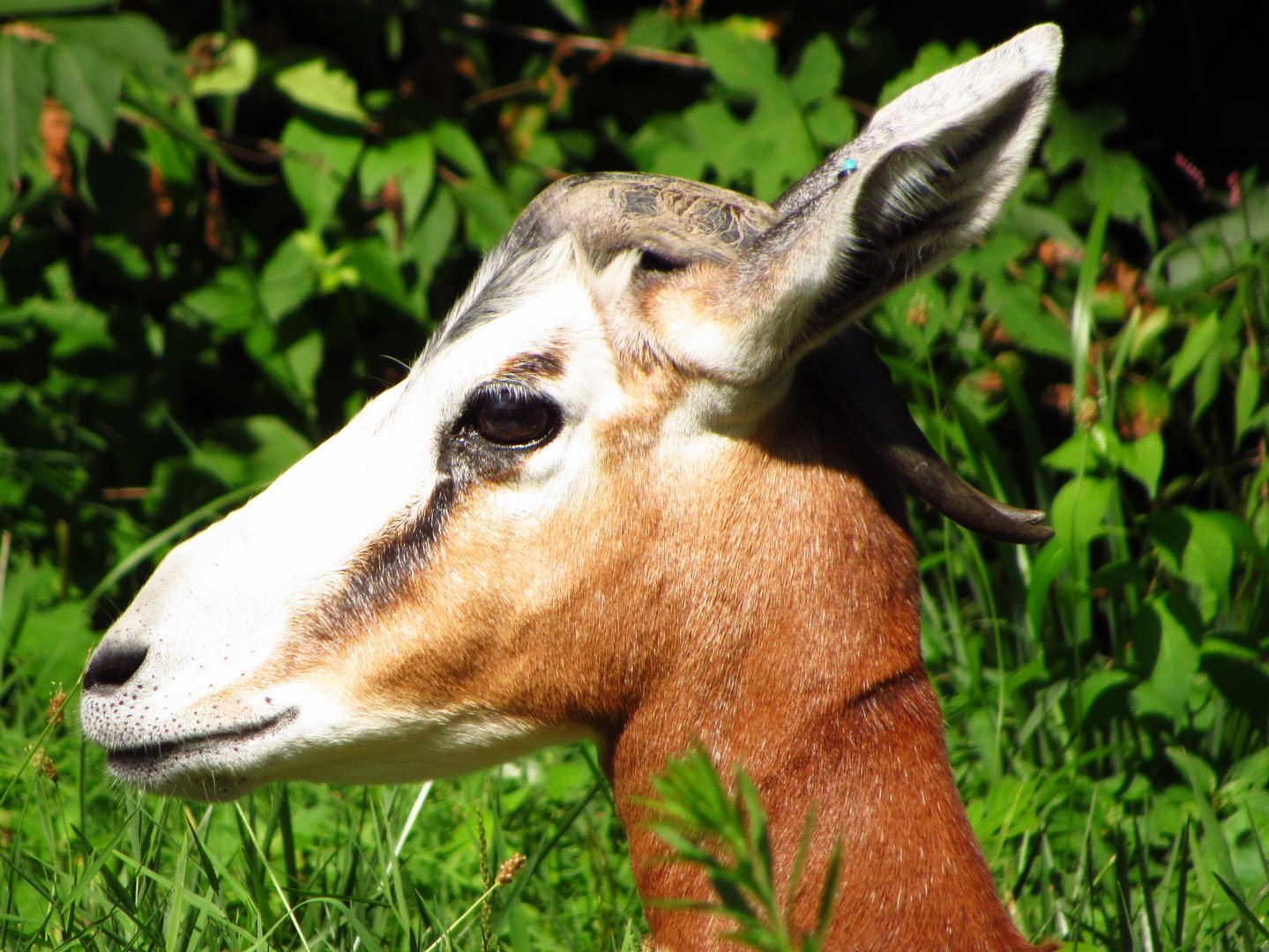
Also, in here was Charlotte the Red River Hog and Abby the last Mhorr’s Gazelle in the US. I snapped a couple pics of her before I visited Tony the White Rhino. He and the four Burchell’s & Grant’s Zebras were eating. I looked at the sign and it said that Tony came from the Jacksonville Zoo. I later looked up Tony and according to this Archie & Gabby are his parents! It's awesome seeing related animals at different zoos like when I saw Spike the Asian Elephant (Dalip’s son) at BG Tampa who now resides at DC’s National Zoo.

I next saw the “Rothticulated” Giraffes. Lastly, I briefly stopped to see Cindy & Unna the Nile Hippos who weren’t moving at all. Overall, I think what they have layout-wise is good but I think they would benefit from making it even better. I remember in the 90’s along with the zebras they had a pair of Sable Antelope. For the large grassy exhibit, I would suggest bringing in either Lesser Kudu or Nyala. For the longest time they had West African Crowned Cranes in the exhibit. Will is the only Saddle-Billed Stork left and its unlikely once he passes the zoo will replace him. It would be great if they transformed the entire area into a Gelada exhibit like the Bronx Zoo to add another unique species to the zoo and can be mixed with Nubian Ibex and move the Wattled cranes to create a unique Ethiopian-themed exhibit. Geladas and Ibex are more suited to the cold and could deal will colder temperatures than the other exhibit inhabitants.
My last animal exhibit was Australian Outpost where the last time I visited were the incredible Bearded Pigs. Unfortunately, they haven’t been on display since the early 2010’s and I viewed the Emus and Red Kangaroos. There was a keeper cleaning the exhibit and we started talking and she said that she had been at the zoo since the 90’s. She told me some great stories. My favorite was that she said when Sanjay the Indian Rhino was at the zoo in the early 2000’s he would have a ball to play with in the pachyderm house. Sometimes the ball would fall into the moat and she would go get the ball out of the moat. Once the ball was out Sanjay would lower his head so she could grab it and he would lift her out of the moat! She called him a gentleman rhino with a great personality. If anyone who knows him (he’s at Bronx now) and has any stories please tell more! She shared some more stories and I told her she should join ZooChat. It was great to hear from her and swap old zoo memories.
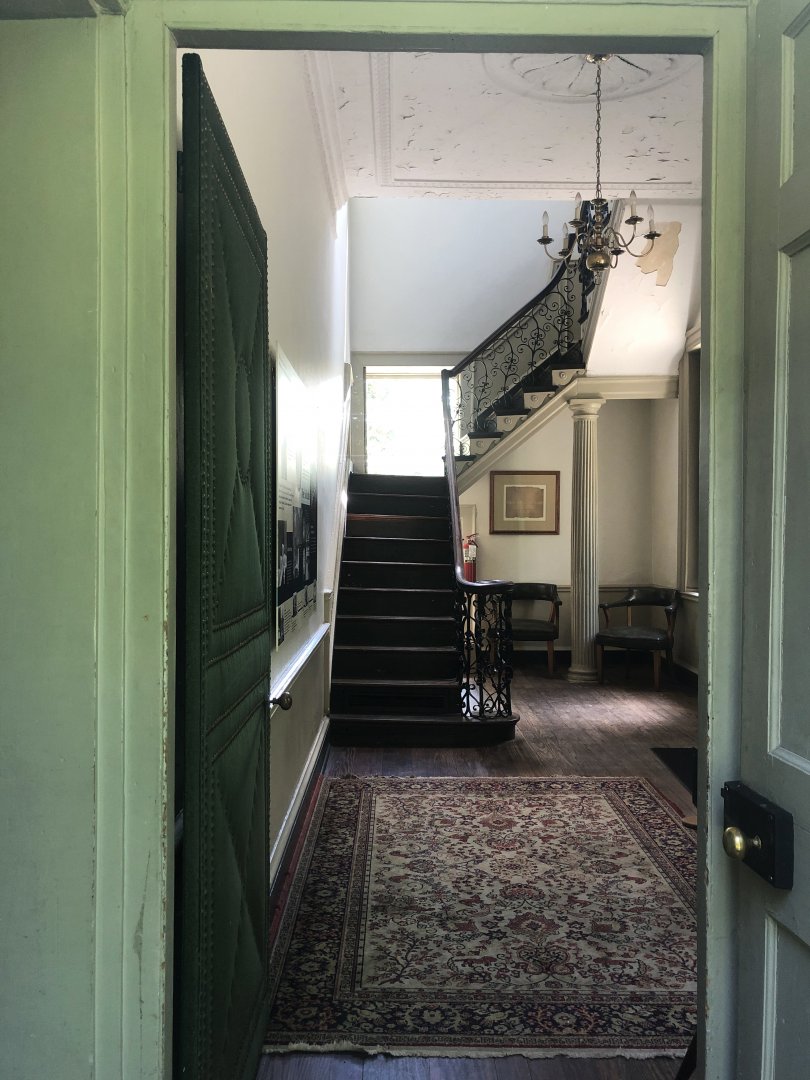
Lastly I visited The Solitude. For anyone interested in early American History The Solitude is not to be missed! It was the home of John Penn the grandson of William Penn and it was one of the first Classical designed homes in the US. You can’t go inside it, but you can look inside through the windows where you can see views of the first floor. Ghost Hunters came to the zoo in 2010 where they investigated certain hauntings in The Solitiude, Penrose Building and the Administration Building. They probably won’t ever do it, but I would definitely visit the zoo for a behind-the-scenes night ghost tour if they offered one!
Last thoughts on the zoo…. it felt very much like the American version of London Zoo. I had visited London in summer 2009 and all the recent refurbishments in Philly gave off the same vibe. Both had mighty impressive collections in their heyday but now have much reduced ones. Regardless of this I did have fun and came away from the zoo wishing I could bring home Storm and the Sloth Bear. Even though I was able to get a taxi to the zoo, there is no taxi service from the zoo. I had to walk about 2 miles to Drexel’s SEPTA stop at Market Street to get a ride back to my hotel at Penn’s Landing. It was a tiring, but fun day. From getting to the zoo to coming back I estimated I walked between 13-15 miles. If anyone is considering visiting now, I would suggest to first visit the species that are rare or unique to the zoo as some of them like Storm and are among the last of their kind in the AZA. Also, if you really want to see the McNeil Avian Center & Small Mammal House contact the zoo ahead of time so you can be sure to see them if they’re open. I left the zoo at about 3:30 PM and one thing I thought was cool is the new obstacle course that replaced the zoo balloon. As a kid the idea of the balloon 500 feet up freaked me out so I never wanted to do it. This looks fun and you can easily see it from Girard Ave. One exhibit I wanted to do but completely forgot about was Wings of Asia. That’s it for my review and enjoy the vid. Be sure to watch it in 4K!
My first stop was the Rare Animal Conservation Center. This building is home to different species, mostly primates that are rare and endangered. One of the species in it is a pair of Eclectus Parrots which are a species I remember from the old 1916 Bird House before it got renovated into the McNeil Avian Center. My main impetus for visiting was Storm the zoo’s Red-Capped Mangabey. I’ve always liked large Old-World Monkeys and I had forgotten how big Mangabeys get. The Golden-Bellies in Cleveland look large but that’s due to their long hair. Storm is easily the size of an 8–10-year-old child and looks like a baboon that went on a Weight Watchers diet. Storm is actually diabetic and is alone because the zoo couldn’t socialize him with other Red-Capped Mangabeys. Its funny how evolution works, because I remembered that the Cercocebus mangabeys like Storm evolved into Drills and Mandrills while the Lophocebus mangabeys evolved into the savanna baboons. Except for Golden-Bellied’s the Cercocebus mangabeys look like the precursors of savanna baboons, Papio with their slim bodies and moderate muzzle length. I talked with one of Storm’s keepers and she stated that the AZA is phasing out Red-Caps which is so unfortunate. I know that AZA & EAZA is focusing on Storm’s cousin the White-Naped Mangabey, but it’d be nice to have both. I couldn’t stop looking at him. The facial contrasts of black skin with white eyelids and red hair looks so cool! I was at the art museum the day before and Samuel Gross from Eakin’s famous painting The Gross Clinic came to mind due to the sideburn similarities. I hope he lives a long time.
Next up were the Francois Langurs. They had babies and they were active. The group was relatively active and moving around. Later in the day, I saw them outside while the keepers were cleaning their indoor area. At this point, I had been doubting whether coming to the zoo was a mistake. Seeing Storm and the Francois Langurs flipped my perception as I headed to PECO Primate Preserve.
I made my way to PECO Primate Reserve and saw that they had installed taller barriers surrounding the large outdoor gorilla and orangutan enclosures. I don’t know whether it was a response to the Harambe incident at Cincinnati but they weren’t there in 2007. Still, it seemed mostly as I remembered it and I made my way inside. I was surprised that they had Aye-Aye’s since I had never seen them before. I saw one and it was up and moving around. The problem was it was so dark that was nearly impossible to film. Luckily, I had not only my iPhone but another older one so I used it as a flashlight to get the Aye-Aye’s visible on film. It worked and I headed to see the other species. One species I particularly liked was the White-Faced Saki. It was grooming itself and moving around. It’d be great to see a Bald Uakari one day. One species the zoo used to have but doesn’t anymore is the Spectacled Langurs which I could’ve seen in years prior. My next stop was the gorillas and orangutans. The Western Lowland Gorillas were having their afternoon siesta, but I got really lucky with the orangutans. The Sumatran Orangutans were supposedly having a keeper training day in the lower area but were up and about in the indoor area when I dropped by. They were climbing on the ladder and right next to glass enabling me perfect views without having to zoom in at all. Then they went back downstairs.
I made my way to Big Cat Falls. I remembered the old Carnivore House and how the two main outdoor enclosures seemed adequate but the smaller cages on the edge of the building were barely any bigger than the cats themselves. You could also go inside and see them being fed. Big Cat Falls is a nice upgrade and it’s built in a way that you forget where you are because everything is next to each other, around corners and tightly packed together. My only complaint would be to make the path next to the Lions a little closer. There is like 20 feet distance from where you are standing and the mesh that contains the lions. It don’t think it’d hurt to move it closer so you wouldn’t have to zoom in so far. I had to wait a while for the female Amur Tiger Koosaka to wake up. I forgot how big Amurs can get. She was easily the size of the male Malayan Tiger in Jacksonville with a little more height. I couldn’t find the male tiger anywhere, so I guess he was inside and out of the heat or on the Zoo360 trail.
By this point, it was time for lunch I ate at Tiger Terrace. For those with milk allergies, you won’t be able to eat the buns that come with the burgers as they’re made with milk. Therefore, I was able to eat a burger patty by itself and some fries with a drink. I must commend the staff as they were very professional about it and looked up the ingredients to make sure I wouldn’t have any problems. If you like pretzels the zoo has a Philly Pretzel Factory location right outside the Rare Animal Conservation Center. I stopped by later in the afternoon to get a Powerade as it was hot and I needed to hydrate.
After lunch, I quickly stopped by KidZoo U. I remembered when the elephants left the zoo in 2007-2008 but figured that the hippos and rhinos would stay. However, since Xavira the Indian Rhino passed away in 2011 and the hippos were moved to African Plains unless they were going to restock the exhibits the area could be restored into another exhibit. I’m sorry if the zoo ends up reading this thread, but I am not at all a fan of Kid Zoo U! I get the idea, but there are other places that kids and their families can go to see domestic farm animals whether they are ALBC rare breeds or not! Some places that come to mind are Peter Wentz Farmstead in nearby Lansdale where you can get a valuable history lesson on 18th Century farming practices while learning about how places like Peter Wentz helped the cause of the American Revolution. Another great option would be Merrymead Farm also in Lansdale. I know the zoo ultimately had the final say in what they were going to do to the old Paul Cret Pachyderm House but this was my idea…. turn the building into a museum about the history of the zoo while using it and the exhibits as an Indian Rhino breeding facility. It's quite simple really. Originally there were six yards, one for the hippos, one for the male rhino Sanjay, another next to it for the male Okapi Kesho followed by Xavira’s and lastly the elephants. What the zoo could have done is made a Basel Zoo type Indian Rhino enclosure where the old hippo yard that used to contain Cindy & Unna as well as the next one could have been the bull rhino yard. The Okapi yard and Xavira’s old yard could’ve been a female and young yard. The elephant yard could have been modified into a courtship yard since it was round and may have provided enough room for a pair of rhinos to do their courting in a large enough area. The yards would be covered with mulch like Basel and there would be multiple pools as well. Perhaps even muntjac or Barasinghas could be mixed in as well? Barasinghas lived at the zoo decades ago. Why not make a return?
Inside the building would be stalls for the rhinos but with mulch for flooring. The ditches that separated guests from the rhinos would be removed and cable would be installed so guests could get closer while preventing an accident for the rhinos potentially falling in the moat. All the stall space until the elephant stalls would be utilized. The old elephant stalls would be torn down and become a museum-type space with exhibits detailing the history of the zoo and its pachyderms over the years. The Academy of Natural Sciences has the skeleton of Bolivar the elephant, which hasn’t been on public display since the 1920’s. Also, they have Pete the Indian Rhino’s skeleton. These could be displayed in this space along with other zoo artifacts and specimens from the older days of the zoo detailing its long history. Currently, the only structures still standing from the early days of the zoo is the entrance gates and the Antelope House both designed by Frank Furness in the late 1800’s. I think this could have been a great way to continue the zoo’s pachyderm legacy while still embracing the history and sharing it with zoo patrons. I also thought this would be a great idea since the only other Indian rhinos within a large distance is the Bronx Zoo and you have to ride the monorail to see them for a very short limited time. Before leaving the area, I stopped by the doors where the elephants and rhinos used to walk out. It was so incredible to think that this is where they once were and now I was able to be there too. I also discovered that the large red door that the elephants came out of was 12 feet tall. I guess the zoo in the 40’s was planning on housing a bull at some point? I don’t know whether it’s the effects of weather and aging or a choice but the doors are now cinnamon-colored. I wish they would paint them the vibrant red they used to be. The one positive thing that came out of my experience at Kid Zoo U was I discovered the Royal Palm Turkeys. I thought they were cool because they look like a hybrid of a Painted Stork and white turkey.
Next, I went into the Reptile House and found it was absolutely crowded. I wanted to stay in but with a certain majority of people not wearing masks and nobody socially distancing I decided to leave and not take a chance on catching the Delta variant. My next stop was Bear Country. I was able to see the Andean Bear come out of his den and walk around for a little bit and then I saw the Sloth Bear. I don’t know which one it was but was awesome finally seeing one up close and moving around. I could hear it sniffing and making the suction sound with its mouth. The long shaggy hairs they have add to their unusual and appealing appearance. It was walking around and even got to the edge of the moat. I’ve never been that close to one before so alongside Storm, the sloth bear was a highlight for me. Following the bears, I saw the Humboldt Penguins at Penguin Point and birds in Bird Valley. The American Flamingos had a chick with its grey feathers.
I was also able to see the Trumpeter Swans up close. However, the Wattled Cranes were sleeping but since they’re at Jacksonville I can see them whenever I want. The zoo used to have Hooded Cranes and I wish they were still there. I made my way toward the McNeil Avian Center to see Cleo & Oscarina the Southern Ground Hornbills. I remembered in 2007 they used to be near the hippos but now reside in the big green flight enclosure where Princess the Andean Condor used to live. Oscarina was holding a toy in her beak and they were both at the fence so I could get up close to them. Their red coloring was a little faded so I assume summer for them is non-breeding season. The next day I would see SGH’s along with other hornbill specimens in the Academy of Natural Sciences’ bird collection to get measurements for future size charts. Apparently, the hornbills are very much people-oriented birds and like to be next to the fence.
Next up was African Plains. This section of the zoo other than the new hippo exhibit and the integration of the White Rhino into the zebra’s exhibit hasn’t changed at all. I first viewed the big grassy field behind the McNeil Avian Center where I saw Will the Saddle-Billed Stork and the new pair of White Storks.
Also, in here was Charlotte the Red River Hog and Abby the last Mhorr’s Gazelle in the US. I snapped a couple pics of her before I visited Tony the White Rhino. He and the four Burchell’s & Grant’s Zebras were eating. I looked at the sign and it said that Tony came from the Jacksonville Zoo. I later looked up Tony and according to this Archie & Gabby are his parents! It's awesome seeing related animals at different zoos like when I saw Spike the Asian Elephant (Dalip’s son) at BG Tampa who now resides at DC’s National Zoo.
I next saw the “Rothticulated” Giraffes. Lastly, I briefly stopped to see Cindy & Unna the Nile Hippos who weren’t moving at all. Overall, I think what they have layout-wise is good but I think they would benefit from making it even better. I remember in the 90’s along with the zebras they had a pair of Sable Antelope. For the large grassy exhibit, I would suggest bringing in either Lesser Kudu or Nyala. For the longest time they had West African Crowned Cranes in the exhibit. Will is the only Saddle-Billed Stork left and its unlikely once he passes the zoo will replace him. It would be great if they transformed the entire area into a Gelada exhibit like the Bronx Zoo to add another unique species to the zoo and can be mixed with Nubian Ibex and move the Wattled cranes to create a unique Ethiopian-themed exhibit. Geladas and Ibex are more suited to the cold and could deal will colder temperatures than the other exhibit inhabitants.
My last animal exhibit was Australian Outpost where the last time I visited were the incredible Bearded Pigs. Unfortunately, they haven’t been on display since the early 2010’s and I viewed the Emus and Red Kangaroos. There was a keeper cleaning the exhibit and we started talking and she said that she had been at the zoo since the 90’s. She told me some great stories. My favorite was that she said when Sanjay the Indian Rhino was at the zoo in the early 2000’s he would have a ball to play with in the pachyderm house. Sometimes the ball would fall into the moat and she would go get the ball out of the moat. Once the ball was out Sanjay would lower his head so she could grab it and he would lift her out of the moat! She called him a gentleman rhino with a great personality. If anyone who knows him (he’s at Bronx now) and has any stories please tell more! She shared some more stories and I told her she should join ZooChat. It was great to hear from her and swap old zoo memories.
Lastly I visited The Solitude. For anyone interested in early American History The Solitude is not to be missed! It was the home of John Penn the grandson of William Penn and it was one of the first Classical designed homes in the US. You can’t go inside it, but you can look inside through the windows where you can see views of the first floor. Ghost Hunters came to the zoo in 2010 where they investigated certain hauntings in The Solitiude, Penrose Building and the Administration Building. They probably won’t ever do it, but I would definitely visit the zoo for a behind-the-scenes night ghost tour if they offered one!
Last thoughts on the zoo…. it felt very much like the American version of London Zoo. I had visited London in summer 2009 and all the recent refurbishments in Philly gave off the same vibe. Both had mighty impressive collections in their heyday but now have much reduced ones. Regardless of this I did have fun and came away from the zoo wishing I could bring home Storm and the Sloth Bear. Even though I was able to get a taxi to the zoo, there is no taxi service from the zoo. I had to walk about 2 miles to Drexel’s SEPTA stop at Market Street to get a ride back to my hotel at Penn’s Landing. It was a tiring, but fun day. From getting to the zoo to coming back I estimated I walked between 13-15 miles. If anyone is considering visiting now, I would suggest to first visit the species that are rare or unique to the zoo as some of them like Storm and are among the last of their kind in the AZA. Also, if you really want to see the McNeil Avian Center & Small Mammal House contact the zoo ahead of time so you can be sure to see them if they’re open. I left the zoo at about 3:30 PM and one thing I thought was cool is the new obstacle course that replaced the zoo balloon. As a kid the idea of the balloon 500 feet up freaked me out so I never wanted to do it. This looks fun and you can easily see it from Girard Ave. One exhibit I wanted to do but completely forgot about was Wings of Asia. That’s it for my review and enjoy the vid. Be sure to watch it in 4K!
Philadelphia Zoo 2021 [4K 60fps] - YouTube
A visit to America's first zoo! Filmed on 8-2-21.
Last edited:


