For the first time in ages a monkey-eating eagle, searching for bearded dragons, suricates and red-necked wallaby, has been seen flying over some Alpine countries. Observers said it looked well-fed. It is unknown where the bird came from.

For the first time in ages a monkey-eating eagle, searching for bearded dragons, suricates and red-necked wallaby, has been seen flying over some Alpine countries. Observers said it looked well-fed. It is unknown where the bird came from.


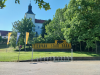


Day 4 # Blumengärten Hirschstetten
To the east of the city, across the Danube in the Donaustadt district, lies a site that originally had a very different purpose from the one it serves today. The Blumengärten in Hirschstetten were acquired in the 19th century as a plant nursery.
There were greenhouses, flower beds and, from 1904, also a Palmenhaus in which potted plants used for urban events were kept. It also provided a winter home for water birds kept on the city ponds of the city parks.
After World War II, Hirschstetten soon became the main location for growing plants. Especially after 1950, it gained importance because from then on much more attention was paid to the beautification of the urban landscape and parks. Hirschstetten's flower gardens thus became a household name.
However, developments continued unabated and, as more and more was purchased from private growers, this breeding centre gradually lost importance. In the early 2000s, it was therefore decided to reclassify it as a recreational area and it was completely redesigned. Next to the Palmenhuis, a Floralium was created with several themed (world) gardens, a petting zoo, an insectarium, etc. They are open from April to October (in winter, only the Palmenhuis is open). Only a small part still has the function of a plant nursery.
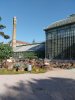
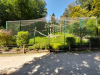
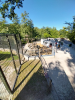
View attachment 673406
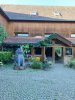
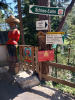
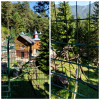
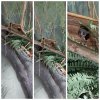
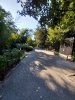
Right after the entrance
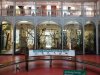
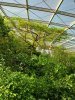
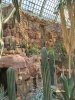
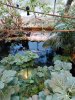
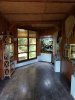
I had a really good time there. The more than 100-year-old Palm House is a dark, fairytale conservatory with century-old trees, among which terrariums for reptiles and insects are set up and a dozen tropical bird species fly around. It's a hidden gem with more than 100 years of mature vegetation among which to look for red-crested turaco, oriental white-eye, Cuban grassquit and others.
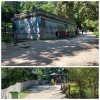
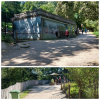
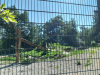
View attachment 673405
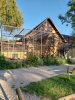
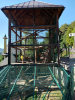
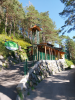
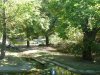
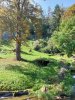
Birdwatching platform
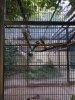
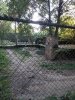
Near the hospitality point is an aviary for native songbirds and at the back of the garden is a large breeding centre for European tortoises and aviaries for European wild cats, Ural owls and pygmy owls.
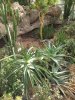
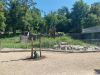
View attachment 673407
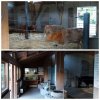
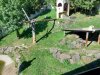
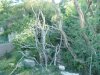
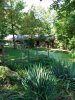
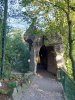
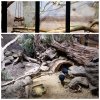
Enclosure for European pond turtle - 1 out of 7 enclosures for European tortoises
Day 3 # 6 Haus des Meeres
This brutalist building is certainly one of the most remarkable locations in Europe to find a zoo.
It has an extraordinary history and has its origins in World War II.
Between 1942 and 1945, six tall concrete bunkers were built in Vienna. Known as Flakturms (FLugAbwehrKanone), they can be found in Berlin and Hamburg in addition to Vienna. These towers had shelters, anti-aircraft guns and were equipped with radar technology. They were built in pairs (one combat and one radar tower each) to defend the city centre. The roof was made of metre-thick concrete and could withstand the heaviest Allied bombs. Besides their military function, they were also used at the time as temporary hospitals and radio stations. After the war, they were not removed because it was not possible at the time without damaging the surrounding houses. Meanwhile, they were listed and given a new function.
The traffic (radar) tower in Esterhazy park has 11 floors and is 47m high. It towers over the surrounding houses. Since 1958, it has been home to the Haus des Meeres, which bought the building from the city of Vienna in 2015 for a symbolic euro. The underground shelters used to house a youth hostel; today it is a torture museum.
It is a bit difficult to navigate around the building, but the panoramic lift already allows you to enjoy a stunning 360° view of Vienna on the top floor.
On the ninth floor, tall enclosures for ring-tailed lemurs (together with black lemurs, giant tortoises and narrow-striped mongoose) and komodo dragon (Sunda zebra finches, tiger finches and bank myna) stand out: the lemurs can also enjoy the outdoors on 1 of the terraces.
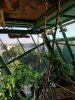
More spectacular is the glass skywalk that takes visitors through the Australien Erlebniswelt, a narrow Australian landscape across 3 sides of the tower. Along the way, free-living parakeets skim between visitors and aquariums with lungfish and rainbow fish can be seen. Very special are the hanging aviaries at 2 of the building's corner points.
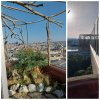
View attachment 673399
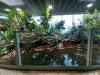
'hanging' aviaries on the 9th floor
Inside is a beautiful Congo paludarium above which Senegal galagos can scurry around in the vegetation.
View attachment 673400
Avoiding noisy visitors
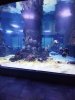
The highlight on the 7th floor is without a doubt the 360° Haibecken, opened in 2021, an oval 4.5m-high reef aquarium with an Indopacifist theme where visitors can walk all the way around. Even for a building that already had very solid foundations from its origins as a bunker, this 500-tonne aquarium on the 7th floor is an engineering feat. A special technique was needed to get the plexiglass without visible seams and they succeeded well in this. That does not hide the fact that the sightlines in this aquarium are not ideal: you will always see a visitor standing on the other side of the aquarium. Among the 1,000 fish are white-tip and black-tip sharks, gitar fish, blue-spotted stingrays, a beautiful school of 13 Orbicular batfish (Platax orbicularis), surgeonfish, cleaner fish, etc. The smaller fish can get into a calmer area through small holes in the coral wall, outside the reach of the big fish. I found this aquarium not so thunderously decorated, much nicer coral reef aquariums can be found in zoos, but the large swimming area where the batfish and sharks spin endlessly makes up for a lot here. The rock pylons in the aquarium are in rather boring predictable places, but probably they have an construction function.
View attachment 673401
Orbicular batfish
On floor 4, a spectacular descent of the 3-storey and 15-metre-high Tropenhaus begins. If you are afraid of heights, this suspended Amazon forest may require some caution (purely imagined, it is steep but of course there are no dangerous points). Besides the familiar white-bearded saki and goeldi’s monkeys, we also find the rarer silvery marmosets and Spix’s saddle-back tamarins here. Birds are also on hand such as blue-throated piping-guan and Brazilian tanagers, I also saw a pigeon species (possibly a red-necked zebra pigeon) and a rail which I think is a grey-necked woodrail. Downstairs, there is also a spacious aquarium for ciclids. Those descending here should remember to also stop on floor 3 where there is an extensive collection of tropical marine animals, coral fish and jellyfish.
View attachment 673402
The 3-storey Amazon rainforest
On the 2nd floor, we first find the piranhas and a number of aquariums focusing on the Mediterranean. The top attraction here, however, is the Crocodile Park. Like the Tropenhaus, it sticks to the building as it were and consists of a glass atrium that extends to just above the entrance. False gharial can be seen in this enclosure along with a range of African bird species: bearded barbet, Amethyst starling, common bulbul, emerald starling, white-crested turaco, superb and purple glossy starlings and red-winged starlings. Inside the building, there are terrariums for insects and aquaria for tropical freshwater fish.
View attachment 673403
Krokipark - False gharial, white-crested turaco and superb starling
On the lower floors, there are large enclosures for boids, a room full of venomous snakes, another with spiders and insects, a walk-through Atlantic tank and a large outback terrarium.
Those who find the aquarium and reptile house at Schonbrunn Zoo a bit disappointing may find the reason in the excellent Haus des Meeres. It has large collections of freshwater and saltwater fish and herpetofauna. But fans of birds and mammals are sure to get their money's worth here too with a number of not so widespread species. And although the architecture is miles away from what we expect in a zoo, the building itself is still intriguing and also offers the best view of Vienna. In any case, I enjoyed it immensely.
I wonder how visitors who are not so interested in the historical context experience this zoo. There’re for many species far better and larger enclosures in more modern zoos than here.
 . Whether it can hold on to all those ABC-species in the future is something of a question mark though for me.... But once the elephants relocate to an extension of the upper part of the zoo, some prime real estate will come free again.
The garden has a free-ranging souslik colony too and when I was there it also had several terraria for native herps in the centre of the garden, where those gone?
I really liked this small garden when I visited, though due to COVID the palm house was unfortunately closed. The garden has a free-ranging souslik colony too and when I was there it also had several terraria for native herps in the centre of the garden, where those gone?
Keep the reviews coming!





I have few rules and principles during my zoo trips, but this one exists and I follow it meticulously: never skip a location with a turaco or hornbill.