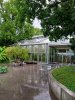
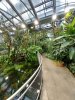
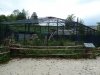
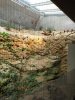
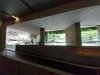
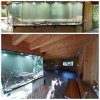
I'm afraid I missed this exhibit. It's probably this one, right after the entrance?
View attachment 686881
For some inexplicable reason, I thought these were toilets.
Yep that is where ants and the native rodents are housed.
I'm afraid I missed this exhibit. It's probably this one, right after the entrance?
View attachment 686881
For some inexplicable reason, I thought these were toilets.


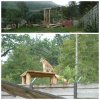
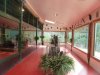
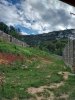
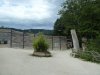
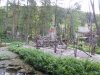


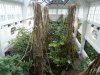
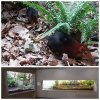


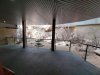
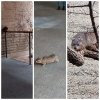




I've never met Anthony Sheridan, but his three full-length zoo books have been a fascinating source of information and data for zoo nerds over the years. In his first book, published in 2011, he ranked Basel Zoo as the tied 5th best zoo in all of Europe, when it came to zoos that received a million annual visitors. I distinctly recall several people scratching their heads and wondering why it was so highly regarded, behind only Vienna, Leipzig, Zurich and Berlin on his list...and tied with Chester and Cologne. Maybe he was ahead of his time when it came to Basel?
In his next book, a hefty tome of 466 pages and published in 2016, he had Basel Zoo as the 4th best zoo in Europe, behind only Vienna, Leipzig and Zurich.
Lastly, in his 3rd book, published in 2021, he dropped Basel down to 11th place. This time it was behind Sheridan's perennial top 3 of Vienna, Leipzig and Zurich, as well as Berlin, Beauval, Chester, Pairi Daiza, Stuttgart, Munich and Prague. Some of those zoos leaped upwards after vast sums of money were spent on new exhibits.
In truth, most of the facilities that Sheridan regards as great zoos are often the exact same zoos that people on this site list as the best in Europe. Therefore, his semi-controversial rankings are frequently in line with other such lists. It seems that with Basel, he was a bit ahead of his time as Sheridan has consistently praised it for many years and the same goes for zoo nerds on this site. It really does look like a zoo that has made the most of its somewhat limited space. It's a real shame that the Ozeanium never materialized, as from renderings and plans it appears that this could have been a revolutionary aquarium. Here's a link with several proposed images of the failed project:
Ozeanium: Basel Aquarium - eVolo | Architecture Magazine

Basel is probably my favourite zooThe Etoscha-haus opens seemingly peacefully with an attrium for succulents and other drought-resistant plants. Few visitors keep reading quietly after seeing huge wheelweb spiders hanging above the information board. This is followed by small but beautifully decorated exhibits for naked mole rats, zebra grass mice and short-eared elephant shrews, but it’s around the corner that the showpiece of this building lurks, a communal enclosure for rock hyrax, Cape ground squirrels, black-cheeked lovebirds and sociable weavers.
View attachment 689078
Mixed species enclosure
When fights break out between the dassies, the glass barrier is no problem for an individual to jump over and lead visitors further into the building, towards an enclosure with large boulders, housing engmatic meerkats.
View attachment 689079
Common rock hyrax
The last enclosure is a large aviary for Northern Carmine bee-eaters, which find frequent nesting opportunities in the high rock wall. The meerkats and the bee-eaters can also simply go outside in nice weather.
View attachment 689080
Aviary for northern Carmine bee-eater
Walking to the Gamgoas-haus, past cheetahs and African wild dogs, the African lion enclosure looks much bigger than it really is. The original inhabitants of Etoscha use the name Gamgaos for what literally means 'the place where the lions live'. Both Etoscha and Gamgoas buildings therefore refer to the same area, and the same ecosystem, the hot and dry areas of Africa’s south-western savannahs. It has 3 panoramic windows overlooking the lion's enclosure, an educational exhibition area and a large enclosure with living termites.
View attachment 689081
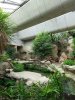
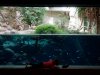
There’s also a breeding station for the Karoo padloper turtles, but the best exhibit here, indeed perhaps of the entire zoo, is in the far corner of the building: the large exhibit includes high rocky cliffs covered with plants and trees, and a riparian landscape with water, papyrus and bushes. On the river bank, safely away from the water, dwarf mongooses run back and forth, ever wary of their fearceful co-inhabitants in the water. Skimming through the air are red-billed tocs, golden-breasted and superb starlings, Cape turtle doves, yellow-crowned bishop and the non-native Cuban grassquits. In the water, large Nile crocodiles lurk among hundreds of blue and yellow ciclids. On one side you look out over the dry areas, but around the corner you have a fabulous underwater look on the crocs.
View attachment 689082
Mixed species enclosure
View attachment 689083
Mixed species enclosure
If you still doubted whether traditional zoos, hemmed in by urban developments, could compete with the rich kids in Cambron, Beauval, Chester or Zurich, here is your answer: both Etoscha and Gamgoas exhibits show why Basel is not afraid of the latter. And for those who argue that traditional zoos only need to exhibit large mammals to survive, here is a lesson to the contrary. An interesting and vibrant species selection, with some small but attractive species, a good mix of communal and single species enclosures, a very high standard of finishing and an attractive layout of the building do the job. Basel reaches its peak here (and in the birdhouse), with rock hyraxes, bee-eaters and termites. Yes, there are also familiar crowd-pleasers like meerkats, and large, fearsome animals like lions and crocodiles but the latter just show what is really possible for a city zoo.
The Sautergarten is the zoo's 1939 expansion area and the place where primarily the Indian rhinos can be found, the animal with which the zoo achieves great breeding successes. The 1,2,2 rhinos live on a large community plot, along with Visayan warthogs and Reeve’s muntjaks. Although this enclosure is richly structured so that the animals can get out of each other's way, tensions remain inevitable. I repeatedly saw one of the females chasing the other, with both calves reacting startledly to the charges. Eventually, the zoo keepers intervened several times. The Rhino house was closed and so was the pygmy hippo house. The other main exhibit in the Sautergarten is a beautifull giant artifical rock, housing snow leopards on one side and a troop of crab-eating macaques on the other side.
View attachment 689084
Greater one-horned rhinoceros with calf
View attachment 689086
Crab-eating macaque enclosure
Basels Affenhaus is the zoo’s largest building. It houses monkeys and 3 species of apes. The latter have 5 outside enclosures, the Geigy-anlage, that increased sixfold after the renovation in 2011. However, it is inside that the building is truly spectacular. At first glance, you would think that concrete architecture can never produce suitable living environments, but if you do it right, it certainly can. And the zoo has done it right. All great apes have at least three tall, interconnected rooms where filtered light falls down through skylights, resembling to the light falling through the treetops onto the jungle floor. Large windows offer visitors a view of the apes, while the visitor area is soberly decorated with wooden seating and stylish information signs.
View attachment 689087
Connected enclosures for Western common chimpanzee
Things are no different among the monkeys, where perhaps only the species collection can be a little disappointing. With white-faced saki, Bolivian squirrel monkey, cotton-faced tamarin and golden lion tamarin it has some very common species in Europe, but the woolly monky, coppery titi and the golden-handed spider monkeys are much rarer in our zoos. Only the squirrel and woolly monkeys have an outdoors island on the ground floor, while the other species all have access to rooftop cages.
View attachment 689085
Rooftop cages for monkeys
Although Basel's rival zoo in Zurich is much more spectacular, I think I would choose Basel as my favourite zoo in Switzerland. Somehow, I think 1 visit a year would be enough for Zurich, while I could go to Basel several times a year.

Another thoroughly excellent review. I had never heard of Lange Erlen before reading this, but it seems lovely. The lynx enclosure in particular looks phenomenal from those images!Day 17 #42 Tierpark Lange Erlen – Basle
I spent the last morning of the trip at Basel's second zoo, Tierpark Lange Erlen, perhaps a lesser-known park in the eyes of the general public, but it’s a big name among zoo nerds.
The park therefore has a long history. Water birds and roe deer were shown at this location as early as 1870.
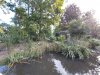
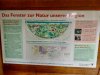
The master plan states, among other things, that the park will focus on animals living now and in the past in the area between the Jura, the Black Forest and the Vosges regions. Cooperation with the zoo should prevent the duplication of species. The park should further develop into an alluvial forest with great attention to water and native fauna. The animals should be displayed there in large natural enclosures. In fact, the park in its current state already largely meets this.
In the city's zoo landscape, Lange Erlen will then be the window to native nature, the Zoo to nature worldwide.
View attachment 691798
Masterplan
A large floodplain landscape with riparian forests for European wolves is currently being built.
Lange Erlen is a beautiful, quiet and pleasant place to visit. The enclosures are all spacious and nicely embedded in the surroundings. There are exhibition pavilions and large signs show the zoo's long history. A large farm offers a wide selection of domestic species.
View attachment 691802
Red deer enclosure
The Monkey house seems an oddity - I am pretty sure there are no monkeys in Swiss forests - , but it is actually not. After all, the park had monkeys in its collection almost from its inception. Anno 2023, these are black-capped capuchin monkeys, but previously it also housed vervet monkeys, spider monkeys, java macaques and baboons, among others. The house opened in 2001, the outdoor aviary in 2004.
View attachment 691804
Black-capped capuchin
View attachment 691803
Monkey house
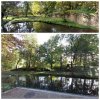
There are very nice woodland enclosures for European wild cats and Eurasian lynx, the latter with only a deep pond as a barrier at some viewing points, something I have not seen before.
View attachment 691797
European wild cat enclosure
View attachment 691796
Eurasian lynx enclosure
There are nice large meadows for wisent and red deer, often in nice perspective, and further enclosures for wild boar, foxes and fallow deer.
View attachment 691799
Wisent enclosure
Perhaps the most beautiful enclosure is the wooded valley for Alpine chamois.
View attachment 691800
Alpine chamois enclosure
In the middle of the park is a large pond where a wooden pavilion serves as an observation hut. Inside are a couple of terrariums for Eurasian harvest mice and barred grass snakes.
View attachment 691795
Barred grass snake (top) - Eurasian harvest mouse and observation point
I cannot deny that I had a little indigestion from all those wild boar, roe and red deer I have seen over the past few days. So I was particularly looking forward to a row of aviaries built against the main building. They are arranged according to local biotopes (hedge edges, Jurassic forest, cultivated landscape, waterfront) but the collection was a bit disappointing: apart from the Eurasian scops owl and little grebe, all others were very common species.
View attachment 691801
Jura mountains aviary
It again made me a little surprised that even this zoo specialising in local species does not pay attention to the highly-endangered grouse species.
That said, Lange Erlen is a great place to see European wildlife without all the climbing that places like Goldau and Innsbruck require.
Another thoroughly excellent review. I had never heard of Lange Erlen before reading this, but it seems lovely. The lynx enclosure in particular looks phenomenal from those images!
I love Basel Zoo too. To be honest, I’m not sure why people keeping referring to Anthony Sheridan’s work. I find it a subjective vanity project that really isn’t worthy of much attention at all.
I love Basel Zoo too. To be honest, I’m not sure why people keeping referring to Anthony Sheridan’s work. I find it a subjective vanity project that really isn’t worthy of much attention at all.

I need to go on an Austrian/Swiss road trip one day!
Finally an Australian zoo house that appreciates the finer (venomous) things of Australian fauna...The visit continues through a corridor with terrariums for red-backed spider