Popular Zoo Mammals and Their Best Exhibits

For today's post, we will be looking at the best exhibits for sea otters! While not a particularly common species, a decent number of facilities continue to house non-releasable rehab animals, including both zoos and aquariums.

The criteria for this post will be fairly similar to that of sea lions:
  • Pool Size: Many traditional sea otter pools are unfortunately on the small side. While smaller than pinnipeds, sea otters are still sizeable creatures that are quite active in the water, making a large pool one of the main keys to a successful exhibit.
  • Land Access: While primarily aquatic, sea otters do ocassionally go onto dry land, and a good exhibit for them should have a large enough land area for all individuals to be comfortably on the land at the same time. The layout of this land area is less important, and there are many excellent examples of either island-style set-ups and/or land areas on one side of the exhibit.
  • Social Structure: Sea otters are social animals, and as such it is important for zoos with sea otters to keep multiple individuals.
The exhibits selected for sea otters are:
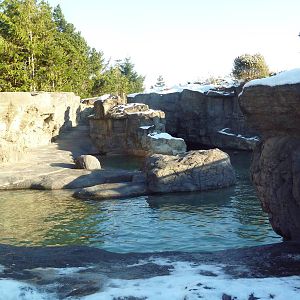
  • One large, impressive sea otter exhibit can be found at a facility that has yet to be featured in this thread, the Oregon Coast Aquarium. This exhibit is quite large, and provides an excellent outdoor home with plenty of space for the sea otters to dive, swim, or go onto land. This large exhibit is also excellent for visitors, as it has a number of different viewing opportunities available:
full
Photo By: @snowleopard
full
Photo By: @snowleopard
full
Photo By: @snowleopard
  • Across the state, the Oregon Zoo also has an impressive exhibit for sea otters. While not quite as large as the aquarium's exhibit, this exhibits remains one with a sizeable pool and plenty of areas for the otters to swim and dive. Large underwater viewing windows are also an impressive feature for visitors hoping to see the otters swim:
full
Photo By: @snowleopard
full
Photo By: @animalman0341
full
Photo By: @snowleopard
  • The only zoo I've personally seen sea otters at is the Detroit Zoo, and because of them the Arctic Ring of Life was a very enjoyable experience (despite the no-show polar bears). This very large, former seal exhibit is home to three southern sea otters, which have a large pool and plenty of land space. The large underwater tunnel also provides an exciting viewing opportunity for visitors to watch them swim. Since sea otters were a relatively recent addition to the Detroit Zoo, some of these pictures still show it as a seal exhibit:
full
Photo By: @pachyderm pro
full
Photo By: @pachyderm pro
full
Photo By: @Moebelle
full
Photo By: @Moebelle
  • Continuing its lead for most exhibits featured, the Minnesota Zoo has now been mentioned twelve times in this thread, and this one is well-deserving. Russia's Grizzly Coast contains a very impressive habitat for sea otters, containing both large underwater viewing areas and plenty of space for the sea otters to swim, dive, or be on land. Unlike many marine mammal habitats, this is also a fairly complex environment, with a pool of varying depths and containing various obstacles:
full
Photo By: @Pleistohorse
full
Photo By: @pachyderm pro
full
Photo By: @Dhole dude
full
Photo By: @snowleopard
  • While much better known for impressive non-mammal exhibits, the Monterey Bay Aquarium has an impressive mixed-species exhibit featuring sea otters and various fish. This is a relatively deep tank, highlighting the kelp forest environment sea otters call home:
full
Photo By: @Coelacanth18
full
Photo By: @Coelacanth18
full
Photo By: @snowleopard

And with that, there are only fifteen species left to be featured in this thread (many of which I suspect are easy to guess will be included). While this semester has been crazier for me than I thought it'd be, I think I should be able to finish this thread by the end of the year.
 
For today's post, we will be looking at the best exhibits for sea otters! While not a particularly common species, a decent number of facilities continue to house non-releasable rehab animals, including both zoos and aquariums.

The criteria for this post will be fairly similar to that of sea lions:
  • Pool Size: Many traditional sea otter pools are unfortunately on the small side. While smaller than pinnipeds, sea otters are still sizeable creatures that are quite active in the water, making a large pool one of the main keys to a successful exhibit.
  • Land Access: While primarily aquatic, sea otters do ocassionally go onto dry land, and a good exhibit for them should have a large enough land area for all individuals to be comfortably on the land at the same time. The layout of this land area is less important, and there are many excellent examples of either island-style set-ups and/or land areas on one side of the exhibit.
  • Social Structure: Sea otters are social animals, and as such it is important for zoos with sea otters to keep multiple individuals.
The exhibits selected for sea otters are:
  • One large, impressive sea otter exhibit can be found at a facility that has yet to be featured in this thread, the Oregon Coast Aquarium. This exhibit is quite large, and provides an excellent outdoor home with plenty of space for the sea otters to dive, swim, or go onto land. This large exhibit is also excellent for visitors, as it has a number of different viewing opportunities available:
full
Photo By: @snowleopard
full
Photo By: @snowleopard
full
Photo By: @snowleopard
  • Across the state, the Oregon Zoo also has an impressive exhibit for sea otters. While not quite as large as the aquarium's exhibit, this exhibits remains one with a sizeable pool and plenty of areas for the otters to swim and dive. Large underwater viewing windows are also an impressive feature for visitors hoping to see the otters swim:
full
Photo By: @snowleopard
full
Photo By: @animalman0341
full
Photo By: @snowleopard
  • The only zoo I've personally seen sea otters at is the Detroit Zoo, and because of them the Arctic Ring of Life was a very enjoyable experience (despite the no-show polar bears). This very large, former seal exhibit is home to three southern sea otters, which have a large pool and plenty of land space. The large underwater tunnel also provides an exciting viewing opportunity for visitors to watch them swim. Since sea otters were a relatively recent addition to the Detroit Zoo, some of these pictures still show it as a seal exhibit:
full
Photo By: @pachyderm pro
full
Photo By: @pachyderm pro
full
Photo By: @Moebelle
full
Photo By: @Moebelle
  • Continuing its lead for most exhibits featured, the Minnesota Zoo has now been mentioned twelve times in this thread, and this one is well-deserving. Russia's Grizzly Coast contains a very impressive habitat for sea otters, containing both large underwater viewing areas and plenty of space for the sea otters to swim, dive, or be on land. Unlike many marine mammal habitats, this is also a fairly complex environment, with a pool of varying depths and containing various obstacles:
full
Photo By: @Pleistohorse
full
Photo By: @pachyderm pro
full
Photo By: @Dhole dude
full
Photo By: @snowleopard
  • While much better known for impressive non-mammal exhibits, the Monterey Bay Aquarium has an impressive mixed-species exhibit featuring sea otters and various fish. This is a relatively deep tank, highlighting the kelp forest environment sea otters call home:
full
Photo By: @Coelacanth18
full
Photo By: @Coelacanth18
full
Photo By: @snowleopard

And with that, there are only fifteen species left to be featured in this thread (many of which I suspect are easy to guess will be included). While this semester has been crazier for me than I thought it'd be, I think I should be able to finish this thread by the end of the year.

Kansas City's seemed promising. @DesertTortoise I haven't visited yet, but you have, how is it?
 
For today's post, we will be looking at the best exhibits for sea otters! While not a particularly common species, a decent number of facilities continue to house non-releasable rehab animals, including both zoos and aquariums.

The criteria for this post will be fairly similar to that of sea lions:
  • Pool Size: Many traditional sea otter pools are unfortunately on the small side. While smaller than pinnipeds, sea otters are still sizeable creatures that are quite active in the water, making a large pool one of the main keys to a successful exhibit.
  • Land Access: While primarily aquatic, sea otters do ocassionally go onto dry land, and a good exhibit for them should have a large enough land area for all individuals to be comfortably on the land at the same time. The layout of this land area is less important, and there are many excellent examples of either island-style set-ups and/or land areas on one side of the exhibit.
  • Social Structure: Sea otters are social animals, and as such it is important for zoos with sea otters to keep multiple individuals.
The exhibits selected for sea otters are:
  • One large, impressive sea otter exhibit can be found at a facility that has yet to be featured in this thread, the Oregon Coast Aquarium. This exhibit is quite large, and provides an excellent outdoor home with plenty of space for the sea otters to dive, swim, or go onto land. This large exhibit is also excellent for visitors, as it has a number of different viewing opportunities available:
full
Photo By: @snowleopard
full
Photo By: @snowleopard
full
Photo By: @snowleopard
  • Across the state, the Oregon Zoo also has an impressive exhibit for sea otters. While not quite as large as the aquarium's exhibit, this exhibits remains one with a sizeable pool and plenty of areas for the otters to swim and dive. Large underwater viewing windows are also an impressive feature for visitors hoping to see the otters swim:
full
Photo By: @snowleopard
full
Photo By: @animalman0341
full
Photo By: @snowleopard
  • The only zoo I've personally seen sea otters at is the Detroit Zoo, and because of them the Arctic Ring of Life was a very enjoyable experience (despite the no-show polar bears). This very large, former seal exhibit is home to three southern sea otters, which have a large pool and plenty of land space. The large underwater tunnel also provides an exciting viewing opportunity for visitors to watch them swim. Since sea otters were a relatively recent addition to the Detroit Zoo, some of these pictures still show it as a seal exhibit:
full
Photo By: @pachyderm pro
full
Photo By: @pachyderm pro
full
Photo By: @Moebelle
full
Photo By: @Moebelle
  • Continuing its lead for most exhibits featured, the Minnesota Zoo has now been mentioned twelve times in this thread, and this one is well-deserving. Russia's Grizzly Coast contains a very impressive habitat for sea otters, containing both large underwater viewing areas and plenty of space for the sea otters to swim, dive, or be on land. Unlike many marine mammal habitats, this is also a fairly complex environment, with a pool of varying depths and containing various obstacles:
full
Photo By: @Pleistohorse
full
Photo By: @pachyderm pro
full
Photo By: @Dhole dude
full
Photo By: @snowleopard
  • While much better known for impressive non-mammal exhibits, the Monterey Bay Aquarium has an impressive mixed-species exhibit featuring sea otters and various fish. This is a relatively deep tank, highlighting the kelp forest environment sea otters call home:
full
Photo By: @Coelacanth18
full
Photo By: @Coelacanth18
full
Photo By: @snowleopard

And with that, there are only fifteen species left to be featured in this thread (many of which I suspect are easy to guess will be included). While this semester has been crazier for me than I thought it'd be, I think I should be able to finish this thread by the end of the year.

I love @Pleistohorse ‘s photo you used for the Minnesota exhibit
 
Kansas City's seemed promising. @DesertTortoise I haven't visited yet, but you have, how is it?
I found Kansas City's new sea otter exhibit to be fairly average. The exhibit is not very large; it is all indoors, and the land area is only a tiny, narrow strip at the back of the exhibit. The pool, however, has a nice depth to it, looking similar to the pool in the Minnesota exhibit in this thread.
 
I found Monterey Bay's to be nice, but other than the depth it's rather forgettable. Georgia Aquarium has an adequate exhibit, but again, it's not fantastic. However, personally I prefer the different viewing angles offered by Georgia over Monterey Bay.
 
If it is alright for me to ask, why is it so rare to see sea otters in traditional zoos? They seem more common in aquariums, is it more difficult for zoos to obtain this species for some reason? Seems very rare, like seeing polar bears in zoos.

Sea otters are very expensive to keep due to their dietary needs of high-quality fish and shellfish, and they can also damage windows with shells and ice, leading to expensive renovations. Perhaps aquariums would be more equipped to deal with these expenses.
 
[QUOTE="And with that, there are only fifteen species left to be featured in this thread (many of which I suspect are easy to guess will be included). While this semester has been crazier for me than I thought it'd be, I think I should be able to finish this thread by the end of the year.[/QUOTE]
Koala wink gif.gif
Hyrax gif.gif
polar bears gif.gif
 

Attachments

  • Koala wink gif.gif
    Koala wink gif.gif
    1.2 MB · Views: 270
  • Hyrax gif.gif
    Hyrax gif.gif
    829.5 KB · Views: 274
  • polar bears gif.gif
    polar bears gif.gif
    510.4 KB · Views: 276
[QUOTE="And with that, there are only fifteen species left to be featured in this thread (many of which I suspect are easy to guess will be included). While this semester has been crazier for me than I thought it'd be, I think I should be able to finish this thread by the end of the year.
View attachment 669470
View attachment 669471
View attachment 669472[/QUOTE]

Polar bears for sure. Hyrax… maybe. I don’t think there are enough koala holders, or enough standout exhibits, to justify picking five. That would literally be more than half the American koala exhibits lol.
 
I don’t think there are enough koala holders, or enough standout exhibits, to justify picking five. That would literally be more than half the American koala exhibits lol.
More than just the number of holders, the bigger problem is that every koala exhibit besides San Diego basically consists of a couple of glass boxes filled with branches. Hard to rank exhibits that are nearly identical to one another.
 
I wasn't planning on making a post today, but coincidentally this conversation fits well with the next species on my list to be featured, the koala! While one of the rarer species to be featured on this list, there are a few unique, impressive exhibits for this species that warrant mentioning. The criteria for koalas will be very similar to another arboreal marsupial, the tree kangaroo:
  • Climbing Opportunities: Koalas live an almost completely arboreal lifestyle. Their best zoo exhibits hence replicate this, either through trees or other means, to create as many climbing opportunities for the koalas as possible.
  • Plants: Koalas are native to forested areas, so an ideal habitat needs to include live plants to replicate this natural environment. While not as essential as adequate space, this is still an important component to welfare and one necessary to having the "best" koala exhibit, as well as being a great way to differentiate between similar exhibits.
  • Space: Small mammals historically have gotten the short end of the stick exhibit-wise, and to this day many small mammal exhibits are still quite small. The five selected for this post are relatively large habitats for koalas, however given koalas sleep most of the day space is not as big a priority as it is for some other species.
The five exhibits I chose for koalas are:
  • To start with an obvious one, San Diego Zoo houses most of the koalas outside of Australia as part of their impressive Australia complex. Multiple spacious exhibits allow for flexibility in social housing for the koalas. Multiple good-sized trees in each exhibit also allow individuals their own space, while providing plenty of excellent climbing opportunities:
full
Photo By: @snowleopard
full
Photo By: @snowleopard
full
Photo By: @Coelacanth18
full
Photo By: @Coelacanth18
  • Southern California is a great place to see koalas, as what is likely the second best koala exhibit in the country can be found at the Los Angeles Zoo, now making its first appearance on this list. These outdoor exhibits contain plenty of space, and both live trees and artificial climbing structures to provide the koalas with plenty of places to climb. Rather uniquely, this is a mixed-species exhibit- as it is also home to wallabies and echidnas:
full
Photo By: @Coelacanth18
full
Photo By: @twilighter
full
Photo By: @Anteaterman
full
Photo By: @Blackduiker
  • Further north in California, the San Francisco Zoo also has an impressive exhibit for koalas. This outdoor exhibit contains live trees to climb, along with other climbing structures, to overall create a very respectable outdoor koala exhibit. An indoor exhibit is also attached, which while not notable in its own regard, indoor-outdoor exhibits are an extra level of complexity for the animals:
full
Photo By: @Chimpangeek
full
Photo By: @Chimpangeek
full
Photo By: @TheoV
full
Photo By: @TheoV
  • Perhaps the best place to see koalas east of California is at Ohio's Columbus Zoo. This koala exhibit contains a number of shady trees in the outdoor section, allowing plenty of great climbing opportunities, and like San Francisco has the additional complexity of indoor and outdoor components. The indoor section is one of, if not the, most spacious indoor koala exhibits in a US zoo:
full
Photo By: @Austin the Sengi
full
Photo By: @TinoPup
full
Photo By: @Moebelle
full
Photo By: @Moebelle
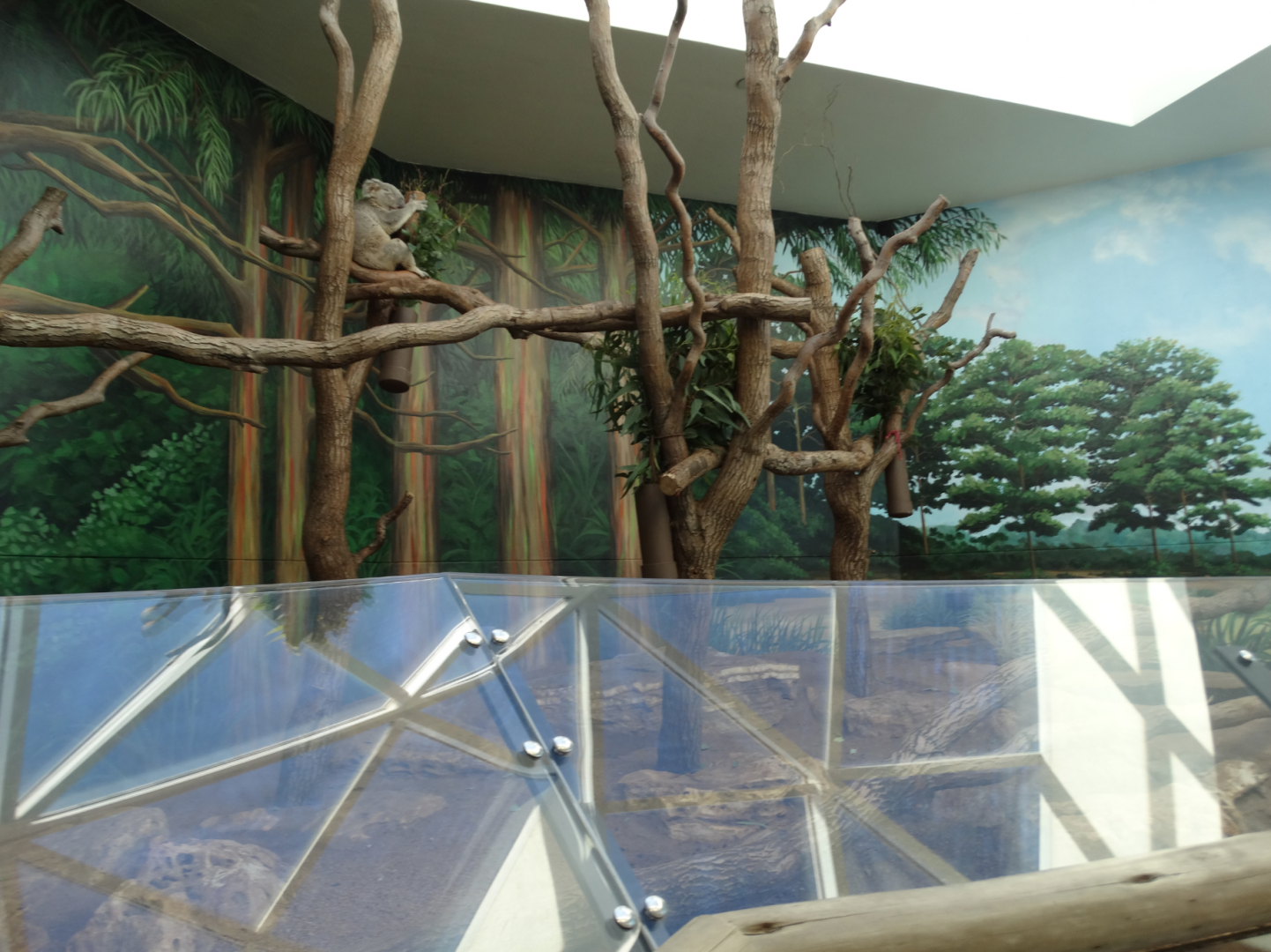
  • If they hadn't recently phased out the species, this last spot would've easily went to the Toledo Zoo. Instead, however, I'll be the first to say there are a few similar-quality options for the fifth spot on the list. I ended up deciding to give it to the Cleveland Metroparks Zoo. This indoor koala exhibit has a number of climbing opportunities available, and has the added benefit of being under a geodesic roof. From a visitor perspective, the open-air aspect makes this exhibit better for viewing the koalas than the normal glass viewing. An outdoor exhibit is also available, which the koalas sometimes rotate into during the summer months for an enrichment opportunity:
full
Photo By: @TinoPup
full
Photo By: @TinoPup
full
Photo By: @TinoPup
full
Photo By: @TinoPup
 
More than just the number of holders, the bigger problem is that every koala exhibit besides San Diego basically consists of a couple of glass boxes filled with branches. Hard to rank exhibits that are nearly identical to one another.
While I do think there were enough unique koala exhibits to warrant inclusion, there are some species I do think exhibits were overall too similar to include in this thread. Perhaps the biggest case of this was with cetaceans, where outside of Shedd Aquarium and Mystic Aquarium no exhibit seemed unique enough or distinct enough from each other for me to make a well-thought out post detailing their exhibitry. A few smaller mammals also fell into this trap, as it seems oftentimes small mammal exhibits are the same, rectangular indoor displays with very similar rockwork and other habitat decor. That's not always a bad thing, granted, as sometimes those exhibits can be quite good, but it does make certain species not ideal for this thread.
 
I love that Monterey's otter exhibit seems to be multi-level. I totally accept that the Shedd's sea otter exhibit doesn't deserve to make the list (I'd never seen any of these other exhibits before) but the fact it's multi-level is the most fun and unique thing about that exhibit and I think it'd be worth imitating more.

As for koala, I'd also never seen more than one of their habitats... wow, I love Cleveland's exhibit and it's really cool they have a mixed habitat in Los Angeles. Do they mix all three species at once? Makes me wonder if it could be replicated elsewhere to maximize space for wombat and echidna at other facilities.

You mentioned Toledo's former exhibit and I felt compelled to look it up.
Looks great, actually? I wish I'd have seen it like this. I know Toledo's koala left for a breeding situation - could they return to this space in the future?
 
I wasn't planning on making a post today, but coincidentally this conversation fits well with the next species on my list to be featured, the koala! While one of the rarer species to be featured on this list, there are a few unique, impressive exhibits for this species that warrant mentioning. The criteria for koalas will be very similar to another arboreal marsupial, the tree kangaroo:
  • Climbing Opportunities: Koalas live an almost completely arboreal lifestyle. Their best zoo exhibits hence replicate this, either through trees or other means, to create as many climbing opportunities for the koalas as possible.
  • Plants: Koalas are native to forested areas, so an ideal habitat needs to include live plants to replicate this natural environment. While not as essential as adequate space, this is still an important component to welfare and one necessary to having the "best" koala exhibit, as well as being a great way to differentiate between similar exhibits.
  • Space: Small mammals historically have gotten the short end of the stick exhibit-wise, and to this day many small mammal exhibits are still quite small. The five selected for this post are relatively large habitats for koalas, however given koalas sleep most of the day space is not as big a priority as it is for some other species.
The five exhibits I chose for koalas are:
  • To start with an obvious one, San Diego Zoo houses most of the koalas outside of Australia as part of their impressive Australia complex. Multiple spacious exhibits allow for flexibility in social housing for the koalas. Multiple good-sized trees in each exhibit also allow individuals their own space, while providing plenty of excellent climbing opportunities:
full
Photo By: @snowleopard
full
Photo By: @snowleopard
full
Photo By: @Coelacanth18
full
Photo By: @Coelacanth18
  • Southern California is a great place to see koalas, as what is likely the second best koala exhibit in the country can be found at the Los Angeles Zoo, now making its first appearance on this list. These outdoor exhibits contain plenty of space, and both live trees and artificial climbing structures to provide the koalas with plenty of places to climb. Rather uniquely, this is a mixed-species exhibit- as it is also home to wallabies and echidnas:
full
Photo By: @Coelacanth18
full
Photo By: @twilighter
full
Photo By: @Anteaterman
full
Photo By: @Blackduiker
  • Further north in California, the San Francisco Zoo also has an impressive exhibit for koalas. This outdoor exhibit contains live trees to climb, along with other climbing structures, to overall create a very respectable outdoor koala exhibit. An indoor exhibit is also attached, which while not notable in its own regard, indoor-outdoor exhibits are an extra level of complexity for the animals:
full
Photo By: @Chimpangeek
full
Photo By: @Chimpangeek
full
Photo By: @TheoV
full
Photo By: @TheoV
  • Perhaps the best place to see koalas east of California is at Ohio's Columbus Zoo. This koala exhibit contains a number of shady trees in the outdoor section, allowing plenty of great climbing opportunities, and like San Francisco has the additional complexity of indoor and outdoor components. The indoor section is one of, if not the, most spacious indoor koala exhibits in a US zoo:
full
Photo By: @Austin the Sengi
full
Photo By: @TinoPup
full
Photo By: @Moebelle
full
Photo By: @Moebelle
  • If they hadn't recently phased out the species, this last spot would've easily went to the Toledo Zoo. Instead, however, I'll be the first to say there are a few similar-quality options for the fifth spot on the list. I ended up deciding to give it to the Cleveland Metroparks Zoo. This indoor koala exhibit has a number of climbing opportunities available, and has the added benefit of being under a geodesic roof. From a visitor perspective, the open-air aspect makes this exhibit better for viewing the koalas than the normal glass viewing. An outdoor exhibit is also available, which the koalas sometimes rotate into during the summer months for an enrichment opportunity:
full
Photo By: @TinoPup
full
Photo By: @TinoPup
full
Photo By: @TinoPup
full
Photo By: @TinoPup
Definitely wasn’t expecting to see koalas on this thread, yet I am glad they made an appearance!!!
 
Today's post will be dedicated to a very common species, often found both within and outside the AZA, Cape and Crested Porcupines! The exact species kept by different zoos is often unclear, since they can be difficult to tell apart to the untrained eye, however it is generally accepted that Hystrix africaeaustralis, the cape porcupine, is the most commonly kept species.

The criteria for this post are:
  • Space: Like most other small mammals, porcupine exhibits were historically often too small for their residents. The exhibits featured in this post are all very spacious, and provide more than enough space for these fascinating rodents.
  • Natural Substrate: Porcupines can dig, and as a burrowing species it is important that zoos allow the animals to display this natural behavior.
  • Complexity: Rodents are often way more intelligent than people give them credit for, and as such it is very important for exhibits to be enriching, with plenty of natural elements, mixed-species features, and/or other complex components to keep the animals mentally stimulated.
The zoos chosen for this post are:
  • Porcupines can be a great choice of a recognizable species for smaller zoos, and one such zoo that provides an excellent habitat for them is Texas' Caldwell Zoo. This exhibit is mixed-species, housing cape porcupines alongside slender-tailed meerkats, and provides plenty of space for both species including natural substrate and many naturalistic elements throughout:
full
Photo By: @Wild wolverine
full
Photo By: @Wild wolverine
  • The Bamboo Trail at the Nashville Zoo contains many excellent exhibits, and the cape porcupine exhibit is no exception. This spacious exhibit incorporates natural substrate, hiding opportunities, and a number of natural elements to make an all-around excellent porcupine exhibit. While features such as a waterfall aren't necessarily a top priority in an exhibit for this species, this exhibit goes over-the-top with these natural elements to create an exhibit pleasing for both inhabitants and guests:
full
Photo By: @pachyderm pro
full
Photo By: @TinoPup
full
Photo By: @Moebelle
full
Photo By: @snowleopard
  • Previously mentioned for warthogs, the Indianapolis Zoo contains an excellent mixed-species exhibit with cape porcupines. Natural substrate allows both species present to dig, while hiding opportunities and creeps are present in the exhibit to allow cape porcupines plenty of areas to escape the larger hogs. The mixed-species elements of the exhibit truly maximize the space available to the porcupines though, as this is one of the largest porcupine exhibits I could find in my research:
full
Photo By: @Grizzly Hound
full
Photo By: @Grizzly Hound
full
Photo By: @Crowned Lemur
full
Photo By: @Milwaukee Man
  • One cape porcupine exhibit I am particularly fond of can be found at Boston's Franklin Park Zoo. This exhibit is also mixed with warthogs, however half of the exhibit is only accessible to the porcupines, allowing them to escape from the larger hogs. Natural substrate allows both species plenty of digging opportunities, while this exhibit also shares some nice panoramic views with the Serengeti habitat located behind it. Unfortunately, it remains unclear how much longer this exhibit will survive, seeing as a new "African Experience" featuring penguins and a watering hole exhibit is coming to the zoo soon:
full
Photo By: @DavidBrown
full
Photo By: @TinoPup
  • As its thirteenth entry to this thread, the Minnesota Zoo has an excellent cape porcupine exhibit, which used to be home to Visayan warty pigs. While large parts of this exhibit are rock, there remains sizeable areas of natural substrate in this spacious habitat, allowing the porcupines choice and control over their surroundings. Unfortunately, this is a new enough exhibit at the zoo only one photo is in the gallery, so some of these were taken in its time as a warty pig exhibit or while under construction:
full
Photo By: @Dhole dude
full
Photo By: @Dhole dude
full
Photo By: @pachyderm pro
full
Photo By: @Dhole dude
 
Today's post will be dedicated to a very common species, often found both within and outside the AZA, Cape and Crested Porcupines! The exact species kept by different zoos is often unclear, since they can be difficult to tell apart to the untrained eye, however it is generally accepted that Hystrix africaeaustralis, the cape porcupine, is the most commonly kept species.

The criteria for this post are:
  • Space: Like most other small mammals, porcupine exhibits were historically often too small for their residents. The exhibits featured in this post are all very spacious, and provide more than enough space for these fascinating rodents.
  • Natural Substrate: Porcupines can dig, and as a burrowing species it is important that zoos allow the animals to display this natural behavior.
  • Complexity: Rodents are often way more intelligent than people give them credit for, and as such it is very important for exhibits to be enriching, with plenty of natural elements, mixed-species features, and/or other complex components to keep the animals mentally stimulated.
The zoos chosen for this post are:
  • Porcupines can be a great choice of a recognizable species for smaller zoos, and one such zoo that provides an excellent habitat for them is Texas' Caldwell Zoo. This exhibit is mixed-species, housing cape porcupines alongside slender-tailed meerkats, and provides plenty of space for both species including natural substrate and many naturalistic elements throughout:
full
Photo By: @Wild wolverine
full
Photo By: @Wild wolverine
  • The Bamboo Trail at the Nashville Zoo contains many excellent exhibits, and the cape porcupine exhibit is no exception. This spacious exhibit incorporates natural substrate, hiding opportunities, and a number of natural elements to make an all-around excellent porcupine exhibit. While features such as a waterfall aren't necessarily a top priority in an exhibit for this species, this exhibit goes over-the-top with these natural elements to create an exhibit pleasing for both inhabitants and guests:
full
Photo By: @pachyderm pro
full
Photo By: @TinoPup
full
Photo By: @Moebelle
full
Photo By: @snowleopard
  • Previously mentioned for warthogs, the Indianapolis Zoo contains an excellent mixed-species exhibit with cape porcupines. Natural substrate allows both species present to dig, while hiding opportunities and creeps are present in the exhibit to allow cape porcupines plenty of areas to escape the larger hogs. The mixed-species elements of the exhibit truly maximize the space available to the porcupines though, as this is one of the largest porcupine exhibits I could find in my research:
full
Photo By: @Grizzly Hound
full
Photo By: @Grizzly Hound
full
Photo By: @Crowned Lemur
full
Photo By: @Milwaukee Man
  • One cape porcupine exhibit I am particularly fond of can be found at Boston's Franklin Park Zoo. This exhibit is also mixed with warthogs, however half of the exhibit is only accessible to the porcupines, allowing them to escape from the larger hogs. Natural substrate allows both species plenty of digging opportunities, while this exhibit also shares some nice panoramic views with the Serengeti habitat located behind it. Unfortunately, it remains unclear how much longer this exhibit will survive, seeing as a new "African Experience" featuring penguins and a watering hole exhibit is coming to the zoo soon:
full
Photo By: @DavidBrown
full
Photo By: @TinoPup
  • As its thirteenth entry to this thread, the Minnesota Zoo has an excellent cape porcupine exhibit, which used to be home to Visayan warty pigs. While large parts of this exhibit are rock, there remains sizeable areas of natural substrate in this spacious habitat, allowing the porcupines choice and control over their surroundings. Unfortunately, this is a new enough exhibit at the zoo only one photo is in the gallery, so some of these were taken in its time as a warty pig exhibit or while under construction:
full
Photo By: @Dhole dude
full
Photo By: @Dhole dude
full
Photo By: @pachyderm pro
full
Photo By: @Dhole dude
Wow, those are really nice, and highlight how crummy some zoo's enclosures for this species are. Looking at you ZootTampa with your converted meercat habitat.
 
Wow, those are really nice, and highlight how crummy some zoo's enclosures for this species are. Looking at you ZootTampa with your converted meerkat habitat.

There certainly are some horrendous porcupine exhibits out there in American zoos, although some of the truly diabolical ones have now ceased to exist. Here's a selection of 5 poor enclosures:

Glacier Ridge Animal Farm had a slab of cement for its porcupines when I was there in 2018:

full


Wilderness Walk Zoo had a 9-foot wide wooden box for a handful of porcupines all crowded together:

full


Animal Haven Zoo had this beauty in 2018:

full


Another classic enclosure from Animal Haven Zoo:

full


Timbavati Wildlife Park:

full
 
There certainly are some horrendous porcupine exhibits out there in American zoos, although some of the truly diabolical ones have now ceased to exist. Here's a selection of 5 poor enclosures:

Glacier Ridge Animal Farm had a slab of cement for its porcupines when I was there in 2018:

full


Wilderness Walk Zoo had a 9-foot wide wooden box for a handful of porcupines all crowded together:

full


Animal Haven Zoo had this beauty in 2018:

full


Another classic enclosure from Animal Haven Zoo:

full


Timbavati Wildlife Park:

full
Wild Adventures in Georgia has two, on Indian and one African....the Indian gets the short shaft out of the two:
full

full
 
Back
Top