Prague Zoo Praha Prague Zoo Walkthrough / Review

If the honey-buzzards are flightless rescues, then that makes me feel a lot better about it, and similar things can be said for the leopards - the zoo deserves much credit for having a genuine breeding complex with offshow enclosures, which I have only ever seen before at Highland. Interesting sounding setup with the geese, thanks for that information.

Shame about Dja cutting into former savannah space, and it seems odd that any zoo would downsize existing enclosures if it can be avoided (which I believe it can, as I recall reading that Prague has 20 or so acres of currently unused space, but might be wrong?).
 
(which I believe it can, as I recall reading that Prague has 20 or so acres of currently unused space, but might be wrong?).

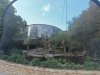
I doubt the zoo has 20 acres of unused space (I might be wrong of course). There are max 2 hectares of meadow in slope just above savannah - the zoo used this space as an overflow carpark for years. Then there is maybe 1 hectare around Sklenářka (the house you see on photo with former souslik cage). And then little bits and chunks elsewhere, like around Gočar houses, around paper-making house or behind sea eagle aviary. Together it could be another 1 hectare at best of usable land.

There are also spaces within zoo ground that are left undeveloped due to existence of local native fauna and flora. That "empty" wild space on cliff above zakazanka is protected from development because of population of localy threatened European green lizard. Left part of cliff is wintering ground for 1200 wild dice snakes. The blind water channel in lower part of the zoo is home to kingfisher, common moorhen, crucian carp and others. Slope under sklenarka is used for reintroduction of some locally extinct butterfly species. Also common hoopoe probably bred somewhere around there this year. Such places migth look "deserted" but the zoo manages them in detail and in such way it would suit target species.
 
Last edited:
Part 4 - Zakazanka Path, Aviaries under the Cliff and Bird Wetlands:

The Zakazanka Path is a diagonal path that scales the vast cliff that divides Prague Zoo in two, 228 metres tall at its highest point.

The day before I visited Prague Zoo, I was cycling into the city from Melnik, along the banks of the River Vltava. Throughout this trip (a bike ride down the Elbe), I had been amazed by the might of the Elbesandsteingenberge, or the Elbe sandstone mountains, that loomed over either bank, and made our bike ride quite dramatic indeed. It was around now that I remembered a facet of Prague Zoo; having avoided photographic spoilers, I wasn’t completely sure what to expect, but having read many reviews, almost memorised the zoo’s map and followed its news, I had a rough idea of what the zoo contains. Among those offerings were mountain goat enclosures that utilised the cliff face to its advantage. Surrounded by the sandstone mountains, and strongly suspecting that this was the same range of hills and cliffs that ran into Prague, I couldn’t help but hope that these mountain goat enclosures were even more dramatic than I had anticipated, although truth be told, I was not sure I even believed myself. That was until I entered Troja and got our first views of the zoo, a preview of what to expect the following day, in a sense, and saw in the distance tremendous portions of these cliff faces fenced off, with a path running above them in which visitors could be seen observing something below. It was clear to me then that I was not mistaken to dream, and that tomorrow, I would see up-close some of the greatest zoo exhibits on the planet.

In terms of technical mastery, innovation or anything of the sort, these enclosures aren’t anything special; just enclosed expanses of land. They are the pinnacle of a certain ‘genre’ of zoo exhibit, that being those that are completely based on natural resources and making the most of one’s surroundings. Prague was challenged with one of the most topographically difficult sites of any zoo on the planet, and instead of having the cliff be a weakness that they fear, they took advantage of it and made it something brilliant. The first of these exhibits holds Himalayan Tahr, while the second, and largest, of the lot houses West Caucasian Tur with Barbary Macaques, and the third features Barbary Sheep. All three of them are some of the most magnificent enclosures that one will ever see. I will say that I personally found the more dramatic way to view them was from above, as even if you aren’t scared of heights, leaning over such a steep drop and watching animals leaping on the rocks below you can be quite something, and gives an unsettling sense of scale. Unfortunately (and I suspect this was due to the heat, with the top of the cliff being more exposed), the various sheep and goats were choosing to linger at the bottom, where the shadow from the many trees protected them, barring a few strays, including some shockingly courageous calves, who ventured much further up. It was a special experience indeed.

IMG20240807140433.jpg

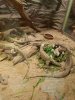
It isn’t just the goats here, however. Elsewhere along the Zakazanka Path is an enclosure labelled on the map as ‘Czech Reptiles.’ I wasn’t sure what to expect from this, expecting an indoor room, perhaps embedded into the cliff, similar to what Prague did for the Mongolian reptiles in Gobi. But instead, we had a pair of outdoor enclosures, netted over to stop birds, and absolutely gorgeously landscaped. The only thing I have seen akin to this was the Sand Lizard and adder enclosure at Chester, in which the reptiles were locked indoors for my mid-winter visit, and the enclosure was nowhere near as attractive as this in terms of landscaping. With hidden ponds, overhanging rocks, bushes and long grass, these two enclosures were absolute masterclasses in landscaping, and every reptile enclosure on the planet could learn something from this. They held:

Sand Lizard
Adder
Smooth Snake
European Green Lizard
Grass Snake
Dice Snake


I only managed to spot half of the species, that being both lizards and the Dice Snake, but I got much more enjoyment out of these than I should have done. Searching for lizards among the reeds and grasses with which they blend in perfectly, or realising that a pair of vines lying vertically across the water were in fact snakes, or observing the small-scale conflicts between the (unsigned) fish in the many pools. This exhibit is one of Prague Zoo’s hidden delights, and given how much love native species exhibits, or small-scale, well-designed vivariums, seem to get from zoo enthusiasts, I am genuinely in awe that these aren’t discussed more often.

Following the path down to the base of the cliff, I could not help but notice that, especially as we progressed further down the cliff, the space above us became just as big as that below. I began to think that the zoo could build even more world-class cliffside exhibits here, perhaps expanding the focus to include a species like Snow Leopards as well, given how well the similar exhibits at Zurich and Highland work. At the base of the cliff, you get the first of many views into ‘the Great Aviary,’ a large birds of prey cage that fades into the cliffside. As this window is overgrown, however, I chose to skip the Aviary for now, until I could get a better view later on in the day.

The moment that I stepped into the lower half of the zoo, the vibe completely changed, and, a quick spoiler for the rest of my thoughts, I will say that I adored this lower half, much preferring it to the upper one. It didn’t take me long down here to realise that Prague was not just a good zoo, but one of the very best in the world, and it was here that deciding which I preferred between it and Zurich (my current favourite) would be quite a challenge, but more on that later. While down here, you had aviaries on all sides, gorgeous views of the tree-covered cliff from below, but most importantly sounds. The deafening calls of cranes, the roars of the lions, or the comical and surprisingly loud sound of some giant tortoises mating! It all created an ambience like no other zoo of being completely surrounded by life.

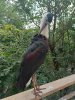
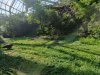
Immediately below the cliff, a spacious, shaded lake held both Dalmatian Pelican and Great White Pelican. However, what stuck out to me most about this area were the two huge walkthrough aviaries, which I didn’t actually know the zoo had prior to now. Labelled as ‘storks’ on the map, or until recently ‘spoonbills,’ I expected some small-scale pheasantry-type exhibits, but was instead greeted by a huge lake-based aviary (the same lake as the external pelican pool), with weeping willows and other hanging branches over a dappled pool, log-covered banks and varying depths. An incredible aviary, and with a very good selection of waterfowl to boot:

Eurasian Spoonbill
Asian Woollyneck
Black-headed Ibis
Spot-billed Pelican
Purple Heron
White-naped Crane
Red-crested Pochard
Milky Stork
Red-breasted Merganser
Smew
Magpie-goose
Baer’s Pochard
Black-crowned Night-heron
Rufous Night-heron
White-winged Wood Duck


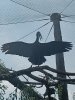
Asides from being a very lengthy selection of birds, there are a fair few rarities mixed in there, although sadly neither of my top two targets here (the Rufous Night-heron and the Purple Heron) revealed themselves, the dense foliage at the rear portion of the enclosure no doubt enabling both species, whose relatives are quite elusive from my experience, to hide. That said, I did manage to see the Milky Stork, kept at just two other European collections and a very charismatic bird, and the Spot-billed Pelican, both lifeticks. As a lover of pelecaniformes (the long-legged wading birds), being able to tick off both of these species, as well as seeing countless night herons and woollynecks was a real treat. One thing that I found interesting about this particular aviary was that the birds had no fear of visitors. Pelicans and woollynecks were all perched on the railing that ran along the wooden boardwalk, and if it weren’t for their remarkable bills that could have obviously done some damage, visitors would be able to stroke one. I have never seen birds of this size so brave within a walkthrough barring hand-reared chicks (such as some of the ibis at London). It was nice to see the pelicans so close, observing the namesake spots on the bill of this lifetick, but seeing the woollyneck at this proximity was a particular pleasure, given that they are kept in a cage-like aviary at my local but always seem to prefer to stay far away, usually on the high branches. It feels weird to have to go to Czechia to see a species that is kept at your local zoo, but this is only the second best example of such a thing we will be having at Prague. More on that shortly.

IMG20240807142325.jpg IMG20240807142756.jpg

The second aviary here, labelled as ‘ibises’ on the map, wasn’t quite as impressive, being a little barren in places, but I did love the way that it faded into the cliff face, and that it focuses on native European species, some of which felt very out of place in a zoo. It held:

Rock Pigeon
Vulturine Guineafowl
Lesser Kestrel
Marbled Teal
Common Teal
Yellow-billed Stork
Hadada Ibis
Abdim’s Stork
Hamerkop
African Comb Duck
White-headed Duck
Ferruginous Duck
Egyptian Vulture
Demoiselle Crane
Northern Bald Ibis
Little Owl


A fairly standard species selection, asides from the Yellow-billed Storks which would have in fact been a lifetick were it not for me seeing them at Dresden earlier this trip, and my aforementioned love for pelecaniformes meant that I was hardly complaining about a second chance to see them, especially as one of the storks here was quite a bit more active than the individuals at the German zoo, wading about in a lake. It should be noted that, although I preferred the ‘storks’ walkthrough as an aviary, the ‘ibises’ walkthrough is better as a walkthrough, not confining you to a raised wooden boardwalk, with the path instead being more winding, and at one point even inviting you to a brief trail onto some grass. Several smaller ducks, mainly teals, also demonstrated the lack of fear towards visitors mentioned for the previous aviary, resting right beside said trail seemingly oblivious, or at the very least careless, about our presence.

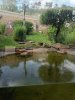
Opposite this aviary, a pleasant water fountain could be seen in the centre of an open-topped stream of sorts, which felt like a smaller-scale version (perhaps even a continuation of the same body of water) of the pelican lake from earlier. It held Bewick’s Swan, Red-breasted Goose and Cape Barren Goose. I then followed the path along the base of the ‘Rock Outcrop,’ the zone of the zoo featuring the mountain goat seen from the Zakazanka Path (the colour-coding system used by the zoo’s map to define what is an exhibit would suggest that the Ibis Aviary, Stork Aviary, Great Aviary and even the Red Panda and North American Porcupine exhibits from earlier in the day are also part of the Rock Outcrop). It was here that I managed to spot the macaques in the Barbary Sheep enclosure, as well as the tahr enclosure (the smallest of the three), which I had somehow missed from above. The other enclosure in this area of the Rock Outcrop is the Bearded Vulture aviary, which also features more Egyptian Vultures. A decently sized aviary, blending into the cliff face and in some ways resembling a smaller version of the zoo’s famous Great Aviary. Second to the snow leopard enclosure, this is my fantasy exhibit to use the space above the Zakazanka Path for. Mountain goats and macaques below, with native reptiles, birds of prey and snow leopards above. How magnificent would that be? Although of course this whole area is quite special already!

IMG20240807144421.jpg

Nearby is the TRILOBIT, which is the zoo’s fossil shop, and a rather decent one at that, featuring some impressively sized ammonites and even a few Ichthyosaur casts, as well as the cast of a Triceratops skull outside. I pondered over why this was here, until I remembered that the cliff face features rocks dating back as far as the Ordivivician, and given that it was at one point an iron mine, there were no doubt many interesting fossils discovered there in that time, which is presumably the inspiration for the shop (whether or not the fossils are actually from within the zoo, or if the cliff was just an excuse to appeal to dinosaur-lovers, is not clear to me, but I did have a look inside the shop and was impressed by the variety).

IMG20240807144433_01.jpg

Moving on from the Rock Outcrop, I entered ‘Bird Wetlands,’ which, using the colour-coding system, is the next independent exhibit on the zoo’s map. When seeing this on the map, I was quite curious about what it would entail - a series of aviaries, or open-topped enclosures for pinioned birds, and would either of them be walkthroughs? It turned out to be a charming mixture of all of the above, featuring perhaps one of the best collections of waterfowl and pelecaniformes, if not the outright best collection of them, that I have ever seen.

The first exhibit here is labelled on the map as ‘Secretarybirds,’ which I assumed would be an aviary devoted to the species, but is in actuality a large, grassy lawn, with a large water-based portion attached, that housed:

Blue Crane
White Stork
Bewick’s Swan*
Secretary Bird
African Black Duck
Muscovy Duck


*From this point onwards, I will be using an asterisk to indicate repetition in species lists (i.e. if this is the second enclosure at the zoo to feature the species)

After that enclosure, the pathway then leads towards a pavilion of sorts, equipped with several large aviaries on all sides. The map reduces this whole area down to one icon and one word (‘ibises’), which I think is odd, as it is in fact a series of many large aviaries showing wetlands-based birds from around the world, two of which being walkthroughs and two being observed externally only. The first was devoted to the ‘Lednicke Rybniky,’ a major nature reserve in the south of Czechia, near the Austrian border, and is hence essentially a native species aviary. Like most of these aviaries, it is dome-shaped and decorated with reeds, along with other plants intended to represent the region of the world where it was from, which of course for native species enclosures is made rather easy, although it was charming all the same. Although only being able to observe the aviary externally did seem to be a hindrance at first, I became a lot more fond upon discovering a small underwater viewing area, which allowed several ducks and oystercatchers to be observed moving about. The full species list for this aviary is:

Eurasian Oystercatcher
Northern Shoveller
Pied Avocet
Black-winged Stilt
European Stone Curlew
Rosy Starling
Harlequin Duck
Ruff
Northern Lapwing
Glossy Ibis


The next aviary, and the first of the lot, was Okavango, themed to the namesake river delta in Botswana, featuring an impressive selection of African birds. This was my personal favourite aviary of the four, featuring some delightful rockwork throughout, and also being where I saw some of the most impressive behaviour, with some very impressive Openbill storks stretching their wings and displaying their full size quite impressively on branches that hang very near to the visitor area for a memorable sight indeed. It held:

Hottentot Teal
Blacksmith Lapwing
African Spoonbill
Hadada Ibis*
Garganey
Hamerkop*
Purple Swamphen
African Openbill
Malagasy Sacred Ibis
Hartlaub’s Duck
Red-winged Starling
Squacco Heron


The highlight for me was seeing my first ever Squacco Heron, a very attractive bird with long feathers hanging from above its neck, which is some estimates place as being the most common heron species in the world, but is incredibly scarce in European zoos (I didn’t even realise that any zoos held them, so was pleasantly surprised to see the signature neck feathers and the signage for one in this aviary). The Hartlaub’s duck and starling also provided lifeticks.

IMG20240807145611.jpg

The second and final walkthrough here had a Pantanal-theme and thus focused on South American birds. Design-wise, it is the most boring of the four, being fairly barren, but was still nice, and housed:

White-cheeked Pintail
Roseate Spoonbill
Guira Cuckoo
Boat-billed Heron
Striated Heron
Southern Lapwing
White-throated Piping-guan
Brazilian Teal
White-faced Ibis
Black-faced Ibis
White Ibis
Bufflehead
Southern Screamer
West Indian Whistling-duck
Ringed Teal


While I said that it is the worst design-wise, it is probably the best in terms of species list. Prague is one of just two European zoos to hold White-faced Ibis and one of only three to hold White-throated Piping-guan, and it also provided me with my first White Ibis and Guira Cuckoo. The cuckoo was the highlight, flying from one end of the aviary to the other, perching on one of the mesh walls mere inches away from us, fanning out its tail feathers while leaping up and along the walls as though it was some sort of dance, before taking flight again and vanishing into the trees. Prior to this, my only encounter with cuckoos of any species was in the wild with the European Cuckoo, so it was brilliant to have seen two species of them. However, cuckoos are notorious for their behaviour around nests, implanting their own eggs in other birds’ nests, with the chicks then pushing away the parent birds’ eggs, destroying them, to take all food provided by the mother for their own. Presumably, Prague prevents this through incubating any cuckoo eggs that are found, as they actually have a rather commendable breeding record with this species.

The final mixed-species aviary around the ‘Waterfowl Pavilion’ is a second South American one, which only features four species, but more than makes up for that with the rarity of said species. Scarlet Ibis are accompanied by Crested Oropendola (held at four European zoos), Horned Screamer (held at just three) and the rarest duck in the world, the Brazilian Merganser. While I missed the screamers and mergansers (the former rather annoying, as I had always been fascinated by them, but the latter harmless having seen them before at Antwerp), seeing the merganser drowned out any frustration. Held at no other European zoo, with Prague’s animals, arriving directly from Brazil towards the end of last year and only going onshow in March of this year, and with less than 250 left in the entire world, this is the very definition of a rarity. Two males are kept onshow, both of which were generously positioning themselves right against the main viewing area, using one of the nearby trees to shade in, with a further eight being kept offshow, presumably for breeding purposes. While I said that Okavango was my personal favourite of the four aviaries, I think that this is the best by far in terms of design. Underwater viewing of a clear pool, plenty of shade, logs hanging over the pool, and a small bamboo forest at the back for birds to shelter in. It also seemed to be the biggest of the lot, which was odd as it has the smallest species selection. A fantastic aviary.

IMG20240807150210.jpg

Although the main mixed-species aviaries are complete, there is still one more aviary attached to the Waterfowl Pavilion, housing a bird that seems to be a favourite among all enthusiasts, and I am no exception, the Shoebill. Have only seen this species on two occasions prior, both at Exmoor, and the awe of seeing one never goes away. Fan-favourite penguins aside, they are probably the only bird that can inspire the average visitor just as much as enthusiasts, and yet very few so much as know their name. As usual, a huge crowd of visitors gathered round to watch them, and can you really blame them? Prague keeps two shoebills onshow, but apparently keep another two offshow, and I presume that the plan with both pairs is to gradually introduce them for breeding purposes, something which I know is a tremendous challenge with shoebills, with Pairi Daiza being the only European collection to have bred them in recent times (or perhaps even ever?). Both enclosures here, long, greenhouse-like structures that are densely packed with bamboo, are certainly better than the Exmoor enclosure, which I have never been too fond of and always thought was too small. However what struck me most was a large bucket of water with some fish in that one of the shoebills, in the enclosure on the left, was fishing for. For a brief second, I thought that the fish seemed alive, appearing to be moving its tail in an attempt to escape, but dismissed this as an illusion caused by the shoebill moving its bill. Reviewing a video I took, however, makes it quite obvious, however, that the shoebill was being fed live fish. Outstanding enrichment, although one does have to feel for those fish, which I don’t recall ever seeing at a zoo before. I only wish that they were placed in a larger pool than the small bucket that they received, so as to ensure there was more of an element of skill to it, which would only make this already excellent enrichment even better.

That concludes the Waterfowl Pavilion, but the Bird Wetlands exhibit continues with some open-topped lawns, yet again equipped with a water source, with geese in the first and cranes in the second. The highlight here was hearing the Red-crowned Crane call, which I had been hearing from throughout the zoo, but after witnessing them do their signature motion of pointing their necks to the sky before doing so, there was no denying what species was responsible for the call, which was wonderful to see in person after hearing so much about it. The full species list for these aviaries is:

Lesser White-fronted Goose
Red-breasted Goose*
Magpie-goose*
Emperor Goose
Eurasian Crane
Red-crowned Crane
Siberian Crane


You view these enclosures from a boardwalk, which eventually leads to level ground and the first enclosures in the Feline and Reptile Pavilion. All in all, I was delighted by Bird Wetlands. A series of well-landscaped, at times walkthrough aviaries for rarities, especially with my love for ducks and pelecaniformes, was irresistible. The overall vibe here of feeling as though there was always something going on, some sort of interesting animal activity around every corner, was something that I don’t remember experiencing at a zoo within many years. Having the mountain goat paddocks, the Czech reptiles and the cliffside aviaries all so nearby only improved the compact feel of the place. As readers can probably tell from my tone and overall positivity, my thoughts on Prague began to improve considerably as we entered the lower portion, and things would only get better.

-------------------------------------------------------------------------------------------------------

Apologies that I didn't get time to write about the Feline and Reptile Pavilon, but I hope all readers enjoyed this very bird-centric post all the same. Tomorrow's post will cover said pavilion, as well as the Giant Salamander Pavilion (I have been looking forward to writing about that one the most!), Giant Tortoise Pavilion and the Mefou Centre, as well as several miscellaneous exhibits in between, and potentially the Great Aviary if time allows (even more unlikely is the Rakos' Pavilion).
 

Attachments

  • IMG20240807140433.jpg
    IMG20240807140433.jpg
    221.3 KB · Views: 215
  • IMG20240807142325.jpg
    IMG20240807142325.jpg
    132.7 KB · Views: 211
  • IMG20240807142756.jpg
    IMG20240807142756.jpg
    213.9 KB · Views: 205
  • IMG20240807144433_01.jpg
    IMG20240807144433_01.jpg
    161.7 KB · Views: 223
  • IMG20240807145611.jpg
    IMG20240807145611.jpg
    163 KB · Views: 223
  • IMG20240807150210.jpg
    IMG20240807150210.jpg
    183.5 KB · Views: 222
  • IMG20240807144421.jpg
    IMG20240807144421.jpg
    169.4 KB · Views: 214
I doubt the zoo has 20 acres of unused space (I might be wrong of course). There are max 2 hectares of meadow in slope just above savannah - the zoo used this space as an overflow carpark for years. Then there is maybe 1 hectare around Sklenářka (the house you see on photo with former souslik cage). And then little bits and chunks elsewhere, like around Gočar houses, around paper-making house or behind sea eagle aviary. Together it could be another 1 hectare at best of usable land.

There are also spaces within zoo ground that are left undeveloped due to existence of local native fauna and flora. That "empty" wild space on cliff above zakazanka is protected from development because of population of localy threatened European green lizard. Left part of cliff is wintering ground for 1200 wild dice snakes. The blind water channel in lower part of the zoo is home to kingfisher, common moorhen, crucian carp and others. Slope under sklenarka is used for reintroduction of some locally extinct butterfly species. Also common hoopoe probably bred somewhere around there this year. Such places migth look "deserted" but the zoo manages them in detail and in such way it would suit target species.
You are probably right that 20 acres was an overestimate. I saw on the zoo's website that it is 58 hectares of which 50 hectares is exhibits and assumed that the remaining 8 ha (about 20 acres) was unused land surrounding the zoo, rather than wildlife or visitor devoted spaces within it, which makes sense.

I saw some of the Crucian Carps in the moats and assumed they were captive, but it is even better if they are wild. Towards the end of the day, near the flamingos and spider monkeys, I saw some very impressive specimens indeed!

Your comments about the snakes and lizards on the Zakazanka Path make my snow leopard fantasies nothing more than that, sadly, but wildlife should always come first in such situations, so I won't protest.

Speaking of wildlife, one thing that I forgot to mention in my previous post were the many herons that could be seen nesting on the trees on the cliff, and at times even perched among the tahrs on rocks. They brought further life to these already remarkable exhibits and were great fun to watch indeed.
 
although I only managed to spot one wolf, lying down underneath one of the raised platforms near the takins.
My last experience is similar, I wonder how many wolves Prague actually keeps
to compliment bigger exhibits with smaller ones, such as aviaries, vivariums or aquaria. This has always been my personal preferred way to display birds, reptiles or fish. As much as I love all three of those classes (especially birds), I can easily find myself tiring after seeing rows and rows of them, often rushing the final few exhibits in a reptile house due to the need for some variety. And the same applies for large mammals,
Yup, totally agree, even if I prefer ungulates and other large mammals which is why I kinda like Plains, despite them being indeed quite monotonous... well, they should be refurbished in near future (process already started with Gobi)
 
One thing that I found interesting about this particular aviary was that the birds had no fear of visitors. Pelicans and woollynecks were all perched on the railing that ran along the wooden boardwalk, and if it weren’t for their remarkable bills that could have obviously done some damage, visitors would be able to stroke one.

Birds started to use the railing for perching en masse during long months of covid closures of the zoo. After end of closure, number of daily visitors was strictly limited and said limit progressively relaxed. It had habituated the birds to crowd proximity. The railing gets first morning sunrays within the aviary so birds really like it and refuse to move away untill unruly visitors trying to pet them get too much. On cold off-season mornings, good portion of aviary inhabitants can concentrate around it, resembling an overstocked chicken coop roost.
 
Part 5 - Feline and Reptile Pavilion, Giant Salamander Pavilion and Great Aviary

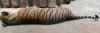
Here, I was greeted with two enclosures for both Sumatran Tiger and Malayan Tiger, which, along with the Siberians in Northern Forest, brings Prague’s total number of tiger subspecies up to three (that is, of course, depending on the individual’s views on tiger taxonomy, which could argue for the Sumatrans and Malayans being one subspecies, or equally as being separate subspecies under a completely different species to the Siberians)! I knew that Prague had three at some point, but for some reason, I had the misleading idea that one of the three had left the collection and they were now down to just two, so was pleasantly surprised when I followed the path along from the Malayans and found that what I thought must have held lions was in fact home to Sumatrans! The other pleasant surprise around here was the quality of the two islands for the tigers. As mentioned earlier, the big cat enclosure seems to be some of the most regularly criticised exhibits at Prague, with the ones in the Feline and Reptile Pavilion being subject to this the most. However, while these islands are by no means world-class, they are both very good, being spacious, with a decently big climbing structure, undulating terrain, good grass coverage, and patches of bamboo and trees to hide among. I was disappointed not to see the Malayans, a subspecies that I have never seen before, but knowing that the indoor area within the Pavilion was onshow, I wasn’t all too bothered at this moment, and I could see a Sumatran resting elegantly on a plank.

I then decided to enter the Pavilion itself, which, like most of the buildings in this lower half of Prague Zoo, isn’t architecturally flattering, prioritising functionality (and being flood-proof) over aesthetics, with a two-dimensional brick facade and a mix of concrete and glass on the roof. This building is huge, far larger than I had anticipated, and is my first time ever visiting a traditional ‘cat house,’ a style of taxonomically-arranged exhibit that is absent from the UK, to my knowledge, or at least on this scale. That said, as you can tell by the name, the Feline and Reptile Pavilion isn’t just cats. The indoor areas for the cats line the perimeter of the Pavilion, while the ‘island’ in the middle is filled with reptiles (far more reptiles than I had expected, it must be said). There are, however, two exceptions to this, as the first two reptile enclosures you see as you walk in are also on the perimeter.

It is also worth noting that, at the time of my visit, the Feline and Cat Pavilion was probably the only ‘incomplete’ exhibit at Prague Zoo. This is because, at the time of my visit, the last Javan Leopard had sadly passed away (yes, Prague had two leopard subspecies and three tiger subspecies until recently), and the last Clouded Leopard was soon to depart, having been moved offshow in preparation for its departure (or at least, I assume this is the case, as ZTL still lists the species but there was no evidence of them on my visit). Soon, both the former leopard and clouded leopard enclosures will be given to a new arrival, the Fossa, who is also already at the zoo per ZTL, but I again saw no evidence. As such, two of the enclosures here were empty at the time of my visit, and probably still are.

Now, back to the walkthrough. As mentioned earlier, there are two reptile enclosures as soon as you walk in before the ‘main body’ of the house, with the reptile island and cats on the perimeter, begins. The first of these is a desert-themed mix that I was rather fond of, featuring thick layers of sand and many rocks to hide among, as well as a very large selection of species, although I could only locate roughly half of them:

Eastern Collared Lizard
Giant Horned Lizard
Zebra-tailed Lizard
Common Chuckwalla
Baja Blue Rock Lizard
Desert Spiny Lizard
Desert Iguana


For lizard-lovers, something which I do not regard myself as, this is heaven on Earth, with five of the seven species (rock lizard and chuckwalla being the exceptions, although the former of those is by no means common either) are kept at 11 or less public European collections per ZTL. However, despite my lack of interest in lizards, I did get much joy out of watching some very active and scarcely kept Zebra-tailed Lizards running through the sand. The other reptile enclosure here is a paludarium with a very deep pool and rocky land area, that stars one of my personal favourites, the Green Anaconda, along with Silver Dollar and Silver Arowana.

Opposite this, I saw the first indoor areas for big cats, that being those for the Sumatran Tigers. It was here that I began to understand the criticisms for the Feline and Reptile Pavilion. These indoor stalls offer good space, and with many different rooms and a backstage portion, there is hardly a lack of separation options. But to call them ‘ugly’ or ‘barren’ feels like an understatement, because there is no climbing, no natural substrate, and nothing more than a white-washed concrete floor with intimidating green walls. In a way, it was a guilty pleasure, as it is the exact kind of ancient cat house that I often hear discussed as having once been a staple of European zoos, now, quite thankfully, lost to time. But they certainly need improvement. Simple changes, like the addition of natural substrate or expansion of the climbing on offer, would work, but a dramatic overhaul with expanded indoor rooms could be necessary. The ones for the lions and small cats have the same flaws, so I will save covering those species’ exhibits for when we get to the outdoor area (although regrettably, the Palawan Leopard Cat, a major rarity which I could not see, does not appear to have an outdoor area, and hence is one of the worst exhibits in the zoo). I hope that after the Polar Bears, the big cats are next to receive improved exhibits, but I also sincerely hope that whatever these new exhibits are, it doesn’t endanger the reptilian offerings which are quite excellent. On the bright side, I did manage to find a Malayan Tiger, pacing in their indoor area and attracting quite the crowd in the process.

Screenshot_2024-08-14-20-26-17-10_92460851df6f172a4592fca41cc2d2e6.jpg

The rest of the reptiles in this building, all kept on the island, are the following, with ‘+’ sign indicating that they share an enclosure with whatever species is next on the list.

Steppe Agama +
Secret Toadheaded Agama +
Frog-eyed Sand Gecko +
Ocellated Skink +
Iraqi Spiny-tailed Lizard +
Russian Tortoise
West African Gaboon Viper
Lesser Antillean Iguana
Annam Pond Turtle +
Murphy’s Pricklenape +
Common Tree Frog* +
Tokay Gecko +
Indochinese Box Turtle
Malayan Flat-shelled Turtle +
Frilled Lizard
Five-keeled Spiny-tailed Iguana +
Cuban Ground Iguana +
Northern Curly-tailed Lizard
Spiny Turtle +
Green Tree Monitor
Eastern Diamondback Rattlesnake
Cuban Boa +
Cuban Cave Anole
Eyelash Viper +
Plumed Basilisk


Exhibits like these do make me regret my lack of interest in lizards, because a brief look at ZTL reveals just how outstanding this species selection is. The only zoo where one can find Secret Toadheaded Agama and Murphy’s Pricklenape in Europe, one of just two to hold Frog-eyed Sand Gecko and Iraqi Spiny-tailed Lizard. The most impressive lizard was none of those species, but the Tokay Gecko. I couldn’t tell you why, but for some reason, I had always assumed that they were similar to day geckos in size, but the one here was at least twenty centimetres and was quite the specimen indeed. There were some impressively active rattlesnakes who, thanks to a pacing tiger distracting most of the crowds, I got some excellent views of, but the highlight was seeing a pile of 10 or more Cuban Ground Iguanas huddled around some food, shamelessly scaring off any other lizards who seemed to contest it. Prague Zoo was the first European collection to breed this species, so it is nice to see that to this day they are kept here in large numbers.

IMG20240807153107.jpg

I have left one reptile exhibit out, as it is quite bizarre in design and feels as though it merits its own description. It is a large, glass-roofed room with trees and branches in which small birds could be seen flying about (House Finch, Cuban Grassquit and Ruddy Ground Dove). The base of it is littered with rocks, plants and pools, that are inhabited with yet more Cuban Ground Iguanas as well as Green Iguanas, who are given the freedom to roam between all of them, while the North Antillean Slider are confined to a pool in the centre by virtue of the whole thing being split into three. It is a strange design that I partly like (having a turtle pool within the context of a larger area featuring lizards and birds is a good way to hint that these small vivariums do not represent the full ecosystem), but at the same time, the dividing barriers to prevent the turtles from moving seem very unnecessary and disrupt the natural feel of it somewhat. If they were removed, then I would be a lot more fond of this bizarre exhibit. The sliders were a particular highlight, being very fond of turtles myself, and along with the two venomous snake species earlier, they were a nice refresher with the many lizards that surround them - Prague is one of just two European collections to house the species, as well.

On that note, I departed the Pavilion and, after a quick detour to the ‘Gaston Restaurant’ (named after a fur seal ‘Gaston’ who escaped into the Vltava and swam up the Elbe as far as Dresden, sadly passing away shortly after his arrival there, with a statue of him in the pond in front of the restaurant) to get a drink, being very dehydrated at this point from the lack of water refill stations, I began to look around the outdoor portions of the house. Before even entering the pathway that circumnavigates the Pavilion, presenting the visitor with the outdoor enclosures in the process, there is a sheltered viewing area that looks onto the zoo’s South African Cheetah enclosure, which, appeared to be lovely, although only a small portion of it could be viewed due to its design, essentially being a large grassy lawn that revolves around a raised portion in the centre. Although far from the best cheetah enclosure that I have seen, it is very good, and reminded me quite a bit of the average-sized, but very charming and well-landscaped one at Dartmoor in terms of its structure (due to it being more vegetated, I actually preferred the Dartmoor one, but from a cheetah perspective the two are roughly equal in quality, I should suspect).

It began with a run of three small cat enclosures which, it must be said, far exceeded my expectations. The Fishing Cats were particularly lucky, and this is quite possibly the best enclosure that I have ever seen for the species even with the mediocre indoors - two, huge aviary-type exhibits with long grass, abundant bushes to hide among and a deep pool with underwater viewing. The Geoffroy’s Cat and Amur Leopard Cat enclosures are delightful as well. Sadly, as none of the three cats were visible, I didn’t linger here for long. It was in this row of enclosures that the former Clouded Leopard and Javan Leopard enclosures sat empty awaiting the arrival of Fossa. Around the corner is the zoo’s Asiatic Lion enclosure, which seemed comically disproportional with a moat that made up half of the exhibit, although with the moat drained on my visit (and, judging from the plants that have been growing there, I suspect it is always the case), the lions can easily access it and this enclosure turned out to be a very satisfactory size as a result, with decent foliage as well, although it was by no means excellent, and coupled with the poor indoor area made it among the weaker lion enclosures that I have personally seen.

IMG20240807155545.jpg

Overall, I thought that the Feline and Reptile Pavilion was a decent but hardly outstanding exhibit. I loved all the reptilian offerings, although my lack of interest in lizards did make it feel a bit repetitive at times (a crocodilian or some amphibians would no doubt make my impression of it much more positive), and thought that while the outdoors for the cats were all of a surprisingly high standard (never truly elite, but always very good), the indoors made me feel as though I had time travelled, such was the antiquated feel of their design. Given the spatial constraints of the surroundings, it may prove to be quite the challenge, but I think that renovating this area in a way that does not hinder the reptilian offerings should be a priority.

With mixed impressions of the Feline and Reptile Pavilion, but leaning slightly more towards the positive side of things (having very low expectations due to the amount of negativity I had heard towards it helped), I moved onto the Giant Salamander Pavilion. I have been looking forward to writing about this one, and had to take some time to ensure that I got it right, because, in my opinion, this is easily the best exhibit at Prague Zoo, and I had to do it justice. In fact, it is probably one of the best zoo exhibits that I have ever seen in general.

IMG20240807161218.jpg

It's a large room featuring five tanks for the Chinese Giant Salamander. Two of these tanks (one embedded into the floor, the other into the wall), appear to be open-topped, but in fact have a pane of glass just below the surface of the water so as to give a very convincing illusion. The illusion is enhanced by the fact that, from 14:00 onwards, with my visit to the enclosure being an hour after that, the room enters ‘night mode,’ with only very minimal, dark blue lights being left on. The doors have screens that must be woven around to enter, blocking any sunlight, and staff members are positioned to prevent photography of the salamanders, and to keep noise levels low, thus allowing these sensitive, nocturnal creatures to feel more at ease. Another one of the five pools allows visitors to crawl underneath it and look up, and while this display was meant for children, the lure of standing underneath such an impressive animal did encourage some adults to partake in it too, which was lovely to see. There are also two more generic tanks. The tank in the floor, which I did not realise had the hidden glass pane until after my visit, and thought was an accident waiting to happen that, on several instances, I feared I may fall into, was also filled with small fish (unsigned, but I think I recognised a few catfish), although apparently they could not access the other tanks. The salamanders, on the other hand, could travel between the tanks, which are connected by what the zoo refers to as a ‘water cascade,’ presumably a waterfall-like stream that is too shallow and rocky for the fish but ideal for the salamanders.

IMG20240807161305.jpg
(Photography is not allowed in the Velemlokarium, so this photo showing a map of the house is the closest I could get to showing a visual overview)

Despite it only being kept onshow at eight European collections, I have, of course, seen the Chinese Giant Salamander before, as one of those eight is ZSL London Zoo. However, none of the three enclosures that London has kept the species in throughout my lifetime (or, to my knowledge, any of the other enclosures for the species in Europe) were ever purpose-built for the species, with the salamander having been kept as part of a bigger reptile house on two occasions and in a small, random vivarium in an outdoor courtyard near the former giant tortoise enclosure. As such, while I can normally guarantee seeing a giant salamander, I have never seen more than a head peering out of a rock, and, if I am lucky, a neck and two limbs may peer out with it. However, immediately upon walking into this Pavilion (after a brief moment of disappointment when I thought a rock was a huge salamander), I saw two salamanders in one of the generic, eye-level tanks, both on the move, exploring and feeling their way around every corner of their exhibit. A brilliant encounter indeed, as was climbing into the aforementioned glass-topped tunnel and looking up to see a salamander right above my head, which was quite the memorable encounter indeed.

It was about now that I remembered something else that the Velemlokarium is famous for. A salamander named ‘Karlo,’ who in 2015 was reported to measure 158 cm and weigh 35 kg, making him the largest living amphibian that we know of. And, given that he was only 40 when those measurements took place, with salamanders living much longer and continuing to grow throughout their life (although admittedly slowing down as it progresses, I believe), who is to say that he won’t at one point rival the 1.8 metres that is currently considered to be the all-time record holder, and in the nine years since the 158 cm measurement was published he has likely grown quite a bit past that (the zoo's website also states that he could become the record-breaker should he live long enough). Unable to find any evidence of Karlo, I was starting to worry either that I wouldn’t see him, or that I was hugely overestimating how big he was, and one of the three individuals that I had already seen was in fact him, which would be quite the letdown. However, it was then that I realised something quite shocking. The rock I had caught a glimpse of earlier, initially thinking was a giant salamander, before realising I was fantasising, had a pair of (closed) eyes and two limbs hanging down, as well as a tail much further back. I was right from the start. This was Karlo, and he was monstrous. Next to him, his neighbours in the second tank were tadpoles. He didn’t move, but that didn’t stop me from spending a good few minutes admiring him, in awe of what I was seeing. A truly remarkable animal.

Another thing that I loved about the Giant Salamander Pavilion was how much pride the zoo takes in displaying this species. Surrounding the salamanders are strange thematic choices such as a ‘projection wall,’ and two chairs where you can use headphones to listen to audio excerpts from Karel Capek’s ‘War with the Newts.’ There is also the so-called ‘foundation stone’ right outside the entrance, a cast of the skeleton of a prehistoric giant salamander found in Switzerland in 1725 that was once thought to be the remains of an extinct species of human, Homi diluvii testis. There were also two more vivariums at the end of this building, with one housing Impressed Tortoise (a species that I have always wanted to see, as it has one of the best names in the animal kingdom, but was out of luck for) and the other housing Mangshan Pitviper. For both species it was odd to see them in a nocturnal setup, although had I visited during the day cycle that wouldn’t have been an issue. I was particularly impressed by the huge size of the pitviper, far bigger than the individual housed at London.

Overall, I was astonished by the Giant Salamander House. It isn’t Prague’s highest-quality enclosure (the mountain goat habitats) or its flashiest (Gobi or any of the newer exhibits) or its most rarity-packed (Bird Wetlands or Rakos', maybe Indonesian Jungle), but for me it is their best because it is their biggest achievement. Taking a species that is normally dull or inactive in zoos and not only encouraging activity, but finding ways to make them a favourite among all visitors. It’s incredible.

Near the Giant Salamander Pavilion, there are two, independent enclosures . The first is for Indian Crested Porcupines, who had two adorable ‘porcupettes’ contending for the mother’s attention, which brings up Prague’s total number of porcupine species to an absurd total of five! I bet most visitors don’t even know that there are that many! The second houses White-belted Black-and-white Ruffed Lemur, which asides from being a ridiculously long-winded name, is a fairly commonplace zoo species kept here in a fairly basic exhibit - an island with an indoor room connected by a log over the moat. And yet, this is by far the most joy that I have ever got from watching lemurs, with several of them fighting for the right to use the islands and making some comical, but loud, sounds to try and claim the island as their own.

A path between the lemurs and cheetahs leads to the Mefou Centre, the former gorilla exhibit at Prague Zoo, before the construction of Dja, that now holds three males in a bachelor group of sorts. I must say that as an enclosure, Mefou is perfectly sound, and aside from the desire to hold both a bachelor group and a family group, it really does make the construction of Dja feel a little unnecessary, when big cats and polar bears are in much more urgent need. In fact, in some ways I prefer the outdoor portion to Dja, which is very attractive with no obvious barriers, a moated front and abundant climbing in a hilly, shaded enclosure. It's not quite Zurich levels of confused priorities, but it isn’t far off. That said, the indoors was closed for construction during my visit, so perhaps that was the letdown that made redevelopment so urgent. This is where the zoo keeps its Western Tree Hyrax in a standard enclosure that once held callitrichids, although I sadly couldn’t see any.

Backtracking towards the lemurs revealed the zoo’s Giant Tortoise Pavilion, which keeps Aldabra Giant Tortoise as well as Pinzon Giant Tortoise and Western Santa Cruz Giant Tortoise, two subspecies of the Galapagos which are actually subspecies-pure, which was interesting to see. Bizarrely, this enclosure was also signed as having Oustalet’s Chameleon, American Cockroach and the venomous Huntsman Spider. Within the House are two other enclosures, one of which is the Tortoise Nursery, where newborn tortoises and turtles of different species with ‘similar requirements’ are kept together. The tortoises signed were:

Indian Star Tortoise
Pancake Tortoise*
Leopard Tortoise*
Steppe Tortoise
Tunisian Spur-thighed Tortoise*


The second of these enclosures houses two more Komodo Dragons, presumably yet more brothers, in an enclosure which I personally found to be far too small for the species in question. Even more bizarrely, however, is that the signage indicates it is shared with Malaysian Giant Pond Turtles, although with the signage also suggesting that there are chameleons, cockroaches and spiders in the tortoise exhibit, I suspect I am misunderstanding which signs correlate with which enclosures.

At this point, I had done most of Prague Zoo, barring the very convoluted southwestern corner, which makes up a small portion of the map but a very big portion of the zoo’s total number of species and exhibits. The logical route here would be to visit the Sichuan Pavilion, then loop through Water World and Monkey Islands, and up past Darwin Crater and Bororo Reserve to get to the Rakos’ Pavilion, which would conclude the visit. The catch in that? The Rakos’ Pavilion kept birds-of-paradise, which were one of my biggest targets of the day, second only behind the pangolin, and for my father, with whom I was visiting, the outright number one target. As such, I wanted to give myself the option to return to the Rakos’ Pavilion if we missed them on our initial visit, which, with less than three hours to go until 19:00 (when all pavilions, walkthroughs and facilities shut down, although you are allowed to stay in some areas of the zoo until 21:00!) would require going to the Pavilion then and there. So, to make our already confused route around this bottom half of the zoo even more ridiculous, we did just that, and went to the Rakos’ Pavilion, stopping at the Great Aviary, which we had a brief, teasing glimpse of earlier, to appreciate it fully on route.

Birds of prey, given how charismatic they are, and how much flight space they would use up in the wild, always seem to be some of the most disrespected animals in zoos. The number of times they are confined to minute, metal cages in which they can barely stretch their wings, never mind take flight, is tragic, and is making animal rights activists’ jobs far too easy. The Great Aviary at Prague Zoo is very different. Although architecturally it is just as bad as the old pheasantries (a huge, green, metal cage that is quite intimidating and unattractive from a distance), the aviary itself is quite excellent. It is huge, allows the birds to fly for prolonged periods of time, and is an aesthetic masterclass as it fades into the cliff behind, with some delightful rockwork, green grass, dense foliage and slopes at the far end for birds that may chose to stick to the ground. And to top it all off, the viewing area is completely open-fronted, which allowed for some unnervingly close views of a huge Cinereous Vulture tearing into a carcass. The one thing I found odd about this aviary were the many magpies, appearing to be our native species, that could be seen attempting to take food from the vultures. I assumed they were captive, but were unsigned and looked no different to the Eurasian ones that I had been seeing throughout Czechia, although I am not sure how they would get in. That aside, this aviary is brilliant. One of just three truly great birds of prey aviaries that I have ever seen along with Chester and Dresden, although I must admit that this is probably my least favourite of the three. The five species signed were:

Black Stork
Red Kite
Cinereous Vulture
Egyptian Vulture*
Booted Eagle


IMG20240807163644.jpg

While walking to the Rakos’ Pavilion, I passed two very bizarre aviaries, and I don’t mean that in a good way. I gather that they were once part of a longer line of such aviaries known as ‘Linearka,’ and when Linearka was demolished for the construction of Rakos the zoo chose to maintain them as a tribute to the history of sorts. Fair enough, but those two aviaries truly are poor. Small, barren and unattractive, and I feel somewhat sorry for the Slender-billed Parakeet and Southern Festive Amazon who live there while on either side are some of the very best aviaries and bird houses in Europe! The fact that they are both rarities, kept at 5 and 9 European collections respectively, makes this even more infuriating for zoo enthusiasts.

Named after Stanislav Rakos, a parrot collector whose generous donations entirely funded the construction of this exhibit, this Pavilion was opened in 2019 and is the closest that Prague has to a devoted bird house (not a criticism - as mentioned earlier in the review, I would prefer a myriad of smaller scale aviaries and bird houses intertwined with other exhibits than one big one), with its primary focus being parrots. Before entering the house itself, which is architecturally one of my favourite buildings at Prague, but still simple, with cobbled walls covered in ivy, and a dark interior, a large aviary for Kea greets visitors. Far larger than the aviaries that this species typically receives, with enough area for prolonged flight, although it did seem a little lacking in height. Even still, it is far better than the Burgers’ and Bristol aviaries for this species (which, quite surprisingly given how common they are in zoos, are the only other places where I have seen kea).

IMG20240807164059.jpg

This exhibit continues a theme that I had been noticing throughout Prague Zoo, and was very fond of - their ability to commit to geographical themes. If there is a mixed-species exhibit, then nine times out of ten the species shown would live together in the wild, and deviations from this are almost non-existent. Kea aside, there are seven aviaries here, and each have a theme - the Philippines, highland New Guinea, lowland New Guinea, Jamaica, Pantanal, Caatinga, and Andean foothills. While some like the Philippines are quite broad, others, like Caatinga (a xeric shrubland and thorn forest in Brazil that, truth be told, I hadn’t even heard of until this aviary) or both New Guinea aviaries are much more precise. And, just like in Bird Wetlands, the foliage and landscaping matches it well.

The Philippines aviary houses Black-chinned Fruit-dove, Spotted Imperial Pigeon and Blue-naped Parrot. Prague is one of just two European holders of the fruit dove and one of just five for both the imperial pigeon and parrot, making this a strong start to the Pavilion in terms of rarities. I was particularly struck by the imperial pigeon, which seemed exactly like one of our native doves except with more pronounced, cartoonish colours. However, it was the highland New Guinea aviary that particularly caught me, with it housing:

Pesquet’s Parrot
King Bird-of-Paradise
Raggiana Bird-of-Paradise
Cinnamon Ground Dove


Birds-of-paradise have always been one of my target species. The males with their vibrant plumage, most impressive in the tail feathers that are often equipped with long wires, but very much present throughout, are considered by some to be the most attractive birds out there. I myself certainly agree with this opinion, and you can imagine my heartbreak when glancing through Zootierliste and seeing ‘hinter den kulissen’ attached to the entries for both King and Raggiana birds-of-paradise. Although the pangolin excitement mostly drowned it out, there was still a lingering disappointment on the back of my mind that I would have to wait yet longer to see my birds-of-paradise. However, in March, the zoo announced that the plans to put the Raggianas onshow in the Rakos’ Pavilion that have long been in place will be coming to fruition the next month. Somewhat unexpectedly, the Kings followed suit, and just in time for my visit, I would have two species of birds-of-paradise to see!

Interestingly, I had always assumed that the species got their name from their heavenly colour, but it turned out that it came instead from the fact that, back when European monarchs would ship stuffed specimens over from Southeast Asia for their collections, the legs were cut off so as to ensure that the sharp claws on their feet did not damage the delicate and elegant feathers during transportation. This led to most Europeans who saw them assuming that they were born legless and never touched the ground, feeding off ‘the dew of heaven.’ Fittingly, I came to this discovery while looking at a stuffed Raggiana at the gallery of the Residenzschloss in Dresden, just four days before I would visit Prague Zoo.

Arriving at their aviary, there was a brief moment in which I was slightly panicked about missing them. Two huge Pesquet’s Parrots (another rarity that I had seen once before, at Beauval, but did not remember being quite so impressive!) were very active, and did fool me several times with the red patches on their wings, which I thought was a male King BoP (mostly red body, with green feathers on the end of their tail wires). Then, simultaneously, two stunning Raggiana males both revealed themselves, one perched on a tree stump at the far end of their enclosure, reluctant to move itself and very keen to show off, and the other amongst the branches, its tail on full display. They are stunning birds, and I was particularly grateful that the aviaries for them here at Prague had a wire front instead of glass, so as to allow for visitors to hear the wingbeats and calls of the birds. They didn’t move much, but it was tremendously good fun to admire them, and a truly unforgettable lifetick. I did manage to spot a King as well, but only a female without the iconic plumage, although a nearby sign mentioned that, unusually among BoPs, the Kings don’t develop their plumage until seven years of age, so it could equally have been a young male. Either way, I was delighted to have seen both, and the Raggianas in particular were about as brilliant a species as it gets.

IMG20240807170056.jpg
(bad photo, but its a bird-of-paradise!)

The next aviary is for Lowland New Guinea, and is a large walkthrough hall. Although simple in its design, I was really pleased with it, as it offered all of the birds abundant flight space and many plants to hide amongst, but also ensured that the visitors had good chances to see them with many different vantage points, including a tree that one can scale using some stairs for a more complete view. Hardly Blackburn Pavilion (London Zoo’s bird house, featuring a walkthrough which, for me, is the gold standard for bird houses of this size) level, but still very good. It held:

Palm Cockatoo
Helmeted Friarbird
Salvadori’s Fig-parrot
New Guinea Bronzewing
Green-naped Pheasant-pigeon
Pink-necked Green-pigeon
Sunda Teal
Western Crowned-pigeon
Superb Fruit-dove


Sadly, the only bird in this walkthrough that I missed out on (and up until this stage the only bird in the entire house that I missed out on) was the friarbird, a species kept at no other European zoo. However, the bronzewing, of which Prague is also the continent’s only holder, and the fig-parrot, kept at just one other zoo on the continent, were much more visible, perched on platforms visible clearly from the raised viewing area on the tree.

Next is the Jamaican aviary, featuring underwater viewing for the pool for pintails and jacanas, resulting in some particularly enjoyable views of the former. The full species list for it is:

Yellow-billed Amazon
Crested Quail-dove
Scaly-naped Pigeon
White-cheeked Pintail
Wattled Jacana


Of which I saw all but the jacana, a species that is fairly rare in zoos, but I had seen in Zurich prior, so again didn’t mind missing out on. Unfortunately, just like in Zurich where this South American species was kept in the Masoalahalle, this species is the sole deviation from what is otherwise a very geographically accurate exhibit, not being native to Jamaica. The amazon and Scaly-naped pigeon were both lifeticks.

The Pantanal Aviary, perhaps the most lushly planted in the building, followed, and contained:

Hyacinth Macaw
Red-tailed Amazon
Wattled Jacana*
Tataupa Tinamou
Scarlet-headed Blackbird


I sadly missed out on the blackbird, but the tinamou, which could be seen darting throughout the undergrowth near the front of the enclosure, more than made up for this, being only my second ever encounter with any member of the tinamou order (having already seen the Elgeant Crested, the most common of the lot in captivity, at Chester), and being kept at just five European zoos in total. A delightful and welcome lifetick.

Thus, we are left with just one more indoor aviary in the Rakos’ Pavilion, the Caatinga Aviary, which held Lear’s Macaw and Red-cowled Cardinal. I didn’t even know Prague kept Lear’s Macaw, and was very pleasantly surprised to see them, although the individuals here were a little less active and quieter than macaws typically are in zoos, from my experience. However, I would add that these three aviaries, although well-landscaped (the Caatinga one with its cacti was especially interesting), did have the weakness of being glass-fronted, which is my least favourite way to display birds, on the basis that it is harder to truly immerse yourself in their nature. It is odd to me that the first two aviaries are wire-fronted, and yet the exhibitry style changes as the house goes on, and in my eyes, not for the worst.

You then leave the building, but pass one more aviary in doing so - an outdoor Peruvian walkthrough, themed to species from the foothills of the Andes. In terms of bird activity, this was actually my favourite aviary in the Rakos’ Pavilion, with parrots of four species flying in all directions, leaping in and out of nests and burrows, removing food from twig cages and other enrichment items, and overall making my time in this aviary very enjoyable indeed. The four parrots in question are:

Austral Parakeet
Cordilleran Parakeet
Monk Parakeet
Patagonian Conure


On that note, I departed the Rakos’ Pavilion, but, after refilling my water at what was only the second drinking water fountain that I saw that day, I did one more loop to try my luck with the blackbirds, friarbirds and King BoPs, but sadly had no luck (barring the aforementioned female or young male King). All in all, a very good bird house that could become an excellent bird house if they were to replace the glass in some of the aviaries with wire. A brilliant species selection (perhaps even the most rarity-packed area of the zoo) and some nice, but basic exhibitry. A little smaller in scale than I had anticipated, but I really liked that, with Prague’s approach of not having a single devoted bird house and instead sprawling them out throughout the zoo appealing to me quite a lot. A very pleasant exhibit indeed.

-------------------------------------------------------------------------------------------------------

Another longer post after two fairly short ones, that I hope you enjoyed.

Tomorrow, I will aim to release Part 6, which may or may not be the final release. If it isn't, then it will at least be long enough that Part 7 can be short, mopping up what few exhibits I missed, and thus allowing for a long section on my overall thoughts and summary on Prague.
 

Attachments

  • IMG20240807153107.jpg
    IMG20240807153107.jpg
    165.6 KB · Views: 226
  • Screenshot_2024-08-14-20-26-17-10_92460851df6f172a4592fca41cc2d2e6.jpg
    Screenshot_2024-08-14-20-26-17-10_92460851df6f172a4592fca41cc2d2e6.jpg
    81.7 KB · Views: 220
  • IMG20240807155545.jpg
    IMG20240807155545.jpg
    135.5 KB · Views: 208
  • IMG20240807161305.jpg
    IMG20240807161305.jpg
    105.1 KB · Views: 217
  • IMG20240807164059.jpg
    IMG20240807164059.jpg
    155.5 KB · Views: 217
  • IMG20240807161218.jpg
    IMG20240807161218.jpg
    145.2 KB · Views: 212
  • IMG20240807163644.jpg
    IMG20240807163644.jpg
    310.7 KB · Views: 245
  • IMG20240807170056.jpg
    IMG20240807170056.jpg
    169.7 KB · Views: 226
The Cuban ground iguana atrium in cat house is divided into three sections because males of this species are territorial and this setup enables the zoo to keep three adult males (each with own harem of females). In not too distant history, each section exhibited different species - Cuban, Blue Cayman and Hispaniolan ones.

The cheetah exhibit is a home to a female cheetah. It is connected with a separate off-show smaller pen just behind the hill. The main exhibit is not ideal for visitors eyes. Its outside fence had to be built higher due to an escape (ca 10 years ago there used to be just dry moat with mini-fence around). I would also mention that the zoo has an off-show cheetah breeding complex in the upper part, near Gočár houses. It houses two male cheetahs. The female cheetah gets moved there for shorter time periods to mate with them.

The old gorilla house (Mefou) is closed due to montage of new metal netting under ceiling of the indoor exhibit. It should reopen before end of September.

The current inhabitants of giant tortoise house include chamaeleons living in trees inside giant tortoise indoor exhibit, Malayan pond turtle lives in the pond with Komodos (but is usually invisible becouse of murky water). Cockroaches and Nephila spiders live in all rooms including visitors space - the house has American cockroach infestation problem and so staff put signage for this species out there too. I agree the current Komodos has outgrown their space - it was used as a nursery for little ones. And if we talk Komodos - the zoo also has an off-show breeding centre with several rooms for them, the house is called Rinca and stands hidden near shoebill aviaries.

The great aviary is not geat visualy. But after the previous Janda great aviary (built in 1931 at the same place and nicer looking) collapsed under heavy snow in 1969, the zoo went for functionality over visuals. It contacted structural engineers and they proposed to use prefabricated metal parts of train bridges. It stands now for 50 years and holds. Magpies inside the aviary are wild birds - they pass through the mesh.
 
@Jana ever thought of creating a thread about all these little parts of history of the zoo (and other zoos you know well)?
It's very amusing to listen to these little bits of information and in my opinion enriches and saviourates an eventual visit:)
 
The Cuban ground iguana atrium in cat house is divided into three sections because males of this species are territorial and this setup enables the zoo to keep three adult males (each with own harem of females). In not too distant history, each section exhibited different species - Cuban, Blue Cayman and Hispaniolan ones.

The cheetah exhibit is a home to a female cheetah. It is connected with a separate off-show smaller pen just behind the hill. The main exhibit is not ideal for visitors eyes. Its outside fence had to be built higher due to an escape (ca 10 years ago there used to be just dry moat with mini-fence around). I would also mention that the zoo has an off-show cheetah breeding complex in the upper part, near Gočár houses. It houses two male cheetahs. The female cheetah gets moved there for shorter time periods to mate with them.

The old gorilla house (Mefou) is closed due to montage of new metal netting under ceiling of the indoor exhibit. It should reopen before end of September.

The current inhabitants of giant tortoise house include chamaeleons living in trees inside giant tortoise indoor exhibit, Malayan pond turtle lives in the pond with Komodos (but is usually invisible becouse of murky water). Cockroaches and Nephila spiders live in all rooms including visitors space - the house has American cockroach infestation problem and so staff put signage for this species out there too. I agree the current Komodos has outgrown their space - it was used as a nursery for little ones. And if we talk Komodos - the zoo also has an off-show breeding centre with several rooms for them, the house is called Rinca and stands hidden near shoebill aviaries.

The great aviary is not geat visualy. But after the previous Janda great aviary (built in 1931 at the same place and nicer looking) collapsed under heavy snow in 1969, the zoo went for functionality over visuals. It contacted structural engineers and they proposed to use prefabricated metal parts of train bridges. It stands now for 50 years and holds. Magpies inside the aviary are wild birds - they pass through the mesh.
As @Mickey says all this information is brilliant. Especially interesting about the setup with the cheetahs and iguanas. I seem to remember dismissing the gaps in the mesh as not being big enough for magpies, as that was my first assumption after seeing how many were in there, but either I am misremembering that or am overestimating the size of a magpie.
 
This is because, at the time of my visit, the last Javan Leopard had sadly passed away (yes, Prague had two leopard subspecies and three tiger subspecies until recently), and the last Clouded Leopard was soon to depart, having been moved offshow in preparation for its departure (
Javan leopard did not die, he moved back to Tierpark Berlin. Now his former enclosure as well as the former clouded leopard enclosure are used by fossas.
 
Really enjoying these posts - nice to hear what others think about the place while my visit is still very much fresh in my mind :). A couple of notes of my own:

(that is, of course, depending on the individual’s views on tiger taxonomy, which could argue for the Sumatrans and Malayans being one subspecies, or equally as being separate subspecies under a completely different species to the Siberians)!

The Malayans would be part of the proposed Mainland tiger subspecies, so would in fact be in the same grouping (oddly) as the Siberians and not the Sumatrans if one were to take that taxonomy...

The Great Aviary at Prague Zoo is very different. Although architecturally it is just as bad as the old pheasantries (a huge, green, metal cage that is quite intimidating and unattractive from a distance), the aviary itself is quite excellent.

I actually quite liked the aviary - it maybe isn't visually appealing but it is very impressive structurally, and I feel it works well with the backdrop of the cliff.

I did one more loop to try my luck with the blackbirds, friarbirds and King BoPs, but sadly had no luck (barring the aforementioned female or young male King)

Friarbirds were very tough - needed to enlist the help of the volunteer/keeper stationed inside the aviary to eventually see them after 6+ tries in my case, so don't have too many regrets ;).

While I missed the screamers and mergansers (the former rather annoying, as I had always been fascinated by them, but the latter harmless having seen them before at Antwerp), seeing the merganser drowned out any frustration.

Didn't see the screamers either, especially frustrating because I also missed them at Walsrode. Are these typically not showy animals at Prague @Jana?

And if we talk Komodos - the zoo also has an off-show breeding centre with several rooms for them, the house is called Rinca and stands hidden near shoebill aviaries.

On my visit I saw a large off-show complex just behind the path between the Gocar Houses and the alpacas/tigers etc. - do you know what is in there?
 
I actually quite liked the aviary - it maybe isn't visually appealing but it is very impressive structurally, and I feel it works well with the backdrop of the cliff.
I suppose I didn't like it because it stuck out compared to the other large aviaries in that area (storks, ibises etc) which seemed very elegant and to fit in to their surroundings perfectly.
Friarbirds were very tough - needed to enlist the help of the volunteer/keeper stationed inside the aviary to eventually see them after 6+ tries in my case, so don't have too many regrets ;).
I have many regrets from my Prague visit :p, as the zoo was just too vast and too filled with rarities for me to be able to return to any species that I missed earlier. Luckily, I saw my three main targets, those being the pangolins, birds-of-paradise and gharials, as well as the mergansers, kagus and others that I wanted to see. I understand your visit was over two days, but I still can't imagine being able to return to Rakos' six times! It was one of the only exhibits in the zoo (along with Chambal and a few others) that I managed to return to twice, and I was still pressed for time! And to think that I thought I was a fast walker!

Your post has also made me realise a slight typo that I made:
While I missed the screamers and mergansers (the former rather annoying, as I had always been fascinated by them, but the latter harmless having seen them before at Antwerp), seeing the merganser drowned out any frustration
Mergansers in bold was meant to say oropendolas. :)
 
Didn't see the screamers either, especially frustrating because I also missed them at Walsrode. Are these typically not showy animals at Prague?

I see them maybe on 50% of my visits. But I dont go during hot summer months so somebody else must chim in if they have more luck in particular time of the day.

On my visit I saw a large off-show complex just behind the path between the Gocar Houses and the alpacas/tigers etc. - do you know what is in there?

There is more than one building.

The large ones along the path is part of approved quarantine that allows the zoo to transfer animals from/to 3rd countries and keep (suspected) ill animals separated. During the 2002 flood, the zoo managed to house there temporarily 300 animals - including a gorilla troop, 7 big cats, 150 flamingos and many others, before other Czech zoos picked them up.

Other building on the left with grassy pens is part of the cheetah breeding setup, currently occupied just by 2 brothers.

Behind quarantine is also dormitory for zoo employees and their parking lot. Some operational and storage facilities. A little school used by classes who participate in apprenticeship (training) to become zoo keepers. There also used to be a vegetable garden with glasshouse but I´m unsure if it was part of the zoo or not.
 
Last edited:
Part 6 - Darwin Crater, Gharial Pavilion and Sichuan Pavilion (plus overall summary)

(due to a combination of time constraints and low battery on my phone, I didn't take many pictures of exhibits, so will be relying on the ZooChat gallery partly here)

Immediately below the Rakos’ Pavilion, a large lawn serves as a walkthrough for kangaroos and wallabies, the finale of Darwin Crater. Themed around the namesake meteorite impact crater in Western Tasmania, surrounded by mountains and forests that are some of the island’s most biodiverse regions, this is the first Tasmania-themed exhibit that I personally have ever seen, although sadly the geographical accuracy is a little less consistent here (still predominantly good, though). To save time, I didn’t enter the walkthrough, which is found at the end of Darwin Crater, but did get some good views of the Eastern Grey Kangaroos and Bennett’s Wallaby who inhabit it. The enclosure, which is essentially just a sloping lawn with a path through the centre, has little to say about it.

As Darwin Crater is a one-way circuit, I had to loop around the kangaroo lawn to get to the entrance, in doing so passing the Bororo Reserve. This is the zoo’s playground, but because we are at Prague, where everything is a must-see, there is something for zoo enthusiasts as well, namely, three large South American mammals and a small Terrarium. The map gives the misleading impression that one can enter Bororo from below, just above the Chambal (the Gharial Pavilion), which prompted me to leave the Terrarium until later on in the visit. When I found the path that I thought would lead to the Terrarium was blocked, I decided to leave the exhibit until last, which I promptly forgot to do until minutes before 19:00, when all pavilions and indoor exhibits closed. Thankfully, after some hurried backtracking, I managed to see it, but this mistake did cost me being able to return to the pangolins, and looking back on it, I only wished I had visited the Terrarium before Darwin Crater. That said, one of Bororo’s aforementioned South American species can be seen from the entrance to Darwin Crater, that being the Brazilian Tapir enclosure, of which I was quite fond with its relaxed, shaded ambience, large size and varying terrain, but sadly there was no sign of the tapirs.

Arriving at Darwin Crater, I was delighted to see two aviaries at the entrance. Using birds to enrich mammal-based exhibits, as I had so often heard Prague praised for, and it was pulled off delightfully here. With Darwin Crater being one of Prague’s newest exhibits (May 2020), this is a good sign. The first of these is referred to on the exhibit map as ‘Bush Birds’, and is where the species selection deviates from Tasmania the most. It is a decent aviary, with good vegetation, but I didn’t linger here for long (the next aviary being a walkthrough had me quite distracted!). The species list for Bush Birds is:

Common Bronzewing
Tawny Frogmouth
Budgerigar
Red-tailed Black Cockatoo
Wonga Pigeon
Golden-shouldered Parrot


By Prague’s standards, a fairly generic species list (although being one of only six holders of Golden-shouldered Parrot in Europe, that says more about Prague’s standards than anything else). The only true annoyance is that only the bronzewing and frogmouth are actual Tasmania natives.

However, the next aviary, labelled as ‘Wetlands Birds,’ appealed to me much more, and may well have been one of my favourite enclosures at Prague. A simple design. Small to medium sized aviary, with several small trees and other plants, but it was teeming with birds, all very lively, noisy and entertaining to watch. Whether it was a heron skulking down a log and fishing, or cormorants flying back and forth and fighting over branches, or ducks swimming about in the pool. Similar to the bushbabies earlier in the day, it perfectly demonstrates how having bigger groups of animals can drastically improve the value, or at least visitor enjoyment of any enclosure, although again like the bushbabies, I do worry slightly that any more births and new arrivals and it runs the risk of becoming overstocked. As it stands, though, that is not the case, and this aviary is brilliant. The species list is:

Australian Shelduck
Hardhead
Little Pied Cormorant
Blue-winged Kookaburra
Straw-necked Ibis
Rufous Night-heron*


After missing them in the Stork Aviary earlier, it was delightful to be able to get a second chance with the night-herons, and this time they delivered, slowly making its way down a log and craning its neck as though to fish in the pool, attempting this on a few occasions. A wonderful colour throughout, contrasted well with the bright blue around their eyes, with those bizarre white feathers hanging out of their neck being the best feature - I love all pelecaniformes and especially night-herons, but this has to be up there as one of my best encounters with that order. However, the night-heron is not the biggest rarity in this aviary, which is instead the cormorant, kept at just three European zoos. Although I will say that, given how close it is to becoming overstocked in there, Prague could do well to find other willing holders for some of their cormorants in the event of future breeding, something from which all parties will benefit.

full

Credit: @vogelcommando

As great as these aviaries are, they are of course not the stars here. A glass-walled wooden boardwalk leads you between two enclosures (much like Gobi, I loved the clean and modern vibe here, as if Prague were trying to show off) for Tasmanian Devil and Tasmanian Wombat. Both were species that I was quite keen to see, having seen the devils before at Beauval, but asleep, and as such I quite hoped to see one more active here. Thankfully, one of the Prague individuals delivered here, albeit briefly, climbing along one of the fallen logs and running throughout the bushes before vanishing, presumably into a burrow. The wombats are a subspecies of the Naked-nosed Wombats, which, rather ironically given that they are the more common of the two wombat species in zoos, is the one that I haven’t seen (Longleat is the only place in Europe to keep Hairy-nosed, but they are the only zoo I have visited to keep wombats until now), and the wombats were once again cooperative, with one individual sniffing or foraging about in their indoor area for some time, very much visible. The differences between them and the Hairy-nosed are very striking, with a more rodent-like and less ‘peaceful-looking’ face.

Both the Tasmanian devil and wombat enclosures are outstanding, especially the former. Two huge outdoor enclosures with live trees, moats, thick vegetation, burrows, a variety of substrates and scattered rocks. If it wasn’t for the low fencing, one would assume this was a leopard or jaguar enclosure. The wombat enclosure, while not as impressive, is still outstandingly well-landscaped, and I love the authentic and rugged feel created by the random placement of natural elements. This is a theme throughout many of Prague’s exhibits, but these two exemplify it the best.

Indoors, a small cave opposite the wombat enclosure contained two terrariums, one for Rough-scaled Python and the other for Common Death Adder, both scarcely kept snakes that serves as lifeticks for me, but the death adder in particular was interesting, an iconic venomous taxa kept at just six European collections. Moving towards the walkthrough kangaroo enclosure, I located the Short-beaked Echidna enclosure, although sadly, having only seen the species in a nocturnal setup before (not including my view of the species at Hemsley, when all I could see was the quills beneath a log), I missed out on the chance to see a daylit echidna here. From what I have heard, the Prague echidna, who share their enclosure with Long-nosed Potoroo, like to take advantage of the thick natural substrate in their enclosure to completely bury themselves under the floor during daytime, hence the absence. Opposite them was the indoor enclosure for the Tasmanian Devils.

Overall, I loved Darwin Crater, with a noteworthy species list, a wonderful modern atmosphere, some brilliantly crafted enclosures and fairly active animals. It is in stark contrast to what could be found opposite, a row of aviaries titled ‘Birds of Southeast Asia,’ which is very simple and old-fashioned in its design. This row of aviaries is in turn part of a greater row of aviaries that span this portion of the zoo, colour-coded differently to the surroundings on the zoo’s map and, if I am not mistaken, known by most Prague visitors as the ‘Pheasantry.’ The whole Pheasantry area is a guilty pleasure of sorts, being packed with rare birds ranging from charming, colourful passerines to huge hornbills and eagles. And while for some of the smaller birds these aviaries, clearly some of the older exhibits in the zoo, are of a decently high standard (being big enough for them and very well vegetated), for the larger birds they are at times far too small, hence my decision to refer to this area as a guilty pleasure. In a way, it reminds me of the aviaries on the North Bank of the Regent’s Canal at my local London Zoo (which sadly sit empty for now), in that they are small and overgrown, but for some of the smaller birds just about adequate. That said, while I enjoyed this corner of the zoo for its species selection, I hope that the larger birds, especially the hornbills (my favourite animals, who I don’t really like seeing displayed like this) receive improved homes soon!

The ‘Birds of Southeast Asia’ row contains (in order from the tapirs to the penguins):

White-crested Laughingthrush
Vietnamese Pheasant
Edward’s Pheasant
Black-breasted Thrush
Sunda Laughingthrush
Northern Rufous Hornbill
Luzon Tarictic Hornbill
Palawan Peacock-pheasant
Philippine Metallic Pigeon
Philippine Scops-owl
Palawan Hornbill
Sumatran Laughingthrush
Bronze-tailed Peacock-pheasant
Coleto
Rufous-fronted Laughingthrush
Forsten’s Lorikeet
Salvadori’s Pheasant
Javan Green Magpie
Green Imperial Pigeon
Bali Starling


The highlight for enthusiasts would surely be the only Sunda laughingthrush in Europe, a strikingly coloured bird with a gradient-like blend of hazel and bluish grey colours, but most notably a large white patch around the eye. Luckily, I was able to see one of the many Sunda laughingthrushes that Prague keeps in this aviary. Other rarities to look out for include Philippine Metallic Pigeon (I have always had a soft spot for species that resemble our native pigeons, but with subtle differences), Luzon Tarictic Hornbill, Javan Green Magpie, Salvadori’s Pheasant, Bronze-tailed Peacock-pheasant, Palawan Hornbill as well as of course the Coleto. I managed to spot all of these barring the magpies (which I was not all that bothered by, given that they are kept by my local) and the Coleto (which I was slightly more irritated by, given that it is a major rarity and a bald starling!).

Nearby, Ring-tailed Lemurs, the second enclosure for this species at the zoo, occupy a standard island which can be walked through by visitors, but much like the kangaroos, due to being pressed for time, I decided to skip the walkthrough portion and appreciate the enclosure solely from the outside, which seemed to be a decently spacious island. What stood out to me most was the indoor area, which was curiously designed with glass walls on all sides, and as such seemed as though it sat quite comfortably in the surroundings. Marabou Stork and more Cape Barren Goose occupied a large, wooded, sloping enclosure, that, as far as enclosures restricting birds flight go, is probably one of the better ones I have seen with its very pleasant setting. I now decided to begin making my way towards the Gharials, a species I had been fascinated by all my life, and behind only the birds-of-paradise and pangolins was my third biggest target of the day, passing the extension of the Pheasantry labelled on the map as ‘hornbills’ in doing so.

Regrettably, the ‘hornbill’ aviaries had the same issue as the ‘birds of Southeast Asia’ ones, in that, while their simple, overgrown design works well for the smaller birds, they are simply not adequate for the larger ones. In particular, a pair of huge Rhinoceros hornbills could hardly stretch their wings, it seemed. While most of the discussion seems to revolve around the orangutans and big cats, I think that it is these hornbill aviaries, along with the small rodent enclosures in Africa Up Close, that need to receive the most urgent attention after the completion of Arktida. As it stands, however, the following species can be found here:

Rhinoceros Hornbill
Kagu
Hill Myna
Asian Glossy Starling
Madagascar Crested Ibis
Pink Pigeon
Great Indian Hornbill
Nicobar Pigeon


The species in this aviaries that appealed to me the most was the Kagu, a bizarre species whose exact taxonomy is up for debate, but is considered by some to be a relative of the gruiformes (cranes and rails), with its closest living relative likely being the Sunbittern, although to me, they have always looked like a mix between a very large gull and a very small heron, with some attributes of pigeons thrown in, and of course their signature wire-like neck feathers. Sadly, when first arriving at their enclosure, I had no luck, but a return later on in the day revealed a Kagu sitting in the far corner of its enclosure, making a rather bizarre noise. A great lifetick, although sadly all but its head was obscured by the long grass in the enclosure.

It was at the end of this pathway that I had anticipated being able to enter Bororo Reserve and the Terrarium, but upon realising I could not, I instead had to follow a rather odd path which first leads through a viewing shelter, appearing to be nothing more than that, only for it to lead the visitor onto a boardwalk over a moat. This moat, it turned out, was just a small part of a bigger series of moats, streams and lakes, forming a variety of islands interconnected by boardwalks. This exhibit is known as ‘Water World and Monkey Islands,’ which I do find to be a rather sloppy name when just one or the other would have done fine, and hence, for convenience’s sake, I will now be referring to it as WWAMI. In some ways, this area is simple in its design, with almost every zoo having its equivalent. The stars are the namesake primate islands (a common zoo idea) with wild Crucian Carp and Marsh Frogs bringing life to the water that surrounds it, and many captive waterfowl can also be found (again, a common zoo idea). However, I have never seen it on this scale, with seven or eight islands, many bodies of water and some delightful viewing lodges to watch the birds. There are a lot of areas of Prague Zoo where I feel as though if I weren’t rushing through them (something which, considering how big the place is, I had no choice but to do), then I may have gotten much more joy out of them. And for me this (along with another exhibit that I will discuss shortly) was worst affected by it. Not only was I rushing, but as a result, I was getting quite lost (the map shows a gibbon island, but I couldn’t find it, although there was a construction site roughly where the map indicates that the gibbons are, so I suspect that is why), not able to find several key species with many others presumably hiding due to the fact that it was quite late on in the day. Even still, I did love WWAMI and its design, with all the wildlife only bringing more life to it.

After first entering through the aforementioned viewing hut, the first enclosure one sees houses:

Chilean Flamingo
Caribbean Flamingo
Crested Duck
American Wood Duck


Not the most interesting selection, but it is always nice to see two flamingo species side by side and compare them. Nearby is the first of the primate islands, that being a huge, green one for Mexican Spider Monkeys. Although the ground portion is perhaps a little barren, the height and maturity of the live trees in the enclosure was very impressive and far exceeds what is typical of primate islands in zoos. What is most exciting about this particular enclosure, however, is that the Mexican subspecies of spider monkeys is kept at just two other European zoos (all I saw, however, was a single monkey sitting on the grass). Also here is the first of two viewing points for the Malayan Tapir, a species that I was rather keen to see, an old favourite of mine from when they were once kept at London, although since their departure I do not see them often enough. Unfortunately, I made it two for two with tapir misses, and moved on, in doing so noting that their enclosure, although pleasantly shaded, was hardly all that special. Much like the spider monkeys, South American Squirrel Monkeys benefit from a smaller, but equally spacious and pleasant, island.

The exhibit in this area that I most looked forward to was Chambal, also known as the Gharial Pavilion. Chambal is a river in India that serves as a tributary of the Yamuna, which is in turn a tributary of the Ganges - however, the ‘Chambal’ in the name refers to a sanctuary along said river, which was formed to protect the Gharial (along with two other species - the Red-crowned Roofed Turtle and the Ganges River Dolphin). This Pavilion is, architecturally, my favourite in the zoo, with all of its walls made out of bamboo planks, but covered by genuine bamboo, allowing it to sit discreetly into the surroundings. Outside the entrance of Chambal, one can find a large pond for European Pond Turtles, which is also signed as being a favourite hangout spot for the native Marsh Frogs found throughout the zoo, but especially in WWAMI. Of the three outdoor enclosures I have seen for pond turtles (the others being Exmoor Zoo and Tierpark Wittenberg), this one seemed to have the least action going on, with all of the turtles basking on the shore, compared to Exmoor where I reliably see large groups in the water, resulting in much joy trying to spot their raised heads, although it is still a lovely enclosure and I suspect that the time of day when I visited plays a big part in their inactivity.

Now, overcome with excitement to see one of my most long-awaited lifeticks, I made my way down the ramp and into the Pavilion. I mentioned that the Velemlokarium, or Giant Salamander Pavilion, is the best exhibit in Prague Zoo in terms of what it achieves, and that the Rock Outcrop with its goats on the towering cliff is the best in terms of enclosure quality. I stand by both those opinions, but I think that in terms of my personal enjoyment of each exhibit, the Gharial Pavilion easily takes it. I had wanted to see Gharials for as long as I can remember - as a child, crocodilians were my favourite animals, and the idea of one heavier than alligators and as long as a Saltie that preys almost exclusively on fish, with the specialist adaptations to show for it, just fascinated me. That said, I know that as reptiles grow continuously throughout their life, there was a high chance that the gharials at Prague weren’t full grown, and would disappoint in that regard. However, they certainly did not, as all six of the Prague animals were huge. And they weren’t alone either. The pool held:

Gharial
Northern Batagur
Crowned River Turtle
Indian Roofed Turtle
Brown Roofed Turtle
Indian Star Tortoise*
Giant Danio


When I first arrived in Chambal, there was one swimming about in the pool, one resting on the shallow stretch of land near the tree in the centre, one on the bank to the right, and two on the bank at the back, with the sixth nowhere to be seen. When I returned near the end of the day, there were two under the tree, three swimming about, and just one on the banks. These Gharials, who have been at Prague since 2008, were huge and probably some of the biggest crocodilians that I have ever seen (off the top of my head, only the Siamese male at Crocodiles of the World is comparable), but what made the whole thing so lively were the batagurs. Huge terrapins that, by the time it was discovered to be a separate species to the Southern Batagur (which Prague also keeps in the Indonesian Jungle), were thought to be extinct in the wild, until miraculously, through using old documentation about turtles mentioned as being potential batagurs, herpetologists were able to locate them and bring the into specialist breeding centres throughout India, with some individuals eventually finding their way into European zoos for ex situ breeding. This article on the zoo’s website provides more interesting information about it, and it is quite fascinating. It was also fascinating to watch them, as they appeared to be cleaning the gharial’s scales, with all three of the crocodilians that could be seen swimming being routinely pestered by the terrapins. They seemed unbothered, until one particularly painful nip caused the gharial to flinch and in response to it, the gharial briefly began to fight back, biting at one of the terrapins, who evaded it with ease by tucking its head into the shell. From then on, it was more peaceful with both species being more gentle, although there was still a crowd of batagurs following the gharials wherever they went.

In terms of animal activity, watching the gharials and batagurs, as well as the smaller turtles (all three of which being rare in zoos) and the star tortoises, who showed a commendable lack of fear when approaching the gharials on land, was easily the highlight of my day. The Giant Danios were interesting too, being a keeper of the smaller but related Zebra Danios myself. This further exemplified the point that I have made many times throughout this and my other reviews, and will no doubt continue to do so - the easiest way to make any species entertaining is to keep them, and their company, in larger numbers. Six gharials and nine batagurs is quite something, but due to the huge size and depth of the ball with banks on all sides but one, it never feels near overstocked. A truly brilliant exhibit.

IMG20240807173708.jpg IMG20240807173834.jpg

Reluctantly, I moved on from Chambal and began making my way towards the Sichuan Pavilion. In doing so, I passed the other South American mammals in the Bororo Reserve, the Giant Anteater and Capybara, although other than a very impressive anteater curled up amongst some straw, there was little going on here. The WWAMI offerings continued with a lake for:

Ruddy Shelduck
Red-crested Pochard
Eurasian Shoveler
Greater Flamingo


Thus bringing the total number of flamingo species at Prague up to three. Here was also another viewing of the pelican lake from earlier.

The next exhibit at Prague Zoo is perhaps the most beloved among zoo enthusiasts - the Sichuan Pavilion, known also simply as Sichuan. An indoor hall filled with free-flying birds, which is a simple concept and one that many zoos around the world have their own take on. However, what makes this exhibit at Prague so special is that, as opposed to focusing on tropical birds of Southeast Asia, Africa or South America, this one has decided to focus on birds of temperate climates from Eastern Asia, with the namesake region being a province, basin and region in central China. Before sharing my thoughts on the exhibit, the species list is as follows:

Emei Shan Liocichla
Red-tailed Laughingthrush
Grey Peacock-pheasant
Common Emerald Dove
Pekin Robin
Barred Laughingthrush
Barred Cuckoo-dove
Ashy Woodpigeon
Eurasian Hoopoe
Little Bittern
Scaly Laughingthrush
White-rumped Shama
Bar-backed Partridge
Golden-crested Myna
Blue-crowned Laughingthrush
Orange-headed Thrush
Cabot’s Tragopan
White Wagtail
Blue-crowned Laughingthrush
Mandarin Duck
Great Argus


With 21 species, its an impressive species selection indeed, and with Europe’s only Scaly and Barred Laughingthrush, as well as Bar-backed Partridge, Barred Cuckoo-dove, Golden-crested Myna and Ashy Woodpigeon all being kept at five or less European zoos, it is hardly devoid of rarities either. With only spending ten minutes in the house (really not enough to do justice to it, but time was against me now), I managed to see all of those rarities barring the cuckoo-dove and Barred laughingthrush, although it is possible that I did see those and simply didn’t realise, as there were many instances when a bird flew overhead or across the path and I did not have time to identify them. However, the highlight for me were the hoopoes. Very common compared to the other species, having been kept at London Zoo for a brief window fairly recently and being native, and yet I had somehow never seen them until this visit. At Prague I saw four or five hoopoes flying across the hall and occasionally landing on the pathway, gathering food and returning it to the nest. Their black and white stripes on the wings are far more pronounced in person than they appear to be in photos, and it more than made up for the many disappointments of having missed them in the past. I was also delighted to see the outstanding tail feathers of a male Great Argus, and in a sense, it was the common species, sometimes even the species kept at my local zoo, that were brought to life by their means of display here that made it feel special. My only regret is that I couldn’t find the Little Bittern!

However, I do have a guilty confession to make. Despite all my words of praise above, I did not enjoy Sichuan near as much as I thought I would. The pathway only covered a small portion of the pavilion, which is fine, as the birds need the option for privacy, but there were many instances where it left me longing for something slightly more creative in terms of viewing options, such as the stairway embedded into the tree that could be seen at Rakos’, or even a toned down version of Burgers’ Bush with trails into the woods. And while I loved and appreciated the bamboo, at times quite mature and impressive, the inclusion of tropical palm trees in a temperate-themed exhibit partly ruined the immersion for me. To be clear, I really enjoyed Sichuan. A brilliant theme, some lovely species, and well-stocked enough to guarantee some good activity. I just wasn’t amazed by it as I have heard other zoo enthusiasts who visited Prague claim to be. To me, it felt no different to other walkthroughs, only with a slightly more interesting selection of birds, and I would much prefer the more simplified approach of, say, London’s Blackburn Pavilion, where I find it much more entertaining to spot the animals than I did here. That said, out of all the exhibits at Prague that I rushed round due to time constraints, this, a walkthrough where patience pays off to see the birds, certainly suffered the most, and is the one that I am most curious to see how my thoughts adapt in relation to upon a return visit (hopefully over the next few years, I will return to this gorgeous city and its zoo in the process).

full

Credit: @lintworm

Very recently, Sichuan received a new addition, that being an aviary in front of it. With just one supporting pillar circling around the entire thing, and then netted over, it is a very good example of zoo architecture in my opinion. My favourite feature of it, however, is how the small pond in the front leads into a small water feature across the visitor path, crossed by a few stepping stones that no doubt keep children entertained during busier times, and then leads into the pond in front of the ‘Gaston Restaurant’ mentioned in an earlier post, with a statue of the fur seal Gaston in the pool. The aviary holds:

White-shouldered Starling
Scaly-sided Merganser
Crested Myna
Rufous-cheeked Laughingthrush
Spotted Dove


All five of which are decently rarely kept, but the laughingthrush is the highlight, held at just one other European zoo.

IMG20240807180023.jpg

I then made my way through the Children’s Zoo, which is primarily domestic animals as well as children’s entertainment such as a train ride and paddling pool, however does bring something of note to the table for zoo enthusiasts with ‘Nature Around Us,’ three aviaries for native European birds (with a rather random aviary for Australian Magpie found nearby), although a very attractively coloured Dwarf Zebu also caught my attention. Having just seen the far superior and more extensive European aviaries at Dresden, and having arrived in Prague on a bicycle trip that allowed me to see some of these species in the wild, I did find these aviaries to be slightly underwhelming, but they are beautifully crafted with some great use of native plants to create a rugged and natural feel, and I appreciate the fact that two of them are walkthroughs. Much like Sichuan, these aviaries are objectively and conceptually great, but I was a little indifferent to them.

The first walkthrough held:

Song Thrush
Stock Pigeon
European Greenfinch
Eurasian Hoopoe*
White Wagtail*
Common Linnet
Common Chaffinch
European Goldfinch


Of which the linnet was the most interesting species to myself, although it was great to see some very active wagtails, as well. The next walkthrough had a corner taken out of it which served as the aviary for Little Owl, so densely covered in conifers that it was all but impossible to locate the owl. Unfortunately, although I was fond of the vegetation, I did find it to be just a little too small for the species in question. The second walkthrough contained:

Common Chaffinch*
Grey Partridge
Common Starling
European Roller
European Turtle-dove


I was quite struck by the colours of the roller, which appeared less vibrant and more ‘pastel’ than I had expected.

From here, I followed back into WWAMI, where I found the zoo’s Western Sitatunga enclosure. Exhibit-wise, this is perhaps one of Prague’s most noteworthy enclosures, giving this swamp-dwelling species an enclosure that suits their nature, with long grass, patches of thick vegetation, and a moat that weaves around the enclosure and allows the animals to wade in it. Although hardly comparable to Exmoor’s enclosure (the same thing but far larger and within the dramatic setting of a valley), it is still fairly nice, and far better than the frustratingly vast number of enclosures that give this species dull, savannah-inspired lawns that do nothing to represent their natural habitat. Although I could not see any, more Marabou inhabit this enclosure. Nearby, I found the indoor viewing for the Malayan Tapirs where I was thankfully able to spot the individuals this time, with two adults, far larger than I ever remember them being at London, were clearly visible.

Nearby, the ‘Pheasantry’ resumes with a series of enclosures for birds of prey. Although, thankfully, far larger and better suited for the inhabitants than the previous portion of the Pheasantry, I still felt as though they were just slightly on the small side, only allowing for brief periods of flight, especially compared to the excellence of the Great Aviary not too far away. The species held in these aviaries are:

Egyptian Vulture*
King Vulture
Lesser Yellow-headed Vulture
Red-legged Seriema
Egyptian Vulture*
Steller’s Sea Eagle
Spectacled Owl
Bald Eagle
Hooded Vulture
European Honey-buzzard*
Pel’s Fishing-owl
Buffy Fishing-owl


This area is of course a must-see for zoo enthusiasts due to the two species of fishing-owl, with the Pel’s being the only representatives of their species at a public collection in Europe, and the Buffies being one of just 5. Although I had no luck with the latter, I was delighted to see three individuals of the former, one of which I believe being a chick born at the collection earlier in the year (first breeding of the species and genus at a public collection), who is maturing rather well, being the same size as the adults albeit still with much fluffier feathers. A delightful species, with the scale-like markings on the wings and spots on the belly making them one of the more interestingly coloured owl species that I have personally seen.

Nearby, the Penguin Pavilion was about as standard a penguin enclosure as it comes, featuring your classic Humboldt Penguin, which in a zoo so littered with rarities did leave me wishing somewhat for a rarer species, or at the very least more than one; for a zoo that has five species of porcupine, three species of flamingos, three subspecies of tigers and too many laughingthrushes to count, I thought that having one species of penguin, one species of bear and one species of crocodilian, when these are the animals most often represented by multiple species in zoos, was odd to me. Not a criticism, just an observation. Although the enclosure and choice of species is basic, I did like that the indoors was onshow, something which is not always seen with penguins, and that they shared with Fuegian Steamer Duck, a lifetick and a species that I thought benefitted quite a bit from the underwater viewing.

IMG20240807182306.jpg

Just around the corner from the penguins were the Cape Fur Seals. Although from an aesthetics standpoint, I wasn’t too keen on this very concrete heavy enclosure, especially with the water not appearing to be too clean (by no means dirty enough to be an issue for the inhabitants, but not all too friendly on the underwater viewing area), I actually think it is of quite a high standard for the animals, with a huge, deep pool and plenty of rocks to climb on in the land portion, even featuring a slide. Around now, I relaxed and watched the fur seals, deciding to return to the gharials and pangolins, only to suddenly realise that I had fifteen minutes until the pavilions closed and still hadn’t seen the Terrarium.

IMG20240807182449.jpg

So, after backtracking rapidly to the Bororo Reserve, I visited the final exhibit at Prague Zoo, the Terrarium. Tucked away behind a playground and accessed only by a boardwalk, I suspect this is among the easiest missed exhibits for first time Prague Zoo visitors. And while it was nothing special, it was actually fairly interesting and certainly worth the last minute rush to see, if only for completeness sake. When you walk in, you first enter a dark room with a huge Lake Titicaca Water Frog enclosure to the left. I have never seen such a large tank for this species, nor such a well-themed tank, presumably trying to give the impression of Aztec ruins, nor so many in one tank. I counted a staggering total of eighty, although given how many may have been hiding under the rocks it is probably closer to one hundred. I was also fairly impressed by the water quality.

IMG20240807183902.jpg

The rest of the enclosures in the house, which is essentially just a long corridor barring a small room at the far end for native species, are rather akin to one another, so aren’t really worth discussing. However, they housed:

Caiman Lizard
Tokay Gecko*
Northern White-lipped Python
Puff-faced Water Snake
Small-banded Kukri Snake
Brazilian Rainbow Boa
Vietnamese Longnose Snake
Eastern Montpellier Snake
Red Tegu
Ruthven’s Kingsnake
Gila Monster
European Glass Lizard
Urartian Rat Snake
Spotted Whip Snake
Bate’s Tree Boa
Mangrove Snake
Nosy Komba Ground Boa
Quince Monitor
Giant Asian Pond Turtle*
Eastern Black-bridged Leaf Turtle
Grass Snake*
Dice Snake*
Aesculapian Snake
Smooth Snake*
Adder*


While the Feline and Cat Pavilion was heaven on Earth for lizard-lovers, this is surely the equivalent for snake-lovers, with fourteen species and some major rarities, such as the whip snake or the montpellier snake among them. I was particularly impressed by the size of the Red Tegu, and thought they made a pleasant change given how commonplace Argentine Black-and-white Tegus are. I was also fond of how the final five species, all kept in a separate native species-themed room at the end, are almost exactly the same as the species in the cliffside ‘Czech Reptiles’ exhibits, as though to offer a second chance for visitors who may have had bad luck seeing them earlier (which, Dice Snakes aside, included myself).

I then made my way back to the Gharial Pavilion, as staff were fairly lenient about closing it at 19:00, and admired the very active crocodilians, along with the batagurs, before attempting to see if staff were equally lenient with regards to the Indonesian Jungle. They were not, so only one pangolin encounter for me, but on the bright side, had I chosen to go to them instead of the gharials, I would not have gone back past the Pheasantry and thus wouldn’t have seen a Kagu. With the outdoor portions staying open to 21:00, and seeing as I was already in the area, I instead settled for watching the Polar Bears, who were also asleep in their dens. With all the pavilions closed, little activity outdoors, and a thunderstorm approaching, I decided it was time to leave.

There is always a strange symmetry to leaving a zoo after you visit for the first time, and this was no exception. Walking down towards the bike park, unlocking our bikes and then riding off, back towards our hotel, I remembered my excitement arriving at Prague Zoo, when I first saw the Indonesian Jungle’s domed roof from a bridge leading towards Troja Palace and thought to myself “that is where I am about to see a pangolin.” I remembered the anxious walk up to the zoo’s gates, when I began to worry that the pangolin wouldn’t show itself. And I also remembered the greater worry I had - that Prague as a whole would disappoint and I wouldn’t enjoy it as much as I had hoped. That one made me chuckle. Walking away from the zoo, instead of worrying if I didn’t enjoy it, I worried instead if I had ruined zoo-going for myself by seeing the best zoo that the world has to offer too early. Maybe not. I haven’t been to Berlin, San Diego, Bronx or Singapore, and truthfully, I wasn’t even sure that Prague was the best zoo I had personally visited, and for most of the journey back to London, in the back of my mind, I was comparing it to Zurich (my favourite prior to this visit) and trying to decide which I preferred.

Here is the conclusion that I came to: Zurich’s biggest selling point is its exhibit quality, and while its best can easily beat the best of Prague (with all due respect to the cliffside exhibits and the giant salamanders, they aren’t Masoala or Kaeng Krachan level), I would argue that its worst is actually weaker than the worst of Prague. Although those rodents in Africa Up Close and the hornbills in the Pheasantry did concern me, I believe the Ape House is a bigger atrocity. While there is a debate on other areas (Zurich, for example, is conservationally the most significant zoo in continental Europe, and I was very fond of the way that they evidenced this with some tasteful theming), as far as key areas go, exhibit quality is the only area where Zurich is clearly better than Prague, and while the Ape House still stands, it cannot claim to be too far ahead in that aspect either. For that reason, as it stands, I would say that Prague is a better zoo than Zurich. There is, of course, no objective way to quantify greatness, and everyone is entitled to an opinion, but using my own criteria, standards and perception, Prague is just about the better zoo. This may well change given coming developments, of course. Zurich has a very exciting masterplan that should further establish its excellence and address the issues of the Ape House, and then things may change, but for now Prague is marginally the best zoo that I have visited.

However, of course, ‘best’ does not translate to ‘favourite,’ and while Prague was never going to beat my beloved Whipsnade for the title of my favourite zoo, it could have easily taken second place from Zurich. And this debate is what bothered me the most, as it is really difficult to answer. On one hand, while I loved every second of Zurich, there were elements of Prague that just didn’t quite click with me, whether that was due to high expectations making them underperform by comparison (Sichuan or the African Savannah) or due to poor exhibitry that made me feel a little uncomfortable (Africa Up Close or the Pheasantry). But on the other, I don’t have a single memory from Zurich that compares to seeing my first pangolin. It’s not even close. Not even my first step in Masoala, or the awe of seeing an elephant in front of Kaeng Krachan’s dome, or the thrill of seeing Mongolian Wolves minutes before closing time mere days before they left the collection. And to be honest, seeing the birds-of-paradise and gharials was probably more memorable than any of that as well. I think for now, I will leave this question unanswered, as recency bias is far too powerful a thing to be accounted for appropriately, and I must wait to see how positively I look back on Prague in a few months time.

I will say, however, that Prague played to my personal interests far better than I thought it would. I had two big reservations going into my visit that I thought might have ruined it all for me. The first was that, after the elephants at Antwerp and the polar bears at Hagenbeck, I knew from experience that having one truly poor enclosure for an animal I was fond of could ruin my mood and enjoyment of that animal. I had heard some enthusiasts criticise the inconsistency of Prague’s exhibitry, and feared that the same might apply here. Thankfully, it did not. The polar bear, orangutan and especially big cat enclosures far exceeded my low expectations, and barring the hornbills (my favourite animal with very little flight space) there were no offensive atrocities. My other worry, and this is more personal, is that I tend to lean more towards zoos with a few hyper-ambitious, world-class exhibits, rather than a sea of consistent ones. My love for Burgers’ and Zurich, and preference for them over Chester, demonstrates this. And while I do still think that Prague could do with more ambition (I remember reading at one point that there were plans for a tropical house with manatees that would have provided this, although I believe they were shelved), I was surprised to realise that ‘ambition’ is the wrong word to describe it. A better word would be ‘awe,’ which is evoked by Masoala or Bush, but is also evoked by standing anywhere in that bottom half of Prague Zoo, with excellent imaginative enclosures, filled with rarities and designed in ways that encourage activity, on all sides, with a mighty cliff face looming over you, delightful botanical features filling the gaps, and the echo of bizarre sounds in all directions. For that reason, Prague dismissed all my concerns with ease. Instead, it gave me another issue, and it made me feel like quite the hypocrite. I often hear enthusiasts criticise zoos like Chester or Beauval for being too big. I have never understood a zoo being too big as a criticism - surely it is something to praise. And while I still think that objectively a zoo that manages to house more species than any other, so long as it doesn’t compromise exhibit quality, should be applauded for that, I understand how it could be a personal criticism. Prague had so many delightful exhibits that need patience and time to get the most out of, but barring the gharials and cormorants, I rushed and didn’t give many of them enough time, which meant underappreciating gems such as Sichuan and WWAMI, but also missing out on rarities such as Horned Screamer or Coleto, that, if we were at Shaldon or Hemsley, I would have happily waited outside their enclosure to see. I am not, however, saying the solution to this is for Prague to downsize, because that would be ridiculous. Instead, I would say that if (I would love to be able to say when) I return to Prague, I would either have to allocate myself two days or be ruthless in terms of leaving out exhibits that I don’t deem to be worth a return, most likely the latter. However, for first time visitors, I cannot recommend two days enough!

Overall, I spent just over 9 hours at Prague Zoo and thoroughly enjoyed it. Like I say, it is probably the best zoo that I visited, and it gave me my first pangolin, so it will forever hold a special place in my heart, and I cannot wait to return!

-------------------------------------------------------------------------------------------------------

So, 5 days and 32,000 words later, I would like to thank all readers for taking the time to read this, and hope that you enjoyed it!
 

Attachments

  • IMG20240807173708.jpg
    IMG20240807173708.jpg
    82.9 KB · Views: 193
  • IMG20240807173834.jpg
    IMG20240807173834.jpg
    100.1 KB · Views: 193
  • IMG20240807180023.jpg
    IMG20240807180023.jpg
    320.9 KB · Views: 202
  • IMG20240807182306.jpg
    IMG20240807182306.jpg
    64.8 KB · Views: 208
  • IMG20240807182449.jpg
    IMG20240807182449.jpg
    174.8 KB · Views: 185
  • IMG20240807183902.jpg
    IMG20240807183902.jpg
    125.5 KB · Views: 202
Back
Top