Ragunan Zoo Ragunan Zoo

Two Sumatran tigers, Tino and Hari, are tested positive for COVID-19 in mid-July. They showed flue-like symptoms, breathing troubles, and lost of appetite. The tigers are now currently recovering after undergoing 10 to 12 days of treatment. The authority are currently trying to figure out how the tigers were infected. The governor of Jakarta, Anies Baswedan, visited the tigers yesterday.
Sumatran tigers at Ragunan zoo recovering from coronavirus
https://www.instagram.com/p/CSA538xJO8L/?utm_medium=copy_link
 
Last edited:
A man was caught giving an elephant a wafer (A type of biscuit), which was then followed by a number of little kids, despite warning by the zoo to the visitors to not feed the animals.
https://www.instagram.com/reel/CdVdUR_ADFc/?igshid=YmMyMTA2M2Y=

This is one of the reason why Indonesian zoos and aquariums will not be developed in the coming years. Not only the management, but also the visitors themselves. A lot of ordinary visitors (And influencers, of course) in Indonesia thinks captive animals as just a mere entertainment, not a creature that need to be properly taken care off, especially since this is the endangered Sumatran elephant. I'm blaming influencers and the zoos themselves for promoting unrestricted animal interaction and awful "education" shows, but it's also because of old habits that once normal in zoos. Even if a Indonesian zoo or aquarium have reached the western standard (Atleast the same level as the Mandai group), things like this might still happen because the visitor's old habits.

The man giving the wafer is also a father, so this is a very bad influence for his child. People argued that zoos give good influence to children by inspiring them to be animal lovers, but I don't think that is the case here in Indonesia. Based on what I've observed, a lot of kids doesn't have that ideas after visiting a zoo, they just feel it as just another fun time. It's not the children fault since it all come back to the parents and how they raised them, in this case regarding animals. But, children gets older and their mindset changes. So, I hope for the best for future generation.
 
A man was caught giving an elephant a wafer (A type of biscuit), which was then followed by a number of little kids, despite warning by the zoo to the visitors to not feed the animals.
https://www.instagram.com/reel/CdVdUR_ADFc/?igshid=YmMyMTA2M2Y=

This is one of the reason why Indonesian zoos and aquariums will not be developed in the coming years. Not only the management, but also the visitors themselves. A lot of ordinary visitors (And influencers, of course) in Indonesia thinks captive animals as just a mere entertainment, not a creature that need to be properly taken care off, especially since this is the endangered Sumatran elephant. I'm blaming influencers and the zoos themselves for promoting unrestricted animal interaction and awful "education" shows, but it's also because of old habits that once normal in zoos. Even if a Indonesian zoo or aquarium have reached the western standard (Atleast the same level as the Mandai group), things like this might still happen because the visitor's old habits.

The man giving the wafer is also a father, so this is a very bad influence for his child. People argued that zoos give good influence to children by inspiring them to be animal lovers, but I don't think that is the case here in Indonesia. Based on what I've observed, a lot of kids doesn't have that ideas after visiting a zoo, they just feel it as just another fun time. It's not the children fault since it all come back to the parents and how they raised them, in this case regarding animals. But, children gets older and their mindset changes. So, I hope for the best for future generation.

Omaigattt... This is a major violation, people need more education from real zoologists/zookeepers, not a bunch of hippies on YouTube :(
 
I just got myself a book titled "Ragunan Zoo", which gave a bit of glimpse of the zoo's past back in the early 1990's. Though the book doesn't seems to have a complete list of species and origins of their more interesting rosters, it was mentioned at the time that Ragunan have over 4.000 different individual animals within its 135 hectares of space in its care. Worth noting that photos of the zoo's former Sumatran rhinoceros were prominent in the book.

Here's some interesting notes regarding the zoo's collection:
  • Unlike most lions in Indonesian zoos, which were of the nubica or the white krugeri, Ragunan's lions were mentioned to be of massaica.
  • Ragunan have had always a large numbers of orangutan, stated to be around 44. These numbers seem to have increased years later, where it was reported in 2011 that the zoo's orangutan population multiplied by 11 kept in seven different exhibits which include off-display quarantine.
  • When referring to the zoo's Sulawesi endemics, it was stated that they had anoas (Depressicornis and quarlesi), babirusas (celebensis), "pygmy" water buffalos, and four species of macaques. These "pygmy" buffalos migh refer to some unidentified local breeds of water buffalos instead of the Filipino carabao. Ragunan as of now displayed three Sulawesi macaques; M. nigra, m. hecki, and m. tonkeana. The fourth species might refer to m. nigrescens, which the zoo used to display. Ragunan also used to kept a m. o. brunnescens in the 2000's.
  • The zoo's former Sumatran rhinos did mate in the early 1990's. though failed to produce offspring.
  • Regarding native species, the zoo used to display Kloss's gibbon, black-crested Sumatran langur, Javan warty pig, Sumatran serow, Sunda clouded leopard (The book show a picture of the leopard's exhibit, which as of now was vacant), red bird-of-paradise, lesser bird-of-paradise, great hornbill, knobbed hornbil, Javan kingfisher, black lory, Nicobar pigeon, great argus, elephant trunk snake, blood python, green tree python, trimeresurus viper, D'albertis python, and albino macaque and crocodile. No details given regarding their origins
  • Regarding exotic species, the zoo used to display cheetah, white rhinoceros, Hamadryas baboon, Arabian oryx, brown bear, Selous' zebra, emu, and collared aracari. No details given regarding their origins
  • The zoo's pair chimpanzee named Casa and Campo came from Zoo Aquarium de Madrid in Spain (Referred in the book as Zoo de la Casa de la Campo). It's unknown wether Casa or Campo still lived, since as of now there was only an chimpanzee displayed in the Schmutzer Primate Centre.
  • Ragunan's earlier pair of giraffe named Timmy and Ngani came from Taronga Zoo. Another pairs would came later on to replace these pairs in the 2010's also from Australia, which succesfuly breeds.
  • Interestingly, in a rather minor segment, the book mentioned that the zoo kept bonobo(s) at the time of the writing, no more details were given afterwards. It's a very interesting piece of Indonesian zoo history if true.
  • The zoo displayed its 1990's group of ring-tailed lemurs in an open-island, while a new group of lemurs from Hungary that arrived in 2010 were displayed in the Schmutzer Primate Centre before being phased out.

Hoffman, L. (1993). Ragunan Zoo. Dai Nippon Printing Indonesia.

IMG20240709211826.jpg
 

Attachments

  • IMG20240709211826.jpg
    IMG20240709211826.jpg
    83.3 KB · Views: 223
I've went to Ragunan today, here's some interesting stuffs seen:
  • The zoo seems to have phased out their Sri Lankan leopards atleast for display, their exhibits now occupied by Sumatran tigers. It's unknown wether the leopards were died out or shipped elsewhere, knowing that the zoo had sent a female leopard to Singapore Zoo in the past.
  • In Ragunan's old primate complex, an Gorontalo macaque has returned on display, while an Javan surili had been moved from Schmutzer. Interestingly, an exhibit seems to be repurposed to house assorted baby gibbons that include siamang, silvery and agile gibbons.
  • In the Reptile Complex, an Aldabra giant tortoise has been moved to its own separate exhibit after a while living with a group of African spurred tortoises. An ball python has also been added as the complex new roster.
  • There seems to be a exhibit revitalization near the Bengal tiger complex, looking forward to the final product.
  • The zoo's lone Grant's zebra is housed at one of the exhibits at the very corner of the zoo, alongside several sitatungas.
  • Another update in the zoo's far corner, a new ratite complex has been built, which include multiple chain-link and glass view exhibits that houses southern and red-necked cassowaries as well as an lone emu.
  • The old porcupine complex has been repurposed to house several capybaras.
  • In one of my favorite complex of the park's, the small mammal complex, the roster include Asian small-clawed otter, Sunda palm civet, Sunda leopard cat, Sunda pangolin, Java mouse-deer, Javan mongoose, large flying fox, Prevost's squirrel, Sumatran masked palm civet, Javan slow loris, small Indian civet, and an empty exhibit that supposed to house raccoon.
 
Last edited:
Some other things I missed out:
  • Located in the southern corner of the zoo is the rather neglected exhibit complex that include Javan muntjacs, Malayan tapir, and banded pigs, as well as a open exhibit for a pair of siamang. Unlike most other complex or even the herbivore and ratite complex, this section of the park have almost no visitors, making it eeriely empty with only several zoo staffs driving around. Though the pigs seems well-fed and had even breed, same could probably said for the others. It's worth noting that this area is near the zoo's animal quarantine area.
IMG20240718114248.jpg
  • In the Schmutzer, the mitered langur from the old primate complex had been moved to Schmutzer in the leaf-eating monkey complex with proboscis monkey and Javan langur. Meanwhile, a new and modern macaque complex has been renovated, one exhibit has been previously occupied by a group of Tonkean macaques, while other exhibits are later planned to house Heck's macaque, Celebes crested macaque, southern pig-tailed macaque, and possibly crab-eating macaque. In the Bornean orangutan exhibit, several species seems to have been added to the very large exhibit, which include a group of white-breasted waterhen and an Malaysian river turtle. The turtle only occupy one specific pond in the exhibit, which can be viewed through the glass view.
  • In the reptile house, an common snapping turtle has been moved with the green iguanas. I wonder how it ended up.
  • In the Children's Zoo, an spotted wood owl has been added to one of the smaller aviary. Meanwhile in the Children's Zoo corner, two exhibits that seems to had originally houses otters now houses alligator gars on one side and interestingly a group of unsigned baby snake-necked turtles on the other. The large gars came from the moat from the Children's Zoo, while Ragunan do have adults snake-necked turtles in the reptile house, I'm not sure if these babies were reimanni, mccordi timorensis, rugosa, or all of them together.
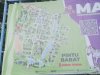
Here's a picture of the updated zoo's map:
IMG20240718112944.jpg
 

Attachments

  • IMG20240718112944.jpg
    IMG20240718112944.jpg
    149.9 KB · Views: 184
  • IMG20240718114248.jpg
    IMG20240718114248.jpg
    147.5 KB · Views: 187
Last edited:
Some other things I missed out:
  • Located in the southern corner of the zoo is the rather neglected exhibit complex that include Javan muntjacs, Malayan tapir, and banded pigs, as well as a open exhibit for a pair of siamang. Unlike most other complex or even the herbivore and ratite complex, this section of the park have almost no visitors, making it eeriely empty with only several zoo staffs driving around. Though the pigs seems well-fed and had even breed, same could probably said for the others. It's worth noting that this area is near the zoo's animal quarantine area.
View attachment 717829
  • In the Schmutzer, the mitered langur from the old primate complex had been moved to Schmutzer in the leaf-eating monkey complex with proboscis monkey and Javan langur. Meanwhile, a new and modern macaque complex has been renovated, one exhibit has been previously occupied by a group of Tonkean macaques, while other exhibits are later planned to house Heck's macaque, Celebes crested macaque, southern pig-tailed macaque, and possibly crab-eating macaque. In the Bornean orangutan exhibit, several species seems to have been added to the very large exhibit, which include a group of white-breasted waterhen and an Malaysian river turtle. The turtle only occupy one specific pond in the exhibit, which can be viewed through the glass view.
  • In the reptile house, an common snapping turtle has been moved with the green iguanas. I wonder how it ended up.
  • In the Children's Zoo, an spotted wood owl has been added to one of the smaller aviary. Meanwhile in the Children's Zoo corner, two exhibits that seems to had originally houses otters now houses alligator gars on one side and interestingly a group of unsigned baby snake-necked turtles on the other. The large gars came from the moat from the Children's Zoo, while Ragunan do have adults snake-necked turtles in the reptile house, I'm not sure if these babies were reimanni, mccordi timorensis, rugosa, or all of them together.
Here's a picture of the updated zoo's map:
View attachment 717828
Are there any Sumatran orangutans still in Ragunan Zoo?
 
Are there any Sumatran orangutans still in Ragunan Zoo?
A couple of female orangutans is still present in an exhibit near the eastern black bear. Unlike the Borneans, Ragunan only have one exhibit for the Sumatrans which is also outside of the Schmutzer Primate Centre. I didn't know if Ragunan had more Sumatran orangutans off-display, but I heard report that they had five to eight Sumatrans in contrast to over dozens of Bornean orangutans.
 
I just got myself a book titled "Ragunan Zoo", which gave a bit of glimpse of the zoo's past back in the early 1990's. Though the book doesn't seems to have a complete list of species and origins of their more interesting rosters, it was mentioned at the time that Ragunan have over 4.000 different individual animals within its 135 hectares of space in its care. Worth noting that photos of the zoo's former Sumatran rhinoceros were prominent in the book.

Here's some interesting notes regarding the zoo's collection:
  • Ragunan have had always a large numbers of orangutan, stated to be around 44. These numbers seem to have increased years later, where it was reported in 2011 that the zoo's orangutan population multiplied by 11 kept in seven different exhibits which include off-display quarantine.
  • When referring to the zoo's Sulawesi endemics, it was stated that they had anoas (Depressicornis and quarlesi), babirusas (celebensis), "pygmy" water buffalos, and four species of macaques. These "pygmy" buffalos migh refer to some unidentified local breeds of water buffalos instead of the Filipino carabao. Ragunan as of now displayed three Sulawesi macaques; M. nigra, m. hecki, and m. tonkeana. The fourth species might refer to m. nigrescens, which the zoo used to display. Ragunan also used to kept a m. o. brunnescens in the 2000's.
  • The zoo's former Sumatran rhinos did mate in the early 1990's. though failed to produce offspring.
  • Regarding native species, the zoo used to display Kloss's gibbon, black-crested Sumatran langur, Javan warty pig, Sumatran serow, Sunda clouded leopard (The book show a picture of the leopard's exhibit, which as of now was vacant), red bird-of-paradise, lesser bird-of-paradise, great hornbill, knobbed hornbil, Javan kingfisher, black lory, Nicobar pigeon, great argus, elephant trunk snake, blood python, green tree python, trimeresurus viper, D'albertis python, and albino macaque and crocodile. No details given regarding their origins.

Hoffman, L. (1993). Ragunan Zoo. Dai Nippon Printing Indonesia.

View attachment 714872
I assume at present the TNB Ragunan only houses lowland anoa. In 2017 they maintained 2.2 lowland anoas, with an older breeding pair (M13 / F21) and 2 younger ones (M1 - calf to breeding pair and a F9 old). I did think the older anoa female may now have passed on. I seem to have read something to that effect.

It is encouraging that the renovation of primate exhibits is leading to renewed focus on the macaques of Sulawesi (3 species) and the langur/surili are now not just exhibited in the Schmutzer Center (I loved this part of the zoo and an example for the main zoo).

I assume the emphasis on native species from Indonesia has been taken up with increased real and effort. Kloss' gibbons are being bred ... (I think, not sure), Javan warty pigs (breeding group now) and of course Sunda clouded leopard, more Sumatran tiger (phase out Bengals and hybrid white???) and the Sumatran serow.

Possibly a lot has changed since the birds species listing and that the Bird Park has seen a lot of re-invention of exhibits and species on exhibit (hornbills, birds of paradise, songbirds???). Especially, excited the cassowary (2 species) have now received new exhibits....!!!!

Keep up the good work with updating and zoo news. Well appreciated, Rizz!!!!
 
Last edited:
Back
Top